First edition, first printing (stated First Edition/First Thousand) of William H. Birkmire’s foundational treatise on modern steel construction, drawing on his own experience as an architect and engineer. Published in 1898 by John Wiley & Sons. As noted in Birkmire’s preface “This volume is presented to architects, engineers, and builders as supplementary to the author’s work on ‘Skeleton Construction in Building,’ published in April, 1894. While the latter was written during the period of the change in building-construction methods, this is the result of his practical experience since that time in the planning, designing, and construction of high office-buildings, in which these structures have attained their present development.” Birkmire (1860-1924), a native of Philadelphia and eventual resident of New York City, apprenticed with Samuel Sloan and worked as an architect for the firm of Furness, Evans, & Co during the early 1890’s. With the J.B and J.M Cornell Iron Works, he arranged the practical steel details for several large commercial buildings, including New York’s Astor Hotel. Among the buildings discussed and illustrated in the present work are the Bowling Green Building, St Paul Building, Commercial Cable Building, American Surety Building, Manhattan Life Insurance Building, Postal Telegraph Building, Ivins Syndicate Building, and National Bank of Commerce Building, all in New York City; Adler & Sullivan’s Guaranty Building in Buffalo; and several of Chicago’s famed skyscrapers including Burnham & Root’s Masonic Temple and Holabird & Roche’s Old Colony Building. 8vo (6” x 9.25”), red embossed boards with gilt-stamped lettering on the spine, 345 pagers plus a section of ads, b/w illustrations throughout including photographs, prints, and renderings of buildings, floor plans and architectural details. Binding somewhat shaken. Bumping and rubbing to extremities, with small stains to boards. Previous owner’s name in pencil on FFE.
First edition, first printing (stated First Edition/First Thousand) of William H. Birkmire’s foundational treatise on modern steel construction, drawing on his own experience as an architect and engineer. Published in 1898 by John Wiley & Sons. As noted in Birkmire’s preface “This volume is presented to architects, engineers, and builders as supplementary to the author’s work on ‘Skeleton Construction in Building,’ published in April, 1894. While the latter was written during the period of the change in building-construction methods, this is the result of his practical experience since that time in the planning, designing, and construction of high office-buildings, in which these structures have attained their present development.” Birkmire (1860-1924), a native of Philadelphia and eventual resident of New York City, apprenticed with Samuel Sloan and worked as an architect for the firm of Furness, Evans, & Co during the early 1890’s. With the J.B and J.M Cornell Iron Works, he arranged the practical steel details for several large commercial buildings, including New York’s Astor Hotel. Among the buildings discussed and illustrated in the present work are the Bowling Green Building, St Paul Building, Commercial Cable Building, American Surety Building, Manhattan Life Insurance Building, Postal Telegraph Building, Ivins Syndicate Building, and National Bank of Commerce Building, all in New York City; Adler & Sullivan’s Guaranty Building in Buffalo; and several of Chicago’s famed skyscrapers including Burnham & Root’s Masonic Temple and Holabird & Roche’s Old Colony Building. 8vo (6” x 9.25”), red embossed boards with gilt-stamped lettering on the spine, 345 pagers plus a section of ads, b/w illustrations throughout including photographs, prints, and renderings of buildings, floor plans and architectural details. Binding somewhat shaken. Bumping and rubbing to extremities, with small stains to boards. Previous owner’s name in pencil on FFE.

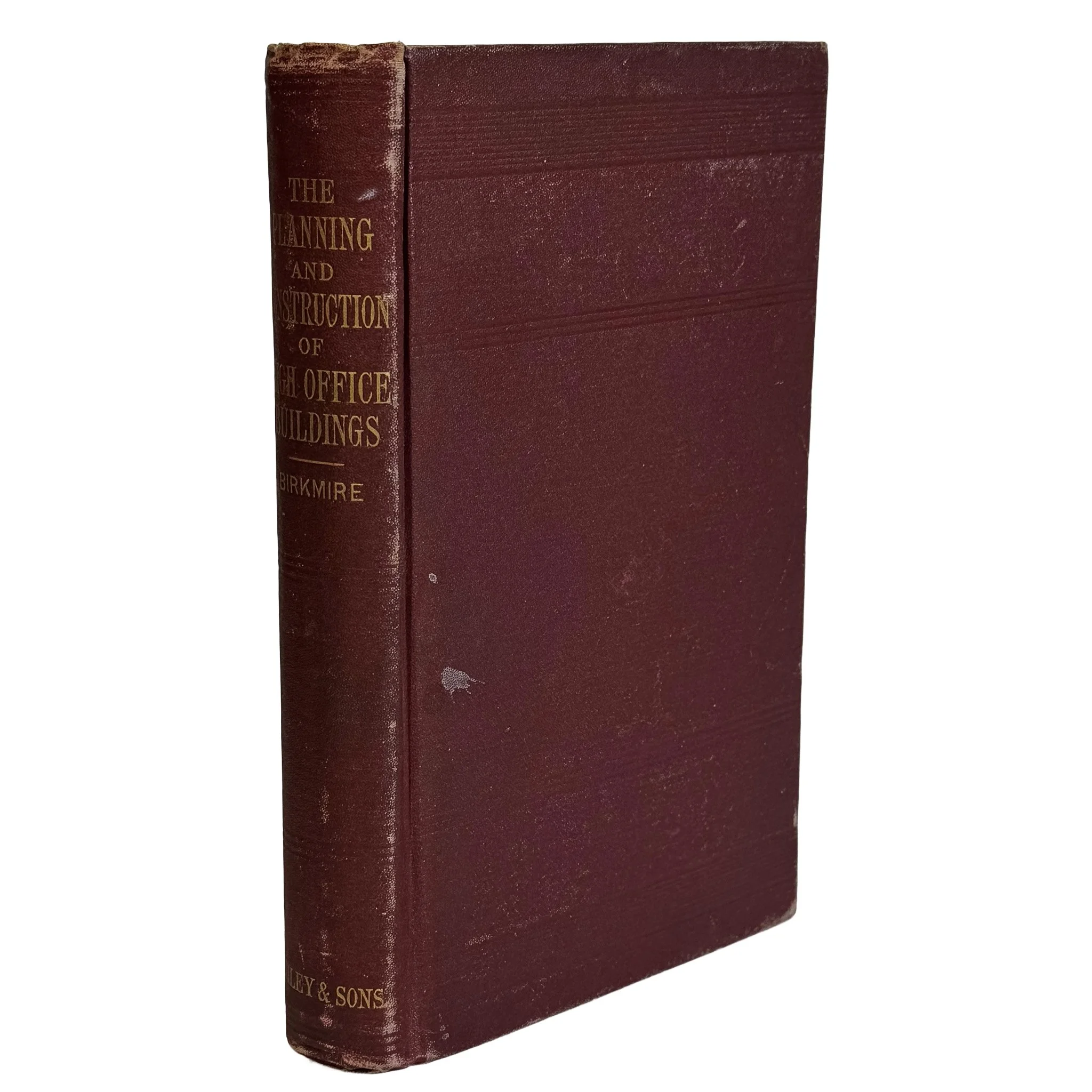 Image 1 of 15
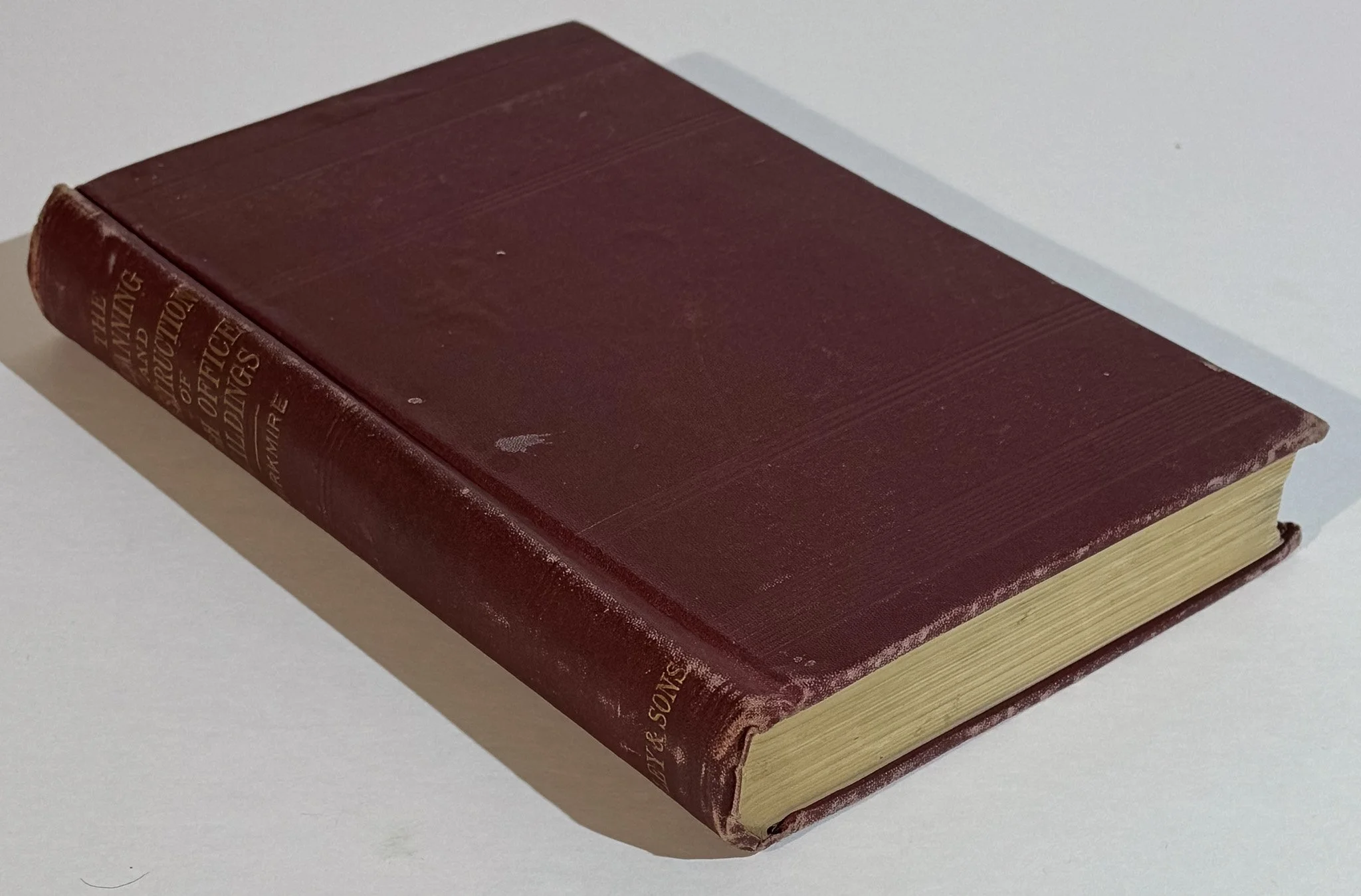 Image 2 of 15
 Image 3 of 15
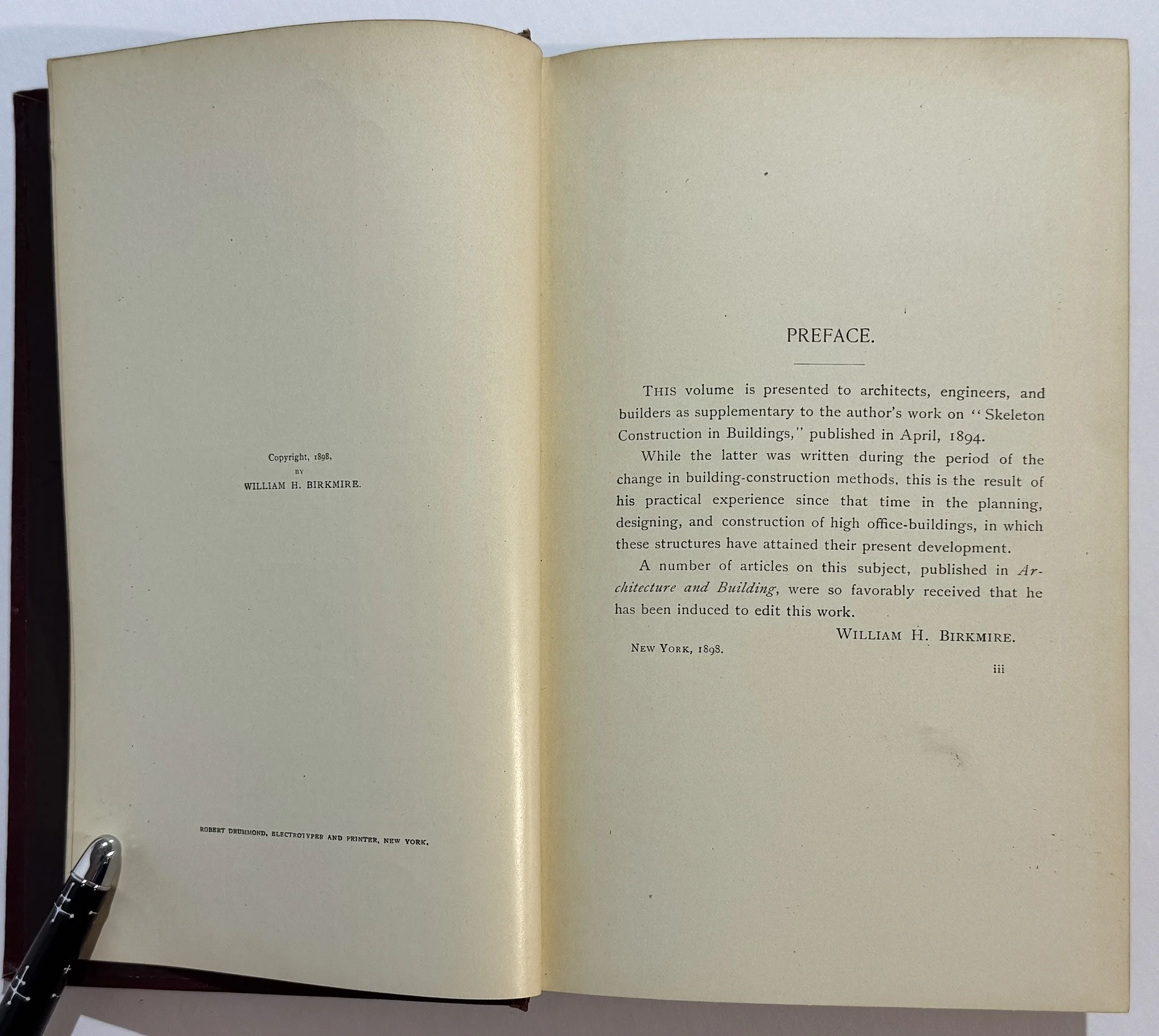 Image 4 of 15
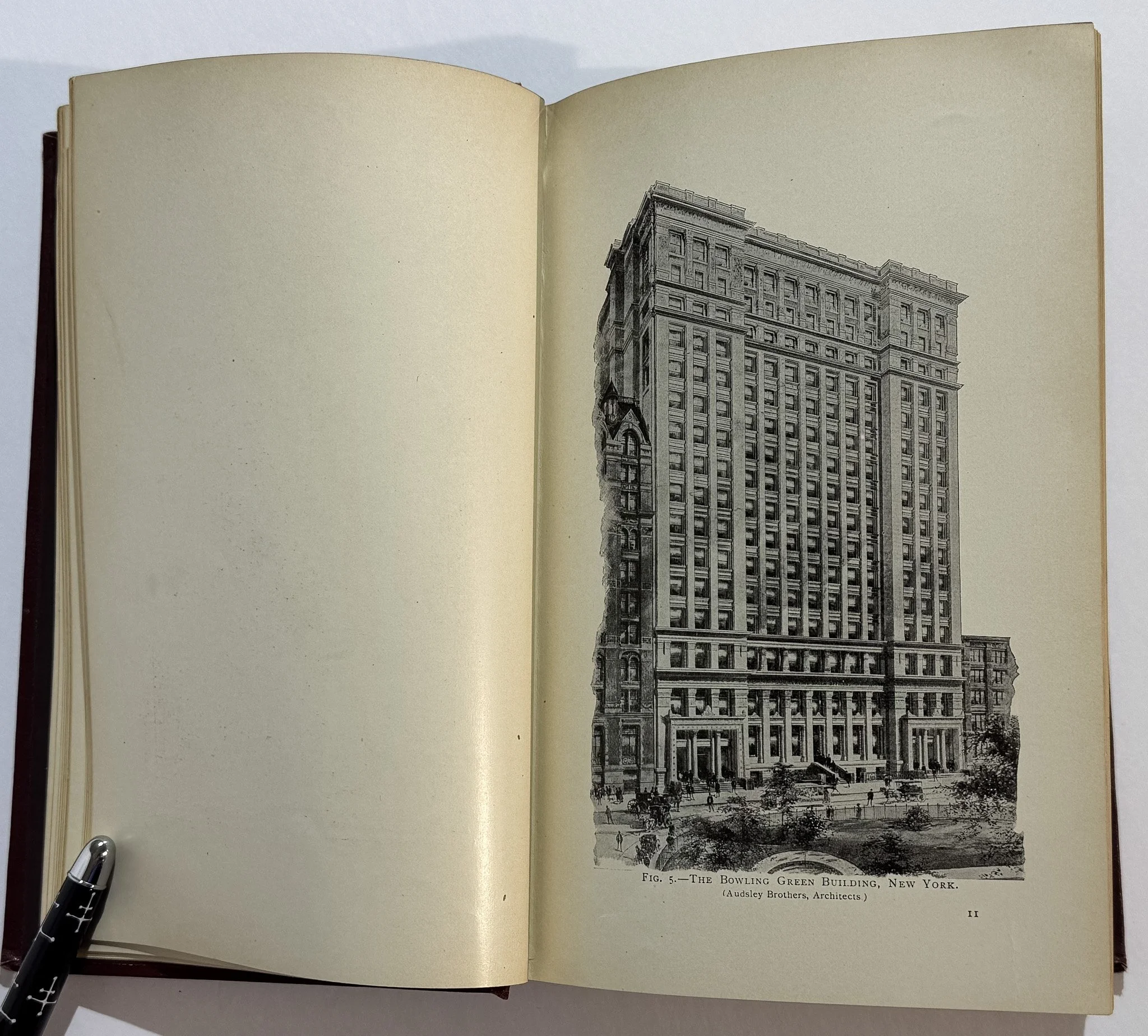 Image 5 of 15
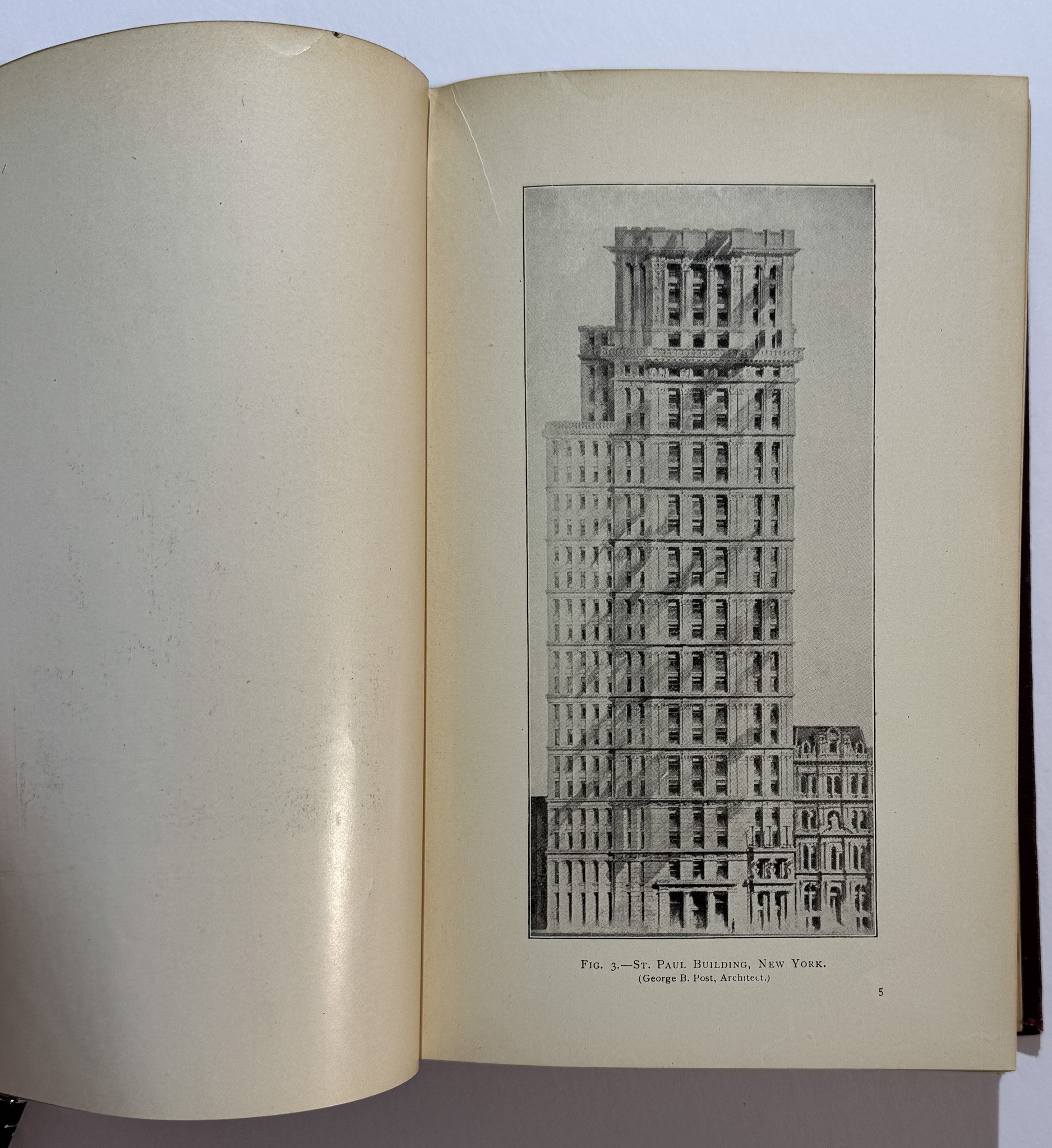 Image 6 of 15
 Image 7 of 15
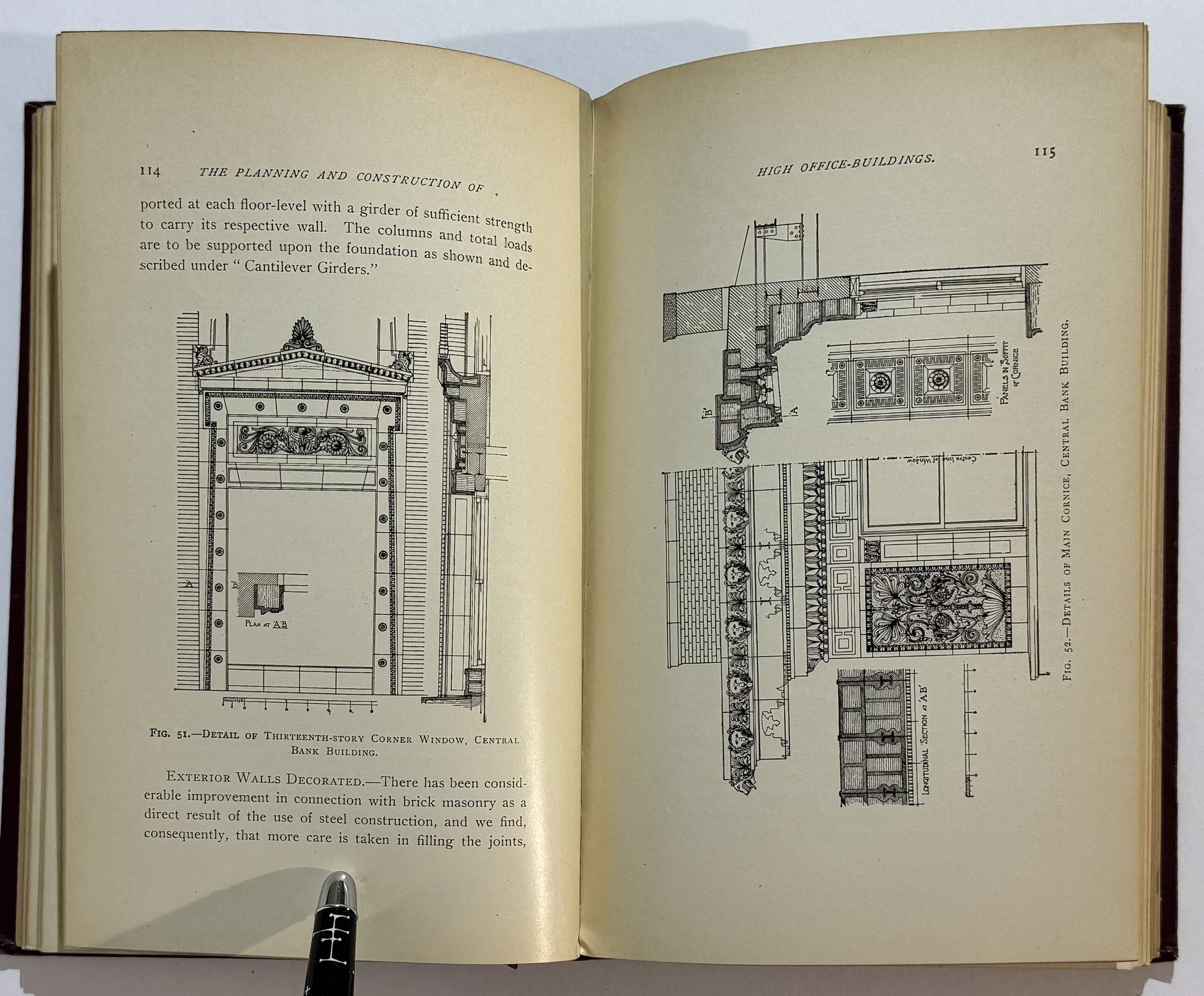 Image 8 of 15
 Image 9 of 15
 Image 10 of 15
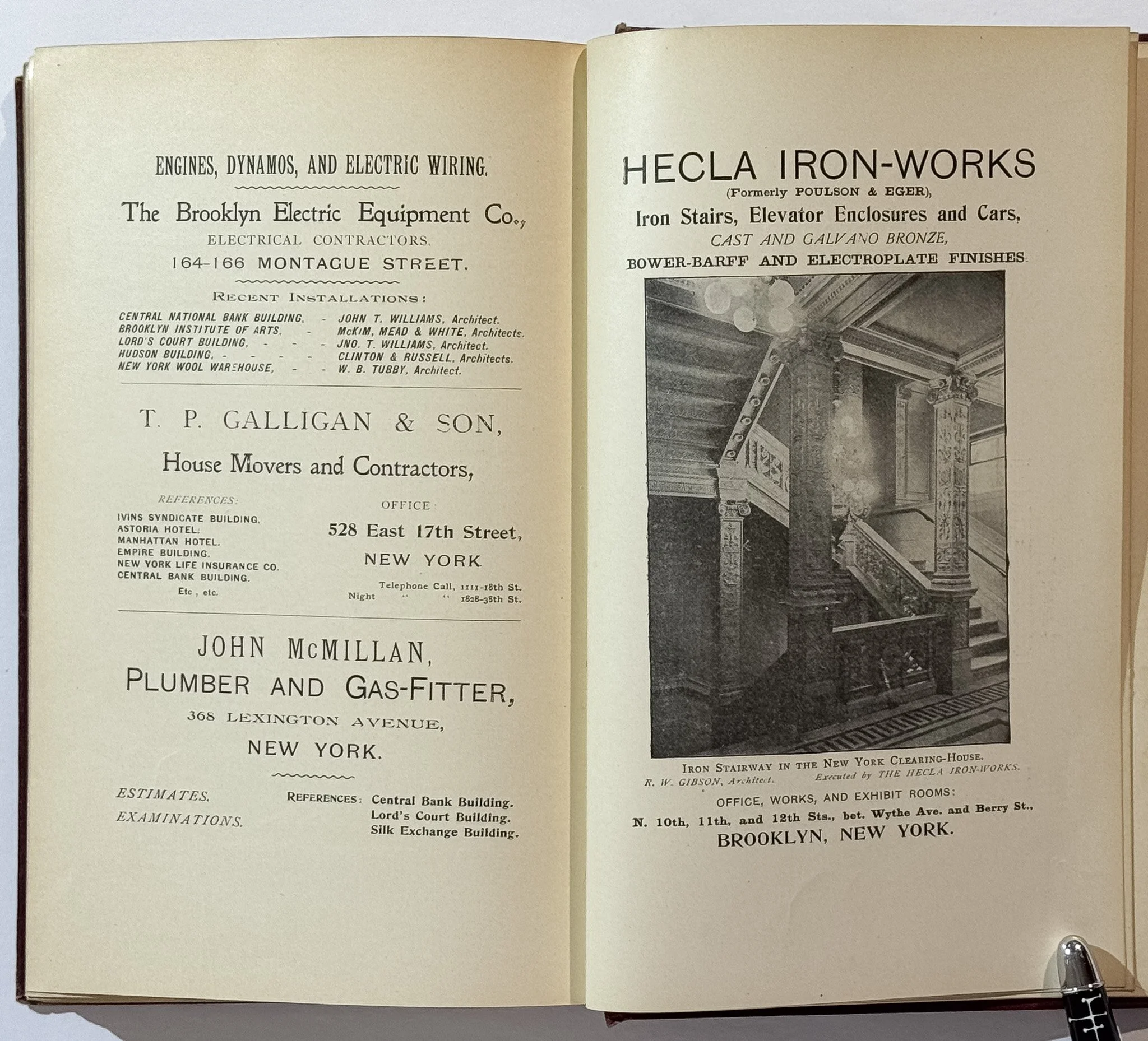 Image 11 of 15
 Image 12 of 15
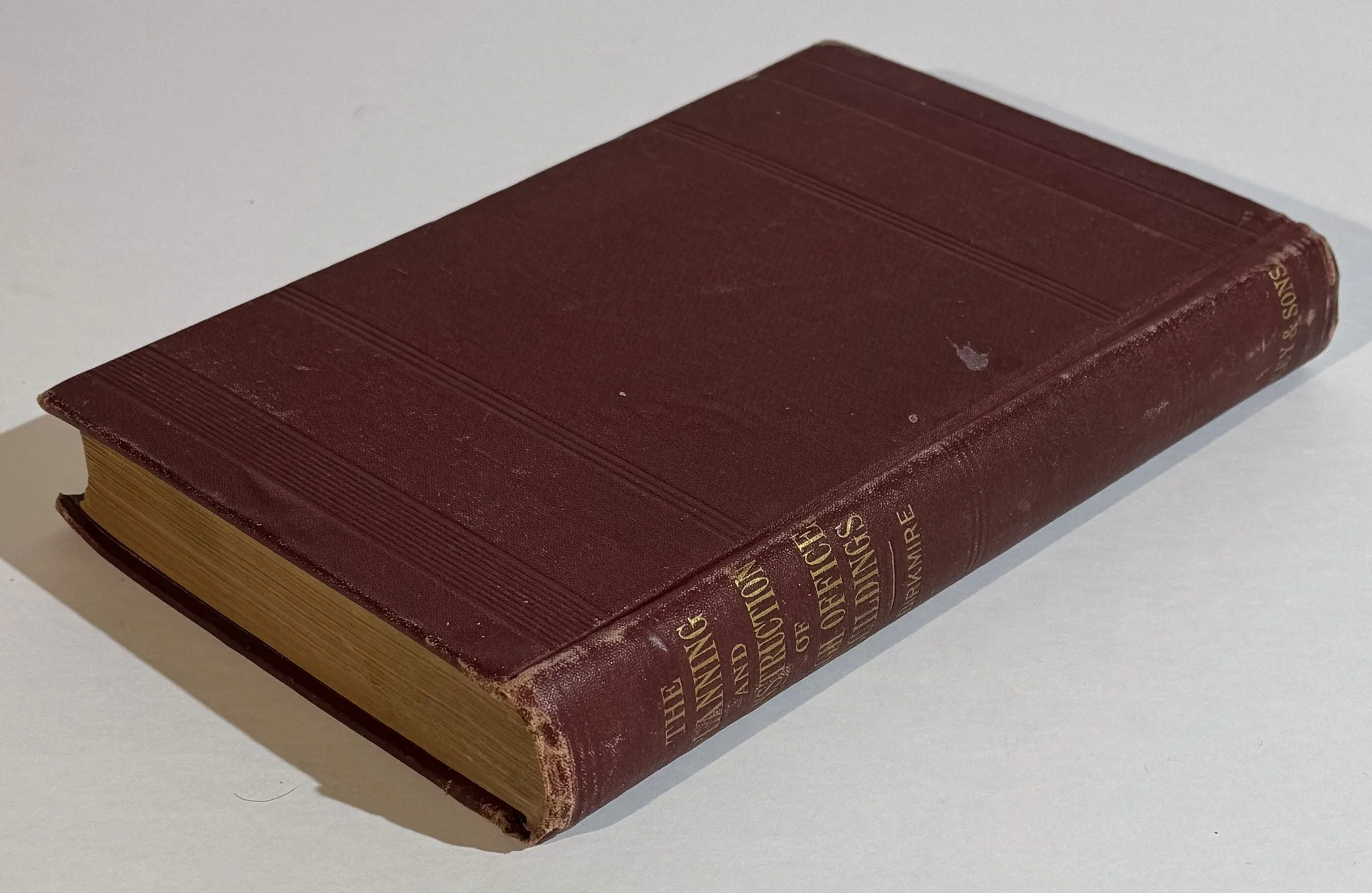 Image 13 of 15
 Image 14 of 15
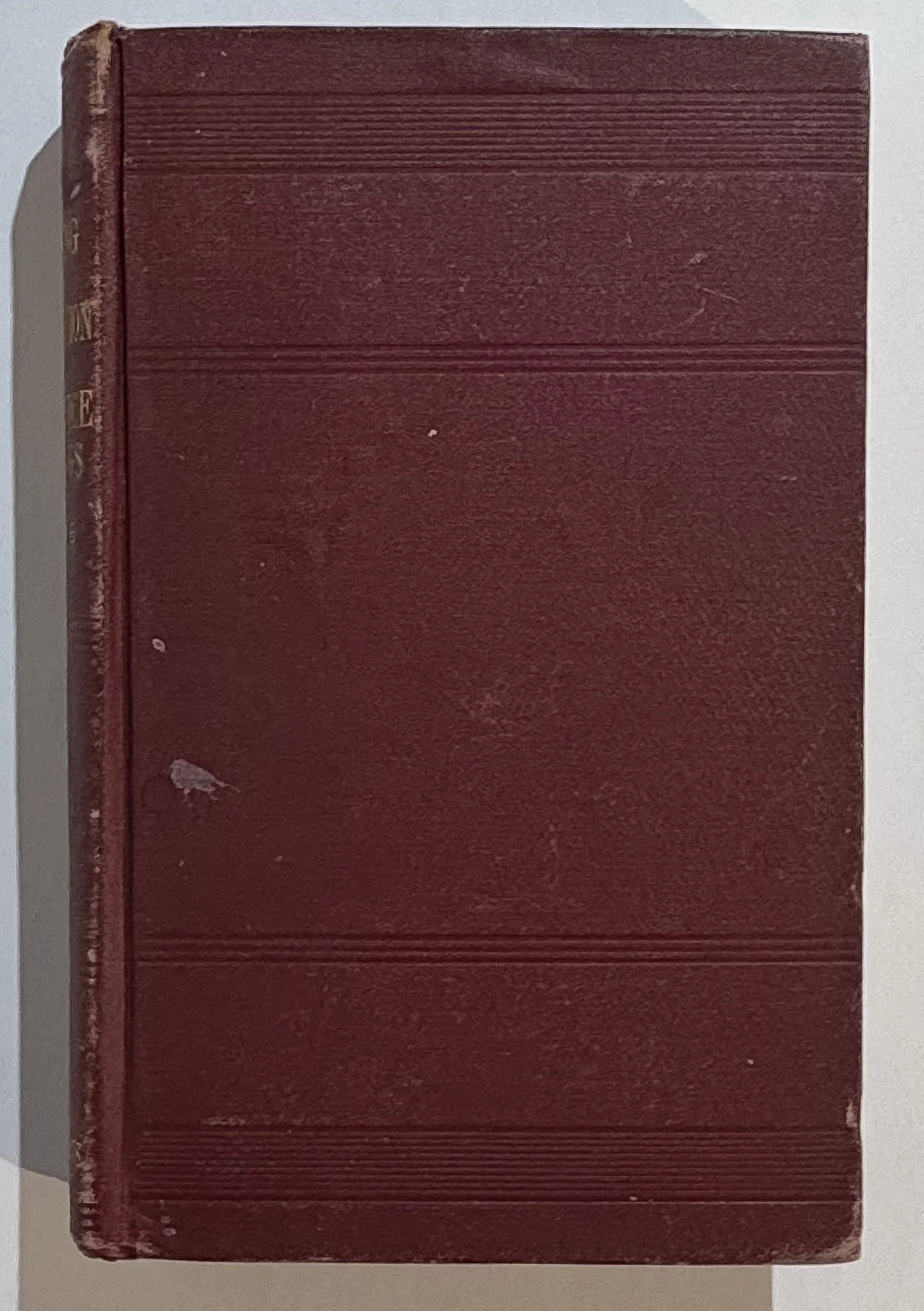 Image 15 of 15







![[1ST ED] Some Roots of Modern Architecture](https://images.squarespace-cdn.com/content/v1/61dc97a529892d0e352a9423/1661918548219-P7TEZ17EVGW7VMET1BIB/9D34FC9F-ABB8-4BC2-8E0F-CB376F7BB63F.JPG)