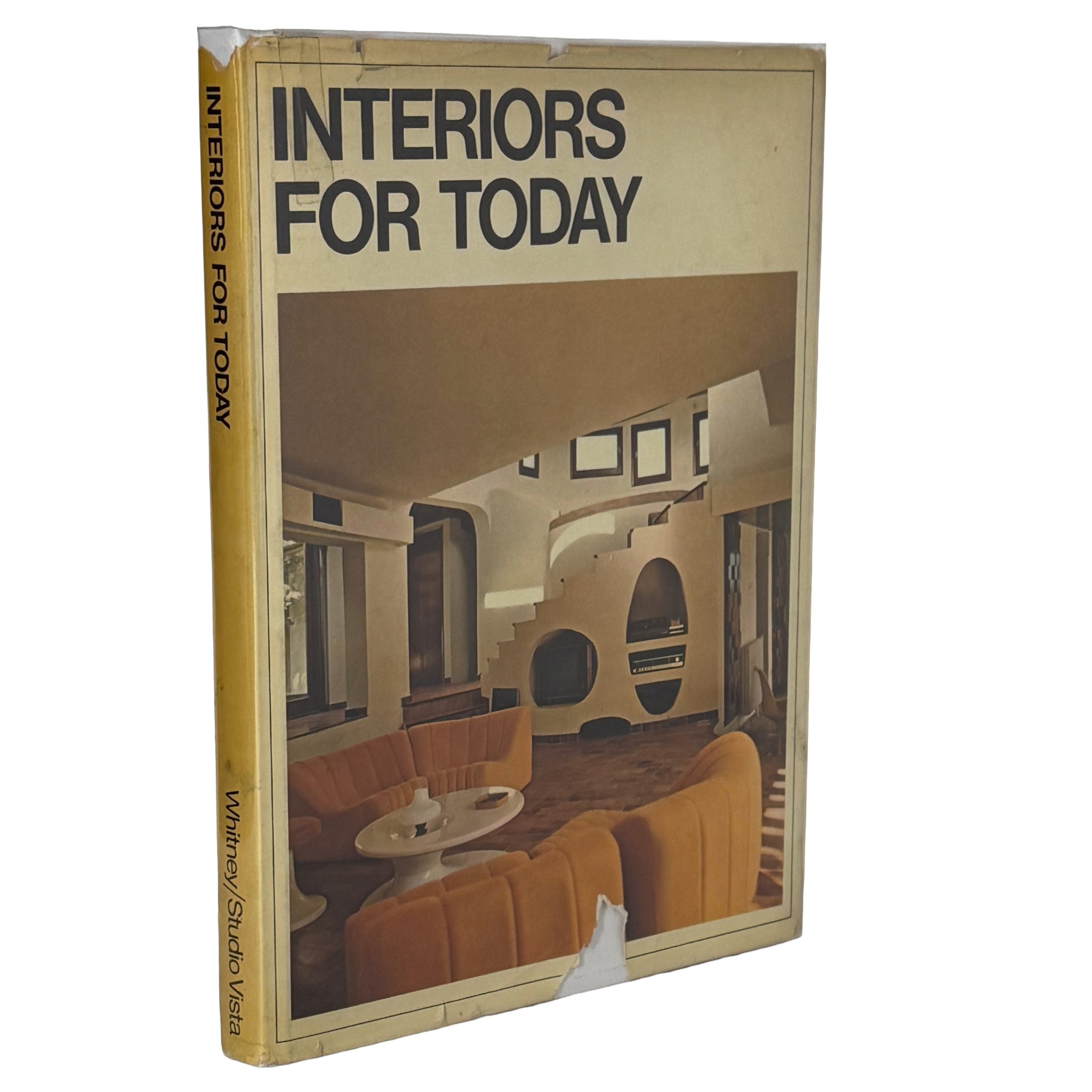
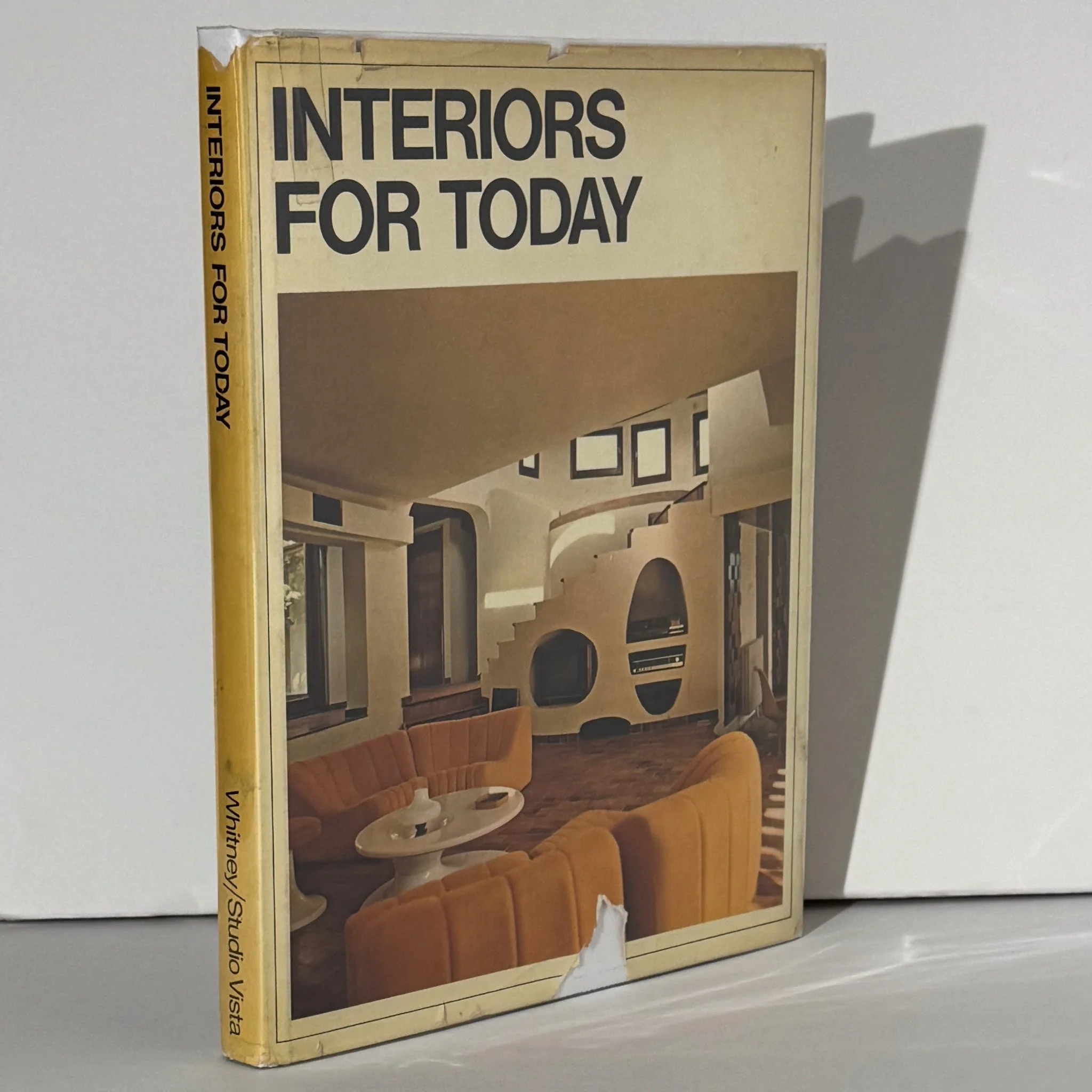
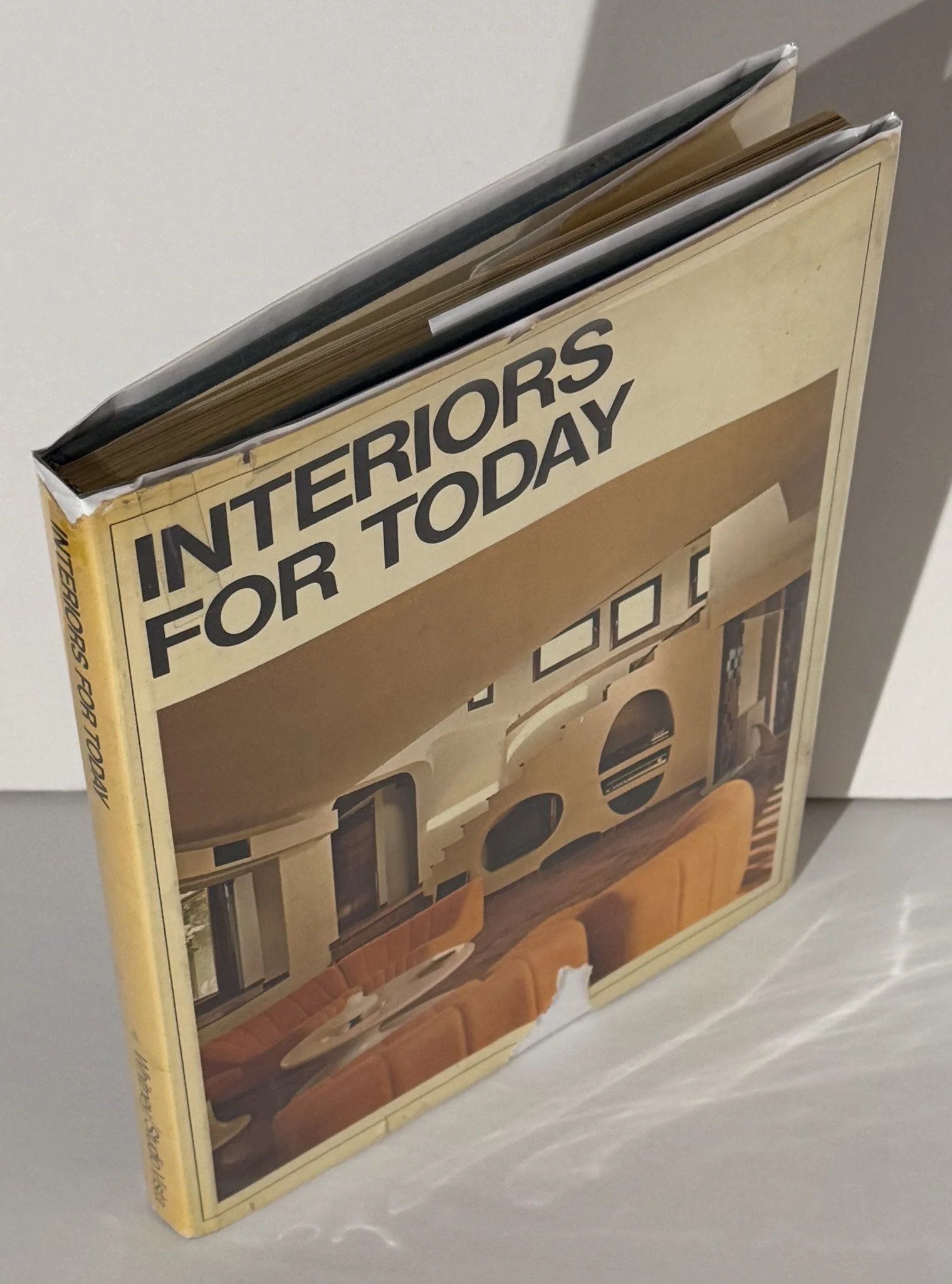
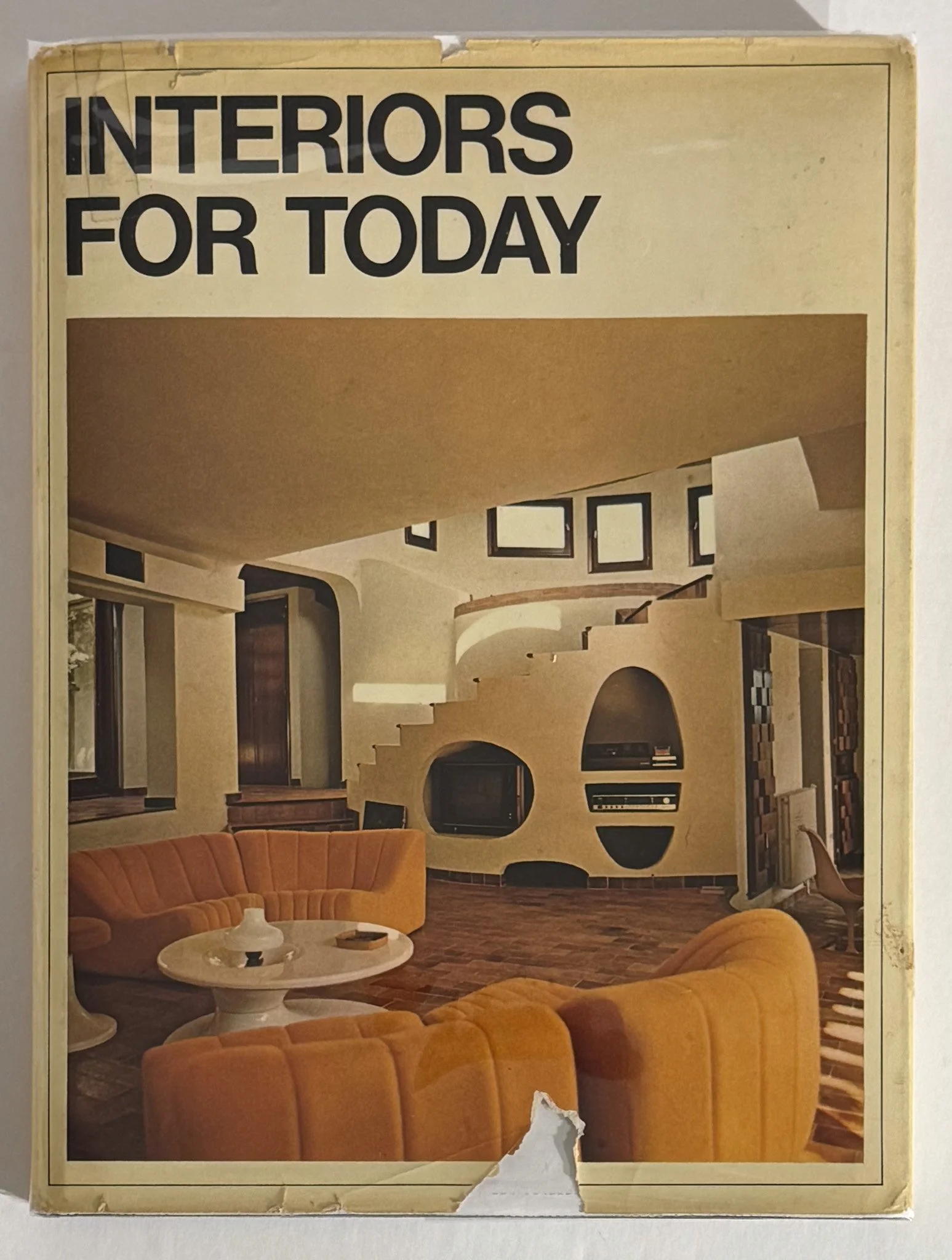
Second English edition of Franz Sales Meyer’s influential compendium of historical ornamental motifs, revised by Hugh Stannus and published in 1894 by B.T. Batsford in London following its original German publication in 1888. With 300 plates containing about 3000 illustrations. Meyer (1849-1927) was a German author, poet, painter, and professor of Ornament at the Karlsruhe School of Applied Art. His handbook, which has been reprinted many times, has become a standard textbook and pattern sourcebook in art schools and applied arts programs, providing an illustrated vocabulary for several generations of decorators, architects, typographers, and craftsmen working in historicist styles. 8vo (6” x 8.75”), gilt and black embossed boards, (xvi) 548 pages plus ads, b/w illustrations. Slight lean to spine. Hinges partially split; f.f.e.p. detached. Gentle bumping and moderate chipping to extremities, especially at spine ends and corners.
Second English edition of Franz Sales Meyer’s influential compendium of historical ornamental motifs, revised by Hugh Stannus and published in 1894 by B.T. Batsford in London following its original German publication in 1888. With 300 plates containing about 3000 illustrations. Meyer (1849-1927) was a German author, poet, painter, and professor of Ornament at the Karlsruhe School of Applied Art. His handbook, which has been reprinted many times, has become a standard textbook and pattern sourcebook in art schools and applied arts programs, providing an illustrated vocabulary for several generations of decorators, architects, typographers, and craftsmen working in historicist styles. 8vo (6” x 8.75”), gilt and black embossed boards, (xvi) 548 pages plus ads, b/w illustrations. Slight lean to spine. Hinges partially split; f.f.e.p. detached. Gentle bumping and moderate chipping to extremities, especially at spine ends and corners.

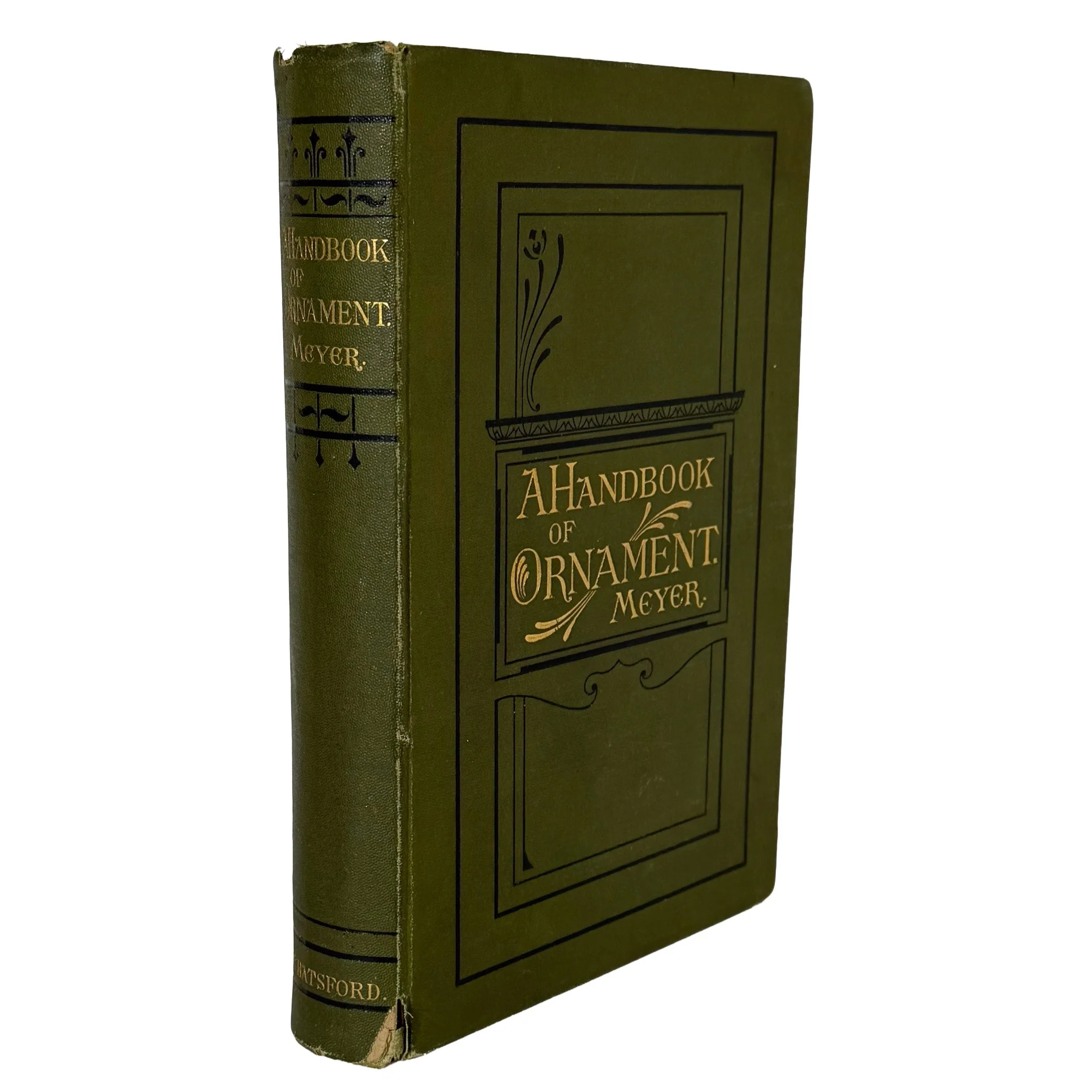 Image 1 of 11
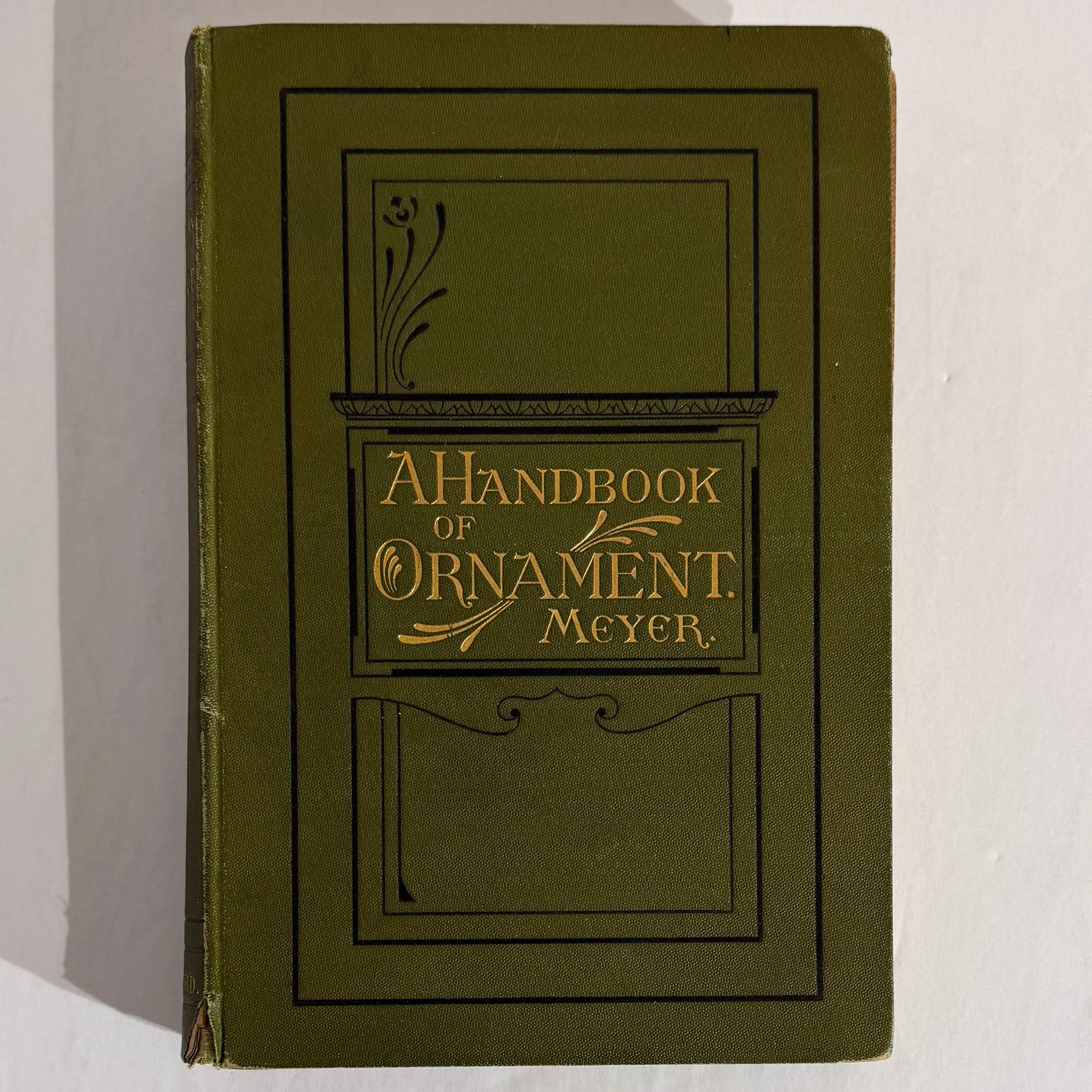 Image 2 of 11
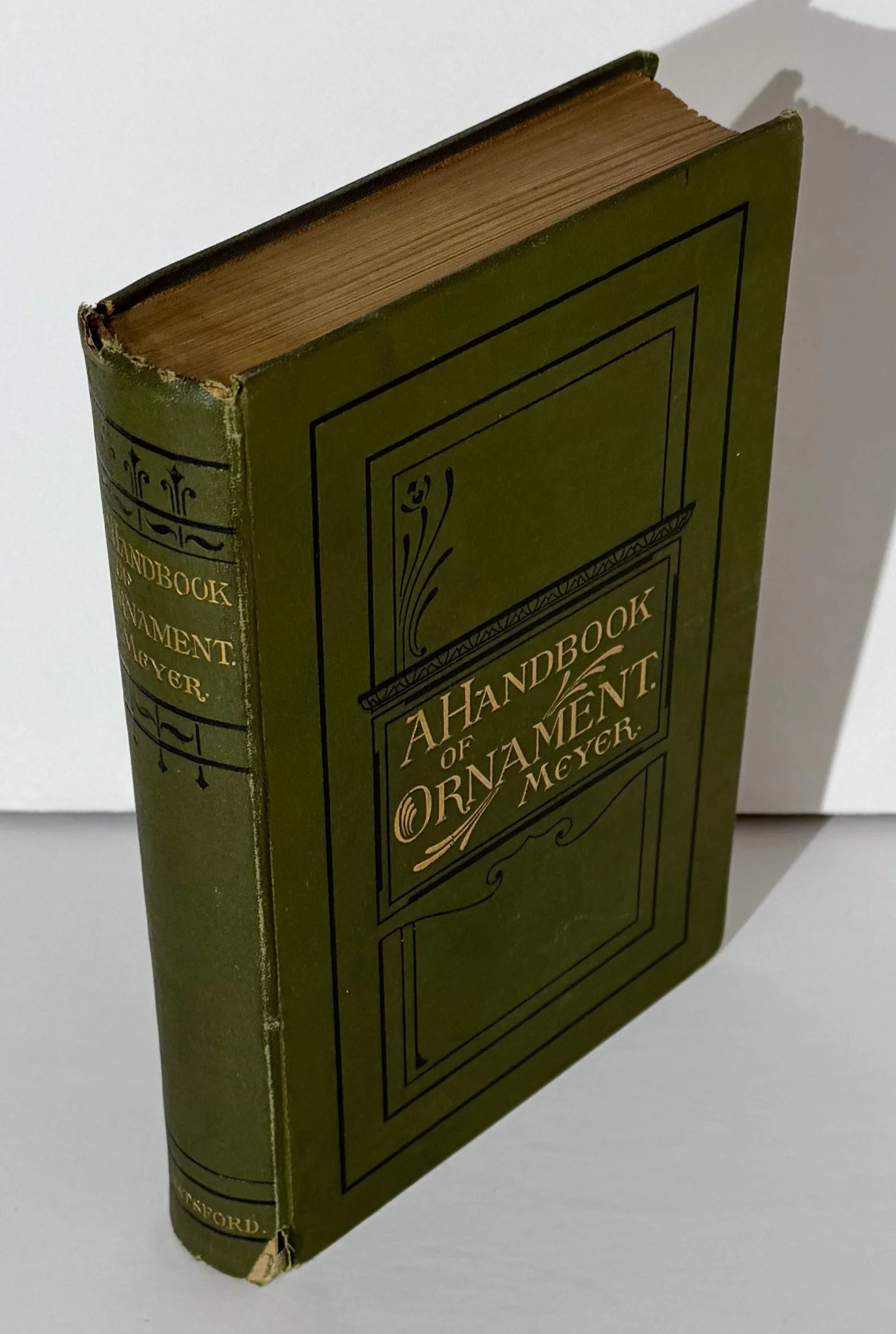 Image 3 of 11
 Image 4 of 11
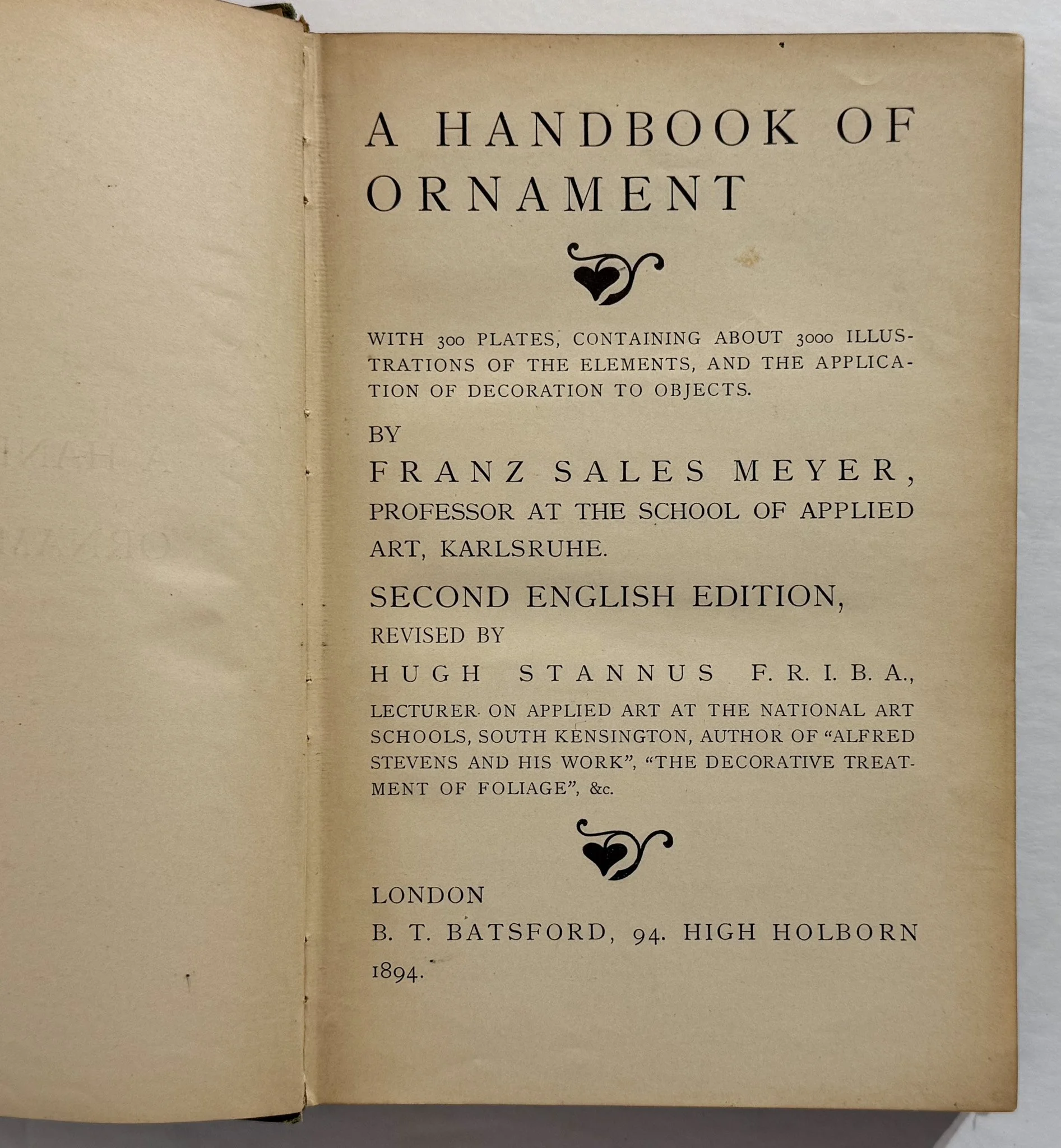 Image 5 of 11
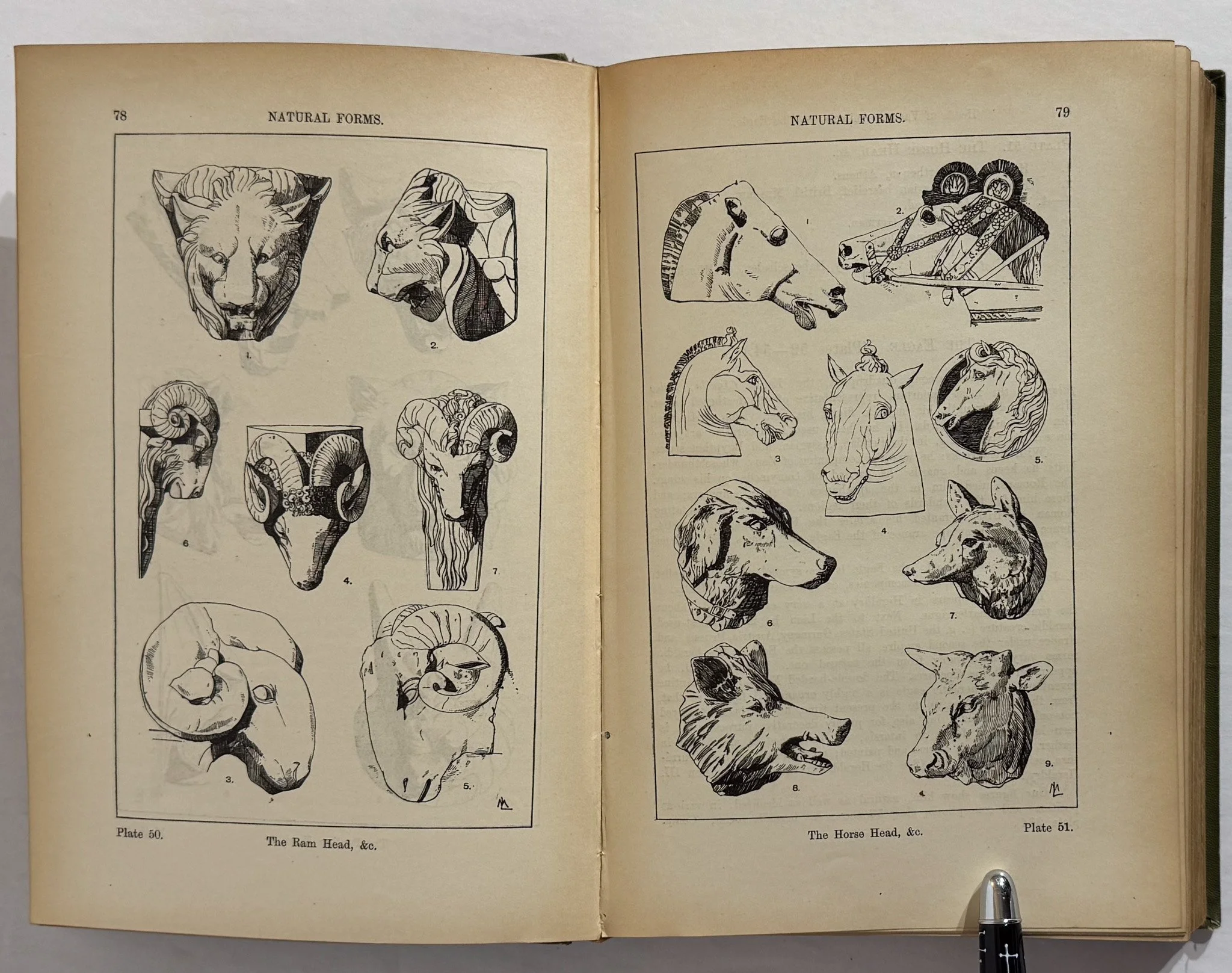 Image 6 of 11
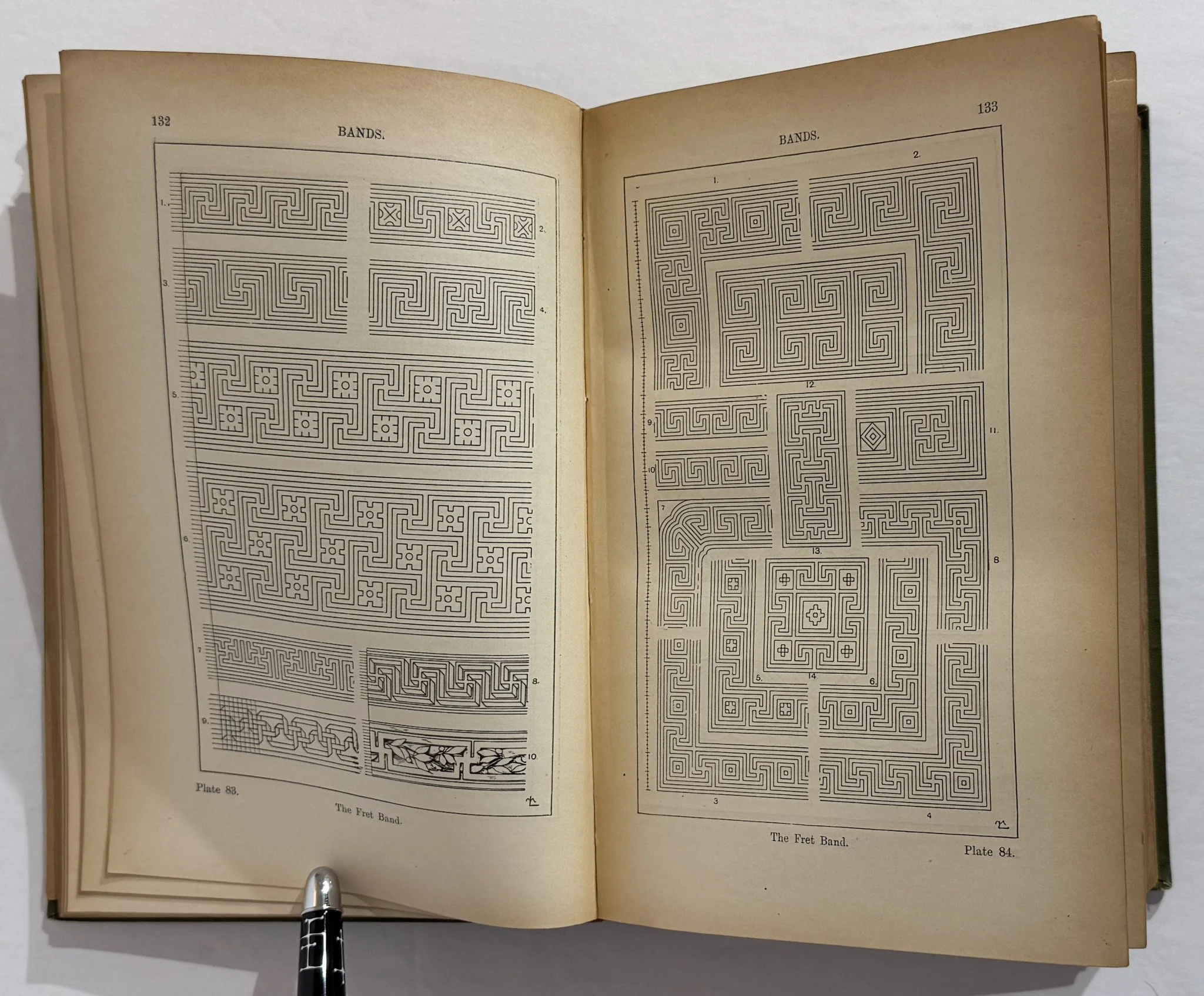 Image 7 of 11
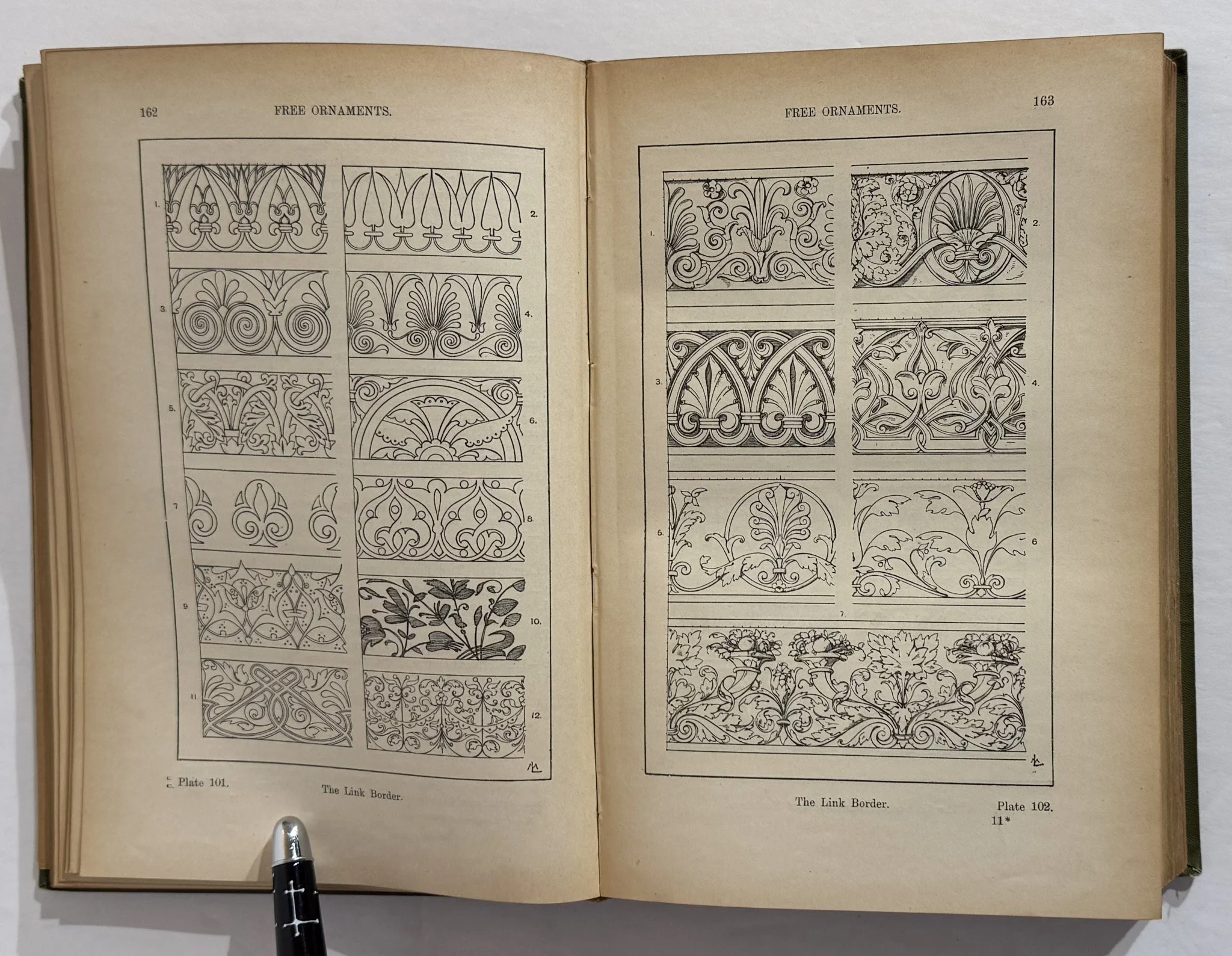 Image 8 of 11
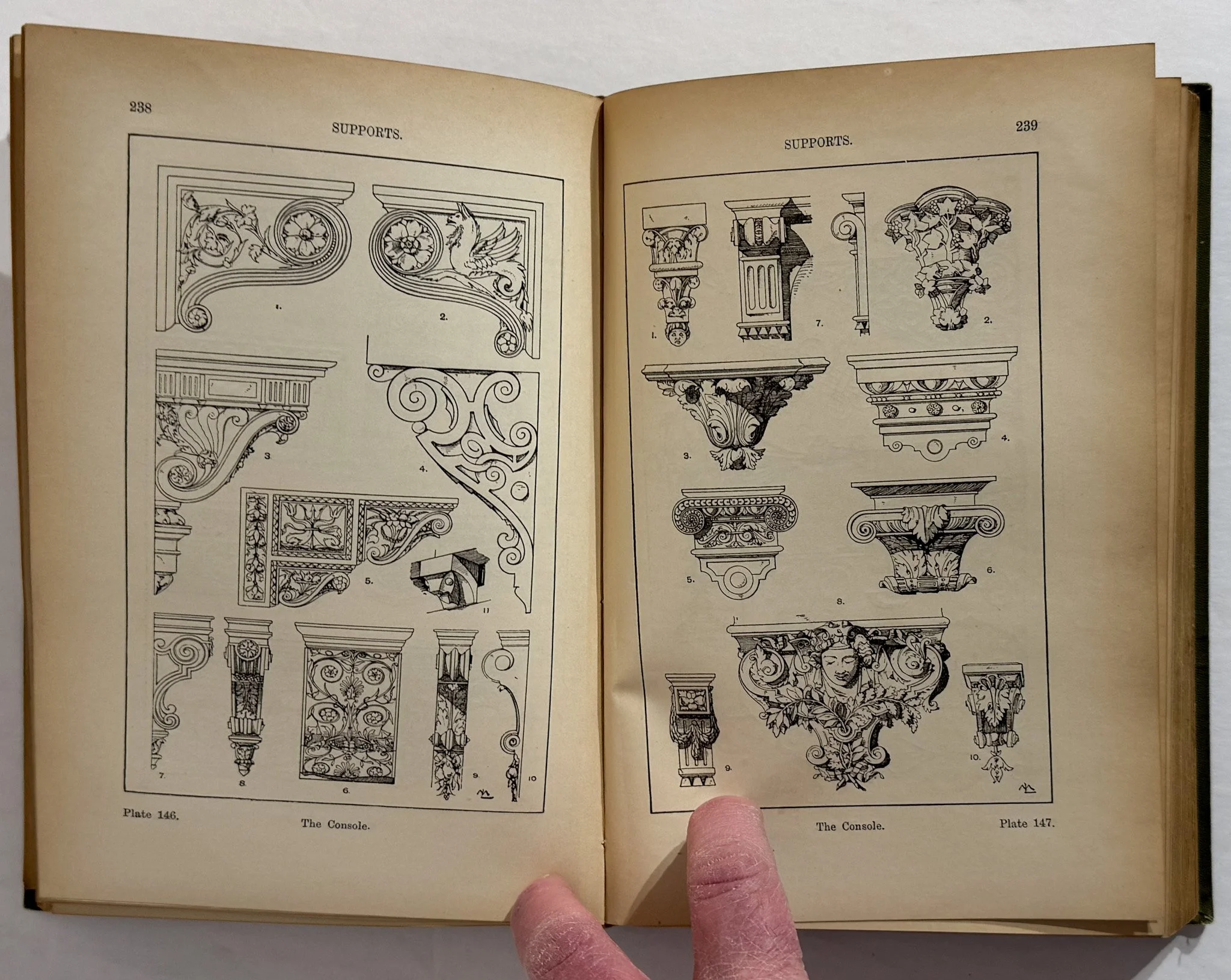 Image 9 of 11
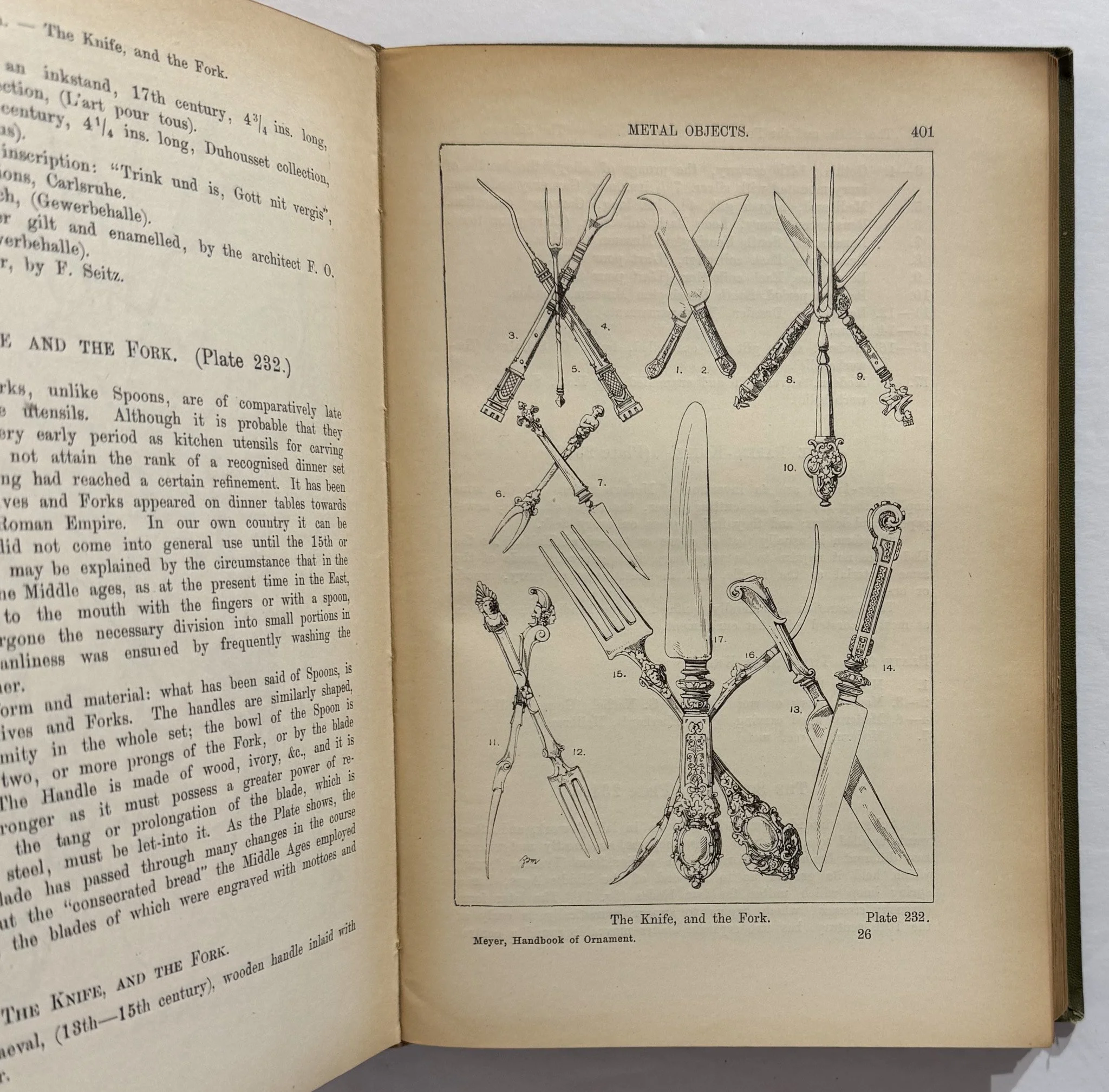 Image 10 of 11
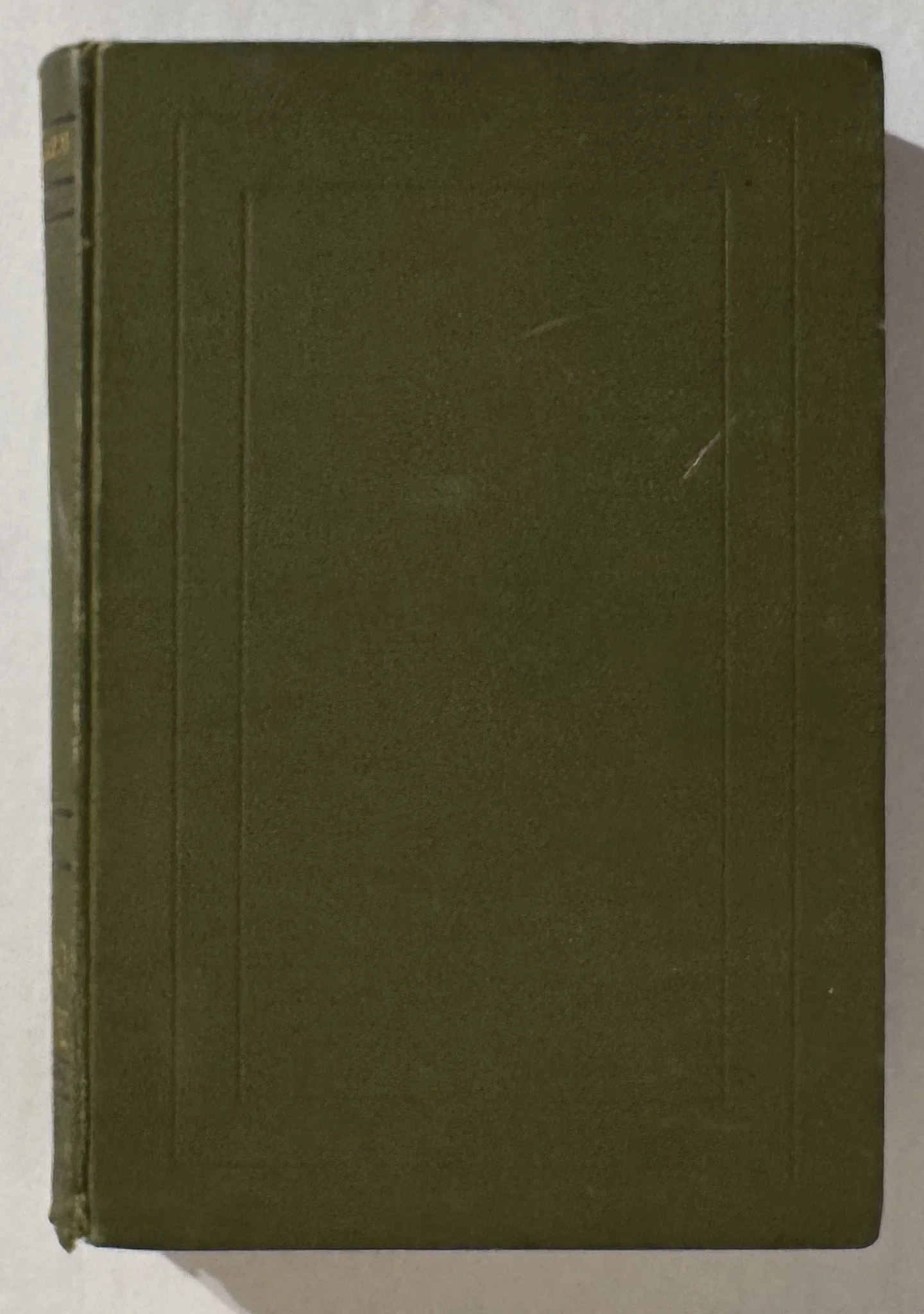 Image 11 of 11