A rare surviving document from the formative years of American Pop Art, this original Stable Gallery broadside was issued in conjunction with Andy Warhol's legendary Brillo Boxes exhibition, held April 21–May 9, 1964. Printed on a single sheet (approximately 9.5 × 13.5 inches) by offset lithography on uncoated stock, it reproduces Gene R. Swenson's stark photographic portrait of Warhol above Swenson's contemporary essay, The Personality of the Artist, with the exhibition announcement across the lower margin. Blank verso. Original horizontal machine fold as issued.
This broadside occupies an important place within the documentary history of Warhol's career. The 1964 Stable Gallery exhibition marked the public debut of the Brillo Boxes, works that irrevocably transformed the boundaries between sculpture, commodity, and art. If the Campbell's Soup paintings announced Pop Art, the Brillo Boxes fundamentally altered its philosophical terrain, prompting questions about originality, authorship, and the status of the manufactured object that continue to shape contemporary art discourse. Few surviving pieces of gallery ephemera are so closely tied to a single watershed exhibition.
Equally significant, the broadside preserves scholar, art historian and “hippie revolutionary” Gene Swenson's contemporaneous critical interpretation of Warhol, written when the artist's public identity was still being forged, making it one of the earliest standalone printed texts devoted exclusively to Warhol's artistic persona. Swenson famously interviewed Warhol for ARTnews in 1963, eliciting the oft-cited quote “I want to be a machine” (more accurately “everybody should be a machine”).
Recent bibliographical research establishes that this is not an advertisement extracted from the April 1964 issue of Art International, as has often been assumed. Direct comparison with the magazine demonstrates that the periodical version is printed on heavier coated stock, carries a John Chamberlain advertisement on the verso, and concludes with a different line of text. The present broadside is instead printed only on the recto, on lighter uncoated paper, and bears the exhibition announcement unique to the Stable Gallery issue. These physical distinctions establish it as a separately produced gallery broadside rather than a removed magazine leaf.
Its independent existence is further corroborated by institutional and scholarly evidence. An example preserved in the Stable Gallery archive at the Smithsonian Institution was reproduced by Jennifer Sichel in Oxford Art Journal, while another has been illustrated by Gary Comenas from material associated with Gene Swenson and critic William S. Wilson. Comparison of these surviving examples reveals identical production characteristics—including the original horizontal machine fold—as well as differing secondary creases and handling marks, confirming that multiple impressions were produced and distributed by the gallery.
The present example carries distinguished provenance, having been acquired from the collection of a New York City graphic designer who retained a small group of original mid-1960’s gallery ephemera, including contemporaneous Leo Castelli Gallery mailers for Warhol and Roy Lichtenstein. Preserved folded in storage for decades, it survives in notably fresh condition, with only light bumping and rubbing to extremities—the best of the three copies noted here.
Original gallery material from Warhol's breakthrough years has become increasingly elusive, particularly pieces directly connected to the Stable Gallery exhibitions that helped define the artist's emergence. This broadside belongs to the earliest and most historically resonant stratum of Warhol ephemera—an authentic gallery-issued document from one of the decisive exhibitions of twentieth-century art.
A rare surviving document from the formative years of American Pop Art, this original Stable Gallery broadside was issued in conjunction with Andy Warhol's legendary Brillo Boxes exhibition, held April 21–May 9, 1964. Printed on a single sheet (approximately 9.5 × 13.5 inches) by offset lithography on uncoated stock, it reproduces Gene R. Swenson's stark photographic portrait of Warhol above Swenson's contemporary essay, The Personality of the Artist, with the exhibition announcement across the lower margin. Blank verso. Original horizontal machine fold as issued.
This broadside occupies an important place within the documentary history of Warhol's career. The 1964 Stable Gallery exhibition marked the public debut of the Brillo Boxes, works that irrevocably transformed the boundaries between sculpture, commodity, and art. If the Campbell's Soup paintings announced Pop Art, the Brillo Boxes fundamentally altered its philosophical terrain, prompting questions about originality, authorship, and the status of the manufactured object that continue to shape contemporary art discourse. Few surviving pieces of gallery ephemera are so closely tied to a single watershed exhibition.
Equally significant, the broadside preserves scholar, art historian and “hippie revolutionary” Gene Swenson's contemporaneous critical interpretation of Warhol, written when the artist's public identity was still being forged, making it one of the earliest standalone printed texts devoted exclusively to Warhol's artistic persona. Swenson famously interviewed Warhol for ARTnews in 1963, eliciting the oft-cited quote “I want to be a machine” (more accurately “everybody should be a machine”).
Recent bibliographical research establishes that this is not an advertisement extracted from the April 1964 issue of Art International, as has often been assumed. Direct comparison with the magazine demonstrates that the periodical version is printed on heavier coated stock, carries a John Chamberlain advertisement on the verso, and concludes with a different line of text. The present broadside is instead printed only on the recto, on lighter uncoated paper, and bears the exhibition announcement unique to the Stable Gallery issue. These physical distinctions establish it as a separately produced gallery broadside rather than a removed magazine leaf.
Its independent existence is further corroborated by institutional and scholarly evidence. An example preserved in the Stable Gallery archive at the Smithsonian Institution was reproduced by Jennifer Sichel in Oxford Art Journal, while another has been illustrated by Gary Comenas from material associated with Gene Swenson and critic William S. Wilson. Comparison of these surviving examples reveals identical production characteristics—including the original horizontal machine fold—as well as differing secondary creases and handling marks, confirming that multiple impressions were produced and distributed by the gallery.
The present example carries distinguished provenance, having been acquired from the collection of a New York City graphic designer who retained a small group of original mid-1960’s gallery ephemera, including contemporaneous Leo Castelli Gallery mailers for Warhol and Roy Lichtenstein. Preserved folded in storage for decades, it survives in notably fresh condition, with only light bumping and rubbing to extremities—the best of the three copies noted here.
Original gallery material from Warhol's breakthrough years has become increasingly elusive, particularly pieces directly connected to the Stable Gallery exhibitions that helped define the artist's emergence. This broadside belongs to the earliest and most historically resonant stratum of Warhol ephemera—an authentic gallery-issued document from one of the decisive exhibitions of twentieth-century art.

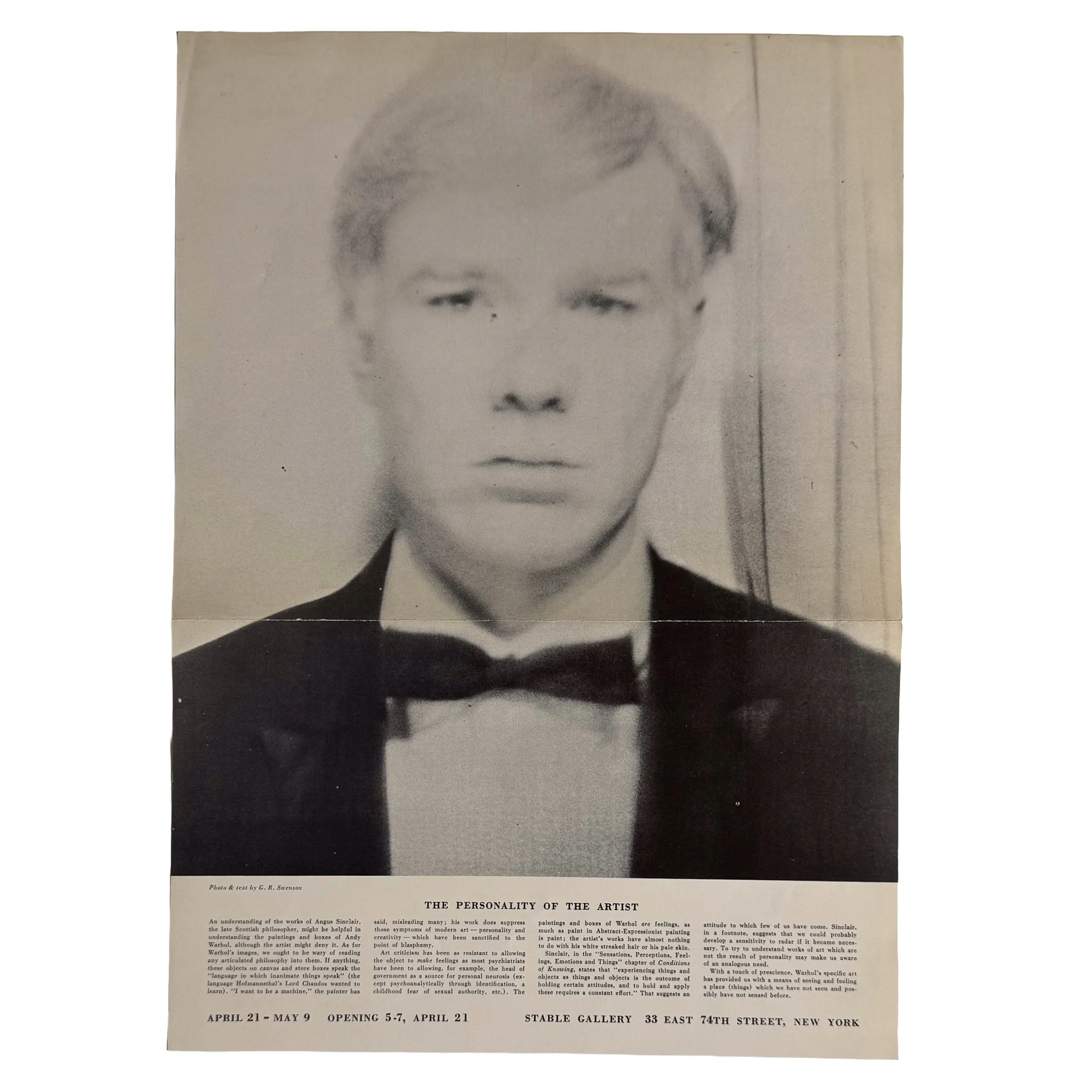 Image 1 of 6
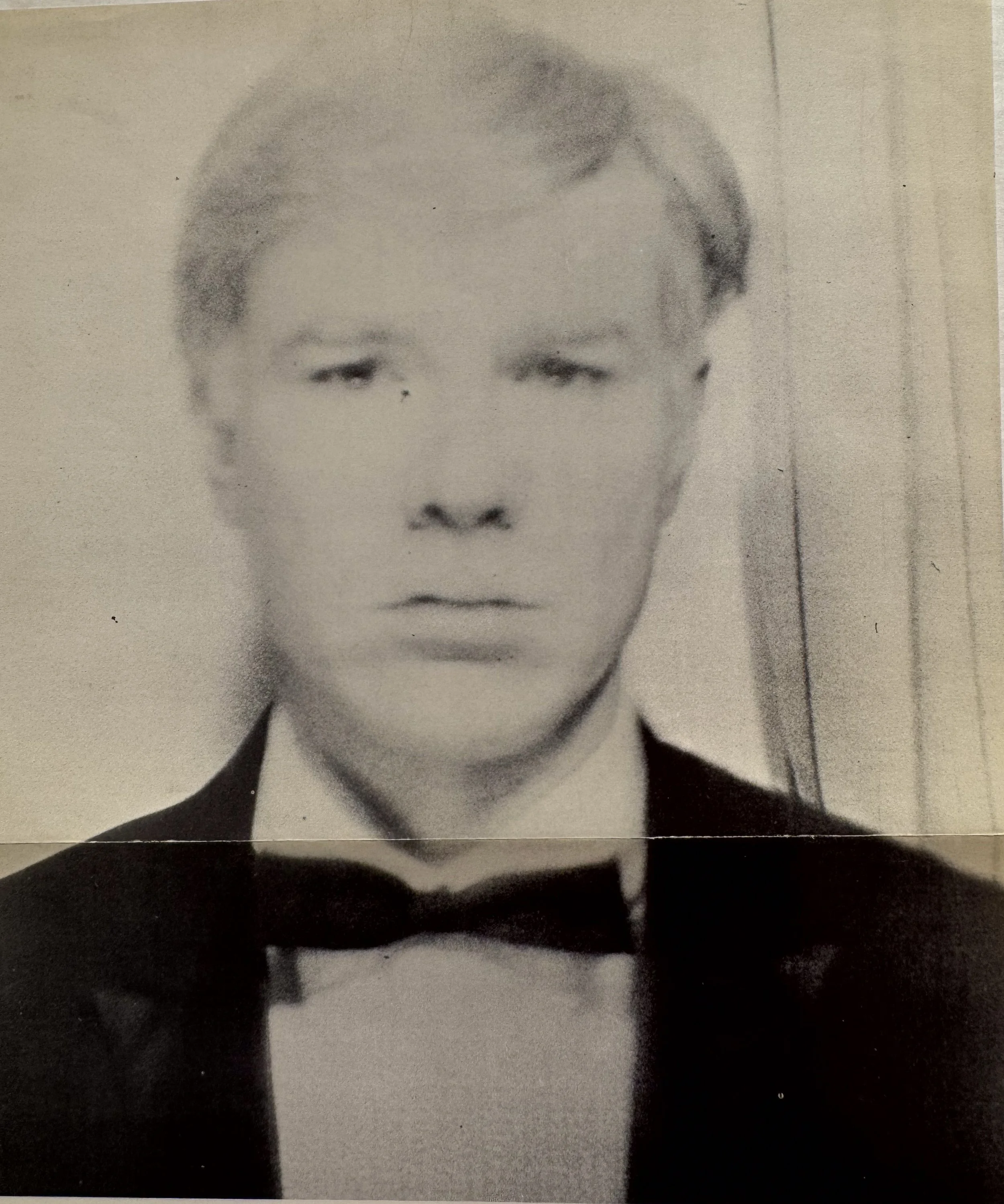 Image 2 of 6
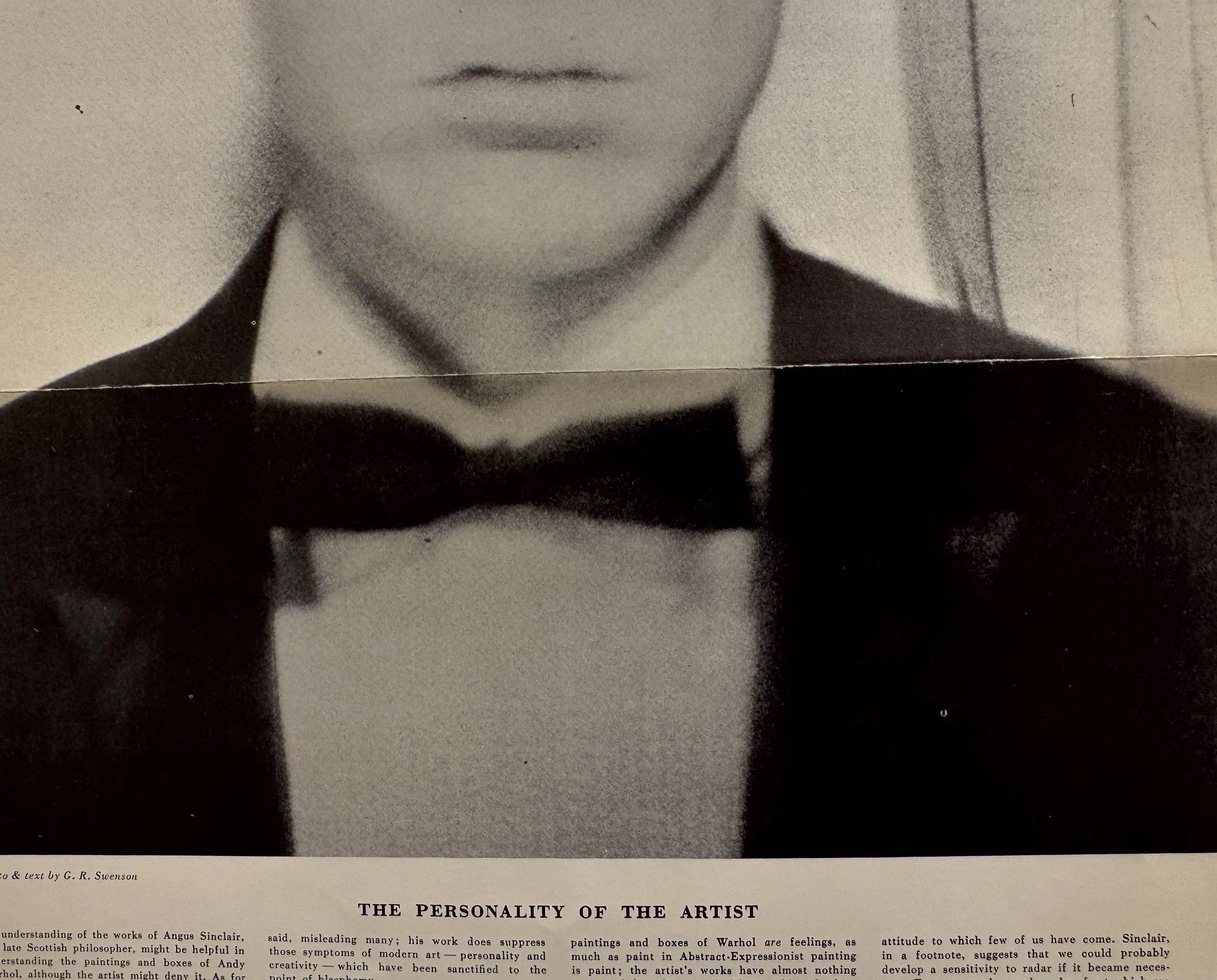 Image 3 of 6
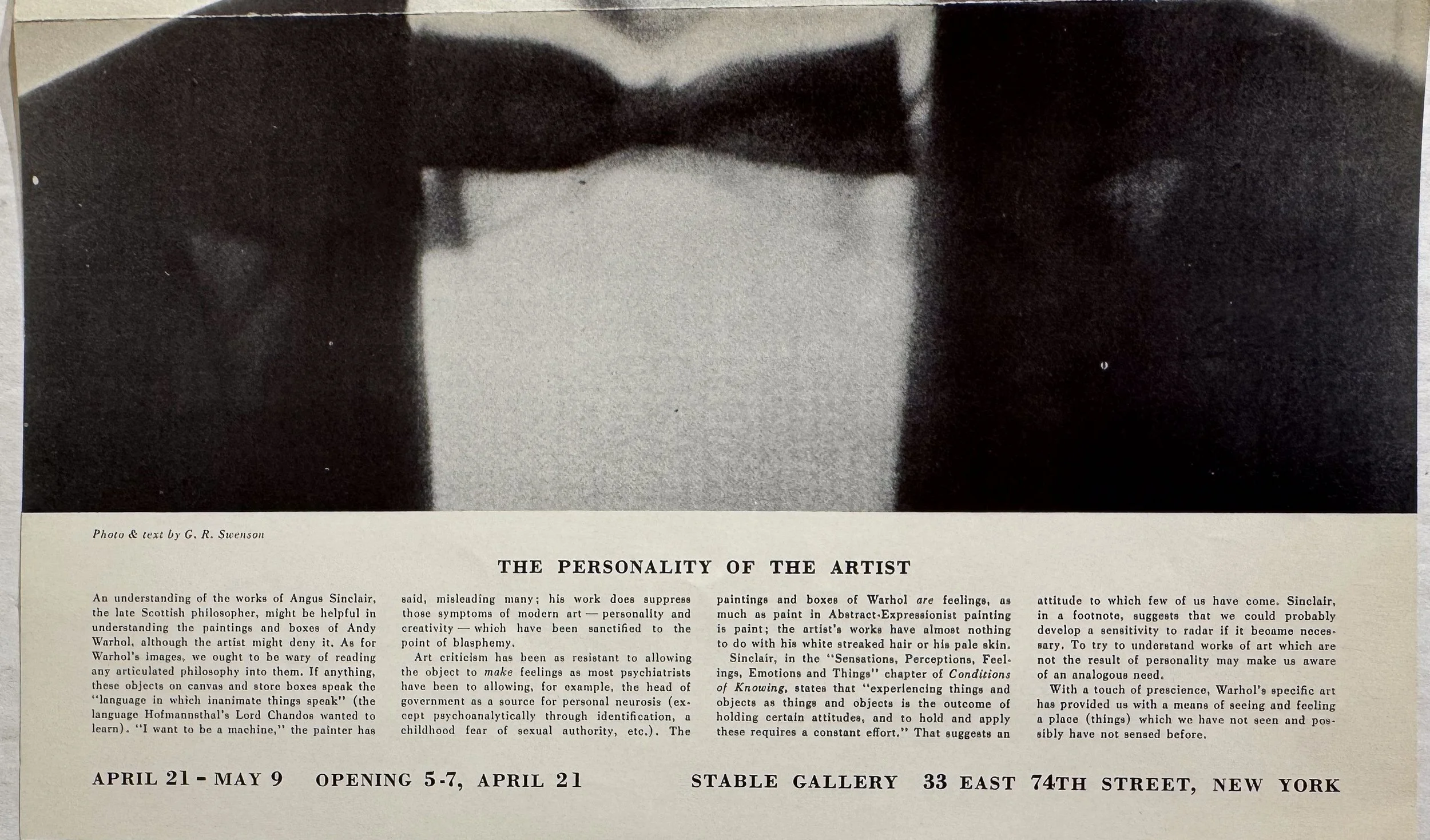 Image 4 of 6
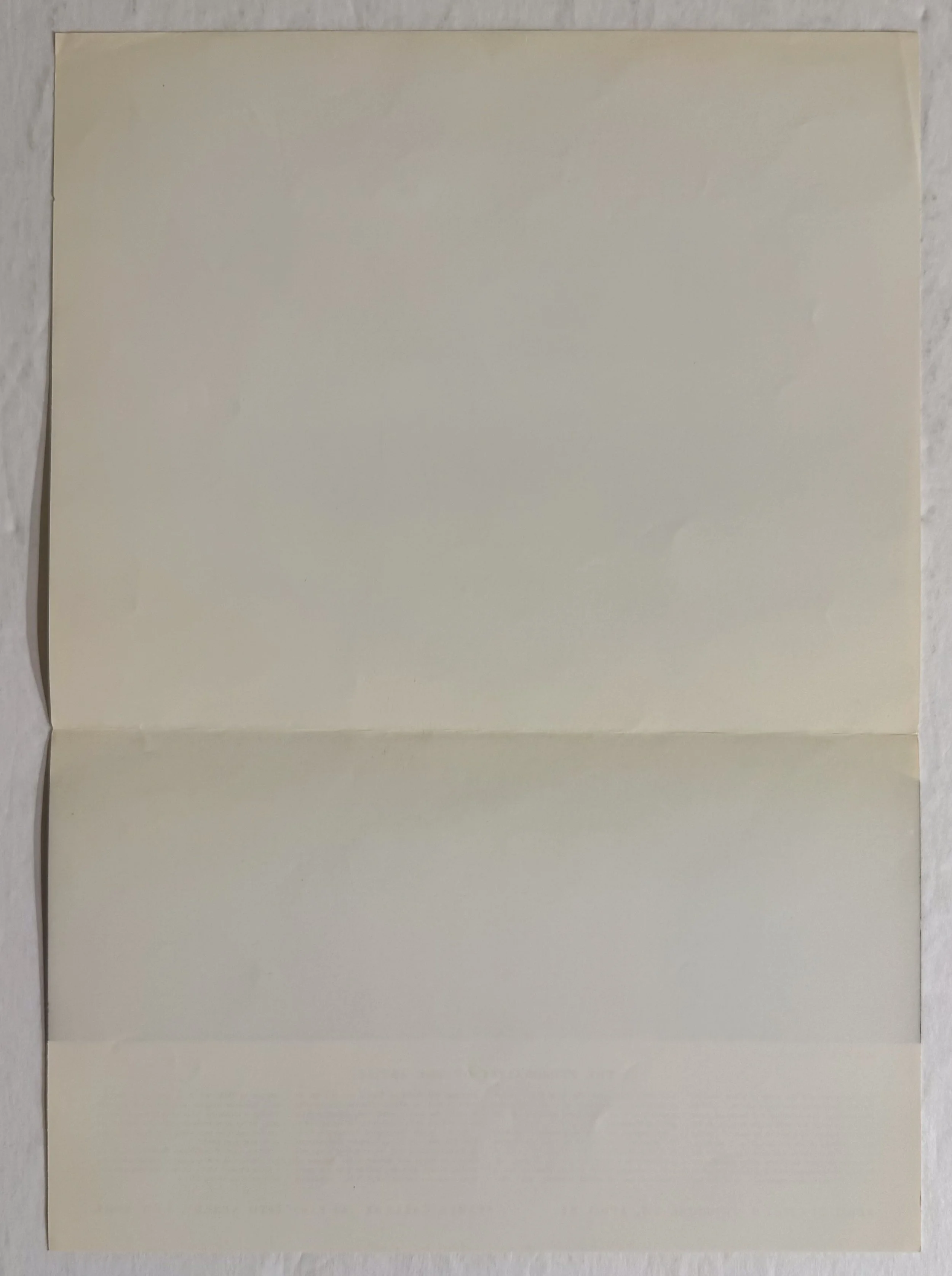 Image 5 of 6
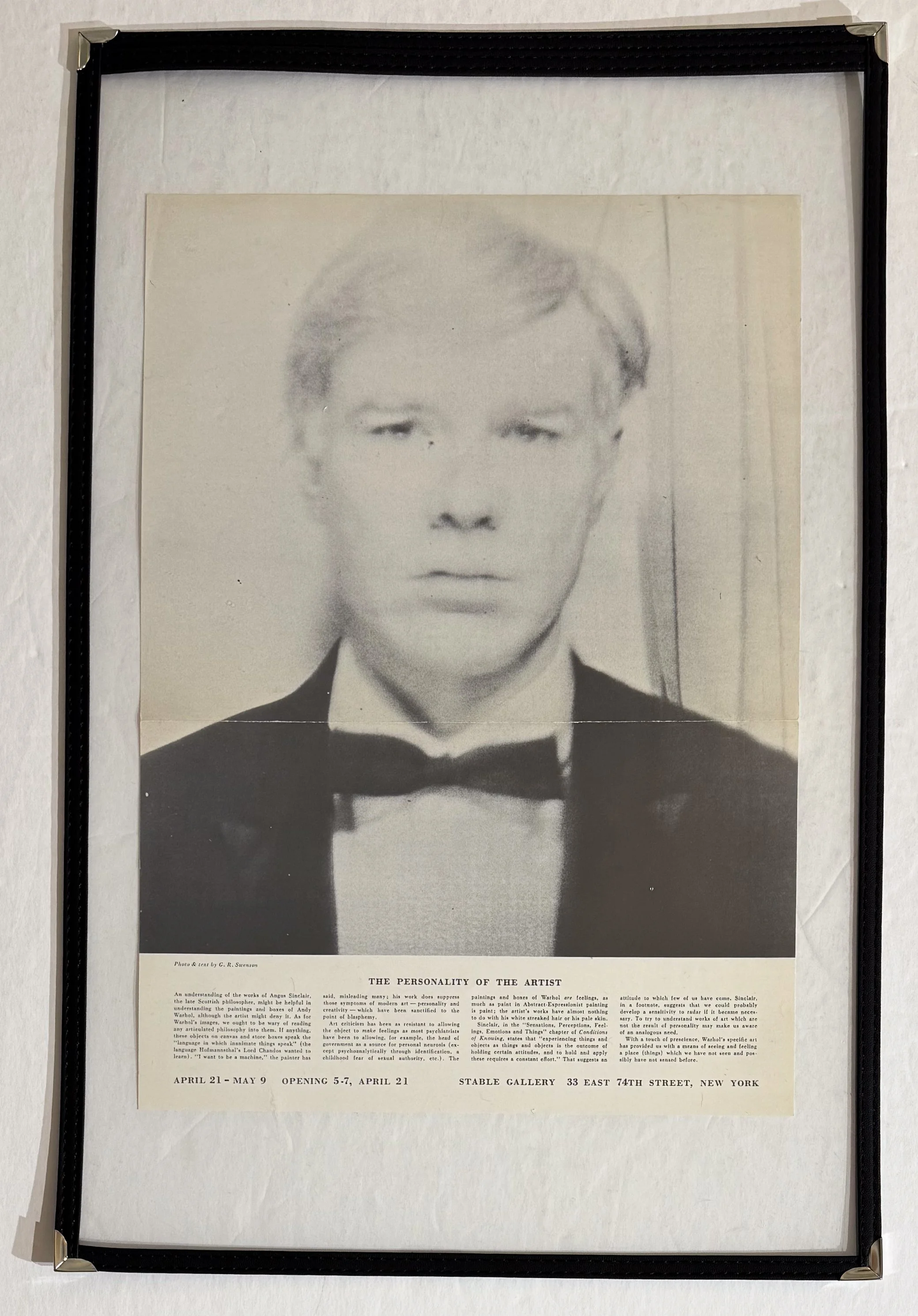 Image 6 of 6