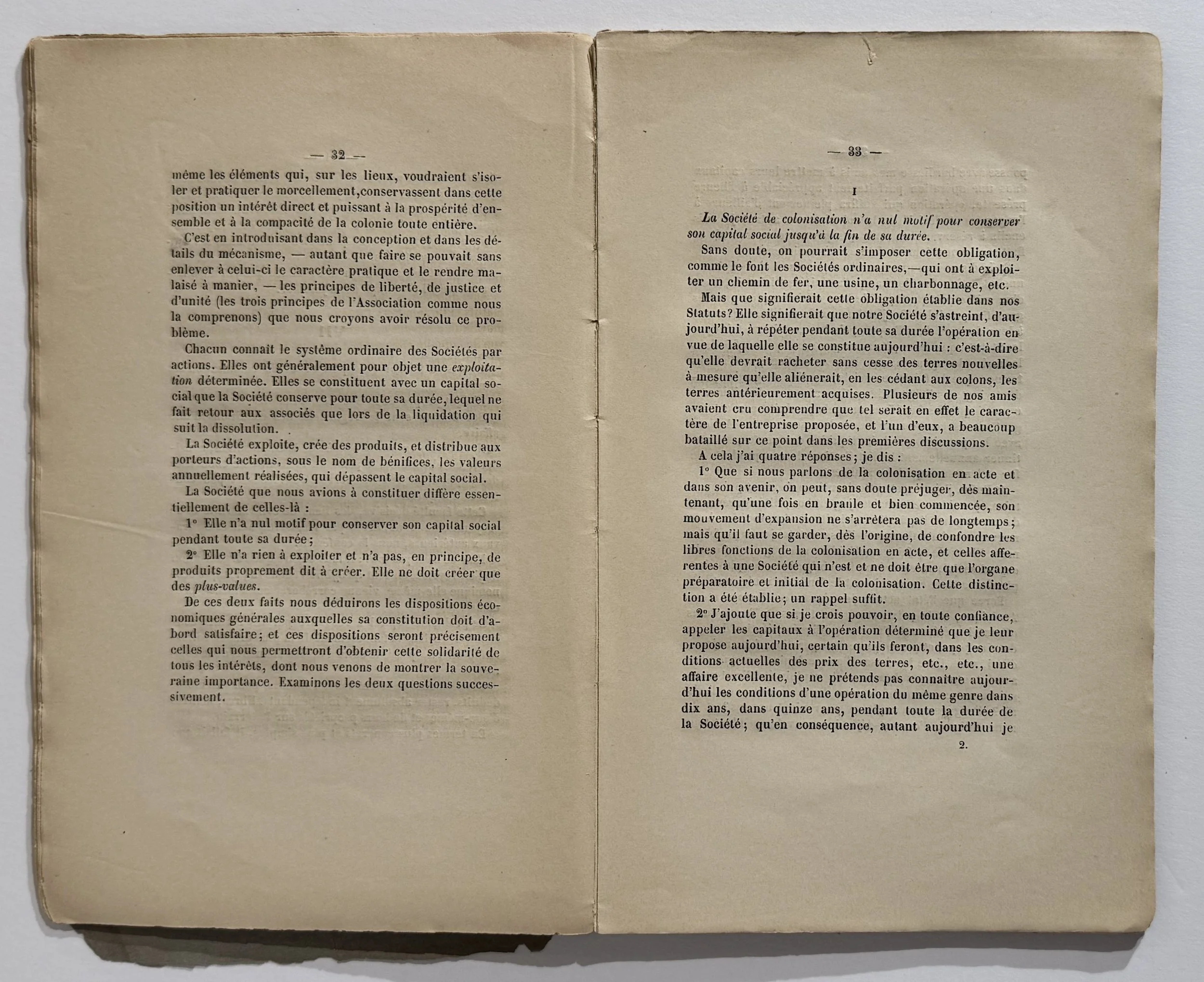
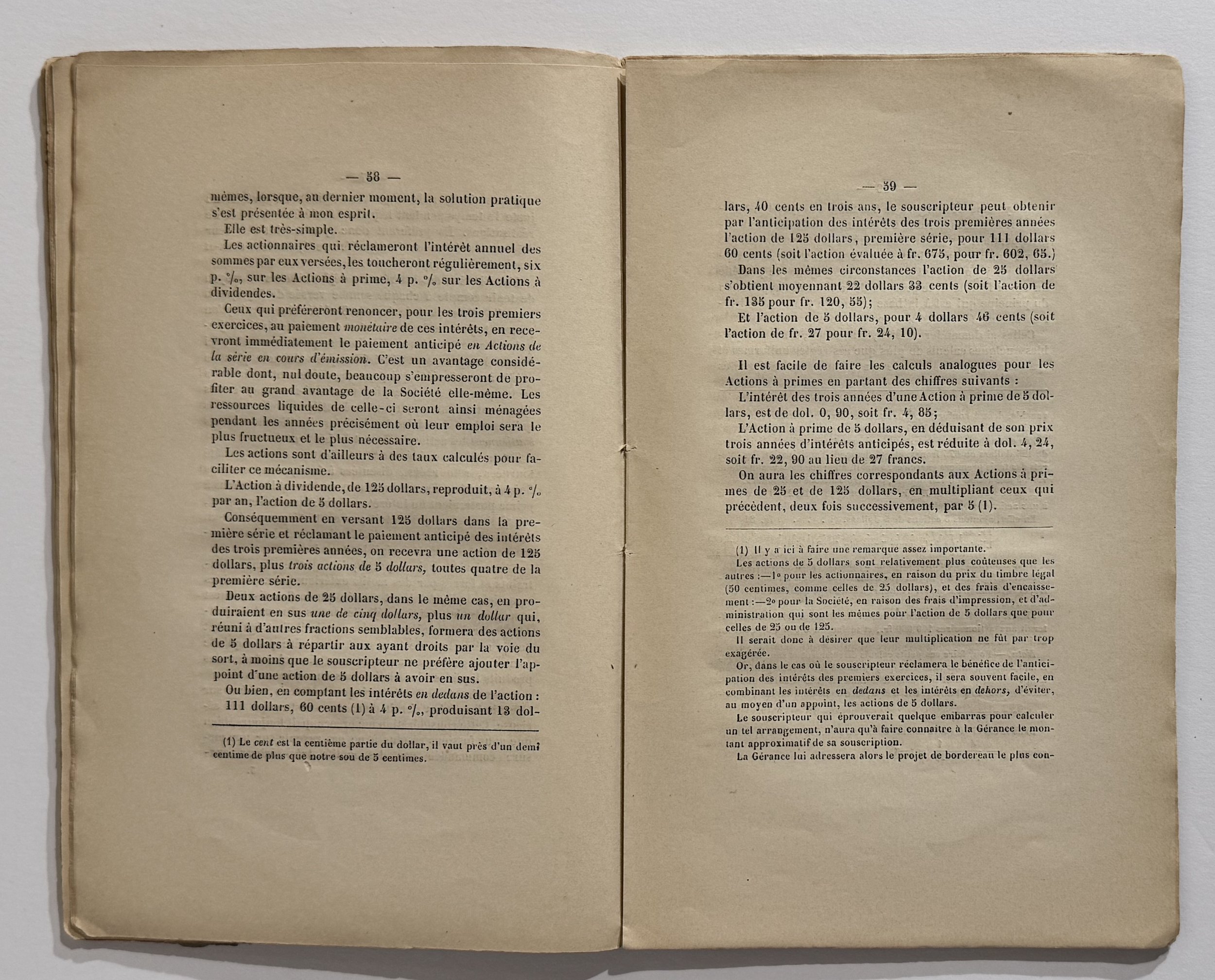
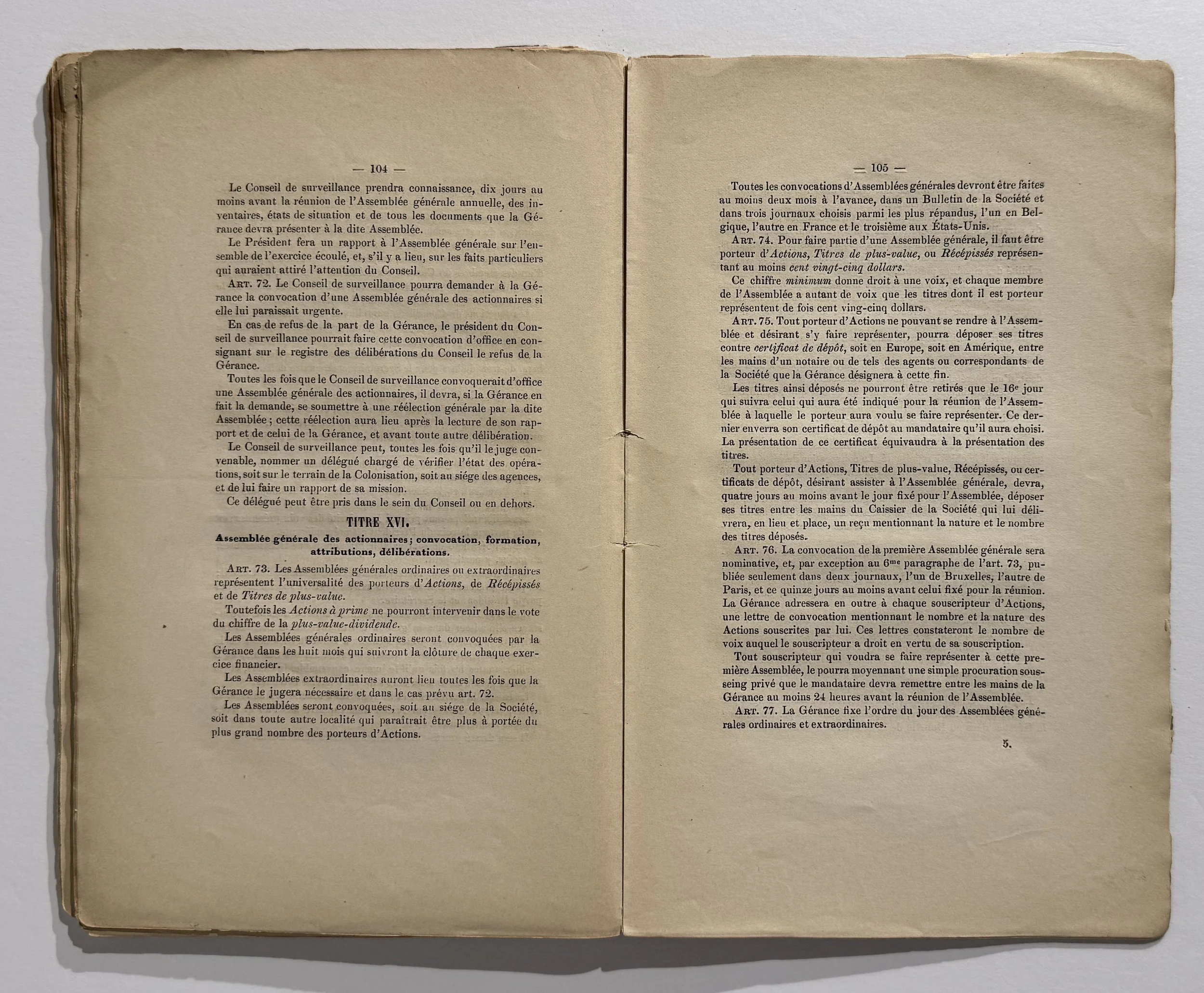
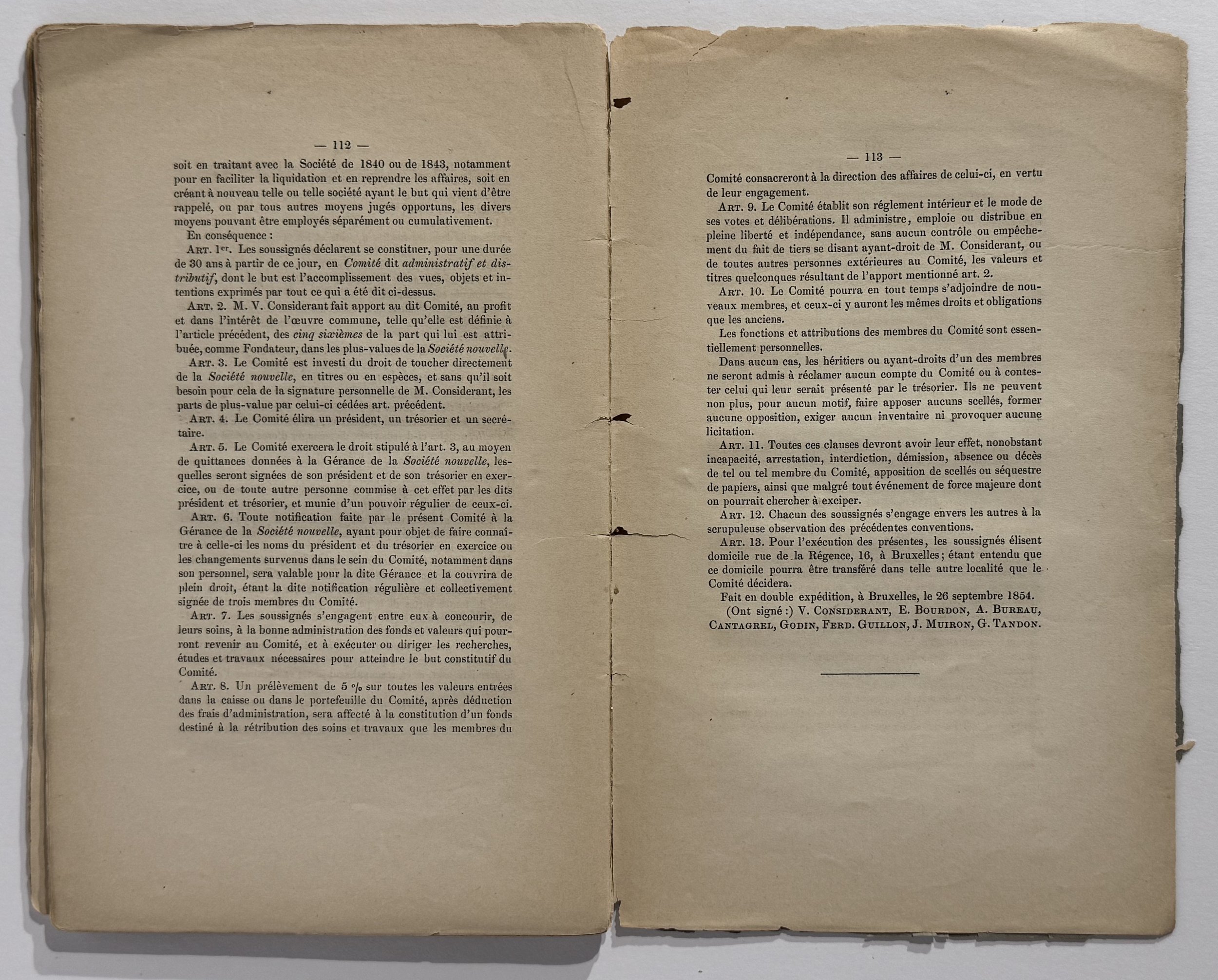
Second edition of the official visitor's directory for Edgar J. Kaufmann's remarkable International Exposition of Arts & Industries, mounted throughout the Kaufmann's flagship store in Pittsburgh in November 1926, immediately following the celebrated Paris Exposition of Decorative Arts. Small 8vo (4” x 6”), pictorial wrappers, 36 pages.
Conceived on a museum scale, the exhibition transformed nearly every department into an educational installation devoted to the history of commerce, craftsmanship, industrial manufacture, and international design. Exhibits ranged from Gobelin tapestries, Lalique glass, Sèvres porcelain, Chinese textiles, royal gloves, antique clocks, and Basque decorative arts to radio technology, Kodak motion-picture equipment, phonographs, piano-roll manufacture, and demonstrations of modern industry. Contemporary installation photographs preserved by the Heinz History Center reveal an ambitious sequence of immersive period rooms, historical displays, and industrial demonstrations throughout the store. While serving as a promotional handbook, the directory also documents one of the earliest and most ambitious attempts by an American department store to function simultaneously as marketplace, museum, and educational institution—anticipating initiatives at Macy’s, Lord & Taylor, Wanamaker’s, and others. It also represents the earliest mature expression of Edgar J. Kaufmann's lifelong commitment to architecture, design, and public culture, preceding by nearly a decade his patronage of Frank Lloyd Wright and, later, Richard Neutra. The striking Art Deco cover, with its geometric typography and stylized globe beneath an array of international flags, visually embodies the exhibition's modern outlook despite its broad historical scope.
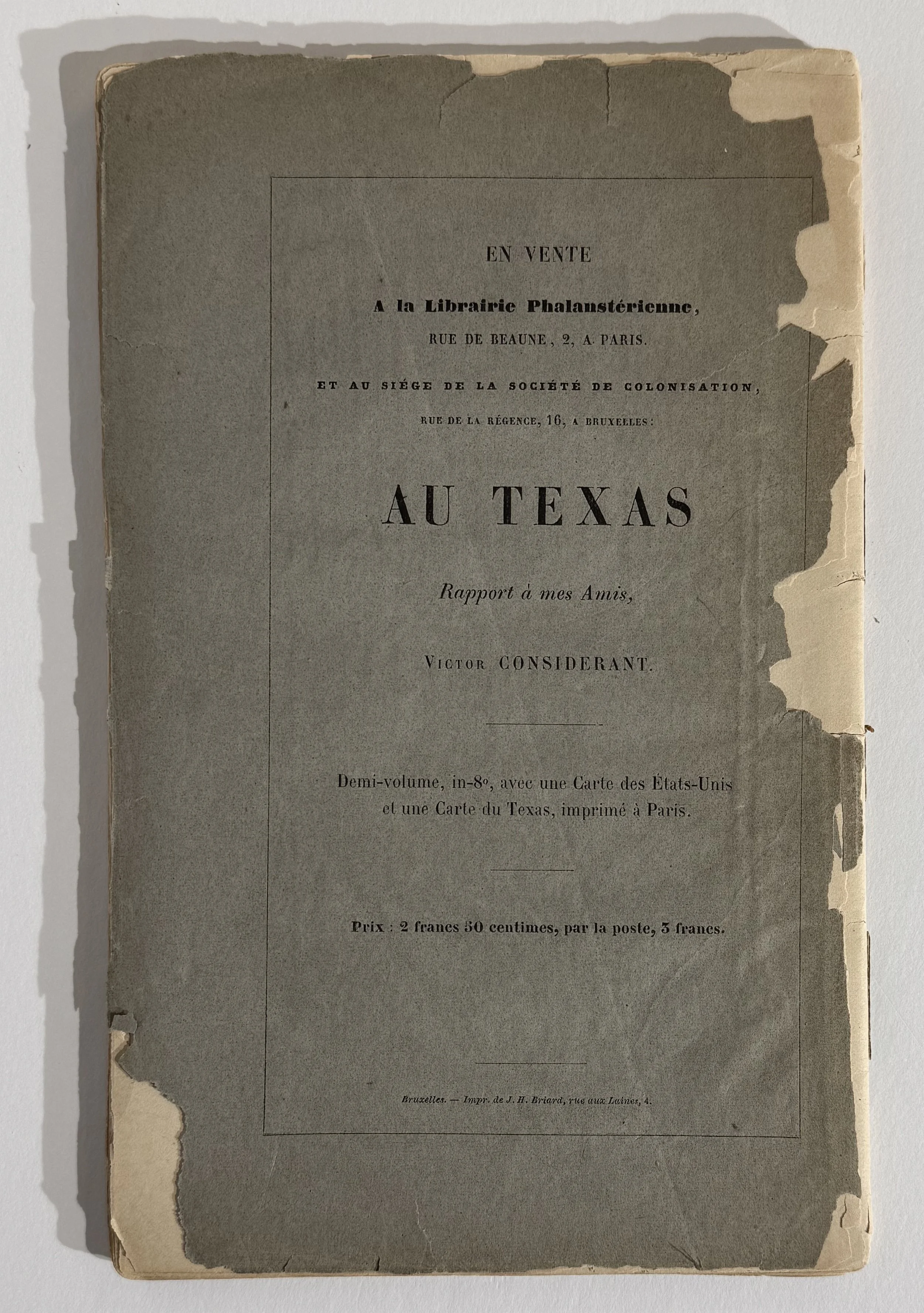
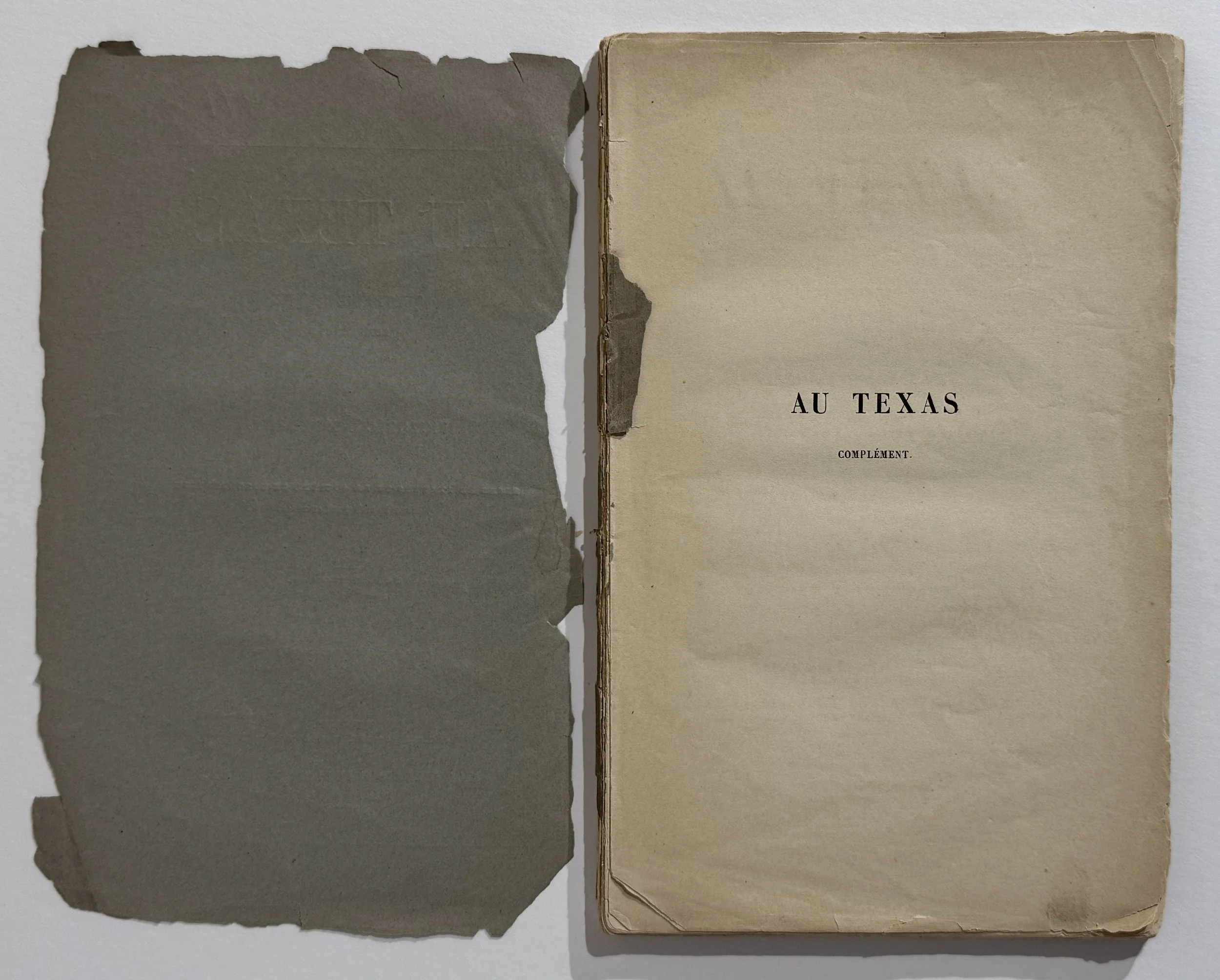
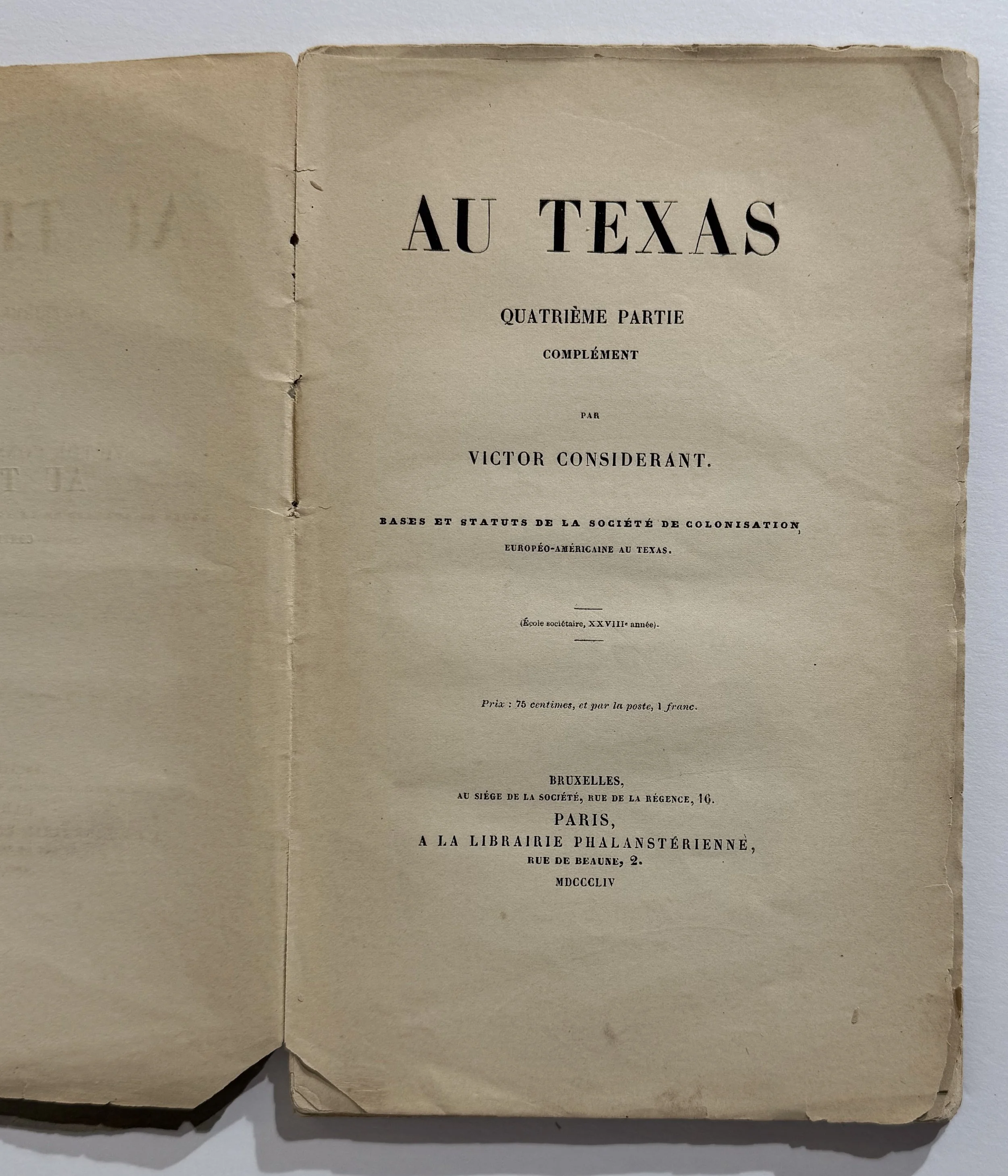
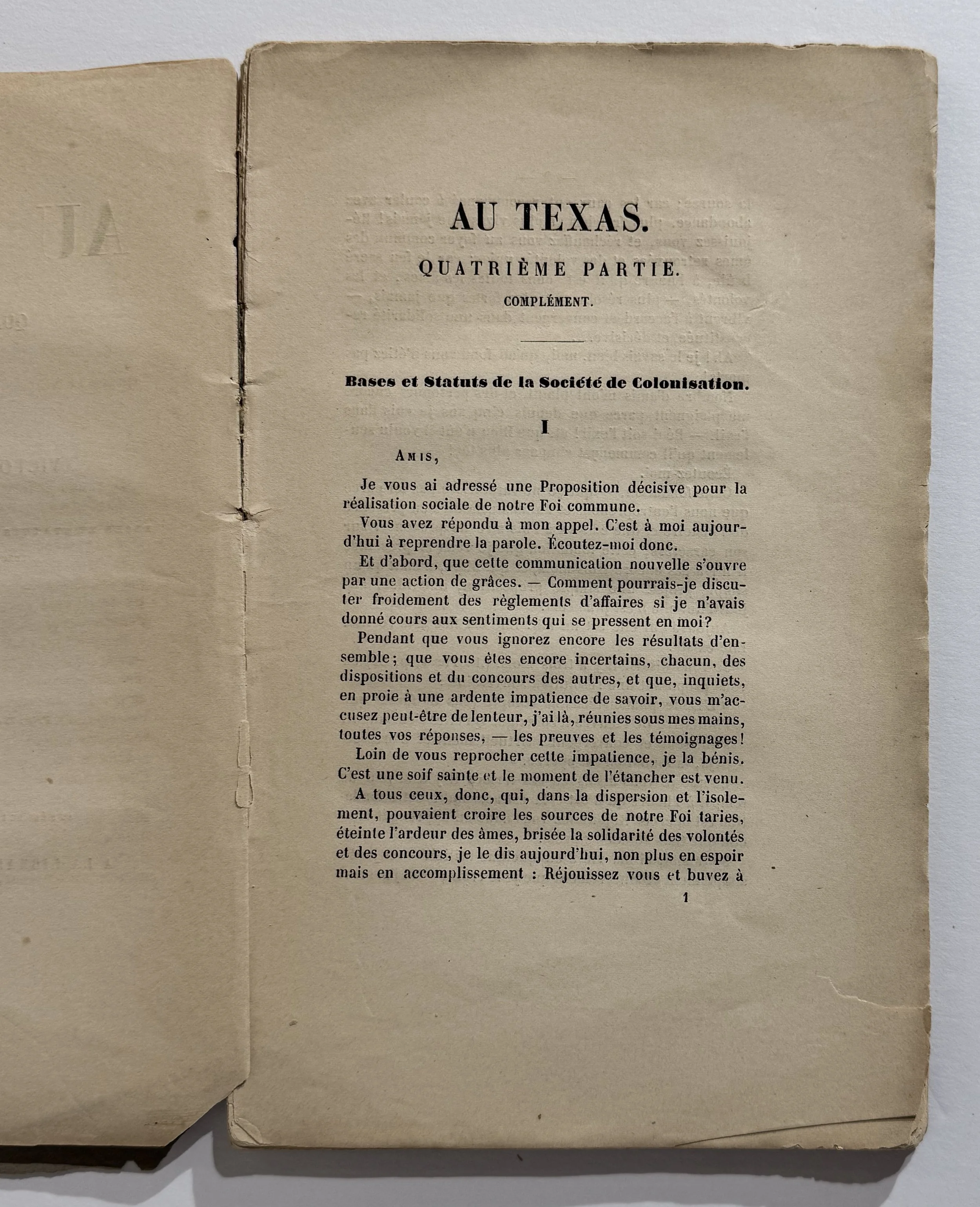
Some rubbing and chipping to extremities, with creasing and soiling to rear wrapper. Damp staining throughout, localized toward fore edge. Apparently absent from OCLC and from the trade at the time of cataloguing. A genuinely rare document marking the emergence of one of twentieth-century America's most influential patrons of modern architecture and design.
Second edition of the official visitor's directory for Edgar J. Kaufmann's remarkable International Exposition of Arts & Industries, mounted throughout the Kaufmann's flagship store in Pittsburgh in November 1926, immediately following the celebrated Paris Exposition of Decorative Arts. Small 8vo (4” x 6”), pictorial wrappers, 36 pages.
Conceived on a museum scale, the exhibition transformed nearly every department into an educational installation devoted to the history of commerce, craftsmanship, industrial manufacture, and international design. Exhibits ranged from Gobelin tapestries, Lalique glass, Sèvres porcelain, Chinese textiles, royal gloves, antique clocks, and Basque decorative arts to radio technology, Kodak motion-picture equipment, phonographs, piano-roll manufacture, and demonstrations of modern industry. Contemporary installation photographs preserved by the Heinz History Center reveal an ambitious sequence of immersive period rooms, historical displays, and industrial demonstrations throughout the store. While serving as a promotional handbook, the directory also documents one of the earliest and most ambitious attempts by an American department store to function simultaneously as marketplace, museum, and educational institution—anticipating initiatives at Macy’s, Lord & Taylor, Wanamaker’s, and others. It also represents the earliest mature expression of Edgar J. Kaufmann's lifelong commitment to architecture, design, and public culture, preceding by nearly a decade his patronage of Frank Lloyd Wright and, later, Richard Neutra. The striking Art Deco cover, with its geometric typography and stylized globe beneath an array of international flags, visually embodies the exhibition's modern outlook despite its broad historical scope.
Some rubbing and chipping to extremities, with creasing and soiling to rear wrapper. Damp staining throughout, localized toward fore edge. Apparently absent from OCLC and from the trade at the time of cataloguing. A genuinely rare document marking the emergence of one of twentieth-century America's most influential patrons of modern architecture and design.

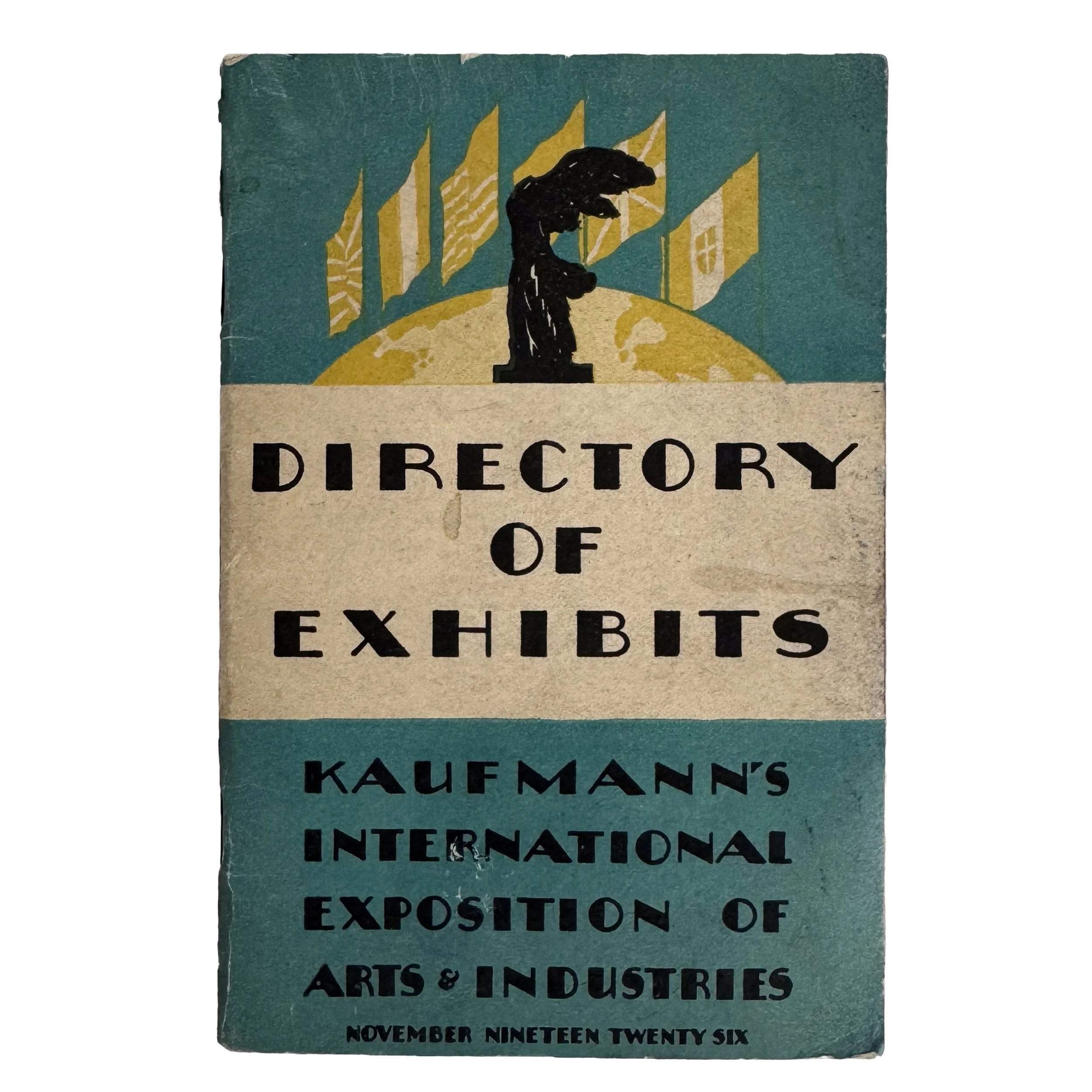 Image 1 of 10
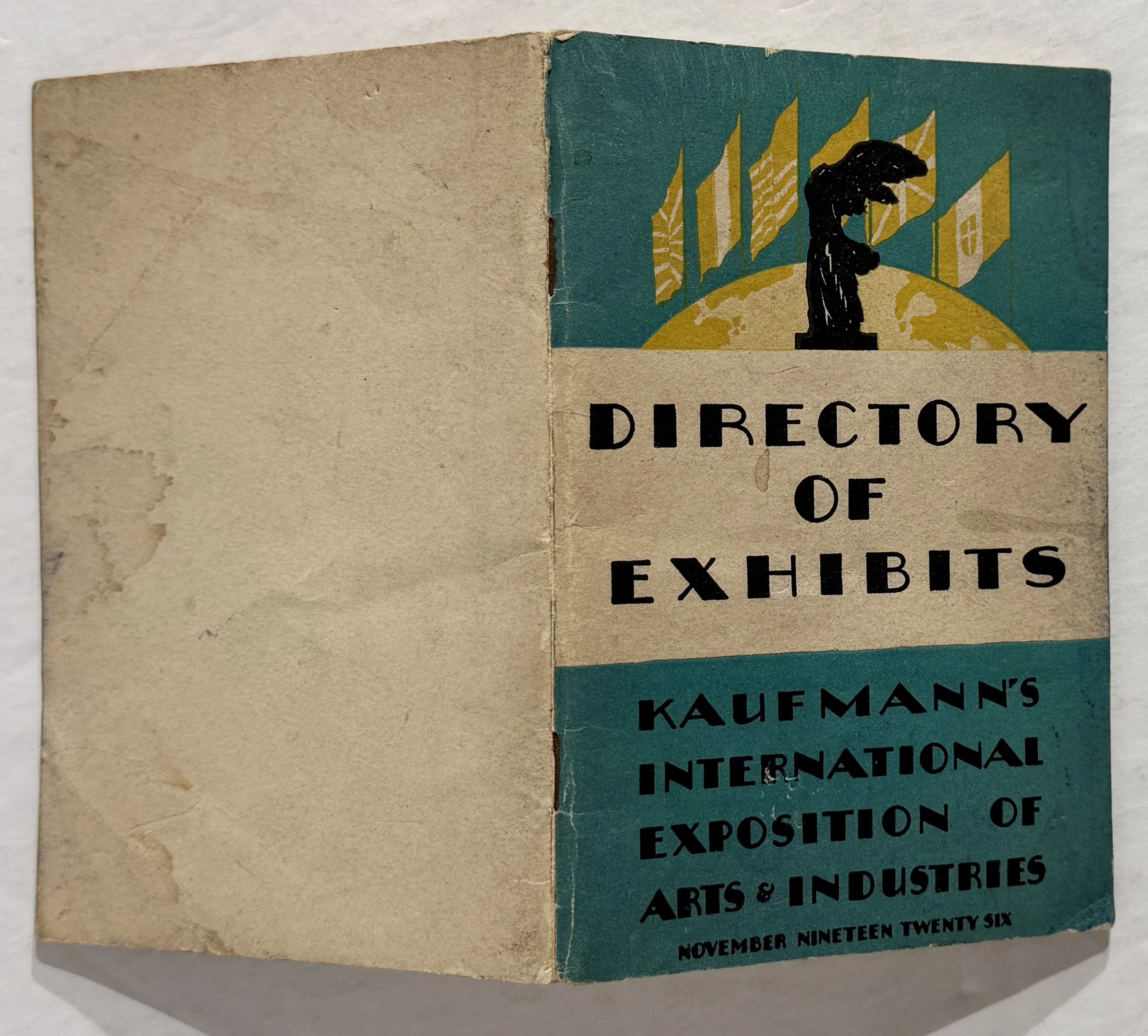 Image 2 of 10
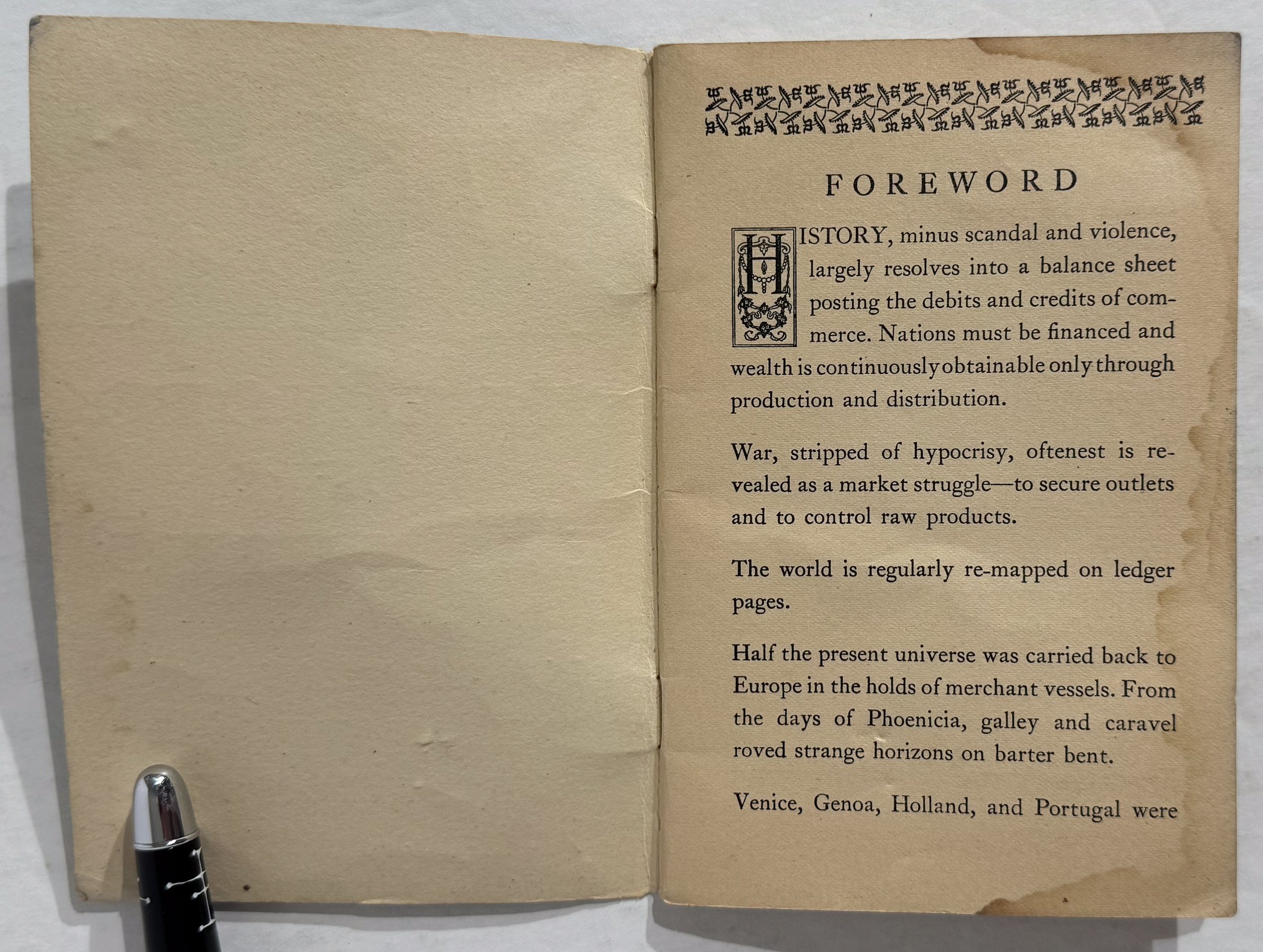 Image 3 of 10
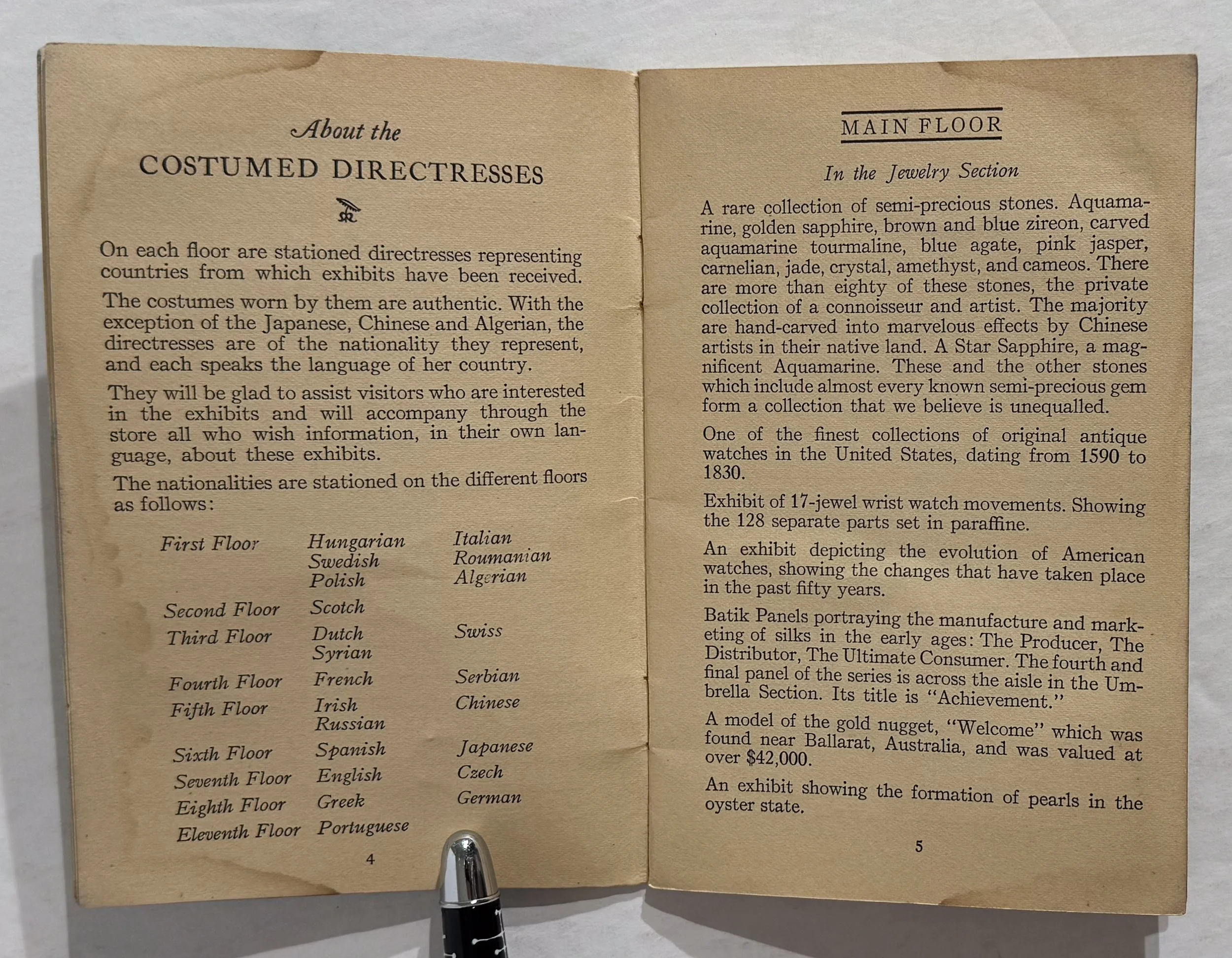 Image 4 of 10
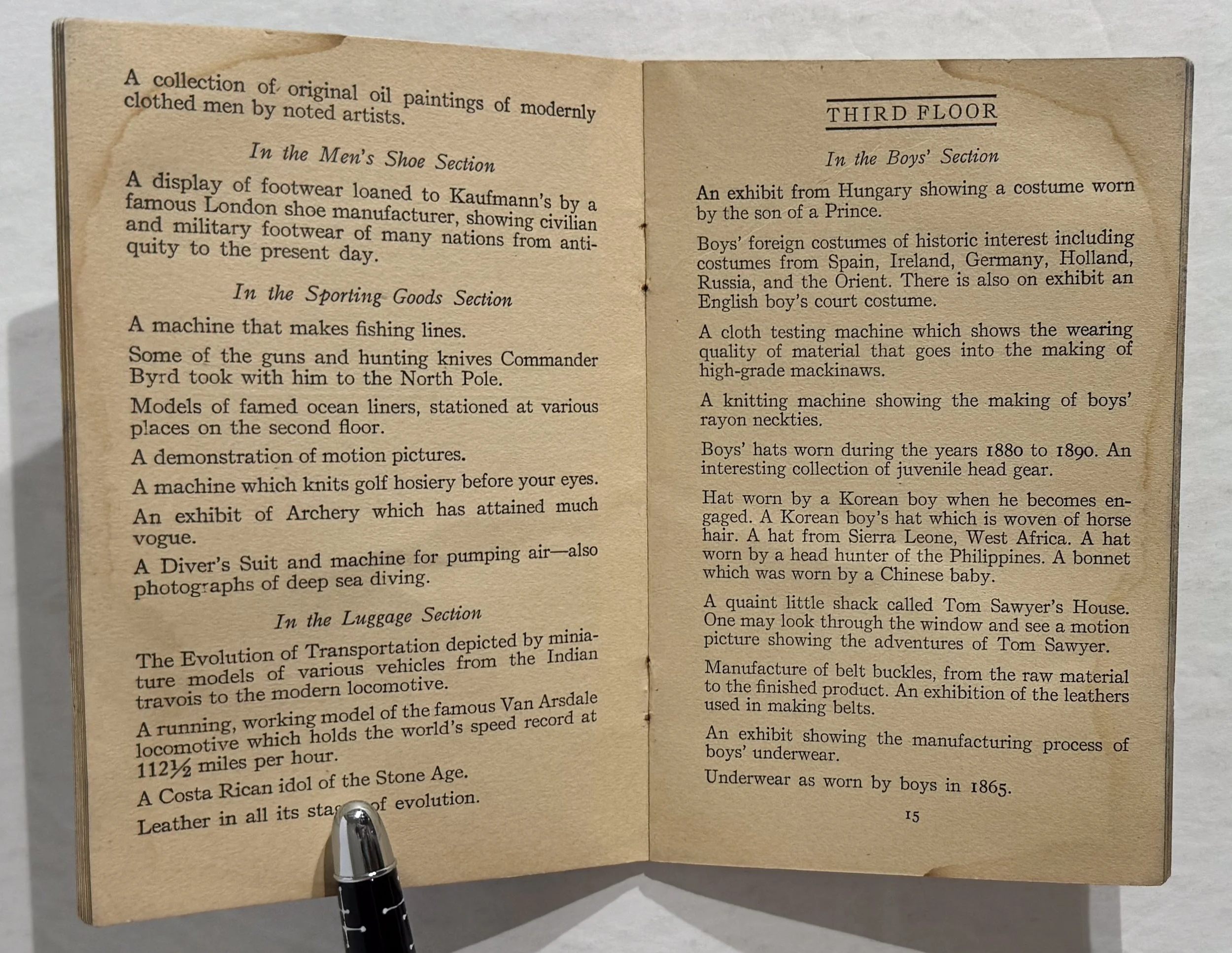 Image 5 of 10
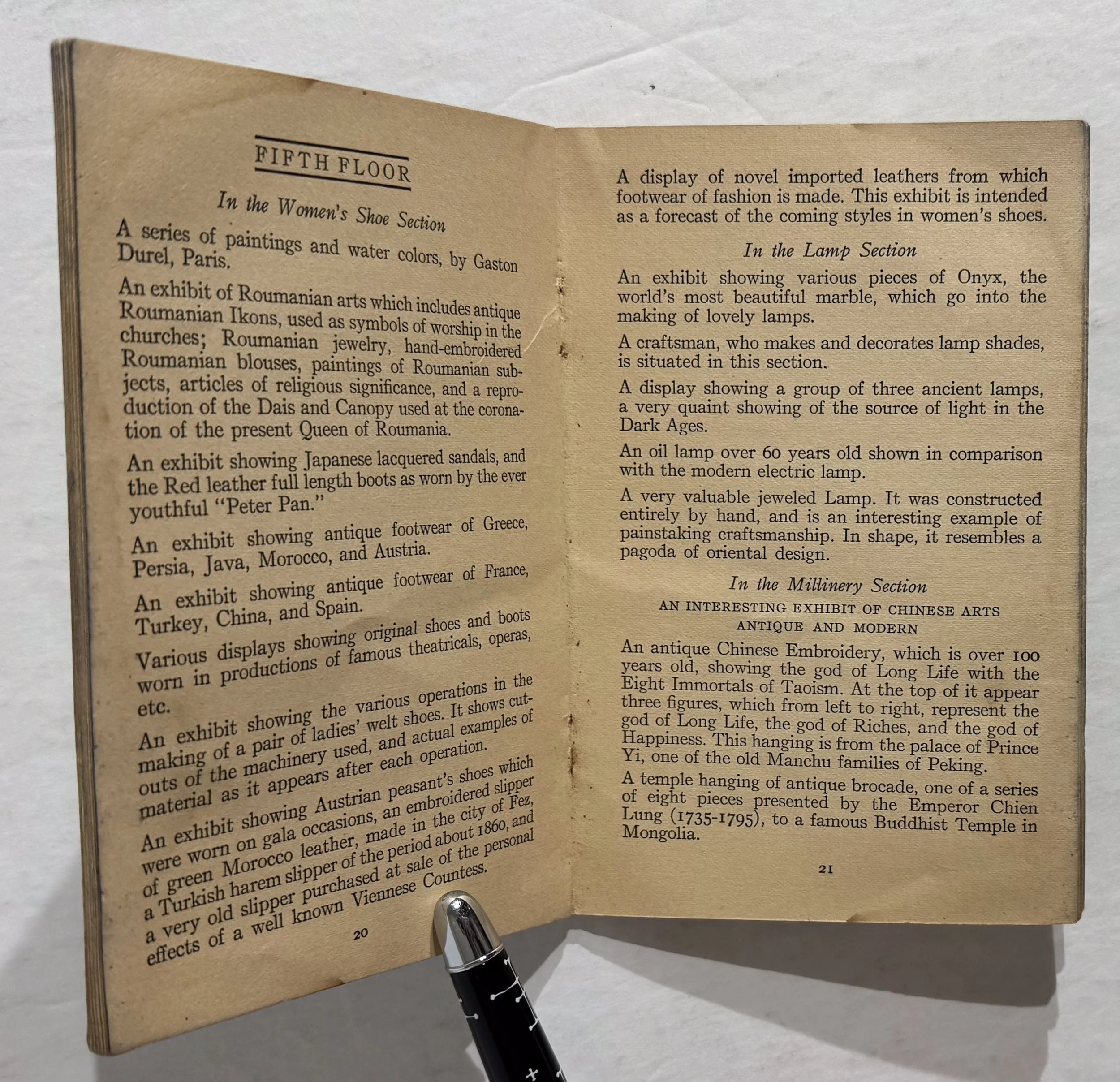 Image 6 of 10
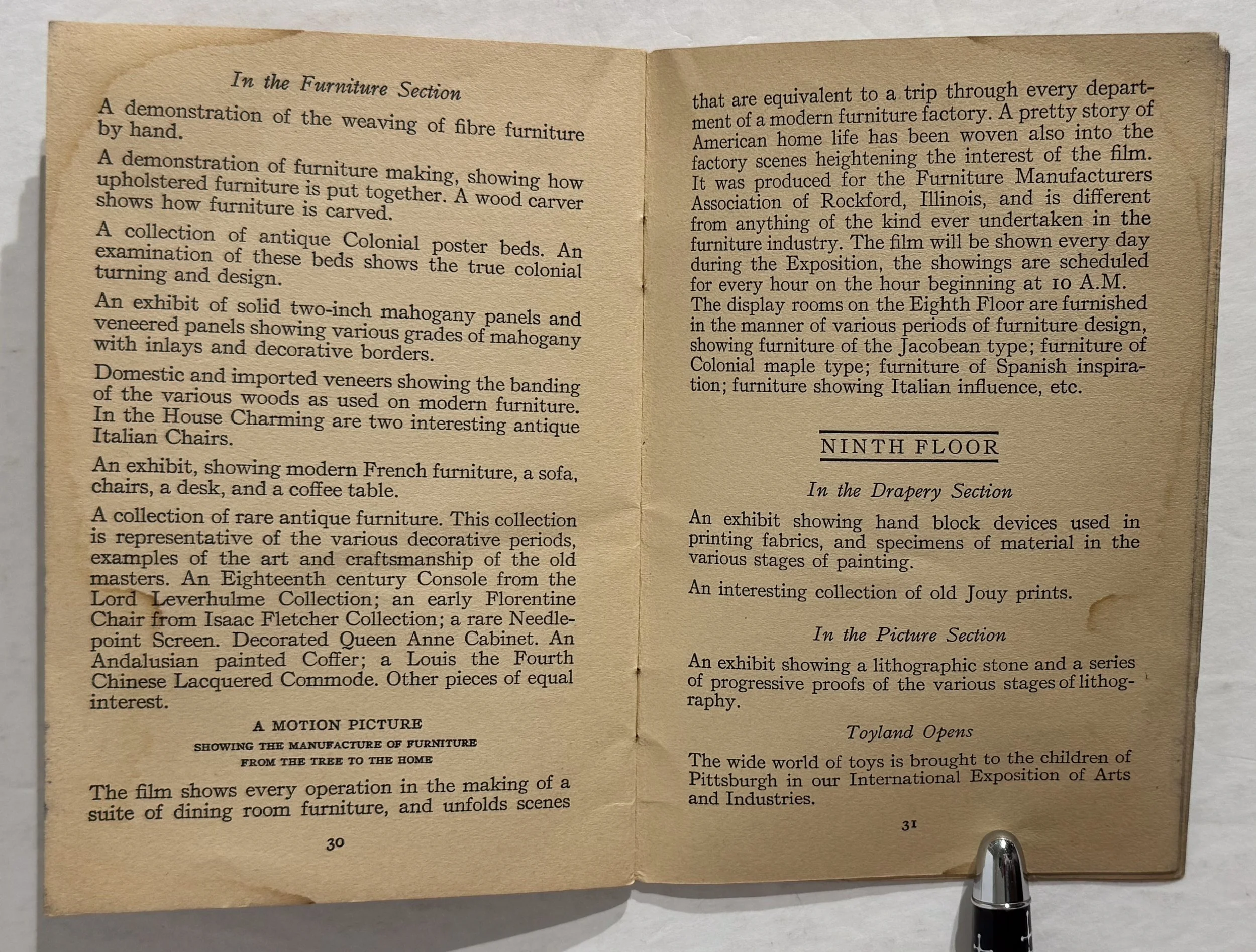 Image 7 of 10
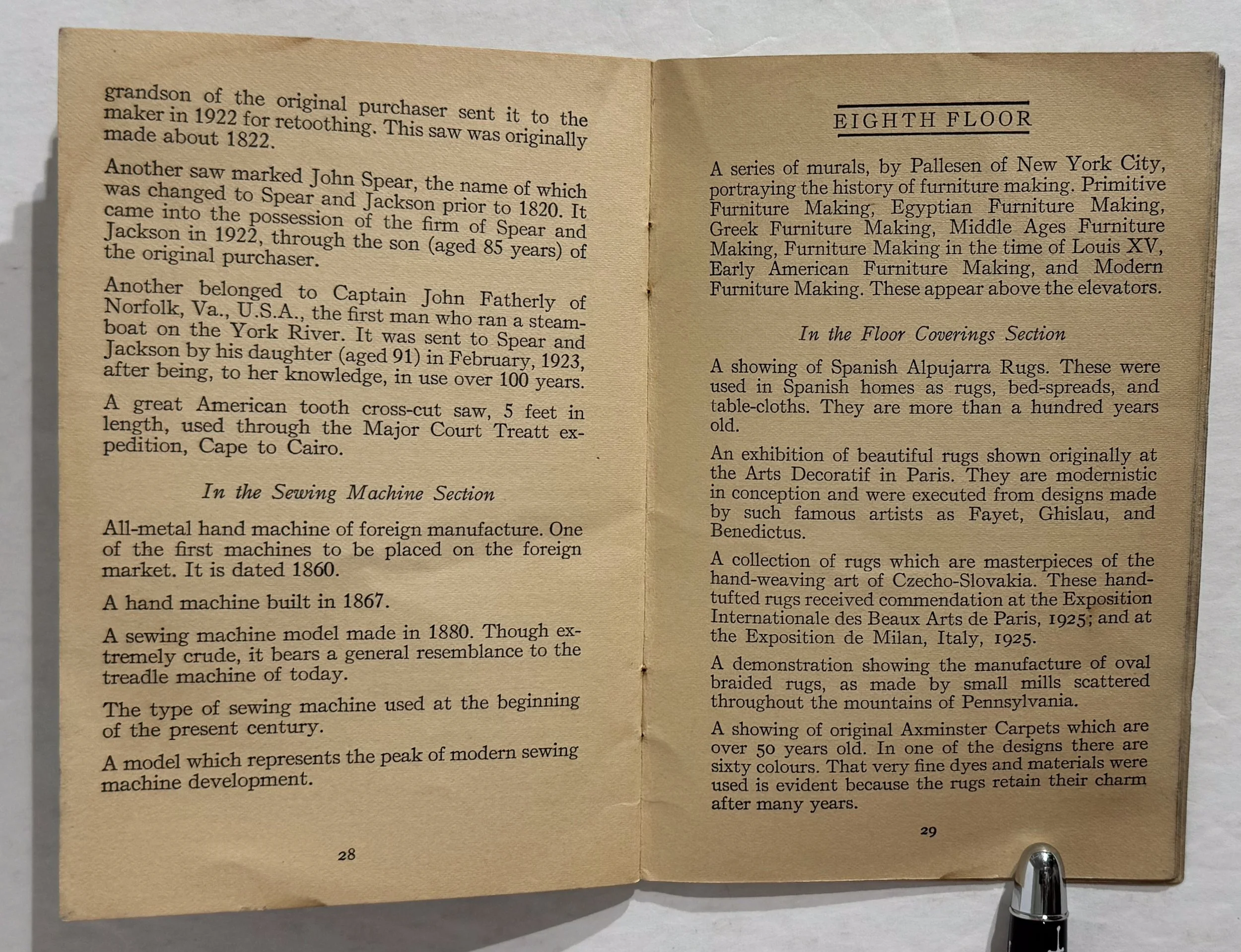 Image 8 of 10
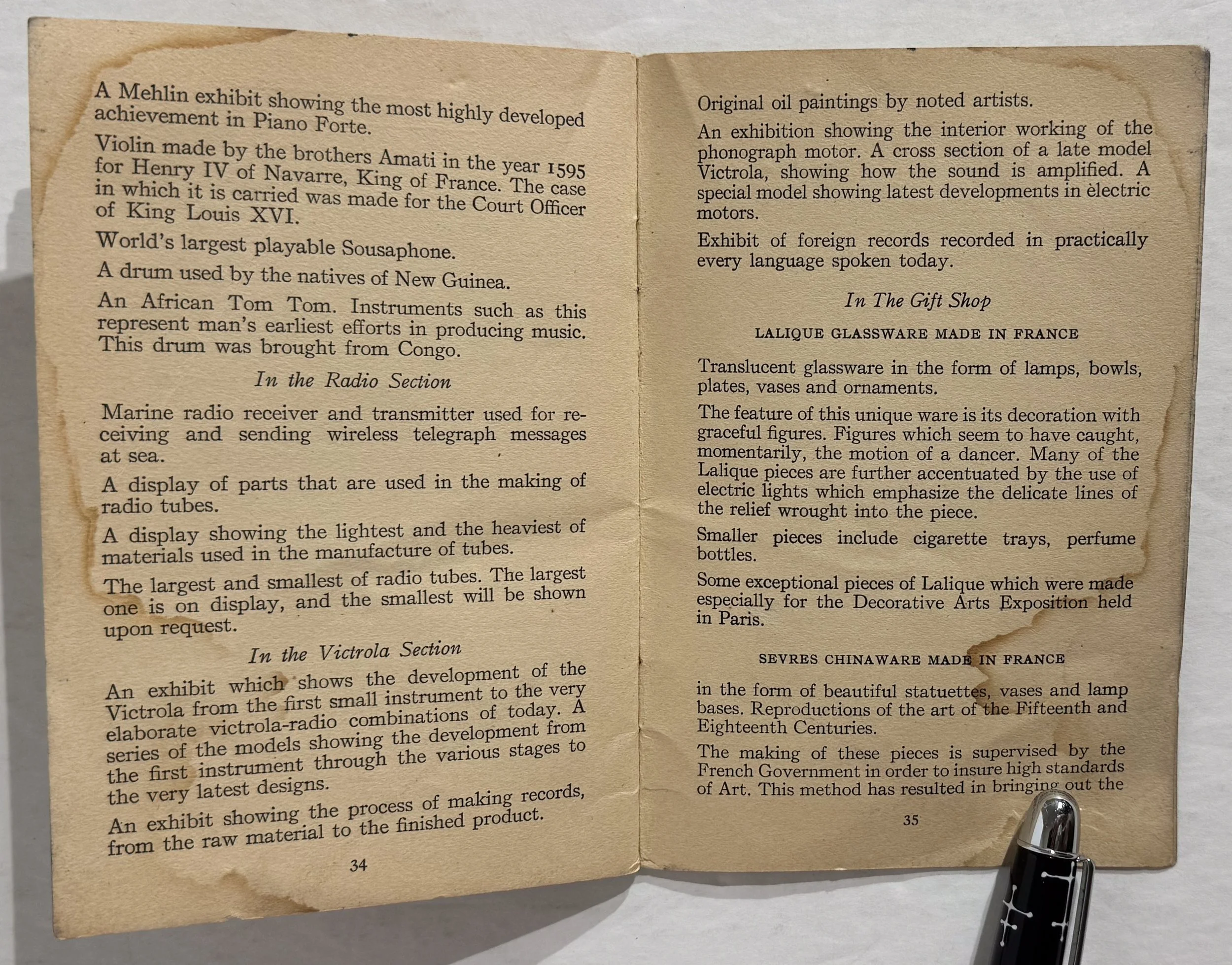 Image 9 of 10
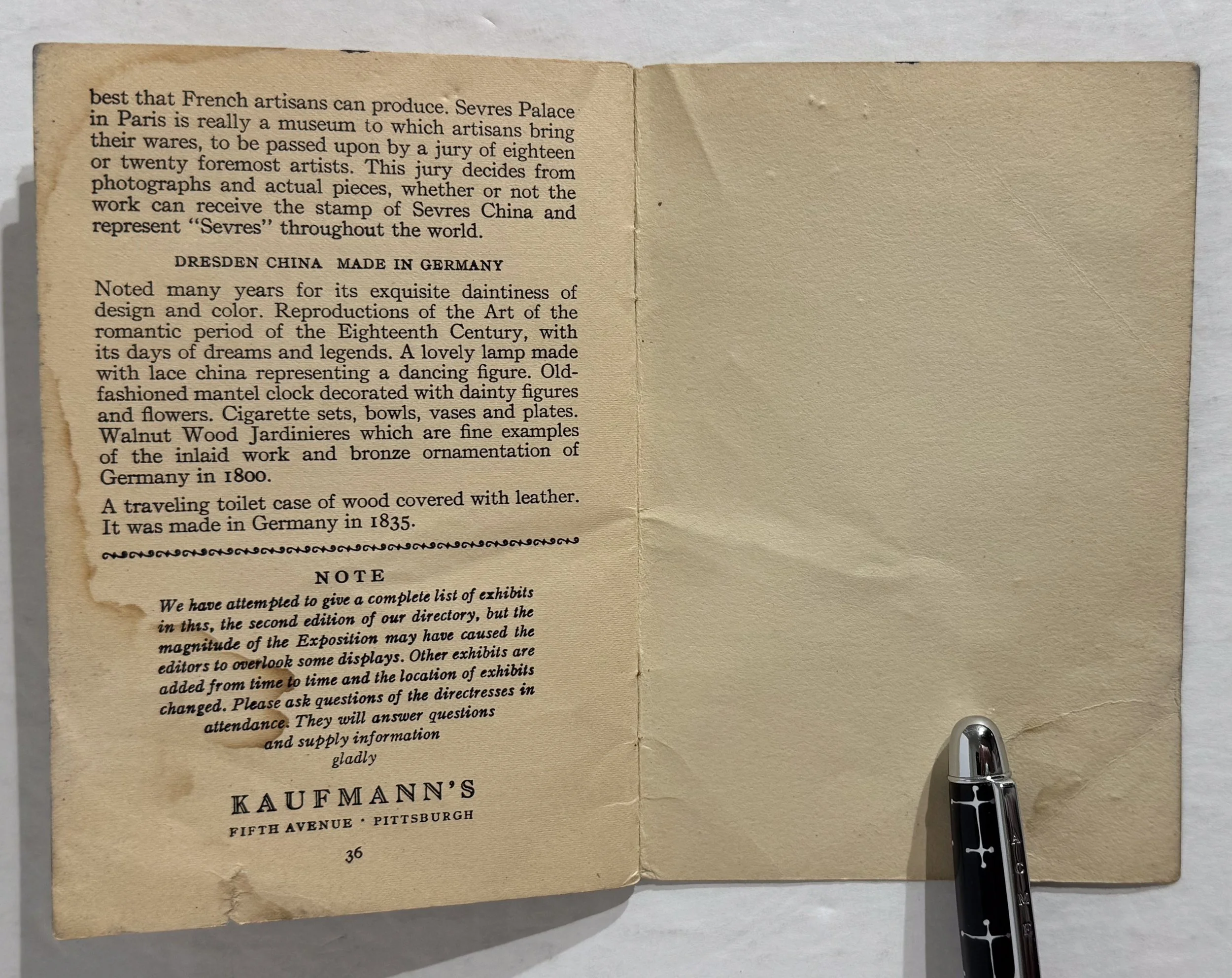 Image 10 of 10