An affectionate presentation copy of pioneering public health advocate S. Josephine Baker’s autobiography, accompanied by a personal keepsake apparently sent to her by playwright George Middleton and his wife, suffragist Fola La Follette. 8vo, hardcover without dust jacket, 264 pages. First printing, stated. Published in 1939 by The Macmillan Company. Inscribed on the front free endpaper: “To David Middleton with love and best wishes from Aunt Jo / S. Josephine Baker / December 1939.”
Baker’s account of her life and work records a defining career in American public health, centered on preventive medicine and the welfare of children in New York City. This copy places that public achievement within her private circle. The recipient, David Middleton, later a physicist and pioneer in statistical communication theory, was the nephew of George Middleton and Fola La Follette, Baker’s longtime friends. The familiar “Aunt Jo” expresses the intimacy of that connection. Fola herself appears in the memoir’s discussion of the Heterodoxy Club, linking the presentation to the feminist and progressive milieu described in its pages.
Laid in is a printed card adapted into an affectionate greeting, apparently from George and Fola to Baker. Above a pasted-in press photograph of the couple seated together at a desk before their bookshelves is the inscription: “With hearts love to you Joey dear.” The writing is probably Fola’s, an attribution supported by its differences from known examples of George’s hand. A separately mounted caption identifies the couple and mentions George’s literary editorship of the weekly published by his father-in-law, Senator Robert La Follette.
The card is No. 28 in Paul Elder’s Impression Leaflets, designed by Spencer Wright and copyrighted in 1907. Its oak-leaf and acorn border encloses a verse celebrating labor, study, love, and service to one’s neighbor—an apt sentiment for Baker. The personal adaptation probably dates to the 1910s, no earlier than 1912. Together, the book and card preserve affection moving in both directions within the Baker–Middleton–La Follette circle: a greeting to “Joey,” retained with the memoir she later presented to the younger Middleton as “Aunt Jo.
Gentle bumping to boards. Limited glue burn to endpapers; otherwise near fine. Moderate bumping and rubbing to card.
An affectionate presentation copy of pioneering public health advocate S. Josephine Baker’s autobiography, accompanied by a personal keepsake apparently sent to her by playwright George Middleton and his wife, suffragist Fola La Follette. 8vo, hardcover without dust jacket, 264 pages. First printing, stated. Published in 1939 by The Macmillan Company. Inscribed on the front free endpaper: “To David Middleton with love and best wishes from Aunt Jo / S. Josephine Baker / December 1939.”
Baker’s account of her life and work records a defining career in American public health, centered on preventive medicine and the welfare of children in New York City. This copy places that public achievement within her private circle. The recipient, David Middleton, later a physicist and pioneer in statistical communication theory, was the nephew of George Middleton and Fola La Follette, Baker’s longtime friends. The familiar “Aunt Jo” expresses the intimacy of that connection. Fola herself appears in the memoir’s discussion of the Heterodoxy Club, linking the presentation to the feminist and progressive milieu described in its pages.
Laid in is a printed card adapted into an affectionate greeting, apparently from George and Fola to Baker. Above a pasted-in press photograph of the couple seated together at a desk before their bookshelves is the inscription: “With hearts love to you Joey dear.” The writing is probably Fola’s, an attribution supported by its differences from known examples of George’s hand. A separately mounted caption identifies the couple and mentions George’s literary editorship of the weekly published by his father-in-law, Senator Robert La Follette.
The card is No. 28 in Paul Elder’s Impression Leaflets, designed by Spencer Wright and copyrighted in 1907. Its oak-leaf and acorn border encloses a verse celebrating labor, study, love, and service to one’s neighbor—an apt sentiment for Baker. The personal adaptation probably dates to the 1910s, no earlier than 1912. Together, the book and card preserve affection moving in both directions within the Baker–Middleton–La Follette circle: a greeting to “Joey,” retained with the memoir she later presented to the younger Middleton as “Aunt Jo.
Gentle bumping to boards. Limited glue burn to endpapers; otherwise near fine. Moderate bumping and rubbing to card.

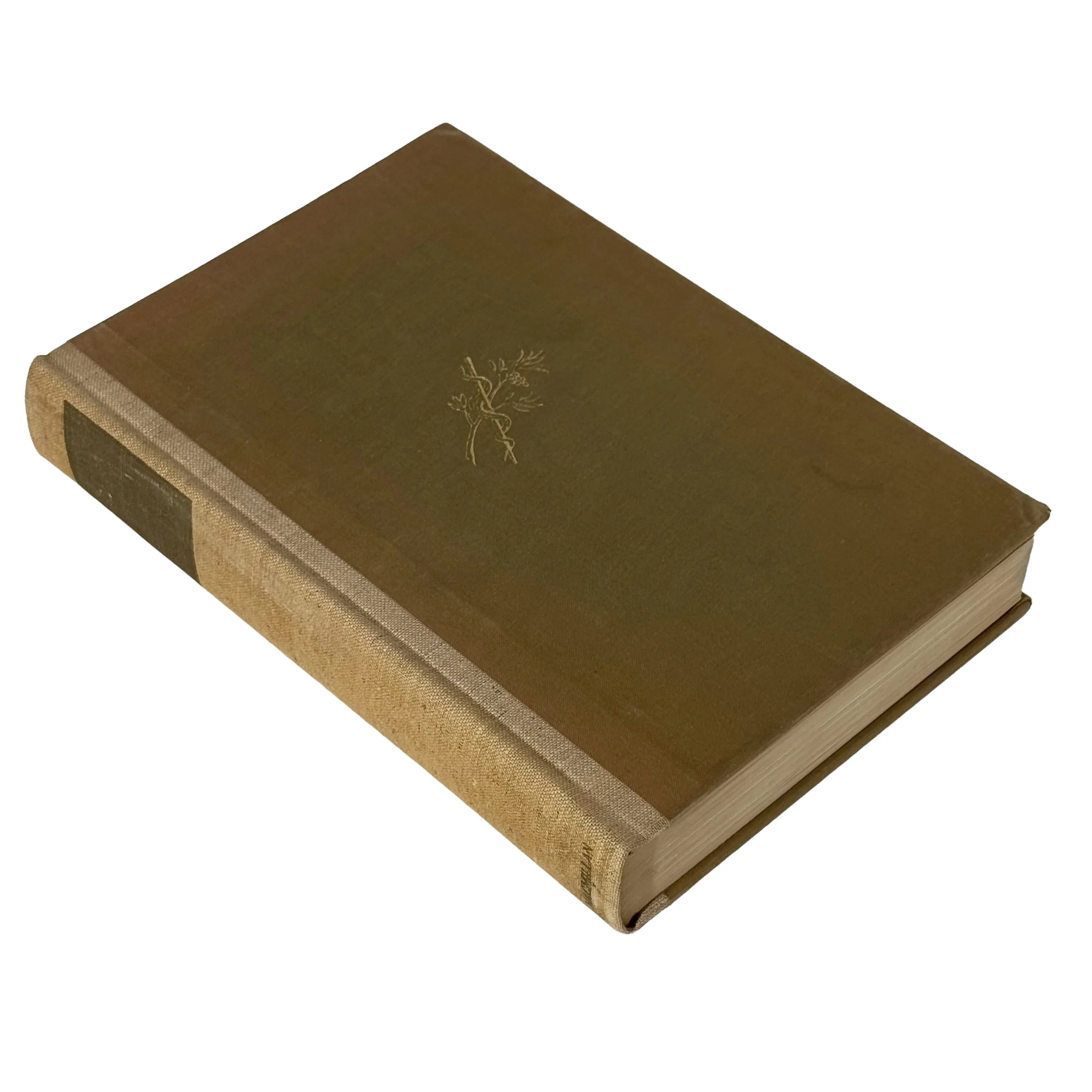 Image 1 of 8
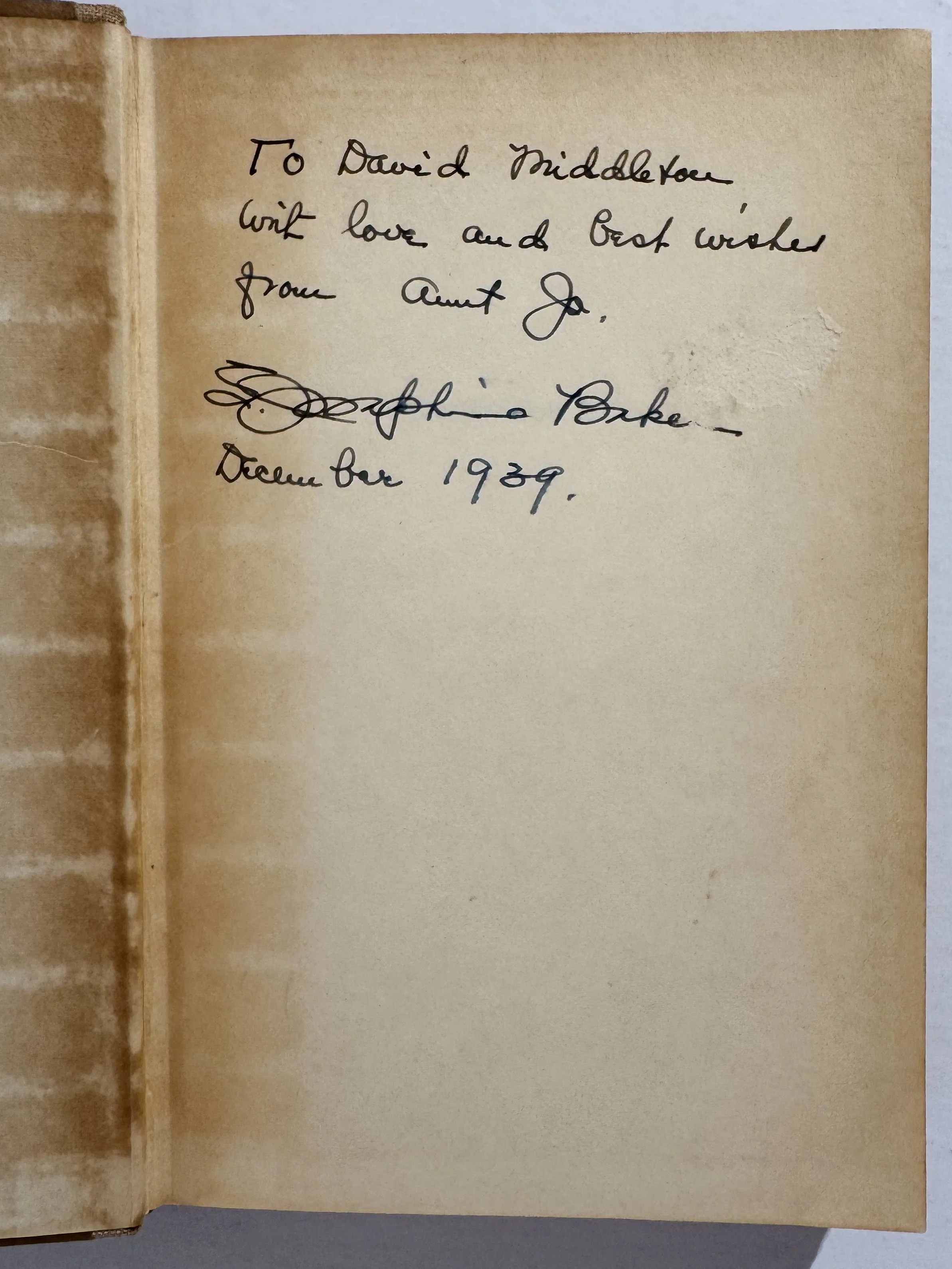 Image 2 of 8
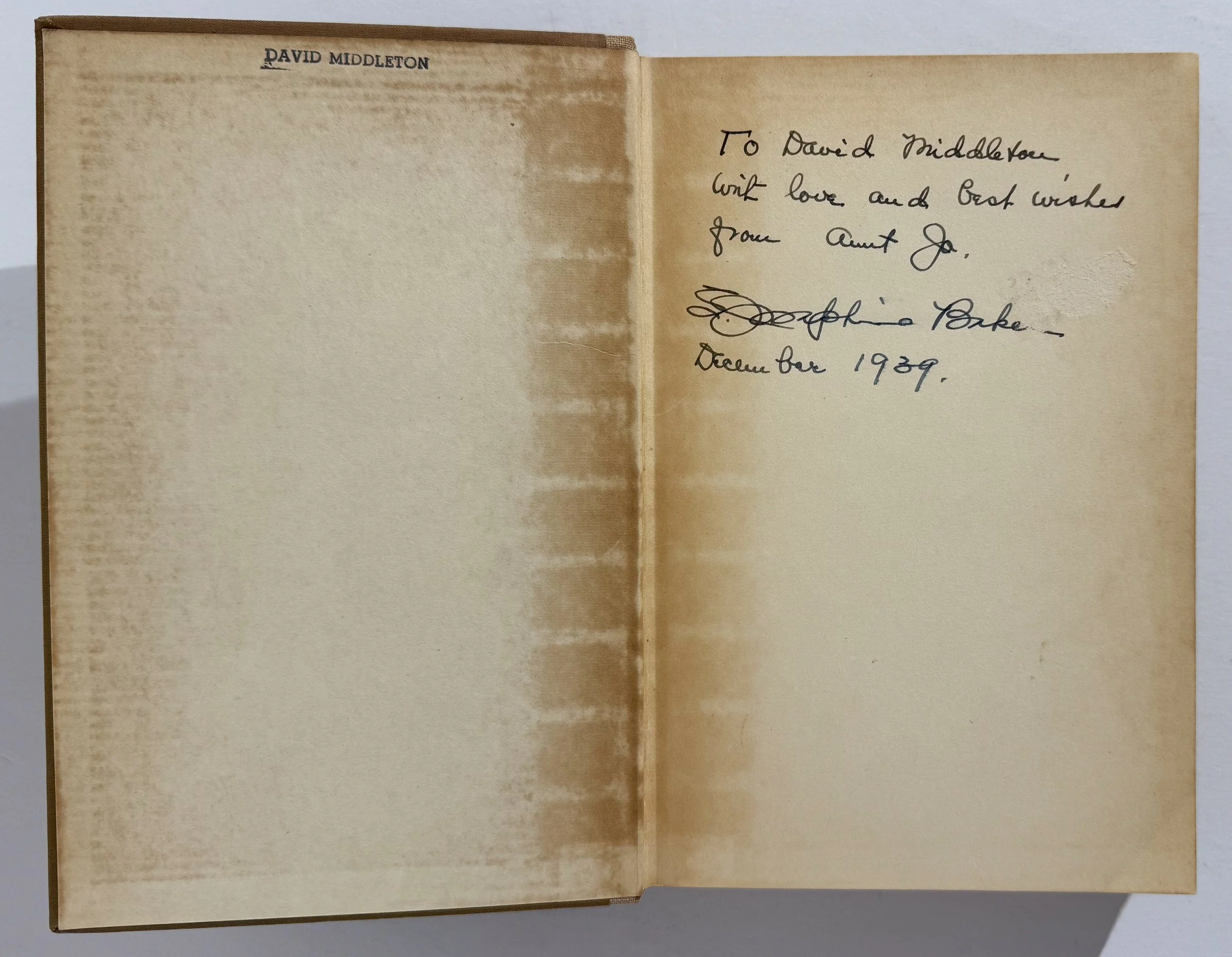 Image 3 of 8
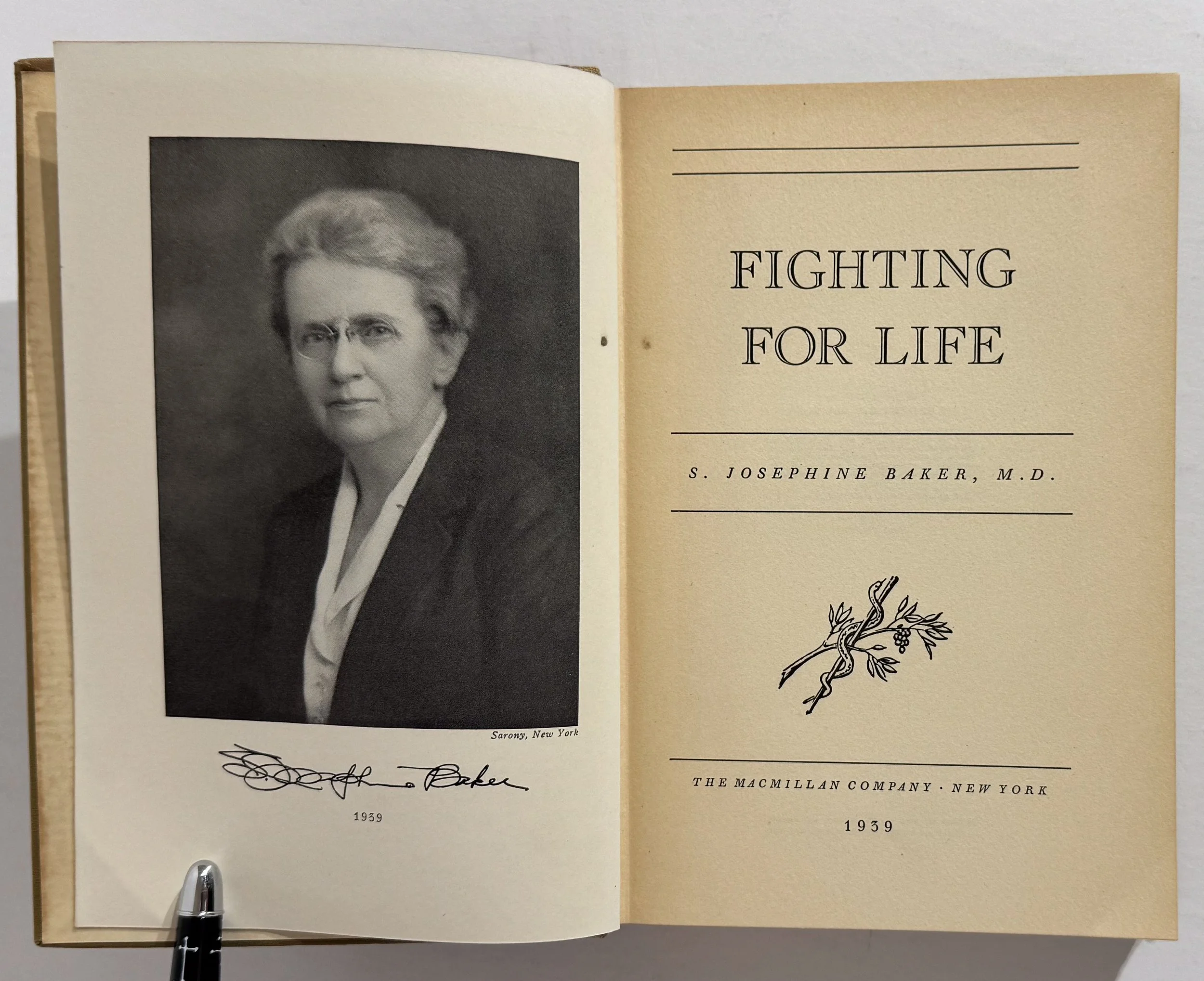 Image 4 of 8
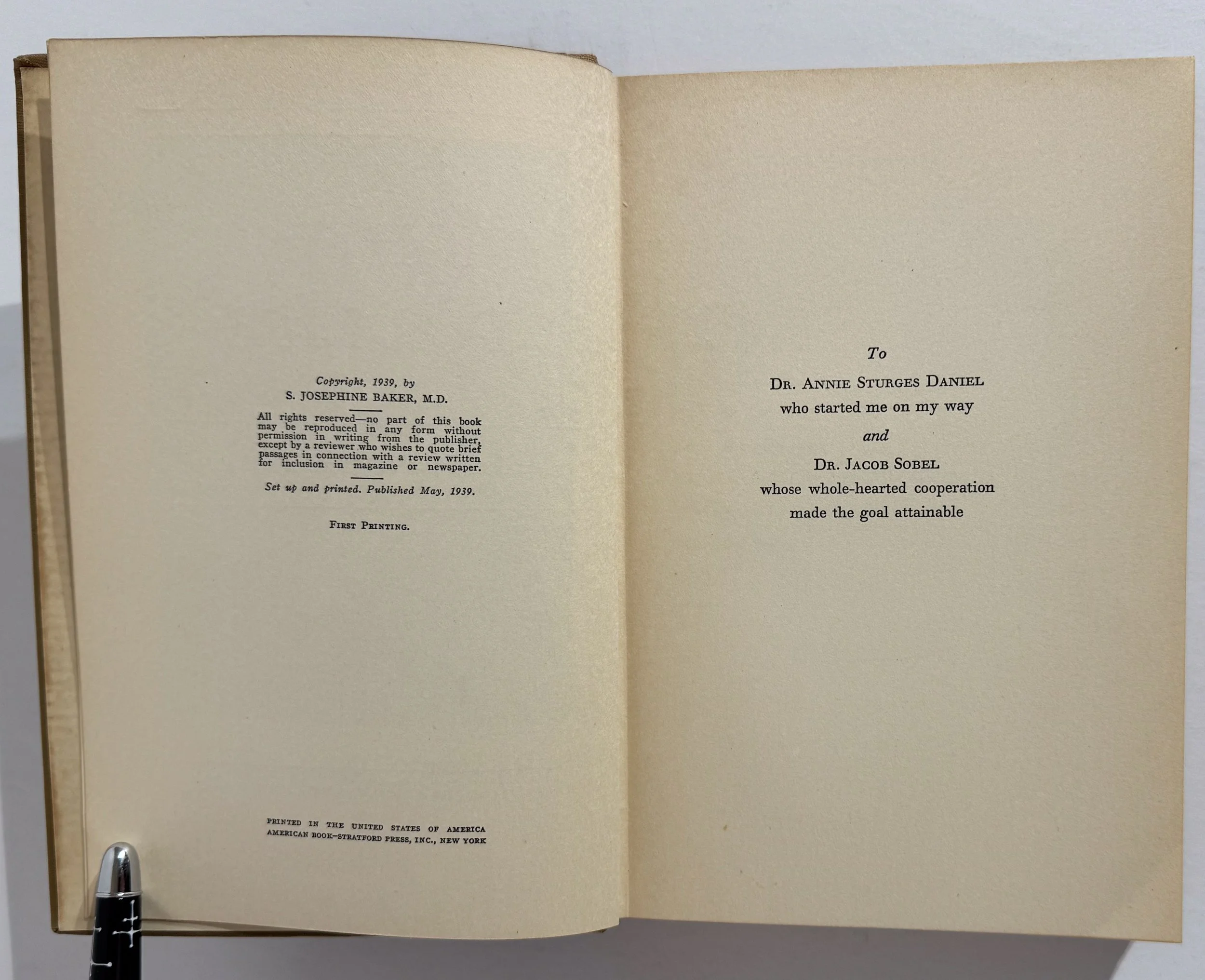 Image 5 of 8
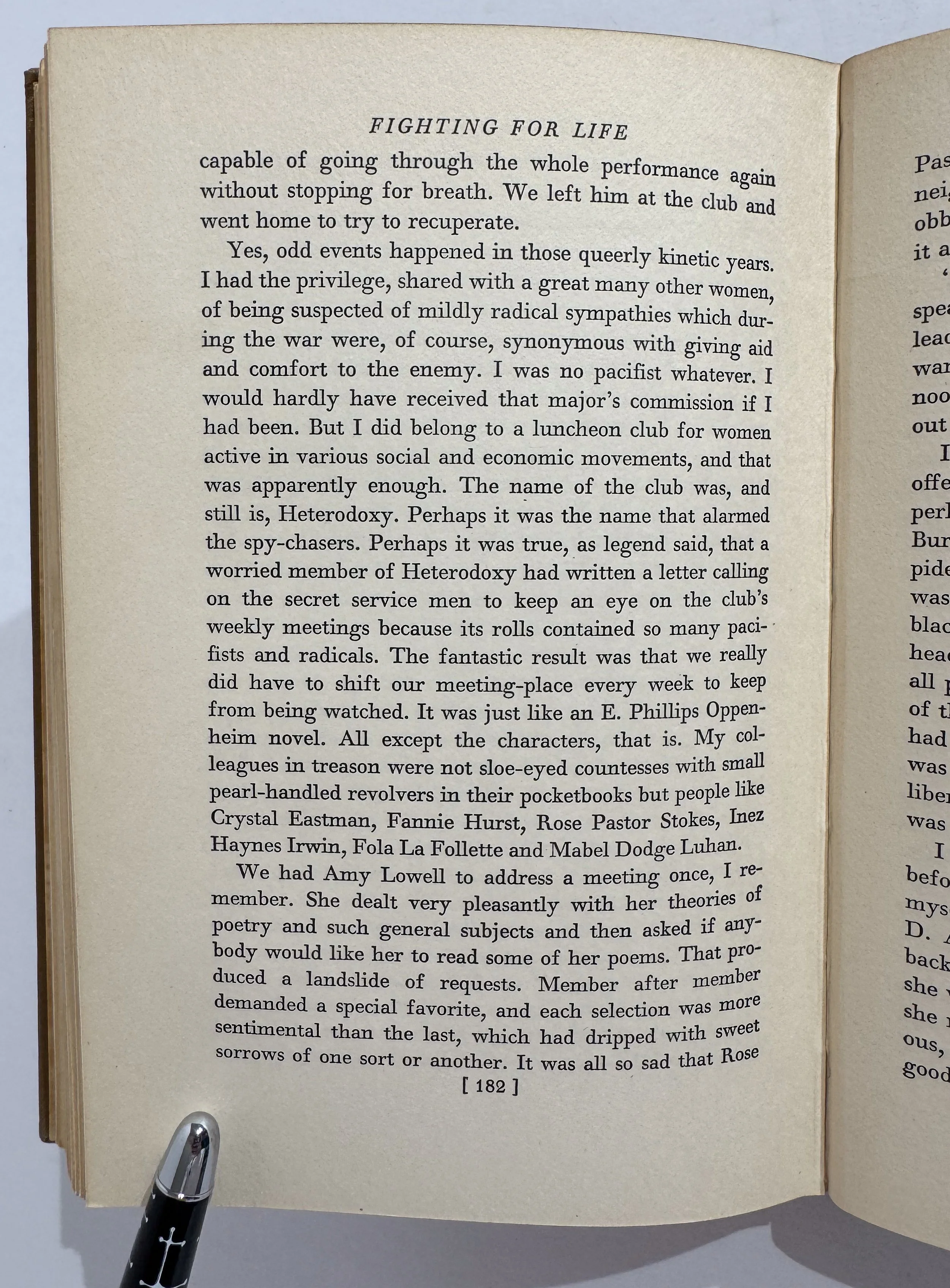 Image 6 of 8
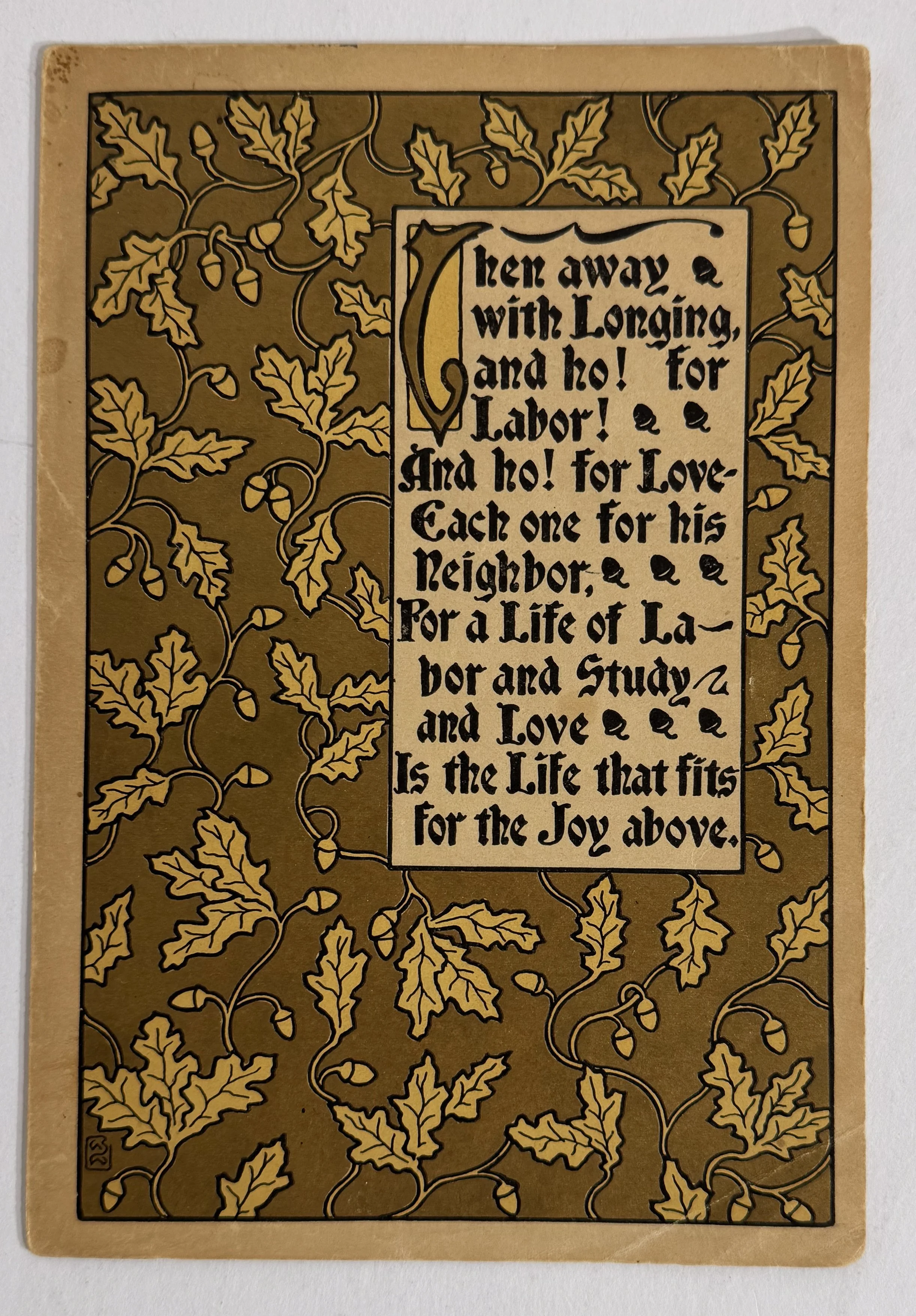 Image 7 of 8
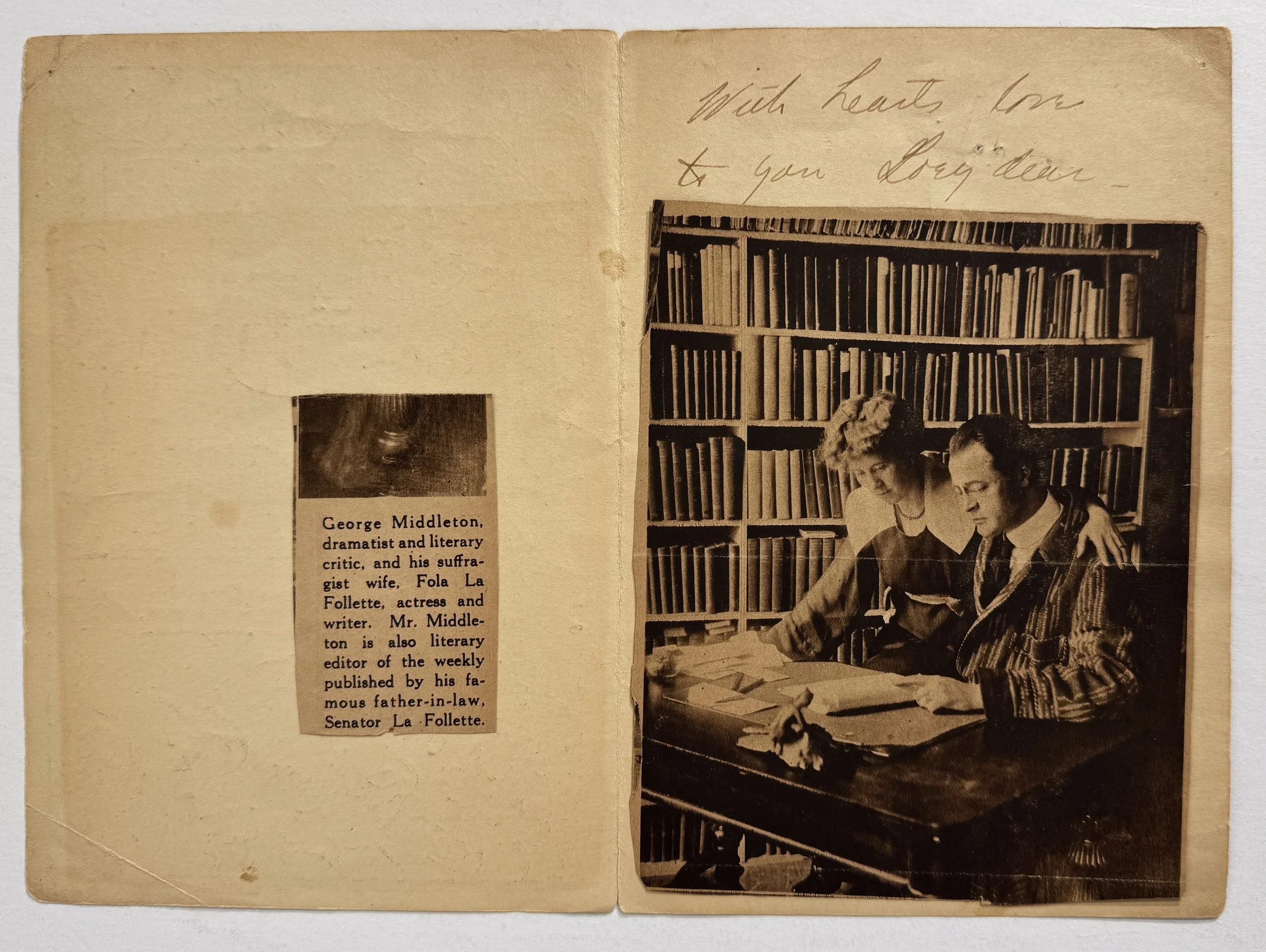 Image 8 of 8

![[1st ed] When Worlds Collide](https://images.squarespace-cdn.com/content/v1/61dc97a529892d0e352a9423/d6090b42-0676-45a4-87ad-589b1ced09bd/IMG_8863.jpg)