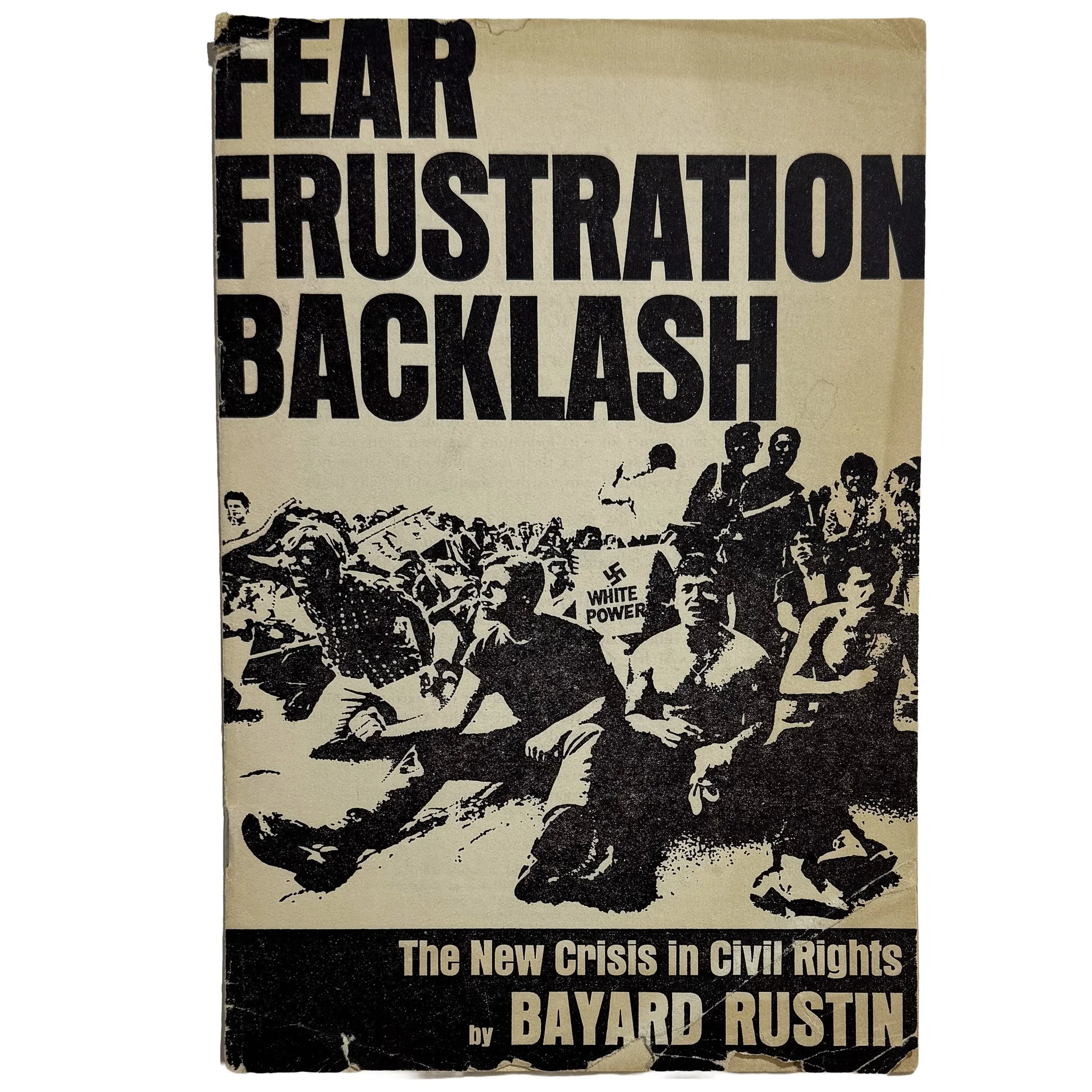
An early publication by Ada Louise Huxtable, issued two years before her appointment as the first full-time architecture critic of The New York Times and nearly a decade before her Pulitzer Prize. Prepared jointly for the Museum of Modern Art and the Municipal Art Society and published in 1961, the guide presents four self-guided tours of Manhattan's modern architecture, including Lever House, the Seagram Building, Lincoln Center, and other landmarks of New York's postwar transformation. The booklet captures a pivotal moment when International Style architecture was still new and actively reshaping the city. Huxtable would go on to become one of the most influential architectural critics in America, helping bring architecture into mainstream public discourse.
Pocket-size (4” x 7”), printed wrappers, 76 pages, b/w photos and maps. Distributed by Doubleday & Company. Light toning and minor rubbing and bumping to wrappers; small remnant of a removed sticker to rear cover. A few small chips to spine.
From the working library of architectural historian Carol Herselle Krinsky, with several of her pencil notations inside.A very good example of an increasingly elusive piece of New York architectural ephemera, enhanced by a noteworthy association between two influential figures in twentieth-century architectural history.
An early publication by Ada Louise Huxtable, issued two years before her appointment as the first full-time architecture critic of The New York Times and nearly a decade before her Pulitzer Prize. Prepared jointly for the Museum of Modern Art and the Municipal Art Society and published in 1961, the guide presents four self-guided tours of Manhattan's modern architecture, including Lever House, the Seagram Building, Lincoln Center, and other landmarks of New York's postwar transformation. The booklet captures a pivotal moment when International Style architecture was still new and actively reshaping the city. Huxtable would go on to become one of the most influential architectural critics in America, helping bring architecture into mainstream public discourse.
Pocket-size (4” x 7”), printed wrappers, 76 pages, b/w photos and maps. Distributed by Doubleday & Company. Light toning and minor rubbing and bumping to wrappers; small remnant of a removed sticker to rear cover. A few small chips to spine.
From the working library of architectural historian Carol Herselle Krinsky, with several of her pencil notations inside.A very good example of an increasingly elusive piece of New York architectural ephemera, enhanced by a noteworthy association between two influential figures in twentieth-century architectural history.

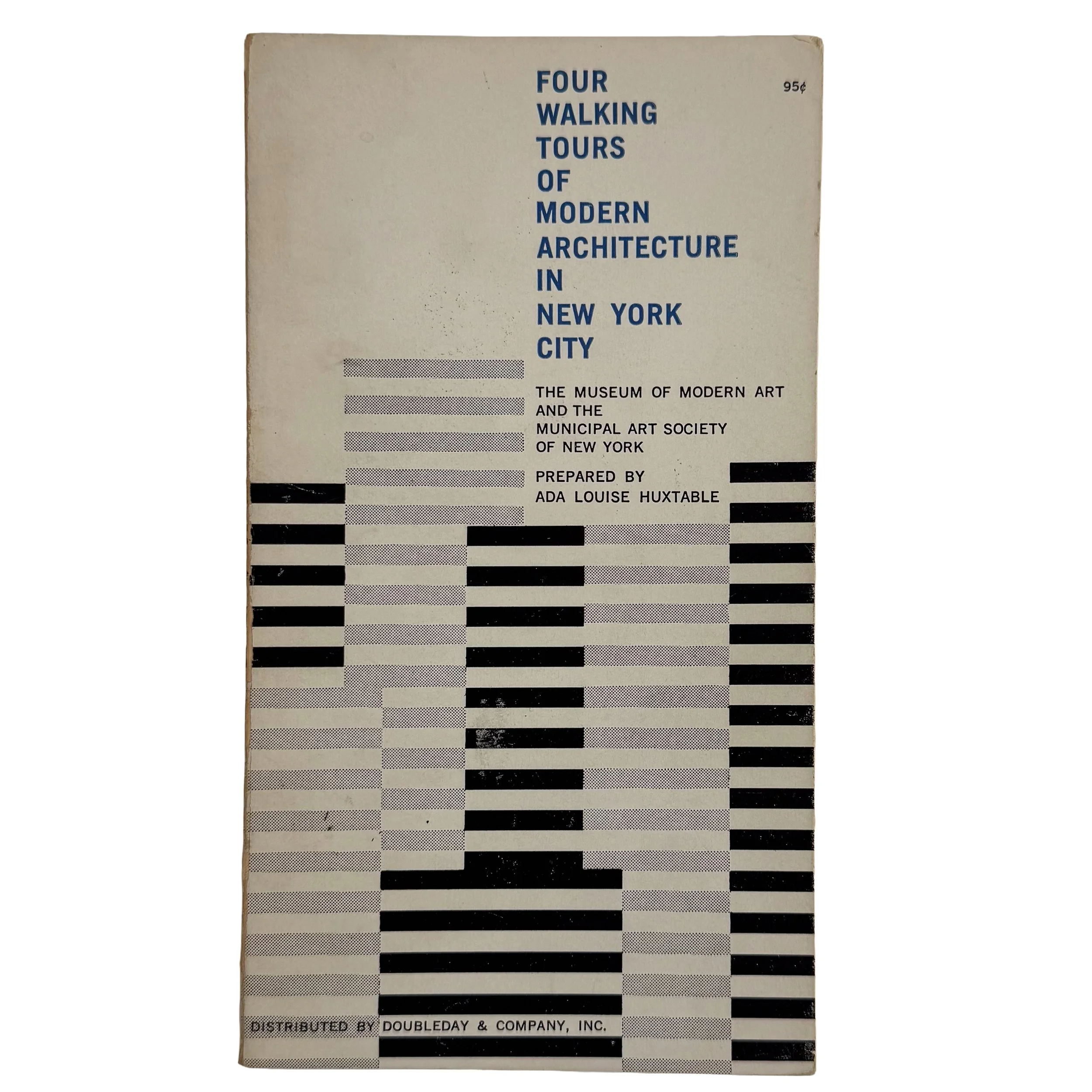 Image 1 of 7
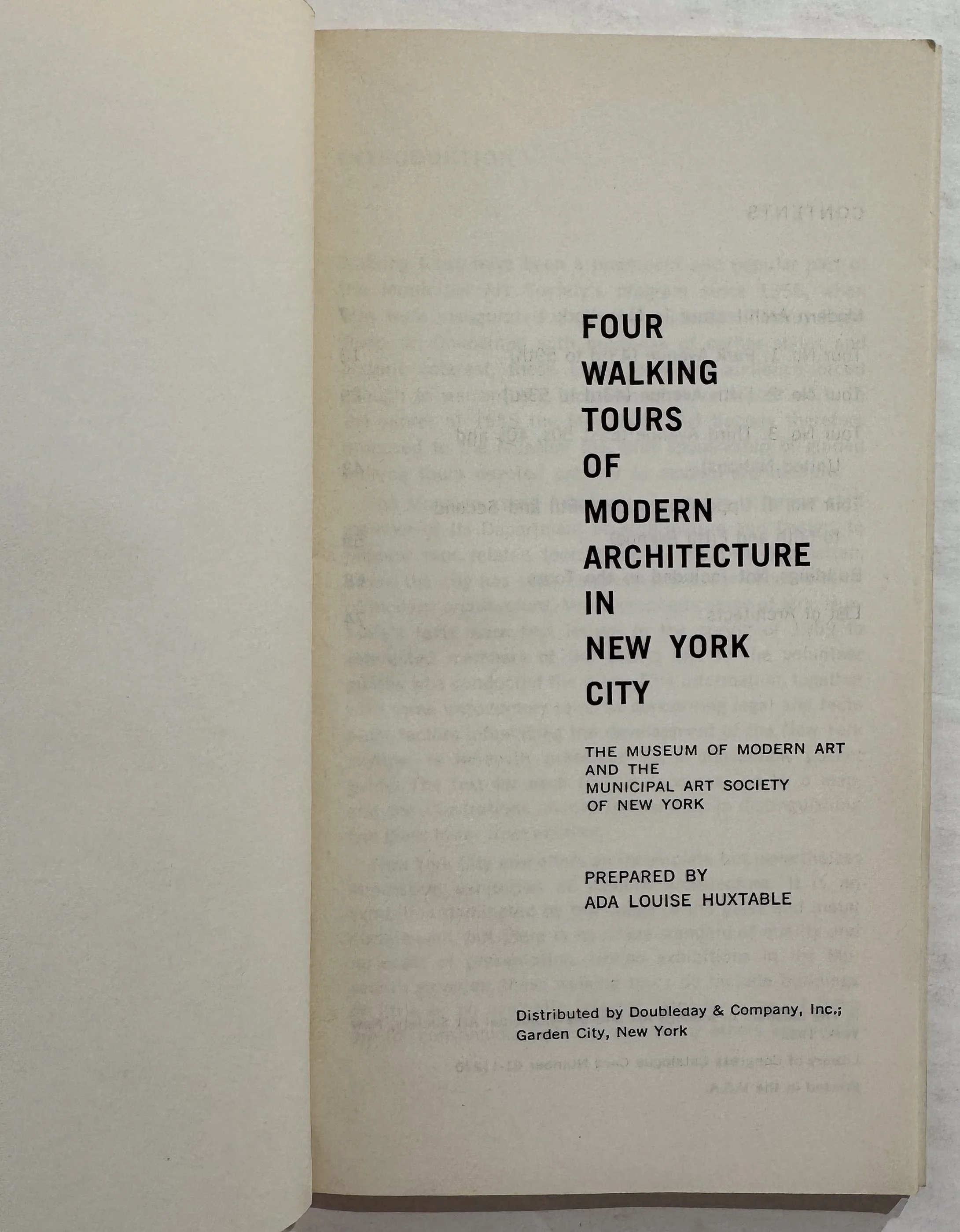 Image 2 of 7
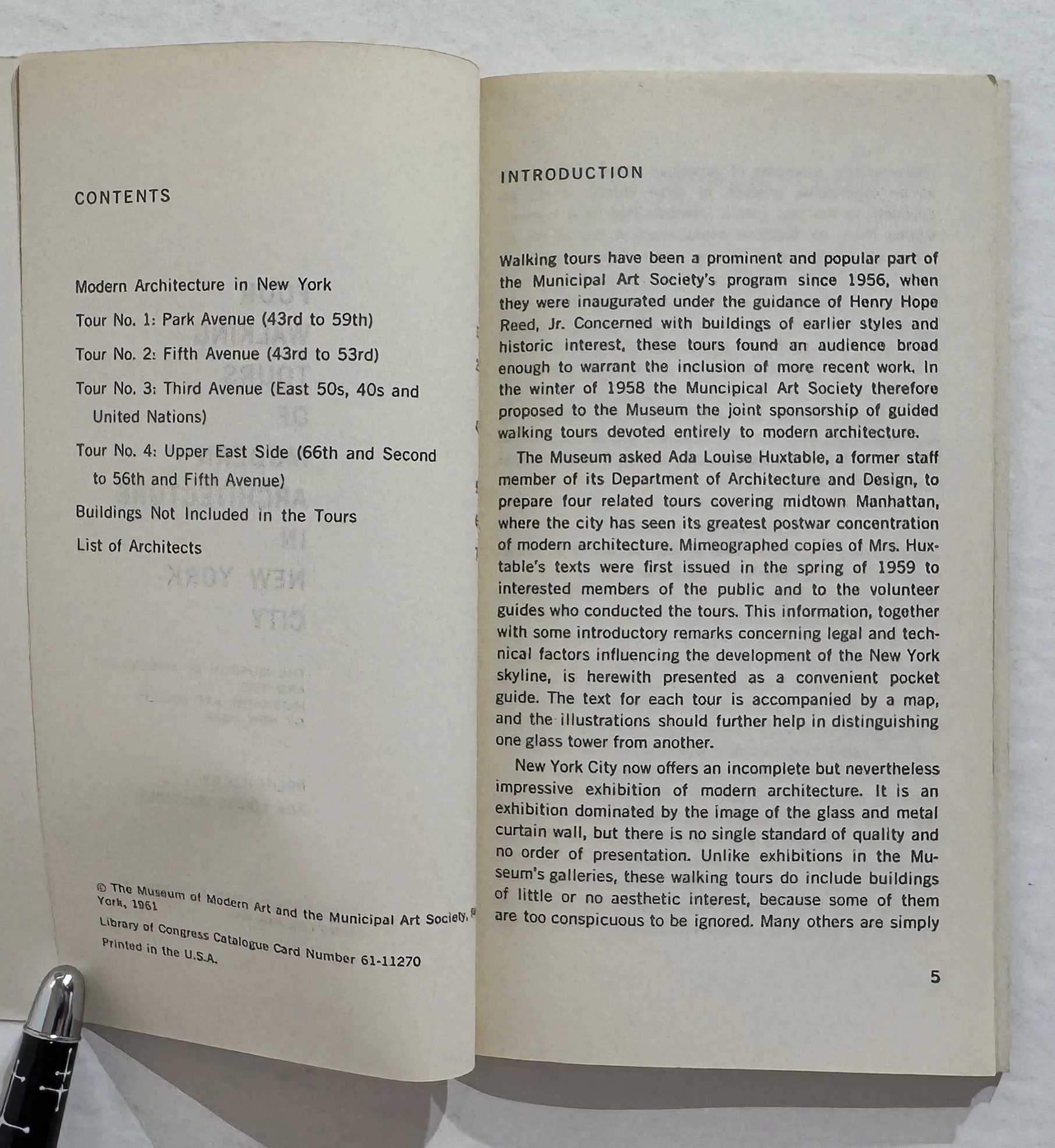 Image 3 of 7
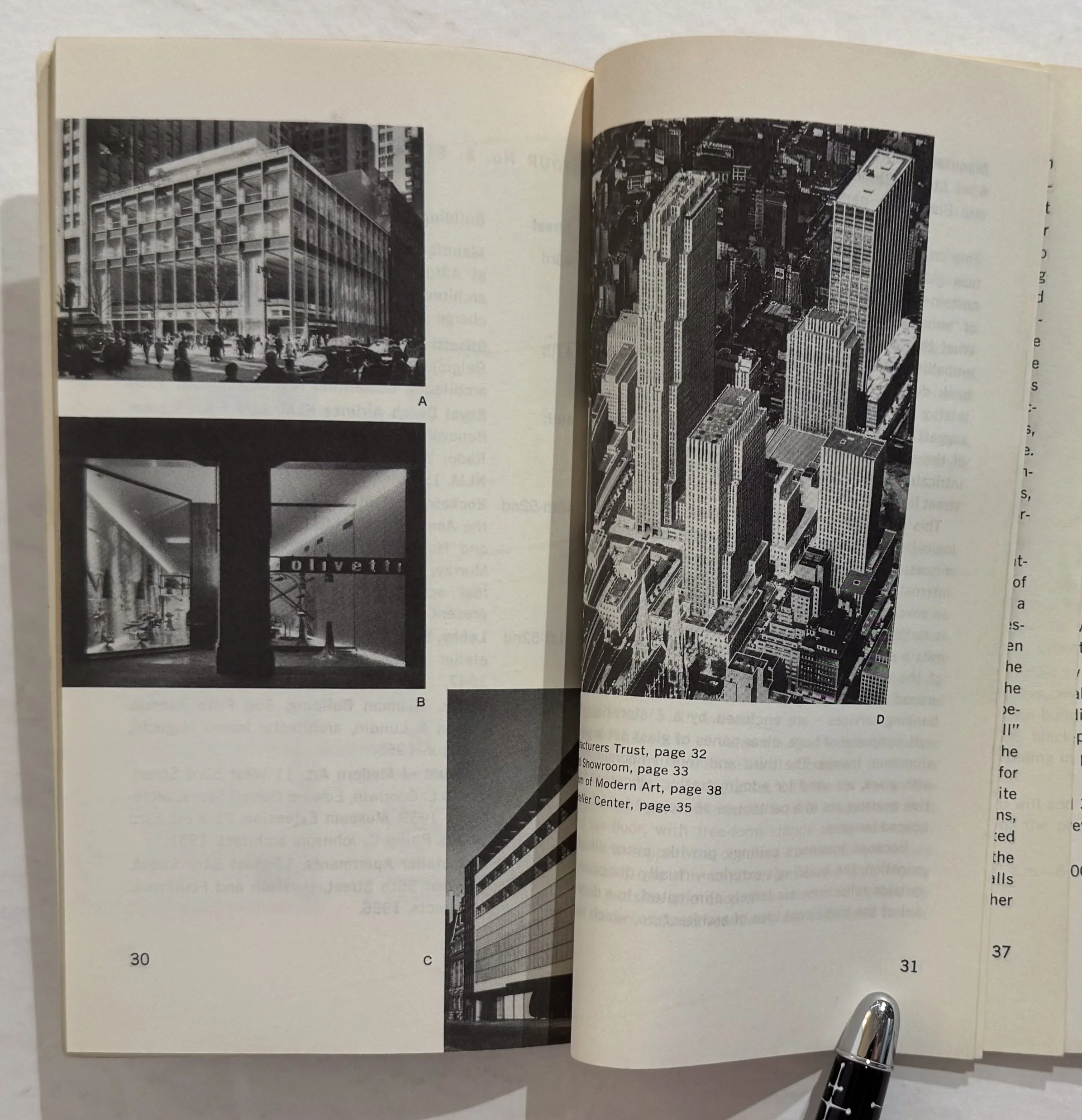 Image 4 of 7
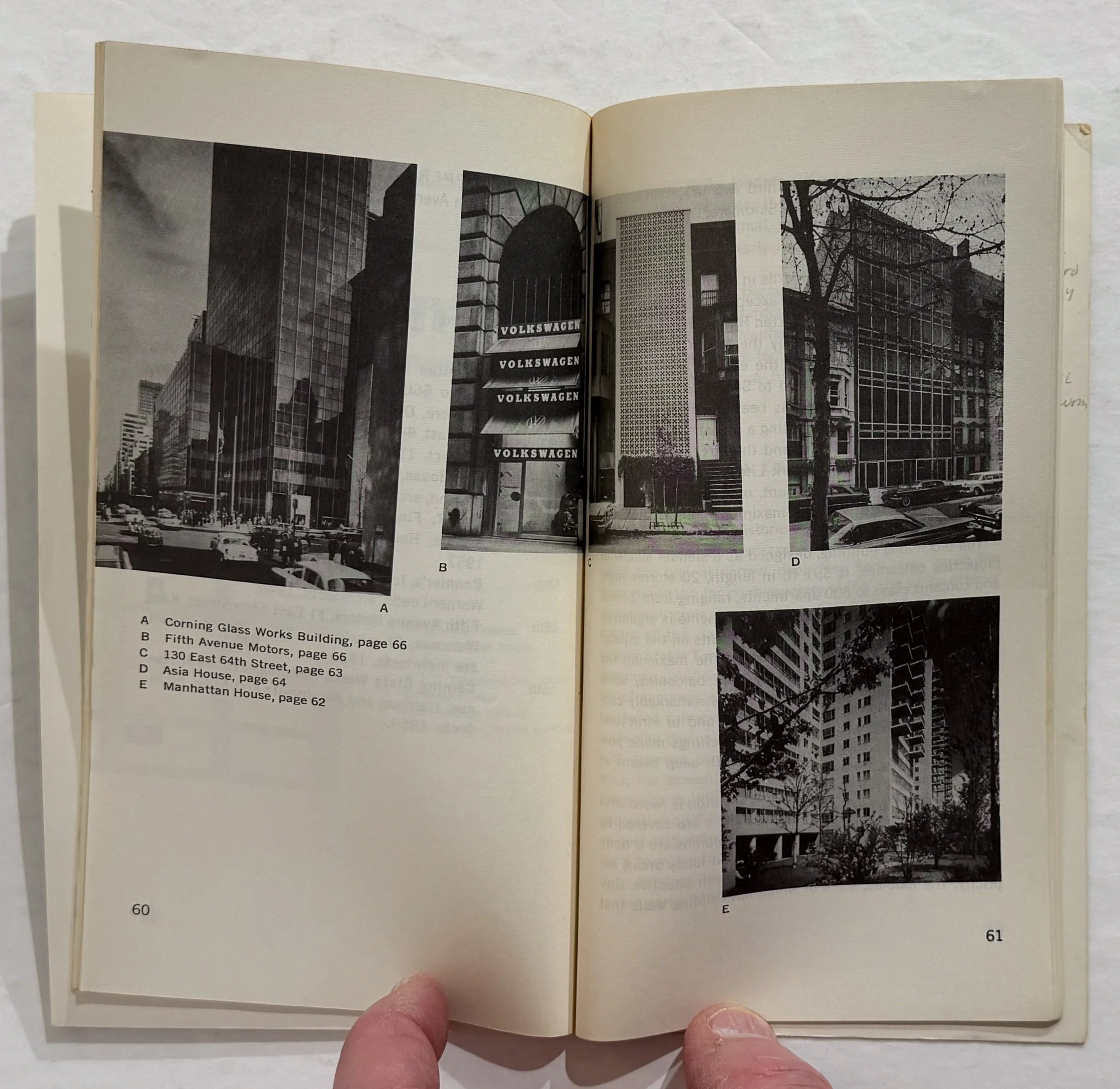 Image 5 of 7
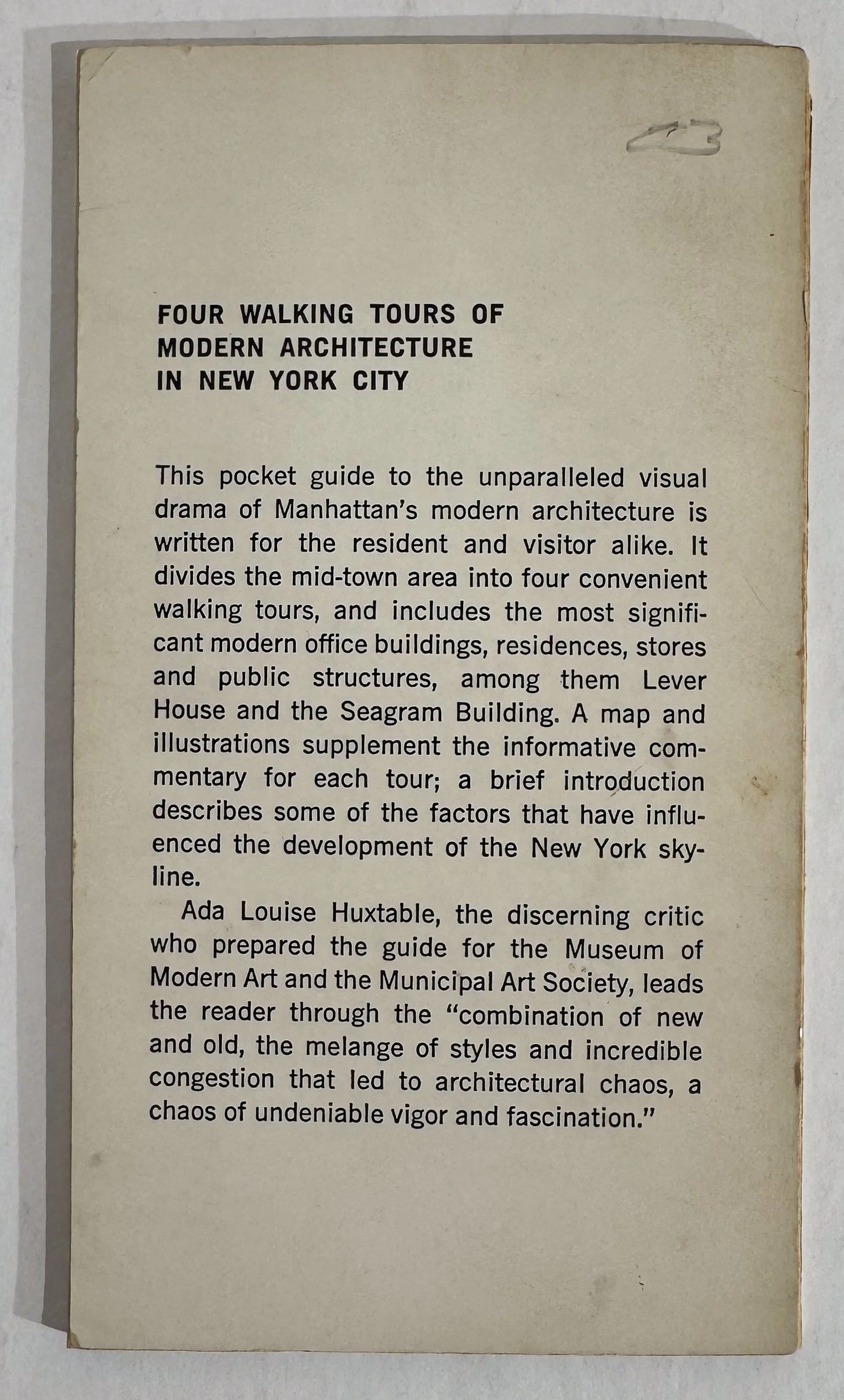 Image 6 of 7
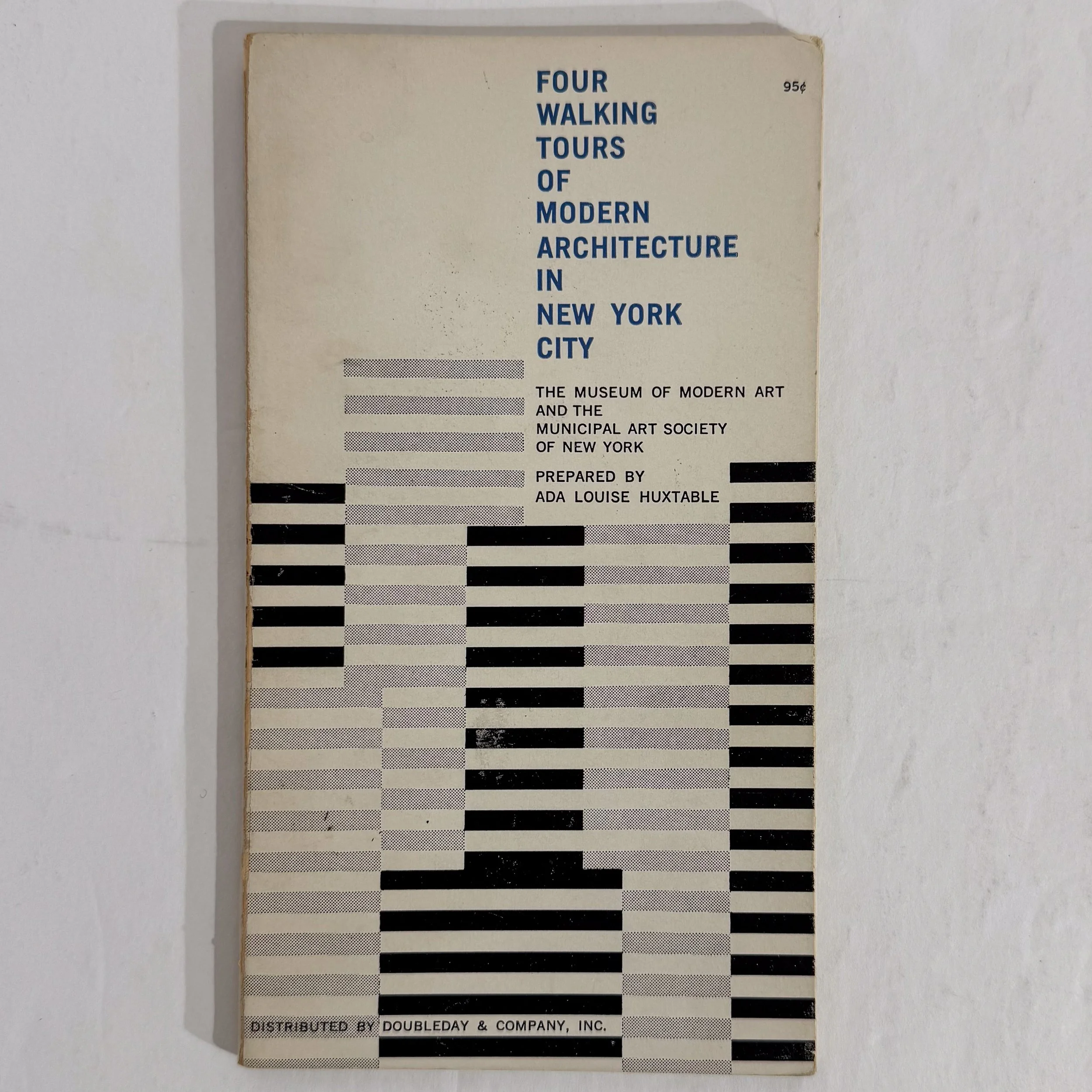 Image 7 of 7