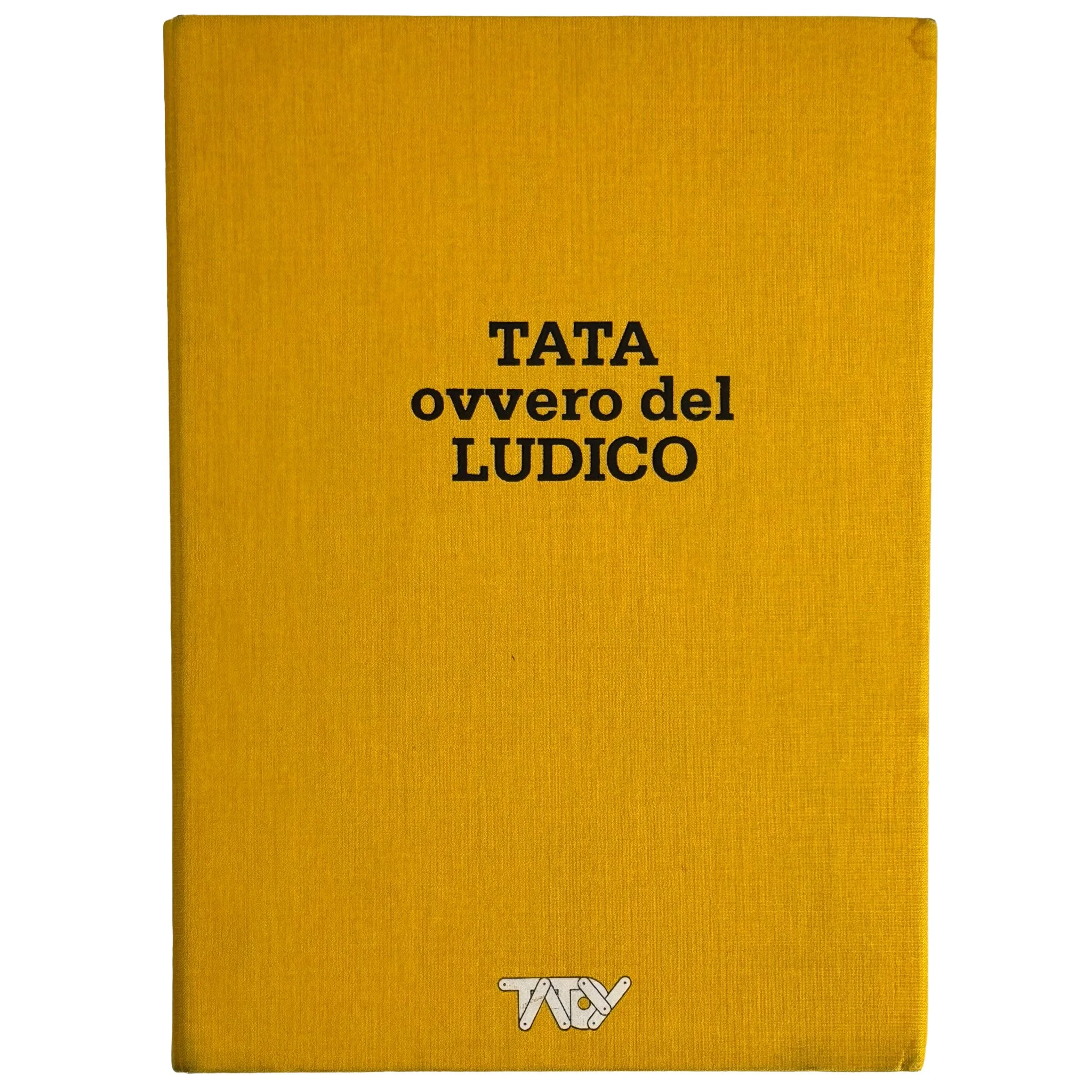
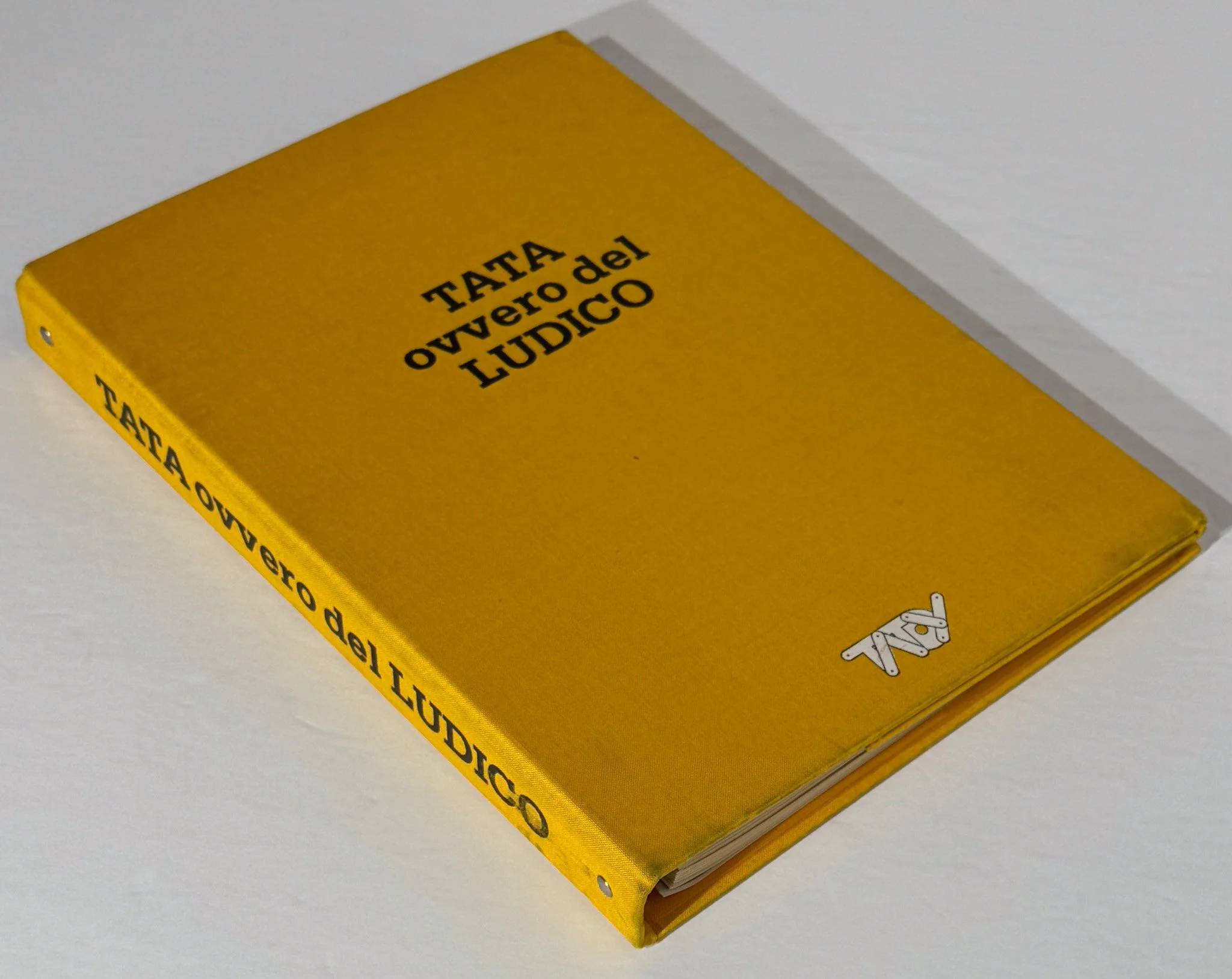
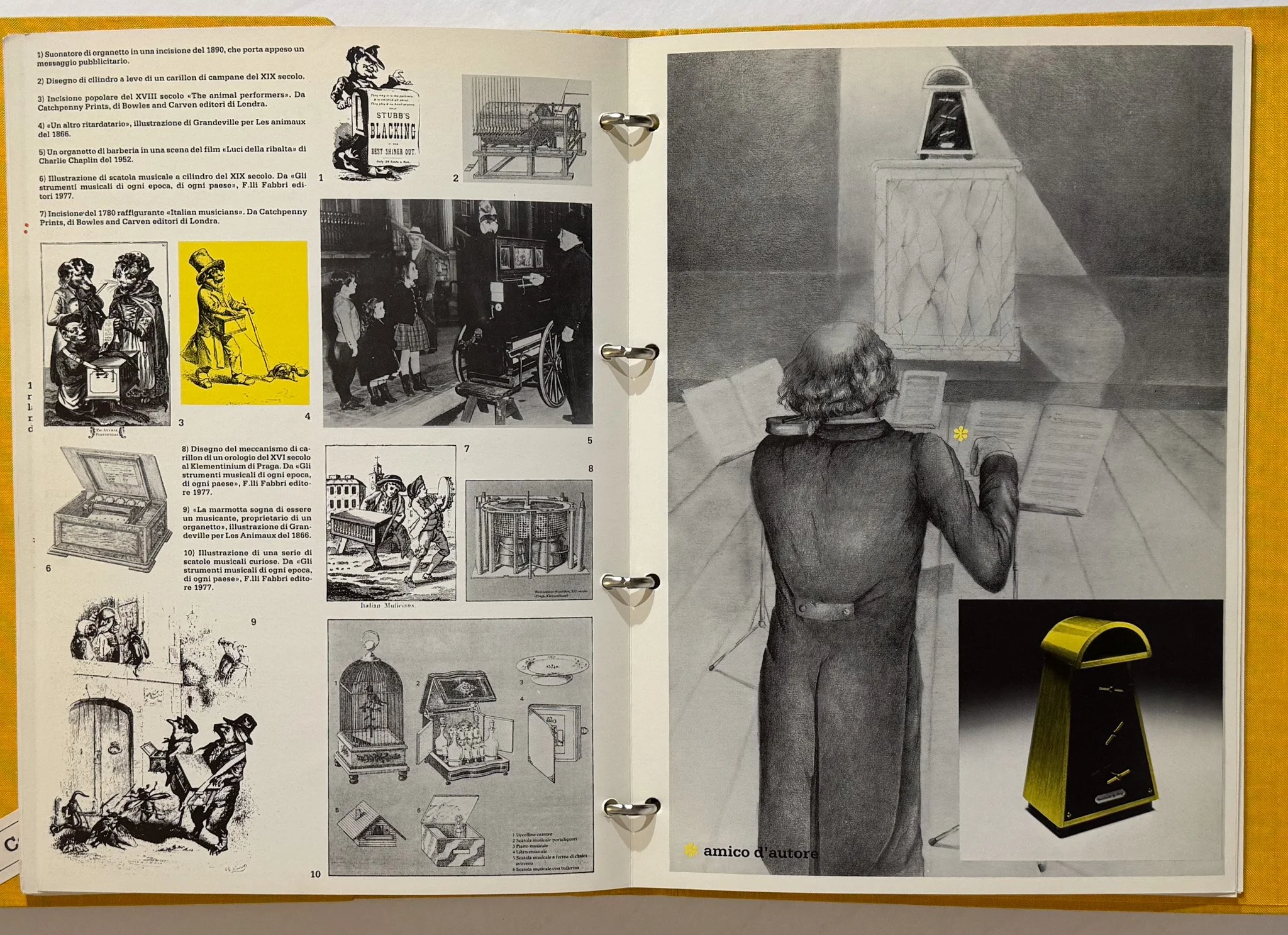
The fourth issue of Kenneth Lawrence Beaudoin’s quarterly “little magazine” of art and literature, published in the winter of 1946 by the Iconograph Press. Beaudoin (1913-95) was an American anthropologist, poet, and editor with a special interest in Native American folk literature. During a sojourn in New York City he founded and ran Iconograph magazine in conjunction with an art gallery he also founded (Gallery Neuf). Central to both the magazine and the gallery were the so-called Indian Space Painters, participants in a short-lived postwar modernist art movement that drew inspiration from Native American (especially Pacific Northwest) iconography along with Surrealism and Abstract Expressionism. Beaudoin served as a ringleader for this movement. 8vo (8.5” x 11”), pictorial wrappers, 35 pages on multiple paper stocks, b/w illustrations. Artworks pictured include works by: George Constant, Esteban Francis, Jerome Kamrowsky, Mark Rothko, Perle Fine, Carl Ashby, Judith Rothschild, Peter Grippe, Charles Seliger, Jackson Pollack (sic), David Hare, Louis Schanker, John Sennhauser, Alfred Russell, Gertrude Barer, and S.W. Hayter. With ads for the Gotham Book Mart and jewelry by Sam Kramer. With contributions from Samuel Kishler Praeger, Sidney Jordan, Oscar Collier, Mina Citron, and Abraham Lincoln Gillespie, among others. Sources indicate that Beaudoin himself was involved in only four issues of Iconograph, plus a supplement. Now obscure, both the magazine and its founder are ripe for rediscovery. As noted in a recent article by Andrew Ross, “How did it happen that a poet once championed and mentored by William Carlos Williams is now forgotten and entirely out of print? How did it happen that a poet who was read deeply by e.e. cummings, who corresponded with Ezra Pound and Randall Jarrell and countless other lesser-known lights, has barely emerged as a footnote in American letters? Similarly, how is it not better known that Beaudoin, first in New Orleans’ French Quarter, then as a gallerist and editor in New York City, led a brief but very real charge to reshape his generation’s conceptions of art and literature?” HIGHLY SCARCE and fragile. Some rubbing and chipping to wrappers. Spine partially split from both ends. Pronounced creasing to rear wrappers, affecting last four leaves. Contents otherwise clean and bright.
The fourth issue of Kenneth Lawrence Beaudoin’s quarterly “little magazine” of art and literature, published in the winter of 1946 by the Iconograph Press. Beaudoin (1913-95) was an American anthropologist, poet, and editor with a special interest in Native American folk literature. During a sojourn in New York City he founded and ran Iconograph magazine in conjunction with an art gallery he also founded (Gallery Neuf). Central to both the magazine and the gallery were the so-called Indian Space Painters, participants in a short-lived postwar modernist art movement that drew inspiration from Native American (especially Pacific Northwest) iconography along with Surrealism and Abstract Expressionism. Beaudoin served as a ringleader for this movement. 8vo (8.5” x 11”), pictorial wrappers, 35 pages on multiple paper stocks, b/w illustrations. Artworks pictured include works by: George Constant, Esteban Francis, Jerome Kamrowsky, Mark Rothko, Perle Fine, Carl Ashby, Judith Rothschild, Peter Grippe, Charles Seliger, Jackson Pollack (sic), David Hare, Louis Schanker, John Sennhauser, Alfred Russell, Gertrude Barer, and S.W. Hayter. With ads for the Gotham Book Mart and jewelry by Sam Kramer. With contributions from Samuel Kishler Praeger, Sidney Jordan, Oscar Collier, Mina Citron, and Abraham Lincoln Gillespie, among others. Sources indicate that Beaudoin himself was involved in only four issues of Iconograph, plus a supplement. Now obscure, both the magazine and its founder are ripe for rediscovery. As noted in a recent article by Andrew Ross, “How did it happen that a poet once championed and mentored by William Carlos Williams is now forgotten and entirely out of print? How did it happen that a poet who was read deeply by e.e. cummings, who corresponded with Ezra Pound and Randall Jarrell and countless other lesser-known lights, has barely emerged as a footnote in American letters? Similarly, how is it not better known that Beaudoin, first in New Orleans’ French Quarter, then as a gallerist and editor in New York City, led a brief but very real charge to reshape his generation’s conceptions of art and literature?” HIGHLY SCARCE and fragile. Some rubbing and chipping to wrappers. Spine partially split from both ends. Pronounced creasing to rear wrappers, affecting last four leaves. Contents otherwise clean and bright.

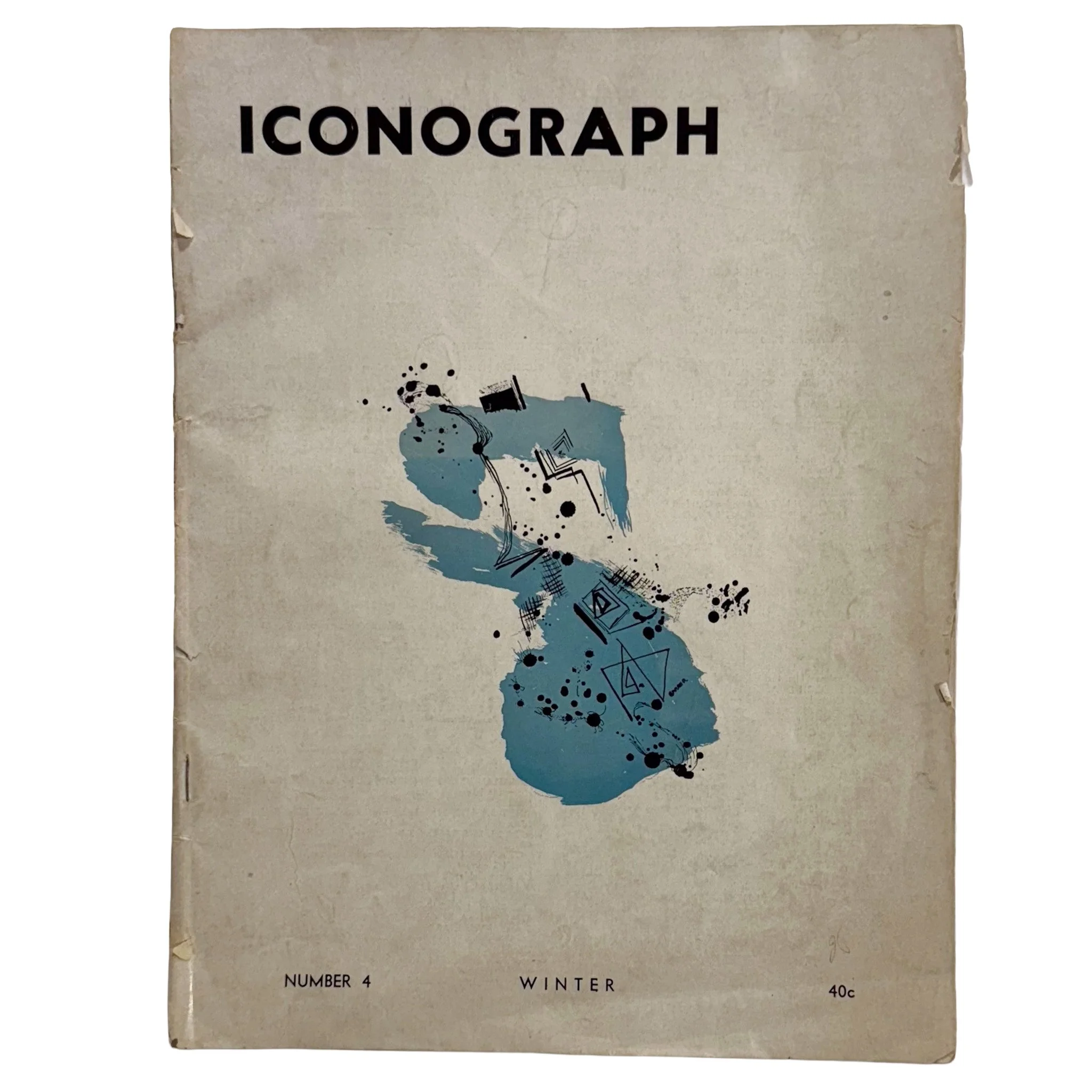 Image 1 of 9
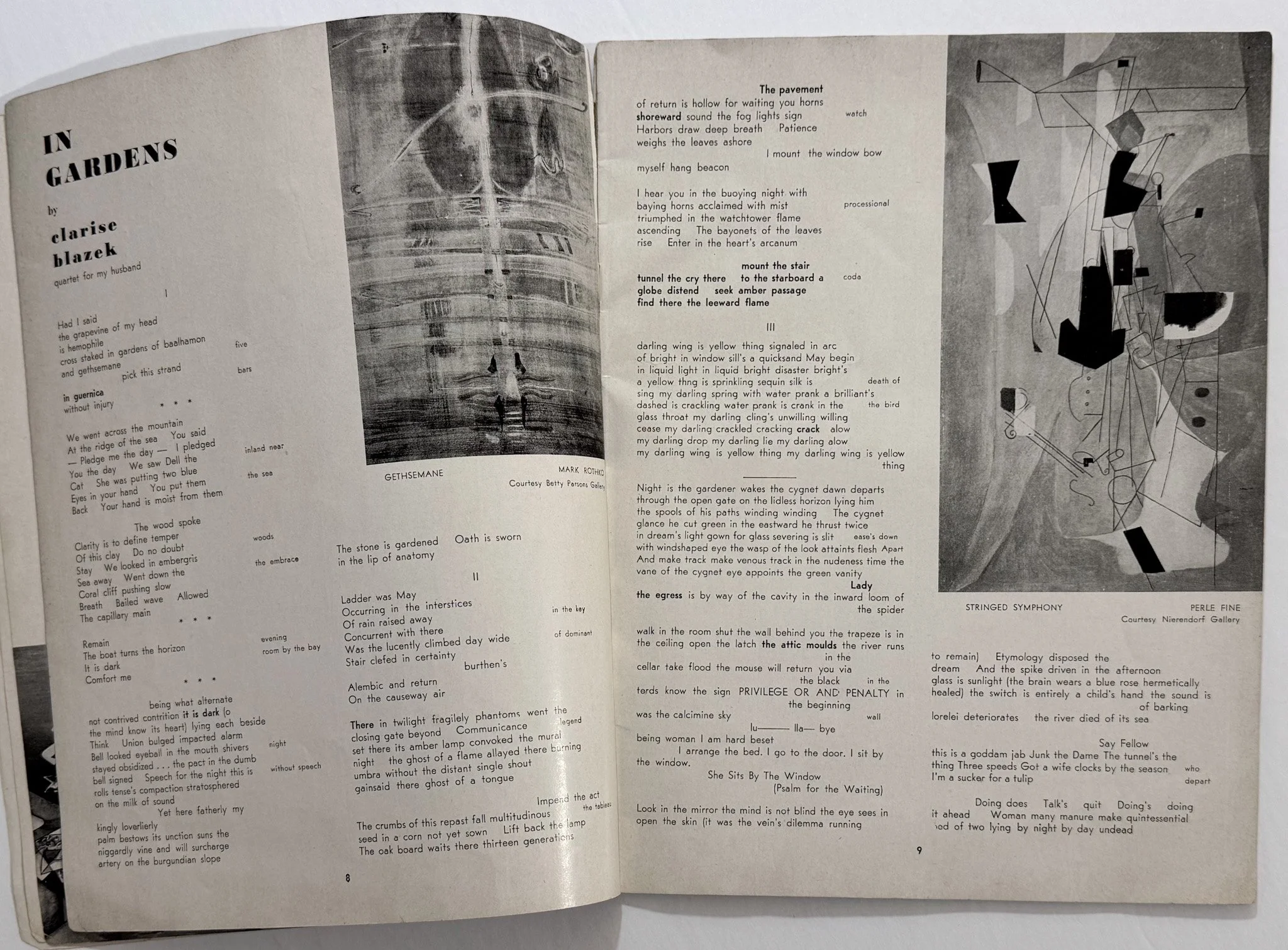 Image 2 of 9
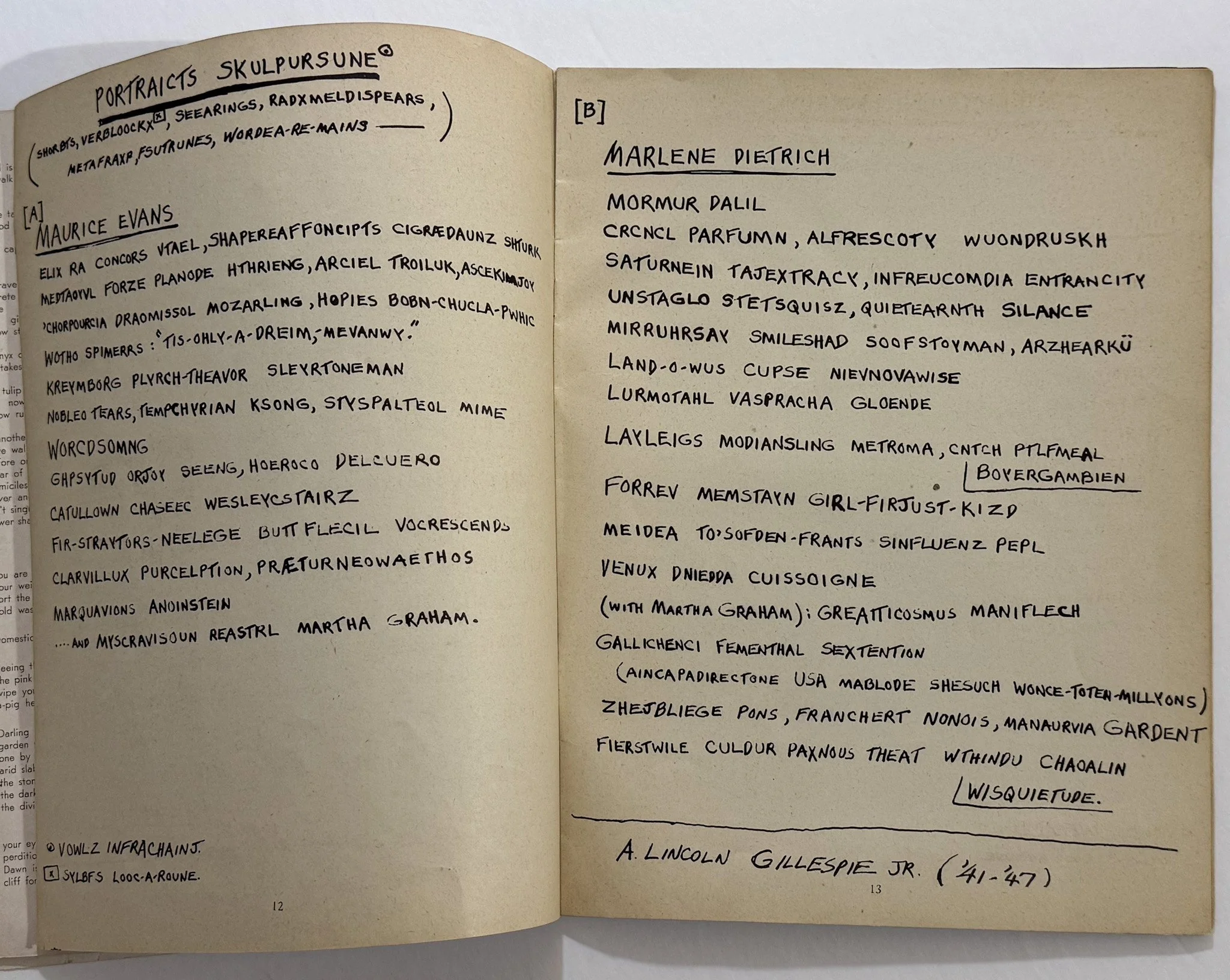 Image 3 of 9
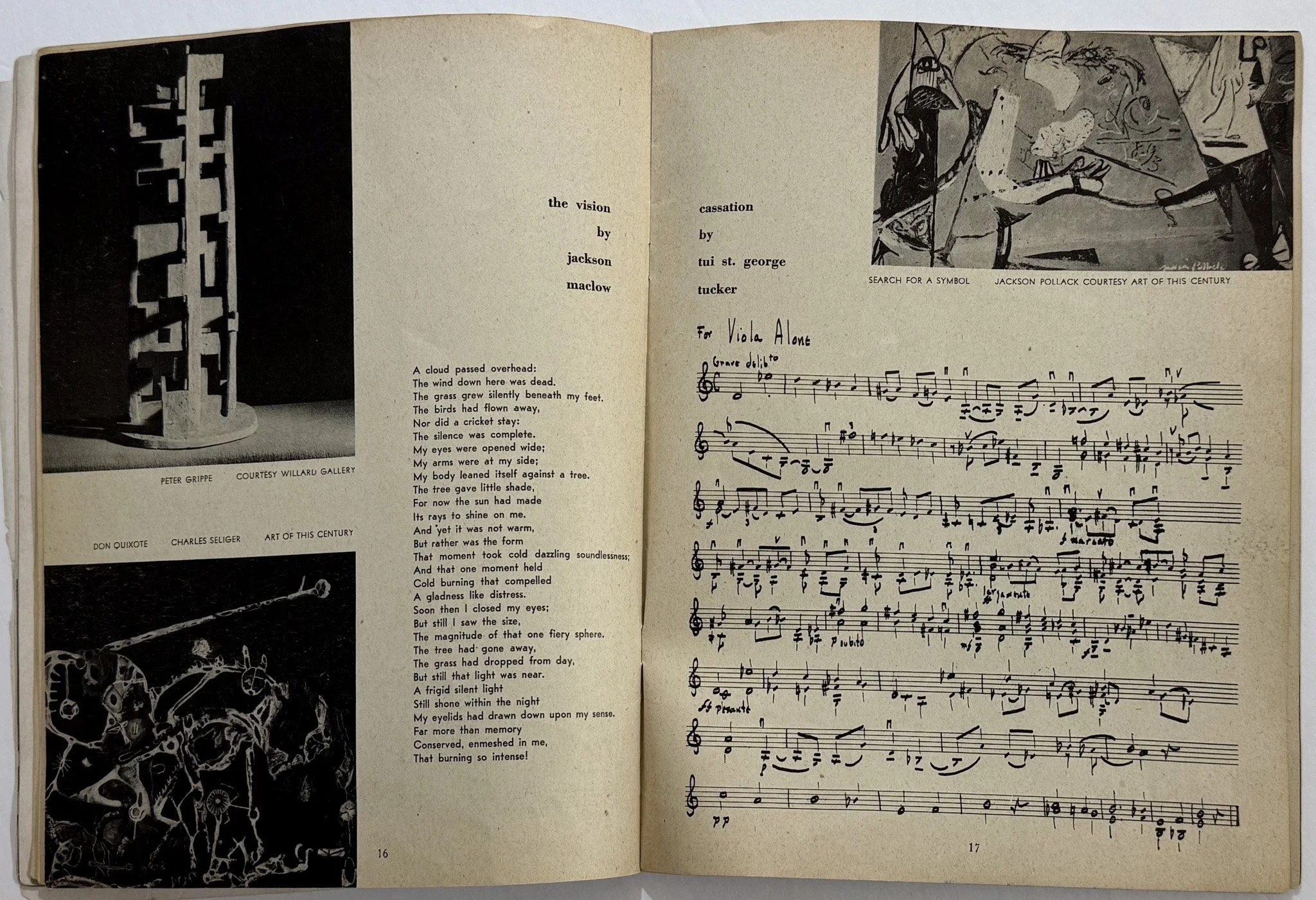 Image 4 of 9
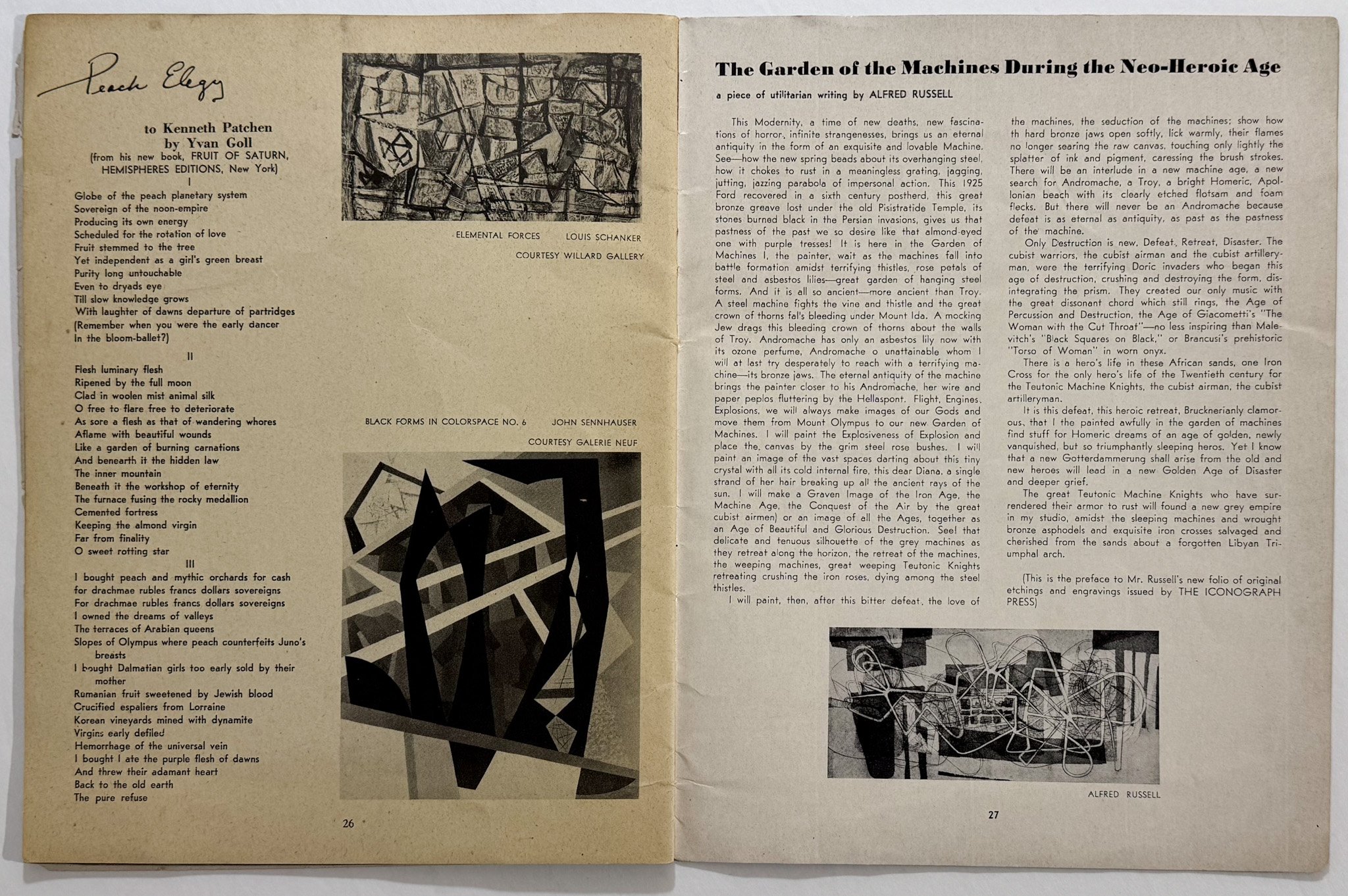 Image 5 of 9
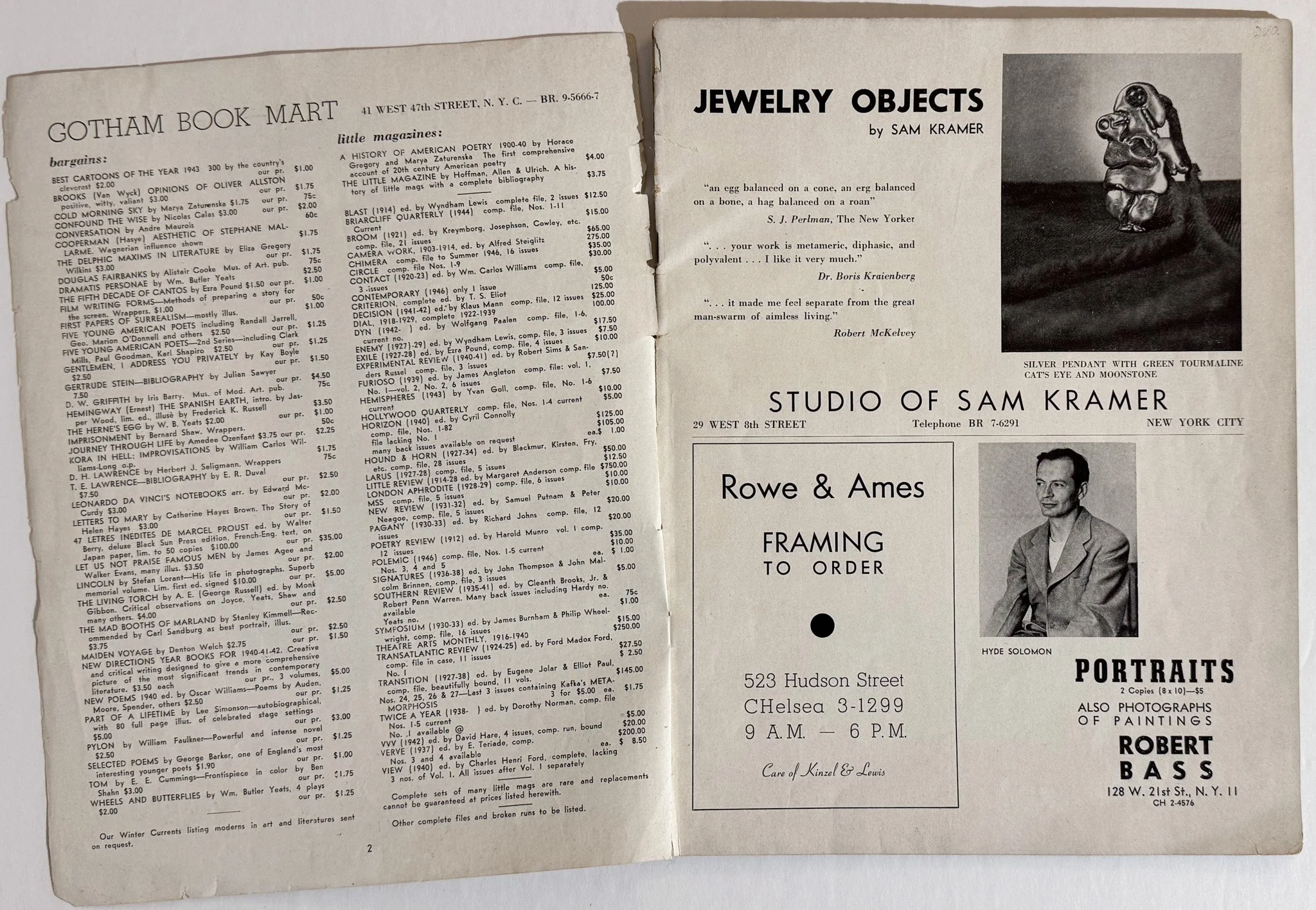 Image 6 of 9
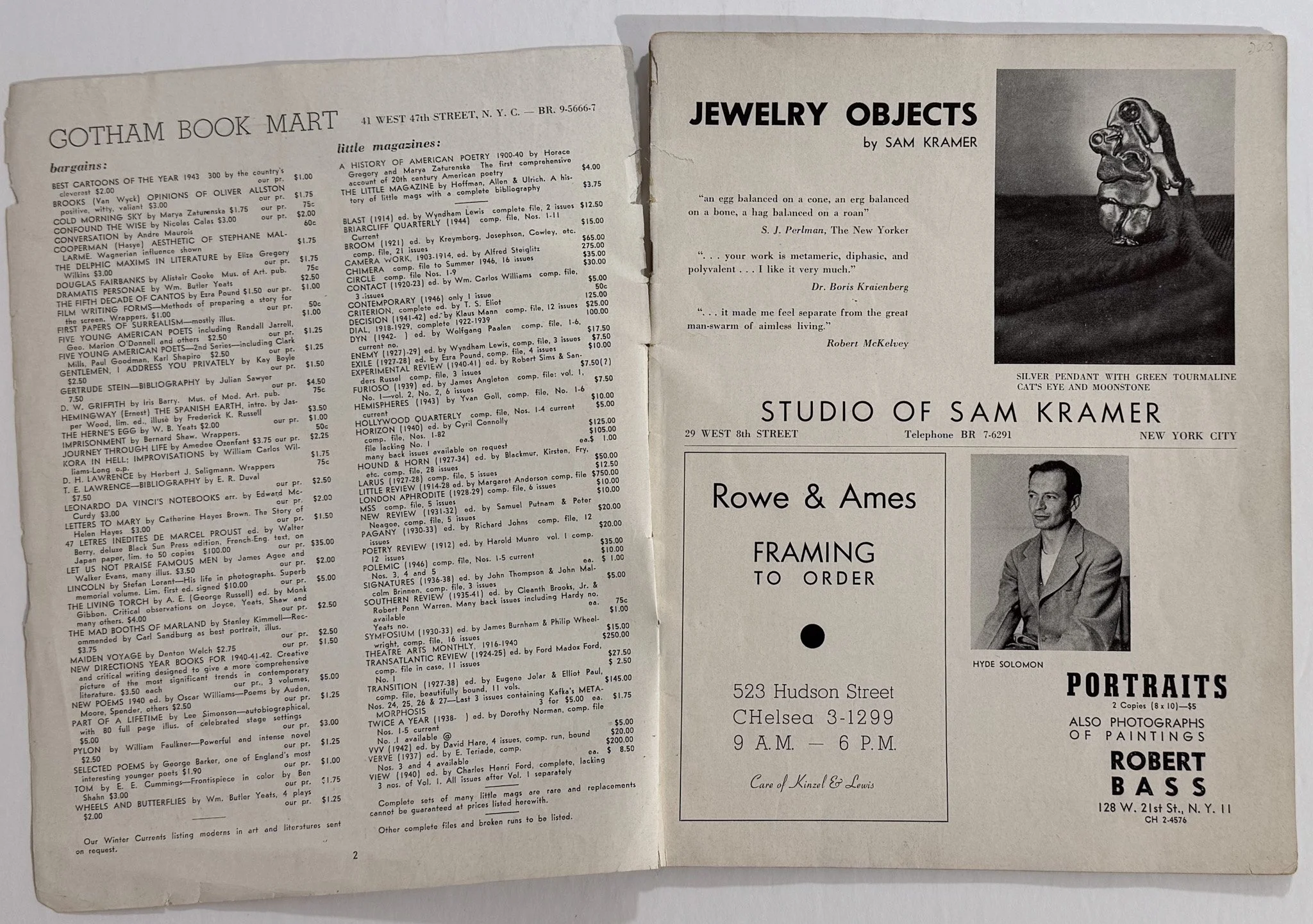 Image 7 of 9
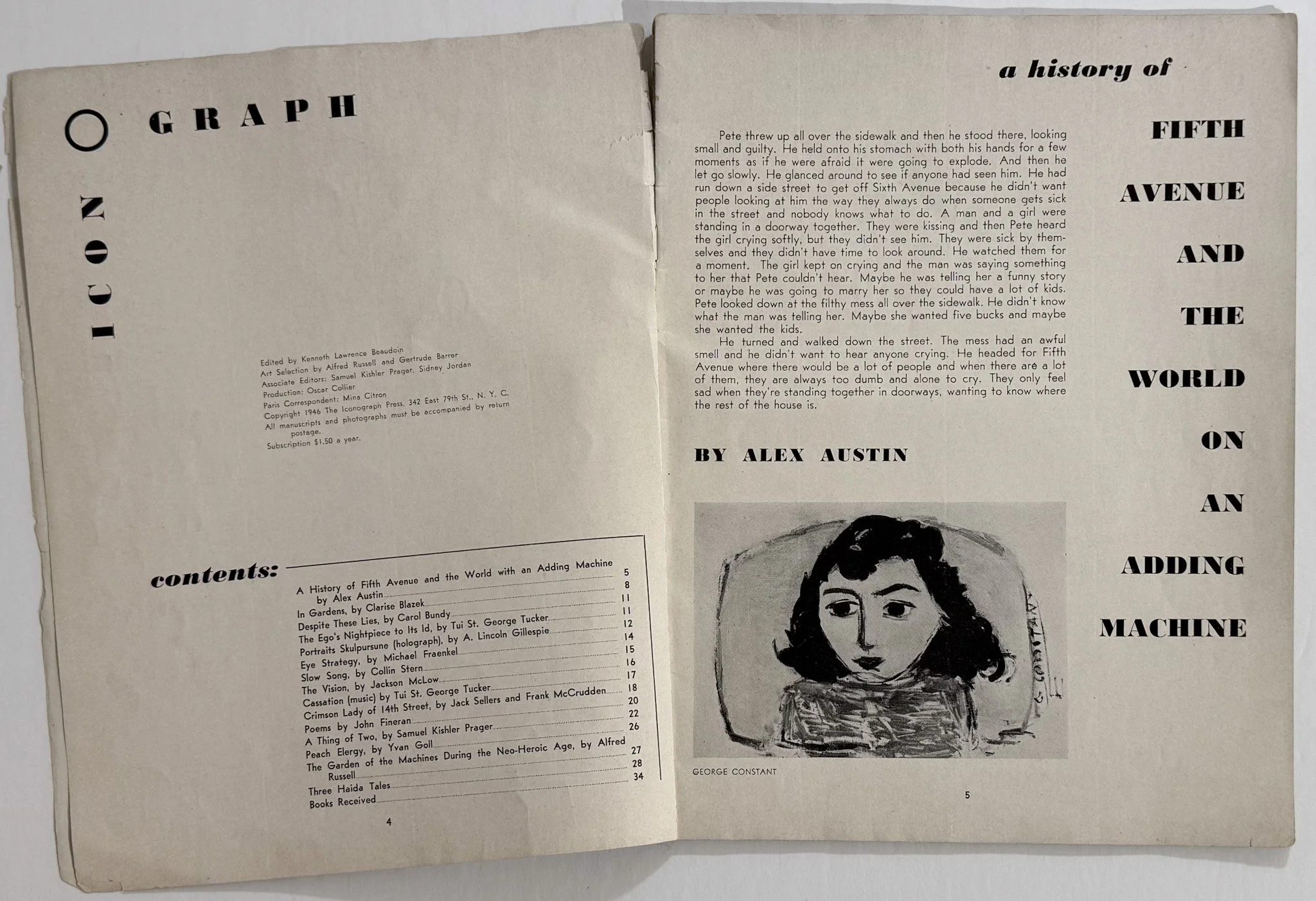 Image 8 of 9
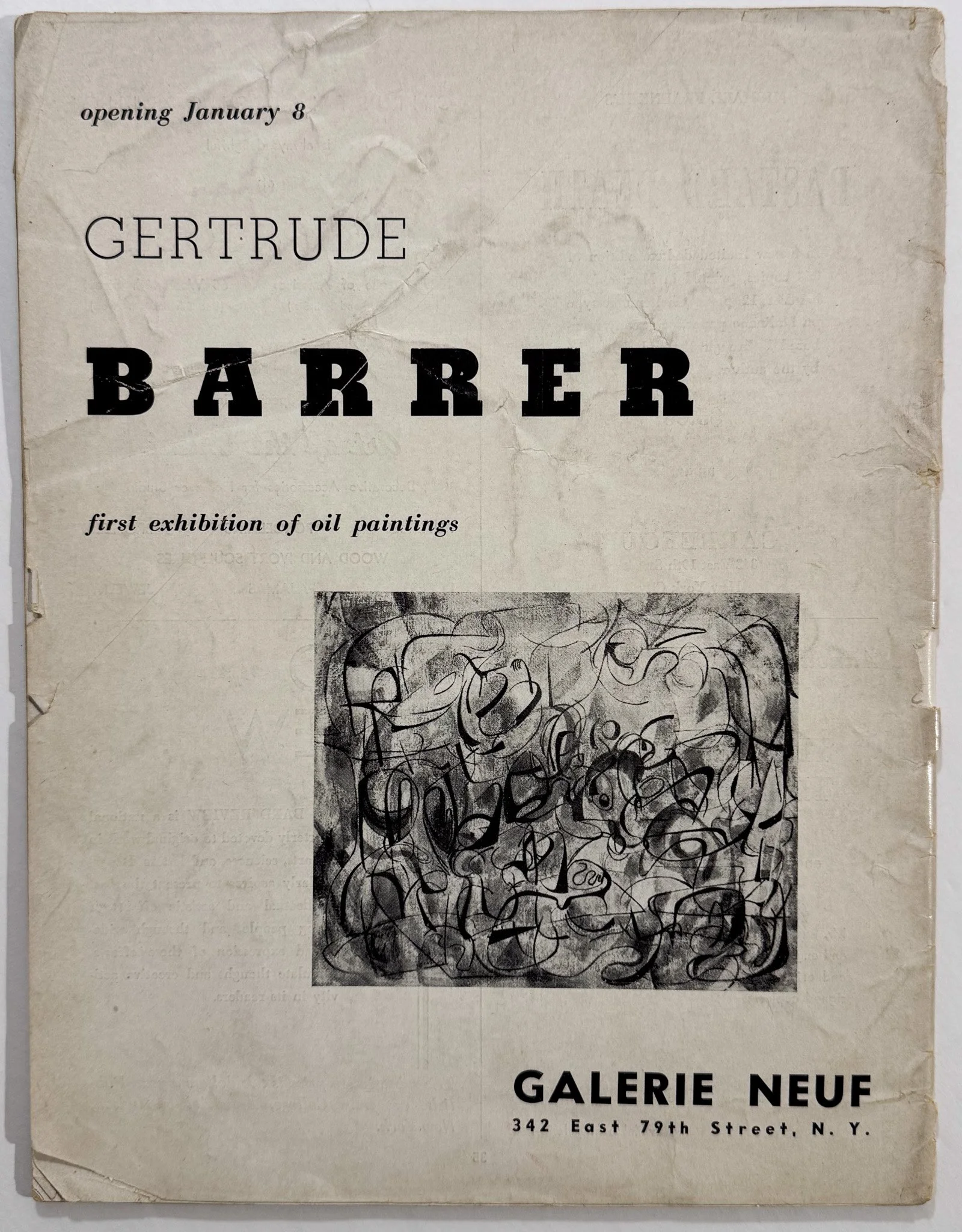 Image 9 of 9