An exceptionally scarce and visually commanding artist’s newspaper with a graphic vocabulary that channels Constructivism and experimental modernist typography. Jointly conceived by Nadia Coën, Andrew Castrucci, and Wm. Bruce Witsiepe and published on August 7, 1994 under the EAU/Éditions Anti-Utopia imprint at 64 Union Street, Brooklyn. Three loose double-sided newsprint sheets, each approximately 30 × 23 inches unfolded, printed principally in yellow/ochre, each folded into quarters. Part of The Inclining Experiment Newspapers, a series of limited-edition prints produced on commercial newspaper presses in editions of 100 and distributed as public handouts, deliberately merging the everyday and disposable character of newsprint with conceptual and poetic experimentation.
Inclining Experiment 2 is considerably more complex physically than its designation as a newspaper might suggest. Its three large sheets are printed on both sides, each side divided into two principal image fields, producing twelve image fields in all. These are simultaneously autonomous and interdependent: circles, trapezoids, linear networks, diagrams, photographs, pictograms, scattered language, and recognizable objects—including a monumental glass jug and wedge of cheese—extend across and respond to the folds. As the sheets are opened, closed, rotated, or partially unfolded, individual fields disappear and reappear in new relationships. The reader effectively edits the work through handling it, transforming a fixed group of printed images into a succession of changing poster-scale compositions.
The publication's own text confirms the intentionality of this structure. It asks whether the pages might be understood as a landscape “punctuated by a code” and characterizes the newspaper as a “folded satellite” and “flying geometry.” Central to that code is the recurring “little question box,” a phrase Coën traces to her father, who affectionately applied it to each of his children as they began to acquire language. She proposes this question box as the probable cryptographic key to The Inclining Experiment: an emblem for a project concerned throughout with language, perception, geometry, uncertainty, and the instability of apparently fixed systems of meaning.
That idea receives a particularly elegant resolution on the twelfth and final field. Beneath a commanding question mark appears the coded colophon: “A. Castrucci / B. Witsiepe / C. oën,” followed by 8.7.94, the EAU device, and 64 Union St., Brooklyn, N.Y. 11231. The A-B-C sequence turns the collaborators' names themselves into part of the publication's graphic and linguistic game, while definitively identifying the work as Inclining Experiment 2.
The three artists belonged to the overlapping networks of alternative publishing, collaborative printmaking, and artist-run spaces that flourished in downtown Manhattan and Brooklyn during the late 1980s and early 1990s. Nadia Coën, raised in Zimbabwe and based in New York, developed an interdisciplinary practice encompassing architecture, installation, light, language, artist's books, and ephemeral printed matter, and was a co-founder of Anti-Utopia. Andrew Castrucci, artist, printmaker, publisher, and activist, co-founded the Lower East Side artist-run space Bullet Space and established its print shop, an important locus for collaborative and politically engaged printed work. Coën and Castrucci were central to Your House Is Mine (1988–92), the landmark collaborative artist-book and street-poster project addressing homelessness, AIDS, gentrification, and contested urban space. Wm. Bruce Witsiepe (1951–1995), trained at the Louisville School of Art and Cooper Union, worked across drawing, installation, writing, publishing, music, and performance and was a member of the experimental group Circle X. His diagrammatic and text-based practice and involvement with Anti-Utopia place him naturally within the conceptual and visual language of the present collaboration.
Institutional evidence is unusually strong for so ephemeral a publication. The New York Public Library Artists' Books Collection holds Inclining Experiment 2 and catalogs it as both an artist's book and poster, specifically transcribing its colophon at “Number 2, page [12].” An inclining experiment | Item … Direct examination of the NYPL example further confirms the physical format of No. 2: three sheets, approximately 30 × 23 inches unfolded, corresponding to the present copy and correcting the generalized two-sheet description found in the institutional catalog record. The NYPL copy was additionally folded for mailing and addressed; the present example retains only the intended quarter folds and consequently presents the large compositions with appreciably fewer intervening crease lines when opened. MoMA's library records holdings of Nos. 1–6 lacking No. 3, thus including No. 2 as well. Tate holds later numbers of the series but not No. 2.
Complete with all three sheets. Expected light toning and handling to the inherently fragile newsprint, with the intended quarter folds; notably well preserved for its scale, material, and original mode of distribution. The absence of the additional postal fold present in the NYPL example allows the compositions to read with unusual clarity when fully opened.
One of only 100 copies. A particularly compelling example of the 1990s artist's newspaper transformed into a mutable graphic environment—simultaneously artist's book, poster suite, visual poem, conceptual print multiple, and participatory paper object.
An exceptionally scarce and visually commanding artist’s newspaper with a graphic vocabulary that channels Constructivism and experimental modernist typography. Jointly conceived by Nadia Coën, Andrew Castrucci, and Wm. Bruce Witsiepe and published on August 7, 1994 under the EAU/Éditions Anti-Utopia imprint at 64 Union Street, Brooklyn. Three loose double-sided newsprint sheets, each approximately 30 × 23 inches unfolded, printed principally in yellow/ochre, each folded into quarters. Part of The Inclining Experiment Newspapers, a series of limited-edition prints produced on commercial newspaper presses in editions of 100 and distributed as public handouts, deliberately merging the everyday and disposable character of newsprint with conceptual and poetic experimentation.
Inclining Experiment 2 is considerably more complex physically than its designation as a newspaper might suggest. Its three large sheets are printed on both sides, each side divided into two principal image fields, producing twelve image fields in all. These are simultaneously autonomous and interdependent: circles, trapezoids, linear networks, diagrams, photographs, pictograms, scattered language, and recognizable objects—including a monumental glass jug and wedge of cheese—extend across and respond to the folds. As the sheets are opened, closed, rotated, or partially unfolded, individual fields disappear and reappear in new relationships. The reader effectively edits the work through handling it, transforming a fixed group of printed images into a succession of changing poster-scale compositions.
The publication's own text confirms the intentionality of this structure. It asks whether the pages might be understood as a landscape “punctuated by a code” and characterizes the newspaper as a “folded satellite” and “flying geometry.” Central to that code is the recurring “little question box,” a phrase Coën traces to her father, who affectionately applied it to each of his children as they began to acquire language. She proposes this question box as the probable cryptographic key to The Inclining Experiment: an emblem for a project concerned throughout with language, perception, geometry, uncertainty, and the instability of apparently fixed systems of meaning.
That idea receives a particularly elegant resolution on the twelfth and final field. Beneath a commanding question mark appears the coded colophon: “A. Castrucci / B. Witsiepe / C. oën,” followed by 8.7.94, the EAU device, and 64 Union St., Brooklyn, N.Y. 11231. The A-B-C sequence turns the collaborators' names themselves into part of the publication's graphic and linguistic game, while definitively identifying the work as Inclining Experiment 2.
The three artists belonged to the overlapping networks of alternative publishing, collaborative printmaking, and artist-run spaces that flourished in downtown Manhattan and Brooklyn during the late 1980s and early 1990s. Nadia Coën, raised in Zimbabwe and based in New York, developed an interdisciplinary practice encompassing architecture, installation, light, language, artist's books, and ephemeral printed matter, and was a co-founder of Anti-Utopia. Andrew Castrucci, artist, printmaker, publisher, and activist, co-founded the Lower East Side artist-run space Bullet Space and established its print shop, an important locus for collaborative and politically engaged printed work. Coën and Castrucci were central to Your House Is Mine (1988–92), the landmark collaborative artist-book and street-poster project addressing homelessness, AIDS, gentrification, and contested urban space. Wm. Bruce Witsiepe (1951–1995), trained at the Louisville School of Art and Cooper Union, worked across drawing, installation, writing, publishing, music, and performance and was a member of the experimental group Circle X. His diagrammatic and text-based practice and involvement with Anti-Utopia place him naturally within the conceptual and visual language of the present collaboration.
Institutional evidence is unusually strong for so ephemeral a publication. The New York Public Library Artists' Books Collection holds Inclining Experiment 2 and catalogs it as both an artist's book and poster, specifically transcribing its colophon at “Number 2, page [12].” An inclining experiment | Item … Direct examination of the NYPL example further confirms the physical format of No. 2: three sheets, approximately 30 × 23 inches unfolded, corresponding to the present copy and correcting the generalized two-sheet description found in the institutional catalog record. The NYPL copy was additionally folded for mailing and addressed; the present example retains only the intended quarter folds and consequently presents the large compositions with appreciably fewer intervening crease lines when opened. MoMA's library records holdings of Nos. 1–6 lacking No. 3, thus including No. 2 as well. Tate holds later numbers of the series but not No. 2.
Complete with all three sheets. Expected light toning and handling to the inherently fragile newsprint, with the intended quarter folds; notably well preserved for its scale, material, and original mode of distribution. The absence of the additional postal fold present in the NYPL example allows the compositions to read with unusual clarity when fully opened.
One of only 100 copies. A particularly compelling example of the 1990s artist's newspaper transformed into a mutable graphic environment—simultaneously artist's book, poster suite, visual poem, conceptual print multiple, and participatory paper object.

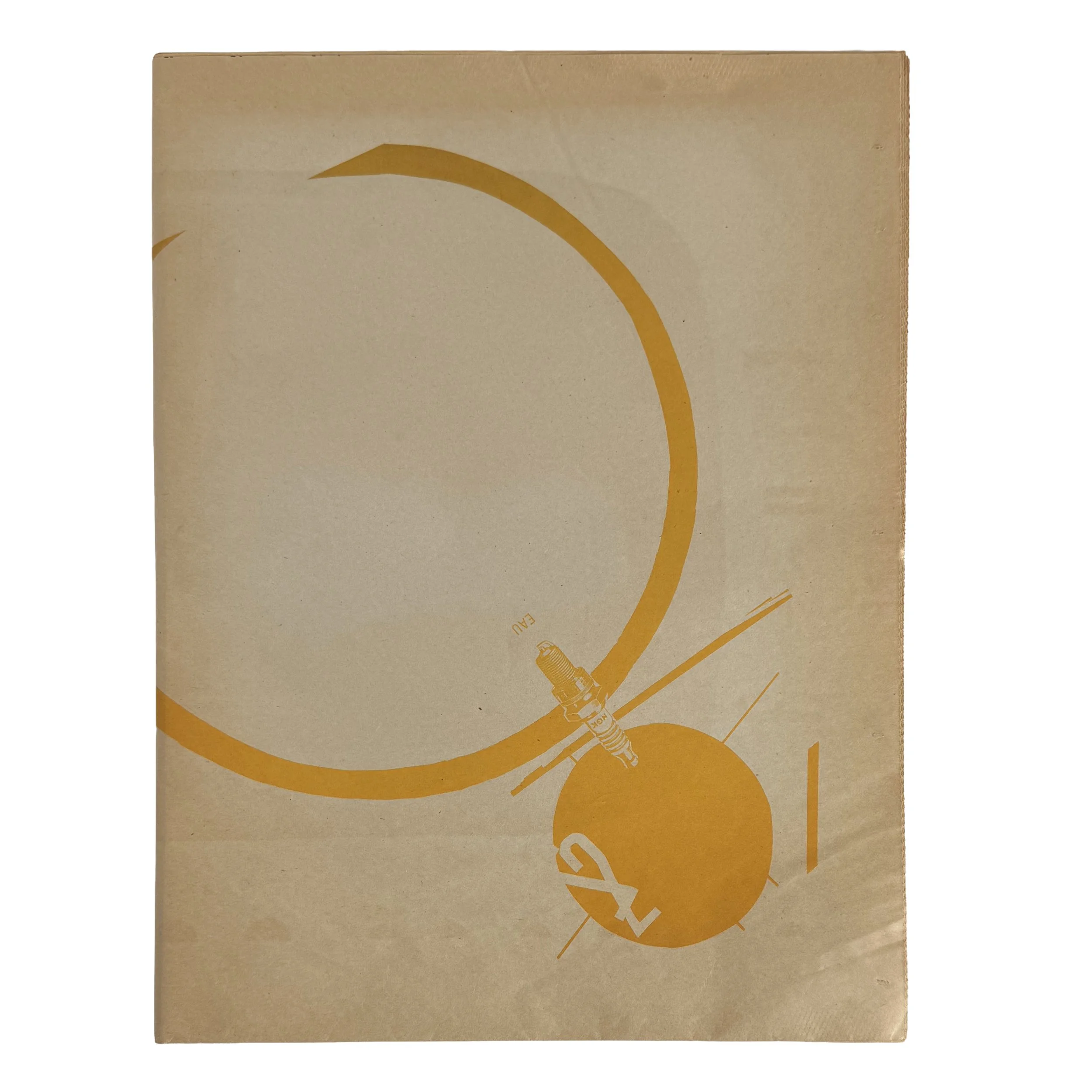 Image 1 of 17
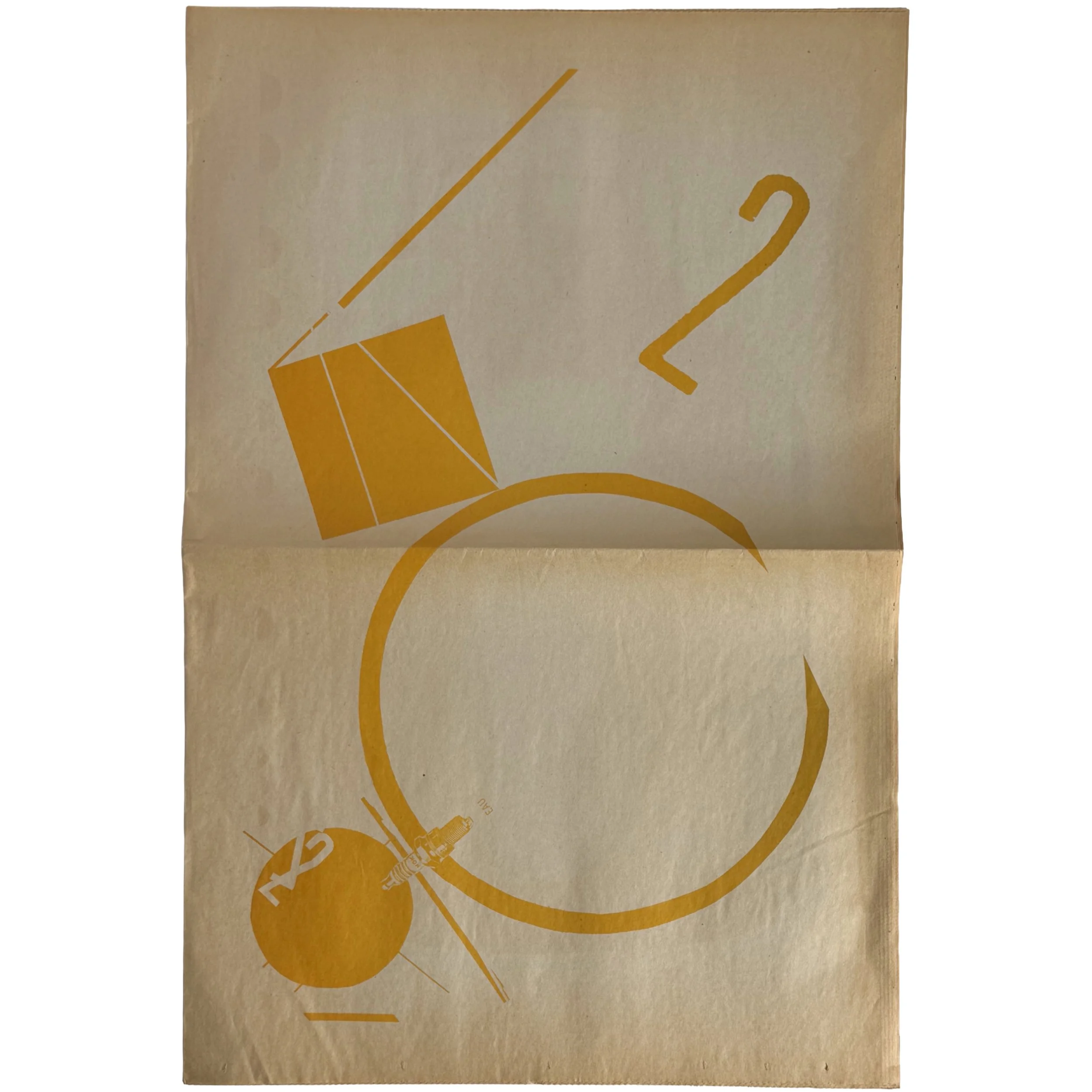 Image 2 of 17
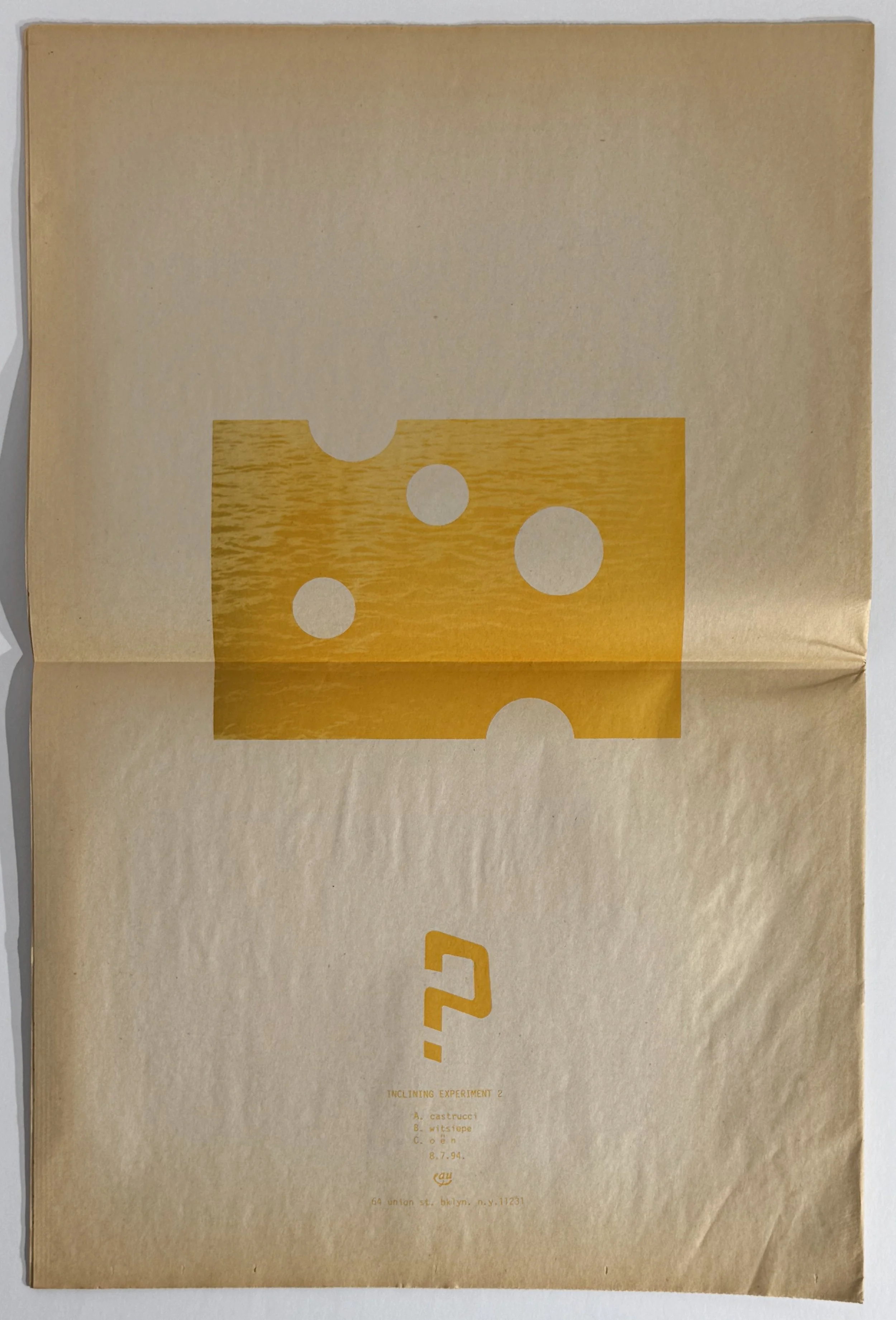 Image 3 of 17
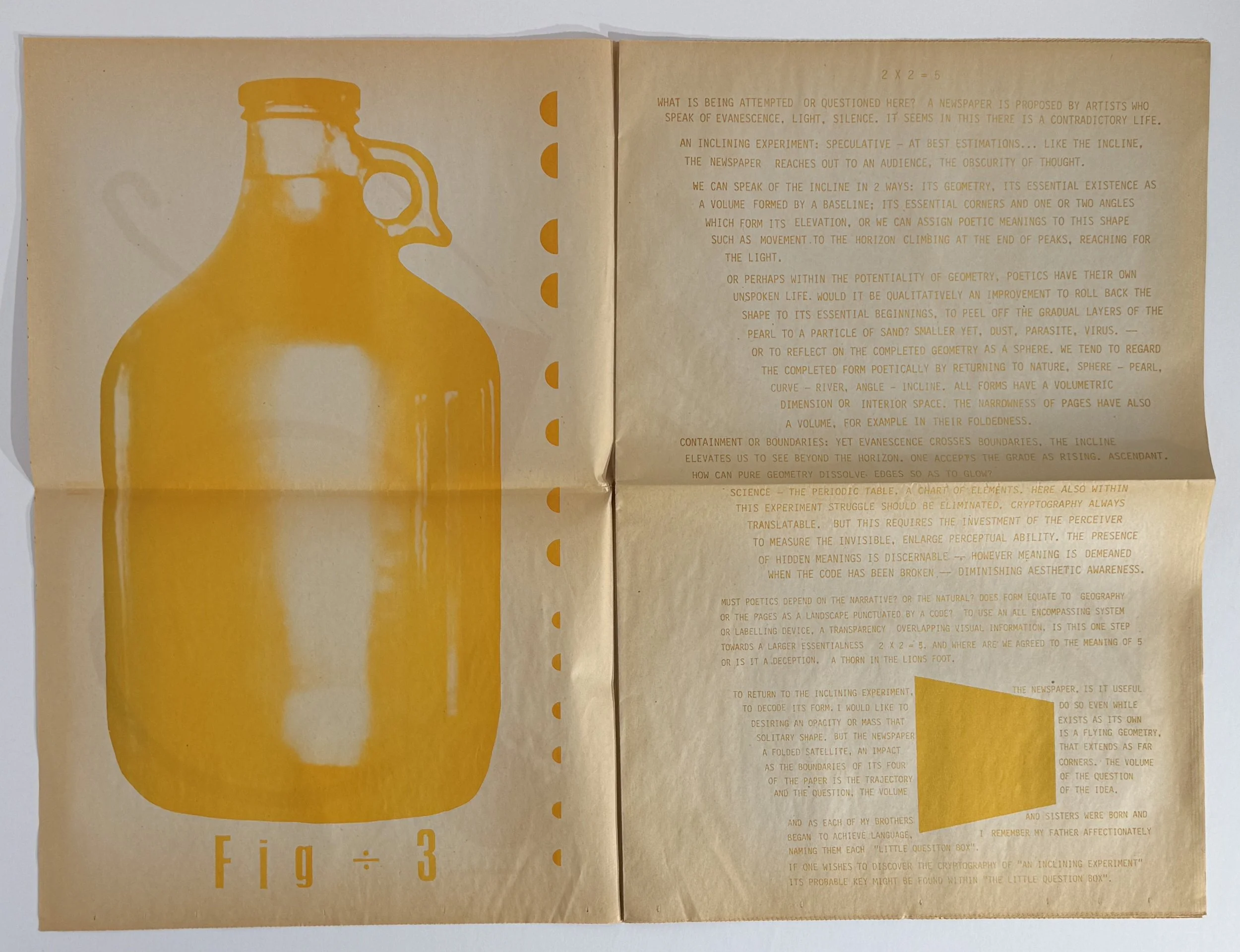 Image 4 of 17
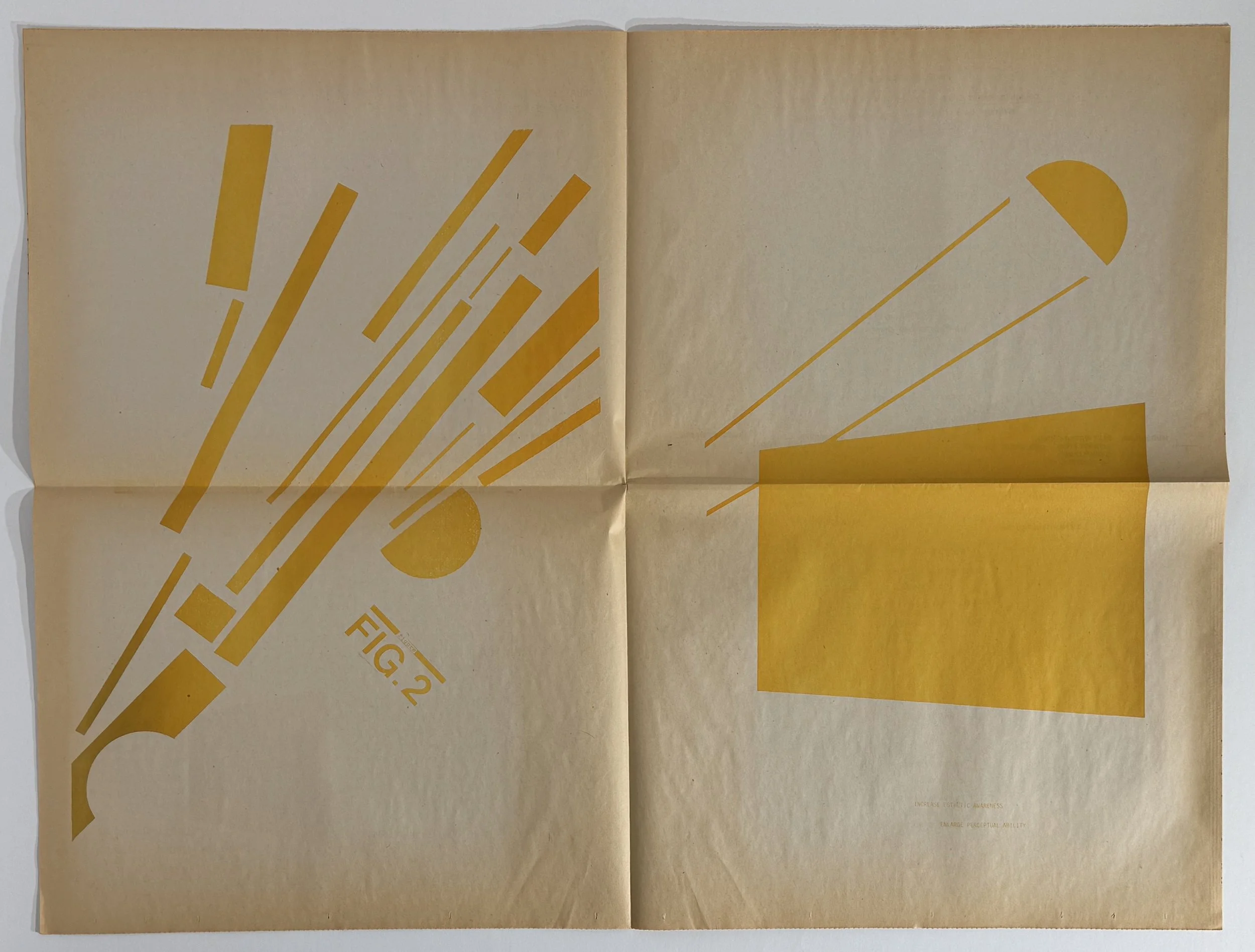 Image 5 of 17
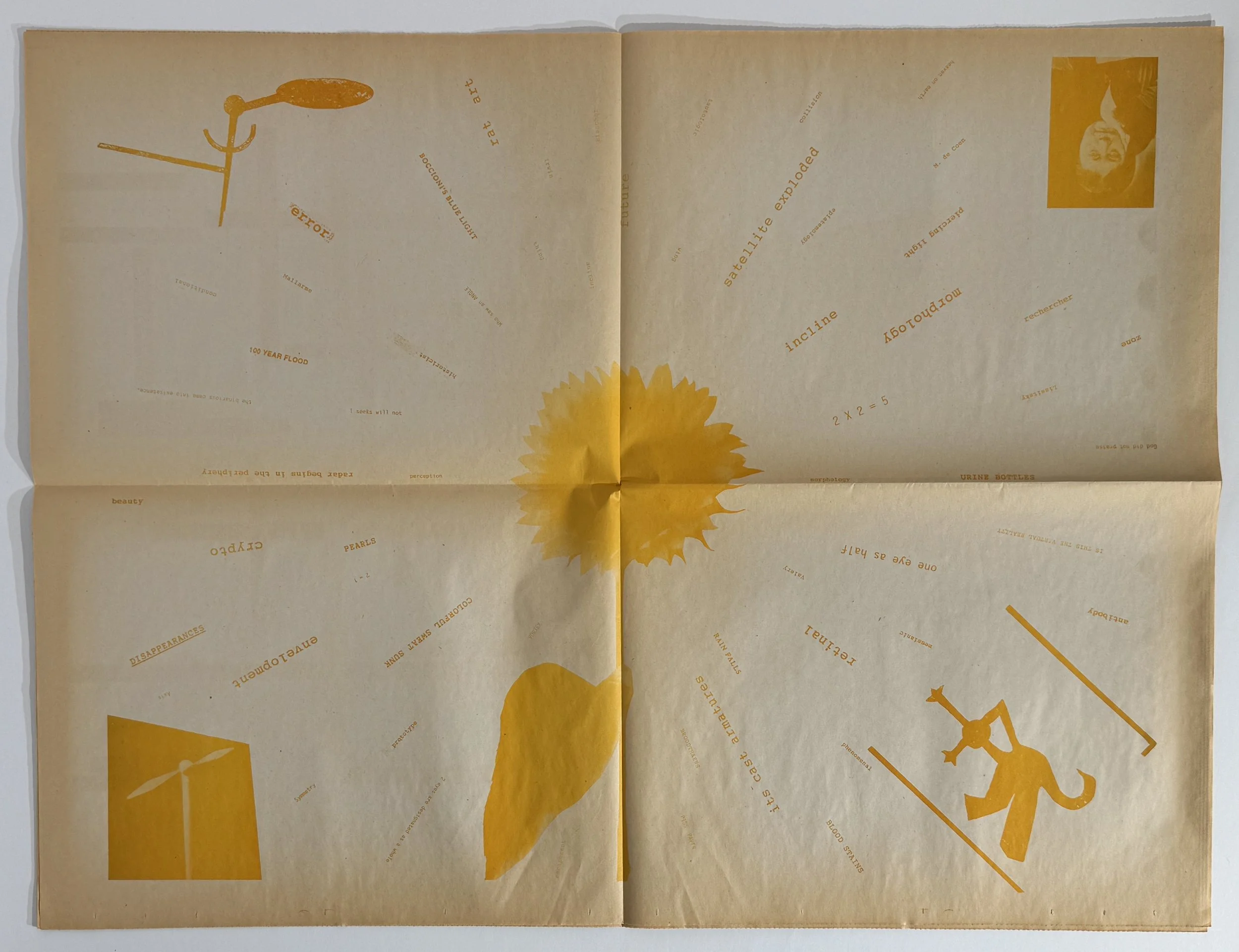 Image 6 of 17
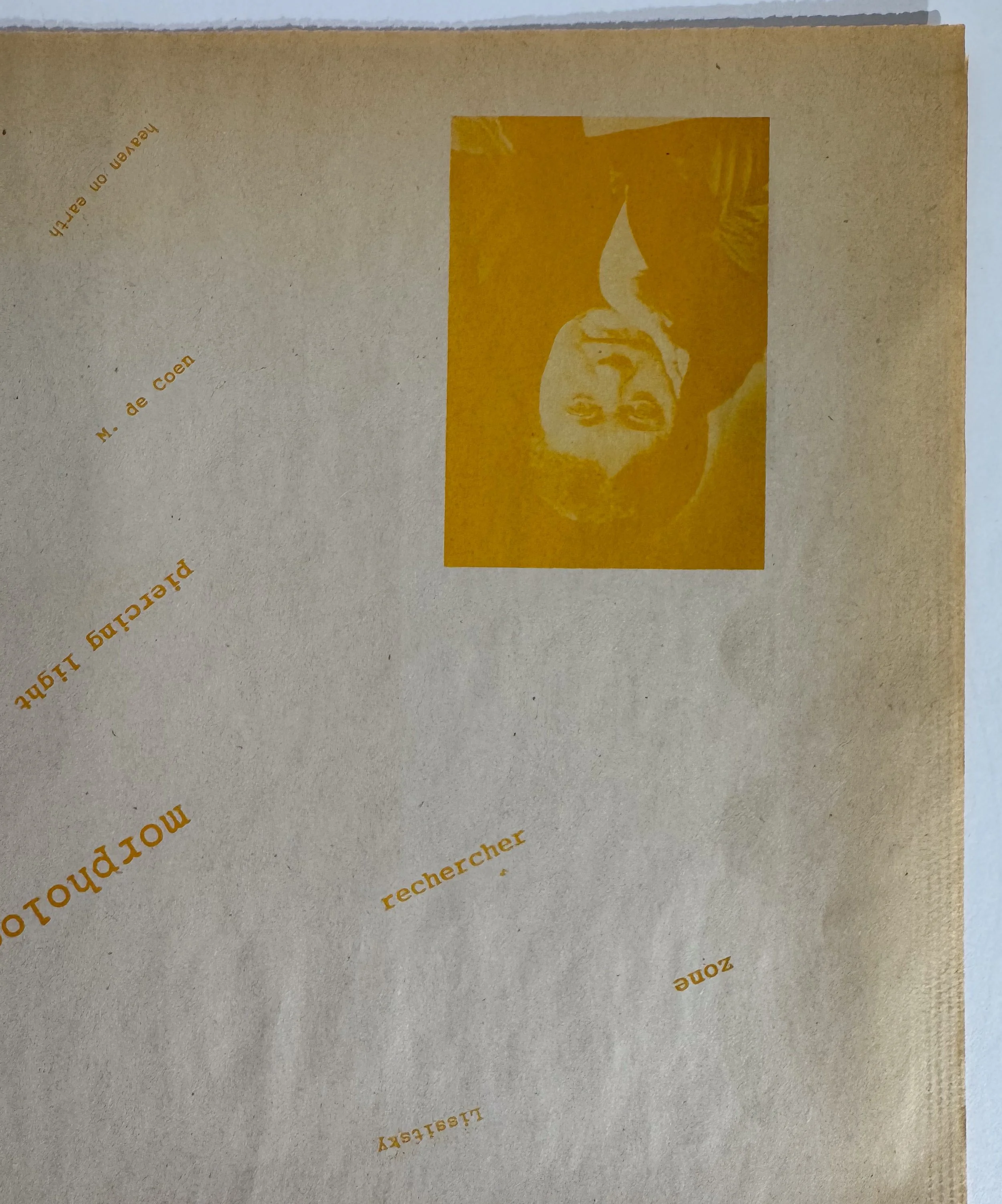 Image 7 of 17
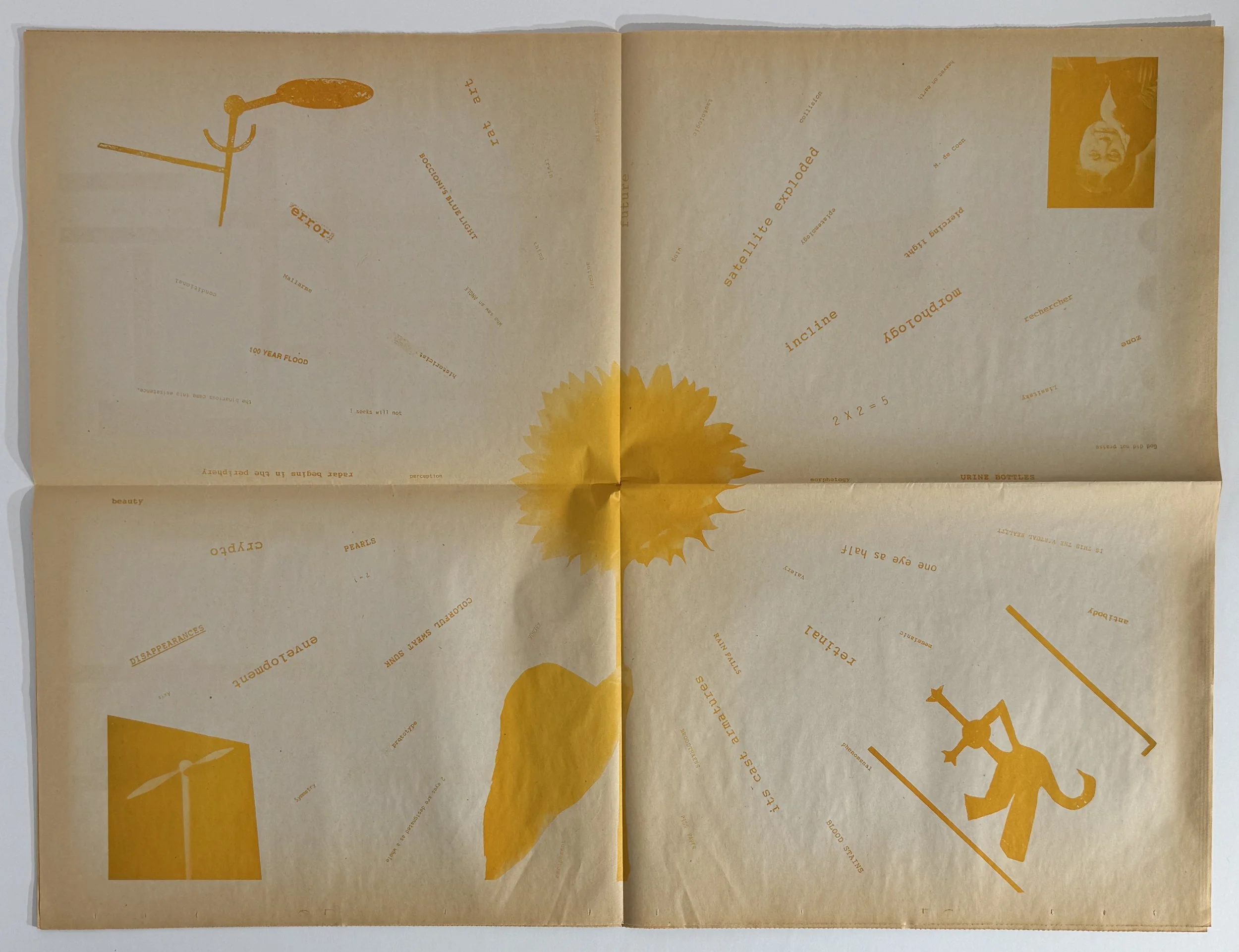 Image 8 of 17
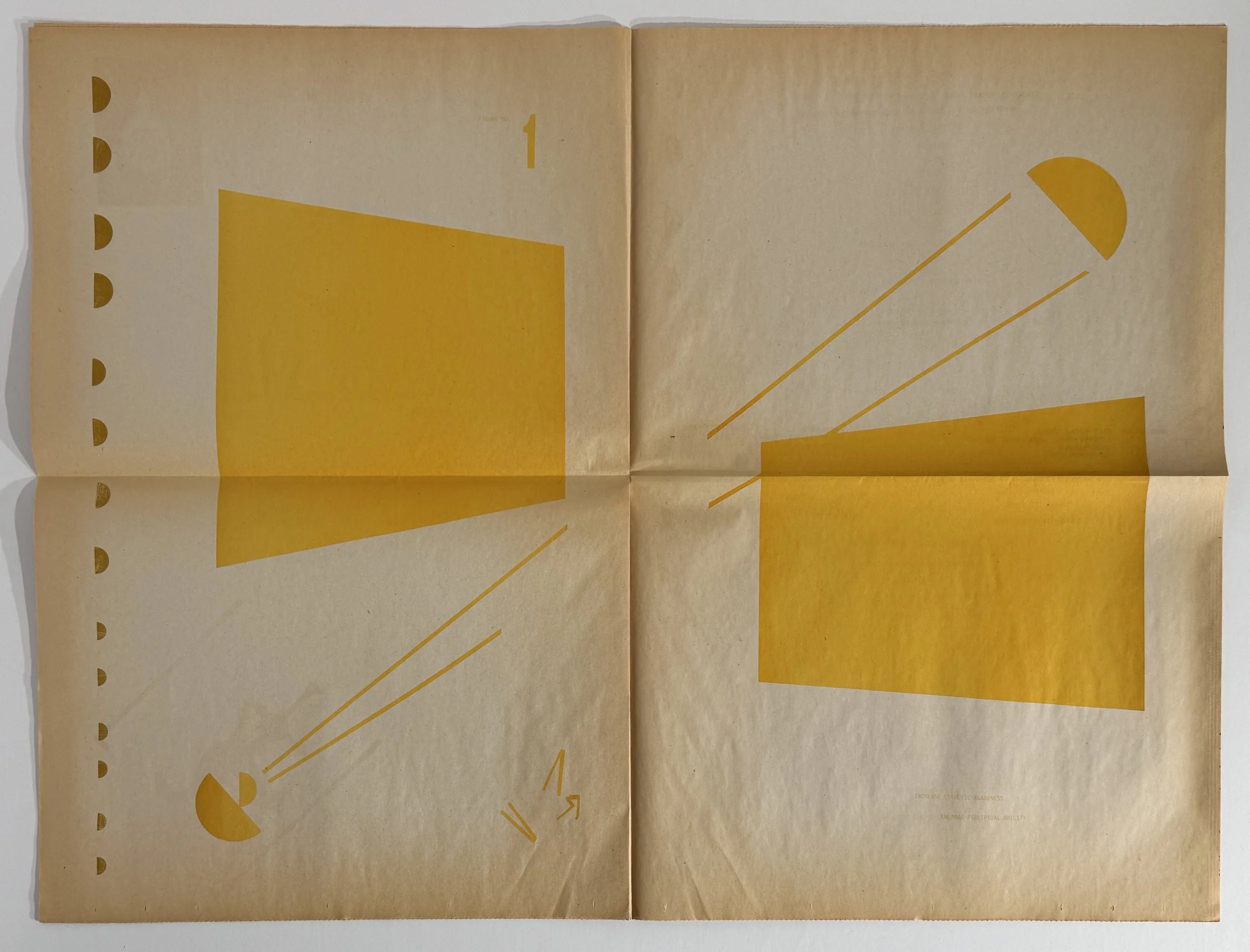 Image 9 of 17
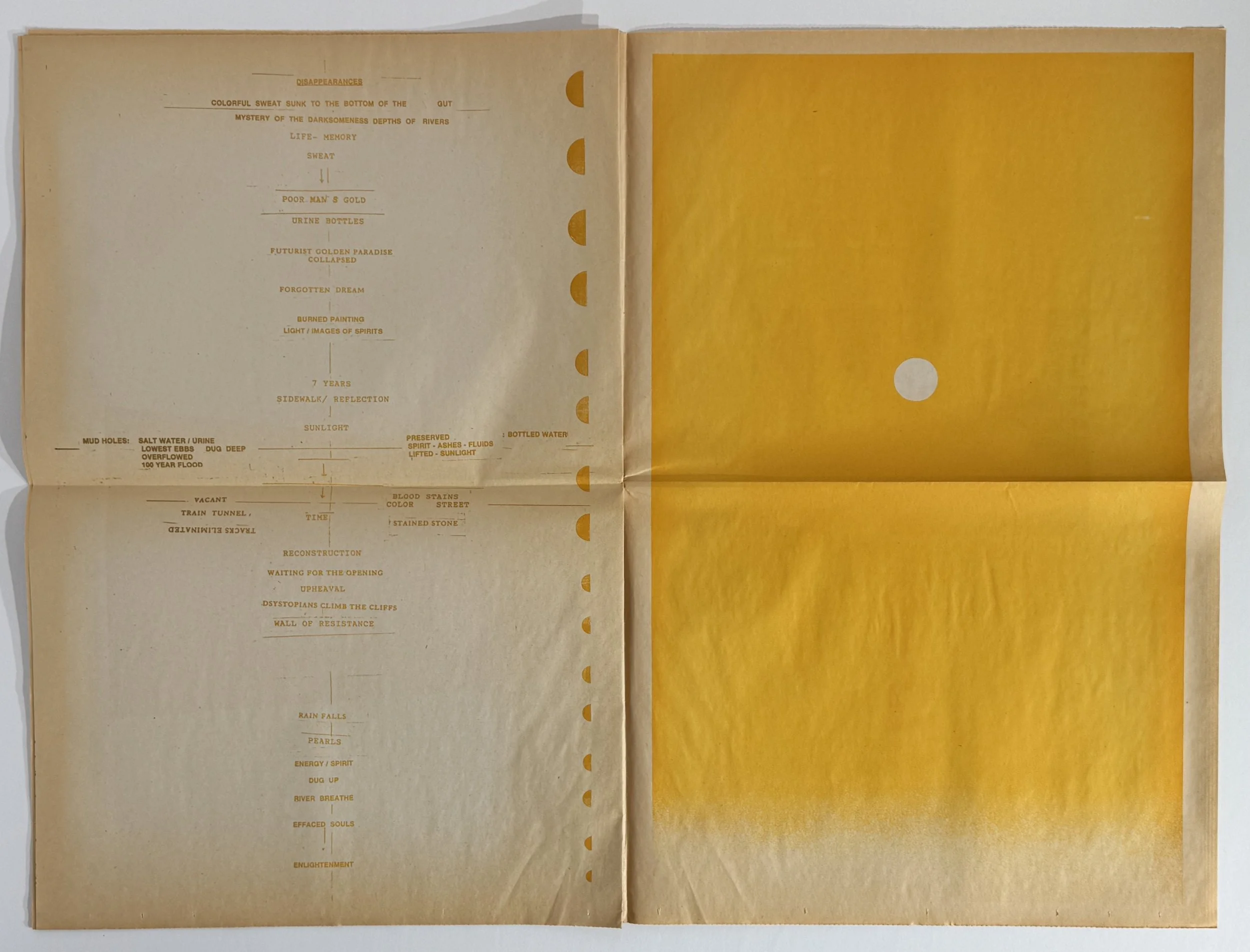 Image 10 of 17
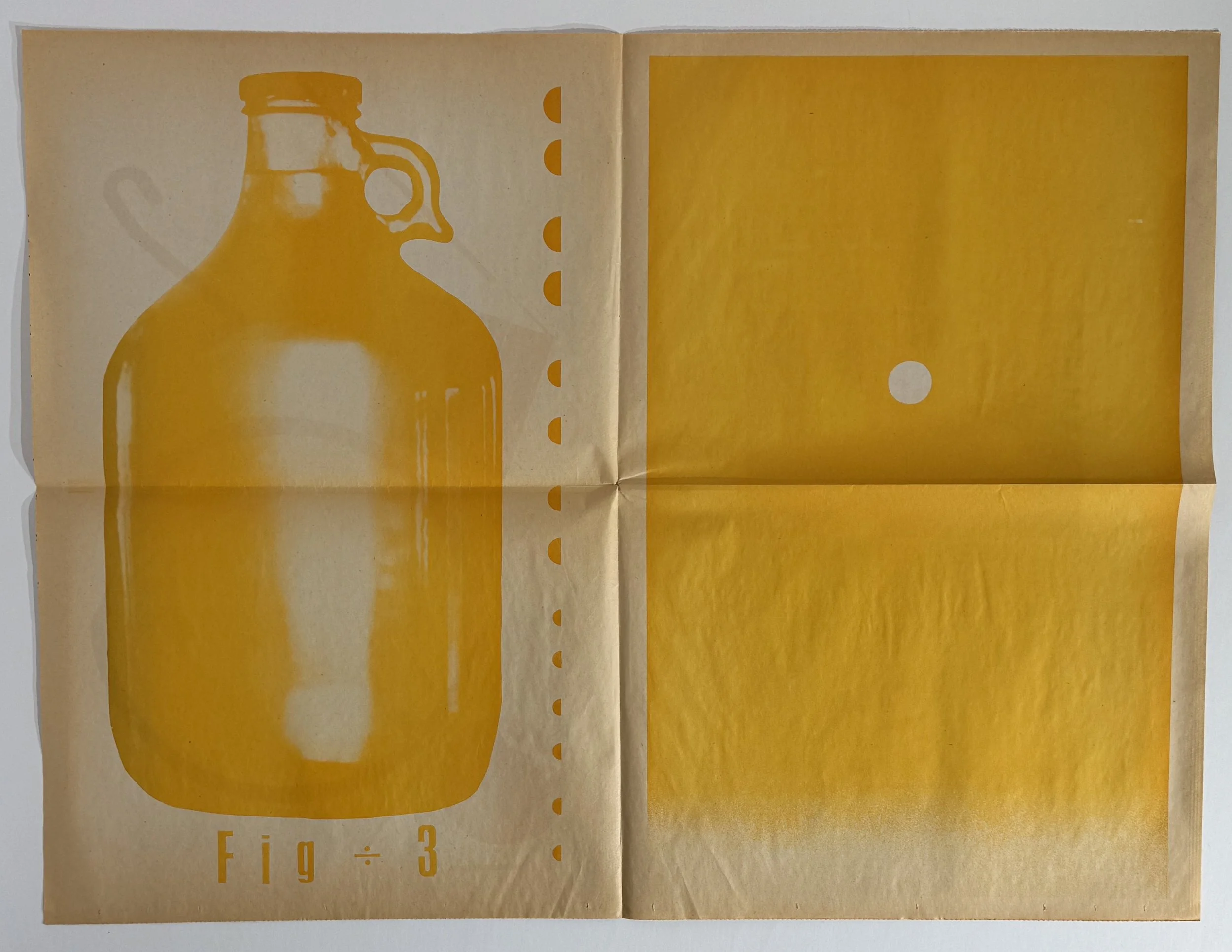 Image 11 of 17
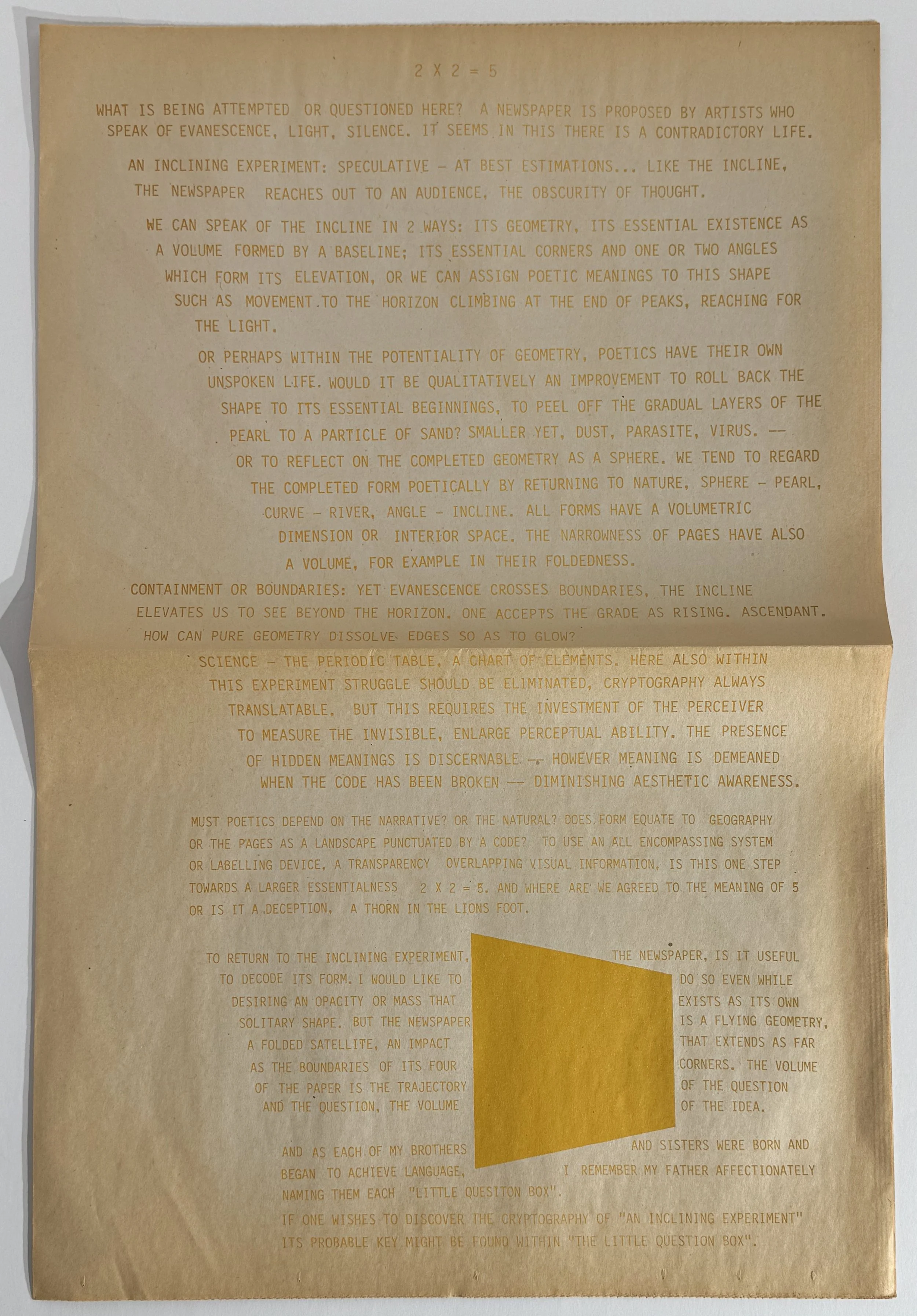 Image 12 of 17
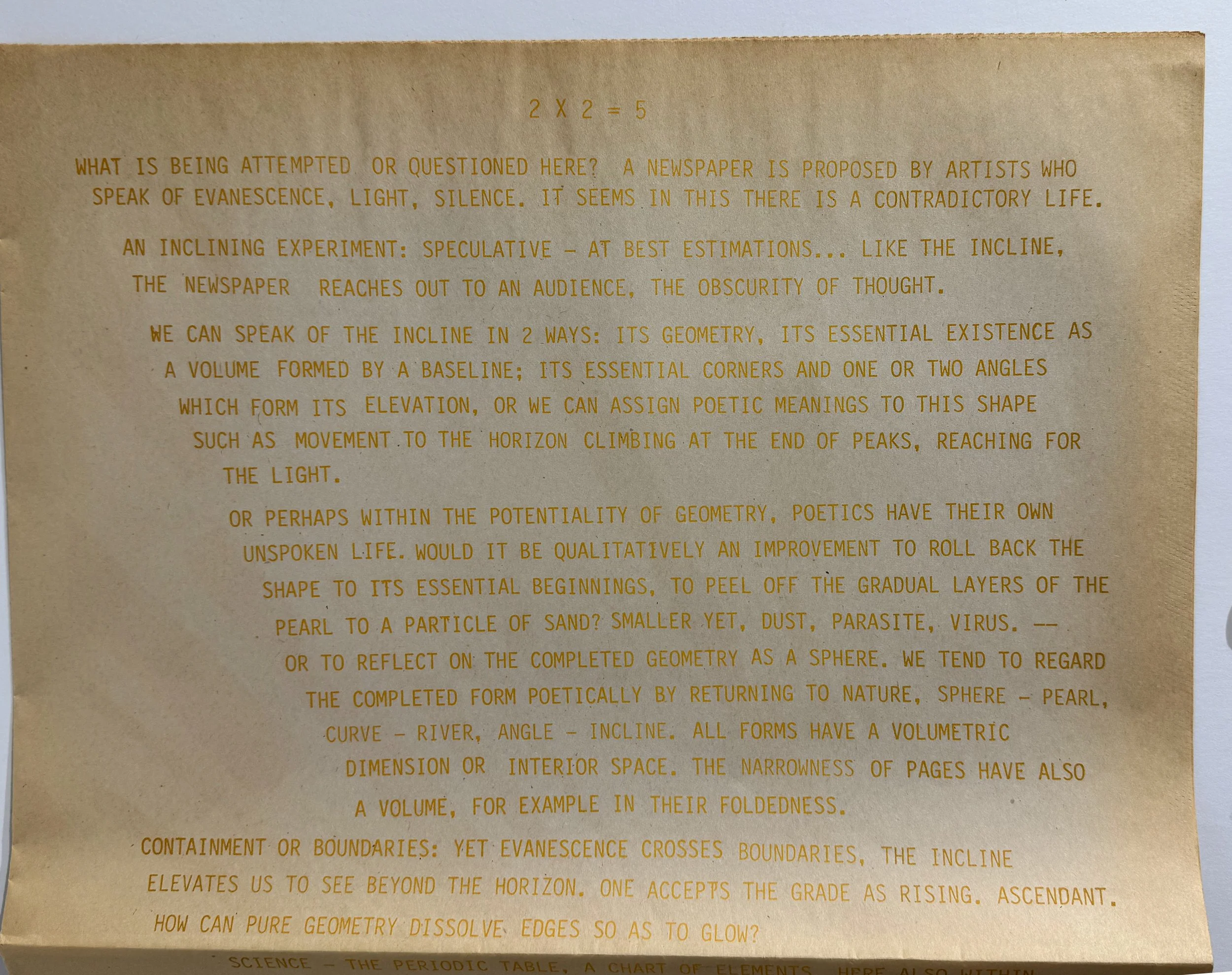 Image 13 of 17
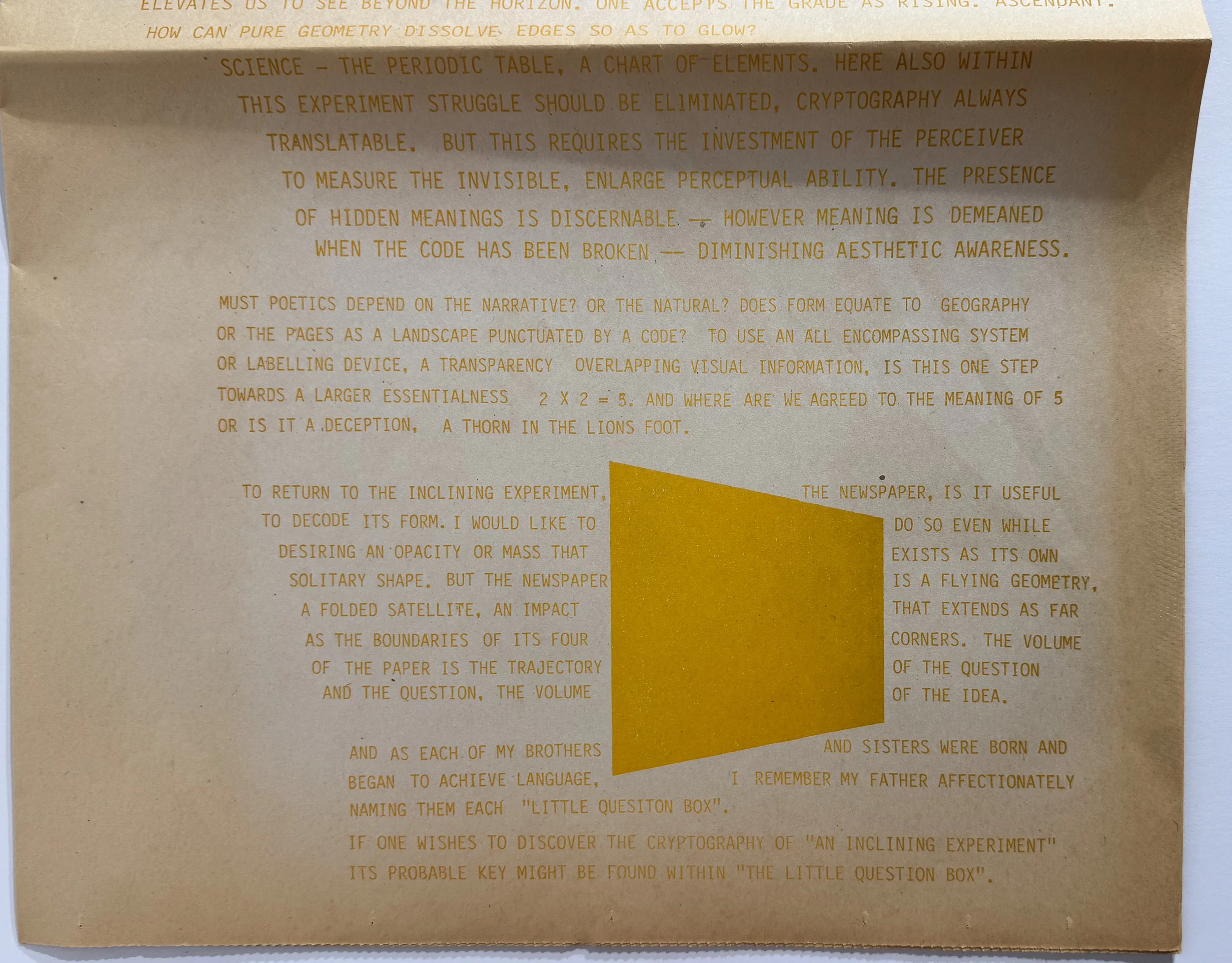 Image 14 of 17
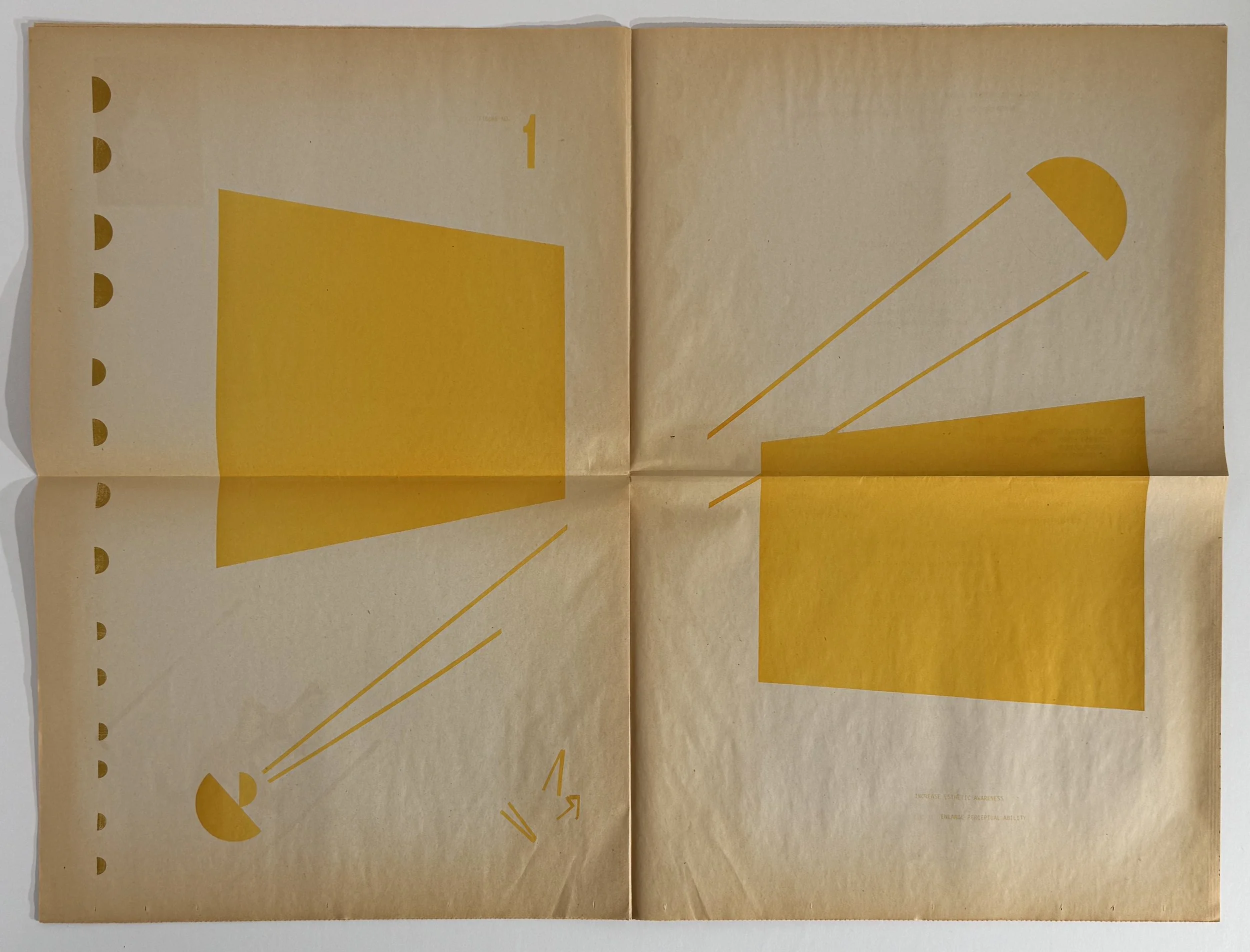 Image 15 of 17
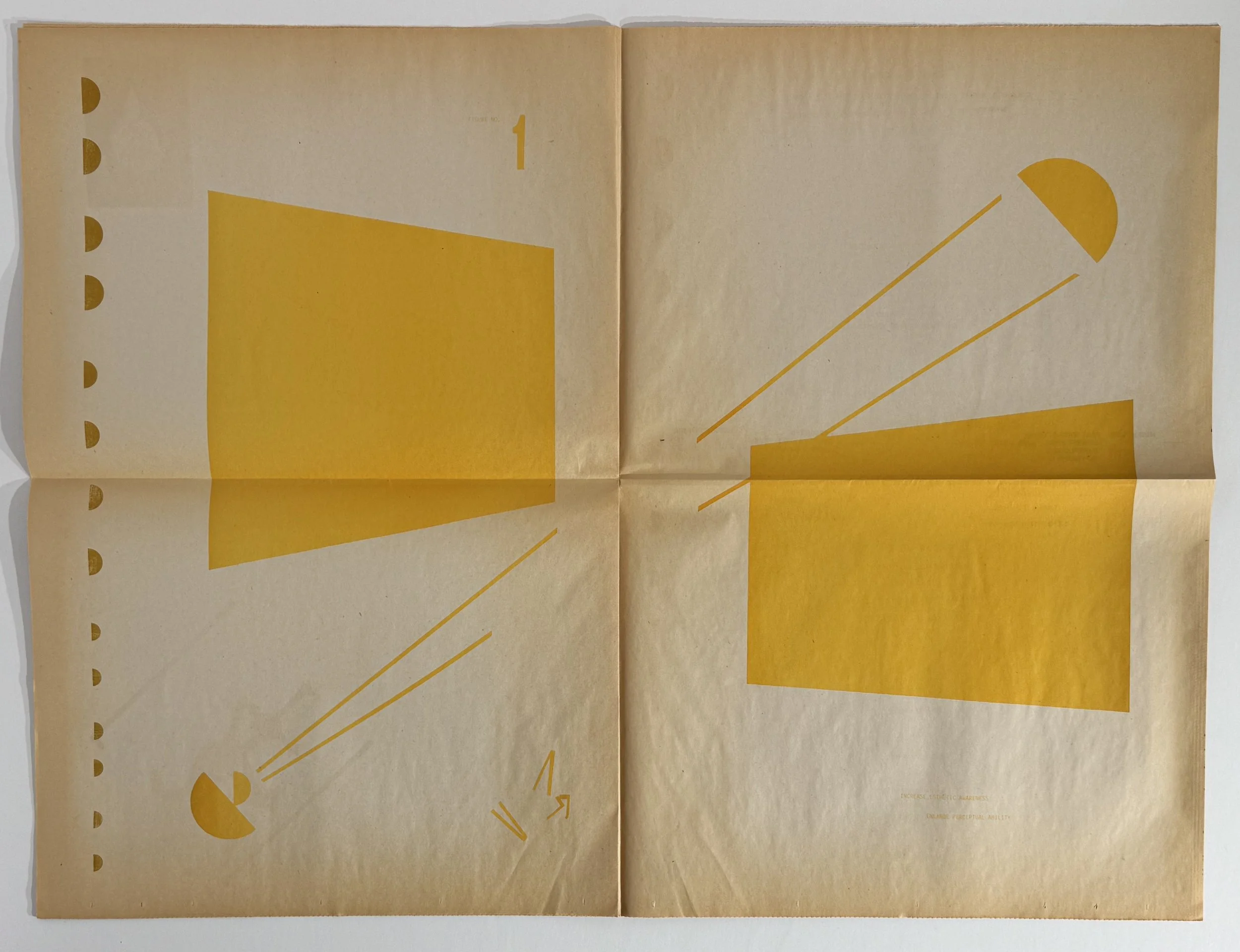 Image 16 of 17
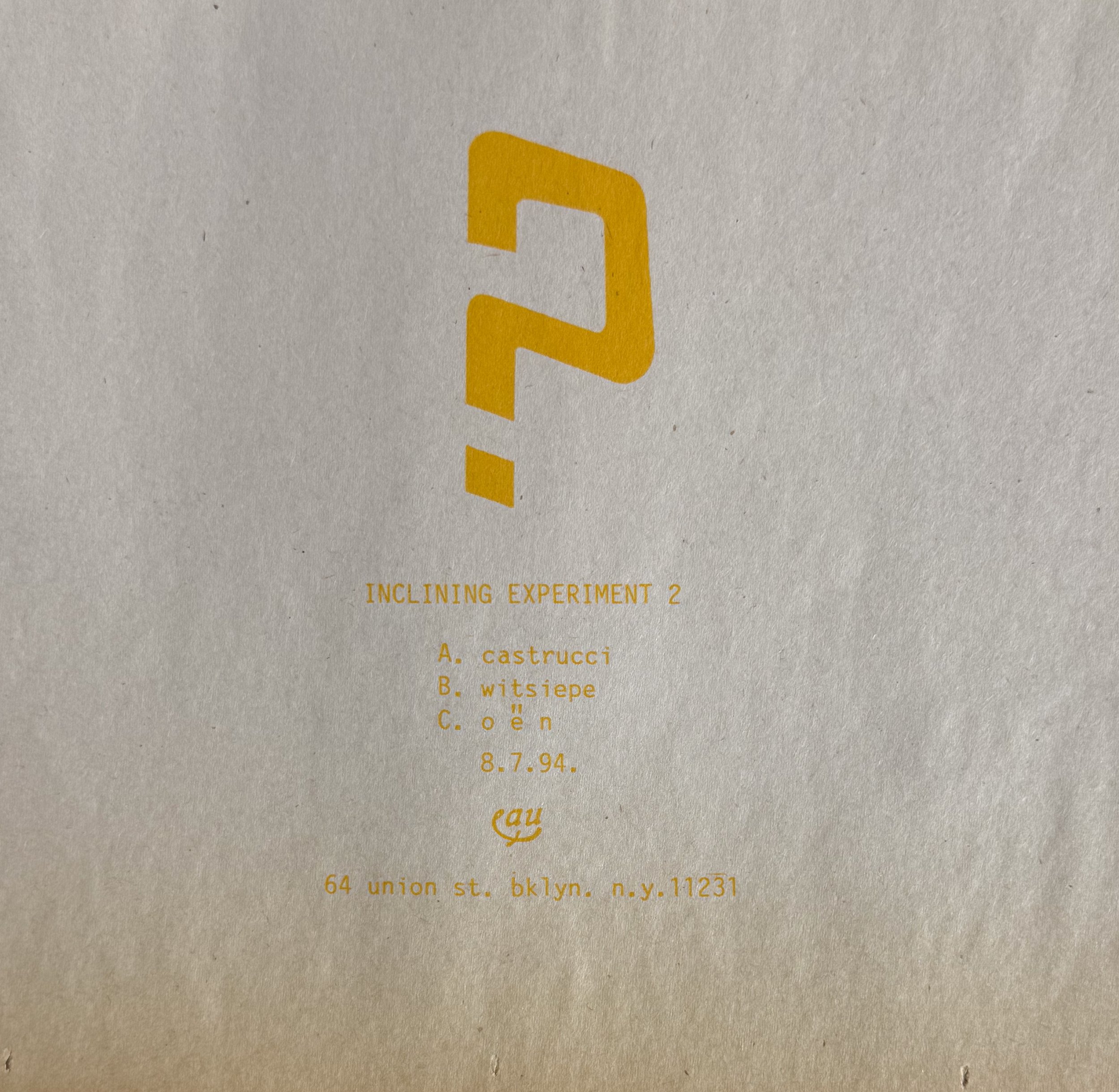 Image 17 of 17