Boeing Scientific Research Laboratories report DI-82-017, published in July, 1962.. 4to (8.5” x 11”), printed wrappers with black tape spine, unpaginated (approximately 75 pages), marked "File Copy" on front cover and Illustrated throughout with photographic plates, thermal contour maps, graphs, and tables. A pre-Apollo lunar research report documenting infrared observations made during the total lunar eclipse of September 5, 1960. John M. Saari and Richard W. Shorthill's study measured thermal behavior across prominent lunar ray craters including Tycho, Aristarchus, Copernicus, Proclus, and Kepler, demonstrating that these formations cooled more slowly than their surrounding terrain. Conducted at a moment when direct exploration of the Moon remained years away, the research formed part of the expanding body of evidence used to infer the composition, structure, and thermal properties of the lunar surface prior to the Apollo missions. Produced by Boeing's Geo-Astrophysics Laboratory with support from the United States Air Force—reflecting the close relationship between aerospace contractors, military research, and space science at the time—and utilizing facilities at Mount Wilson Observatory. Scarce in institutional holdings (five OCLC listings include the Lunar and Planetary Institute and the Defense Technical Information Center) and seldom encountered commercially, it represents an attractive surviving artifact of the research culture that underpinned America's lunar program. Light rubbing to extremities; with one small damp stain to front wrapper, not affecting interior. Slight bowing overall.
Boeing Scientific Research Laboratories report DI-82-017, published in July, 1962.. 4to (8.5” x 11”), printed wrappers with black tape spine, unpaginated (approximately 75 pages), marked "File Copy" on front cover and Illustrated throughout with photographic plates, thermal contour maps, graphs, and tables. A pre-Apollo lunar research report documenting infrared observations made during the total lunar eclipse of September 5, 1960. John M. Saari and Richard W. Shorthill's study measured thermal behavior across prominent lunar ray craters including Tycho, Aristarchus, Copernicus, Proclus, and Kepler, demonstrating that these formations cooled more slowly than their surrounding terrain. Conducted at a moment when direct exploration of the Moon remained years away, the research formed part of the expanding body of evidence used to infer the composition, structure, and thermal properties of the lunar surface prior to the Apollo missions. Produced by Boeing's Geo-Astrophysics Laboratory with support from the United States Air Force—reflecting the close relationship between aerospace contractors, military research, and space science at the time—and utilizing facilities at Mount Wilson Observatory. Scarce in institutional holdings (five OCLC listings include the Lunar and Planetary Institute and the Defense Technical Information Center) and seldom encountered commercially, it represents an attractive surviving artifact of the research culture that underpinned America's lunar program. Light rubbing to extremities; with one small damp stain to front wrapper, not affecting interior. Slight bowing overall.

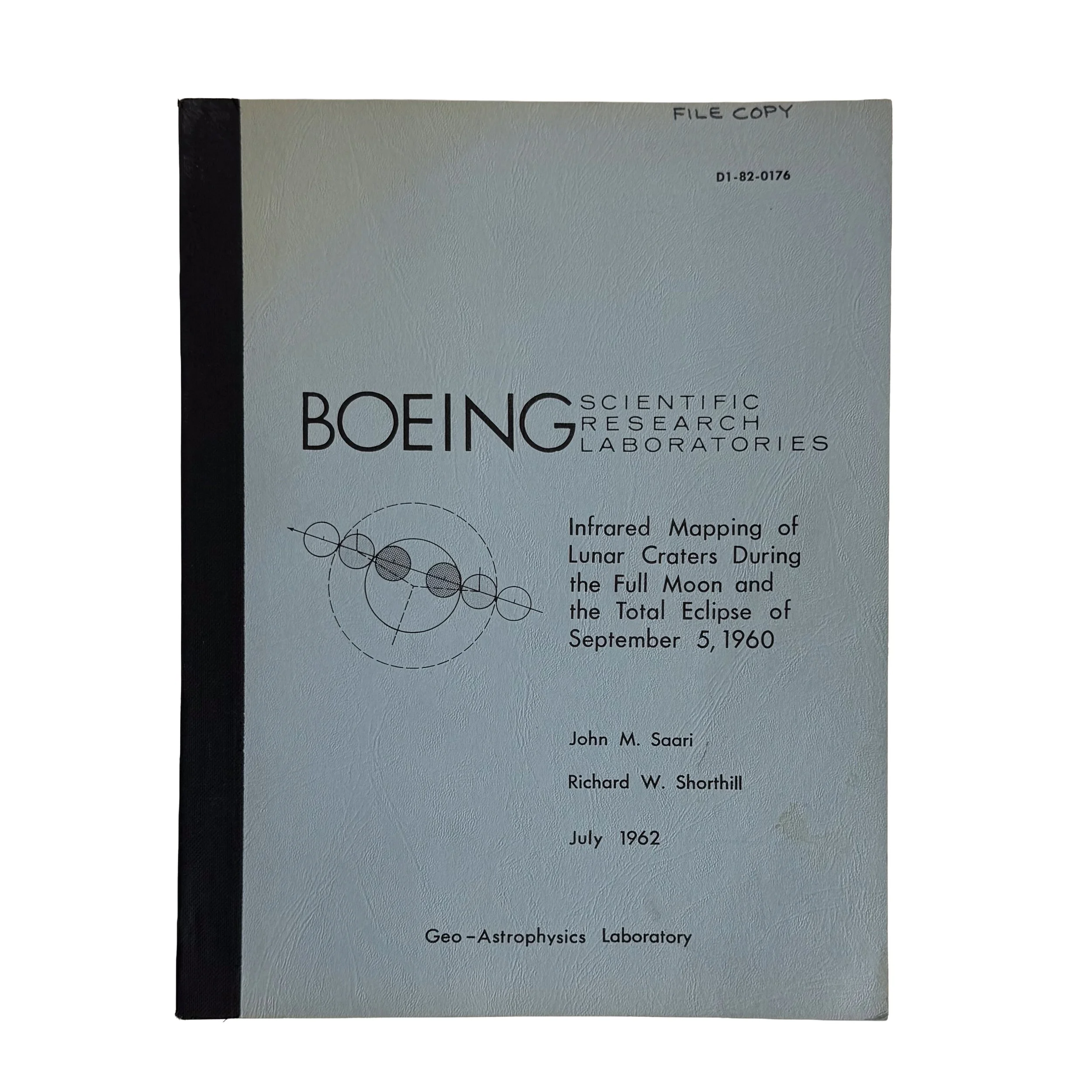 Image 1 of 10
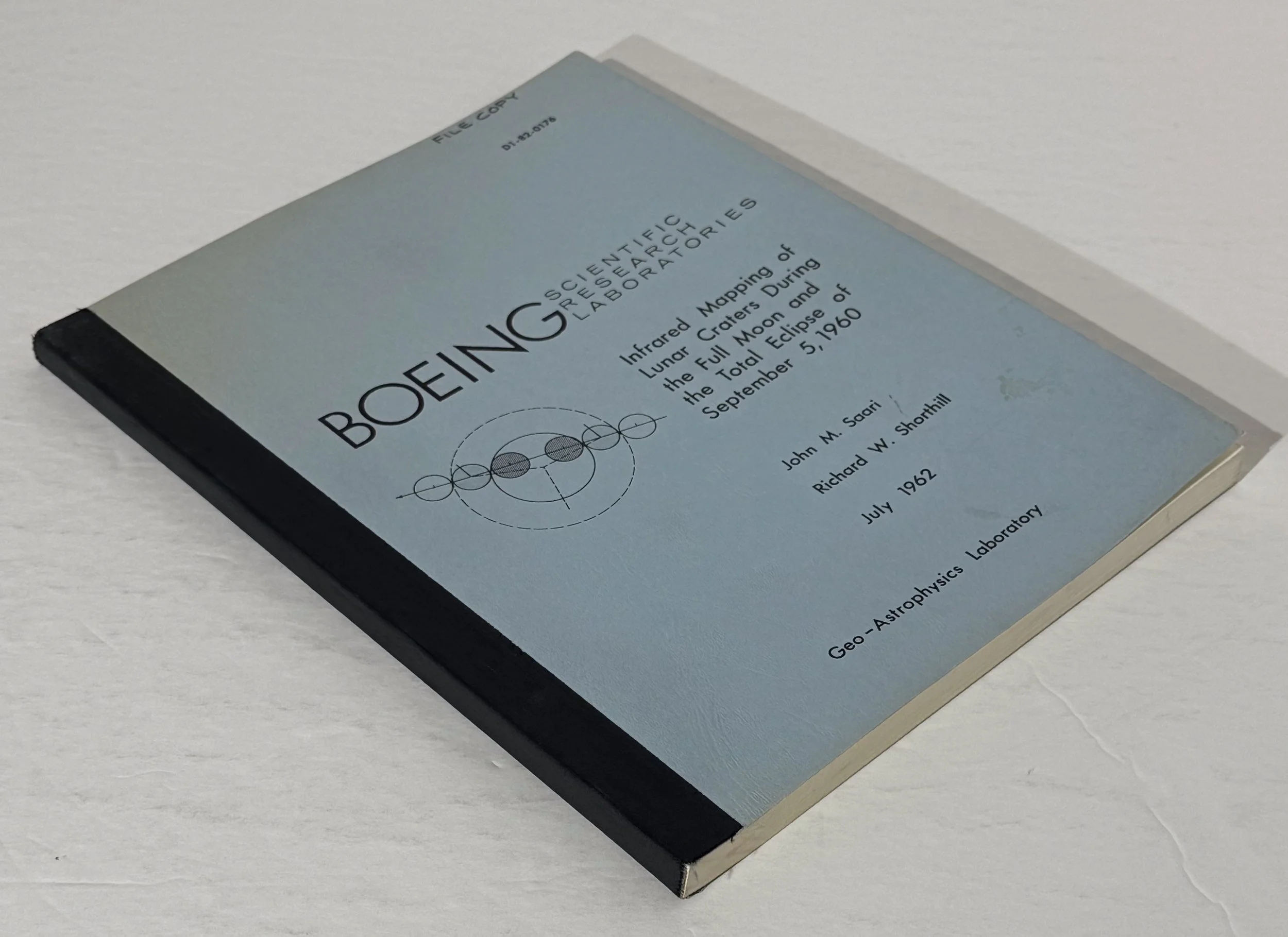 Image 2 of 10
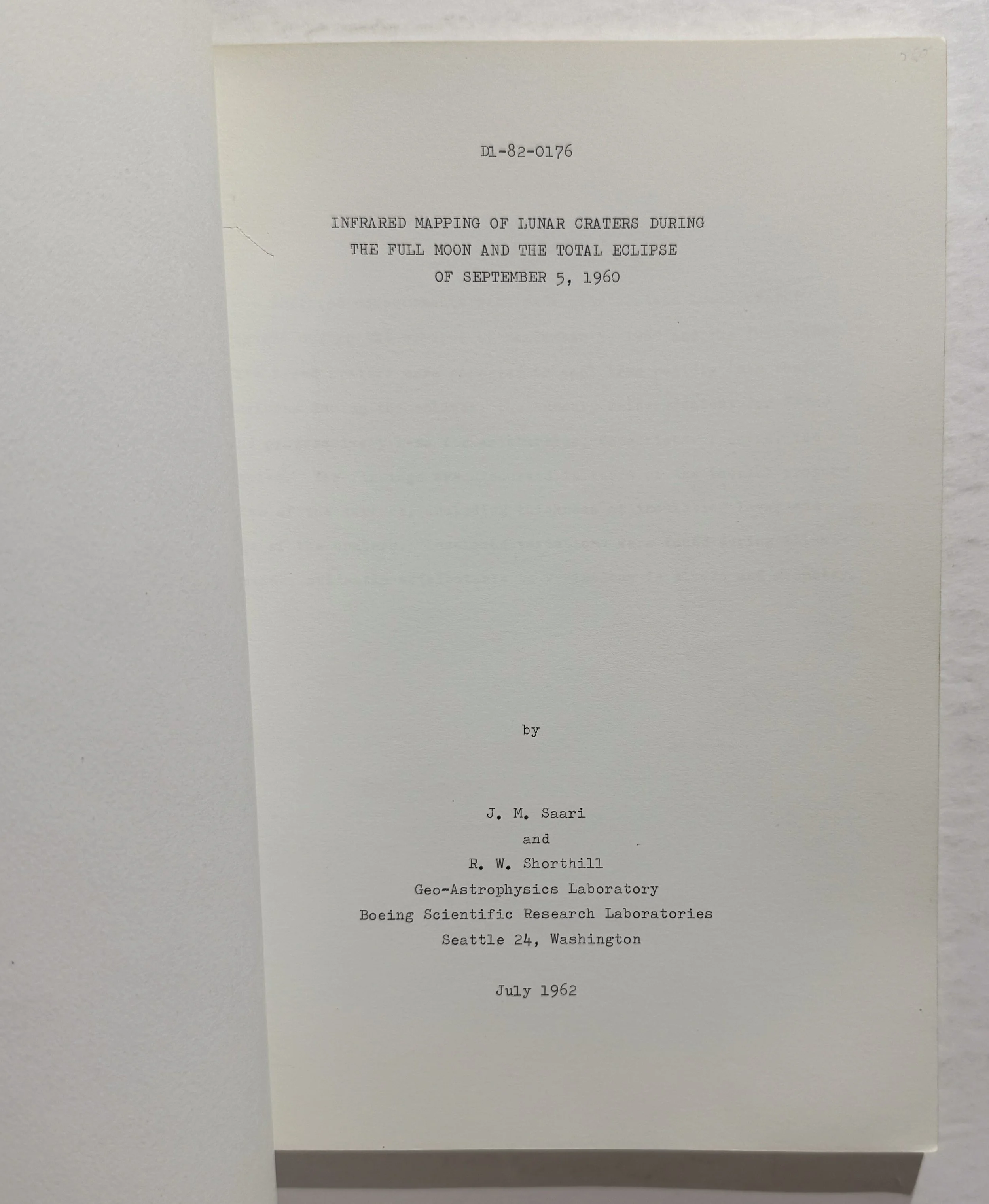 Image 3 of 10
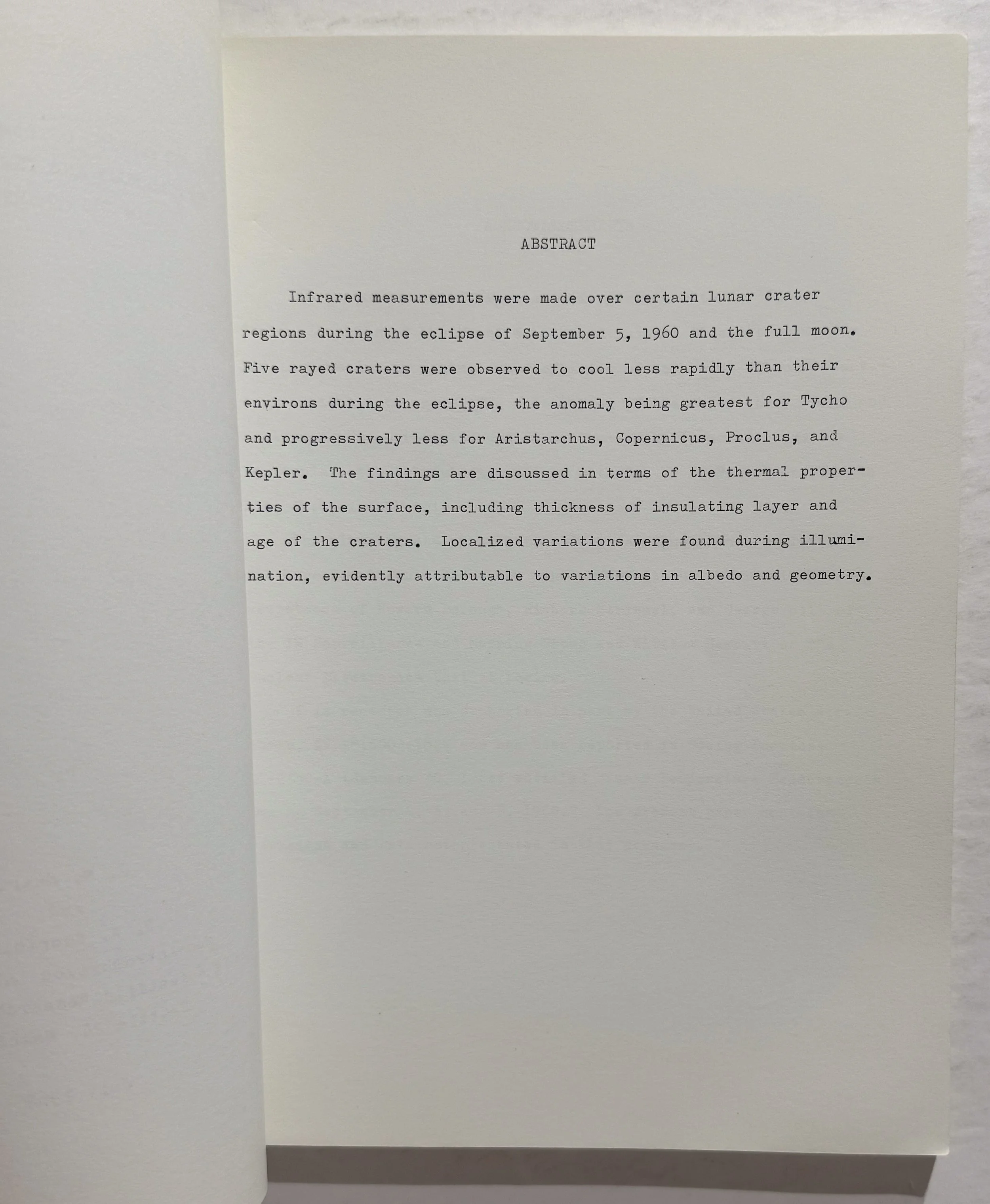 Image 4 of 10
 Image 5 of 10
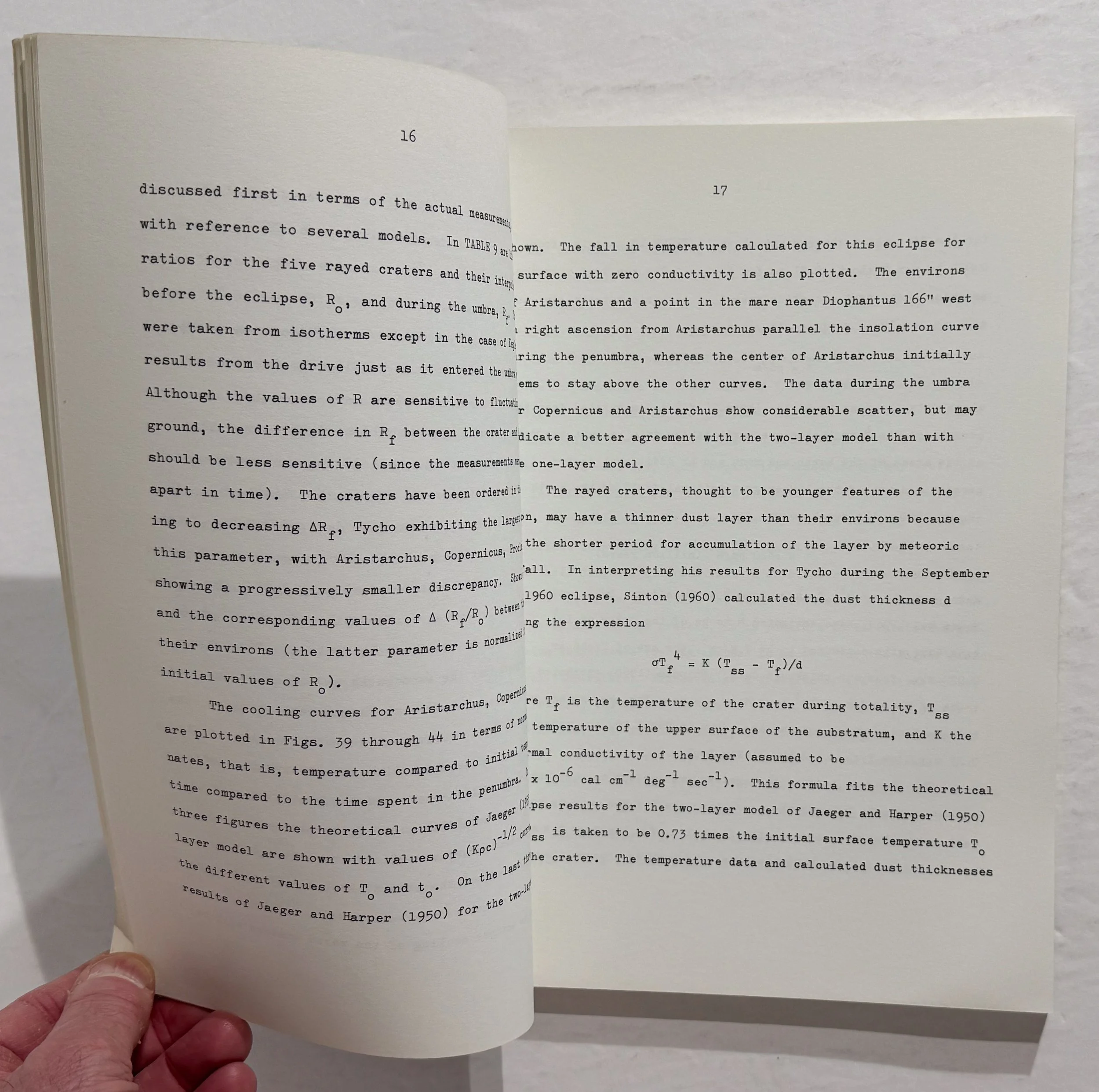 Image 6 of 10
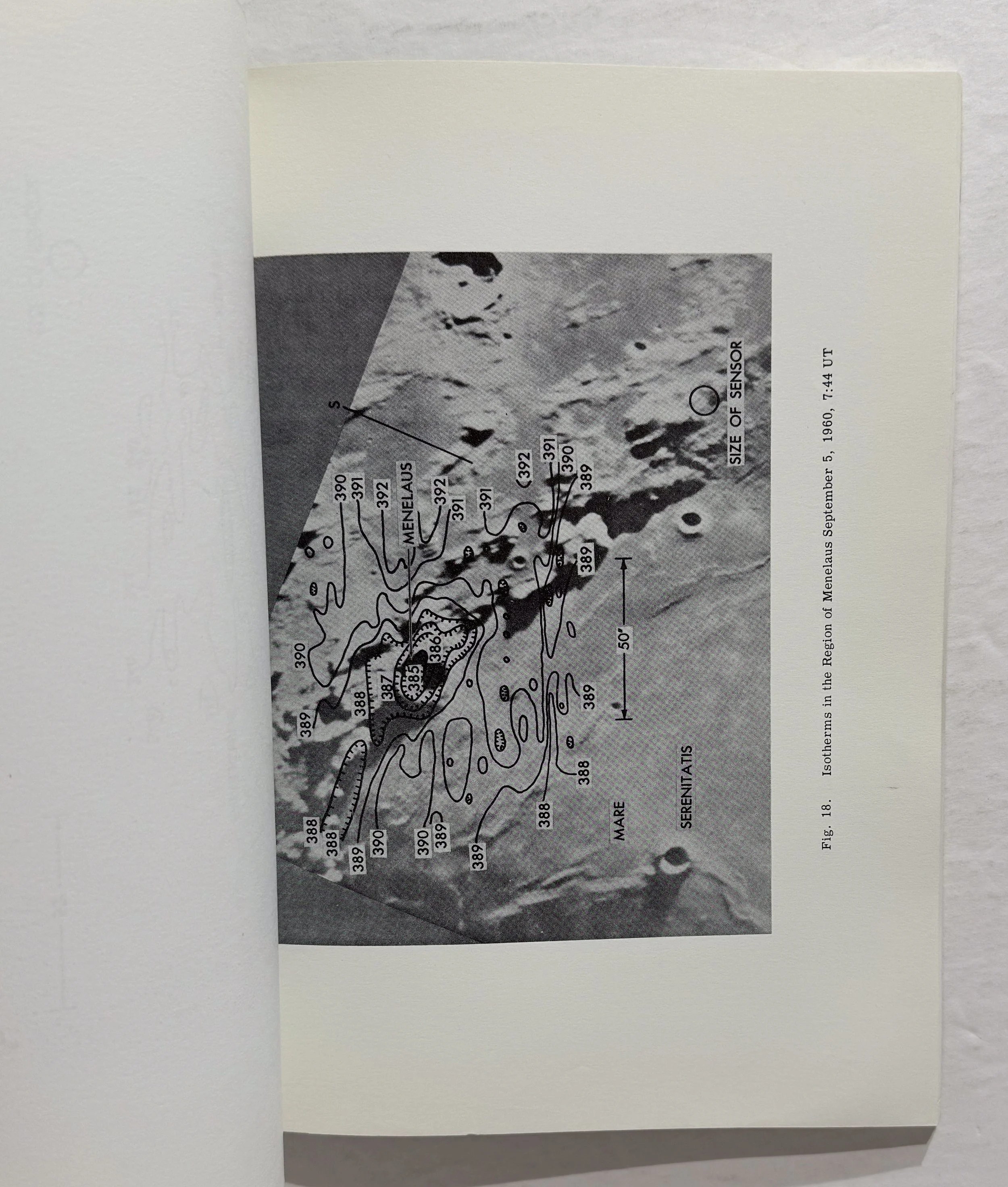 Image 7 of 10
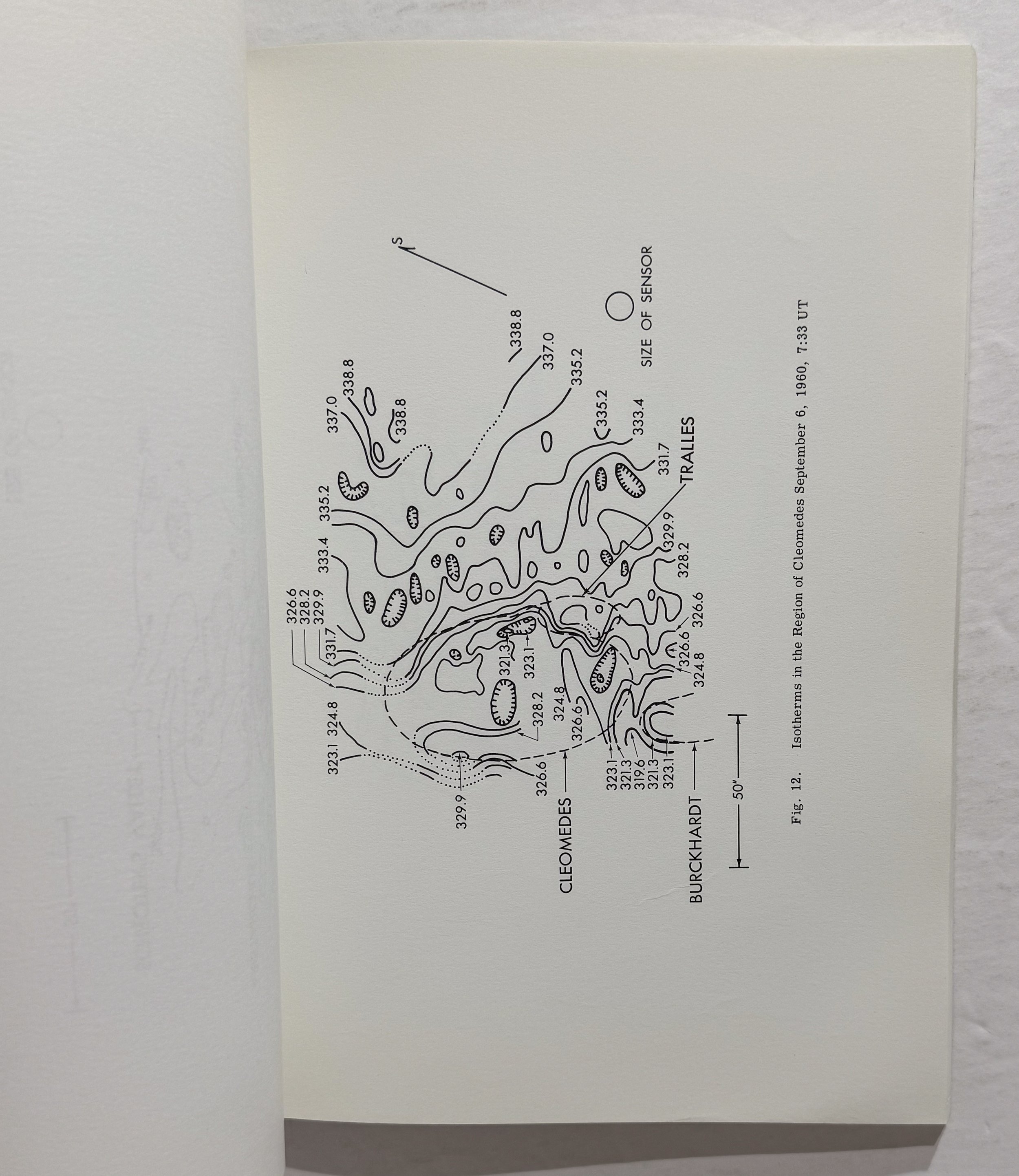 Image 8 of 10
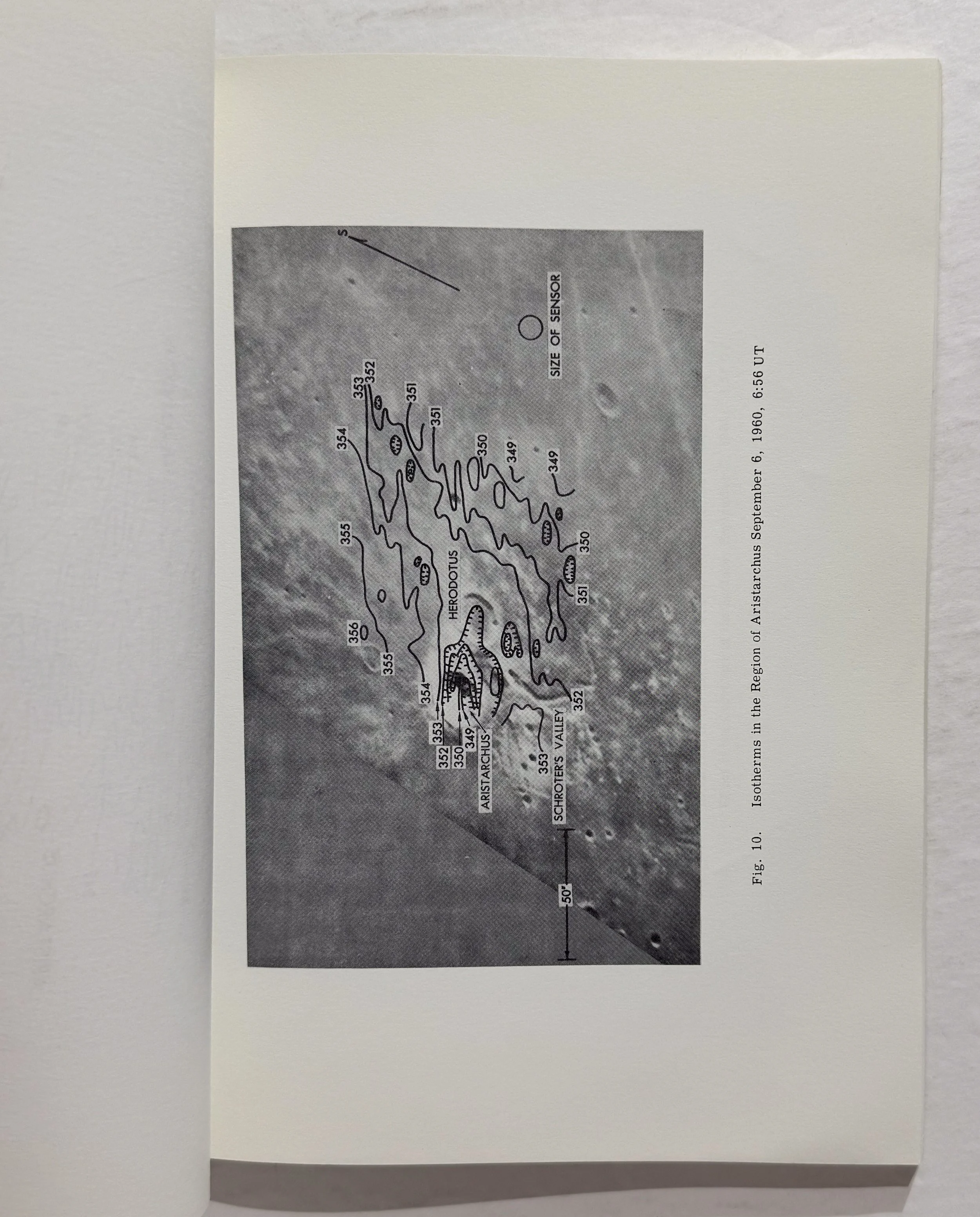 Image 9 of 10
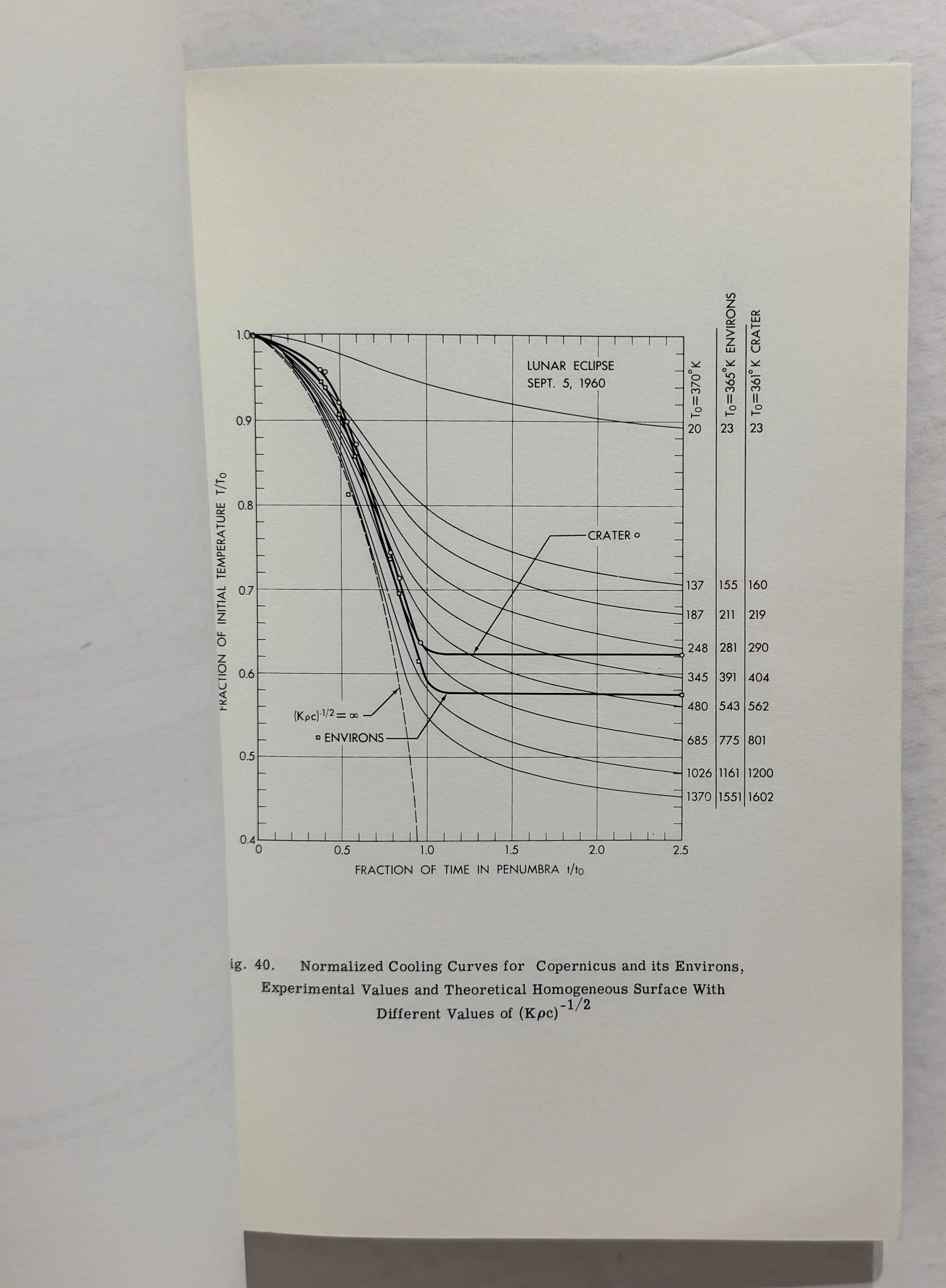 Image 10 of 10