 Image 1 of 5
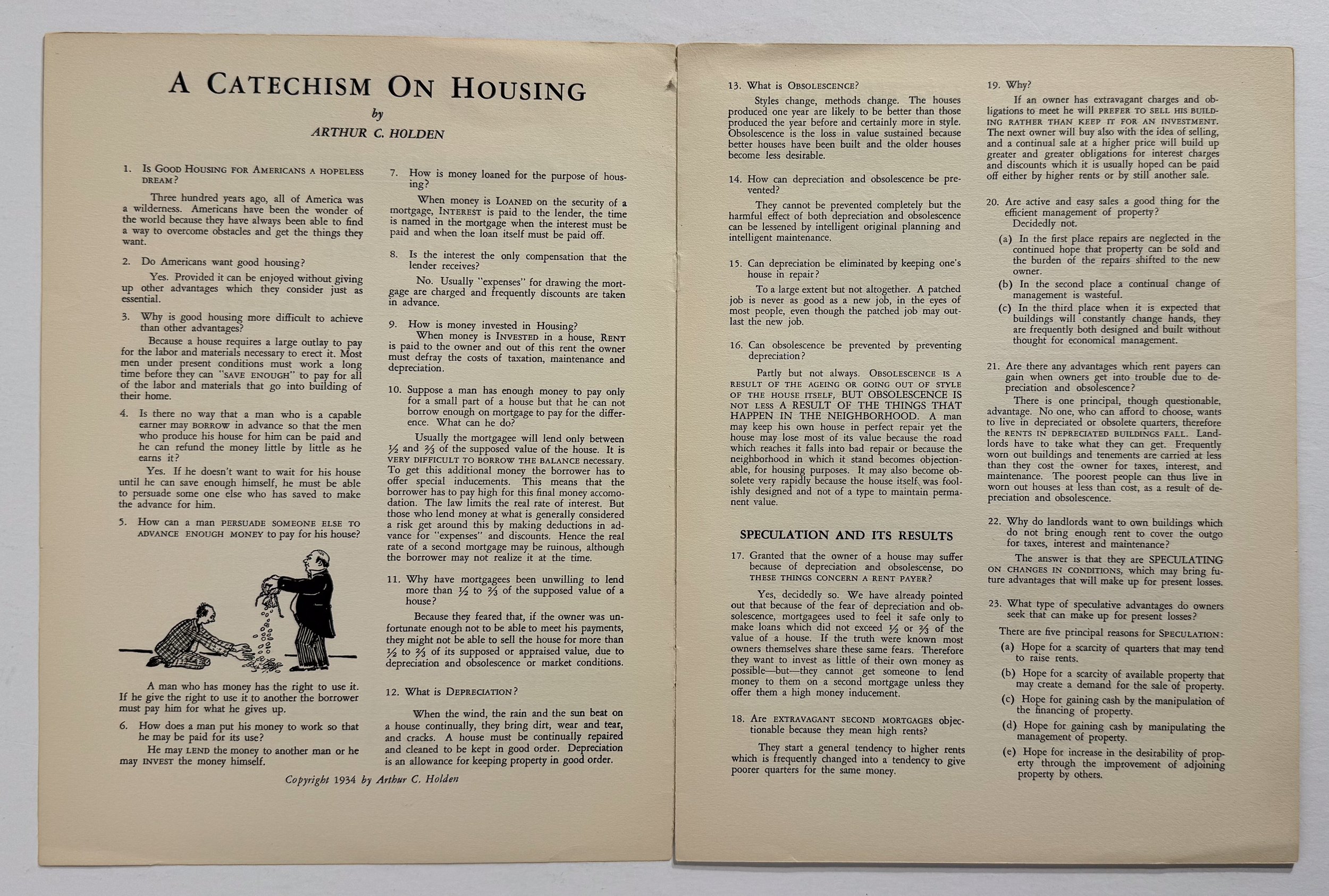 Image 2 of 5
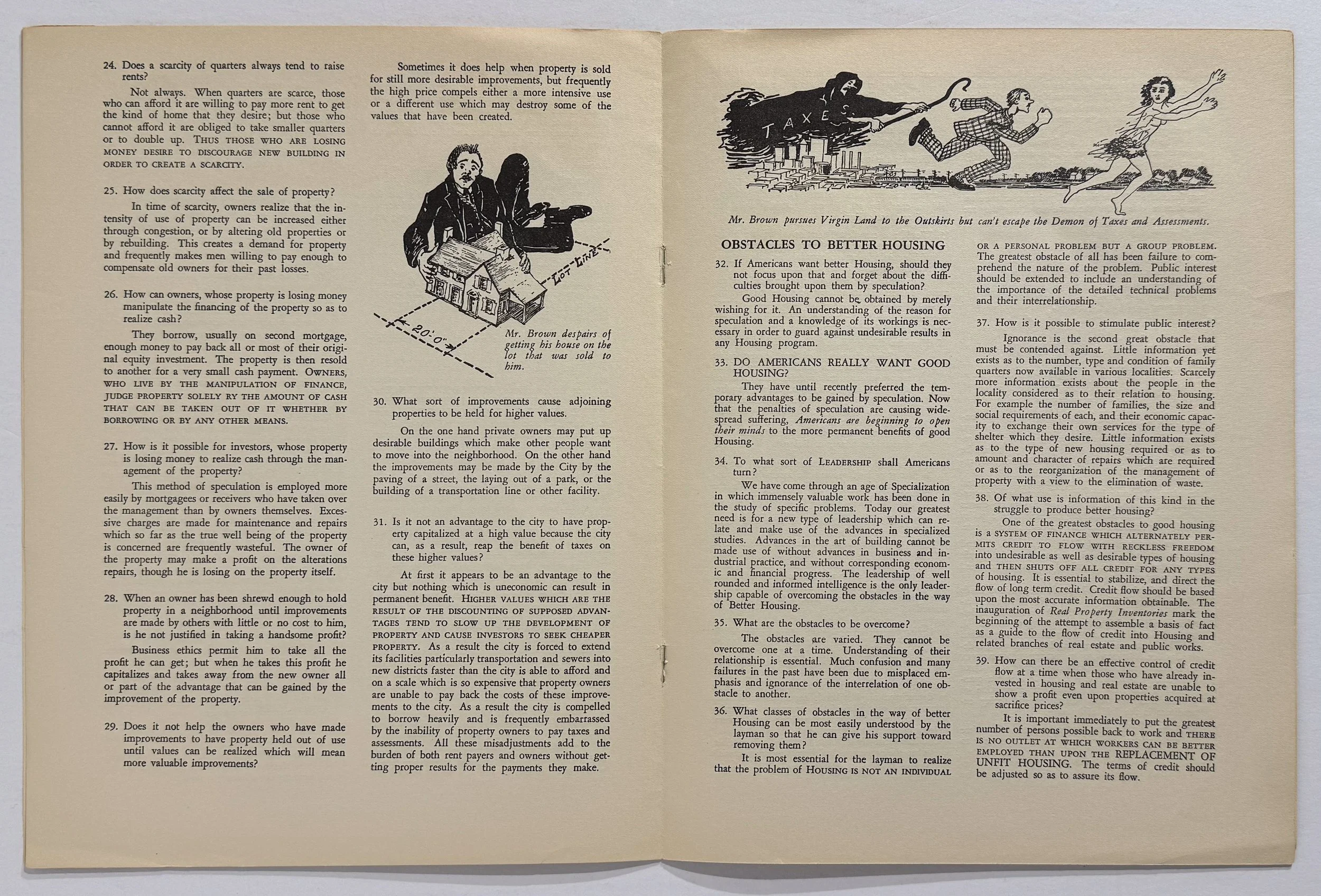 Image 3 of 5
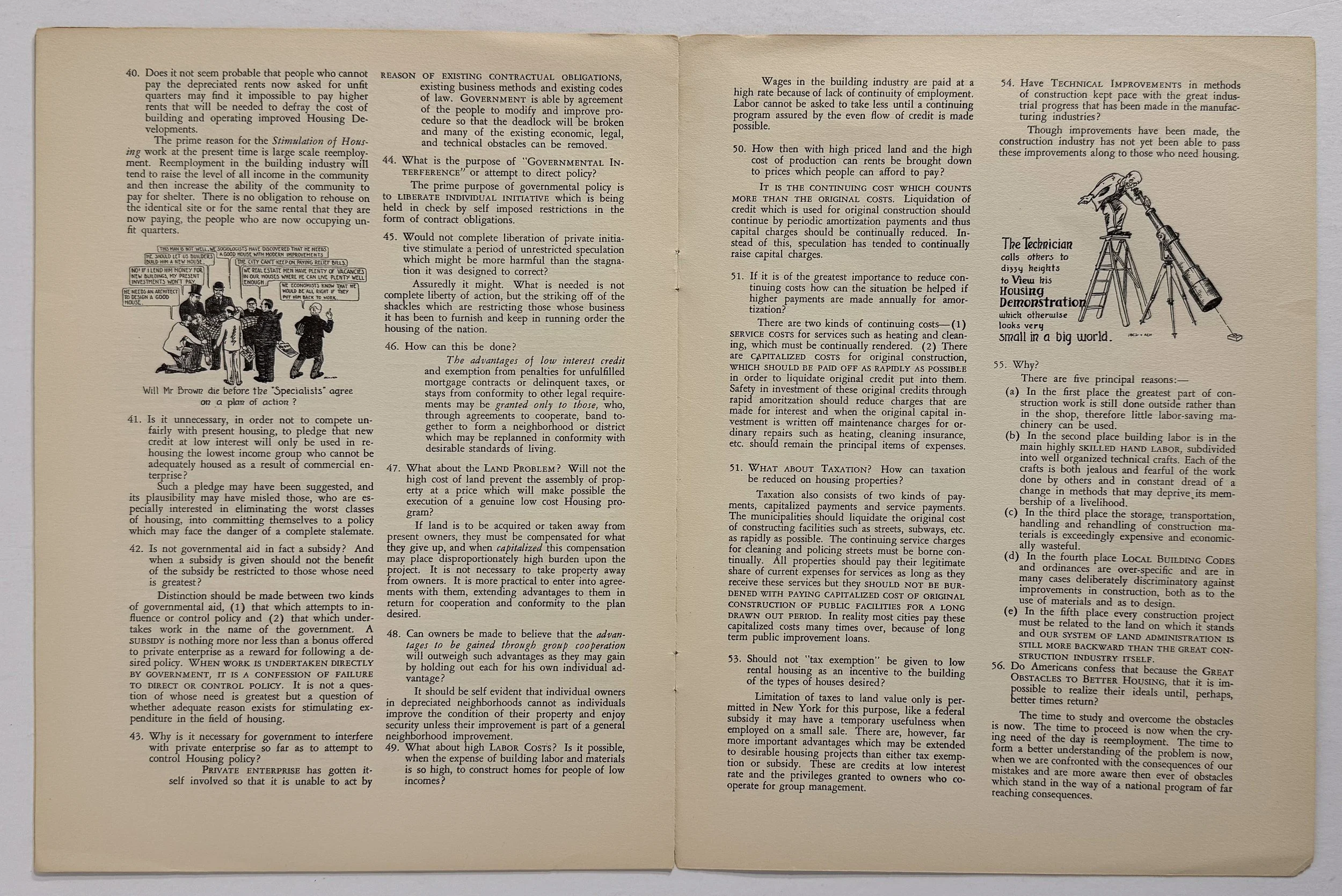 Image 4 of 5
 Image 5 of 5
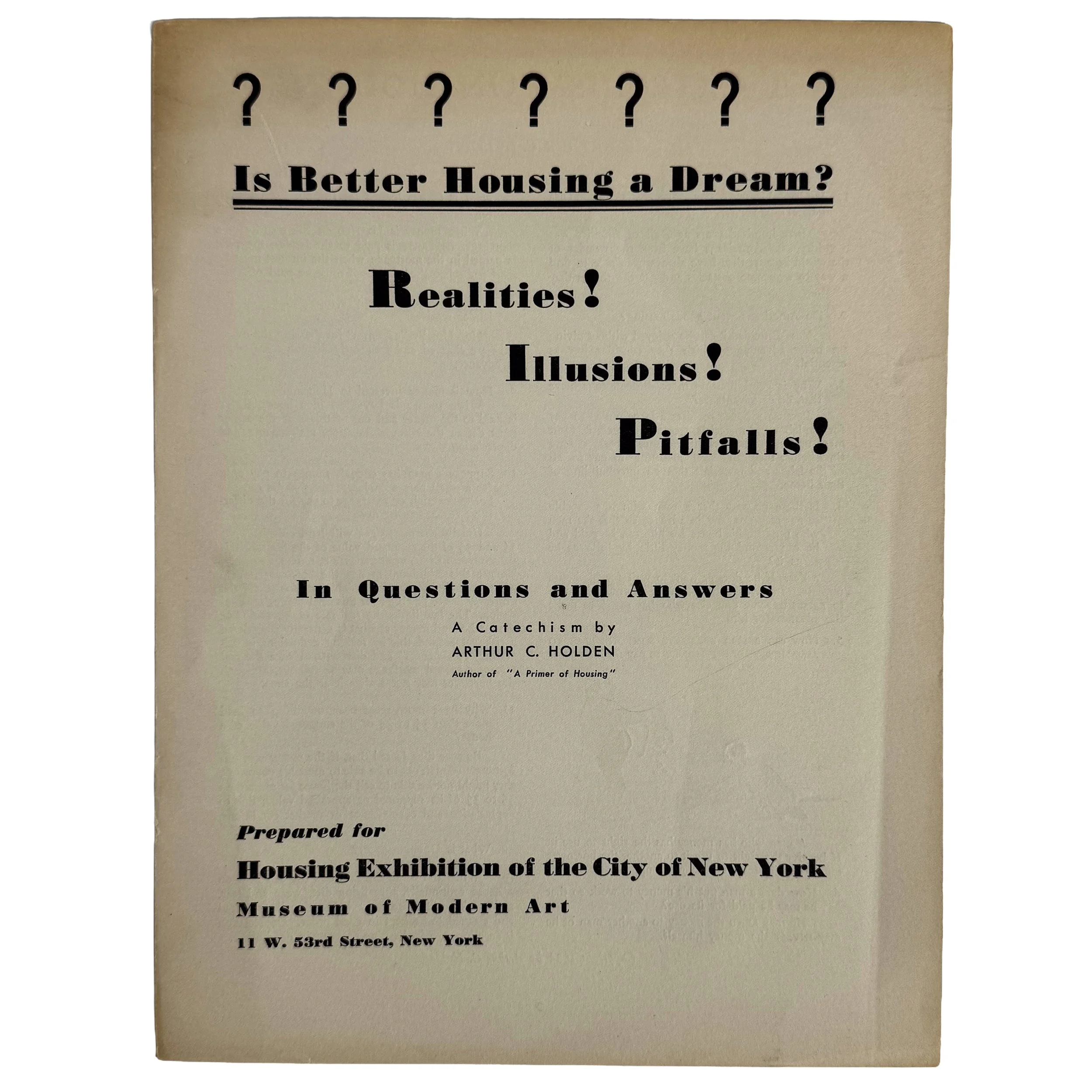
An exceptionally scarce piece of early Museum of Modern Art ephemera, prepared by Arthur C. Holden for the Housing Exhibition of the City of New York, held at MoMA October 15–November 7, 1934. The exhibition occupied three floors of the Museum and was jointly sponsored by the New York City Housing Authority, MoMA, Columbia University Orientation Study, Lavanburg Foundation, and the Housing Section of the Welfare Council. MoMA's archives distinguish it from the separate Modern Housing Exhibition mounted earlier that year. 8 × 10.5 inches, 8 pages including self-wrappers, illustrated with b/w cartoons.
Architect and housing reformer Arthur C. Holden served on the exhibition committee alongside Carol Aronovici, Philip Johnson, Clarence Stein, G. Lyman Paine, Jr., and other leading figures in contemporary housing reform. Conceived as an independent work of popular education, Holden's pamphlet reduces the complex political economy of housing to a remarkably direct sequence of 56 numbered questions and answers.
Ownership, speculation, mortgages, foreclosure, taxation, land values, slums, public housing, government intervention and neighborhood planning are subjected to a rapid Socratic interrogation. The catechism format gives the publication unusual rhetorical force: received assumptions about private property and housing economics are posed as apparently straightforward questions, then progressively dismantled through Holden's arguments for coordinated planning and reform.
The pamphlet belongs to a particularly significant moment in MoMA's early architectural program. Only two years after Modern Architecture: International Exhibition established the Museum as an advocate for European-derived architectural Modernism, MoMA began applying architecture and planning to the urgent social problems of Depression-era America. The Museum itself now identifies the 1934 Housing Exhibition and its principal publication, America Can't Have Housing, as an advocacy effort for modern affordable housing to replace tenement slums.
Is Better Housing a Dream? is especially compelling within that context because it represents the exhibition's argument in its most portable and explicitly didactic form. Rather than treating modern housing primarily as a question of architectural style, Holden addresses the economic and institutional structures that determine whether good architecture can be built at all. Its modest format embodies MoMA's emerging use of graphic communication, exhibitions and inexpensive printed matter as instruments of public education and social argument.
The publication is notably elusive. No meaningful commercial comparable has been located, and it appears far less frequently than the exhibition's principal catalogue, America Can't Have Housing. Its survival as a separate eight-page ephemeral publication is consequently significant both bibliographically and as evidence of the multiple forms through which MoMA disseminated the exhibition's ideas. Light rubbing and creasing to extremities, with small closed tears to spine ends.