From the estate of Joseph (“Joe”) Peroni, an unusually intimate and historically revealing archive documenting the formative literary, musical, and theatrical world surrounding John Vaccaro before and during the emergence of the Play-House of the Ridiculous. More than a mere grouping of collectible objects, the archive preserves the visible transition from Beat-inflected Midwestern student culture into the ecstatic underground performance world that would transform downtown New York theater in the late 1960s.
Peroni and Vaccaro attended Ohio State University together and remained close friends well into Vaccaro’s New York years. Their friendship was later independently noted by Calvin Tomkins in a November 8, 1976 profile in The New Yorker, a small but significant detail confirming Peroni’s authentic place within Vaccaro’s artistic circle: Vaccaro's brother, a basketball coach back home in Ohio, came once to watch Vaccaro rehearse another play, and could not quite believe what he was seeing until Vaccaro's friend Joe Peroni, who also comes from Ohio, explained to him that it was "just like a man-to-man full-court press." "He understood immediately," Vaccaro recalls.
What survives here is therefore not retrospective accumulation, but lived material carried forward from the period itself.
The archive consists of four items:
An original offset-lithograph poster for the legendary 1967 Play-House of the Ridiculous production of Conquest of the Universe, directed by Vaccaro and written by Charles Ludlam, featuring Taylor Mead, starring Rene Ricard, Ondine, Mary Woronov, and Ultra Violet and performed at the Bouwerie Lane Theatre. The present example appears to represent a distinct and substantially scarcer variant from the standard advertising issue commonly encountered. Measuring approximately 28.25" x 17.75" rather than the usual approximately 33.5" x 17.5", the poster is printed on notably heavier stock and survives rolled rather than folded, strongly suggesting a theatre lobby issue, presentation copy, or limited-distribution insider variant rather than the fragile street-posting format ordinarily seen. The colors remain exceptionally bold and unfaded. As an object, the poster encapsulates the explosive emergence of Ridiculous Theater itself: queer spectacle, underground cinema, drag, apocalypse, camp excess, and anti-theatrical theatricality collapsing into a single delirious image.
Accompanying it is a rare original poster for Kenneth Bernard’s The Moke-Eater, directed by Vaccaro and presented by the Play-House of the Ridiculous at Max’s Kansas City. 22.5” x 28.5”. Severe and typographically stark, the poster captures the moment when Ridiculous Theater intersected directly with the Warhol/Max’s Kansas City milieu and the broader collapse of distinctions between theater, nightlife, performance art, and social ritual in late-1960s New York.
The archive’s emotional and intellectual core resides in two books surviving from the years before Vaccaro’s downtown notoriety.
The first is a 1962 Sixties Press edition of Twenty Poems of Cesar Vallejo, translated by John Knoepfle, James Wright, and Robert Bly, warmly inscribed by Vaccaro to Peroni on March 7, 1965. The inscription transcends ordinary presentation-copy sentiment and instead reads as fragmentary poetic manifesto:
“the Truth is not delusion:
it’s an escape…”
The language possesses precisely the yearning instability and emotional theatricality that would later define Vaccaro’s productions. One senses here the private imaginative landscape from which the Play-House of the Ridiculous would emerge before it had yet found formal stage expression. The volume additionally links Vaccaro to the Beat-influenced small-press literary culture circulating through American poetry communities during the early 1960s.
The final item may ultimately be the most revealing: a first New Directions paperback printing of A Coney Island of the Mind by Lawrence Ferlinghetti bearing a substantial signed and dated 1994 annotation by Peroni directly on the half-title page identifying the volume as the very copy used by Peroni and Vaccaro during poetry-and-jazz readings at Ohio State University and at Larry’s Bar & Grill in Columbus during the late 1950’s and very early 1960s. Peroni specifically references appearances with “the C. Angeletti band,” almost certainly referring to Ohio State jazz trumpeter Charles Angeletti, later associated with the influential Jazz Arts Band at OSU.
Most remarkably, the Ferlinghetti volume retains several inked markings by Peroni within the text itself — not casual annotations, but apparent reading or performance cues emphasizing passages of ecstatic anti-establishment language: “Goodbye Broadway,” “The real earthquake is coming,” “I wish to descend in society,” “Junk for sale!” Read retrospectively, the marked poems feel uncannily predictive of the sensibility Vaccaro would later unleash downtown through the Play-House of the Ridiculous. The volume ceases to function merely as a signed book and instead becomes a working performance text from Vaccaro’s artistic formation period.
What survives here, then, is not simply ephemera of the avant-garde. It is evidence of transmission with a narrative arc: Beat poetry passing through jazz performance, through Midwestern student culture and into the literary underground of New York City before erupting onto the stages of the Bouwerie Lane Theatre and Max’s Kansas City. A rare archive in which the origin story remains visible.
Condition
Both posters were photographed in polyurethane sleeves—reflections and scratches are visible in the images that are not present on the posters themselves. Both posters were found rolled up NOT folded as is frequently the case with ephemaral items such as these and will present well when framed. Conquest of the Universe is in very good overall condition with light handling wear and minor creasing along the bottom edge consistent with age and use. Moke-Eater shows moderate wear with creasing, some chipping at the lower left edge, and a small 1/4” non-displaced tear at the upper right. Some staining lower center from period use.
Twenty Poems: Light bumping and toning to extremities.
Coney Island: Binding somewhat shaken; hinges weakened. Creasing to wrapper. Light rubbing and chipping to extremities.
Inquire for additional photographs or information.
From the estate of Joseph (“Joe”) Peroni, an unusually intimate and historically revealing archive documenting the formative literary, musical, and theatrical world surrounding John Vaccaro before and during the emergence of the Play-House of the Ridiculous. More than a mere grouping of collectible objects, the archive preserves the visible transition from Beat-inflected Midwestern student culture into the ecstatic underground performance world that would transform downtown New York theater in the late 1960s.
Peroni and Vaccaro attended Ohio State University together and remained close friends well into Vaccaro’s New York years. Their friendship was later independently noted by Calvin Tomkins in a November 8, 1976 profile in The New Yorker, a small but significant detail confirming Peroni’s authentic place within Vaccaro’s artistic circle: Vaccaro's brother, a basketball coach back home in Ohio, came once to watch Vaccaro rehearse another play, and could not quite believe what he was seeing until Vaccaro's friend Joe Peroni, who also comes from Ohio, explained to him that it was "just like a man-to-man full-court press." "He understood immediately," Vaccaro recalls.
What survives here is therefore not retrospective accumulation, but lived material carried forward from the period itself.
The archive consists of four items:
An original offset-lithograph poster for the legendary 1967 Play-House of the Ridiculous production of Conquest of the Universe, directed by Vaccaro and written by Charles Ludlam, featuring Taylor Mead, starring Rene Ricard, Ondine, Mary Woronov, and Ultra Violet and performed at the Bouwerie Lane Theatre. The present example appears to represent a distinct and substantially scarcer variant from the standard advertising issue commonly encountered. Measuring approximately 28.25" x 17.75" rather than the usual approximately 33.5" x 17.5", the poster is printed on notably heavier stock and survives rolled rather than folded, strongly suggesting a theatre lobby issue, presentation copy, or limited-distribution insider variant rather than the fragile street-posting format ordinarily seen. The colors remain exceptionally bold and unfaded. As an object, the poster encapsulates the explosive emergence of Ridiculous Theater itself: queer spectacle, underground cinema, drag, apocalypse, camp excess, and anti-theatrical theatricality collapsing into a single delirious image.
Accompanying it is a rare original poster for Kenneth Bernard’s The Moke-Eater, directed by Vaccaro and presented by the Play-House of the Ridiculous at Max’s Kansas City. 22.5” x 28.5”. Severe and typographically stark, the poster captures the moment when Ridiculous Theater intersected directly with the Warhol/Max’s Kansas City milieu and the broader collapse of distinctions between theater, nightlife, performance art, and social ritual in late-1960s New York.
The archive’s emotional and intellectual core resides in two books surviving from the years before Vaccaro’s downtown notoriety.
The first is a 1962 Sixties Press edition of Twenty Poems of Cesar Vallejo, translated by John Knoepfle, James Wright, and Robert Bly, warmly inscribed by Vaccaro to Peroni on March 7, 1965. The inscription transcends ordinary presentation-copy sentiment and instead reads as fragmentary poetic manifesto:
“the Truth is not delusion:
it’s an escape…”
The language possesses precisely the yearning instability and emotional theatricality that would later define Vaccaro’s productions. One senses here the private imaginative landscape from which the Play-House of the Ridiculous would emerge before it had yet found formal stage expression. The volume additionally links Vaccaro to the Beat-influenced small-press literary culture circulating through American poetry communities during the early 1960s.
The final item may ultimately be the most revealing: a first New Directions paperback printing of A Coney Island of the Mind by Lawrence Ferlinghetti bearing a substantial signed and dated 1994 annotation by Peroni directly on the half-title page identifying the volume as the very copy used by Peroni and Vaccaro during poetry-and-jazz readings at Ohio State University and at Larry’s Bar & Grill in Columbus during the late 1950’s and very early 1960s. Peroni specifically references appearances with “the C. Angeletti band,” almost certainly referring to Ohio State jazz trumpeter Charles Angeletti, later associated with the influential Jazz Arts Band at OSU.
Most remarkably, the Ferlinghetti volume retains several inked markings by Peroni within the text itself — not casual annotations, but apparent reading or performance cues emphasizing passages of ecstatic anti-establishment language: “Goodbye Broadway,” “The real earthquake is coming,” “I wish to descend in society,” “Junk for sale!” Read retrospectively, the marked poems feel uncannily predictive of the sensibility Vaccaro would later unleash downtown through the Play-House of the Ridiculous. The volume ceases to function merely as a signed book and instead becomes a working performance text from Vaccaro’s artistic formation period.
What survives here, then, is not simply ephemera of the avant-garde. It is evidence of transmission with a narrative arc: Beat poetry passing through jazz performance, through Midwestern student culture and into the literary underground of New York City before erupting onto the stages of the Bouwerie Lane Theatre and Max’s Kansas City. A rare archive in which the origin story remains visible.
Condition
Both posters were photographed in polyurethane sleeves—reflections and scratches are visible in the images that are not present on the posters themselves. Both posters were found rolled up NOT folded as is frequently the case with ephemaral items such as these and will present well when framed. Conquest of the Universe is in very good overall condition with light handling wear and minor creasing along the bottom edge consistent with age and use. Moke-Eater shows moderate wear with creasing, some chipping at the lower left edge, and a small 1/4” non-displaced tear at the upper right. Some staining lower center from period use.
Twenty Poems: Light bumping and toning to extremities.
Coney Island: Binding somewhat shaken; hinges weakened. Creasing to wrapper. Light rubbing and chipping to extremities.
Inquire for additional photographs or information.

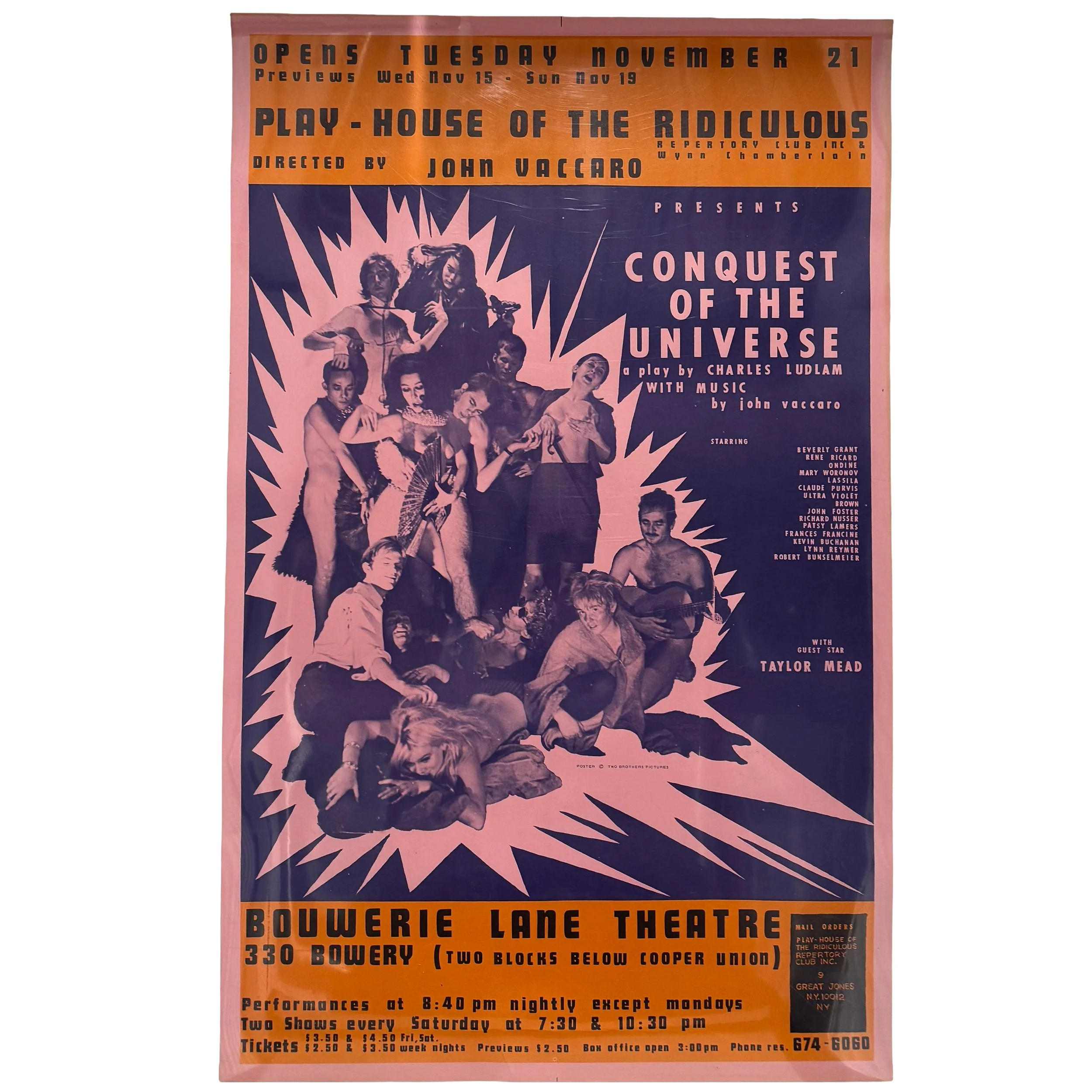 Image 1 of 18
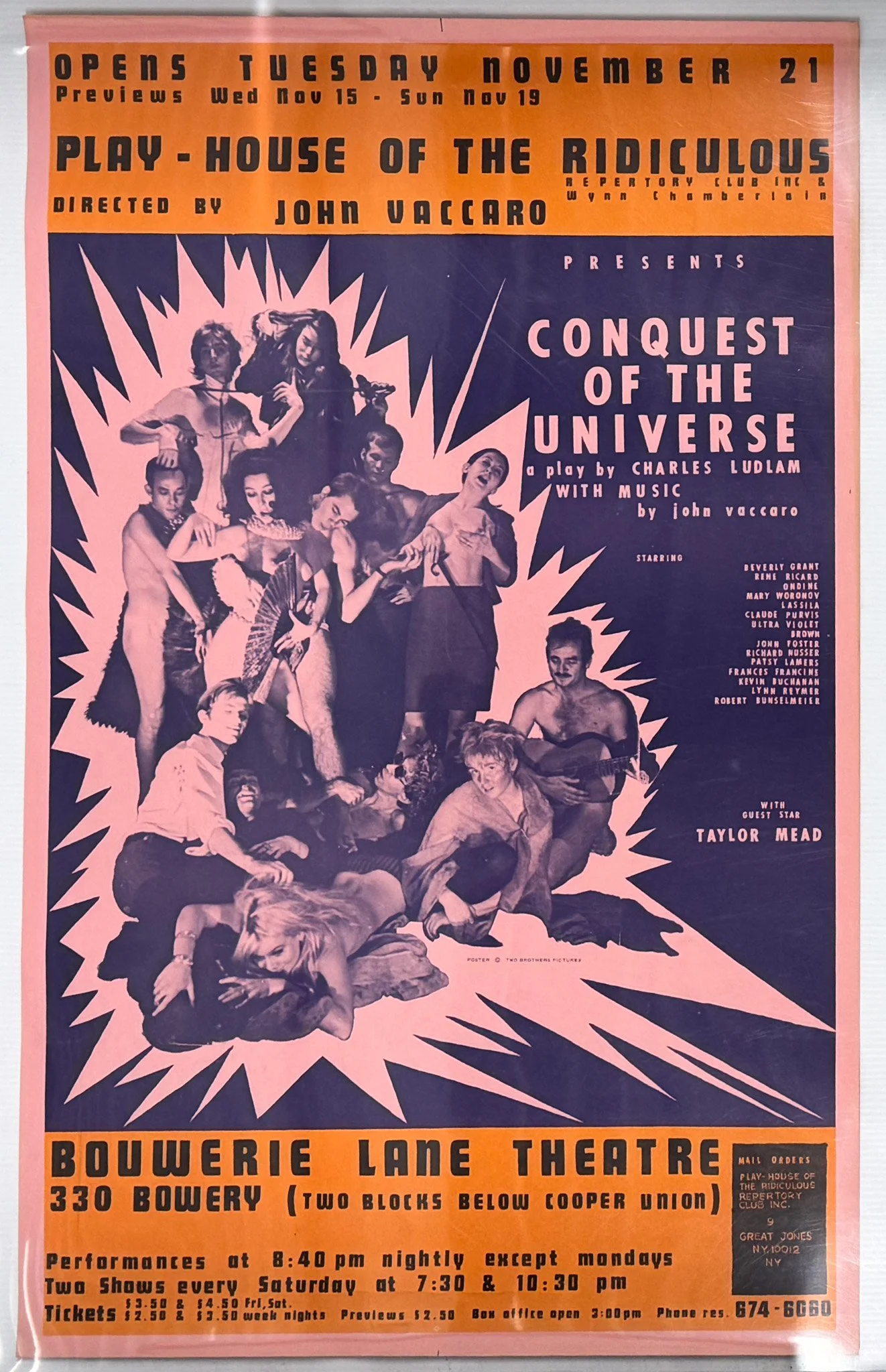 Image 2 of 18
 Image 3 of 18
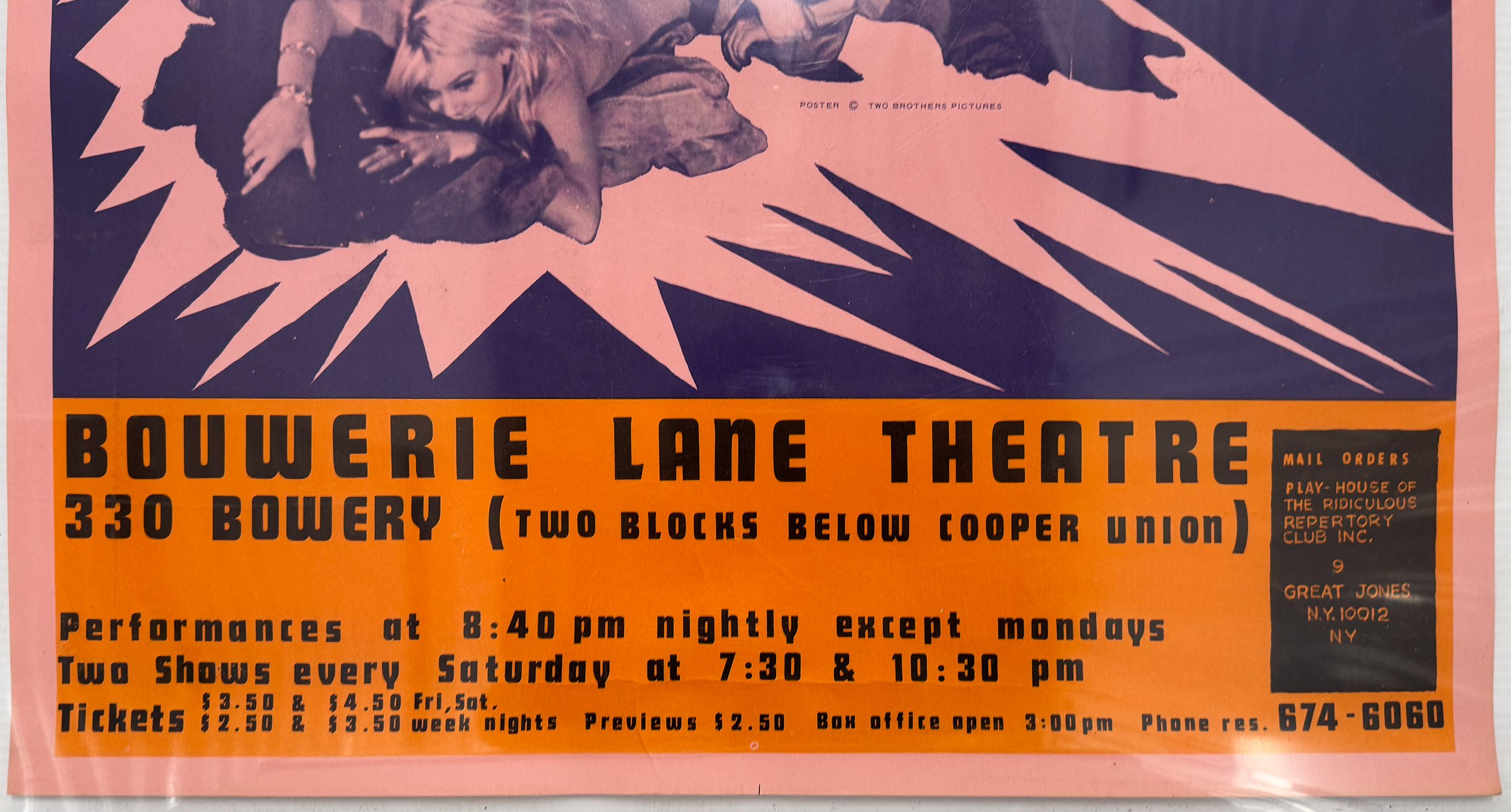 Image 4 of 18
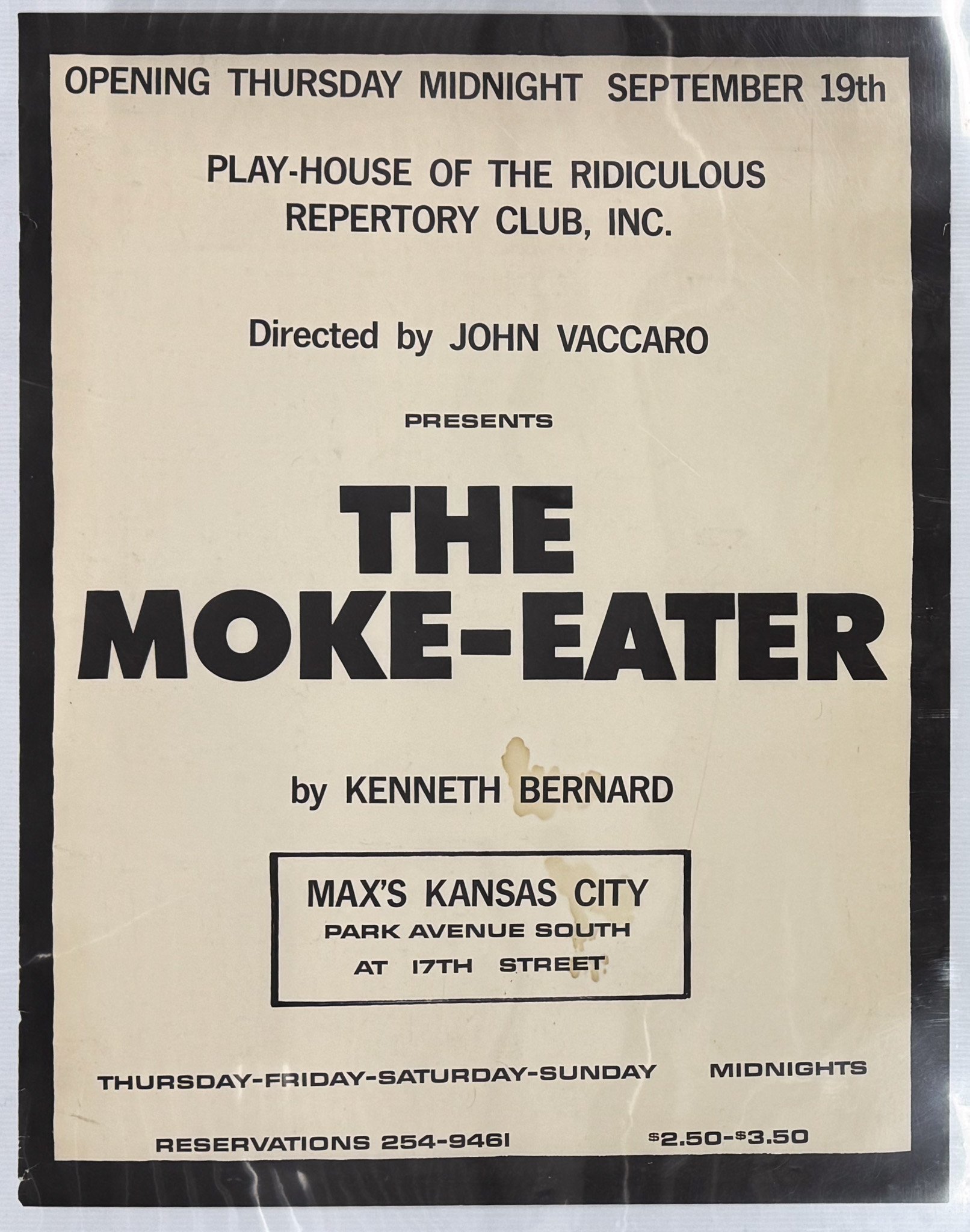 Image 5 of 18
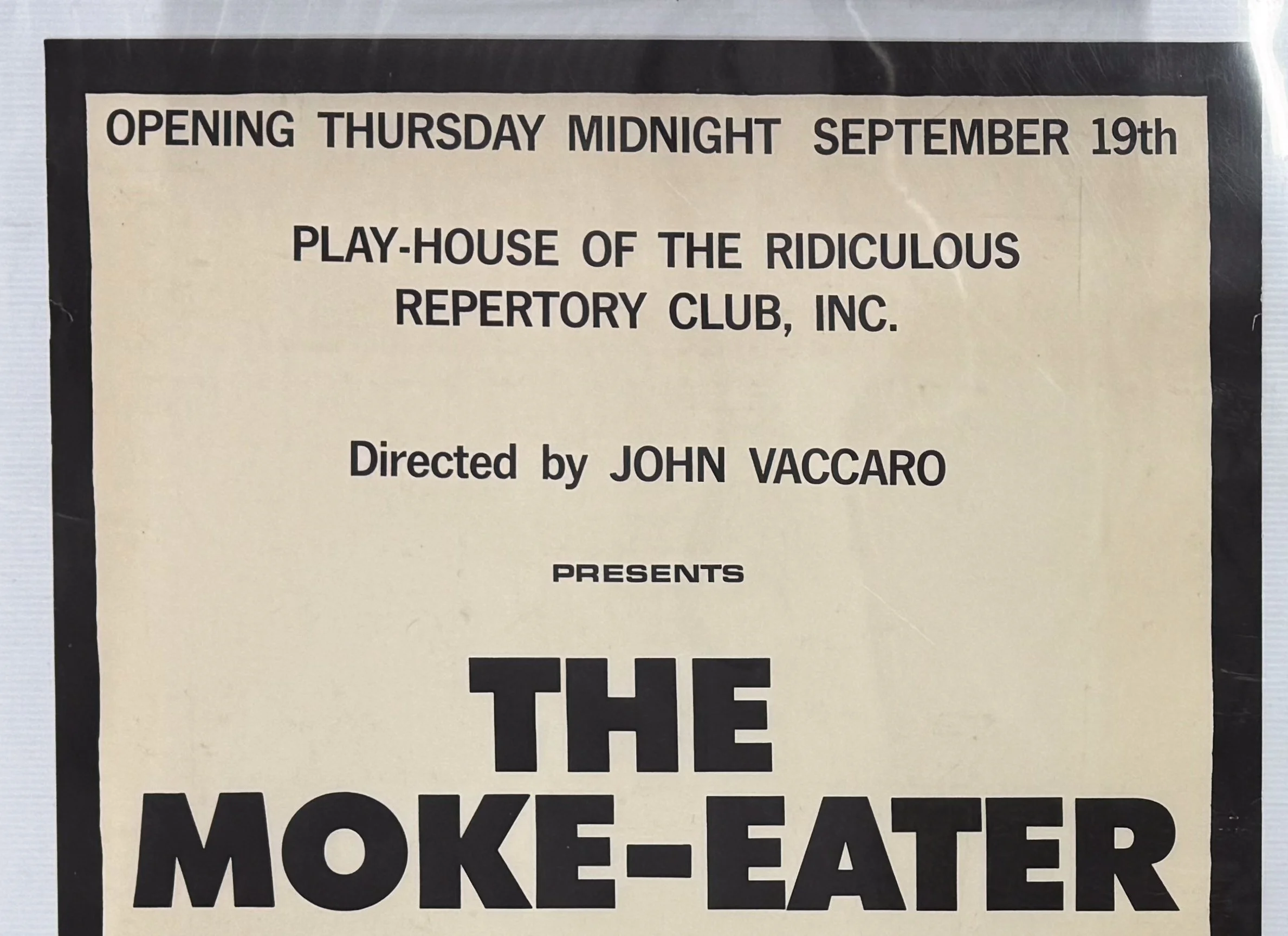 Image 6 of 18
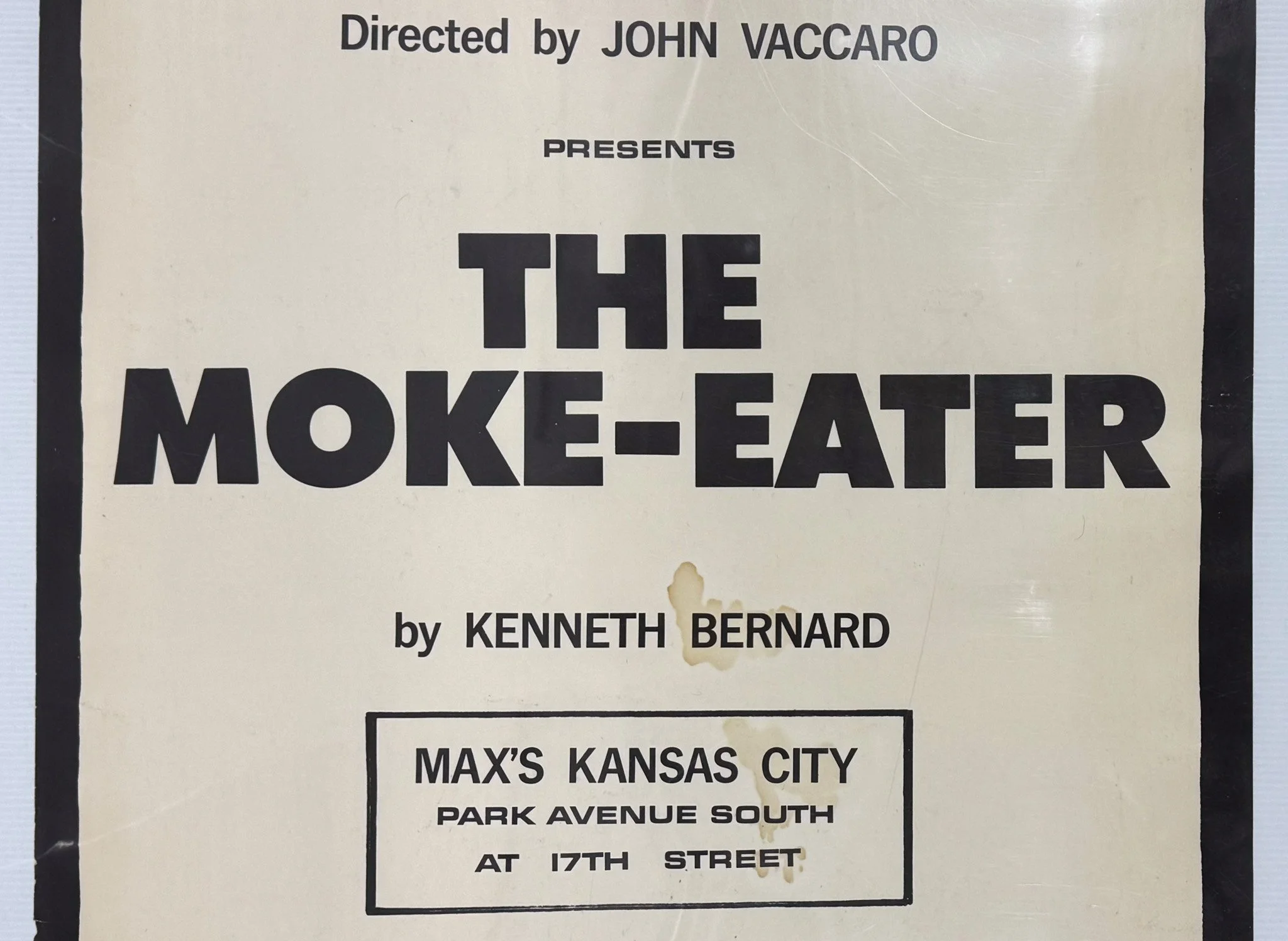 Image 7 of 18
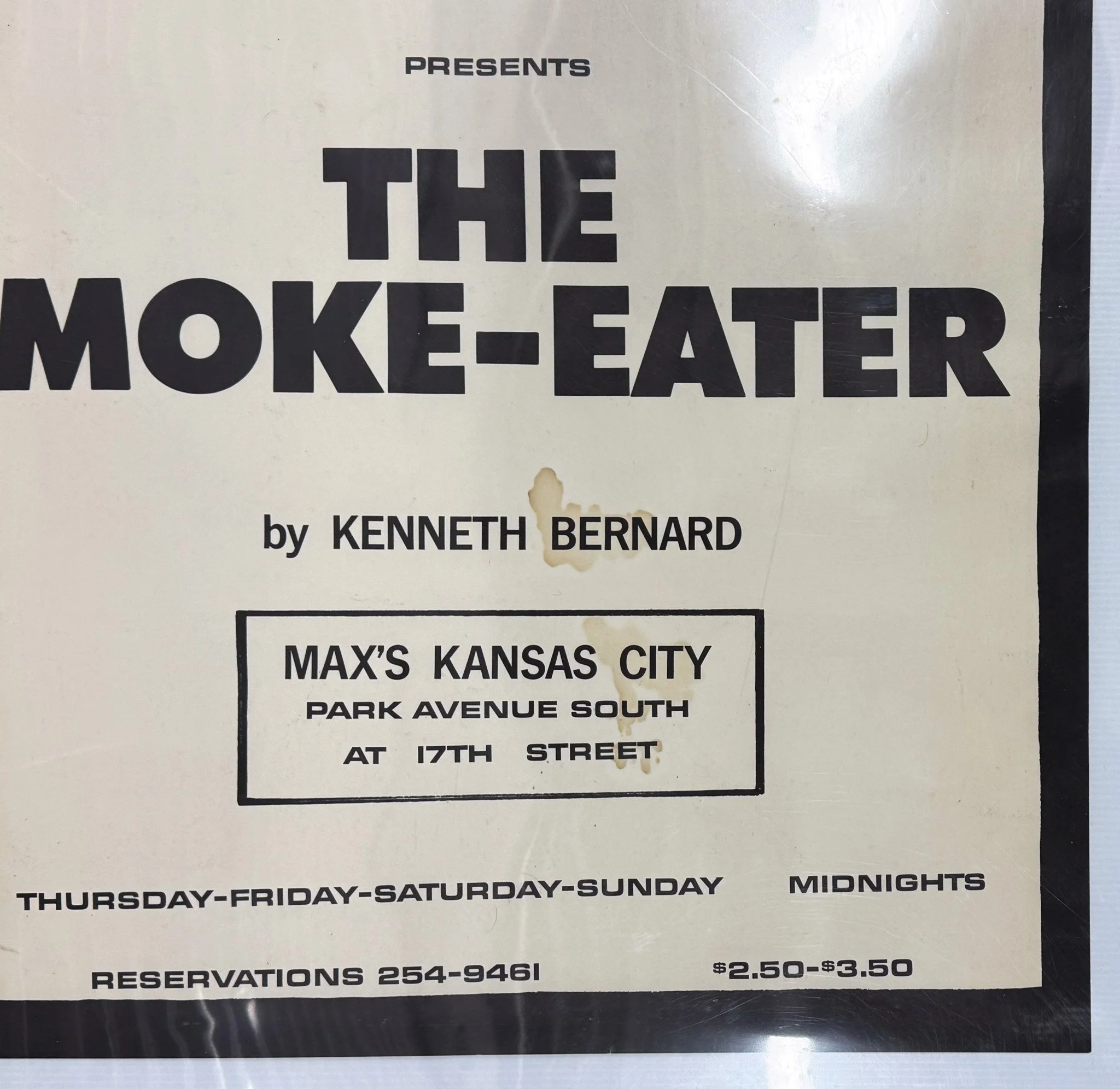 Image 8 of 18
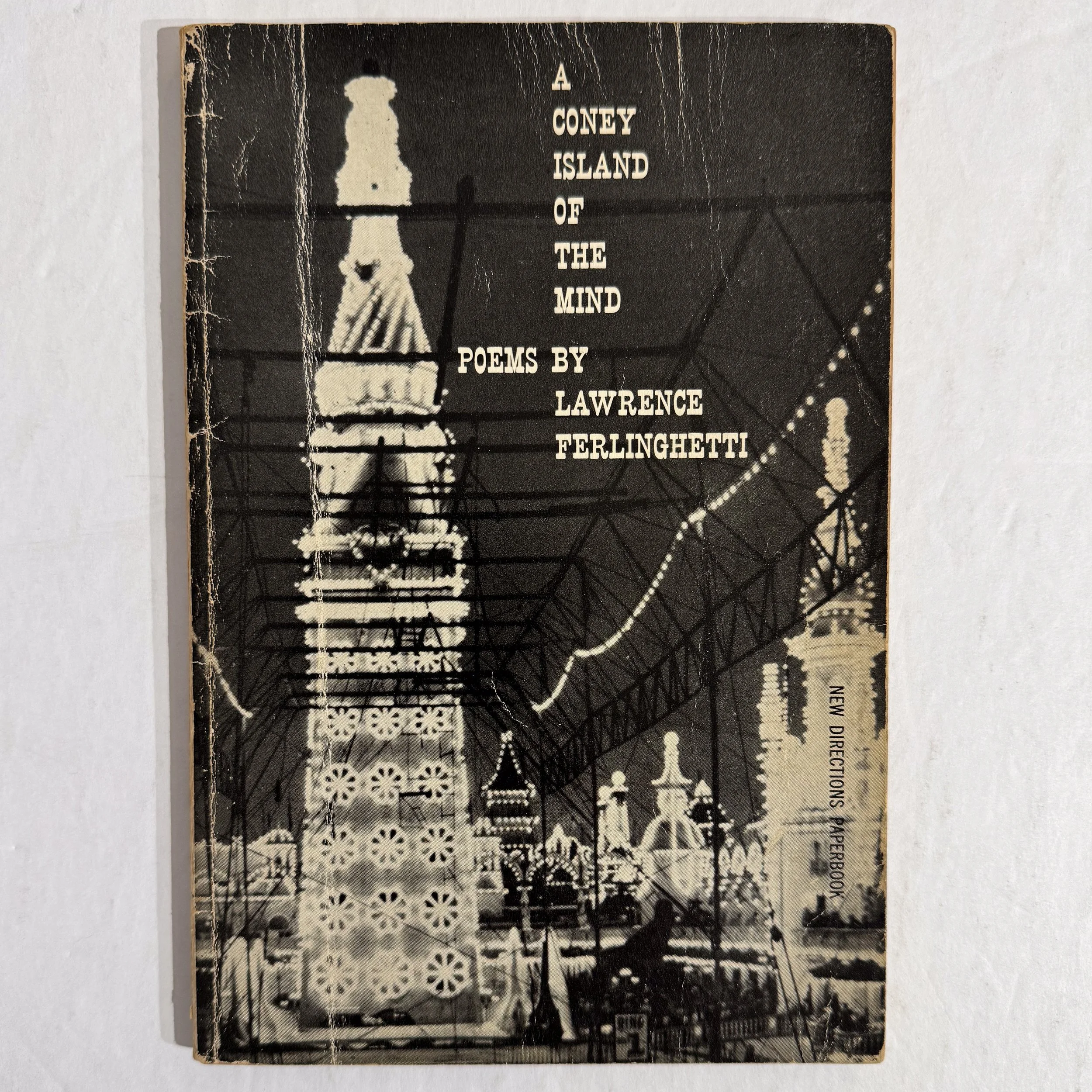 Image 9 of 18
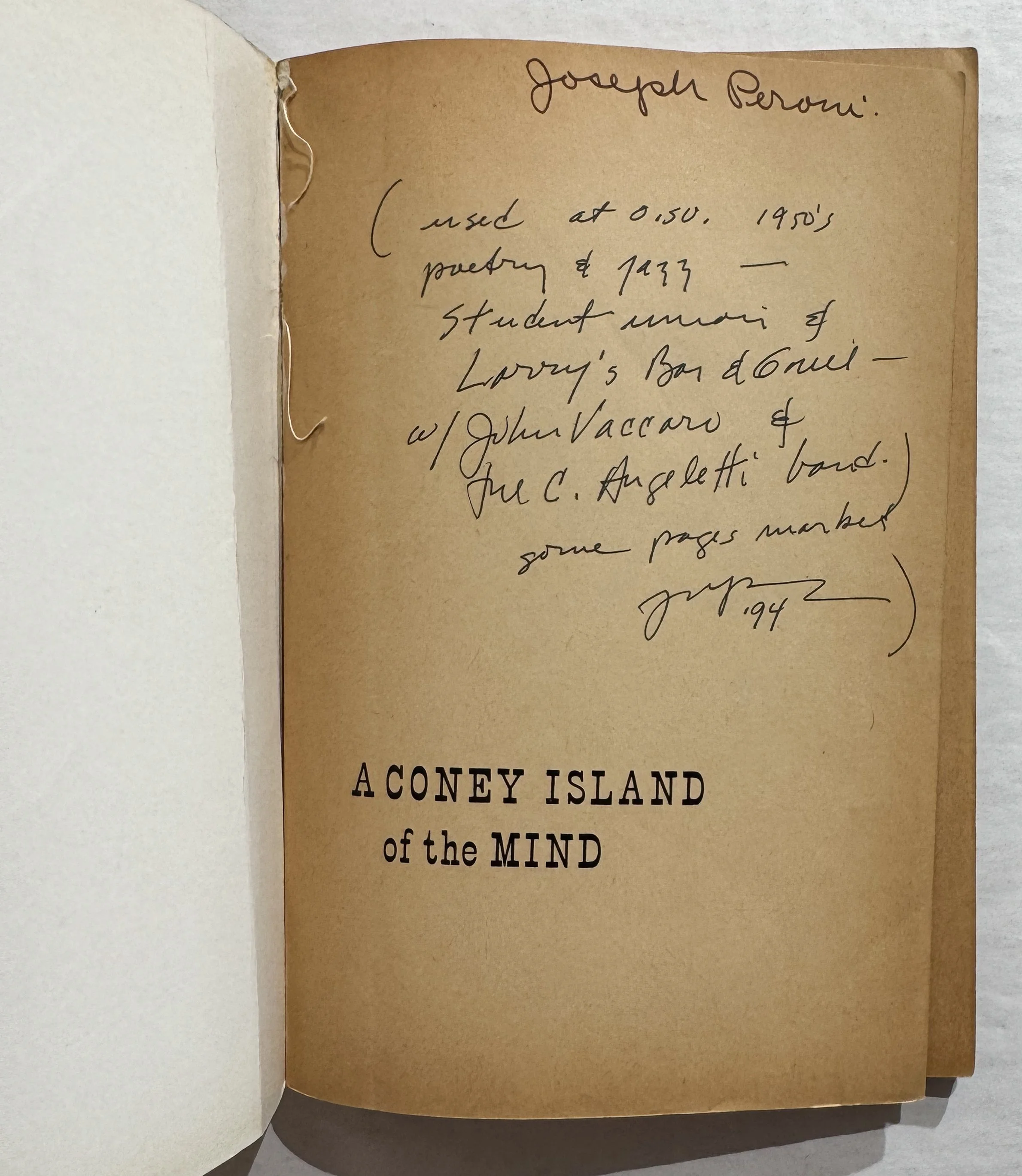 Image 10 of 18
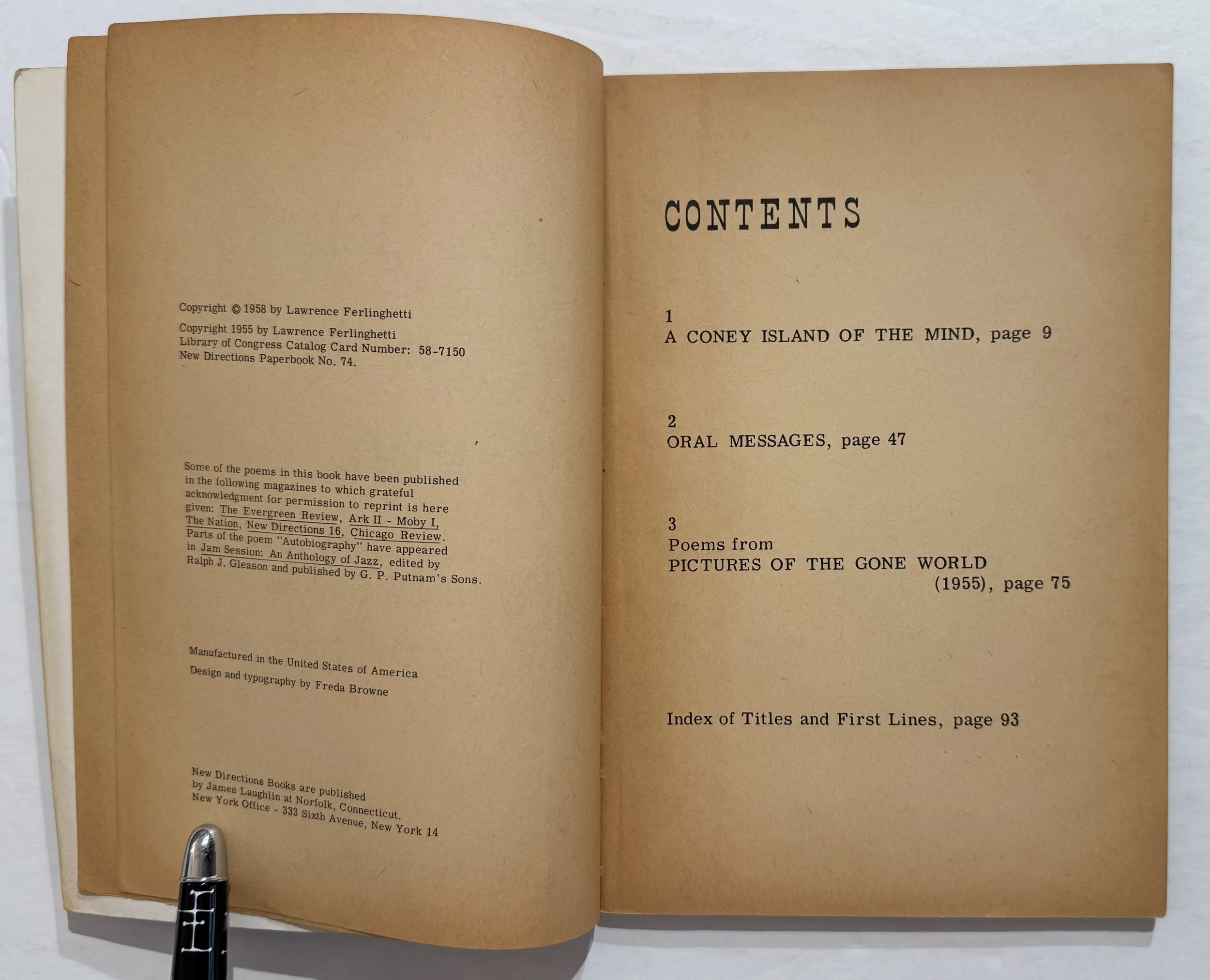 Image 11 of 18
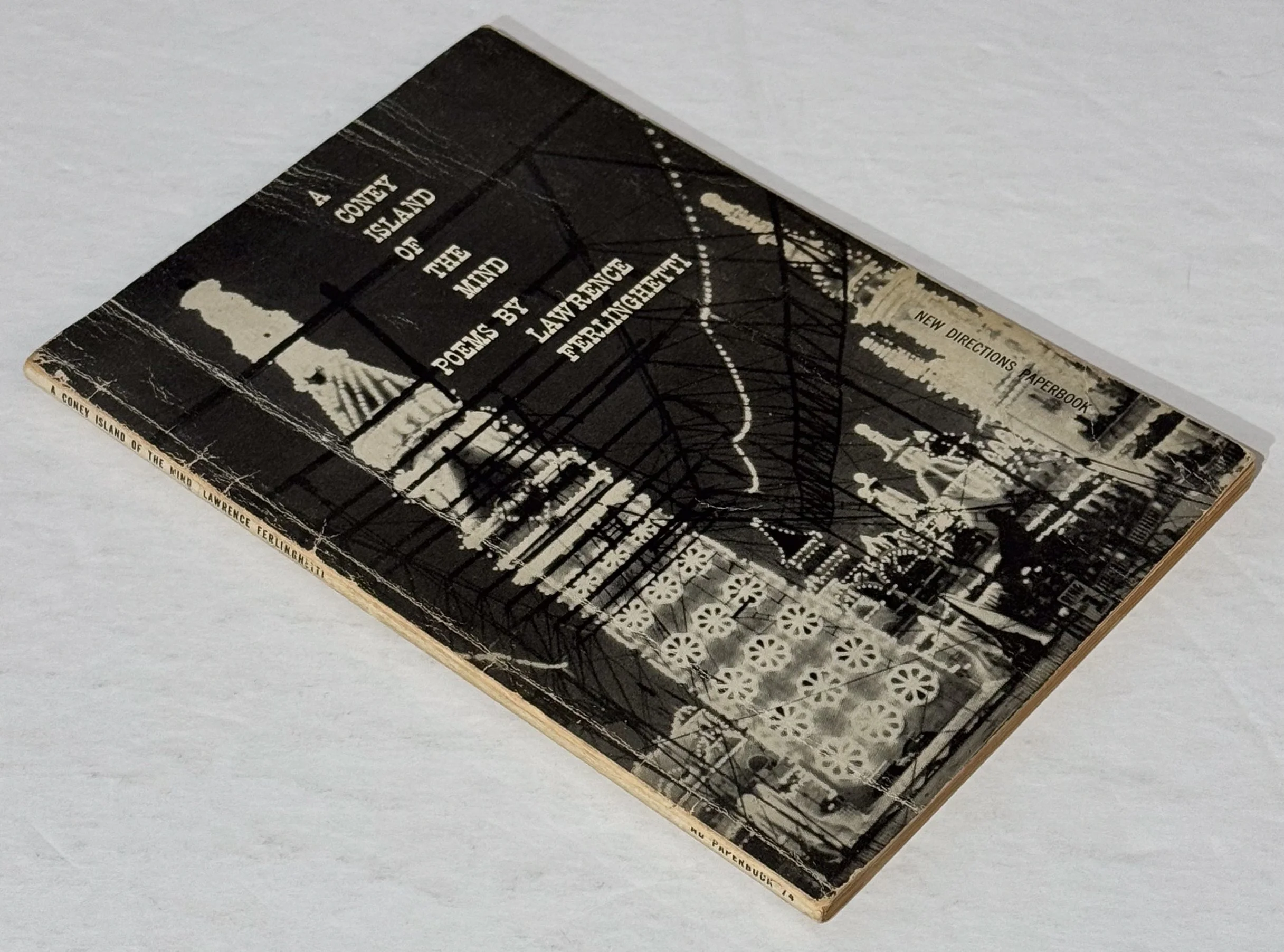 Image 12 of 18
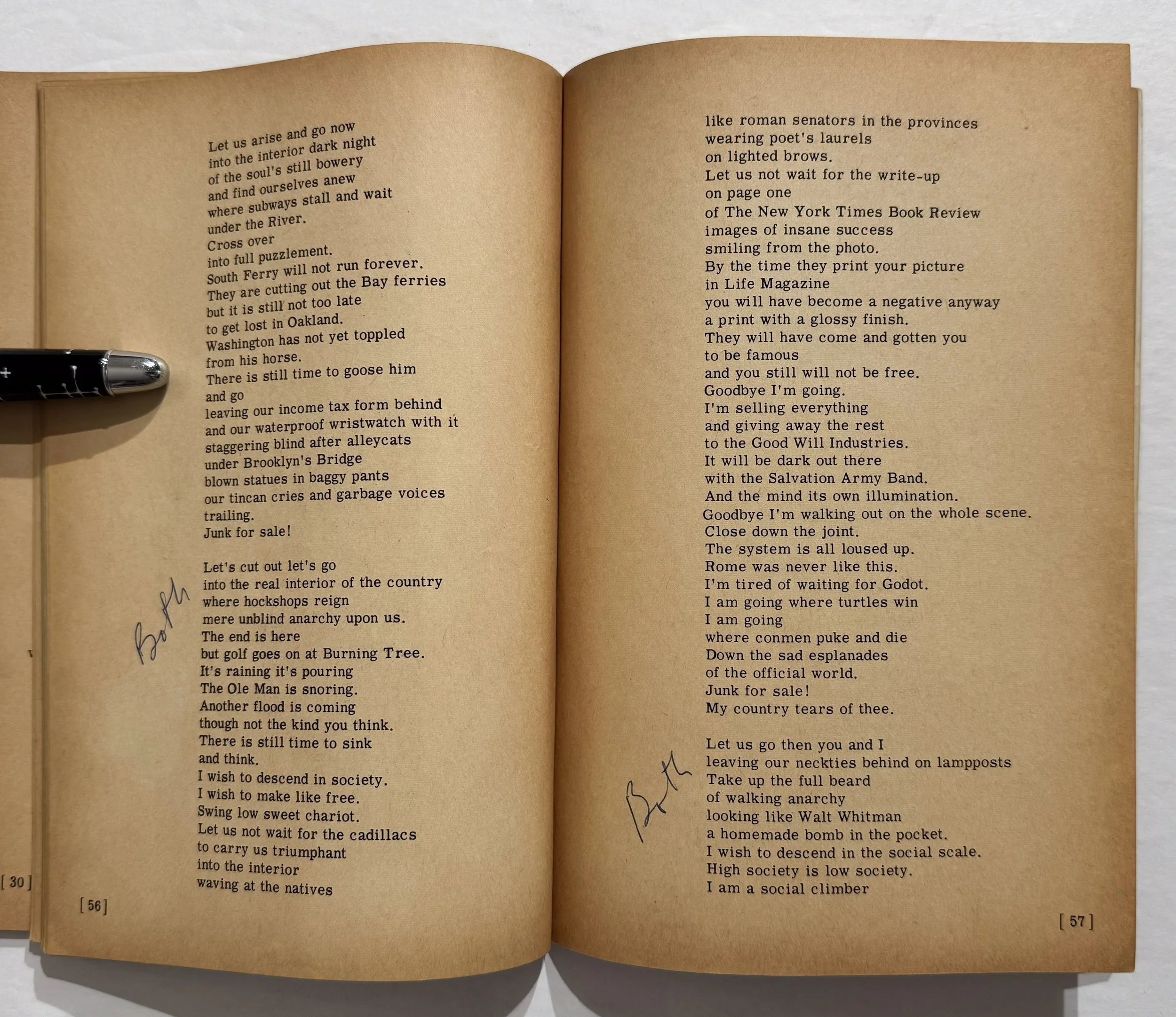 Image 13 of 18
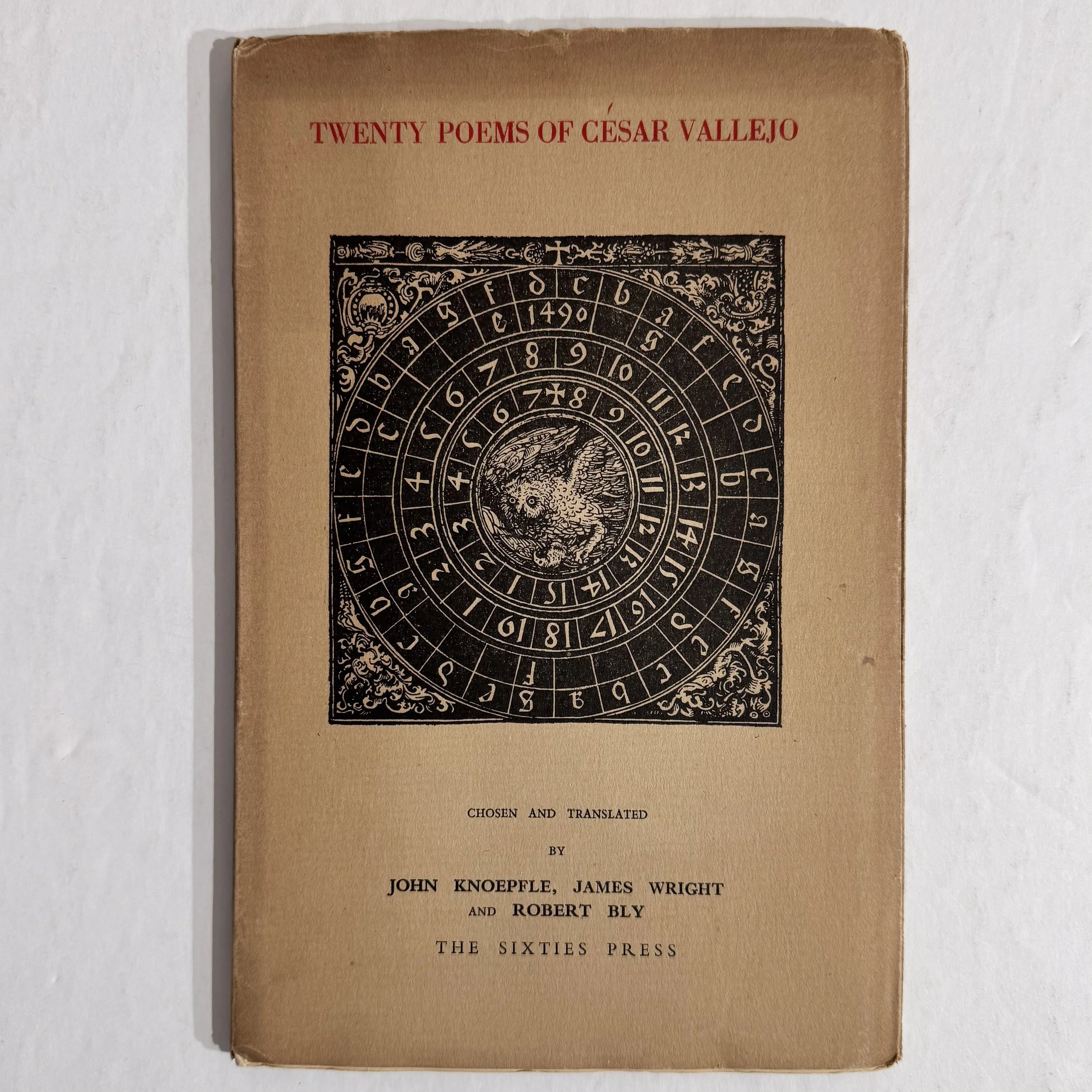 Image 14 of 18
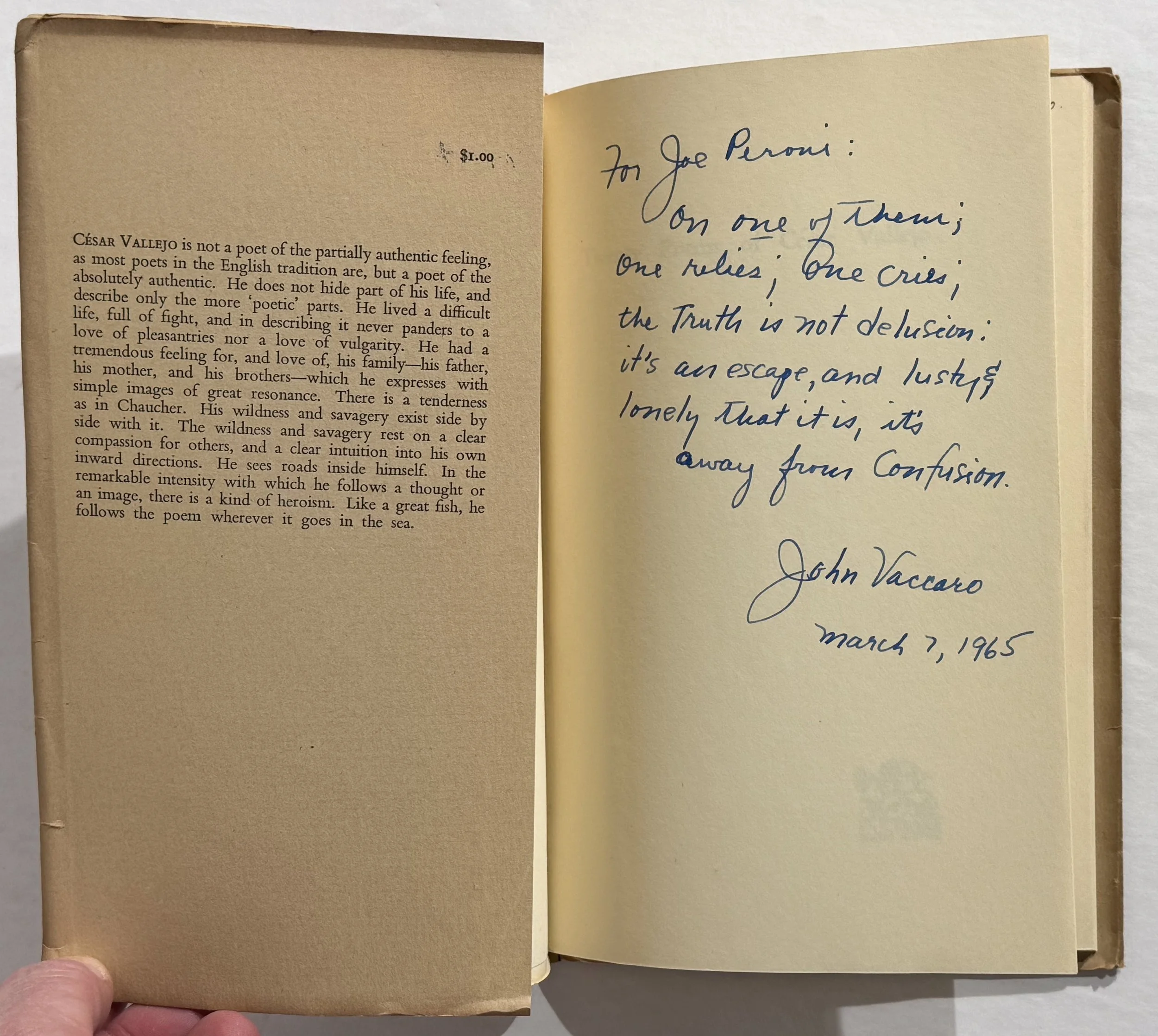 Image 15 of 18
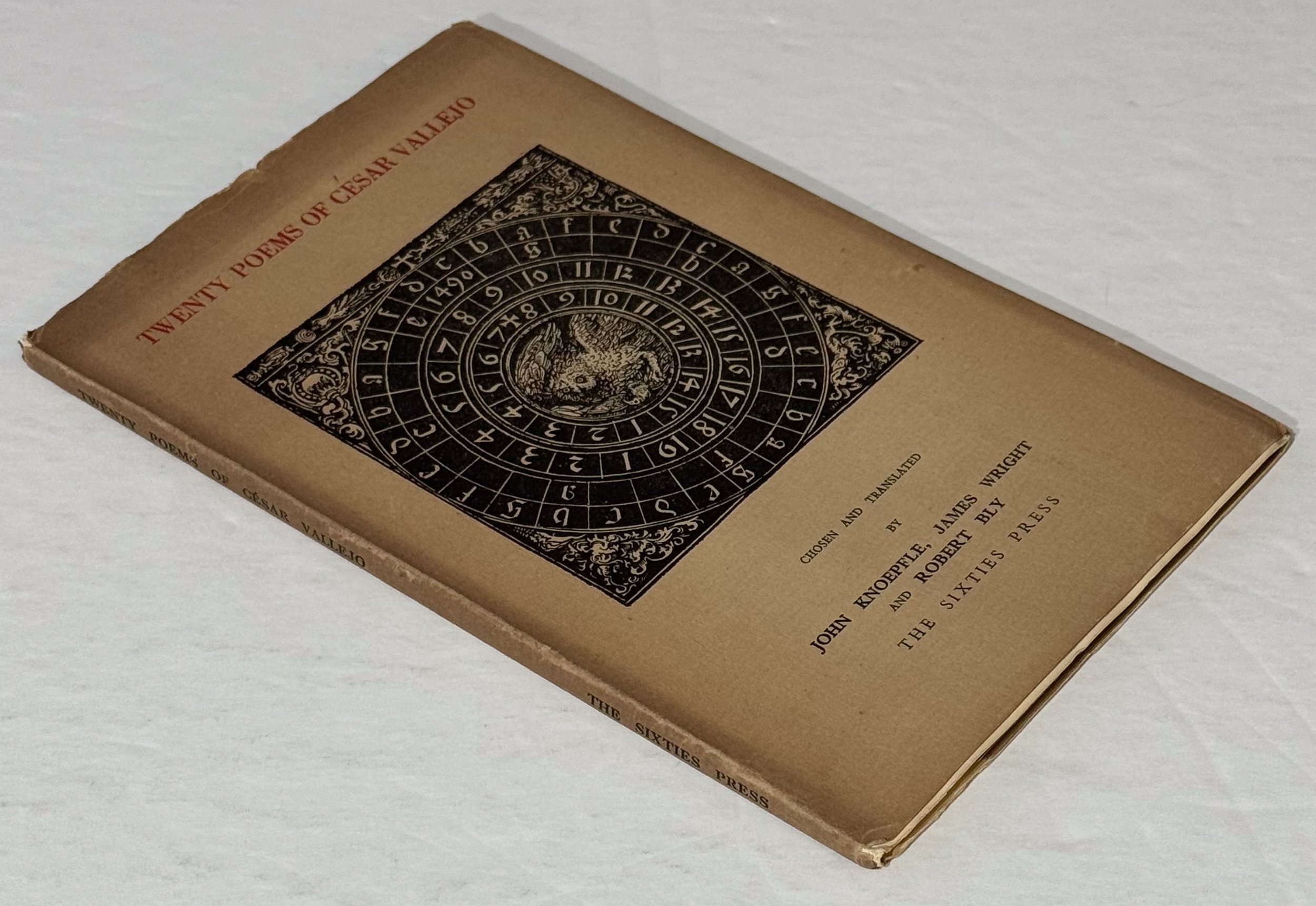 Image 16 of 18
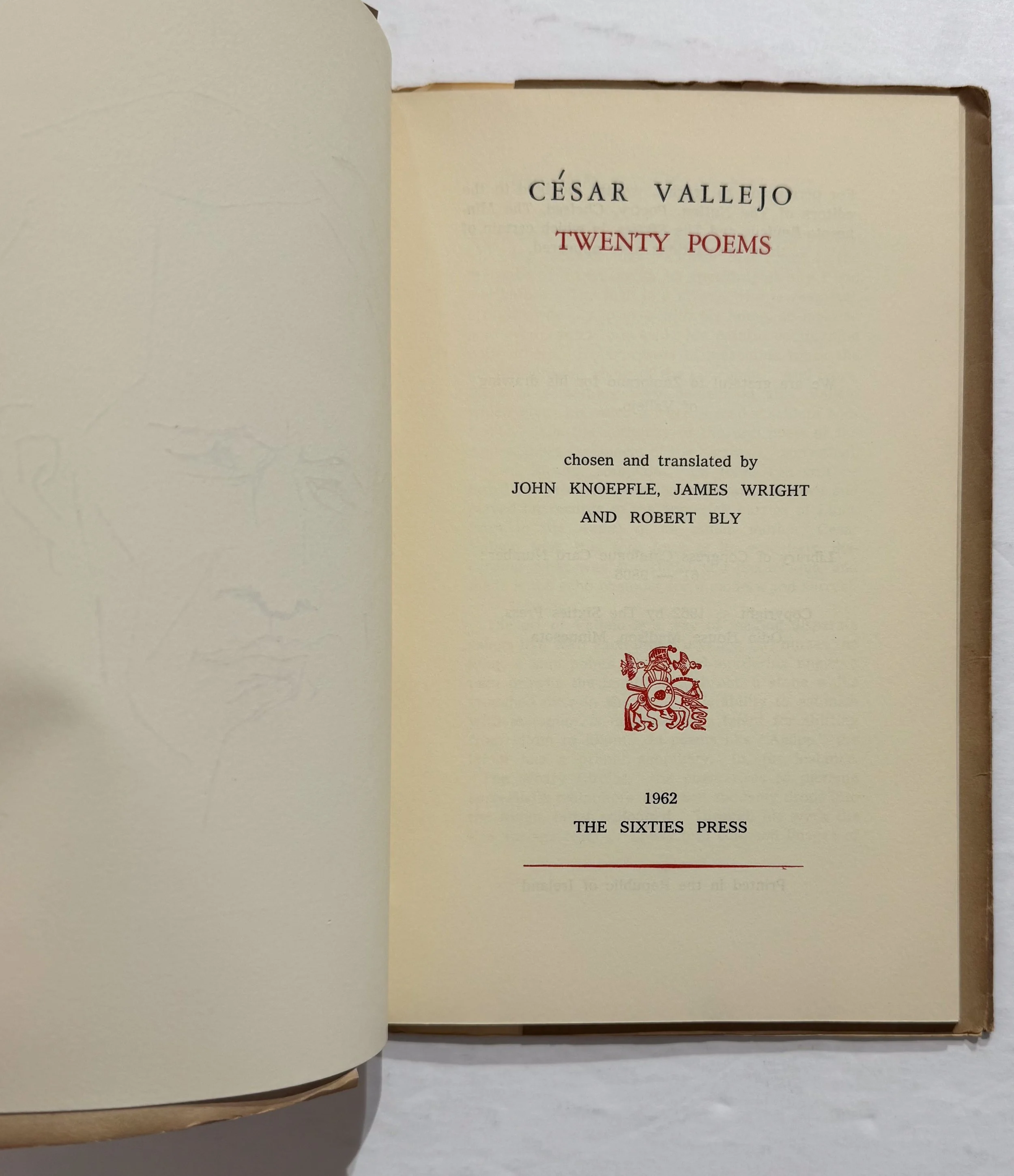 Image 17 of 18
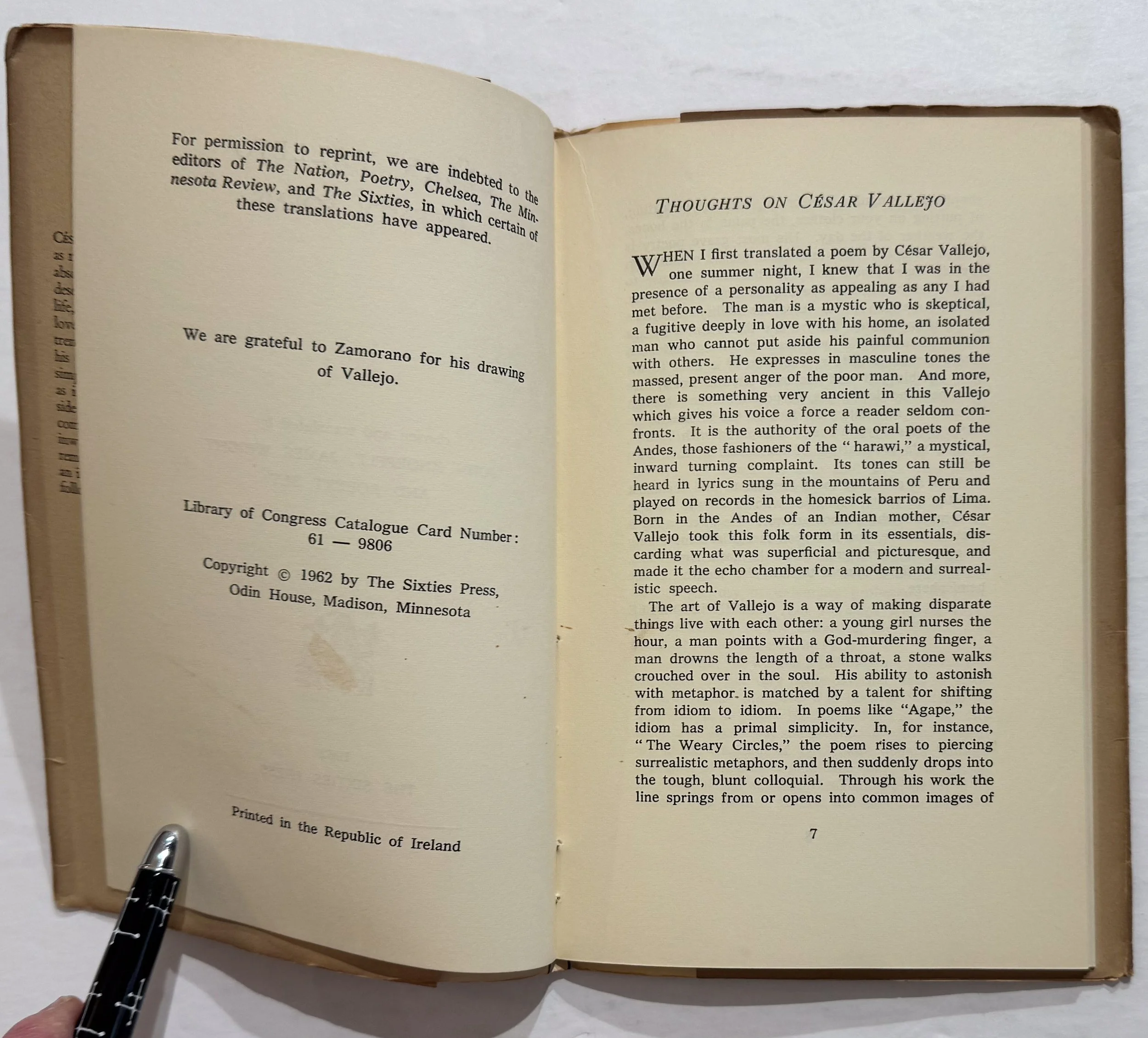 Image 18 of 18