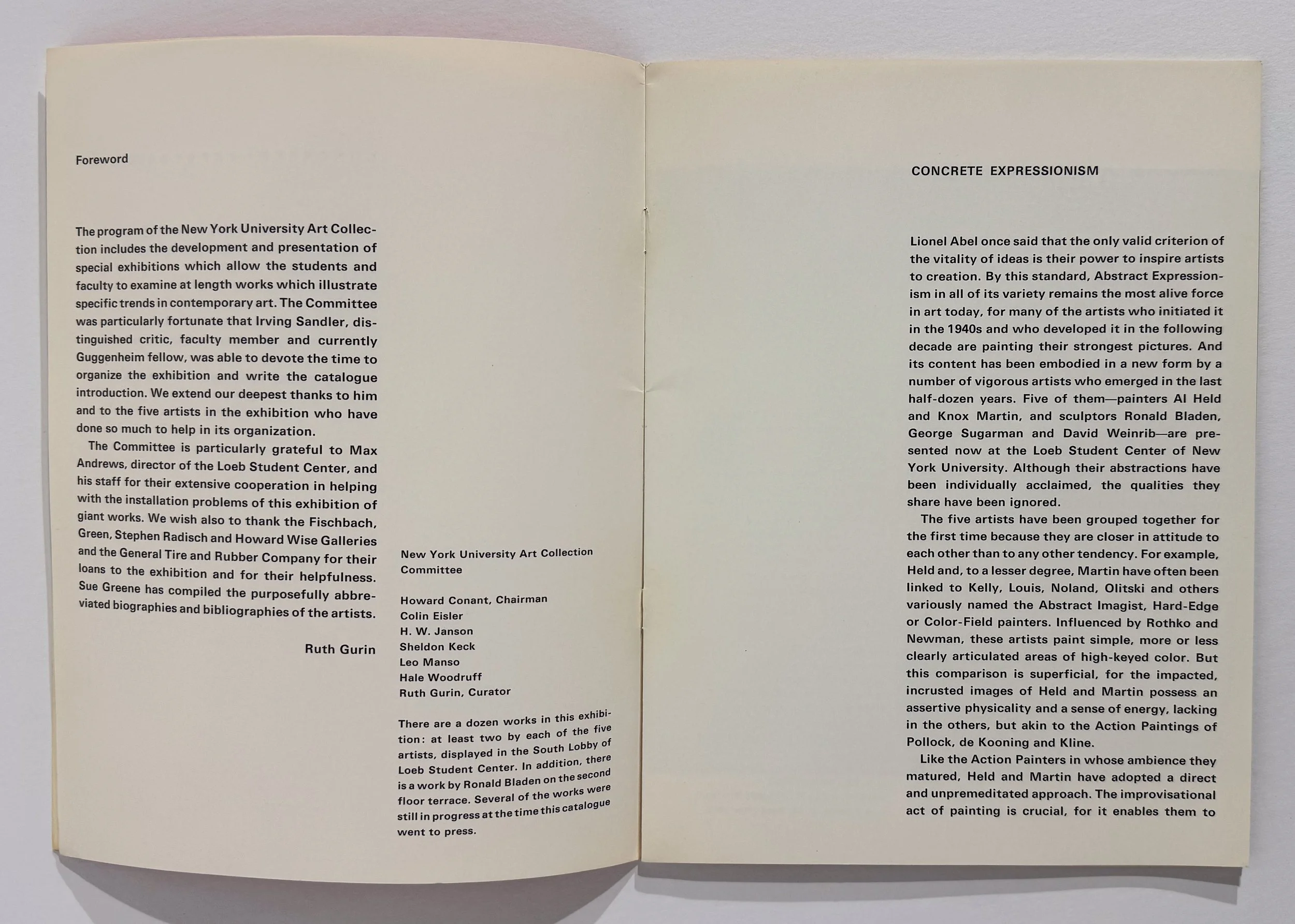
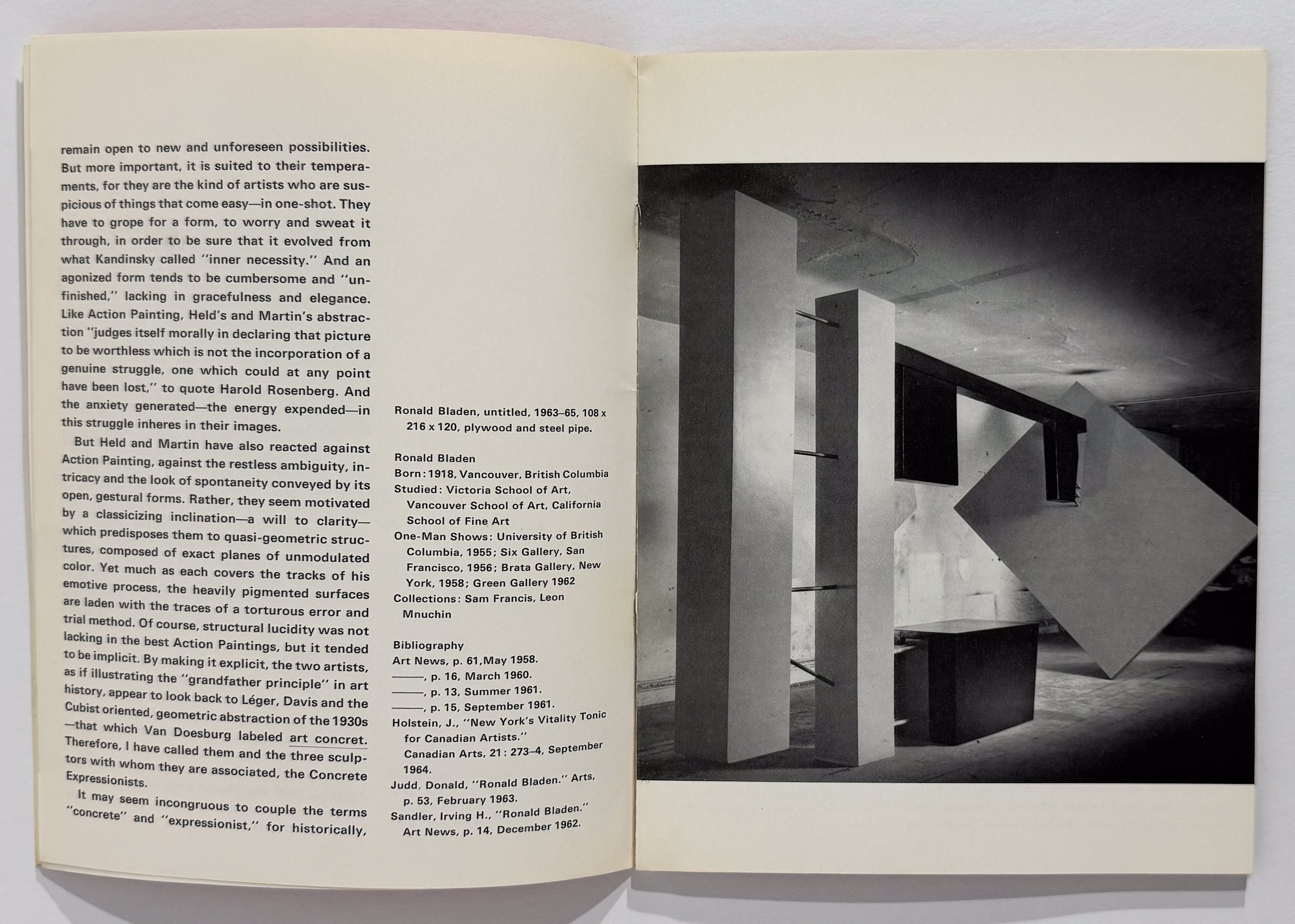
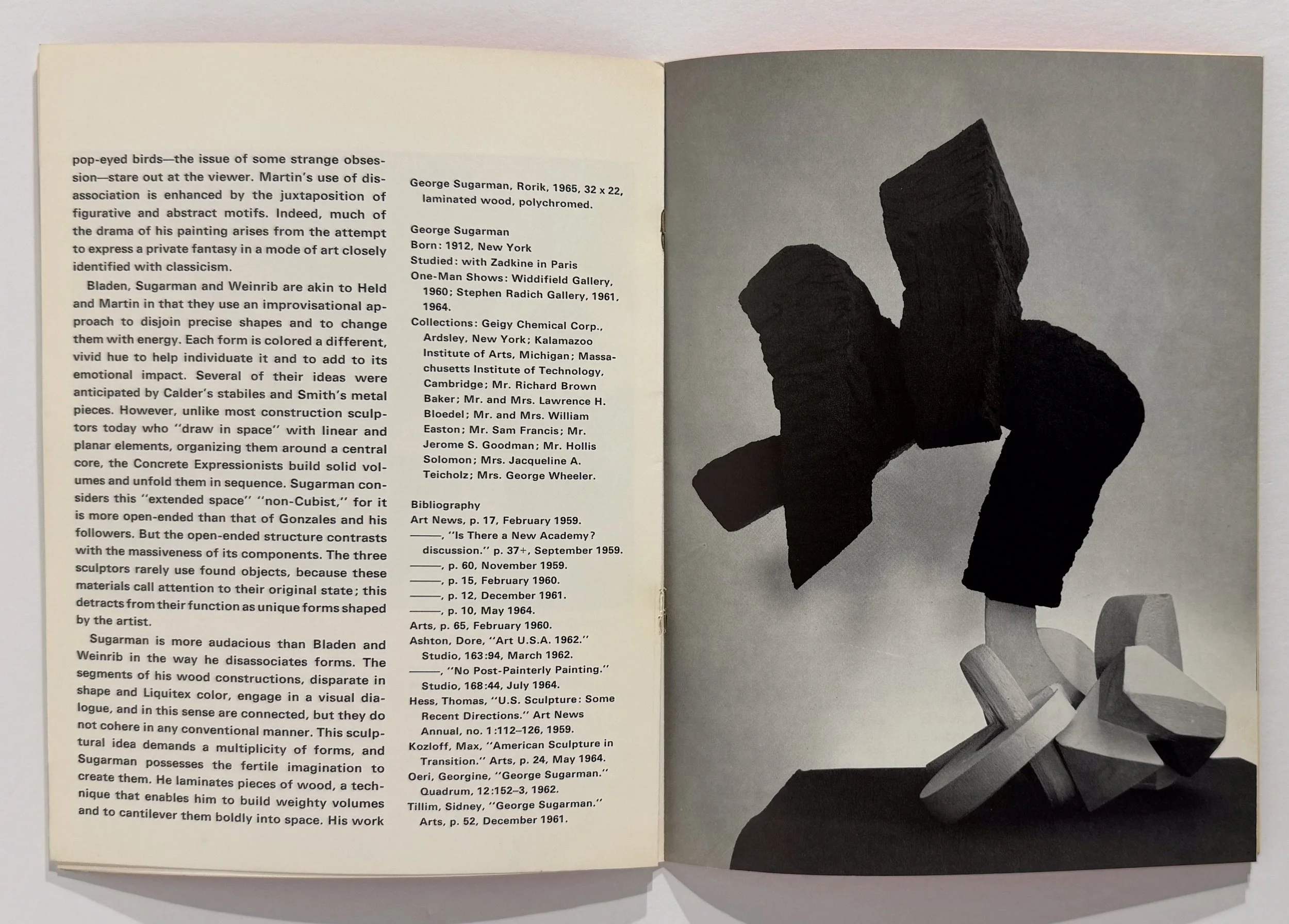
Catalog accompanying a loan exhibition benefitting the New York Infirmary for Women and Children, held at Wildenstein & Co. from April 27-May 27, 1943. 4to (7.75 × 10.5 inches), pictorial wrappers, illustrated throughout in black-and-white.
An ambitious wartime New York exhibition devoted to nearly five centuries of women's headdress as represented in European and American portraiture. Arranged by art collector and dealer Georges de Batz, the exhibition assembled approximately one hundred paintings and related works dating from the fifteenth through twentieth centuries, borrowing from major museums, galleries, and private collections, including the Museum of Modern Art, Brooklyn Museum, Detroit Institute of Arts, Wadsworth Atheneum, Nelson Gallery of Art, Toledo Museum of Art, Worcester Art Museum, Knoedler, and Wildenstein itself.
The catalogue proceeds chronologically through changing modes of headdress, illustrating and describing portraits and figure paintings by such artists as Hans Memling, François Boucher, Antoine Watteau, Joshua Reynolds, Pierre-Auguste Renoir, Giovanni Boldini, and others. Among the works exhibited was Édouard Manet's celebrated Jeanne (Spring), now in the J. Paul Getty Museum.
Throughout, the exhibition connects historical art and contemporary New York fashion. Historic hats and coiffures represented in the paintings were adapted for the exhibition by an extraordinary roster of leading fashion establishments and milliners, including Lilly Daché, Hattie Carnegie, Henri Bendel, Bergdorf Goodman, Bonwit Teller, Saks Fifth Avenue, John-Frederics, Lord & Taylor, Milgrim, Elizabeth Arden, and Ogilvie Sisters. Participating magazines and photographers included Vogue, Harper's Bazaar, Life, Mademoiselle, The New Yorker, and Town & Country, situating the exhibition squarely within the sophisticated New York fashion culture of the early 1940s.
The catalog itself is tylishly designed, its title page organized around a progressive diagonal composition: angled typography moves across the sheet before resolving at lower right into a rakishly pitched series of stepped chronological bands identifying the five centuries represented in the exhibition. The traditional serif typography set against this distinctly modern graphic arrangement gives the catalog an appealing intersection of Old Master connoisseurship and 1940s New York fashion modernism.
The exhibition benefited the New York Infirmary for Women and Children, founded by Elizabeth Blackwell, the first woman in the United States to receive a medical degree. A short history of the Infirmary appears at the rear, while the wrappers and preliminary matter record the exhibition's extensive women's executive committee, ticket committee, and patronage network.
An uncommon and unusually evocative document of wartime New York fashion culture, costume history, museum display, women's philanthropy, and the translation of historical portraiture into contemporary design. Light bumping and rubbing to extremities. Particularly attractive in the original mustard-yellow pictorial wrappers.
Catalog accompanying a loan exhibition benefitting the New York Infirmary for Women and Children, held at Wildenstein & Co. from April 27-May 27, 1943. 4to (7.75 × 10.5 inches), pictorial wrappers, illustrated throughout in black-and-white.
An ambitious wartime New York exhibition devoted to nearly five centuries of women's headdress as represented in European and American portraiture. Arranged by art collector and dealer Georges de Batz, the exhibition assembled approximately one hundred paintings and related works dating from the fifteenth through twentieth centuries, borrowing from major museums, galleries, and private collections, including the Museum of Modern Art, Brooklyn Museum, Detroit Institute of Arts, Wadsworth Atheneum, Nelson Gallery of Art, Toledo Museum of Art, Worcester Art Museum, Knoedler, and Wildenstein itself.
The catalogue proceeds chronologically through changing modes of headdress, illustrating and describing portraits and figure paintings by such artists as Hans Memling, François Boucher, Antoine Watteau, Joshua Reynolds, Pierre-Auguste Renoir, Giovanni Boldini, and others. Among the works exhibited was Édouard Manet's celebrated Jeanne (Spring), now in the J. Paul Getty Museum.
Throughout, the exhibition connects historical art and contemporary New York fashion. Historic hats and coiffures represented in the paintings were adapted for the exhibition by an extraordinary roster of leading fashion establishments and milliners, including Lilly Daché, Hattie Carnegie, Henri Bendel, Bergdorf Goodman, Bonwit Teller, Saks Fifth Avenue, John-Frederics, Lord & Taylor, Milgrim, Elizabeth Arden, and Ogilvie Sisters. Participating magazines and photographers included Vogue, Harper's Bazaar, Life, Mademoiselle, The New Yorker, and Town & Country, situating the exhibition squarely within the sophisticated New York fashion culture of the early 1940s.
The catalog itself is tylishly designed, its title page organized around a progressive diagonal composition: angled typography moves across the sheet before resolving at lower right into a rakishly pitched series of stepped chronological bands identifying the five centuries represented in the exhibition. The traditional serif typography set against this distinctly modern graphic arrangement gives the catalog an appealing intersection of Old Master connoisseurship and 1940s New York fashion modernism.
The exhibition benefited the New York Infirmary for Women and Children, founded by Elizabeth Blackwell, the first woman in the United States to receive a medical degree. A short history of the Infirmary appears at the rear, while the wrappers and preliminary matter record the exhibition's extensive women's executive committee, ticket committee, and patronage network.
An uncommon and unusually evocative document of wartime New York fashion culture, costume history, museum display, women's philanthropy, and the translation of historical portraiture into contemporary design. Light bumping and rubbing to extremities. Particularly attractive in the original mustard-yellow pictorial wrappers.

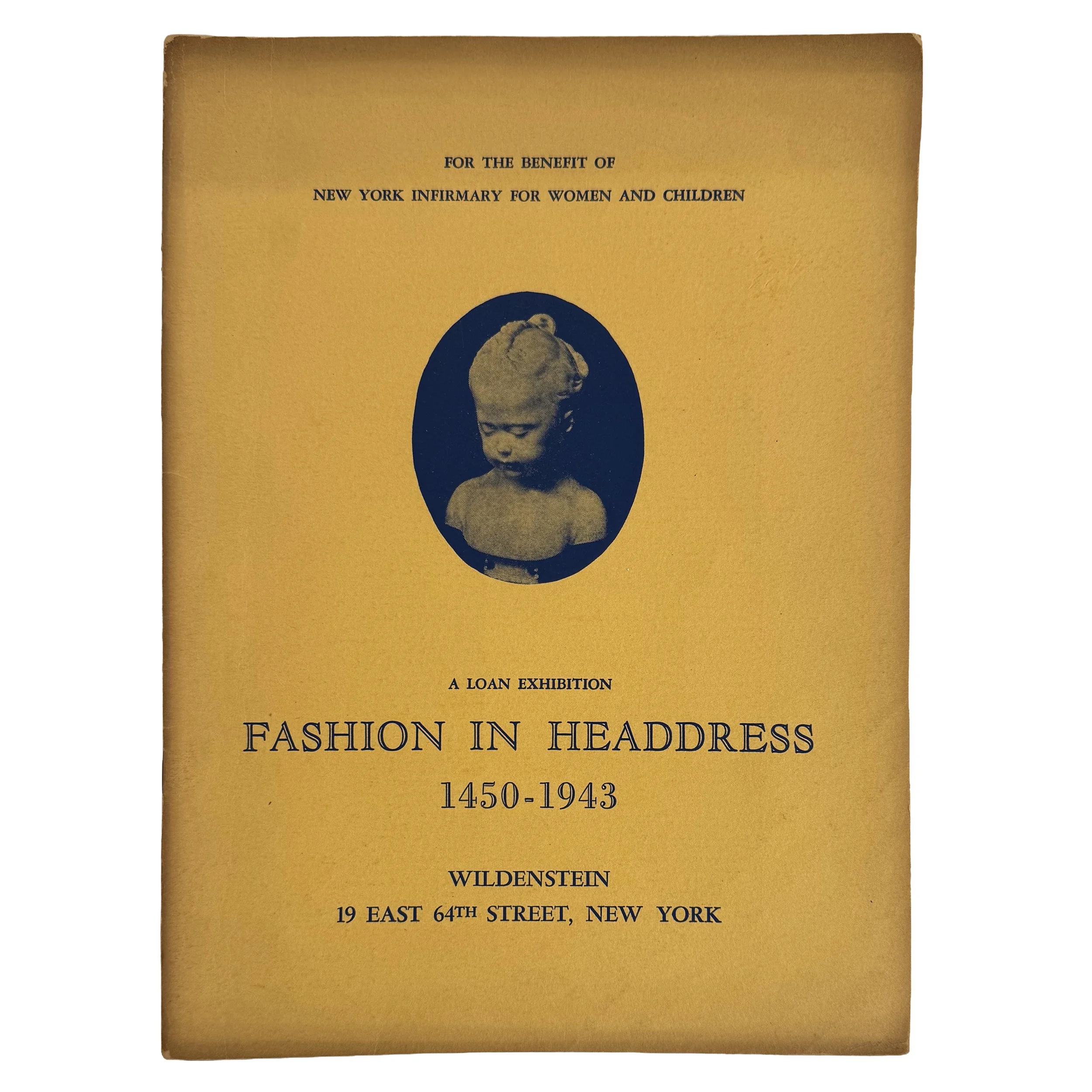 Image 1 of 7
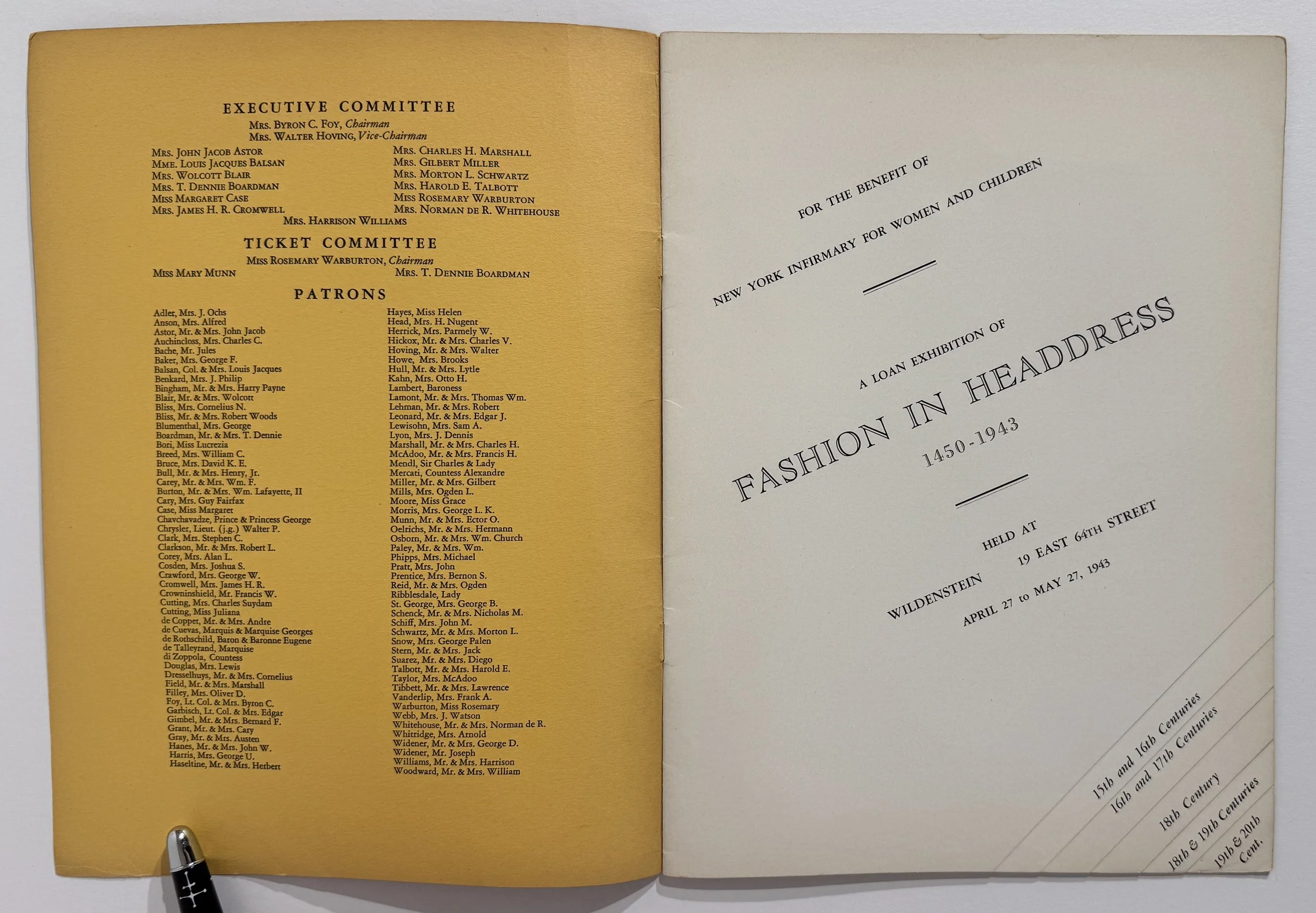 Image 2 of 7
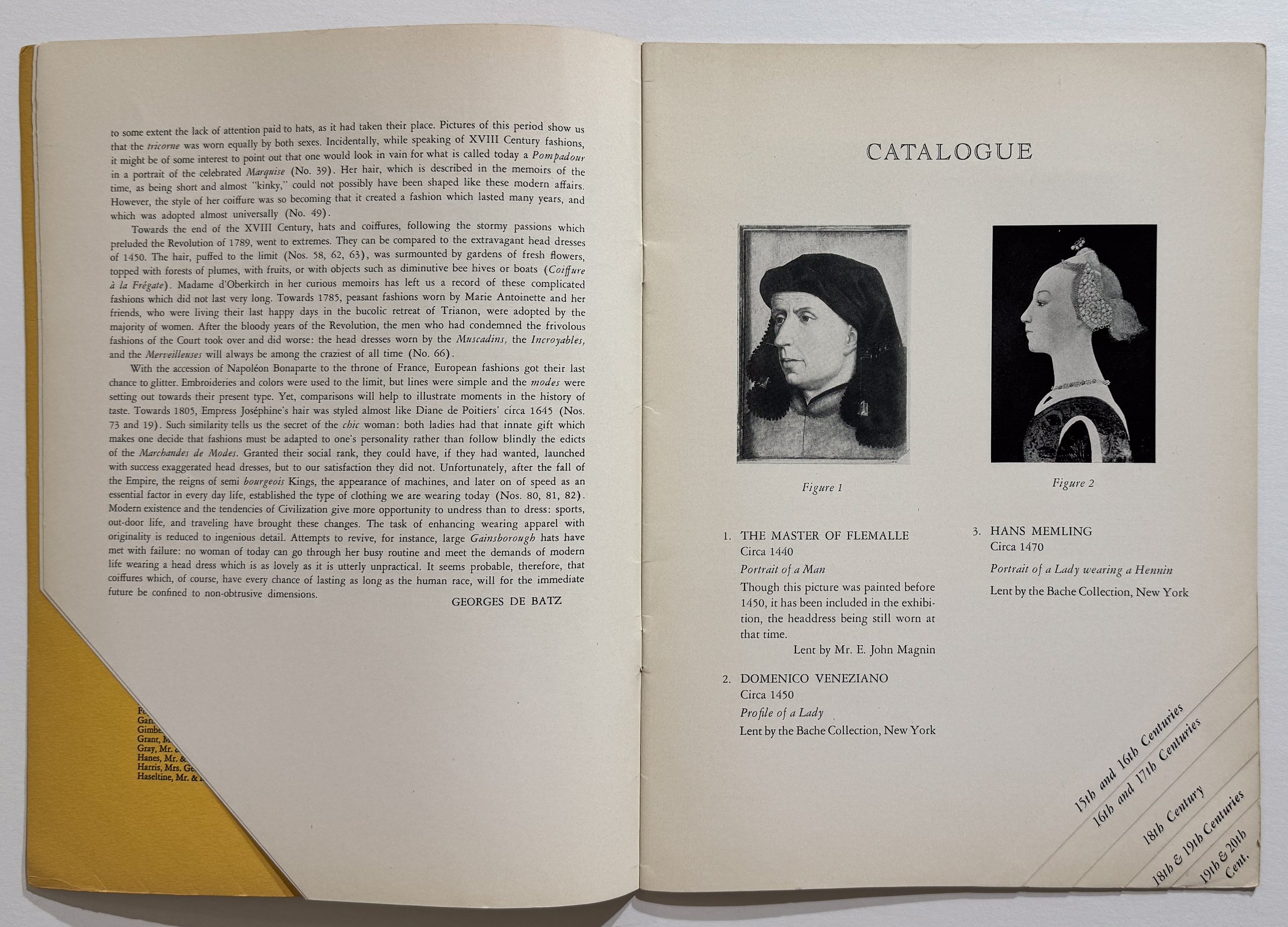 Image 3 of 7
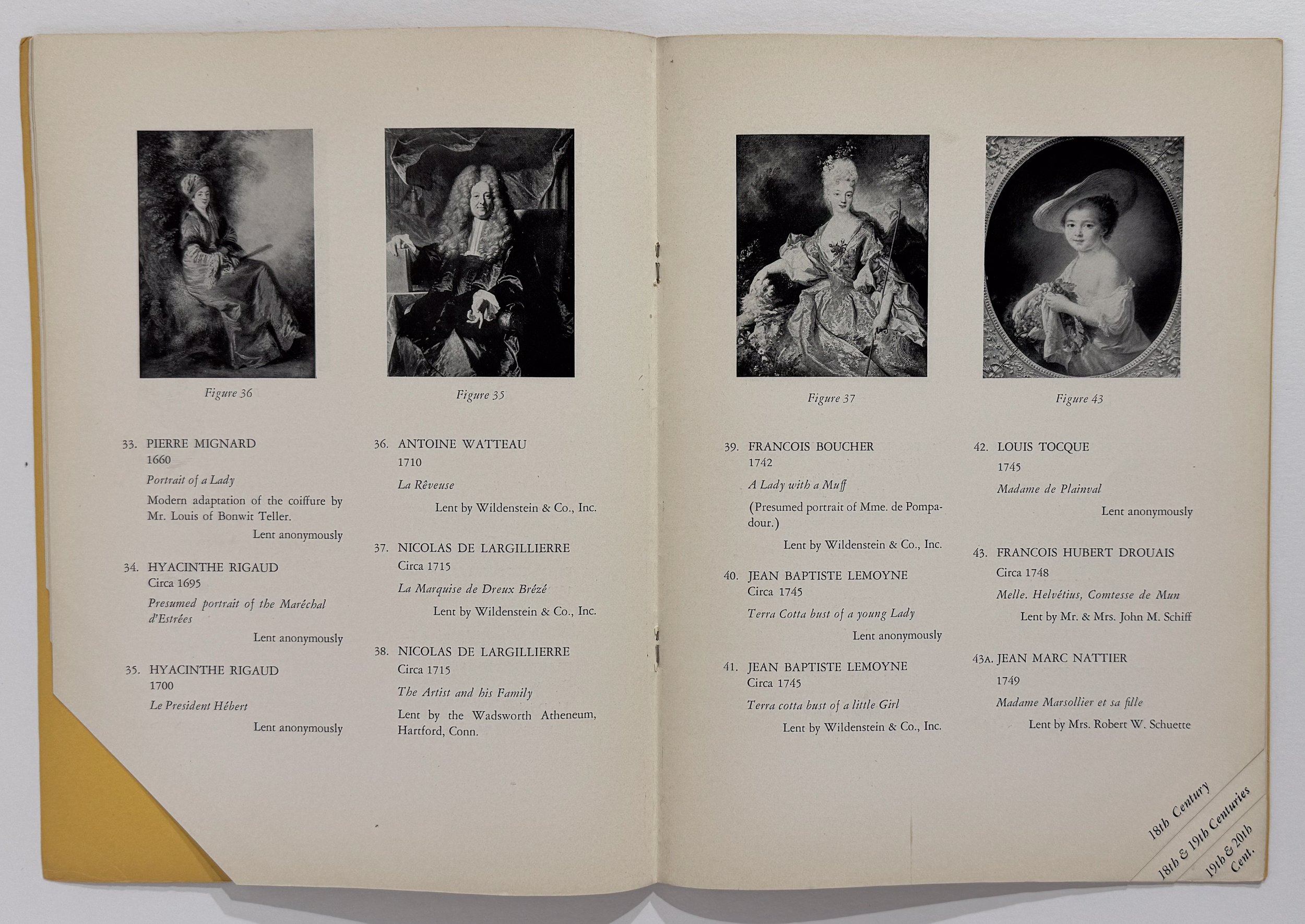 Image 4 of 7
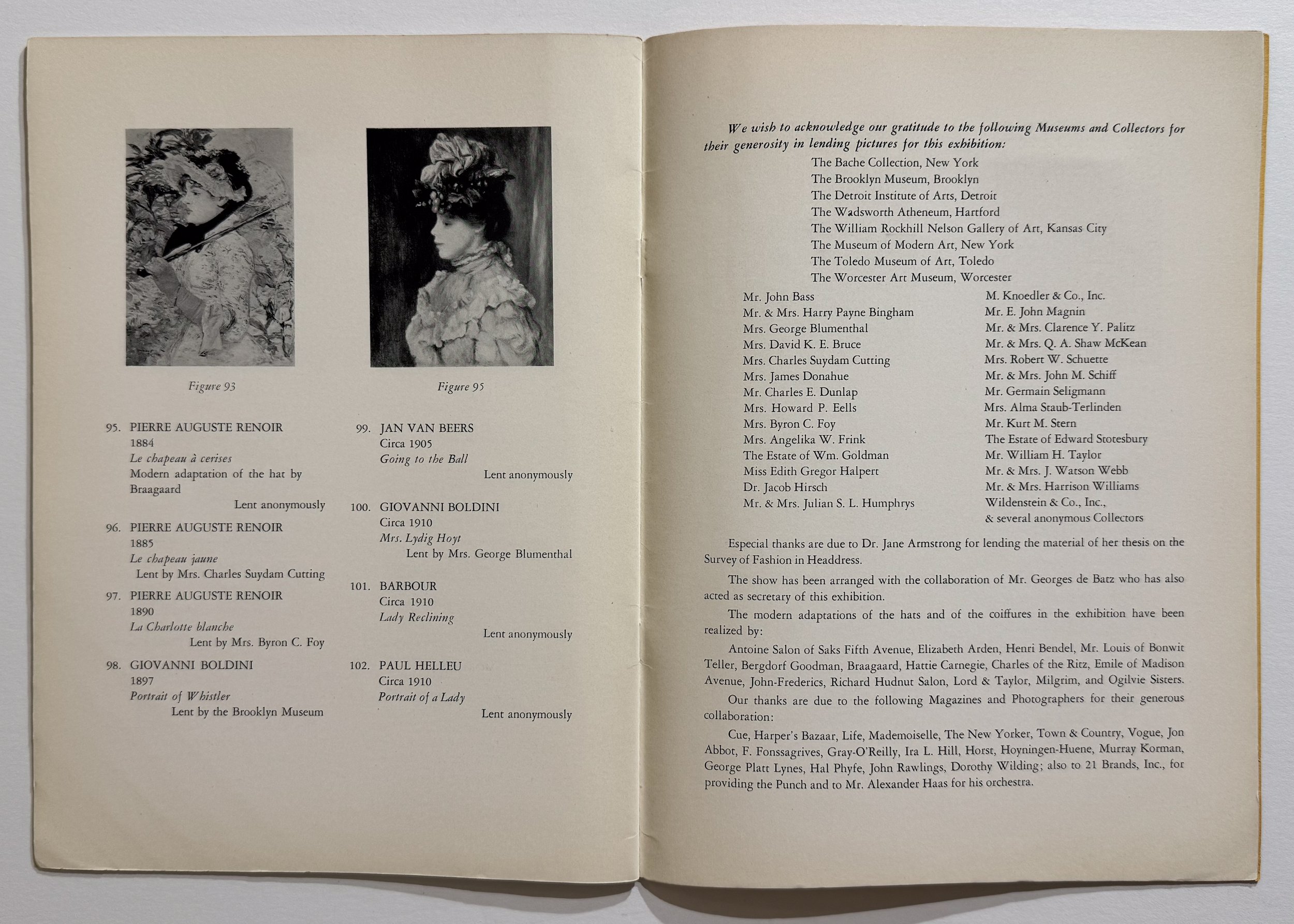 Image 5 of 7
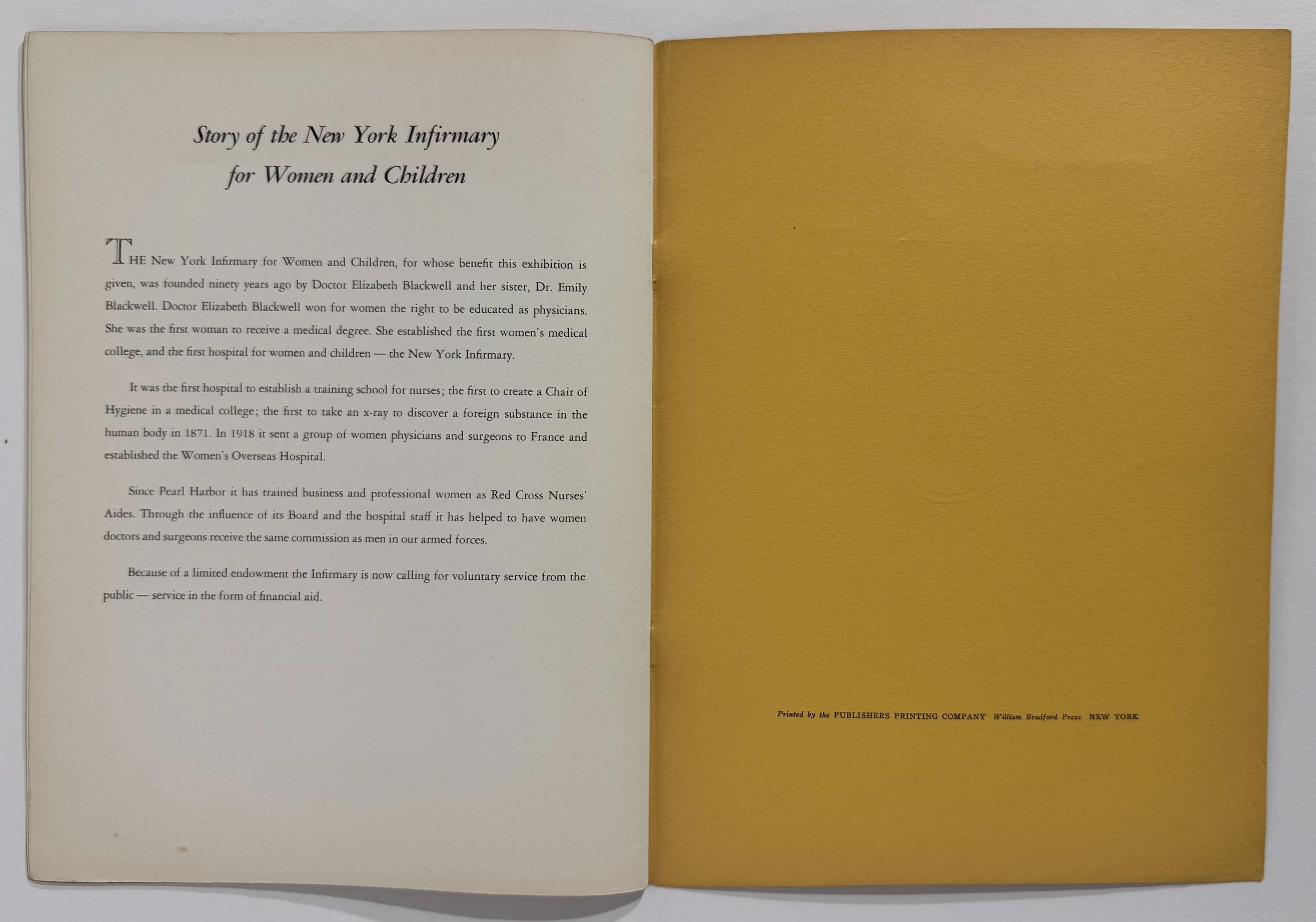 Image 6 of 7
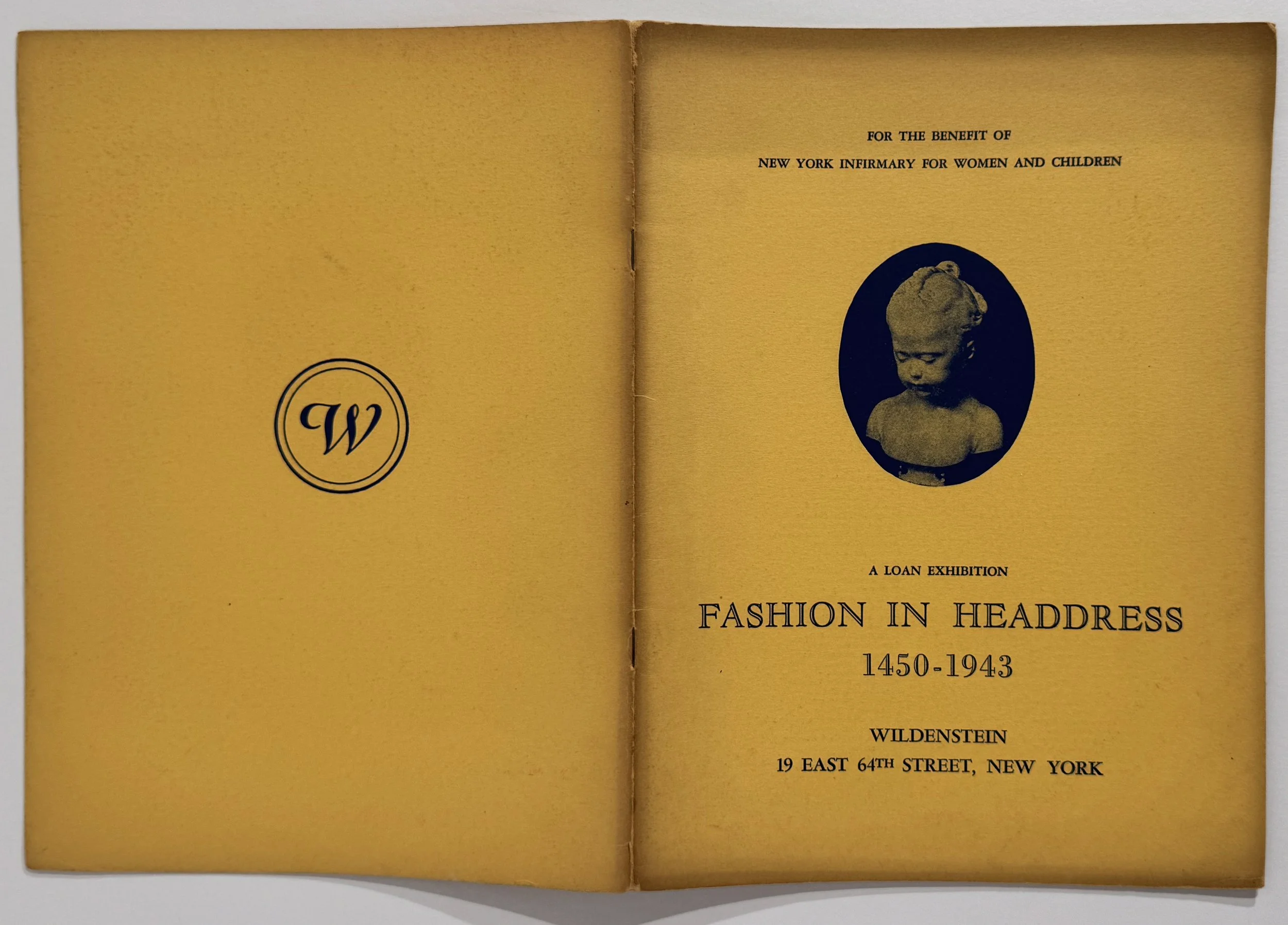 Image 7 of 7