Two contemporary publications documenting one of the formative exhibitions in the history of the Museum of Modern Art and the emergence of industrial design as a field of aesthetic inquiry: the first-edition exhibition catalog together with the March 1934 issue of The Bulletin of the Museum of Modern Art, published immediately before the exhibition opened. Organized by Philip Johnson, Machine Art presented utilitarian, machine-made objects as objects of aesthetic contemplation, extending the modernist principles MoMA had advanced through its 1932 architecture exhibition into the realm of industrial production.
Philip Johnson and Alfred H. Barr, Jr. Machine Art. New York: The Museum of Modern Art, 1934. First edition. Pictorial wrappers, 7½ x 10 inches; 132 pages, extensively illustrated in black and white. Cover designed by Josef Albers, with photography by Ruth Bernhard.
A seminal early MoMA publication. Johnson assembled ball bearings, springs, propellers and scientific instruments alongside cookware, glassware, cutlery, clocks and furnishings—objects frequently anonymous in authorship and never intended as art. Removed from their utilitarian contexts and presented with the visual authority traditionally accorded sculpture, they advanced the proposition that engineering, material economy and mechanical production could themselves generate aesthetic form. Barr's foreword identified abstract and geometric beauty, kinetic rhythm, material and surface, visual complexity and function as central qualities of “machine art.”
Albers's celebrated cover encapsulates the argument: Bernhard's isolated ball bearing becomes an image of almost monumental abstraction. The interior continues this transformation through photography and generous white space, converting manufactured objects into studies of geometry, material and light. Minor damp staining to a 2-inch area along spine, affecting only the title page inside; otherwise only minor handling wear, with the vulnerable black pictorial front wrapper remarkably fresh and sharp.
With: The Bulletin of the Museum of Modern Art. Vol. I, No. 7. March 1, 1934. Four pages, single folded sheet, illustrated. Near Fine, unusually clean and crisp.
Published on the eve of the exhibition, the Bulletin functions as an advance manifesto and provides an unusually revealing counterpart to the finished catalogue. Its cover reproduces a Eugene Dietzgen protractor selected for Machine Art, juxtaposed with passages from Plato's Philebus and Thomas Aquinas's Summa Theologiae concerning geometric, proportional and absolute beauty—placing an anonymous industrial instrument within a philosophical lineage reaching back to antiquity.
Inside, the announcement for the forthcoming exhibition concisely states Johnson's curatorial premise: industrial items, household appliances, scientific instruments, laboratory glass and furnishings were chosen from the standpoint of machine rather than craft manufacture, emphasizing simplicity and proportion rather than superficially “modernistic” design. A separate notice announces Johnson's lecture on Machine Art at the Museum.
Of particular documentary interest, the facing page simultaneously reports that MoMA's Exhibition of Modern Architecture was nearing the end of its twenty-month national tour, illustrated by an installation photograph. The Bulletin therefore captures an important institutional transition: the architectural modernism codified by Hitchcock and Johnson in 1932 was still being disseminated nationally while Johnson prepared the exhibition that extended MoMA's modernist aesthetic from architecture to the industrial object.
Together, the catalogue and Bulletin provide two complementary states of the Machine Art proposition—the Museum announcing and intellectually framing the exhibition, followed by its fully realized visual and theoretical statement. The pairing also documents a decisive expansion of MoMA's conception of modern design; the Museum's Architecture department would become the Department of Architecture and Industrial Art in 1935. Price is for the group of two items.
Two contemporary publications documenting one of the formative exhibitions in the history of the Museum of Modern Art and the emergence of industrial design as a field of aesthetic inquiry: the first-edition exhibition catalog together with the March 1934 issue of The Bulletin of the Museum of Modern Art, published immediately before the exhibition opened. Organized by Philip Johnson, Machine Art presented utilitarian, machine-made objects as objects of aesthetic contemplation, extending the modernist principles MoMA had advanced through its 1932 architecture exhibition into the realm of industrial production.
Philip Johnson and Alfred H. Barr, Jr. Machine Art. New York: The Museum of Modern Art, 1934. First edition. Pictorial wrappers, 7½ x 10 inches; 132 pages, extensively illustrated in black and white. Cover designed by Josef Albers, with photography by Ruth Bernhard.
A seminal early MoMA publication. Johnson assembled ball bearings, springs, propellers and scientific instruments alongside cookware, glassware, cutlery, clocks and furnishings—objects frequently anonymous in authorship and never intended as art. Removed from their utilitarian contexts and presented with the visual authority traditionally accorded sculpture, they advanced the proposition that engineering, material economy and mechanical production could themselves generate aesthetic form. Barr's foreword identified abstract and geometric beauty, kinetic rhythm, material and surface, visual complexity and function as central qualities of “machine art.”
Albers's celebrated cover encapsulates the argument: Bernhard's isolated ball bearing becomes an image of almost monumental abstraction. The interior continues this transformation through photography and generous white space, converting manufactured objects into studies of geometry, material and light. Minor damp staining to a 2-inch area along spine, affecting only the title page inside; otherwise only minor handling wear, with the vulnerable black pictorial front wrapper remarkably fresh and sharp.
With: The Bulletin of the Museum of Modern Art. Vol. I, No. 7. March 1, 1934. Four pages, single folded sheet, illustrated. Near Fine, unusually clean and crisp.
Published on the eve of the exhibition, the Bulletin functions as an advance manifesto and provides an unusually revealing counterpart to the finished catalogue. Its cover reproduces a Eugene Dietzgen protractor selected for Machine Art, juxtaposed with passages from Plato's Philebus and Thomas Aquinas's Summa Theologiae concerning geometric, proportional and absolute beauty—placing an anonymous industrial instrument within a philosophical lineage reaching back to antiquity.
Inside, the announcement for the forthcoming exhibition concisely states Johnson's curatorial premise: industrial items, household appliances, scientific instruments, laboratory glass and furnishings were chosen from the standpoint of machine rather than craft manufacture, emphasizing simplicity and proportion rather than superficially “modernistic” design. A separate notice announces Johnson's lecture on Machine Art at the Museum.
Of particular documentary interest, the facing page simultaneously reports that MoMA's Exhibition of Modern Architecture was nearing the end of its twenty-month national tour, illustrated by an installation photograph. The Bulletin therefore captures an important institutional transition: the architectural modernism codified by Hitchcock and Johnson in 1932 was still being disseminated nationally while Johnson prepared the exhibition that extended MoMA's modernist aesthetic from architecture to the industrial object.
Together, the catalogue and Bulletin provide two complementary states of the Machine Art proposition—the Museum announcing and intellectually framing the exhibition, followed by its fully realized visual and theoretical statement. The pairing also documents a decisive expansion of MoMA's conception of modern design; the Museum's Architecture department would become the Department of Architecture and Industrial Art in 1935. Price is for the group of two items.

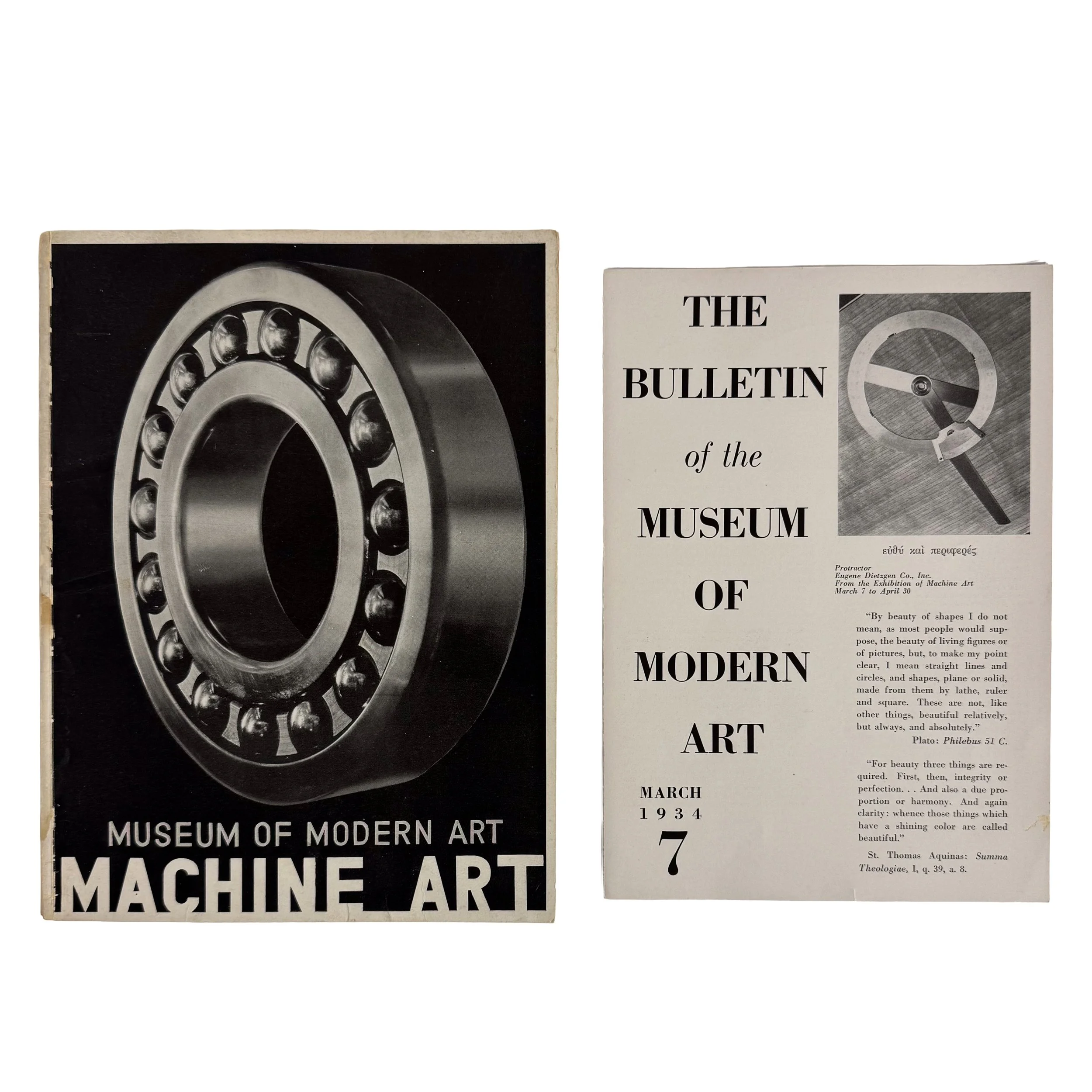 Image 1 of 18
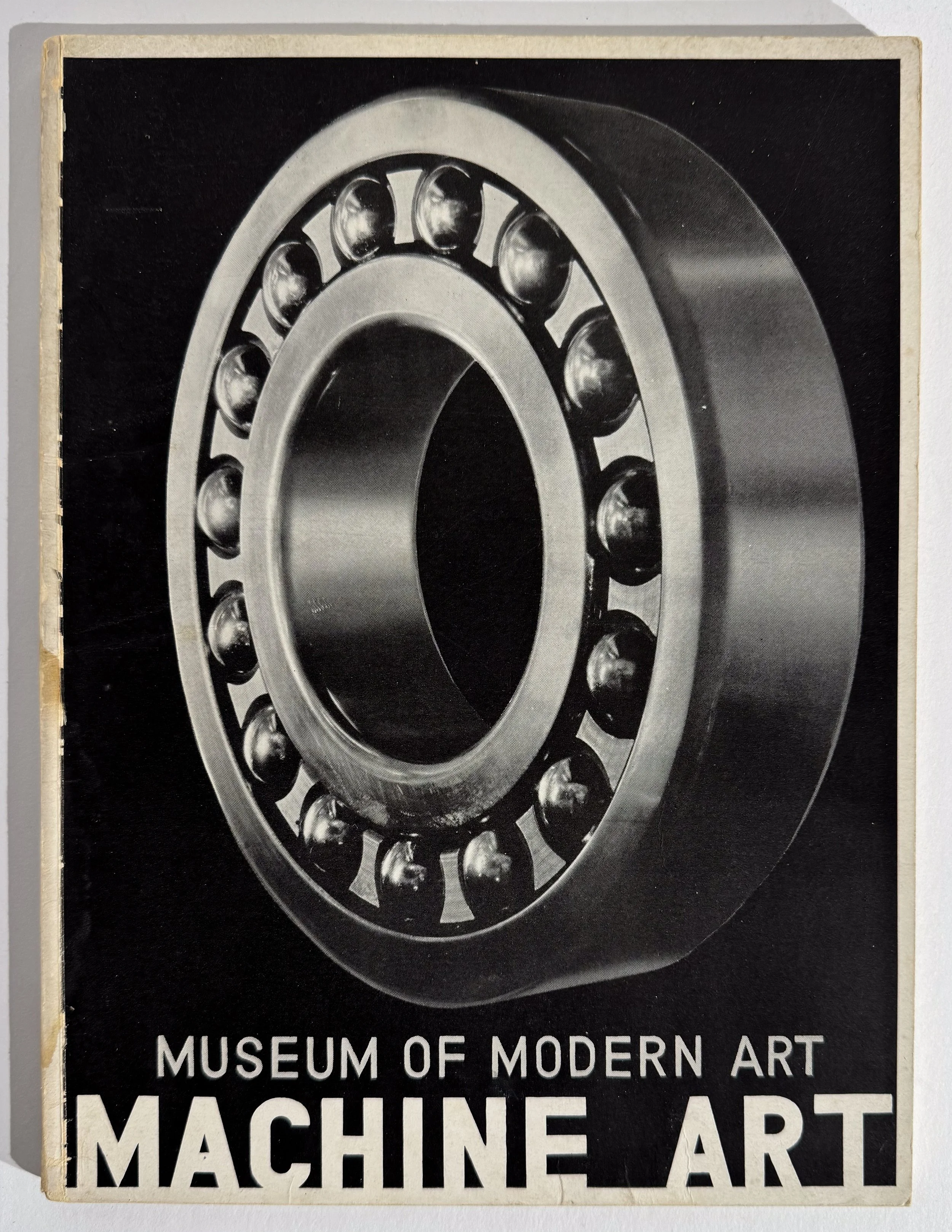 Image 2 of 18
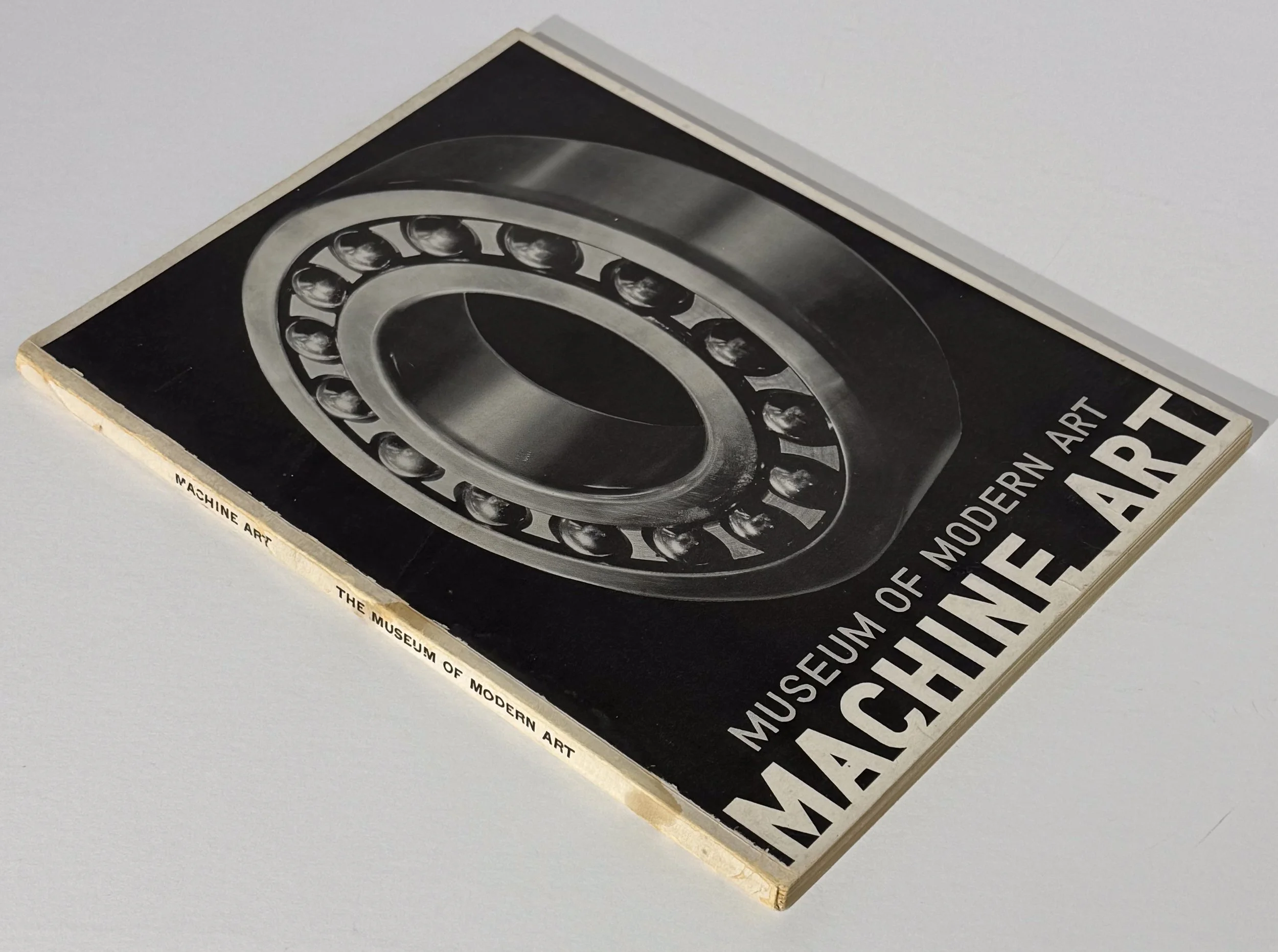 Image 3 of 18
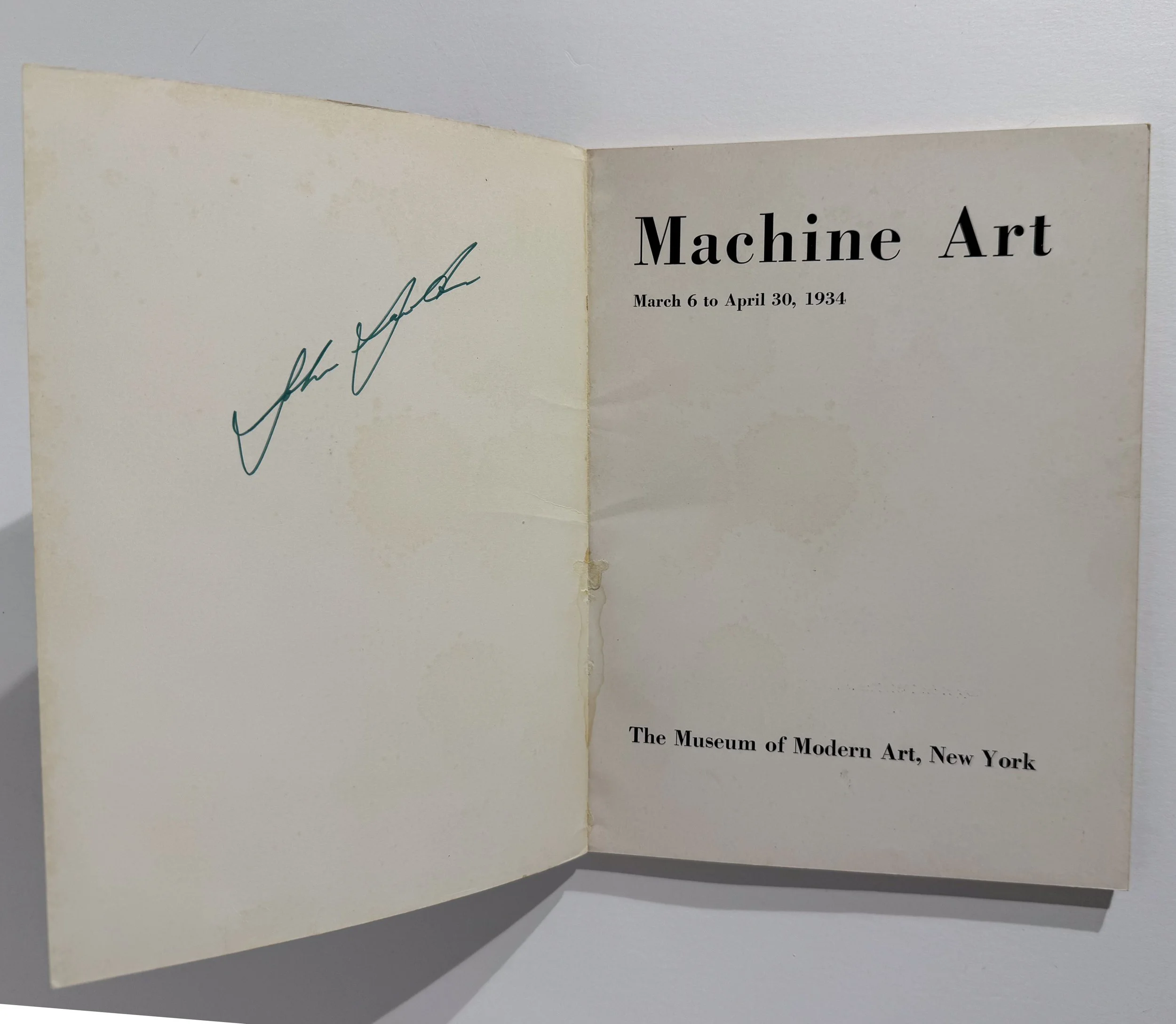 Image 4 of 18
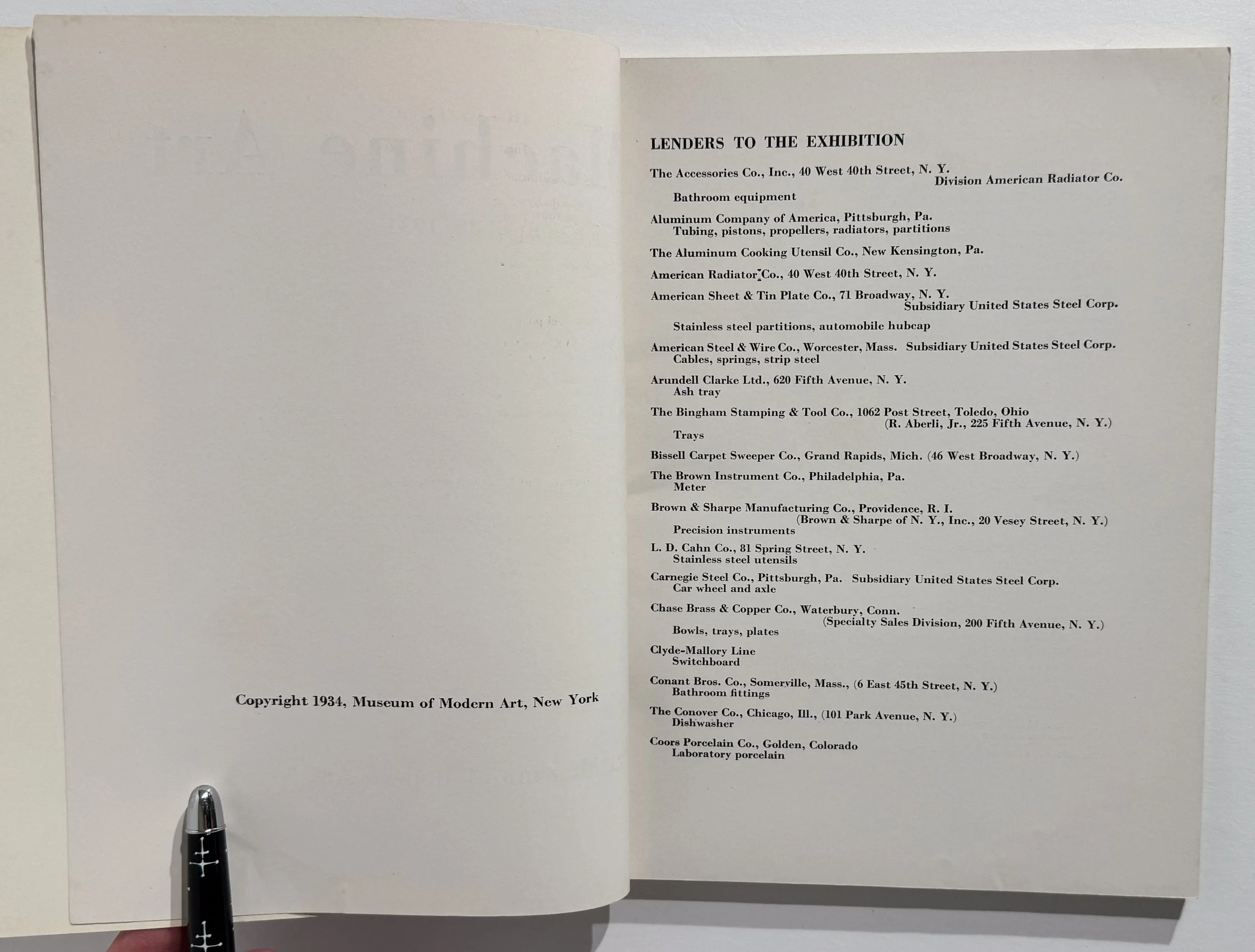 Image 5 of 18
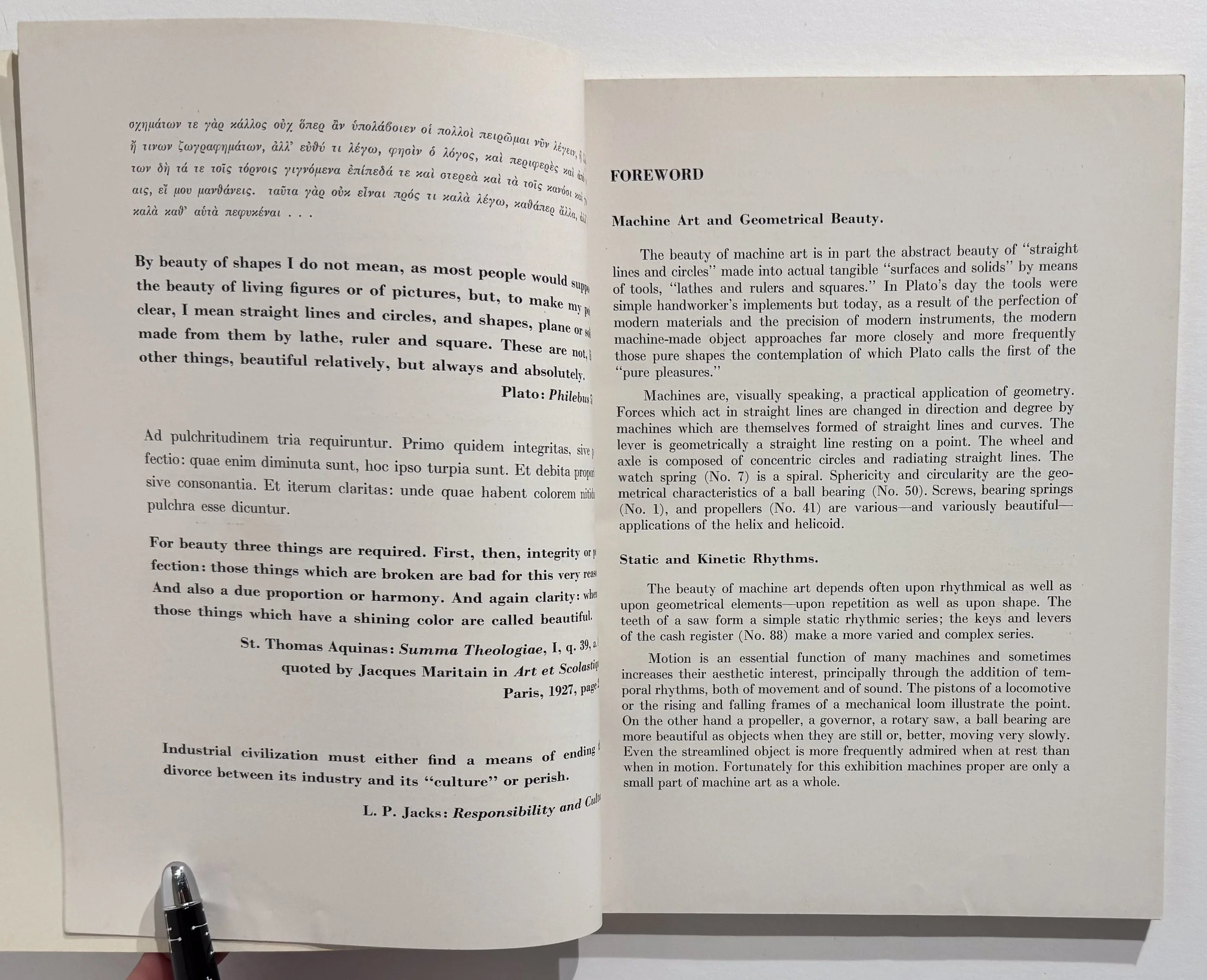 Image 6 of 18
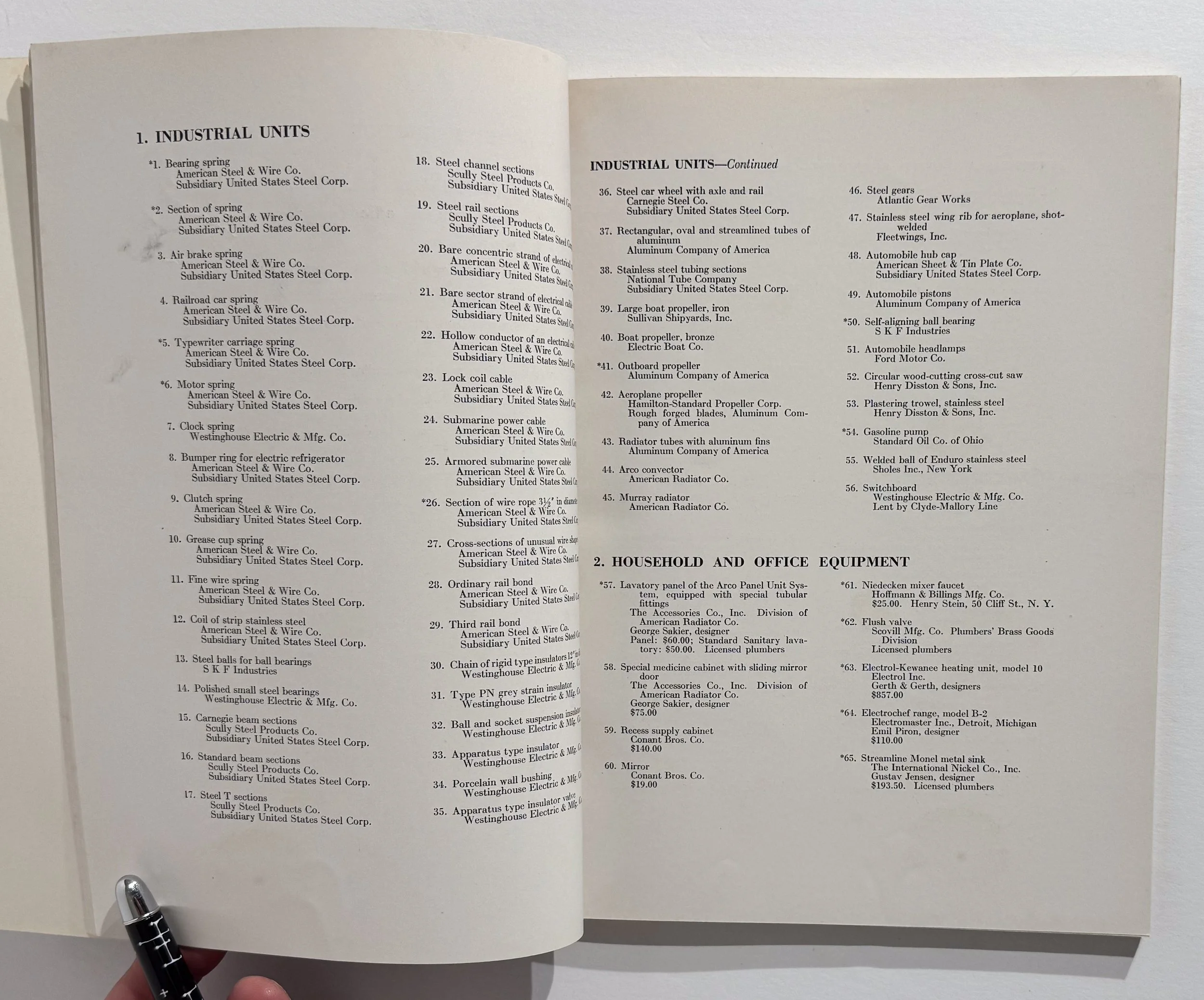 Image 7 of 18
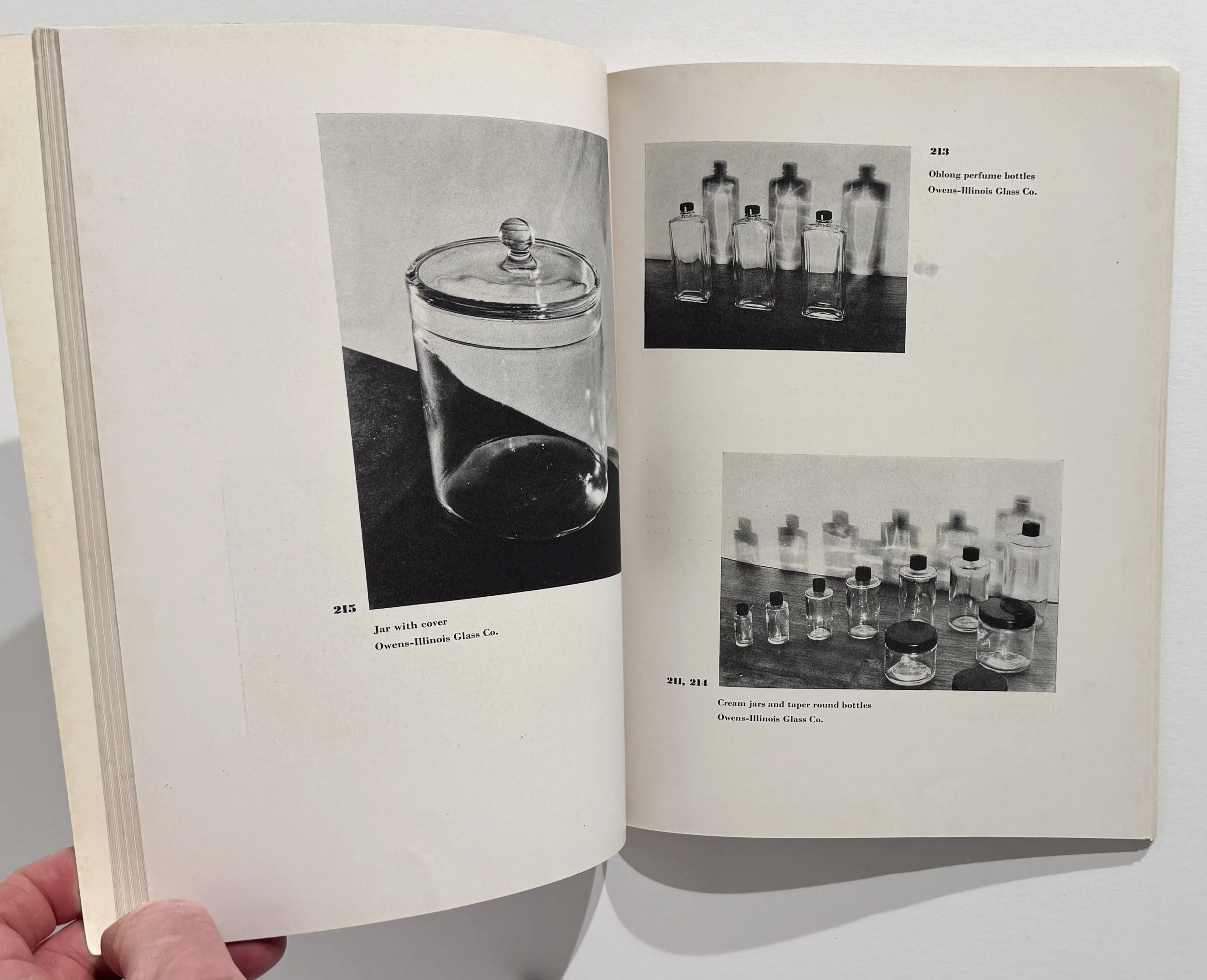 Image 8 of 18
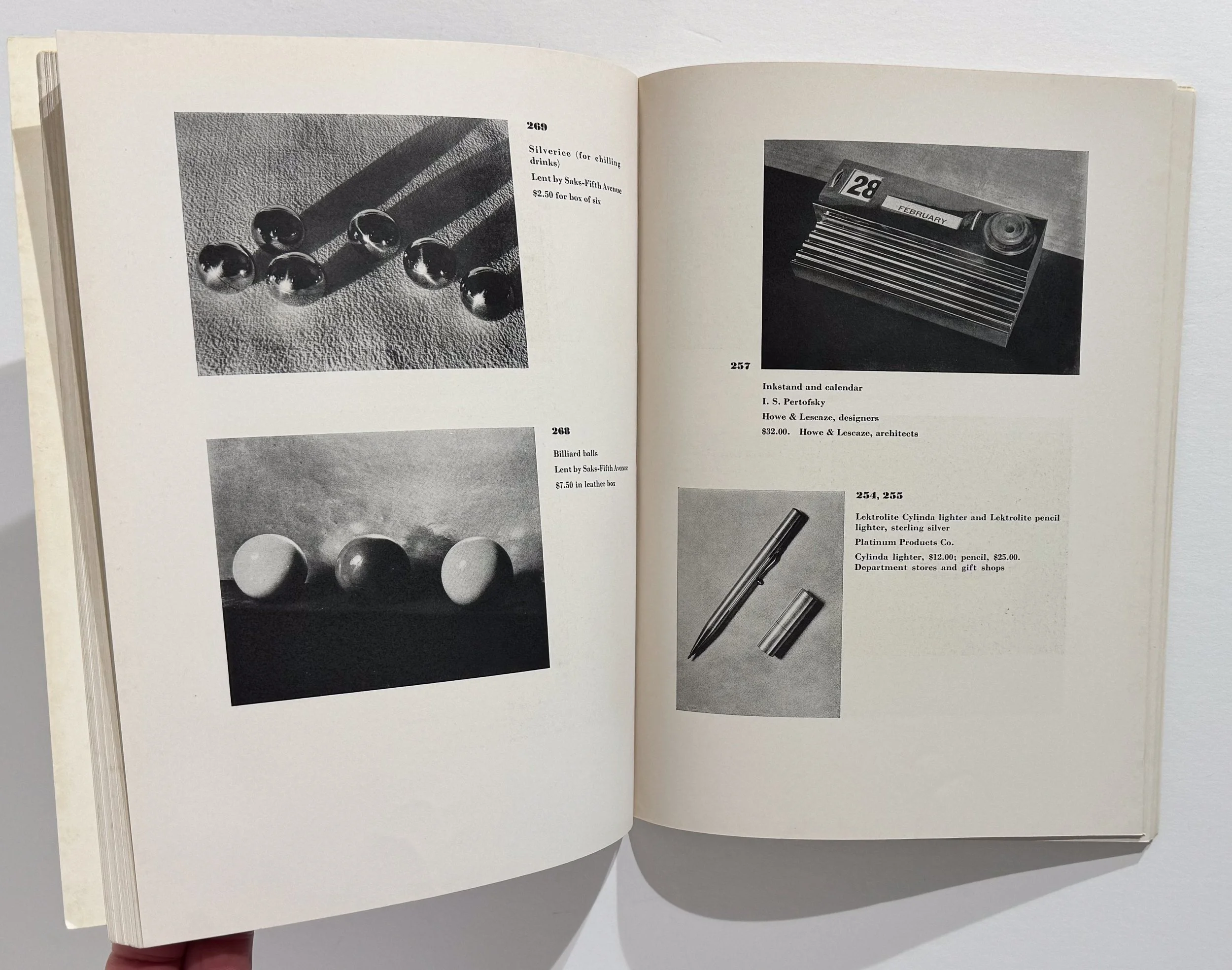 Image 9 of 18
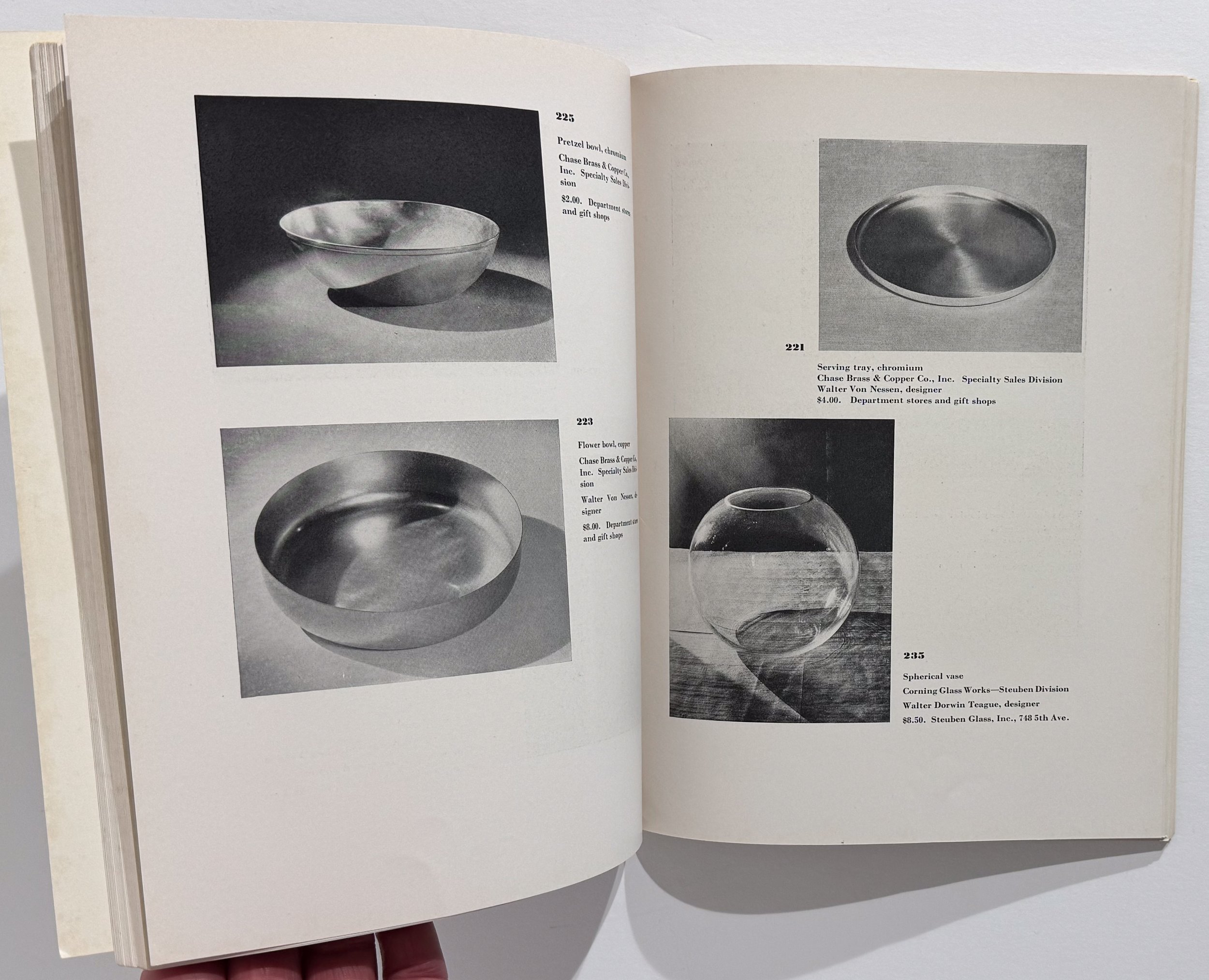 Image 10 of 18
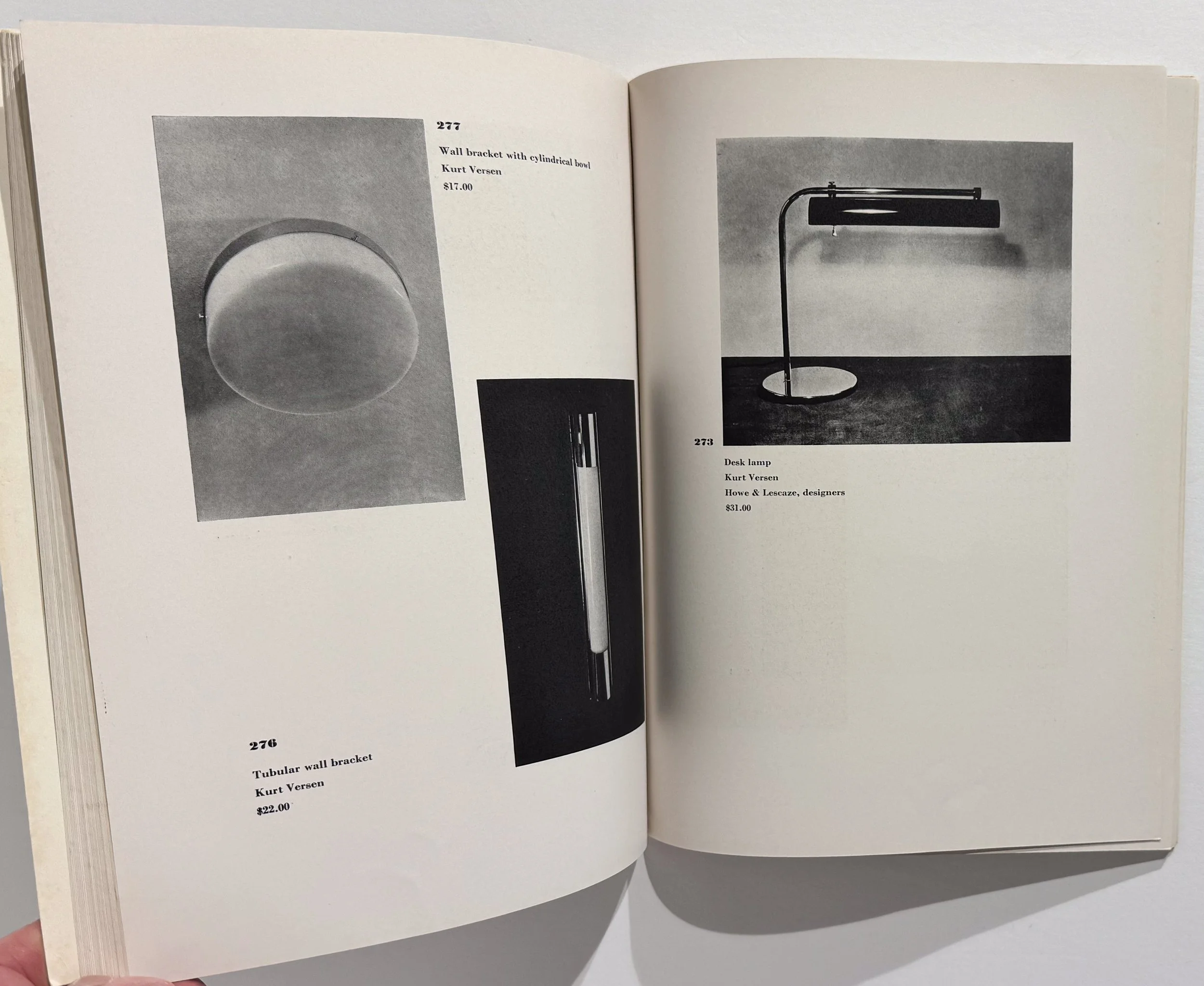 Image 11 of 18
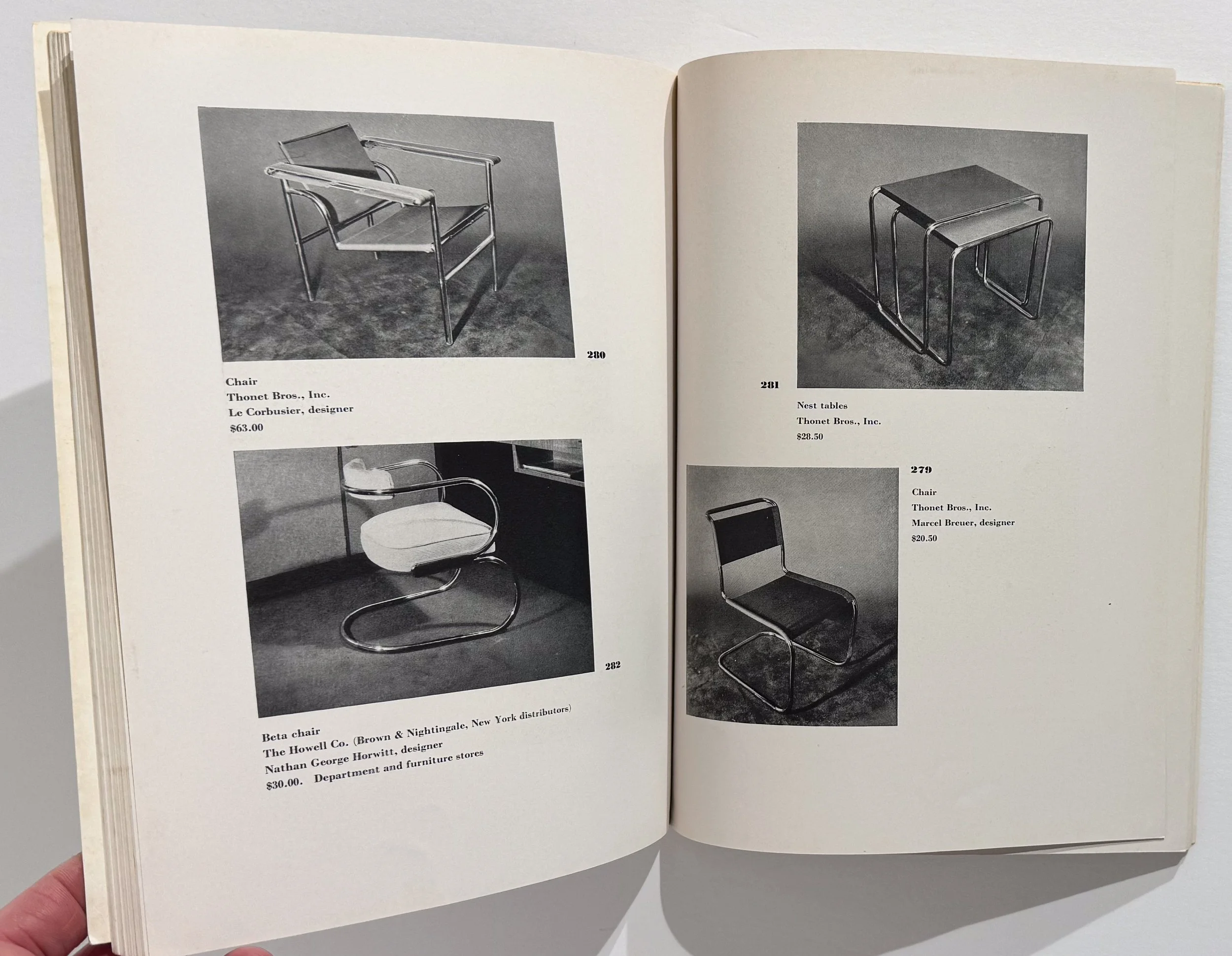 Image 12 of 18
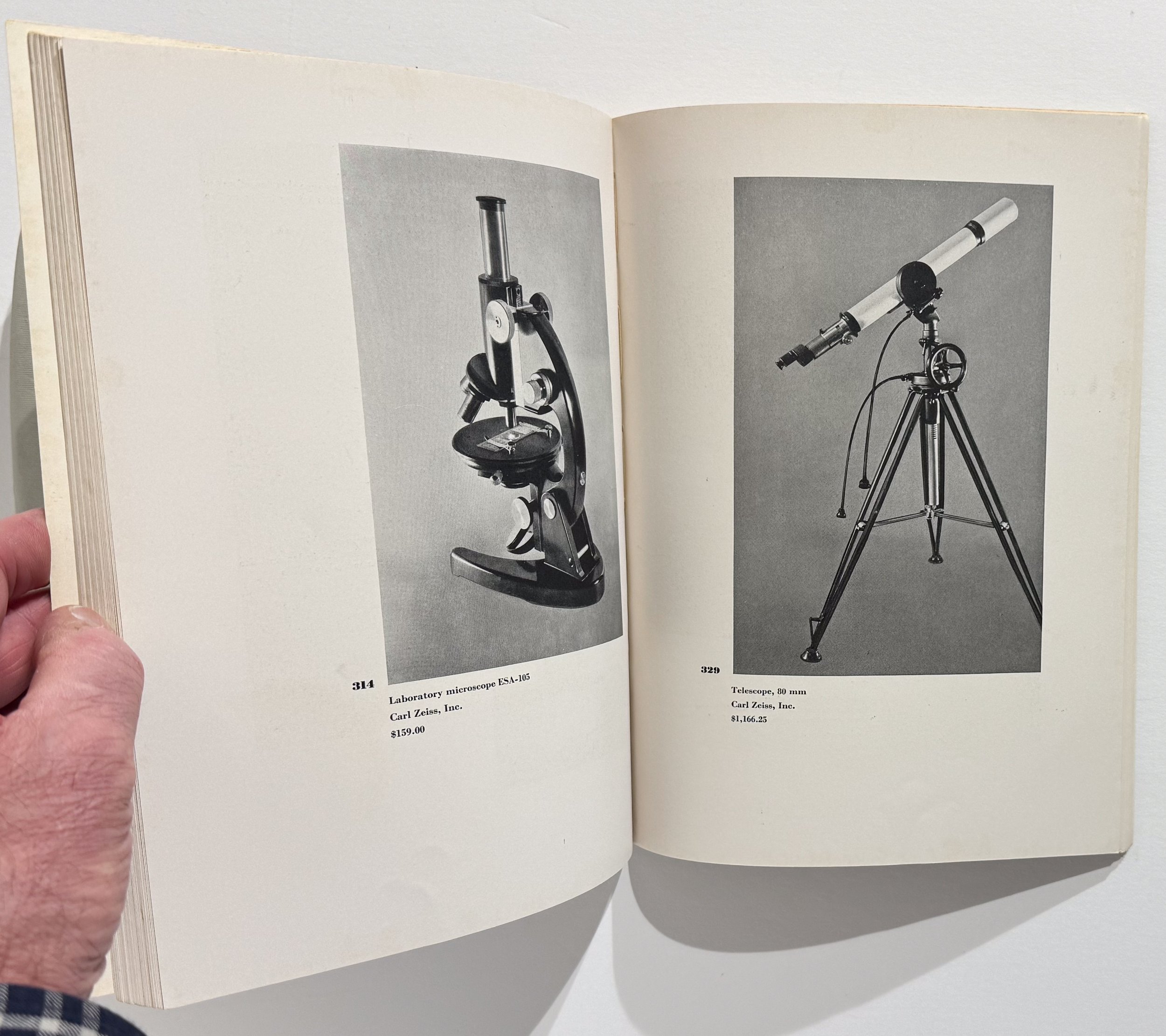 Image 13 of 18
 Image 14 of 18
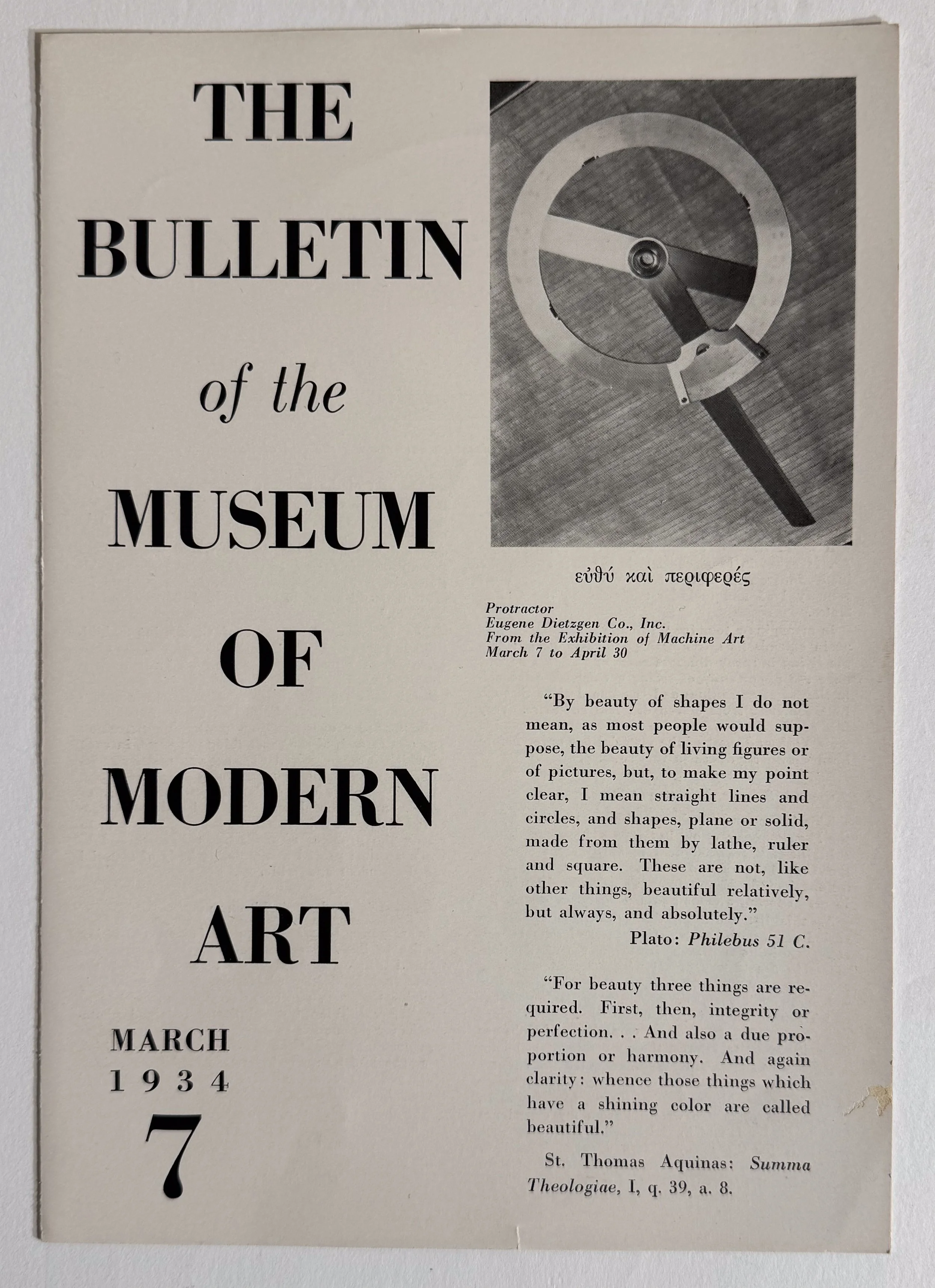 Image 15 of 18
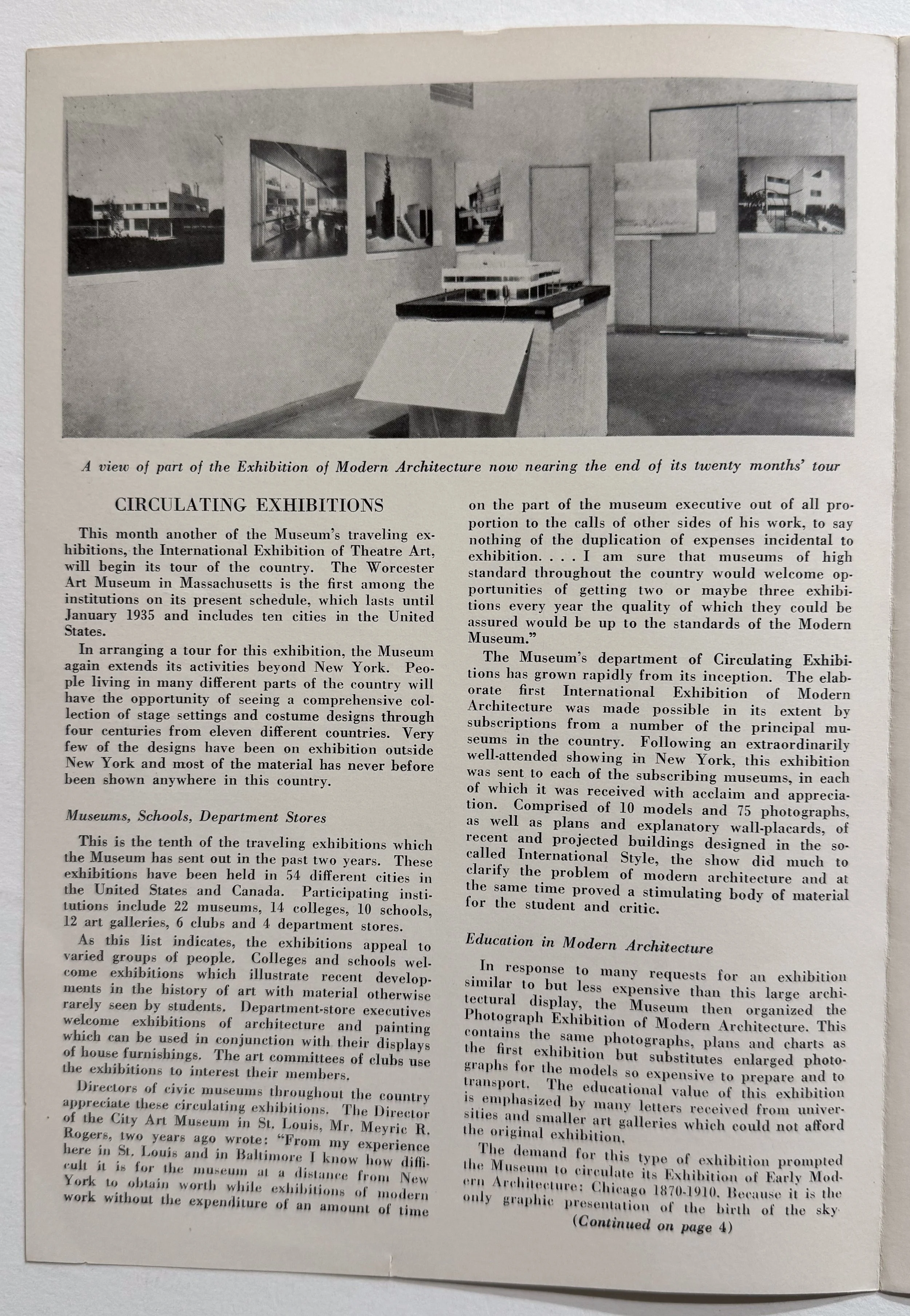 Image 16 of 18
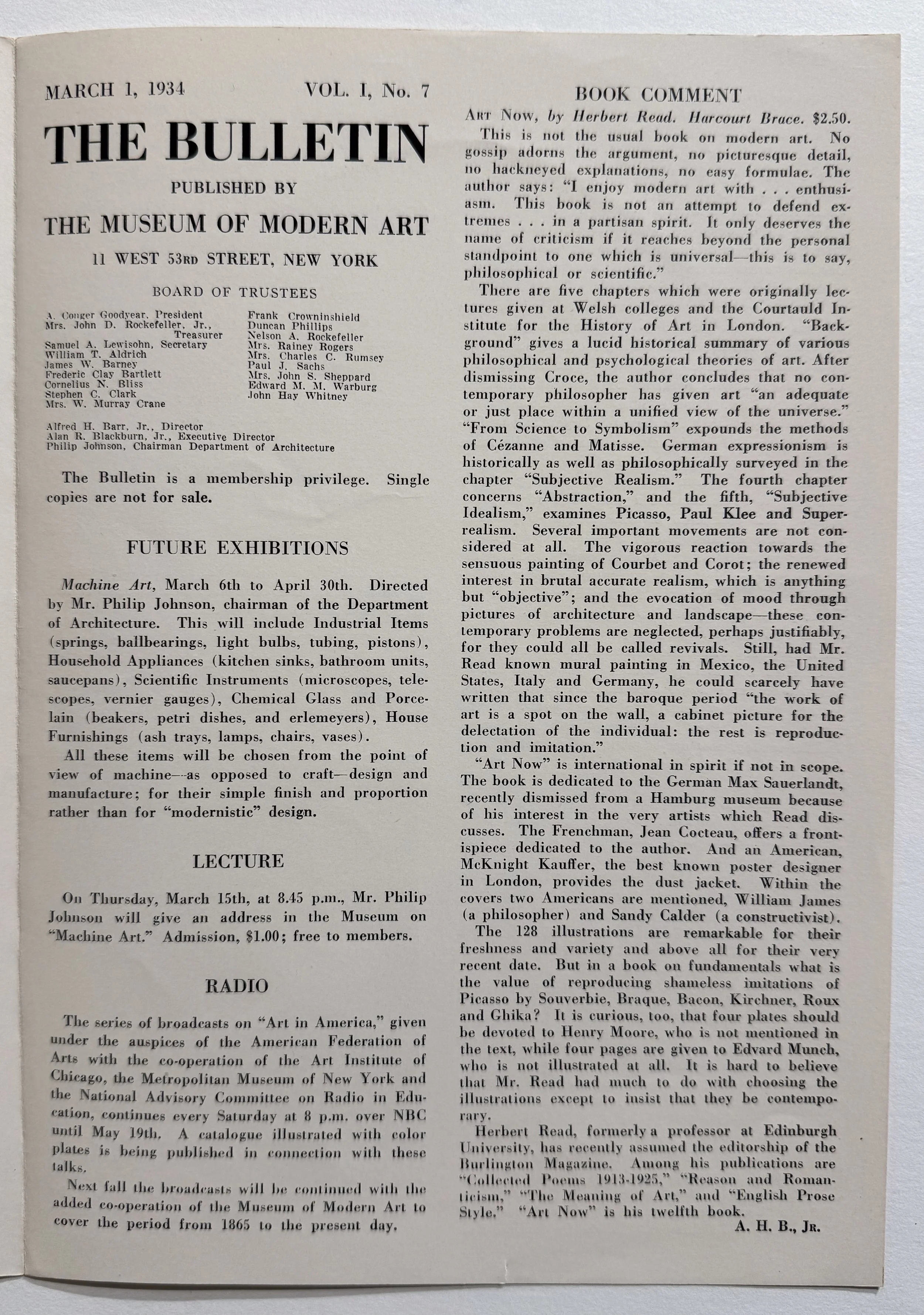 Image 17 of 18
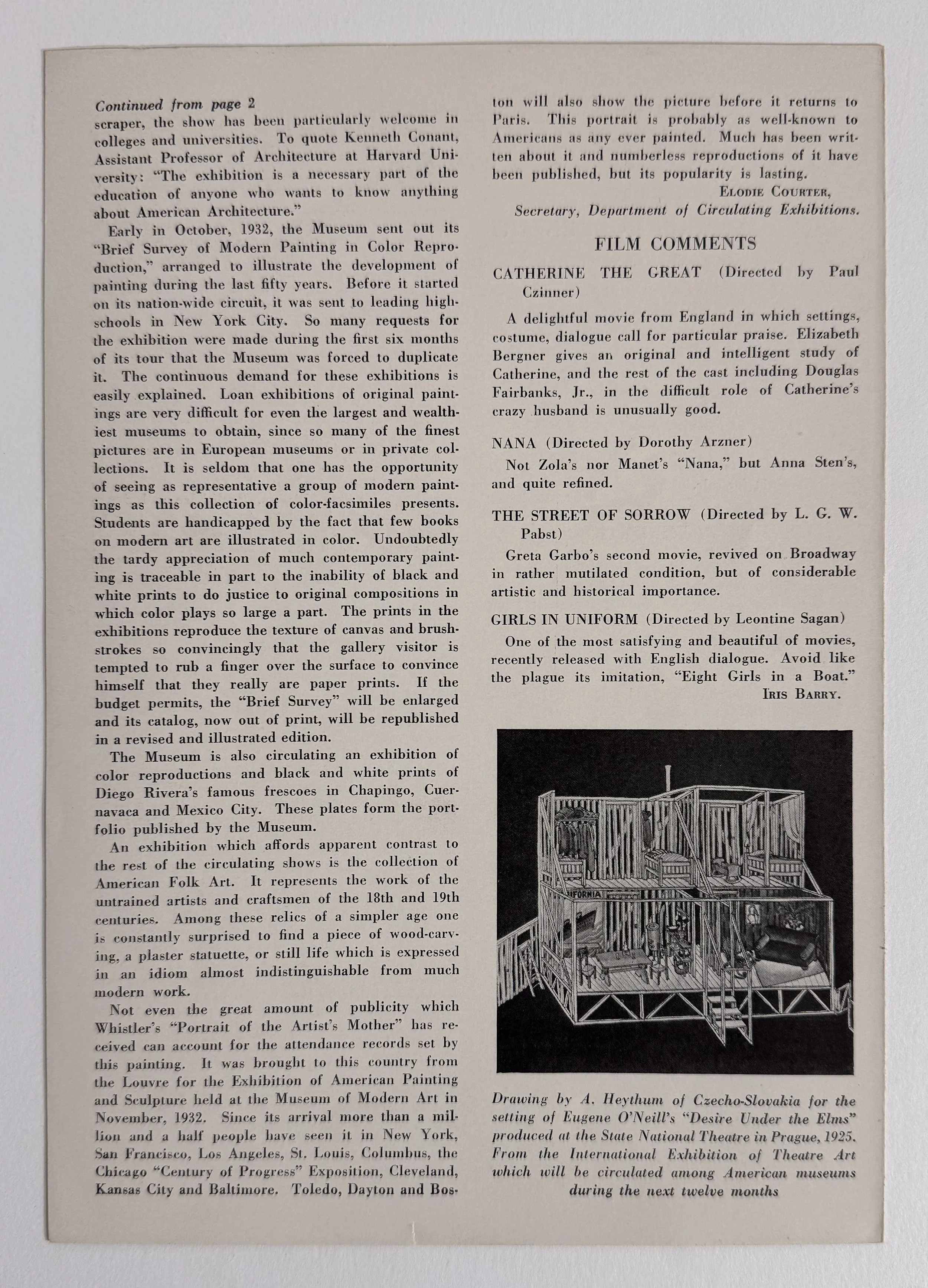 Image 18 of 18




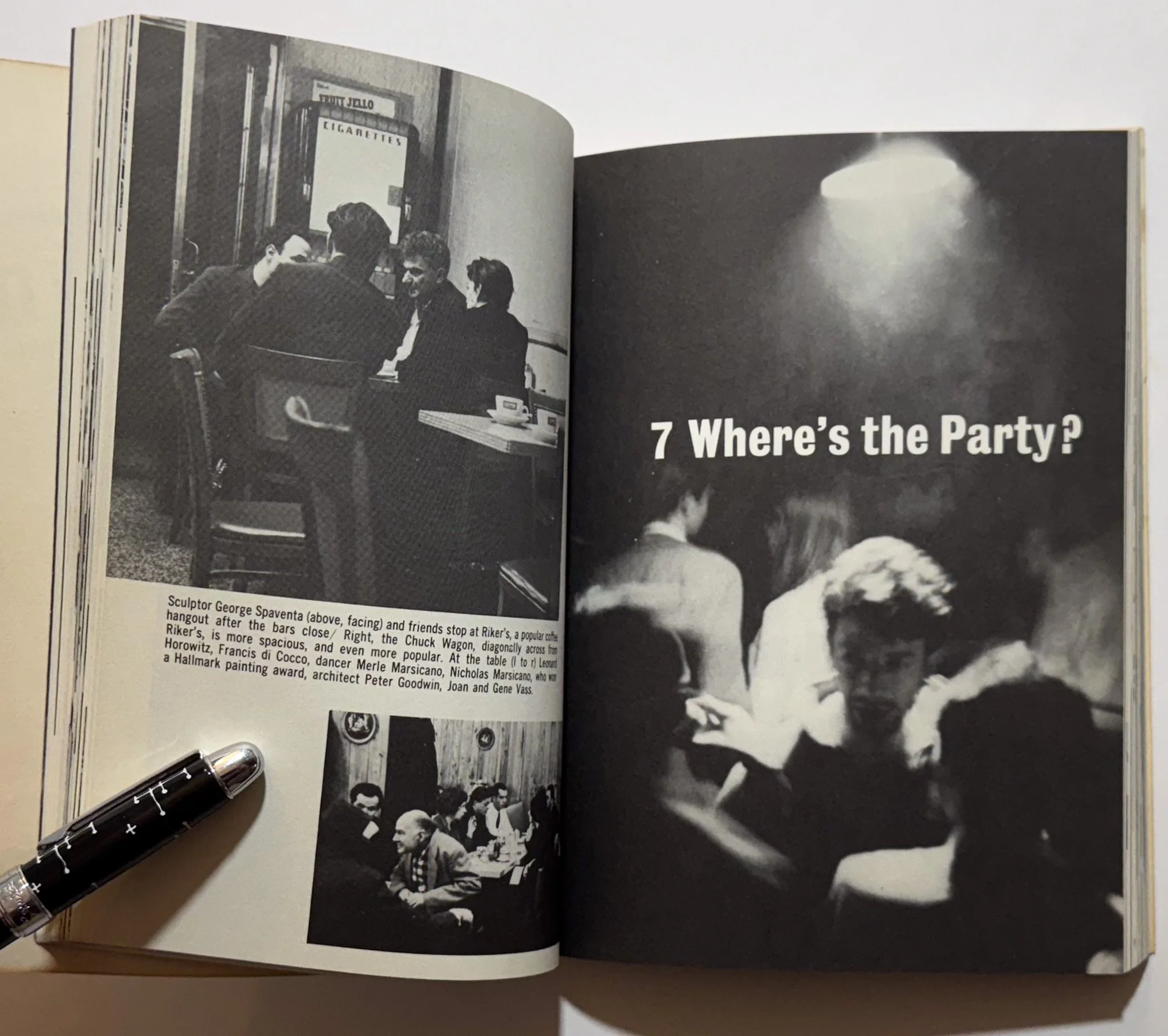
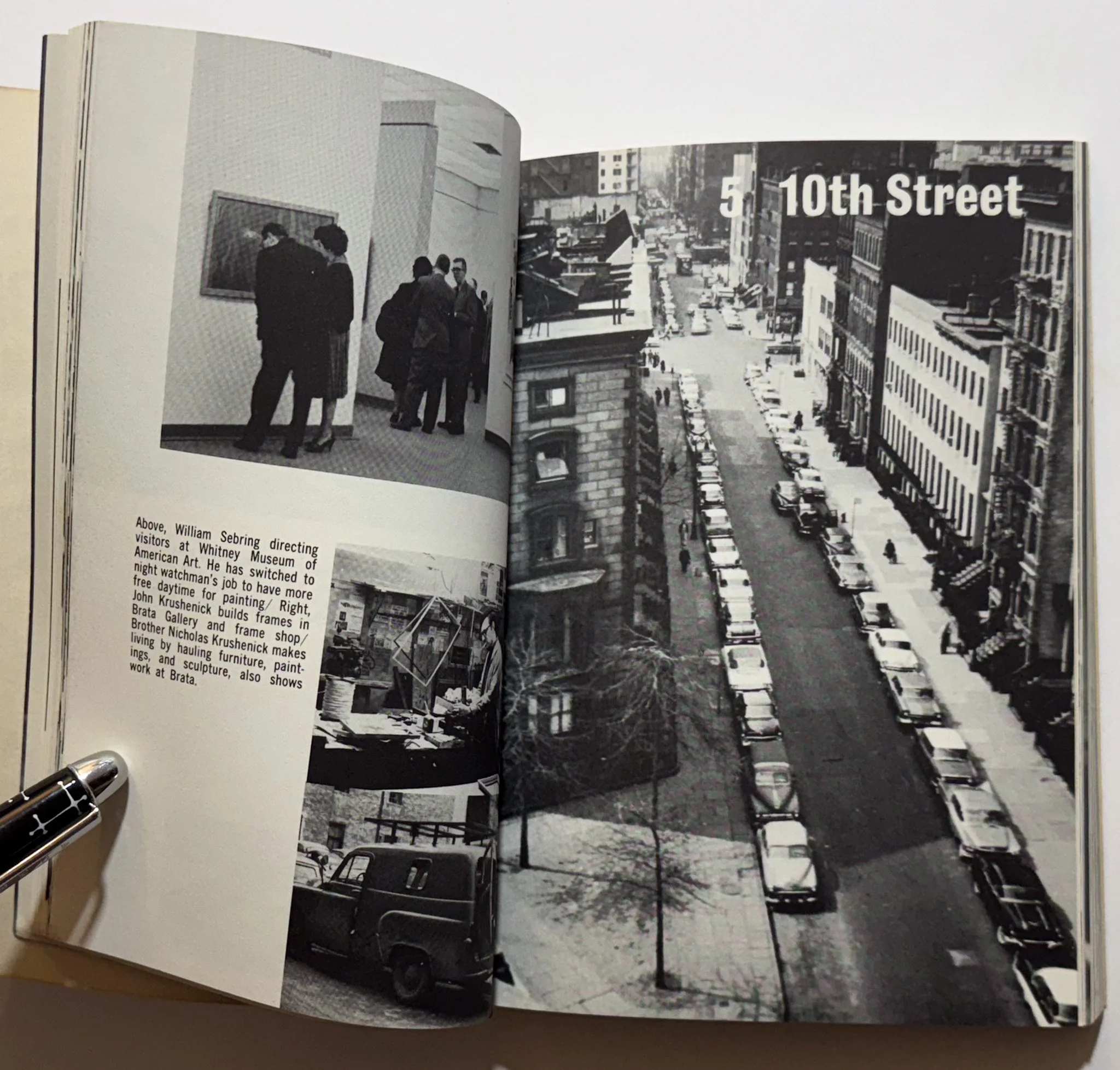
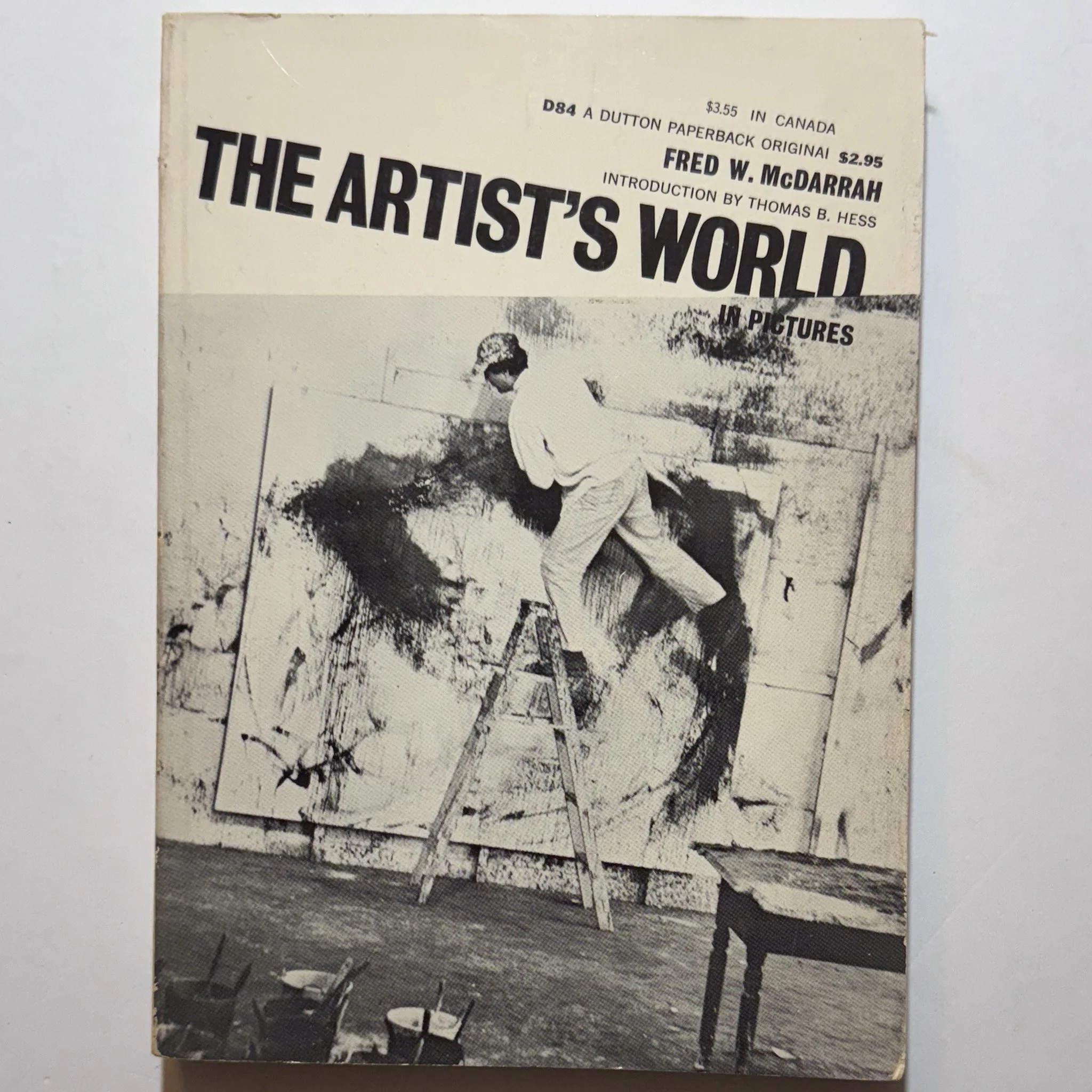
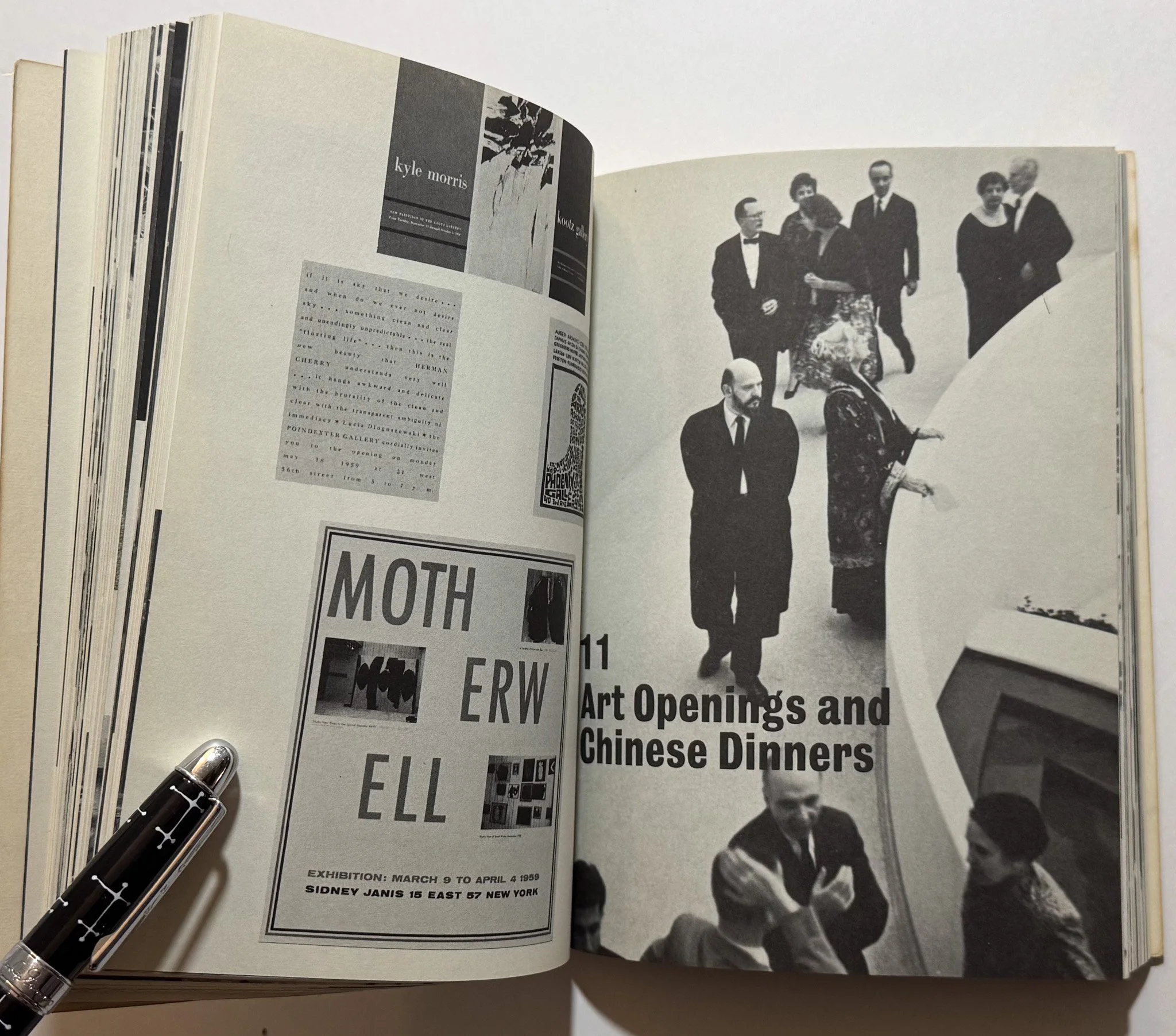
![[1st ed] The Artist's World In Pictures (Signed)](https://images.squarespace-cdn.com/content/v1/61dc97a529892d0e352a9423/a5bc491e-29c5-467d-970e-e8fa420315e2/IMG_4880+2.jpg)