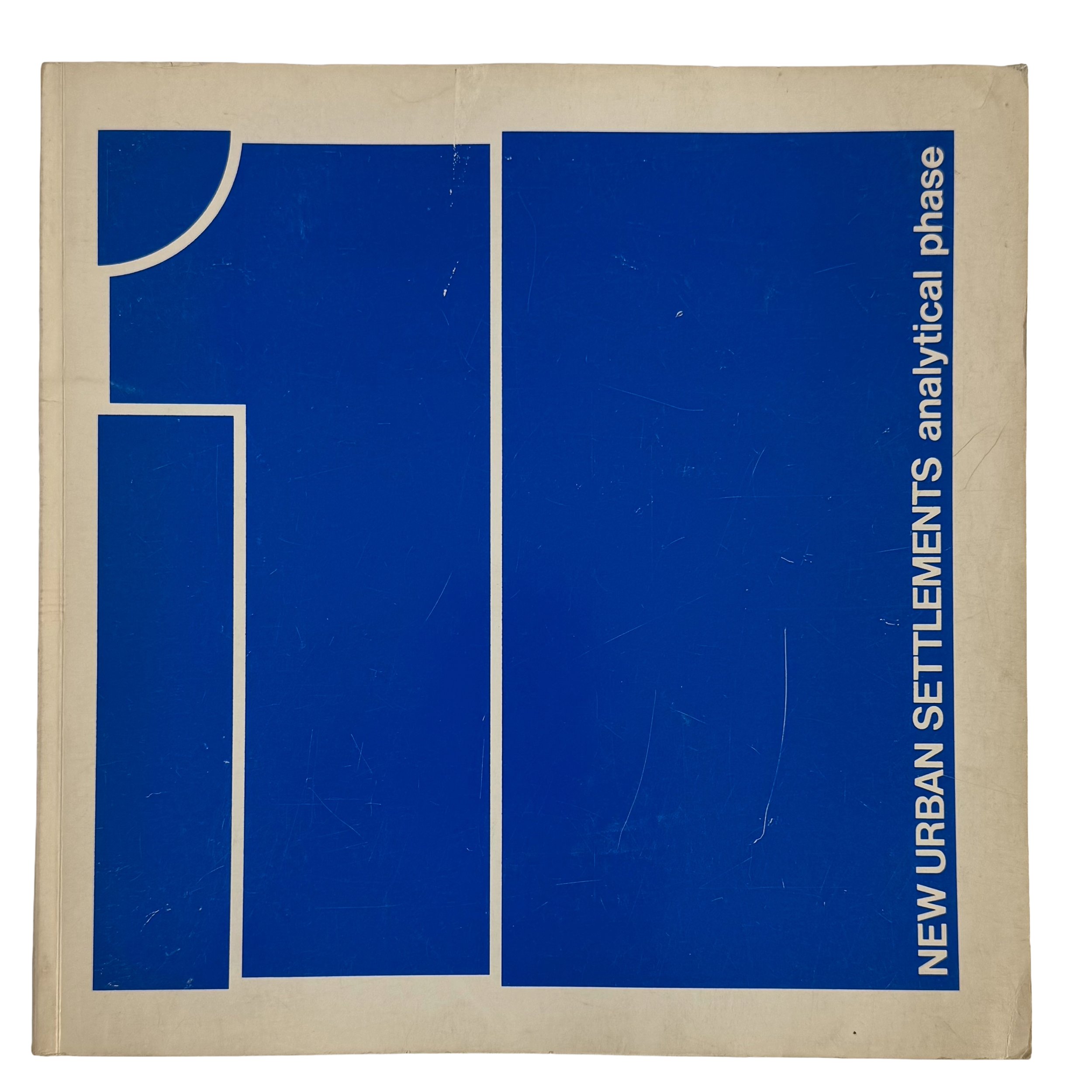
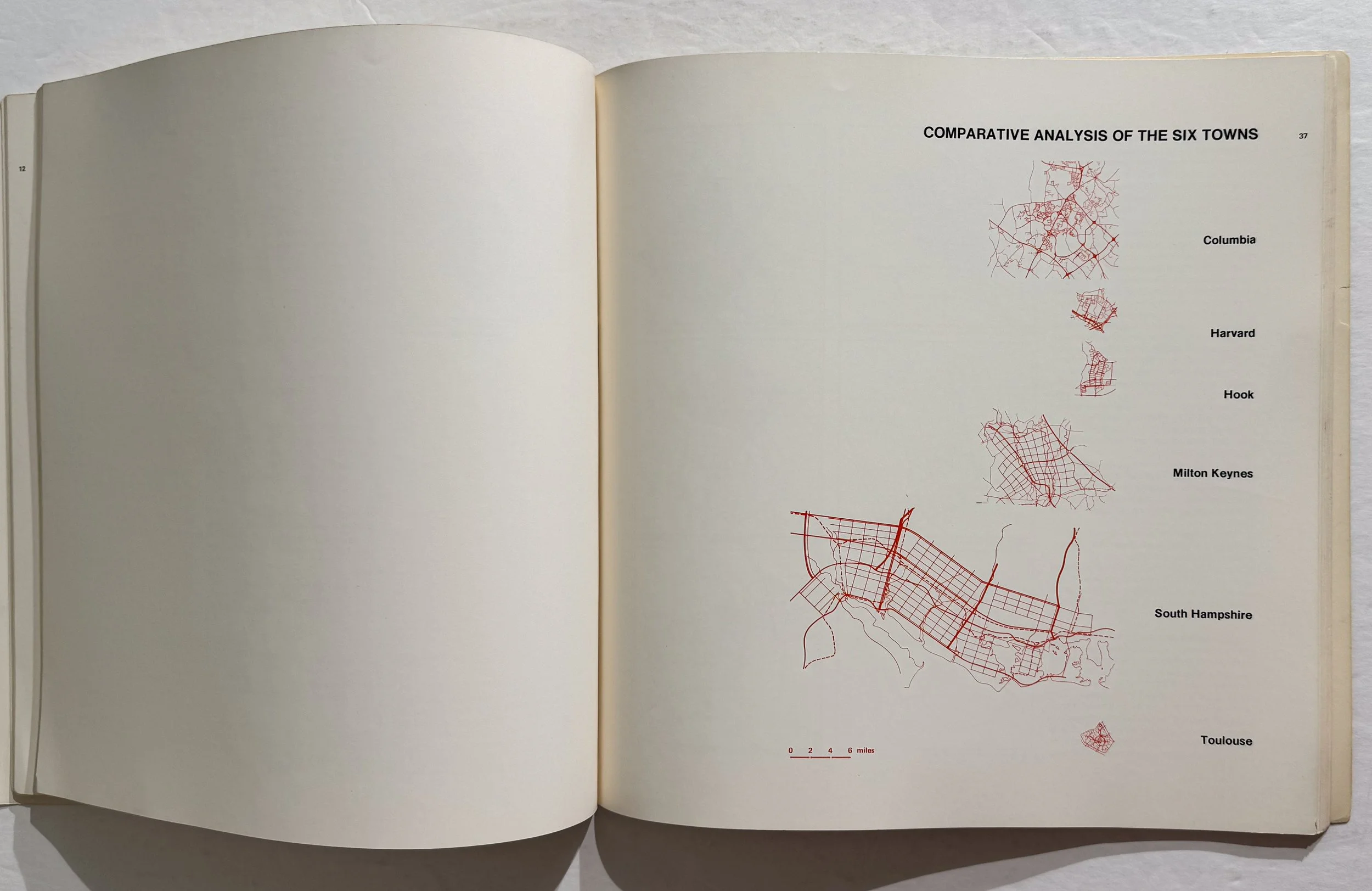
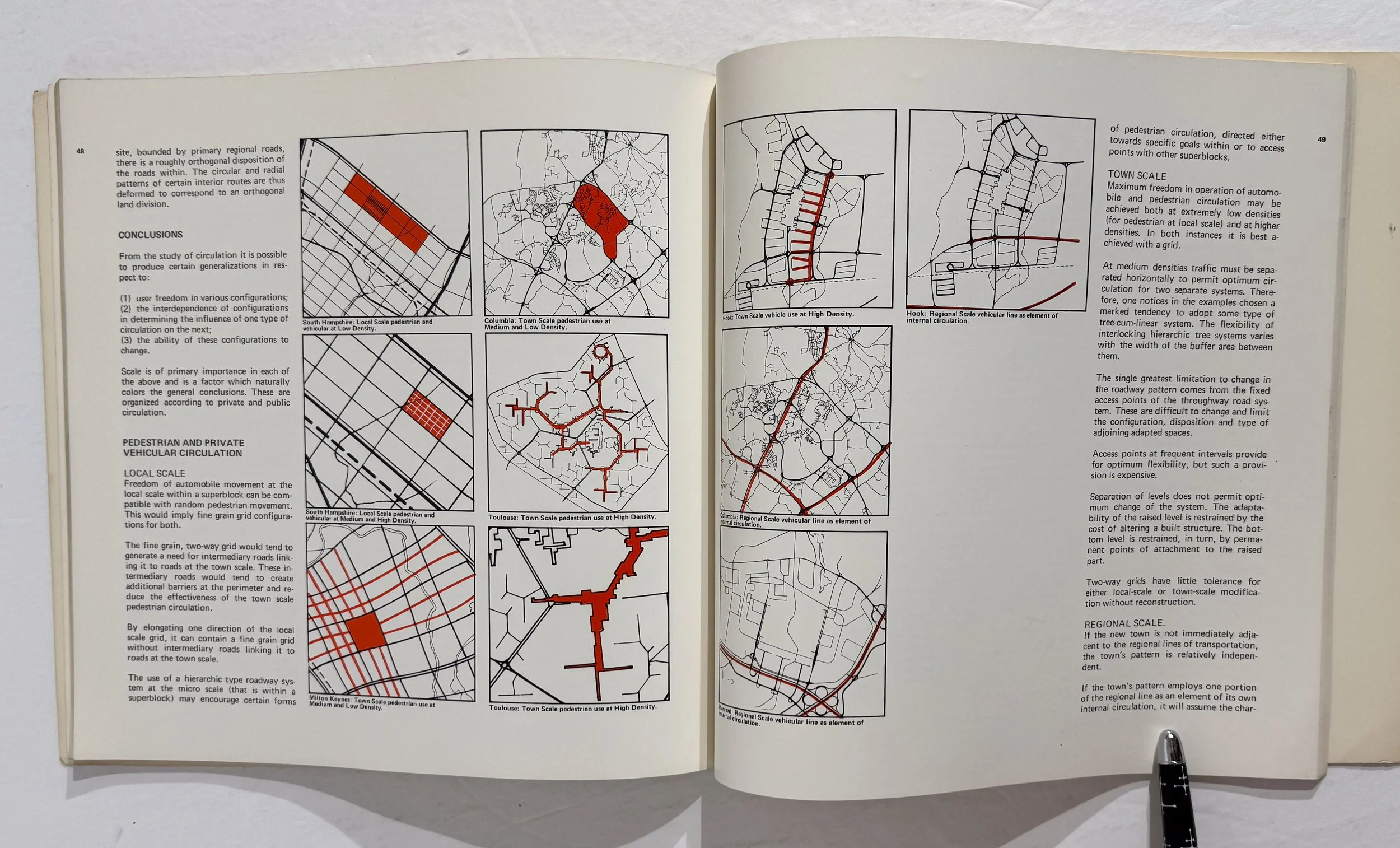
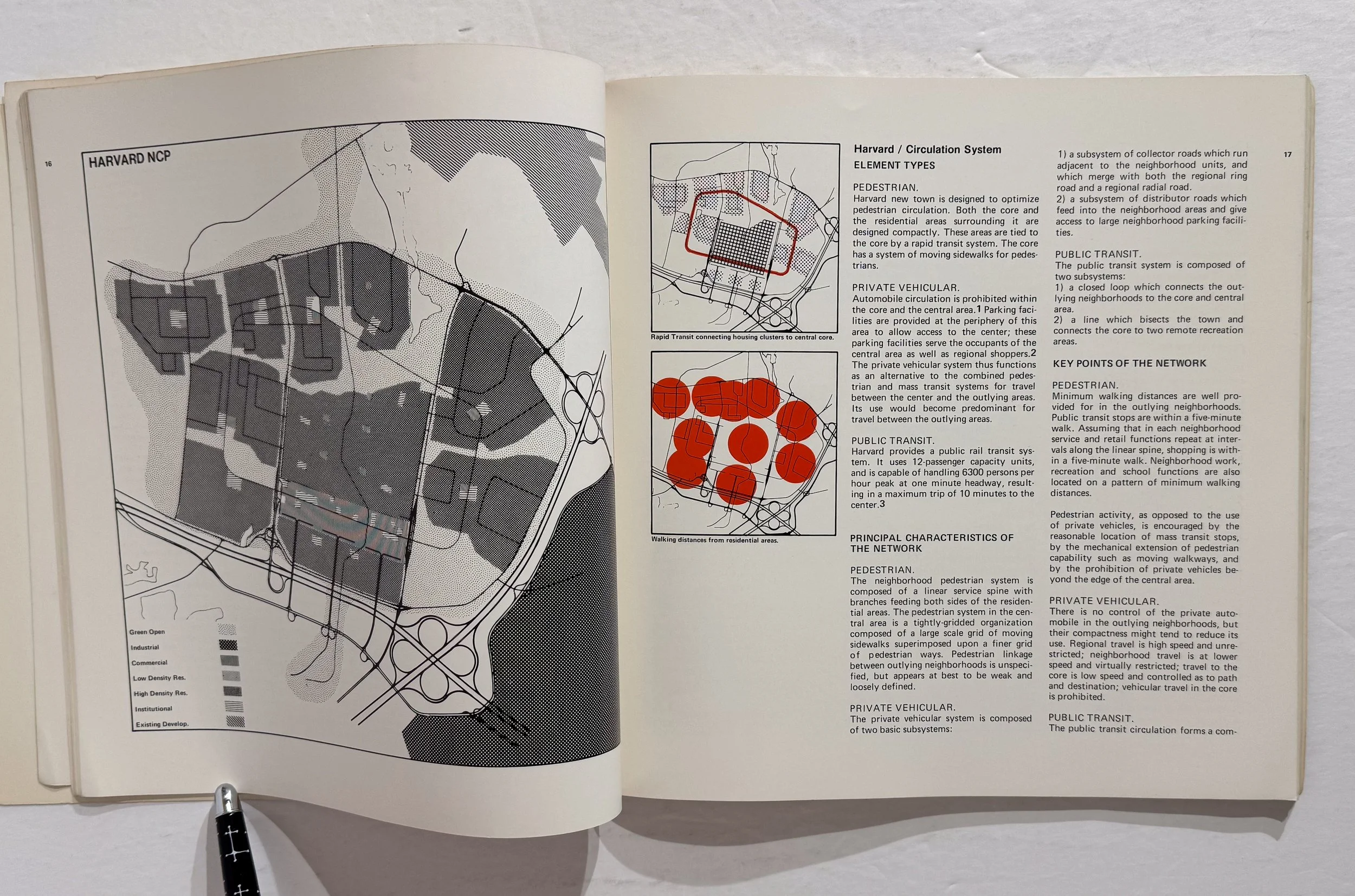
Mill Creek Redevelopment Area Plan, published by the Philadelphia City Planning Commission in September 1954. 4to (8.5” x 11”), printed wrappers, 32 pages. Illustrated throughout with monochrome maps, planning diagrams, perspective renderings, and a large folding two-color preliminary site plan at rear. Prepared under the direction of the Philadelphia City Planning Commission with Louis I. Kahn serving as consulting architect; the planning staff included Wilhelm von Moltke, Chief of the Division of Land Planning, who worked in Kahn's office during this period, became a leading figure in Philadelphia's nationally influential urban renewal program, and later joined the faculty of Harvard's Graduate School of Design. From the library of Columbia University-trained architect Lon Tartt, with his ownership signature to the front wrapper.
A landmark publication of postwar American urbanism and one of the earliest and most consequential printed expressions of Louis Kahn's mature architectural philosophy. Produced during Kahn's collaboration with Edmund Bacon and the Philadelphia City Planning Commission, the report presents an ambitious vision for the comprehensive redevelopment of West Philadelphia's Mill Creek district, synthesizing housing, landscape, circulation, schools, commerce, and civic institutions into a coherent modern neighborhood. While reflecting the influence of Le Corbusier and CIAM planning principles, the proposal already departs from orthodox urban renewal through its emphasis on human scale, neighborhood identity, pedestrian circulation, and the creation of enduring civic places—ideas that would become central to Kahn's greatest architectural achievements. Architectural historians now regard the Mill Creek project as the pivotal bridge between Kahn's early housing work and the monumental civic architecture that established his international reputation.
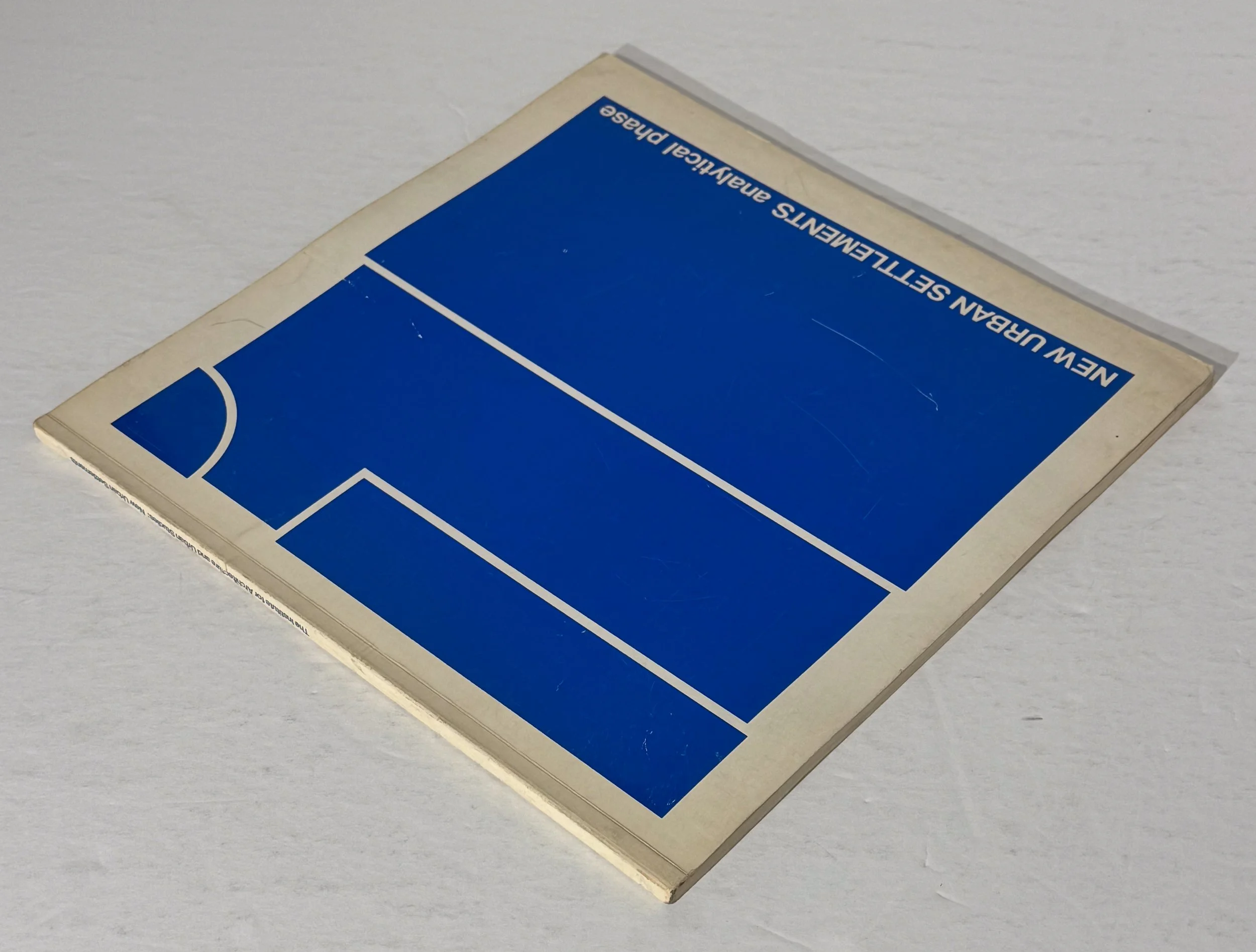
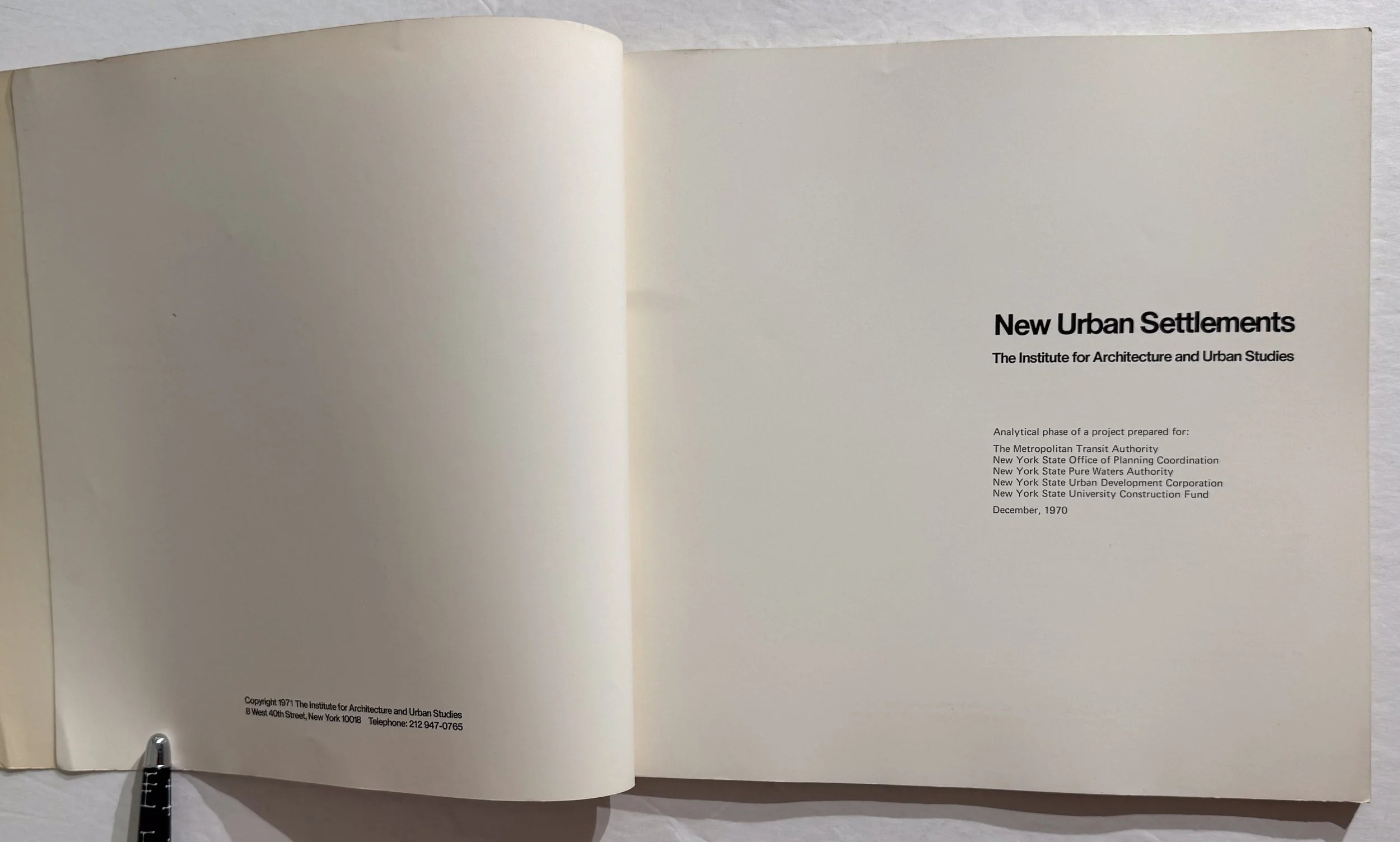
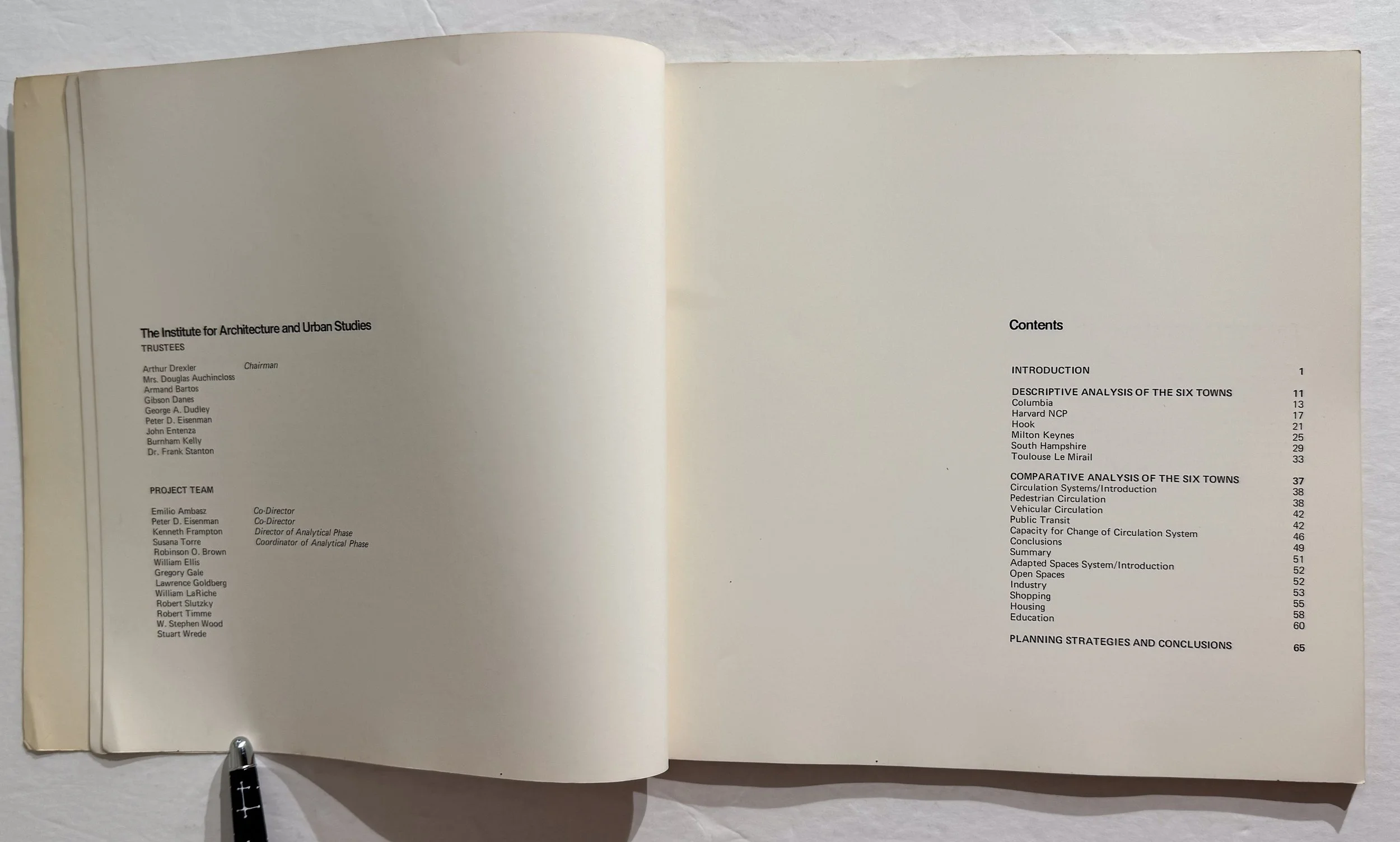
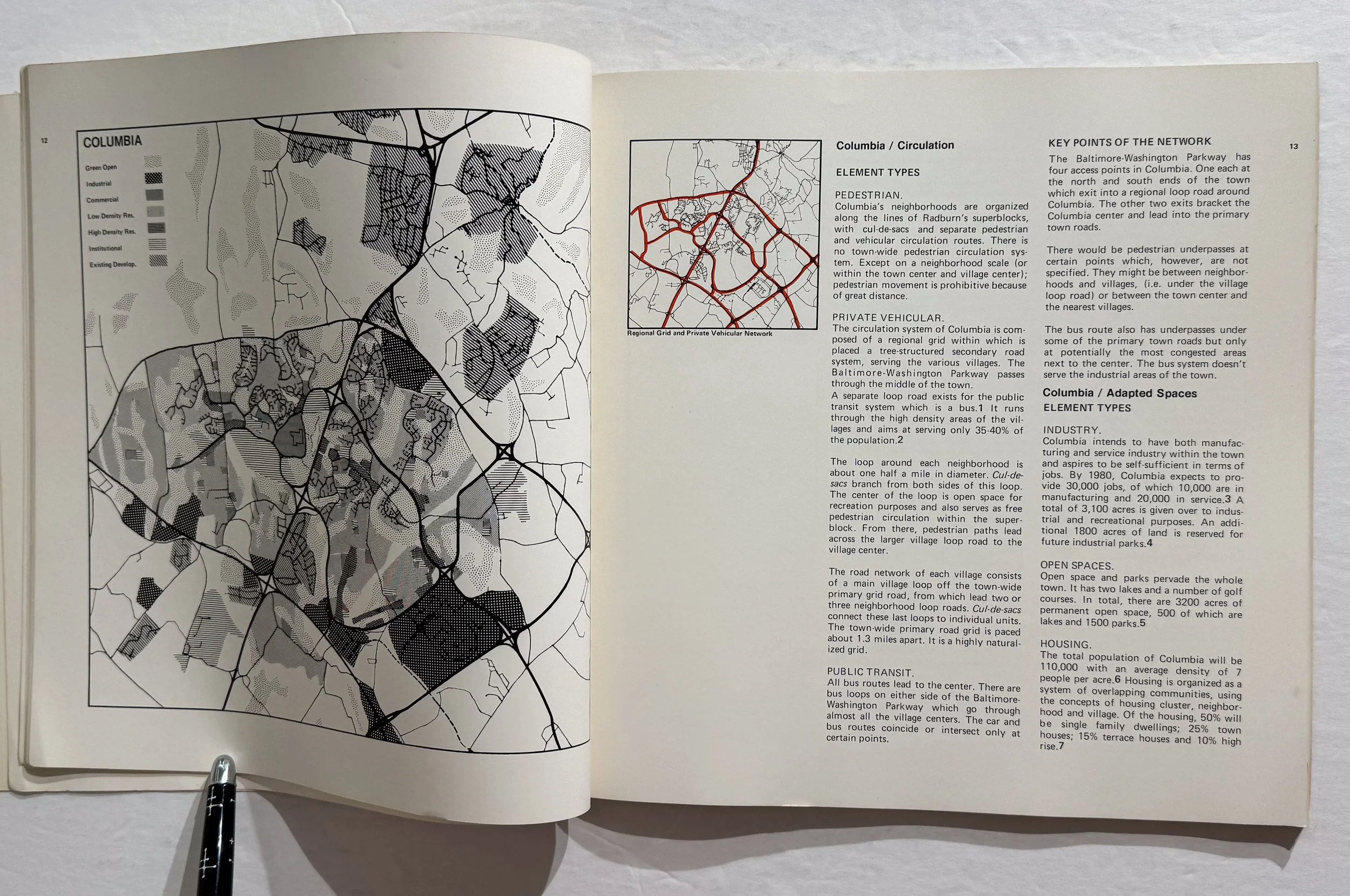
The publication itself stands among the finest examples of mid-century American planning graphics. Its restrained modernist typography, lucid analytical diagrams, elegant mapping, and striking folding color master plan elevate it well beyond routine municipal documentation, embodying the visual language of postwar planning at its most sophisticated. Equally noteworthy is the remarkable concentration of talent represented on its title page: Kahn, Edmund Bacon, Wilhelm von Moltke, and Louis Sauer—figures who collectively shaped the course of American architecture, planning, and urban design during the second half of the twentieth century. As such, the report is significant not merely as the record of a single redevelopment proposal, but as a foundational document of the Philadelphia School and one of the defining planning publications of its era.
Some rubbing to extremities, with gentle bumping to spine, and moderate creasing to edges of rear wrapper. Contents near fine; the folding site plan clean, bright, and entirely intact. OCLC records just 26 institutional holdings, including such august institutions as Columbia, the New York Public Library, the University of Pennsylvania, Temple, Cornell, Harvard, MIT, the Library of Congress, Michigan, and UC Berkeley. No copies located in the antiquarian trade at the time of cataloguing.
An exceptional and increasingly elusive cornerstone of Louis Kahn's formative years and of postwar American urban planning.
Mill Creek Redevelopment Area Plan, published by the Philadelphia City Planning Commission in September 1954. 4to (8.5” x 11”), printed wrappers, 32 pages. Illustrated throughout with monochrome maps, planning diagrams, perspective renderings, and a large folding two-color preliminary site plan at rear. Prepared under the direction of the Philadelphia City Planning Commission with Louis I. Kahn serving as consulting architect; the planning staff included Wilhelm von Moltke, Chief of the Division of Land Planning, who worked in Kahn's office during this period, became a leading figure in Philadelphia's nationally influential urban renewal program, and later joined the faculty of Harvard's Graduate School of Design. From the library of Columbia University-trained architect Lon Tartt, with his ownership signature to the front wrapper.
A landmark publication of postwar American urbanism and one of the earliest and most consequential printed expressions of Louis Kahn's mature architectural philosophy. Produced during Kahn's collaboration with Edmund Bacon and the Philadelphia City Planning Commission, the report presents an ambitious vision for the comprehensive redevelopment of West Philadelphia's Mill Creek district, synthesizing housing, landscape, circulation, schools, commerce, and civic institutions into a coherent modern neighborhood. While reflecting the influence of Le Corbusier and CIAM planning principles, the proposal already departs from orthodox urban renewal through its emphasis on human scale, neighborhood identity, pedestrian circulation, and the creation of enduring civic places—ideas that would become central to Kahn's greatest architectural achievements. Architectural historians now regard the Mill Creek project as the pivotal bridge between Kahn's early housing work and the monumental civic architecture that established his international reputation.
The publication itself stands among the finest examples of mid-century American planning graphics. Its restrained modernist typography, lucid analytical diagrams, elegant mapping, and striking folding color master plan elevate it well beyond routine municipal documentation, embodying the visual language of postwar planning at its most sophisticated. Equally noteworthy is the remarkable concentration of talent represented on its title page: Kahn, Edmund Bacon, Wilhelm von Moltke, and Louis Sauer—figures who collectively shaped the course of American architecture, planning, and urban design during the second half of the twentieth century. As such, the report is significant not merely as the record of a single redevelopment proposal, but as a foundational document of the Philadelphia School and one of the defining planning publications of its era.
Some rubbing to extremities, with gentle bumping to spine, and moderate creasing to edges of rear wrapper. Contents near fine; the folding site plan clean, bright, and entirely intact. OCLC records just 26 institutional holdings, including such august institutions as Columbia, the New York Public Library, the University of Pennsylvania, Temple, Cornell, Harvard, MIT, the Library of Congress, Michigan, and UC Berkeley. No copies located in the antiquarian trade at the time of cataloguing.
An exceptional and increasingly elusive cornerstone of Louis Kahn's formative years and of postwar American urban planning.

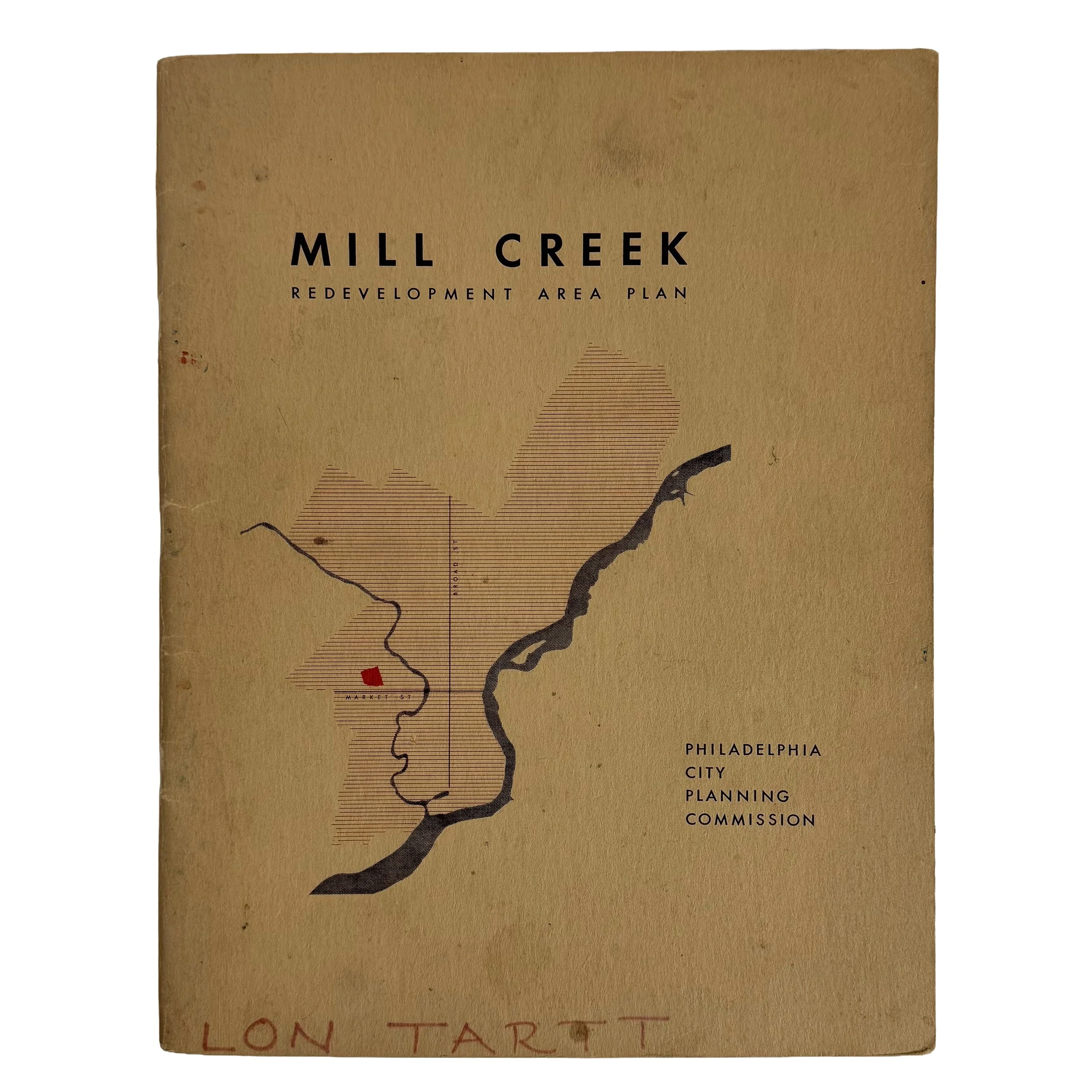 Image 1 of 10
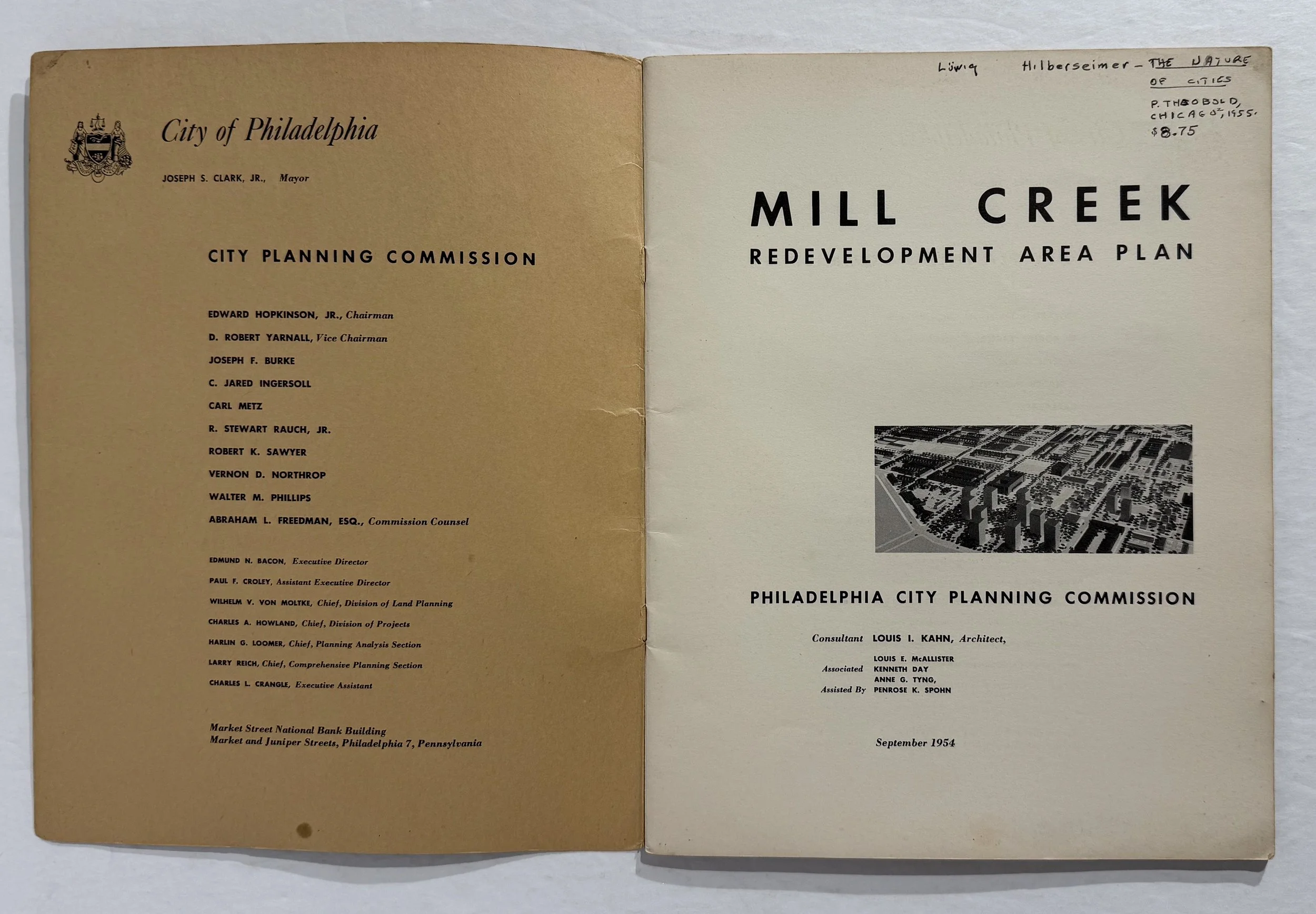 Image 2 of 10
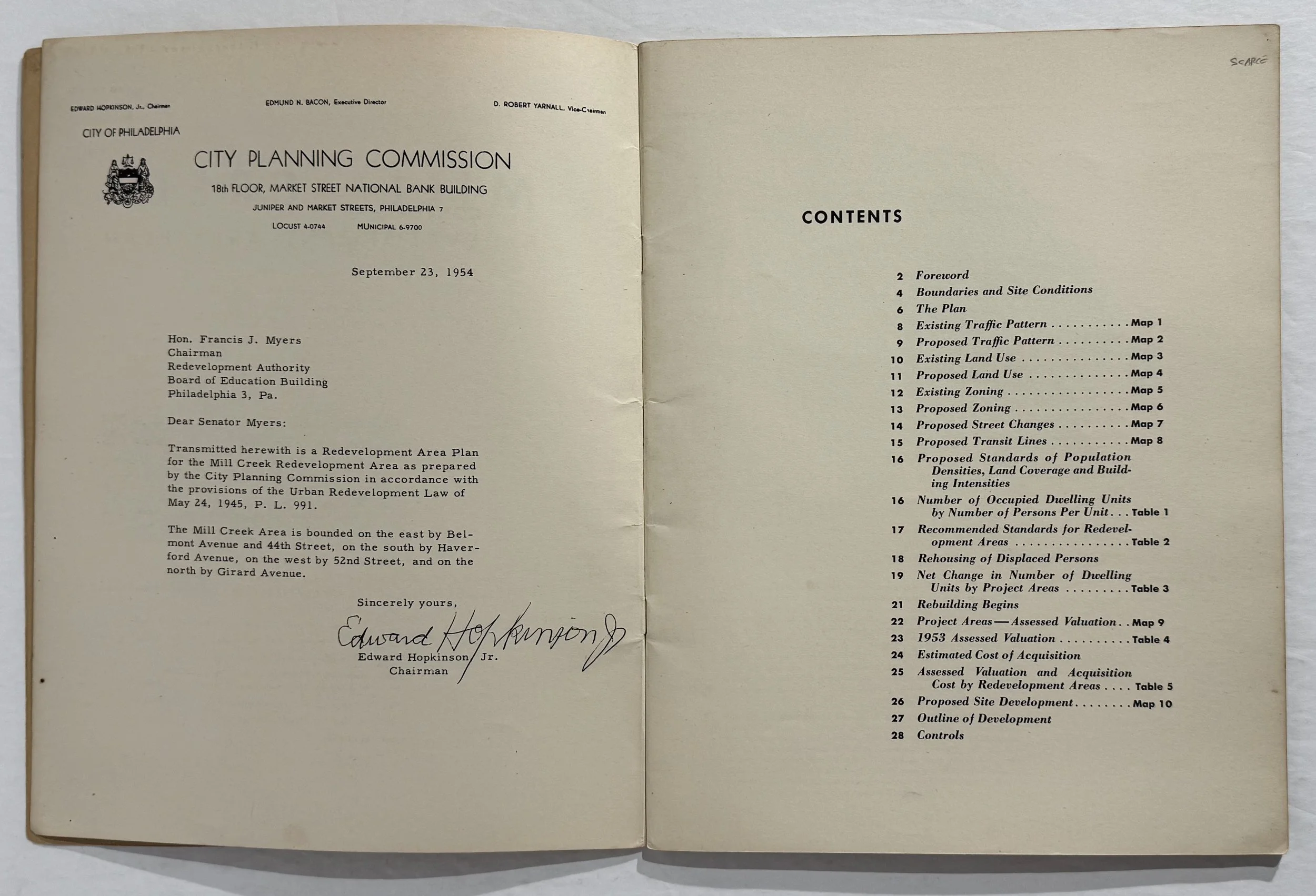 Image 3 of 10
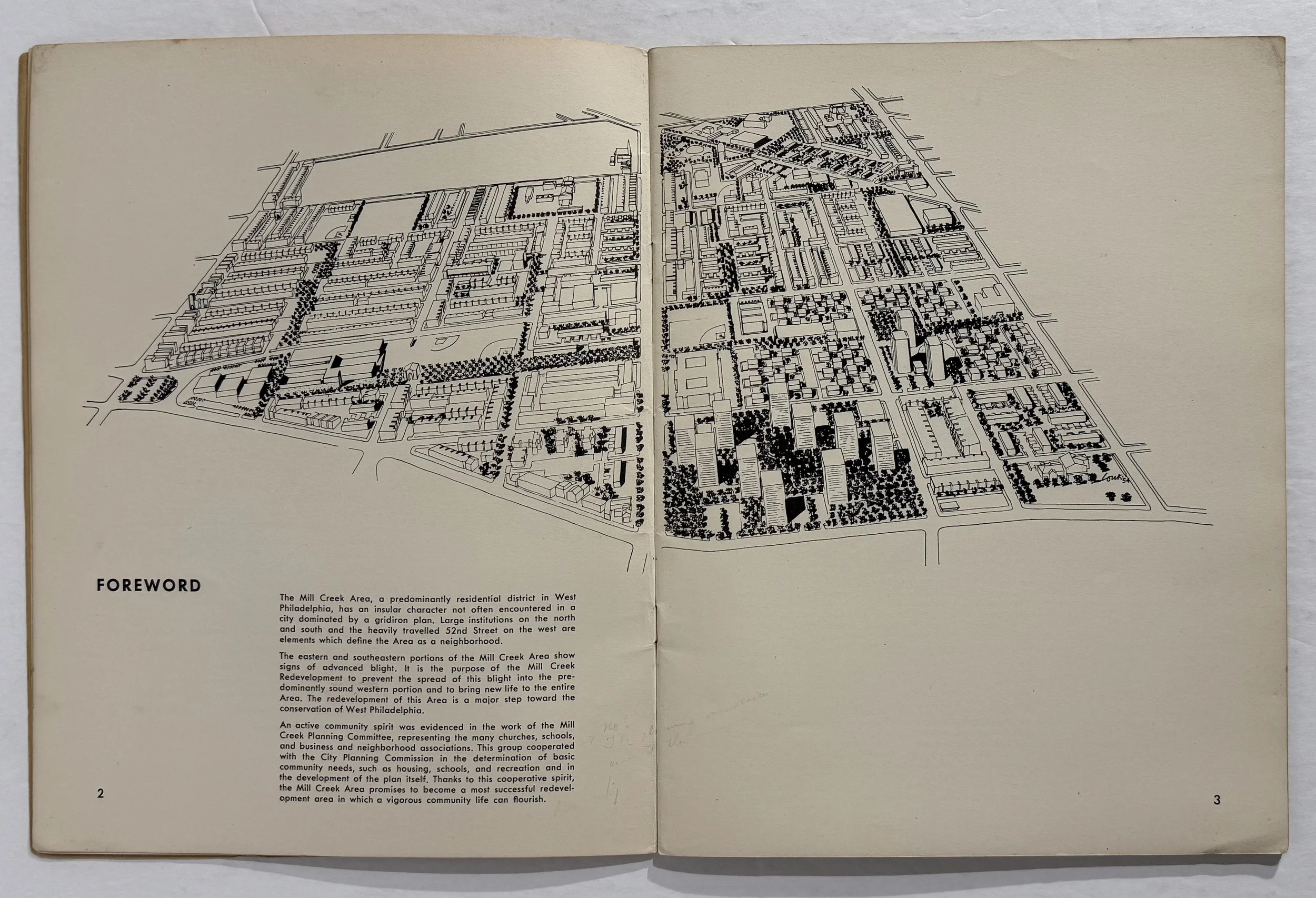 Image 4 of 10
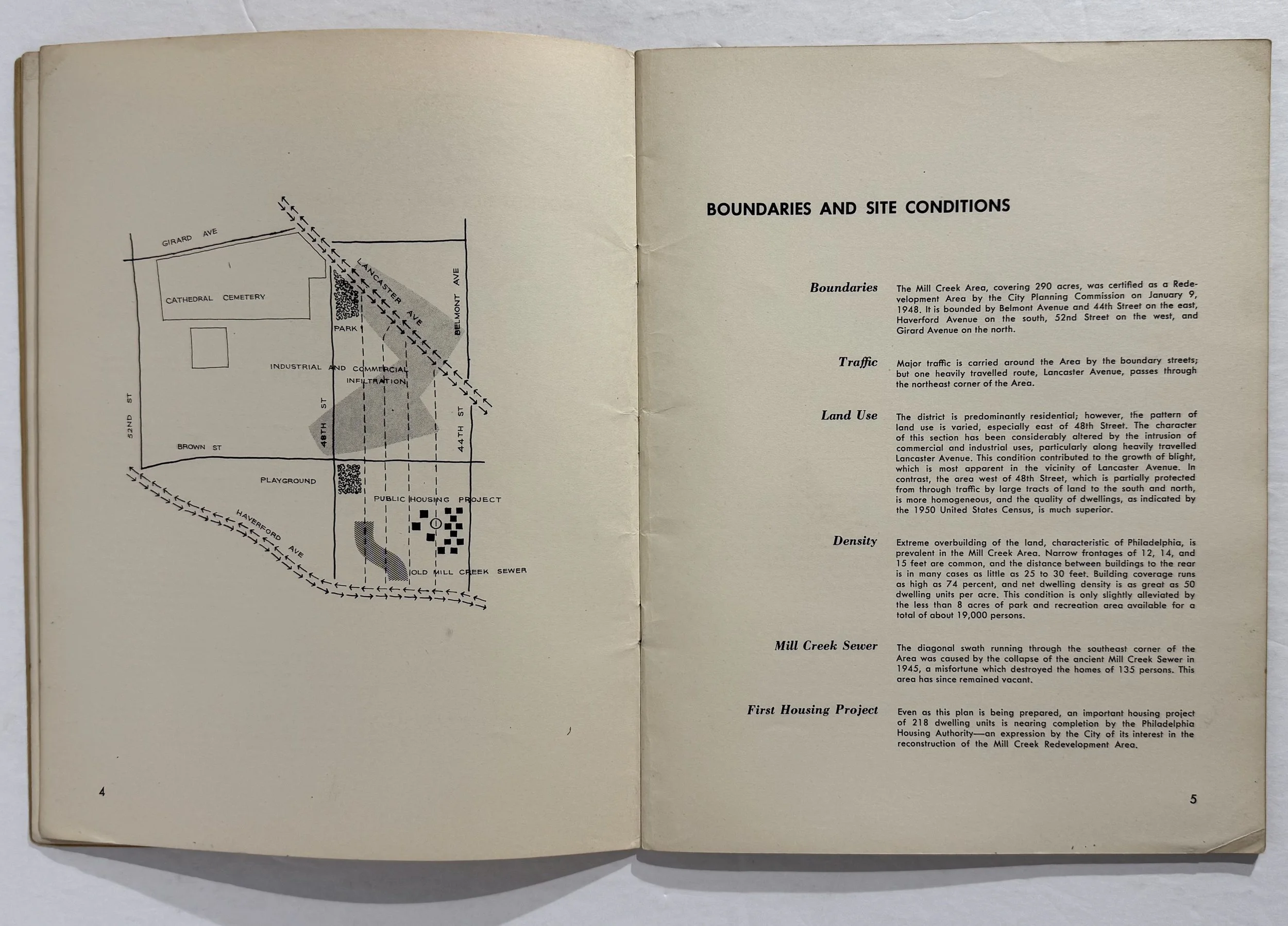 Image 5 of 10
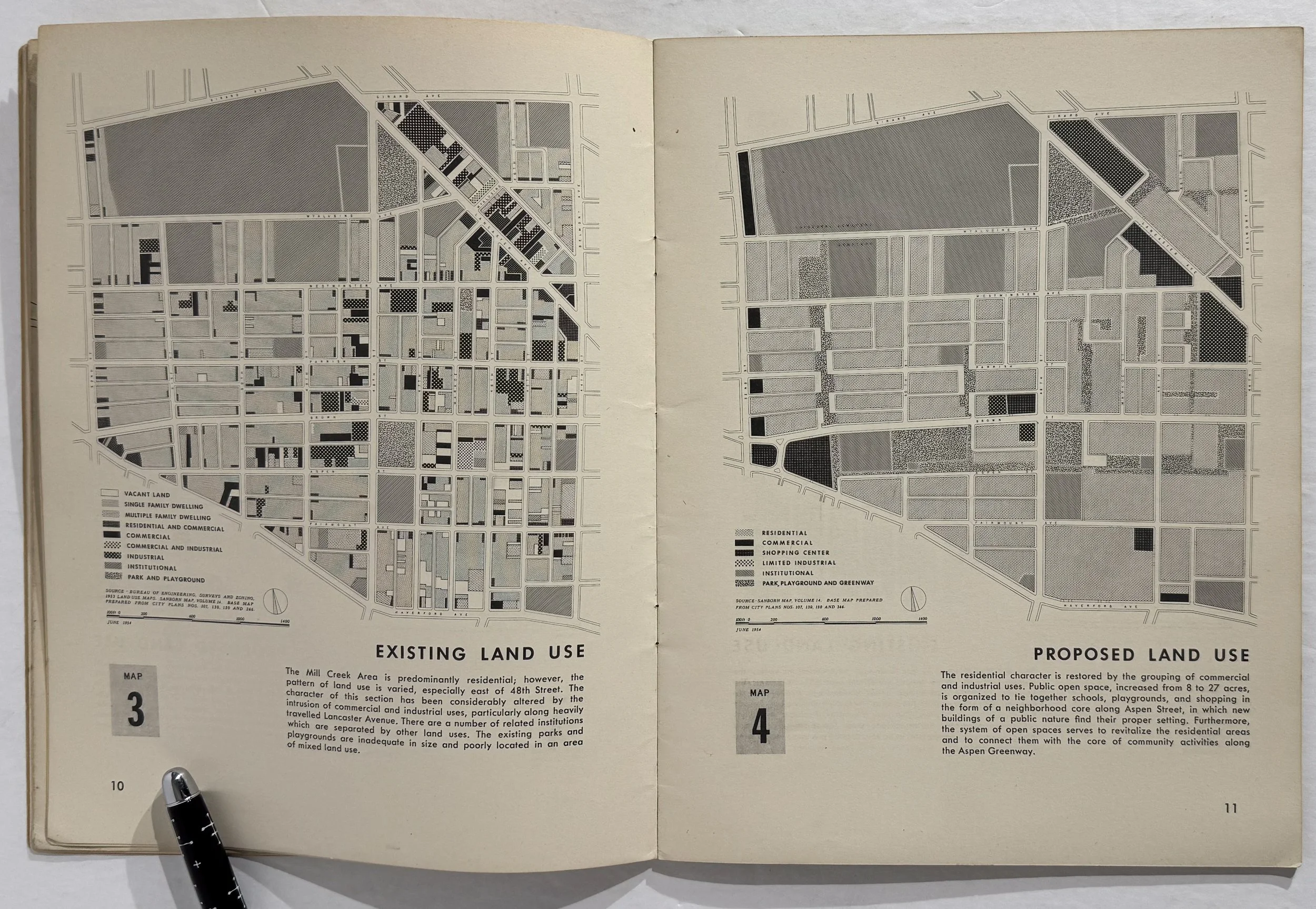 Image 6 of 10
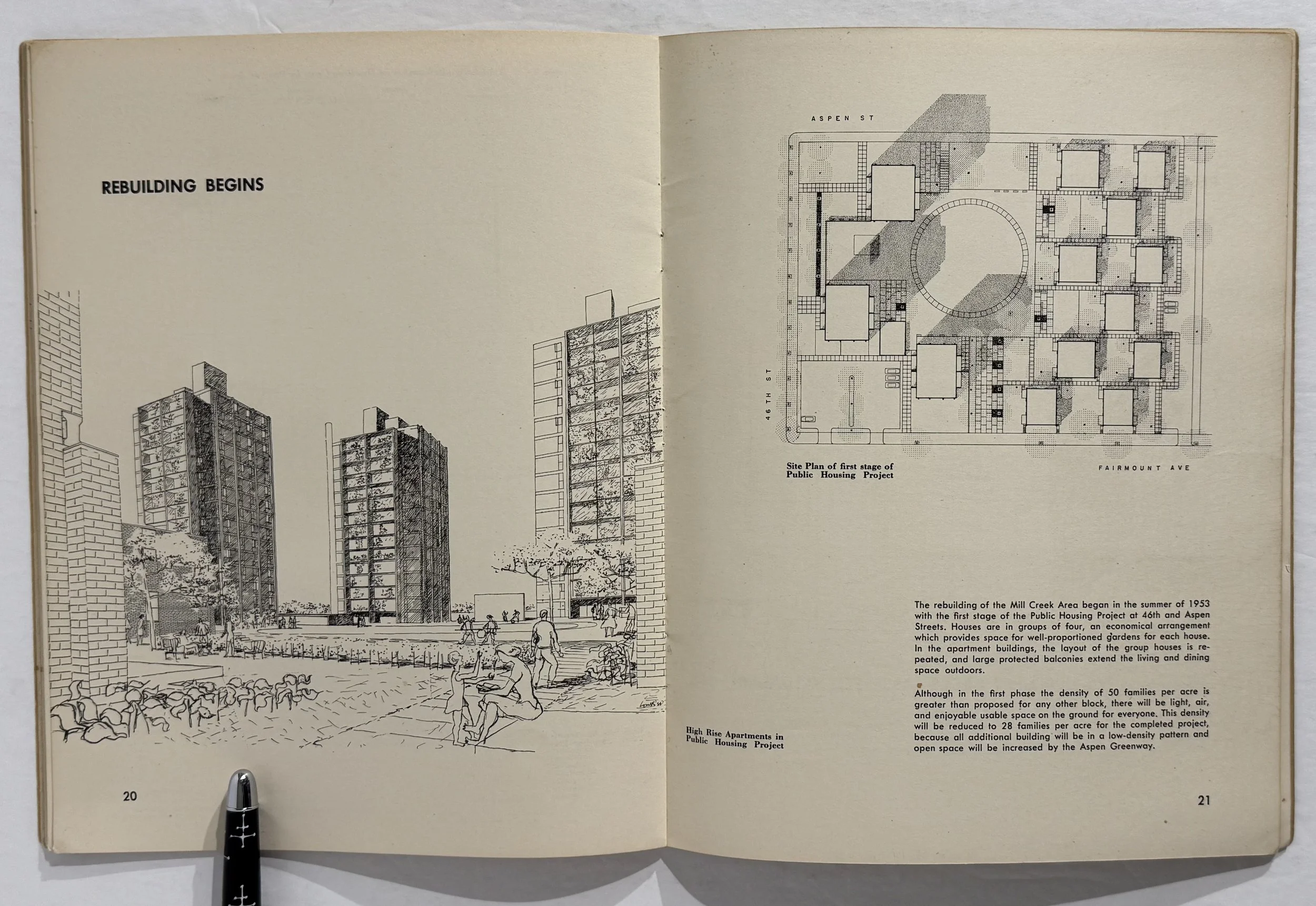 Image 7 of 10
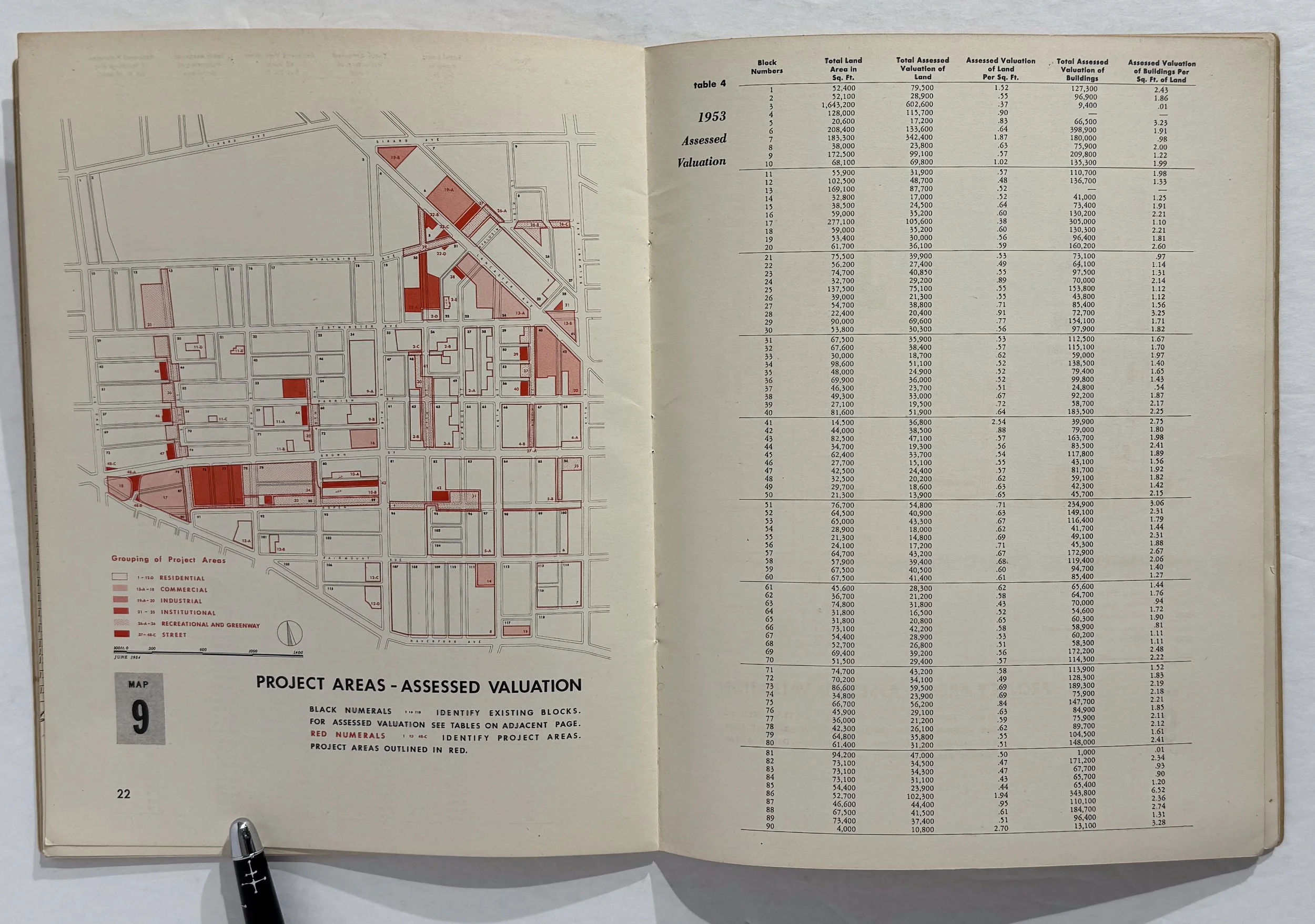 Image 8 of 10
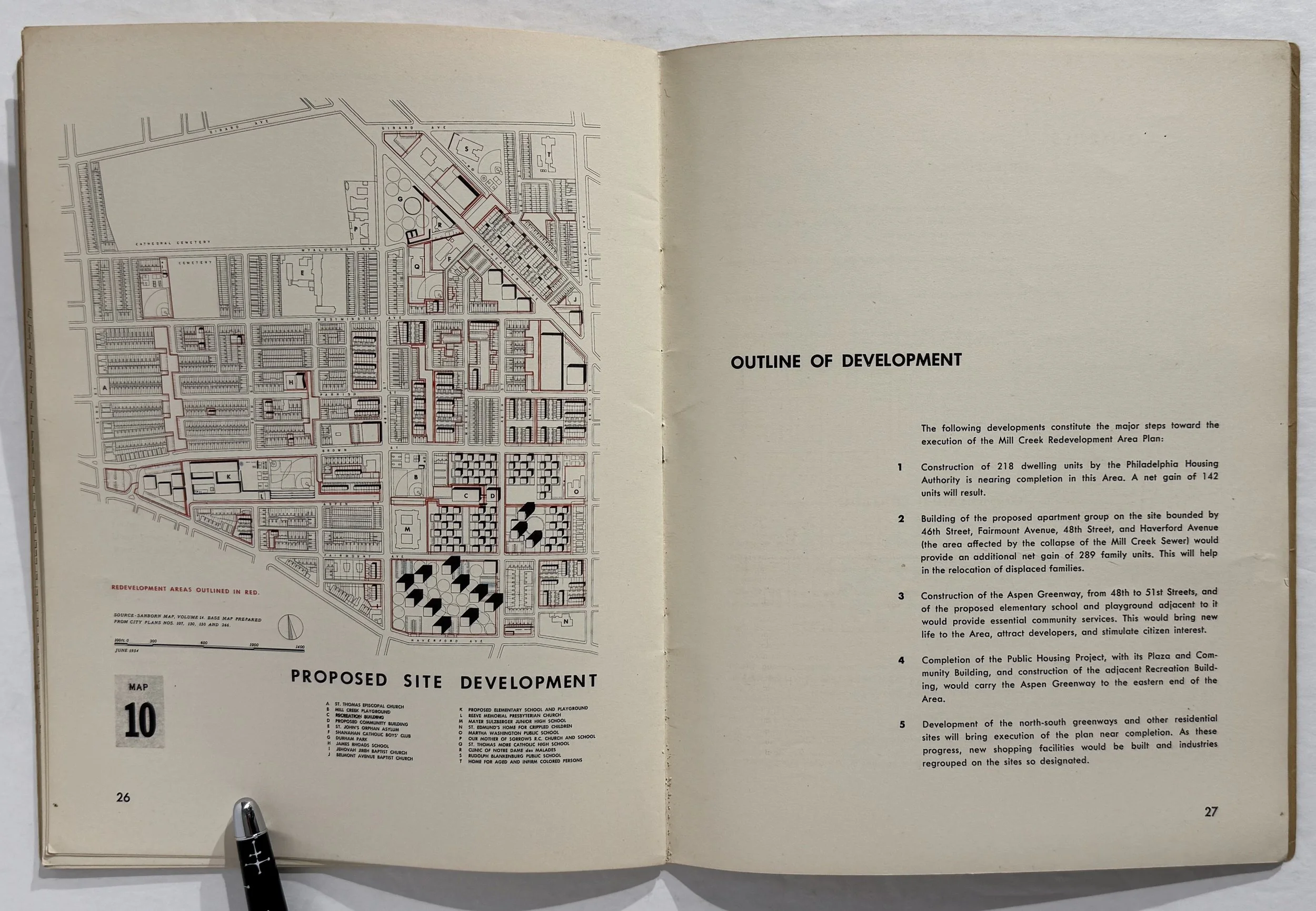 Image 9 of 10
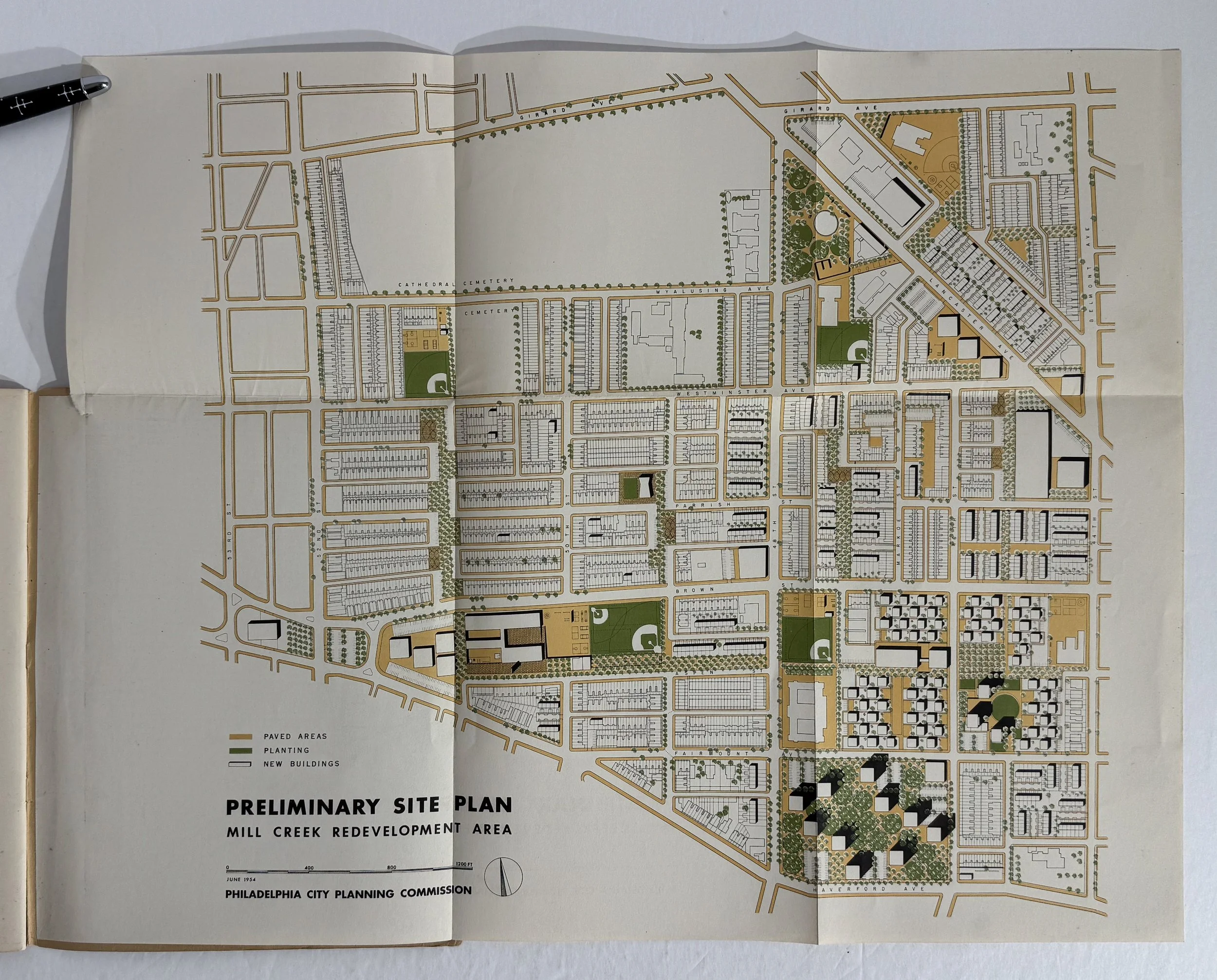 Image 10 of 10