New York: New York City Landmarks Preservation Commission, 1974. First edition. Small octavo, 3.5 x 8.5 inches, 54 pp., illustrated wraparound pictorial wrappers designed by Joseph Paul (Joe) D’Urso, with cover photography by John Barrington Bayley. Early official guide to New York City's designated architectural landmarks, published less than a decade after the establishment of the Landmarks Preservation Commission in 1965. Organized geographically across the five boroughs, with descriptions, historical information, addresses, and architectural attributions for significant buildings and sites. The striking wraparound cover, designed by pioneering minimalist interior and furniture designer Joe D’Urso, employs a repeated, high-contrast photograph of the nineteenth-century E. V. Haughwout Building's cast-iron façade, transforming its architectural ornament into a rhythmic geometric pattern. An unusual example of D’Urso's early graphic work, reflecting the minimalist sensibility that would characterize his influential High-Tech interiors of the 1970s. Minor rubbing and edge wear to wrappers, light interior toning. Wraparound cover intact.
New York: New York City Landmarks Preservation Commission, 1974. First edition. Small octavo, 3.5 x 8.5 inches, 54 pp., illustrated wraparound pictorial wrappers designed by Joseph Paul (Joe) D’Urso, with cover photography by John Barrington Bayley. Early official guide to New York City's designated architectural landmarks, published less than a decade after the establishment of the Landmarks Preservation Commission in 1965. Organized geographically across the five boroughs, with descriptions, historical information, addresses, and architectural attributions for significant buildings and sites. The striking wraparound cover, designed by pioneering minimalist interior and furniture designer Joe D’Urso, employs a repeated, high-contrast photograph of the nineteenth-century E. V. Haughwout Building's cast-iron façade, transforming its architectural ornament into a rhythmic geometric pattern. An unusual example of D’Urso's early graphic work, reflecting the minimalist sensibility that would characterize his influential High-Tech interiors of the 1970s. Minor rubbing and edge wear to wrappers, light interior toning. Wraparound cover intact.

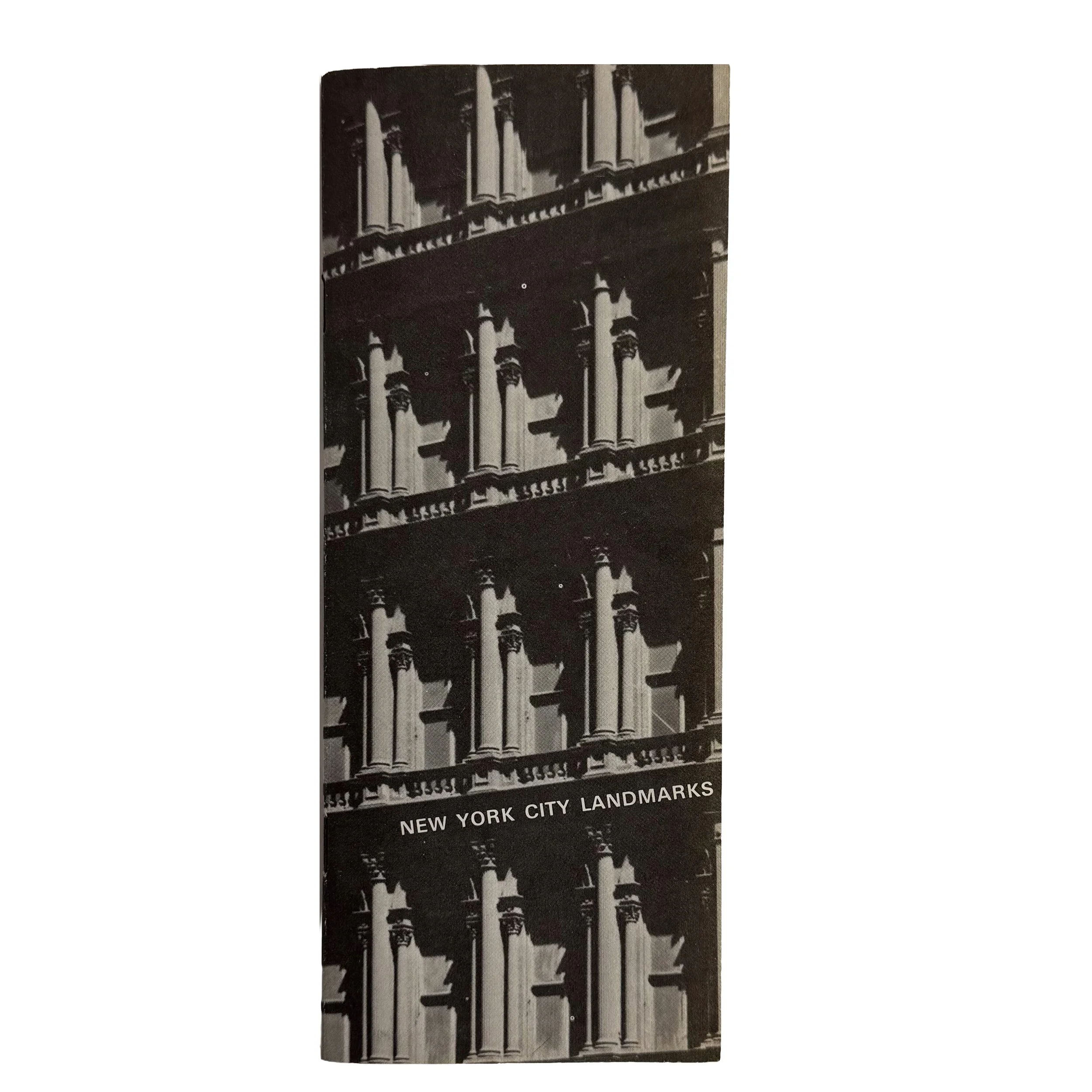 Image 1 of 6
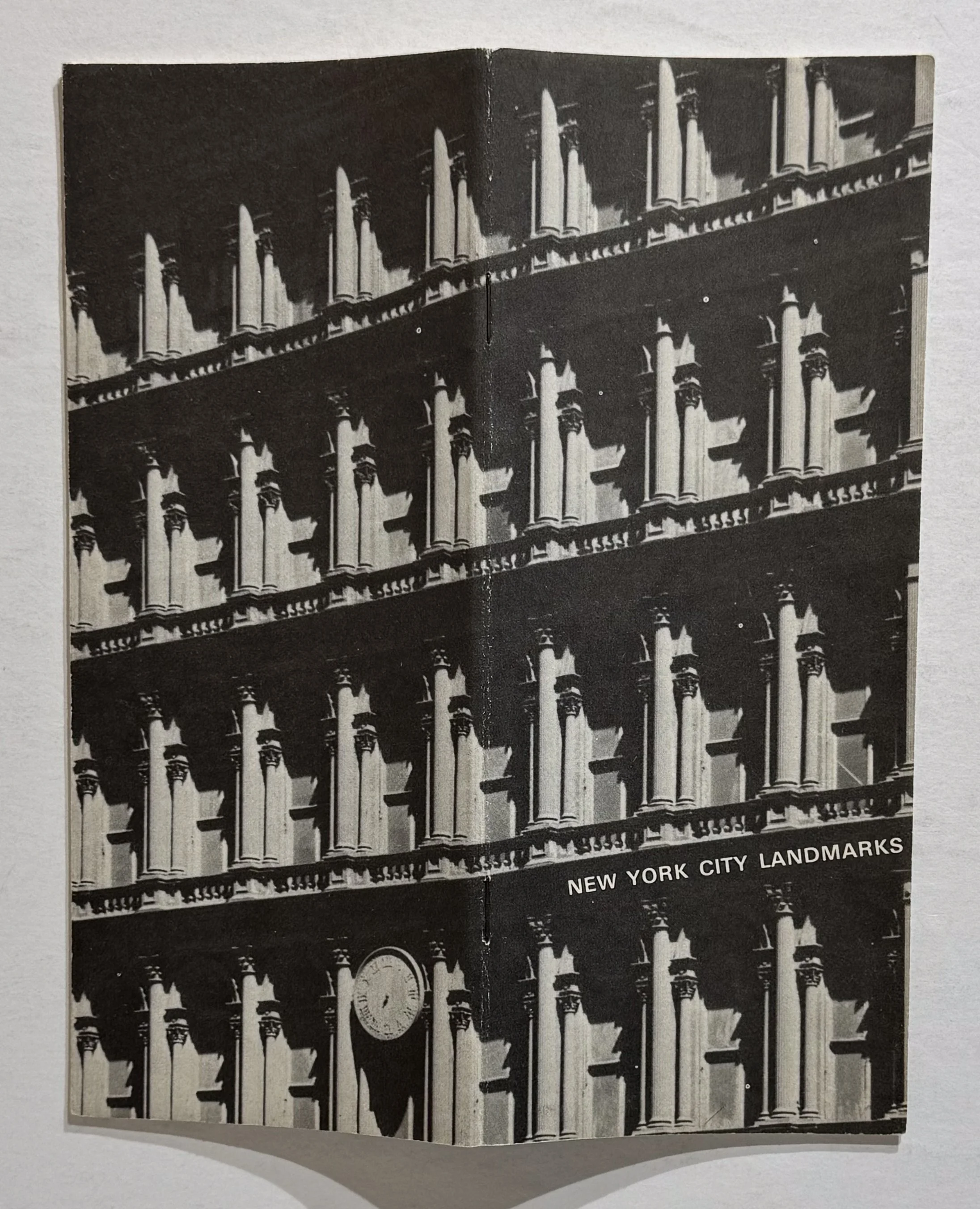 Image 2 of 6
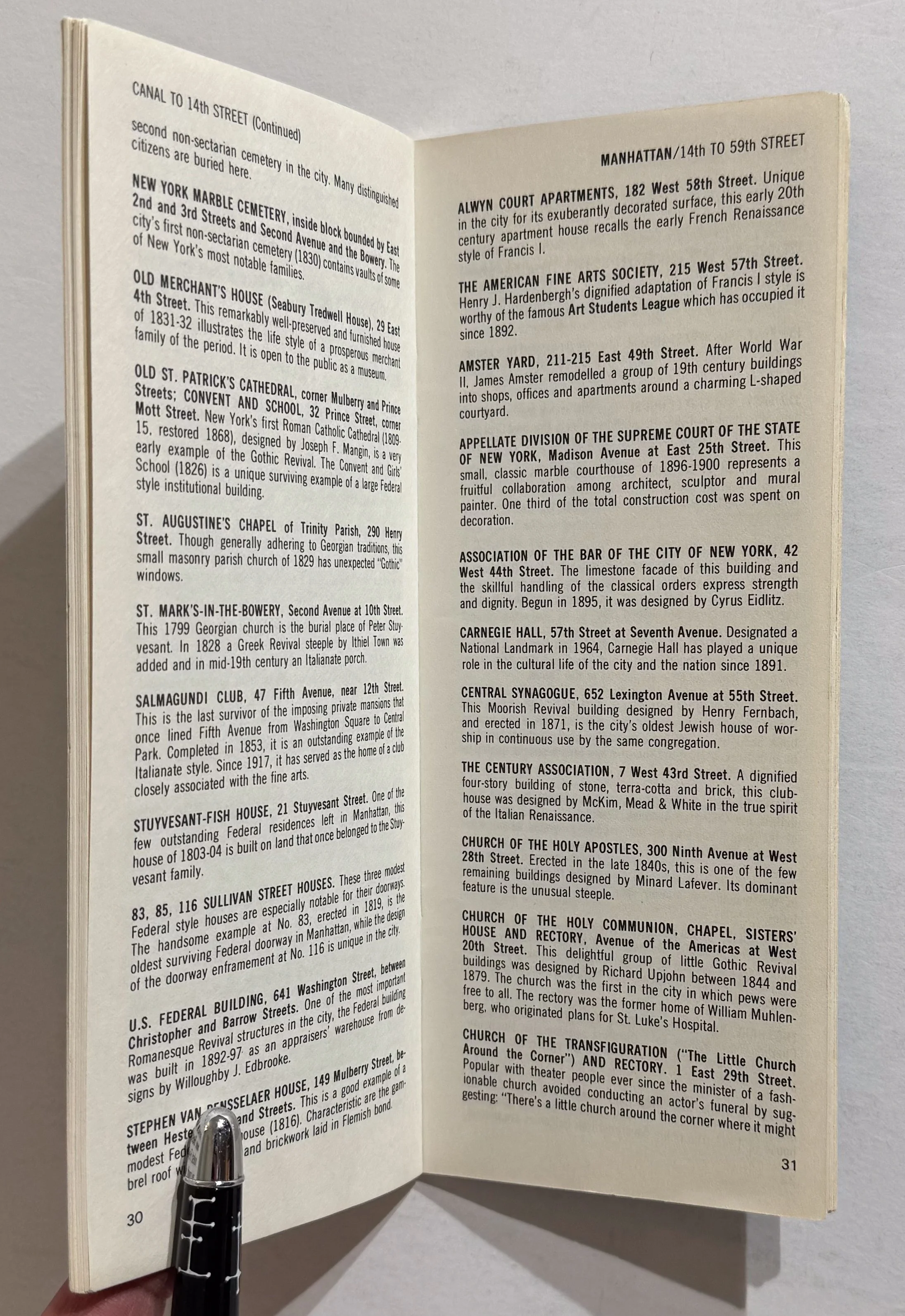 Image 3 of 6
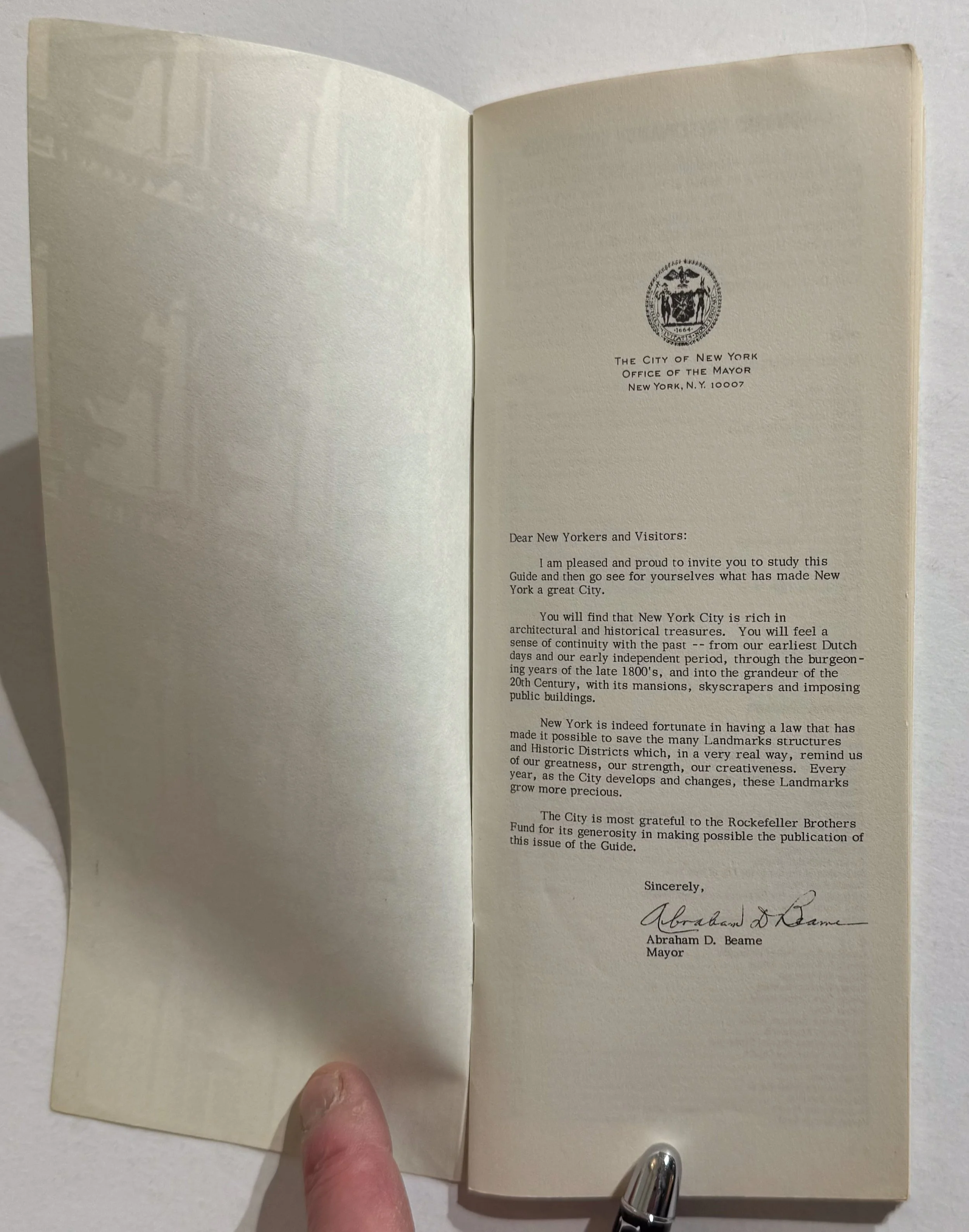 Image 4 of 6
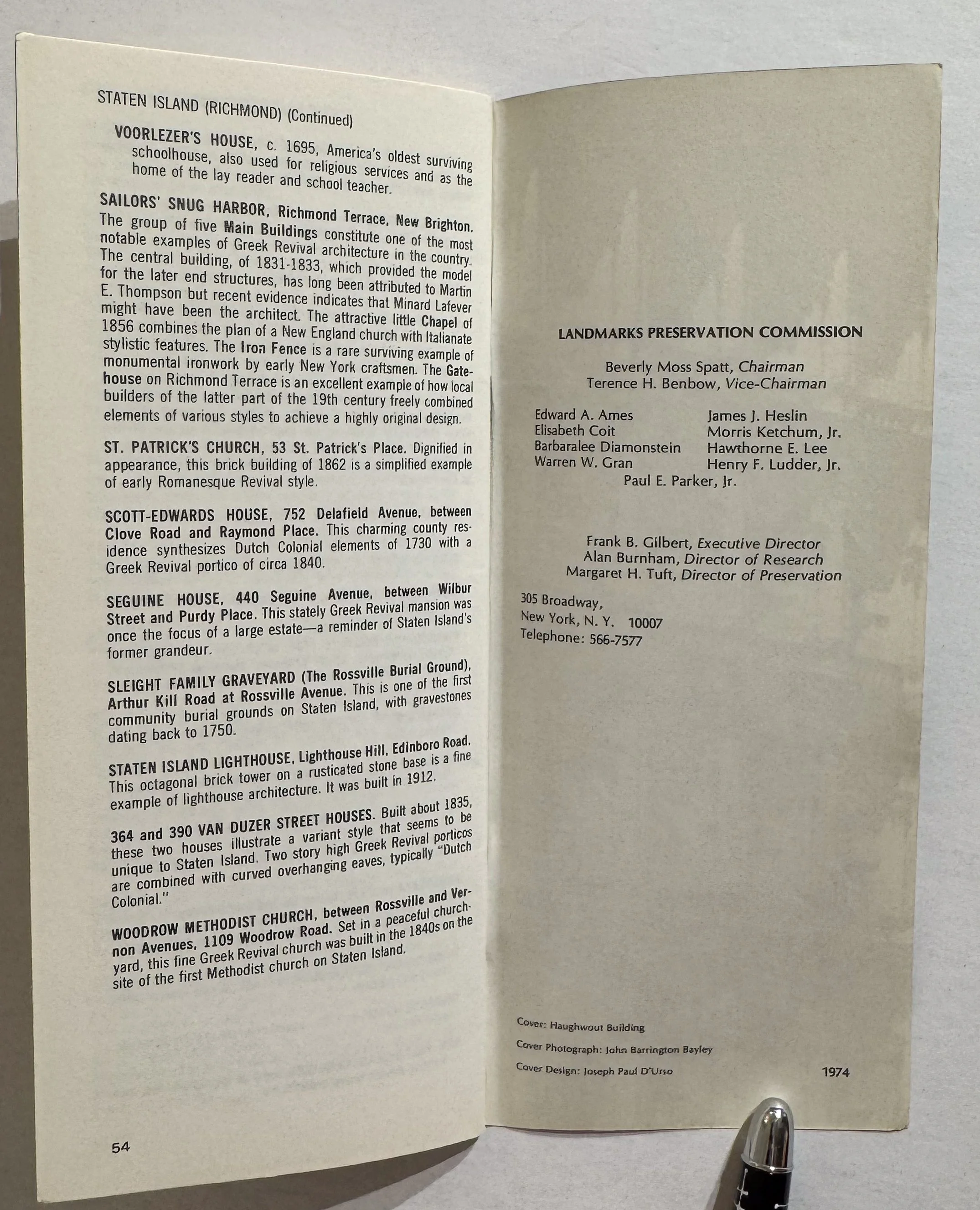 Image 5 of 6
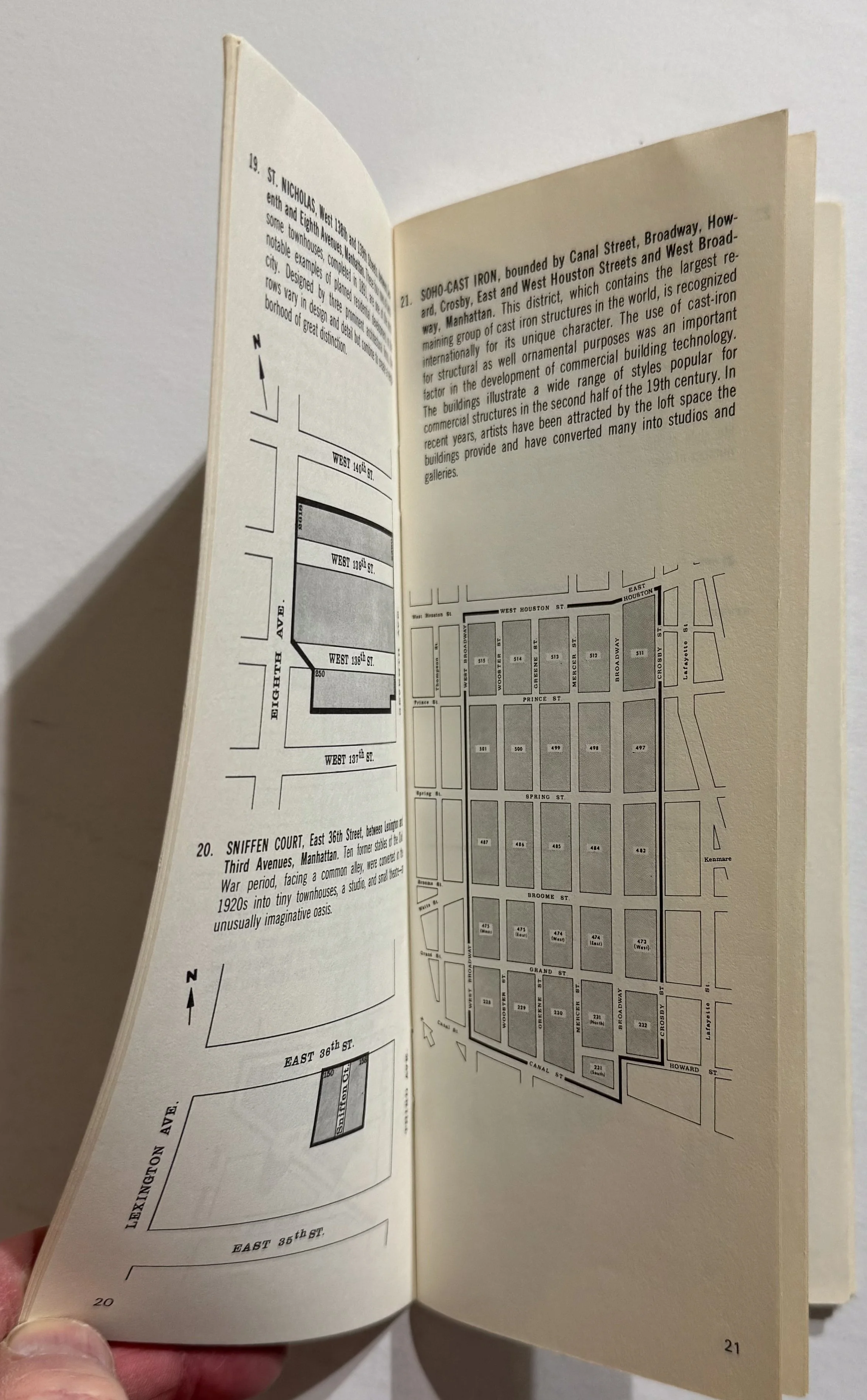 Image 6 of 6