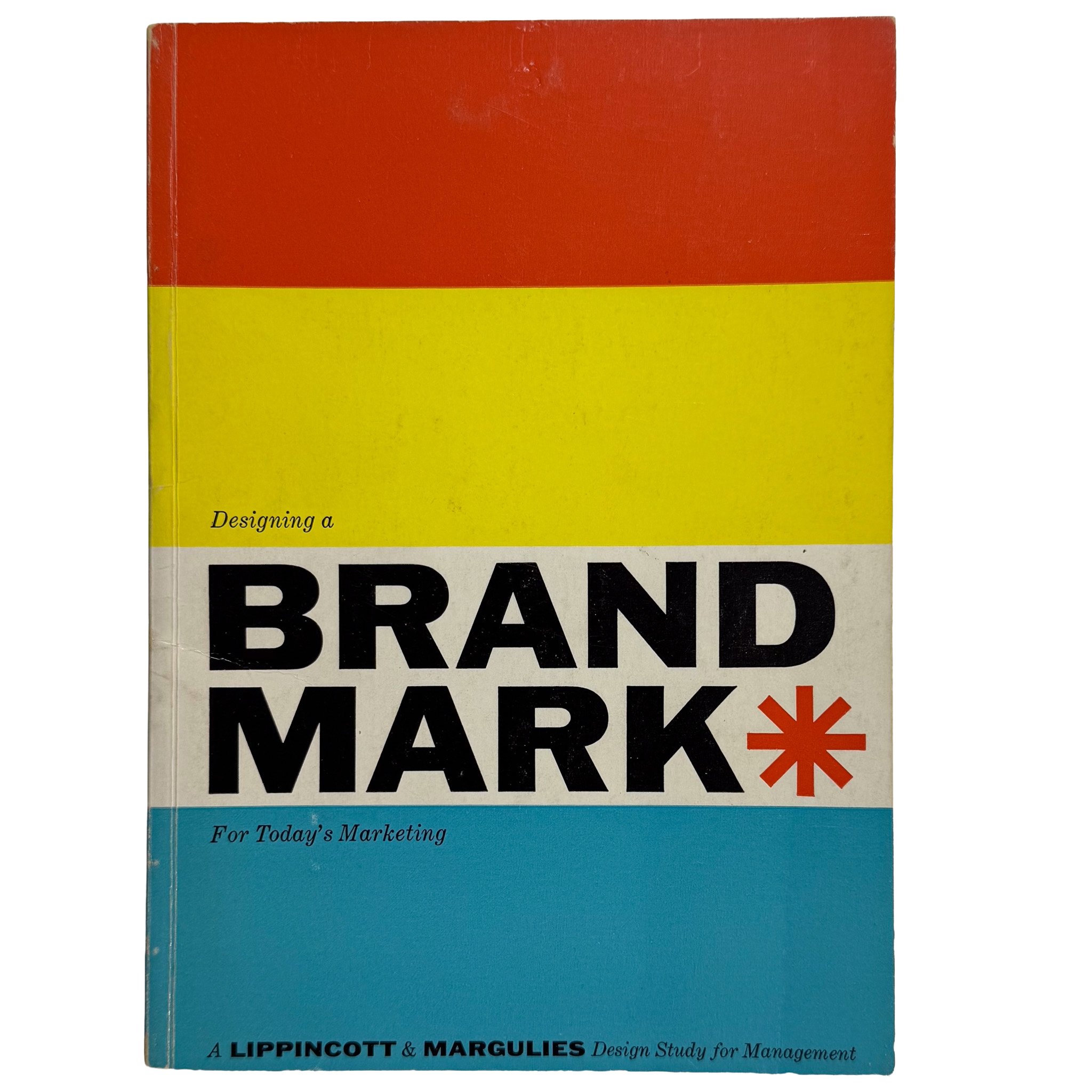
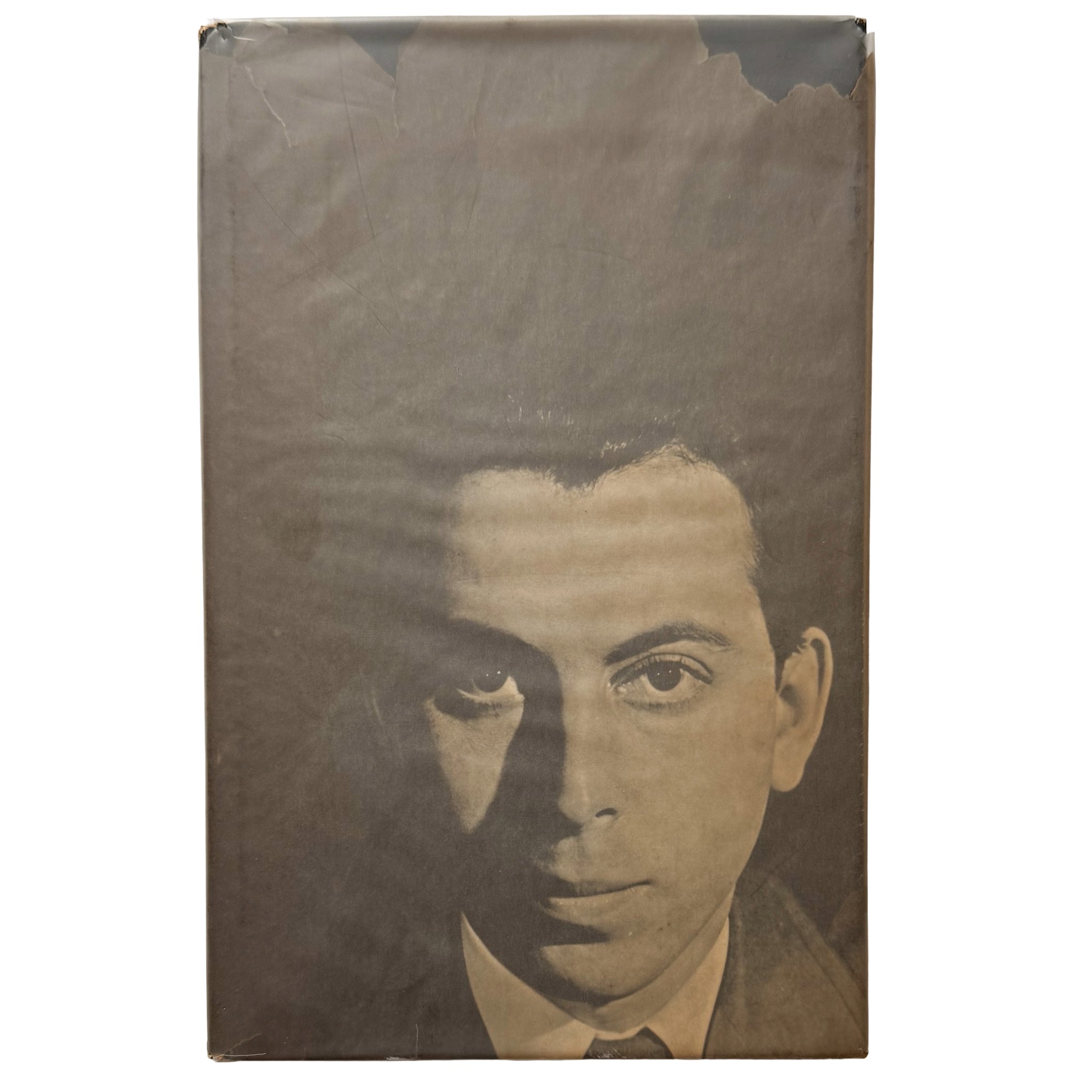
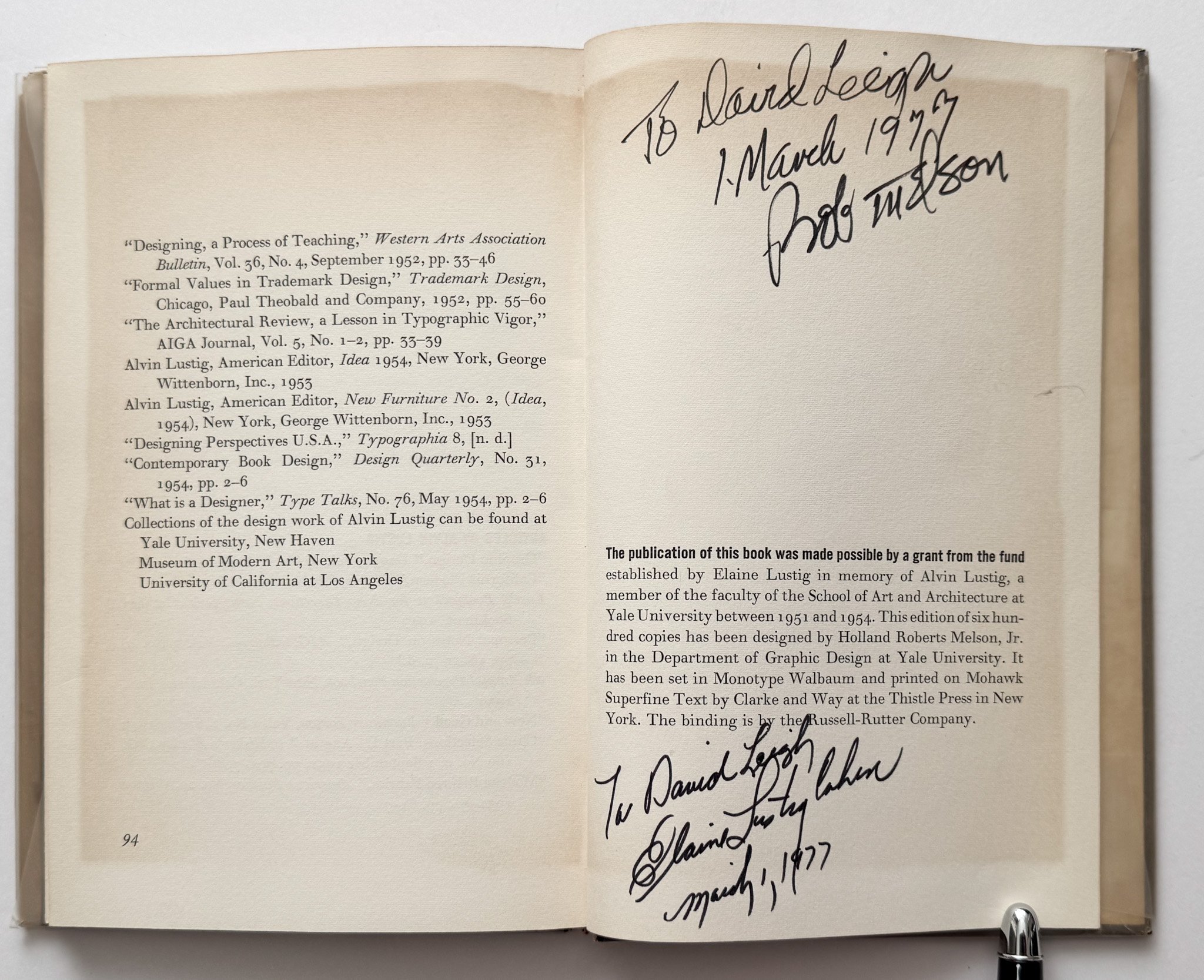
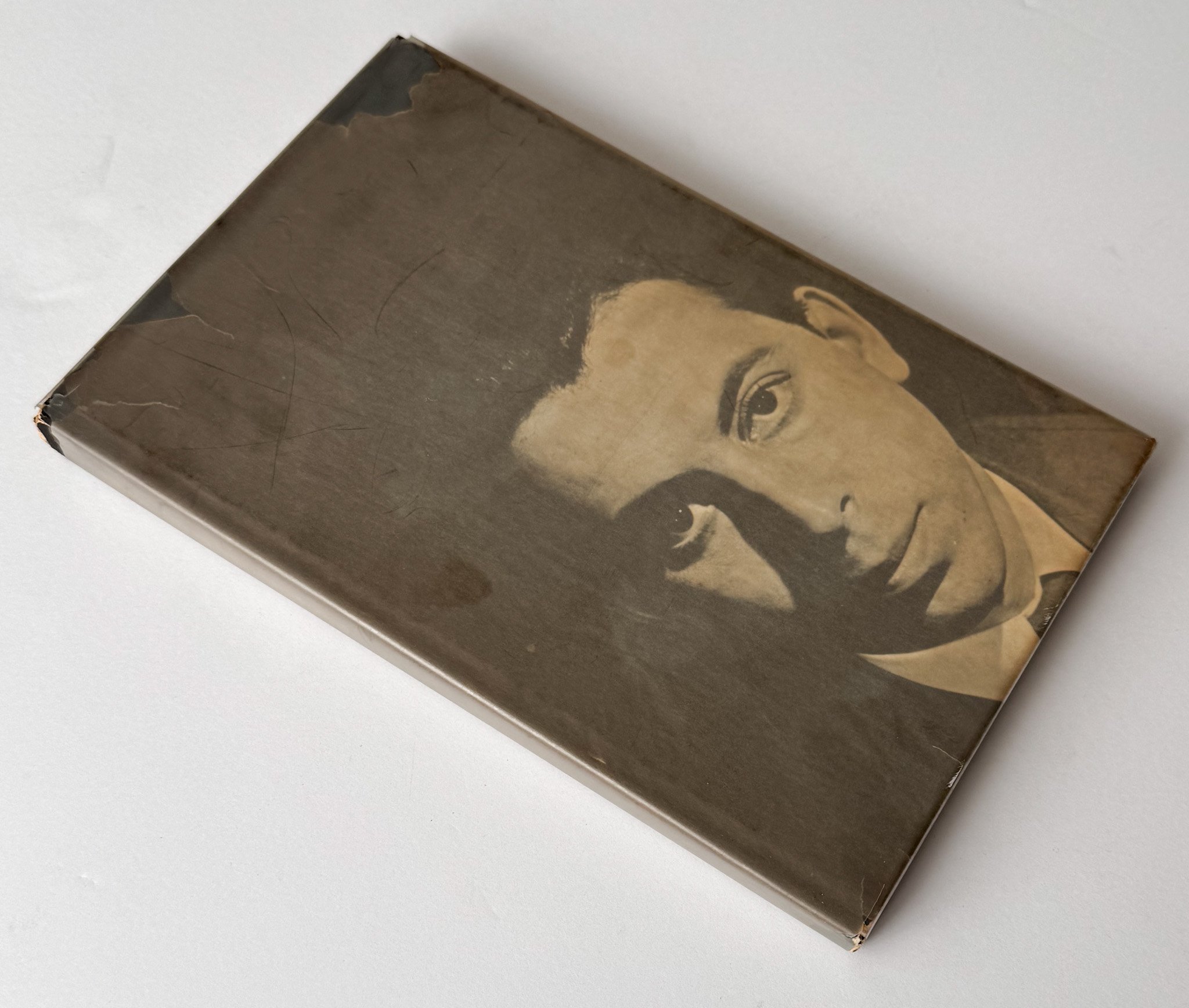
First edition of Leon V. Solon’s influential study of color as an essential architectural element. 8vo (7.25” x 10.25”), xiv, 156, [2] pages, original gilt-lettered black boards with vivid blue cloth spine and matching front strip. Nine color plates and forty-five plates in black and white. Published in 1924 by The Architectural Record, with an introduction by Ralph Adams Cram.
Solon considers polychromy not as applied decoration but as a structural and expressive discipline, tracing its development through Greek, Roman, Byzantine, medieval, and later architectural traditions. His argument joins archaeological evidence, theories of ornament, and practical questions of materials, proportion, light, and chromatic harmony. The plates reproduce painted architectural details, ceramics, mosaics, sculpture, and ornamental systems, with the color illustrations demonstrating effects that monochrome documentation could only suggest.
Ralph Adams Cram’s introduction places the work within the renewed early twentieth-century debate over the role of color in architecture. Published when modernism was beginning to redefine the architectural surface, Polychromy preserves an alternative history in which color remained inseparable from form, construction, and symbolic meaning. It is a significant and still pertinent source for architects, designers, historians of ornament, and students of architectural color.
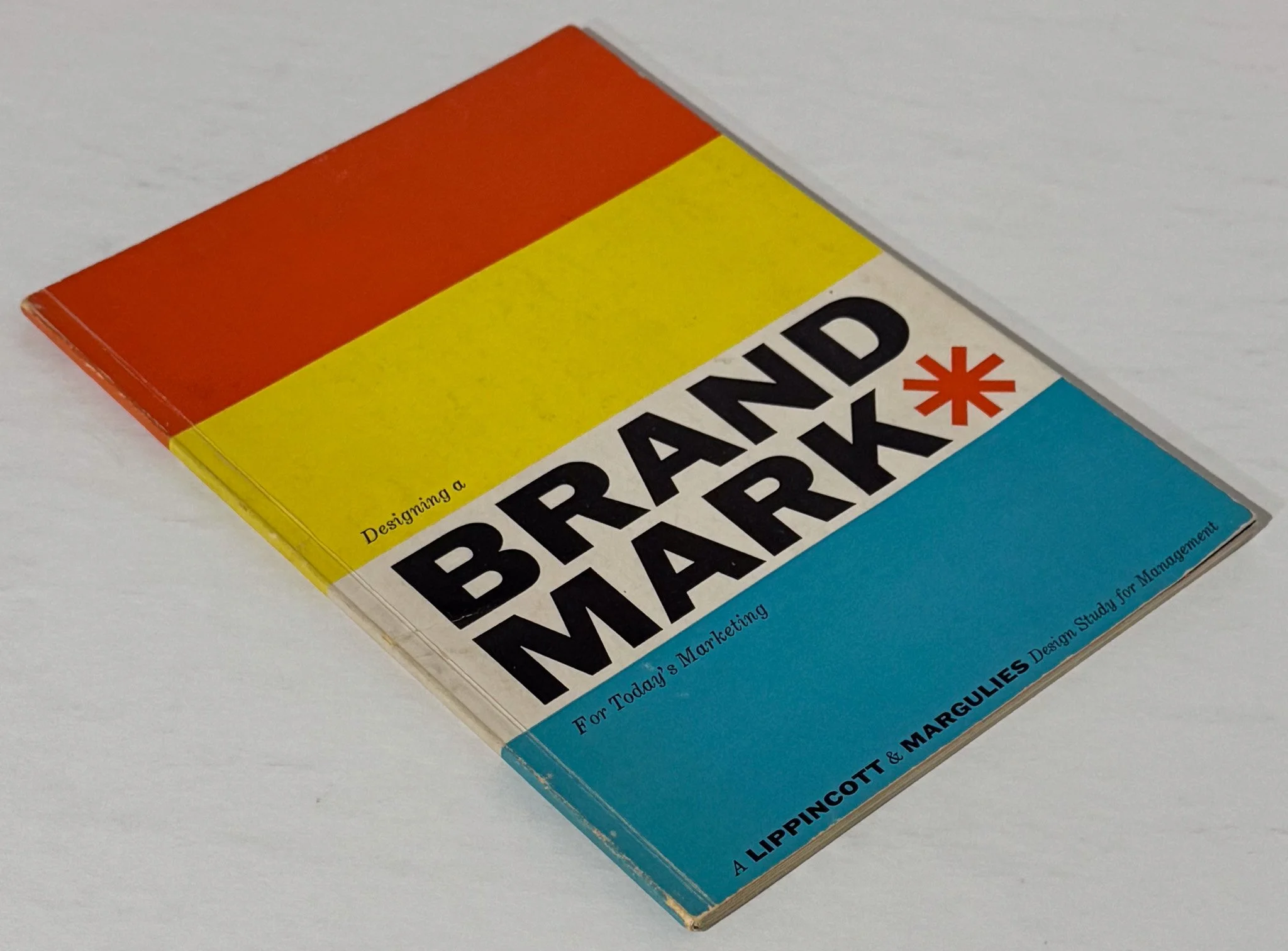
A notably sharp copy in its striking original binding. Gilt bright, boards clean, binding firm, and contents clean; only trivial wear at the extremities.
First edition of Leon V. Solon’s influential study of color as an essential architectural element. 8vo (7.25” x 10.25”), xiv, 156, [2] pages, original gilt-lettered black boards with vivid blue cloth spine and matching front strip. Nine color plates and forty-five plates in black and white. Published in 1924 by The Architectural Record, with an introduction by Ralph Adams Cram.
Solon considers polychromy not as applied decoration but as a structural and expressive discipline, tracing its development through Greek, Roman, Byzantine, medieval, and later architectural traditions. His argument joins archaeological evidence, theories of ornament, and practical questions of materials, proportion, light, and chromatic harmony. The plates reproduce painted architectural details, ceramics, mosaics, sculpture, and ornamental systems, with the color illustrations demonstrating effects that monochrome documentation could only suggest.
Ralph Adams Cram’s introduction places the work within the renewed early twentieth-century debate over the role of color in architecture. Published when modernism was beginning to redefine the architectural surface, Polychromy preserves an alternative history in which color remained inseparable from form, construction, and symbolic meaning. It is a significant and still pertinent source for architects, designers, historians of ornament, and students of architectural color.
A notably sharp copy in its striking original binding. Gilt bright, boards clean, binding firm, and contents clean; only trivial wear at the extremities.

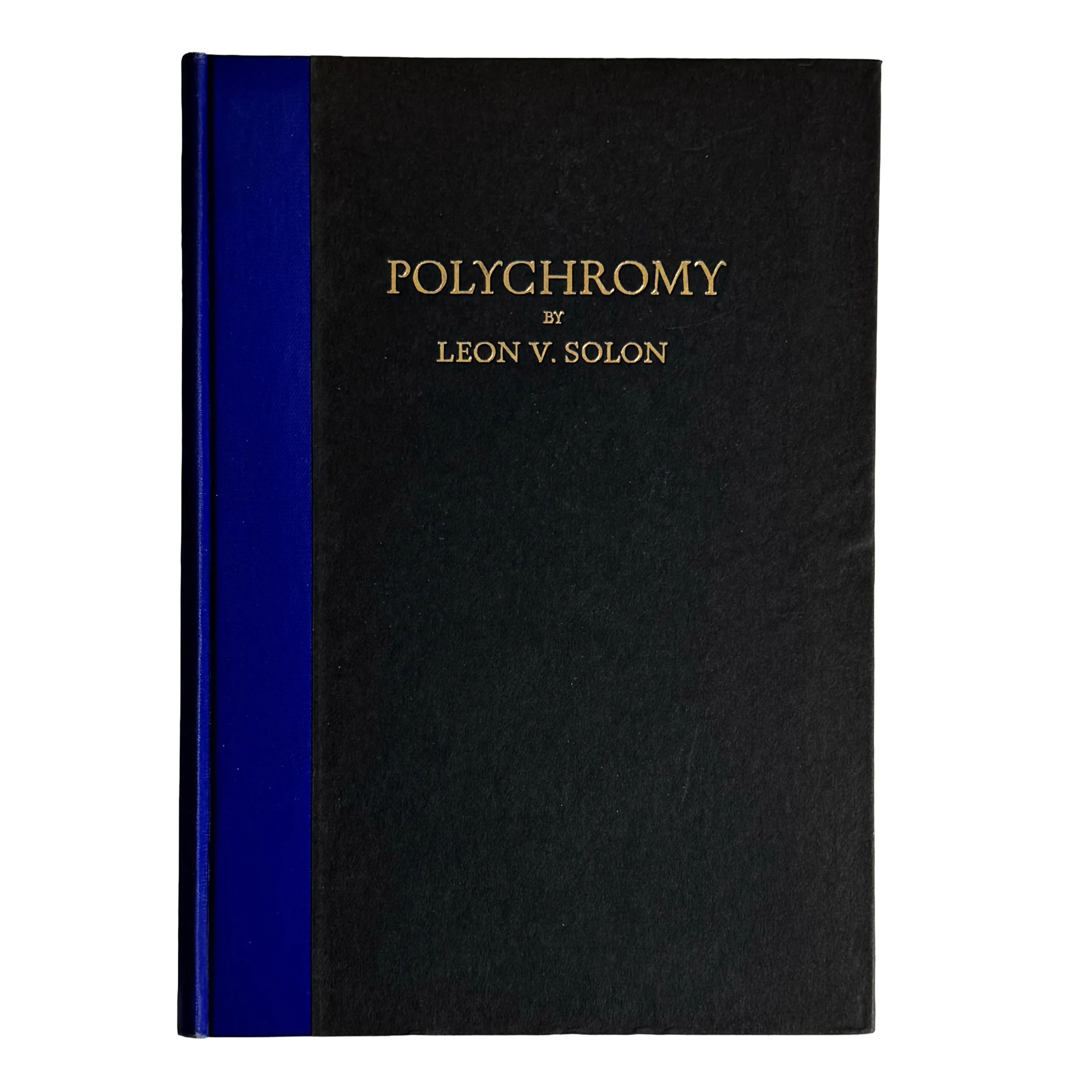 Image 1 of 11
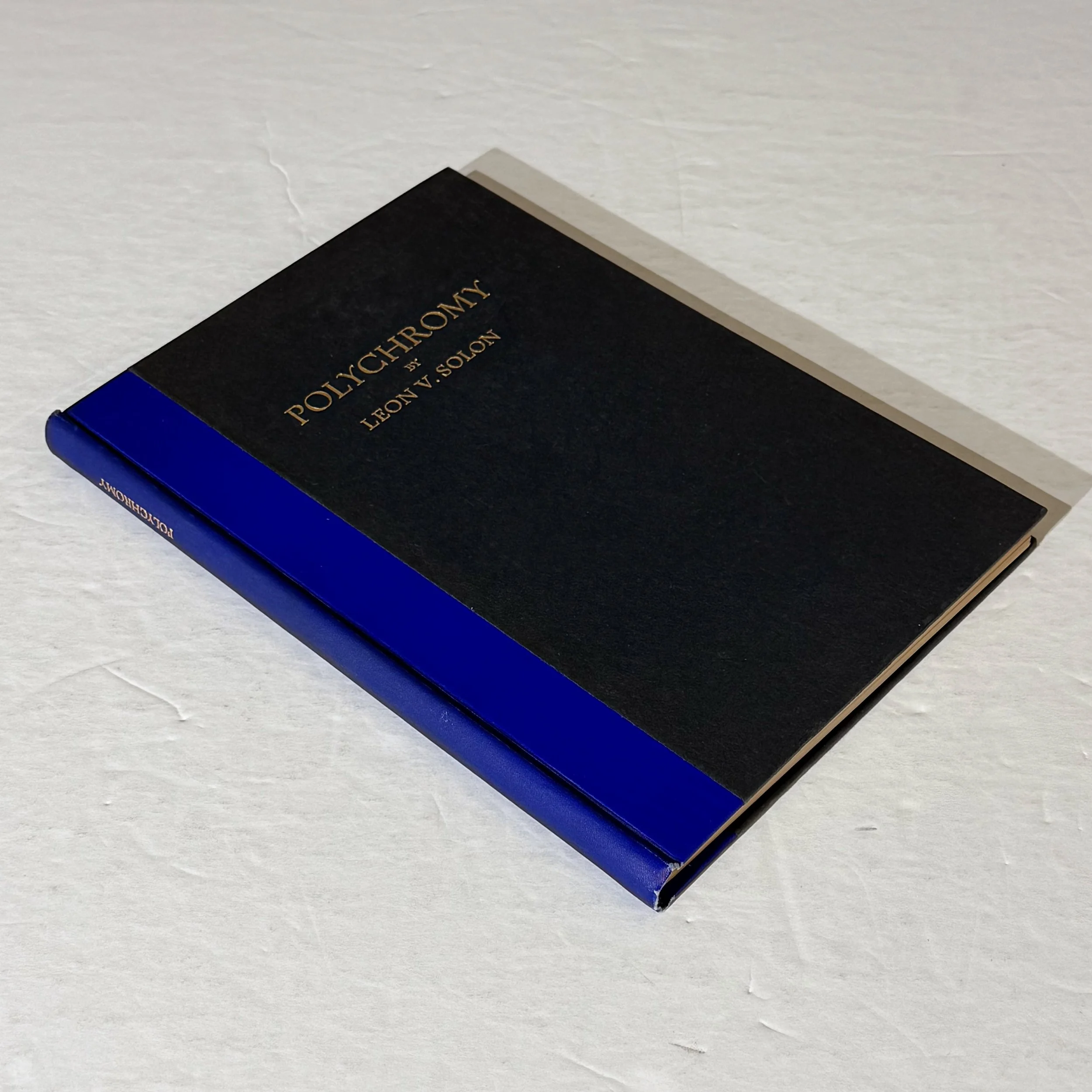 Image 2 of 11
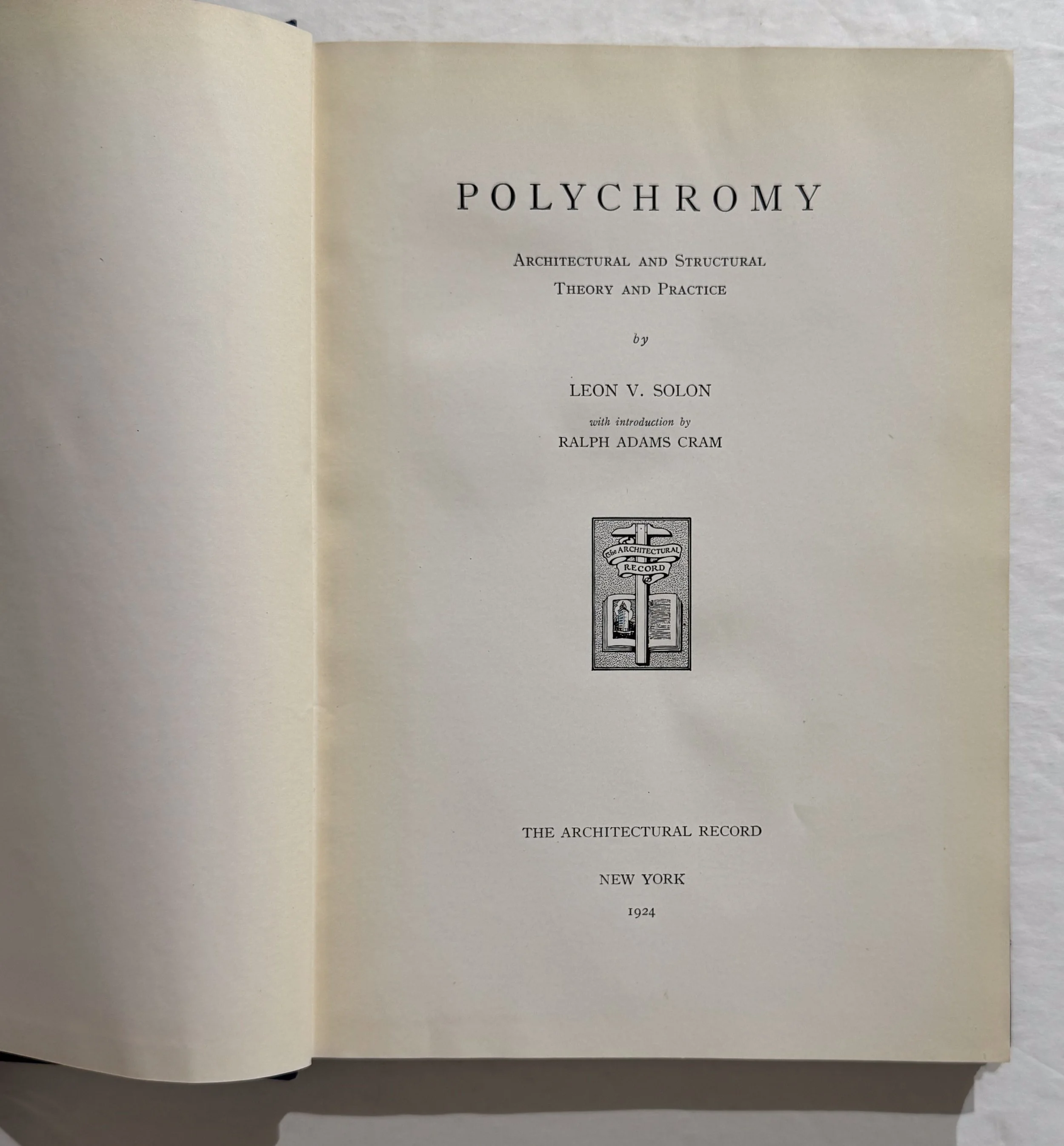 Image 3 of 11
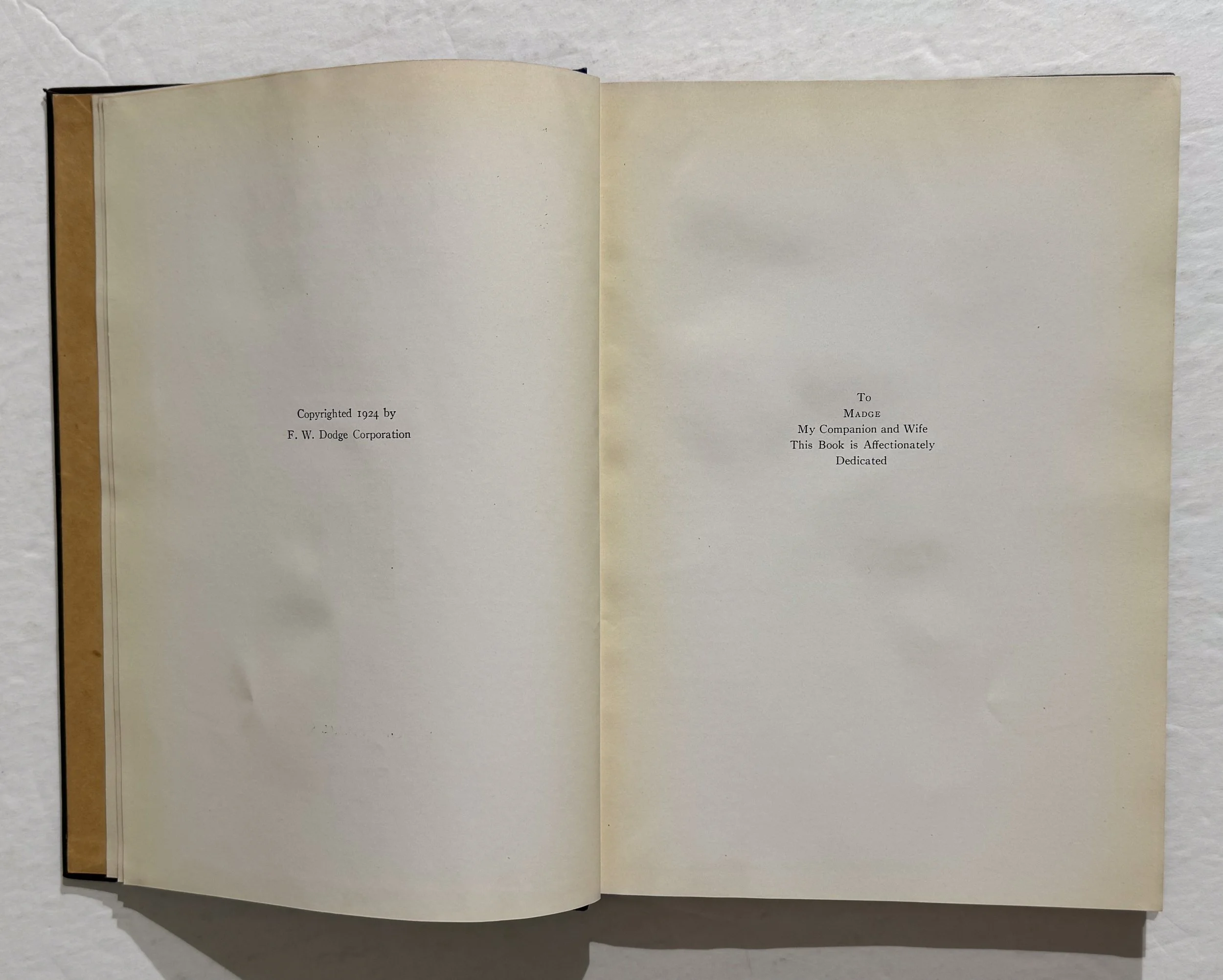 Image 4 of 11
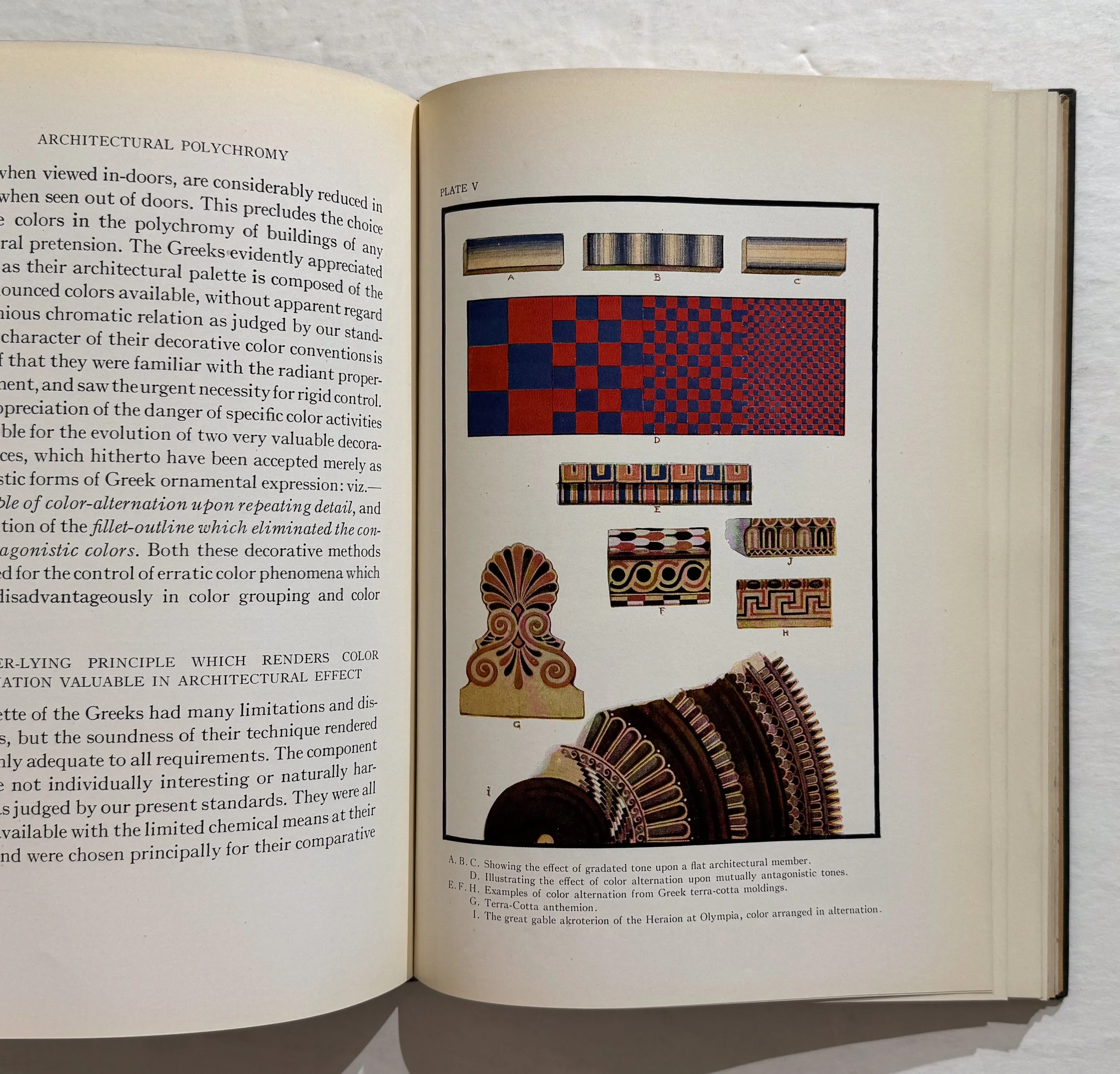 Image 5 of 11
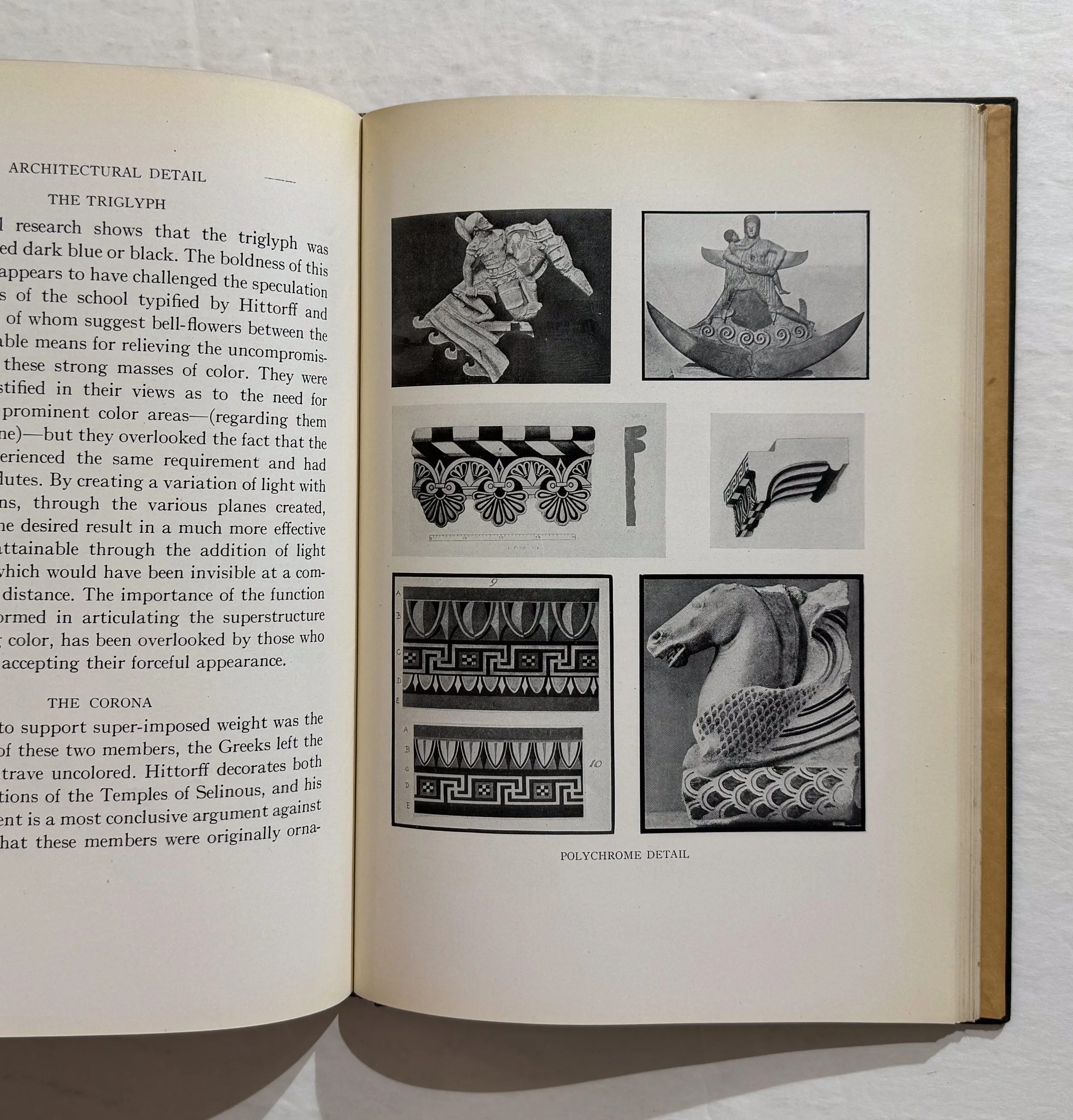 Image 6 of 11
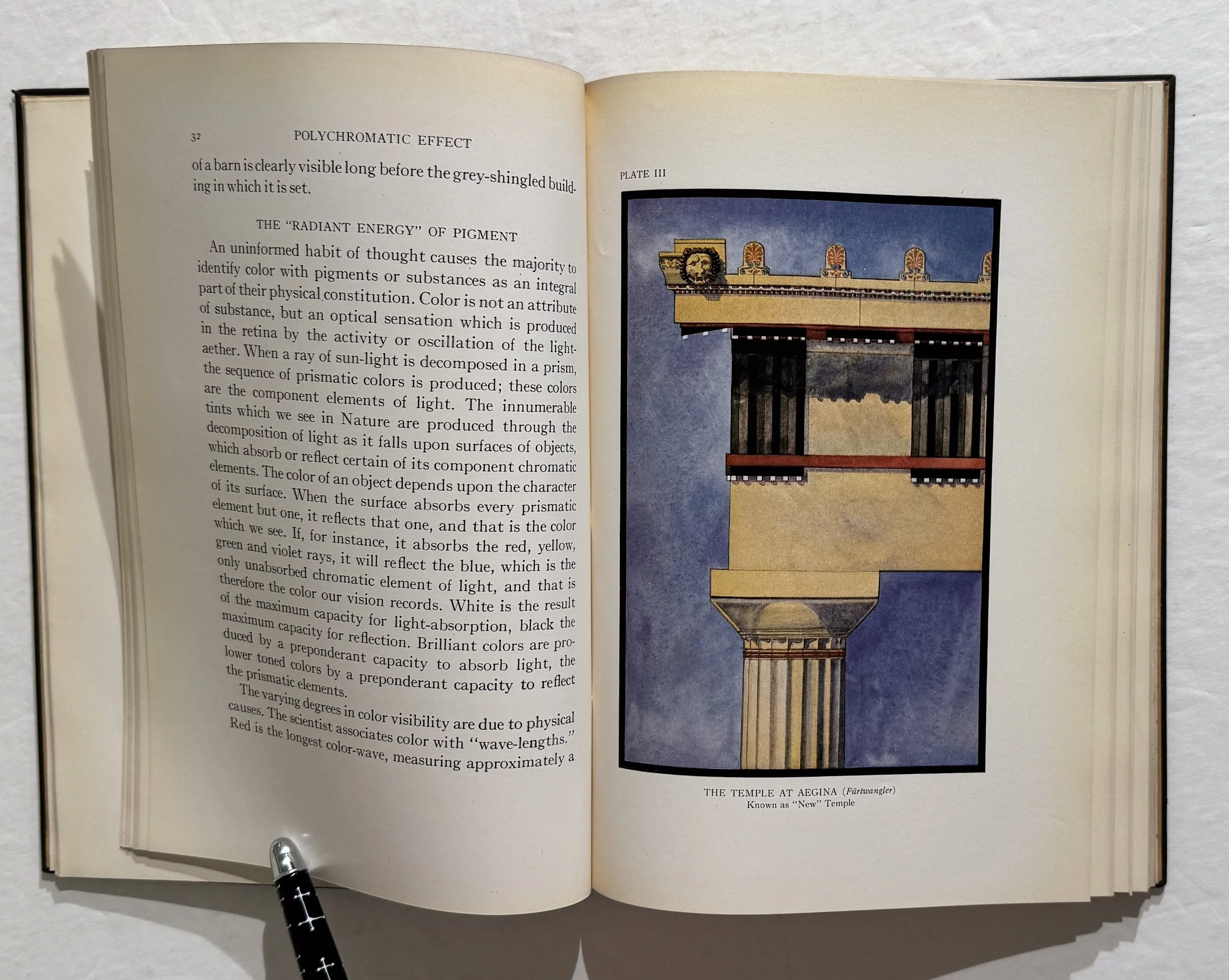 Image 7 of 11
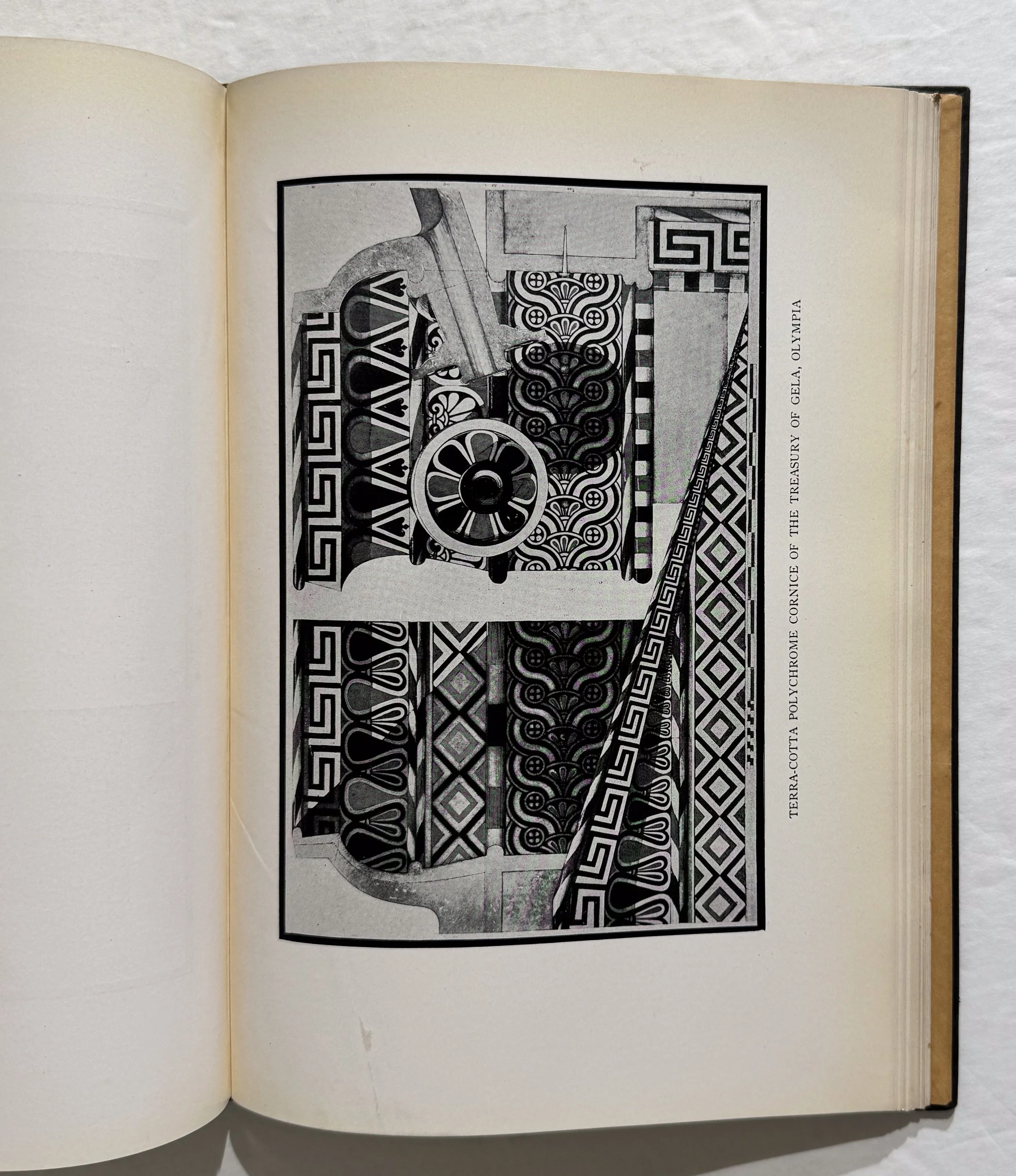 Image 8 of 11
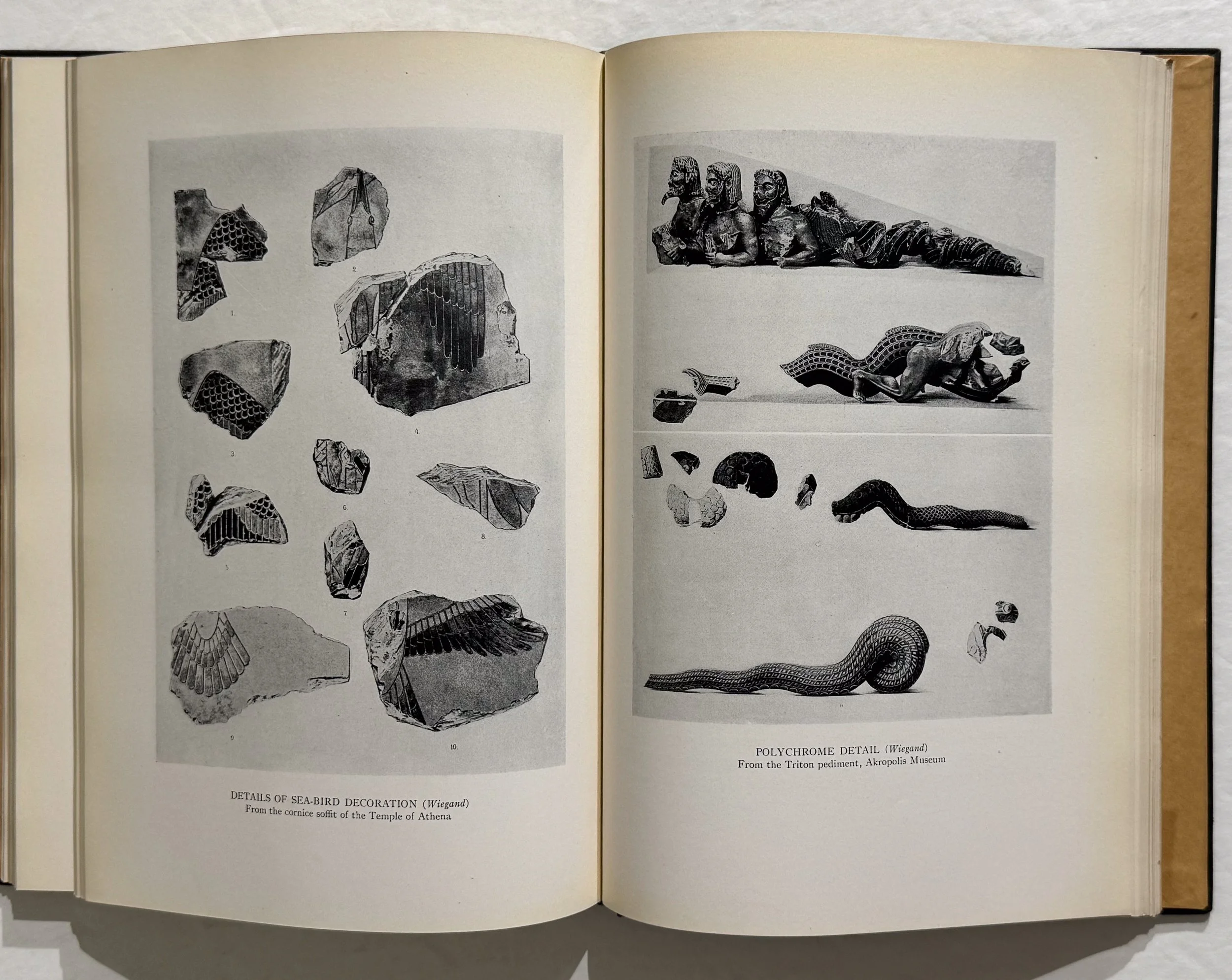 Image 9 of 11
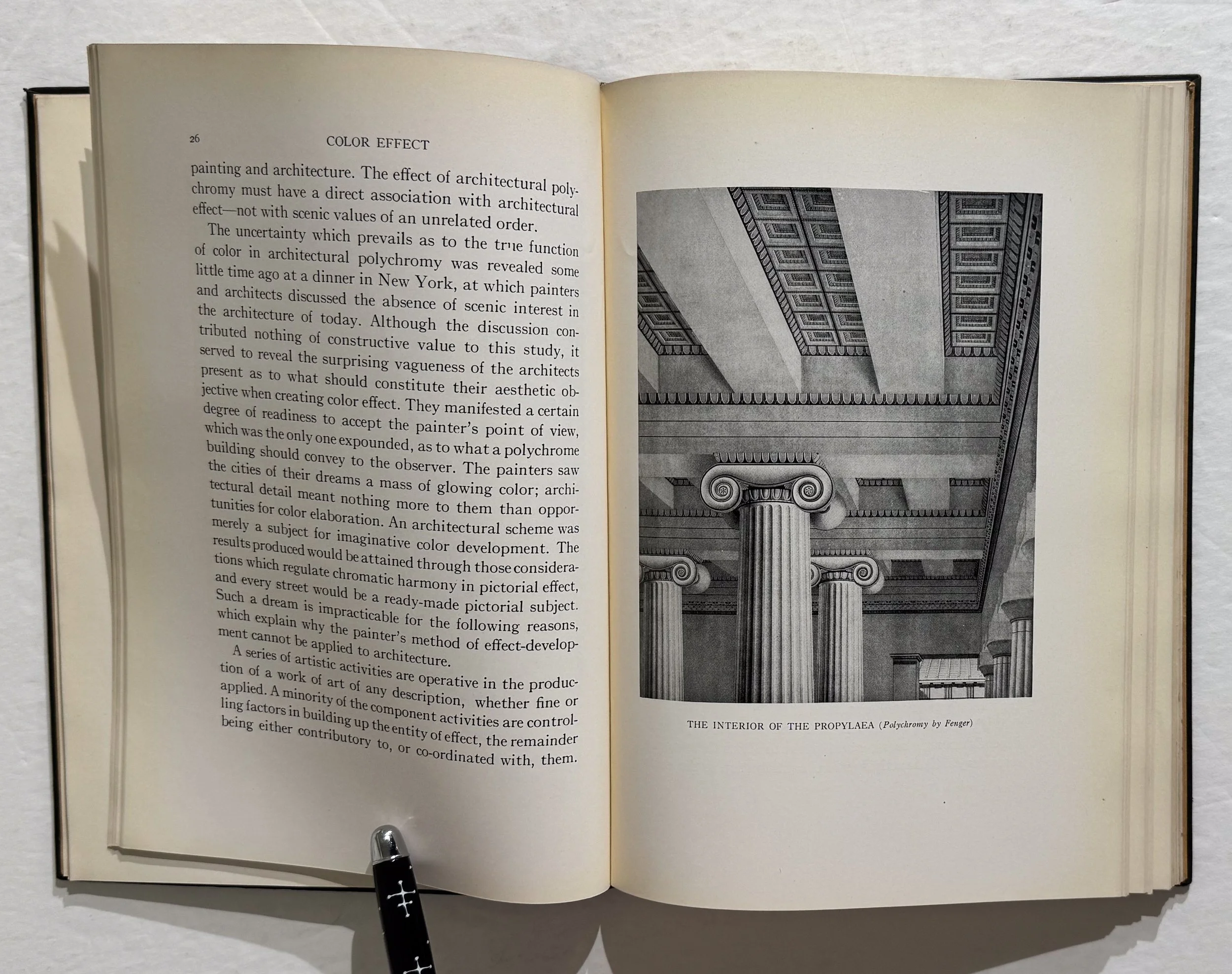 Image 10 of 11
 Image 11 of 11