Inaugural issue of SMAC!, the house journal of the San Francisco Media Arts Council, published in 2001 and a remarkably prescient document from the formative years of digital culture. 8vo (6” x 9”), pictorial wrappers, 20 pages, b/w illustrations. Founded by Grace Hawthorne and Marisa S. Olson, the publication assembled an extraordinary roster of contributors whose significance would only become apparent in retrospect. Among them are Alex Galloway, several years before the publication of Protocol (2004) established him as one of the defining theorists of network culture; Benjamin Weil, then helping shape museum engagement with media art; Dominic Milano, Dave Kapoor, Allegra Fortunati, and others active at the intersection of technology, criticism, and contemporary art. Most notable is the contribution by Nolan Bushnell, founder of Atari and one of the central figures in the history of electronic gaming. His essay, "Art and Video Games: Game On," constitutes an early primary-source investigation into what would later become the discipline of game studies. Written years before museums routinely mounted exhibitions devoted to video games and before the proposition that games might constitute an artistic medium had gained broad acceptance, Bushnell's text now reads as an unexpectedly early statement in one of the defining cultural debates of the digital age. The publication's visual identity is equally compelling. Designed with Pac-Man-inspired wrappers that transform the language of arcade graphics into editorial design, SMAC!occupies an unusual space between artists' periodical, exhibition companion, nonprofit newsletter, and independent zine. It captures the optimism and improvisational energy of Bay Area media culture during the brief interval between late-1990s cyberculture and the emergence of what would later be called post-internet art. Institutionally scarce. OCLC locates only three holdings worldwide: the Museum of Modern Art, the San Francisco Museum of Modern Art, and Stanford University. No copies are presently traceable in the trade. That such a modest publication was preserved by precisely these institutions speaks to its documentary importance as an artifact of early digital culture and media art discourse. Mild bumping and rubbing to extremities. Contents near fine.
Inaugural issue of SMAC!, the house journal of the San Francisco Media Arts Council, published in 2001 and a remarkably prescient document from the formative years of digital culture. 8vo (6” x 9”), pictorial wrappers, 20 pages, b/w illustrations. Founded by Grace Hawthorne and Marisa S. Olson, the publication assembled an extraordinary roster of contributors whose significance would only become apparent in retrospect. Among them are Alex Galloway, several years before the publication of Protocol (2004) established him as one of the defining theorists of network culture; Benjamin Weil, then helping shape museum engagement with media art; Dominic Milano, Dave Kapoor, Allegra Fortunati, and others active at the intersection of technology, criticism, and contemporary art. Most notable is the contribution by Nolan Bushnell, founder of Atari and one of the central figures in the history of electronic gaming. His essay, "Art and Video Games: Game On," constitutes an early primary-source investigation into what would later become the discipline of game studies. Written years before museums routinely mounted exhibitions devoted to video games and before the proposition that games might constitute an artistic medium had gained broad acceptance, Bushnell's text now reads as an unexpectedly early statement in one of the defining cultural debates of the digital age. The publication's visual identity is equally compelling. Designed with Pac-Man-inspired wrappers that transform the language of arcade graphics into editorial design, SMAC!occupies an unusual space between artists' periodical, exhibition companion, nonprofit newsletter, and independent zine. It captures the optimism and improvisational energy of Bay Area media culture during the brief interval between late-1990s cyberculture and the emergence of what would later be called post-internet art. Institutionally scarce. OCLC locates only three holdings worldwide: the Museum of Modern Art, the San Francisco Museum of Modern Art, and Stanford University. No copies are presently traceable in the trade. That such a modest publication was preserved by precisely these institutions speaks to its documentary importance as an artifact of early digital culture and media art discourse. Mild bumping and rubbing to extremities. Contents near fine.

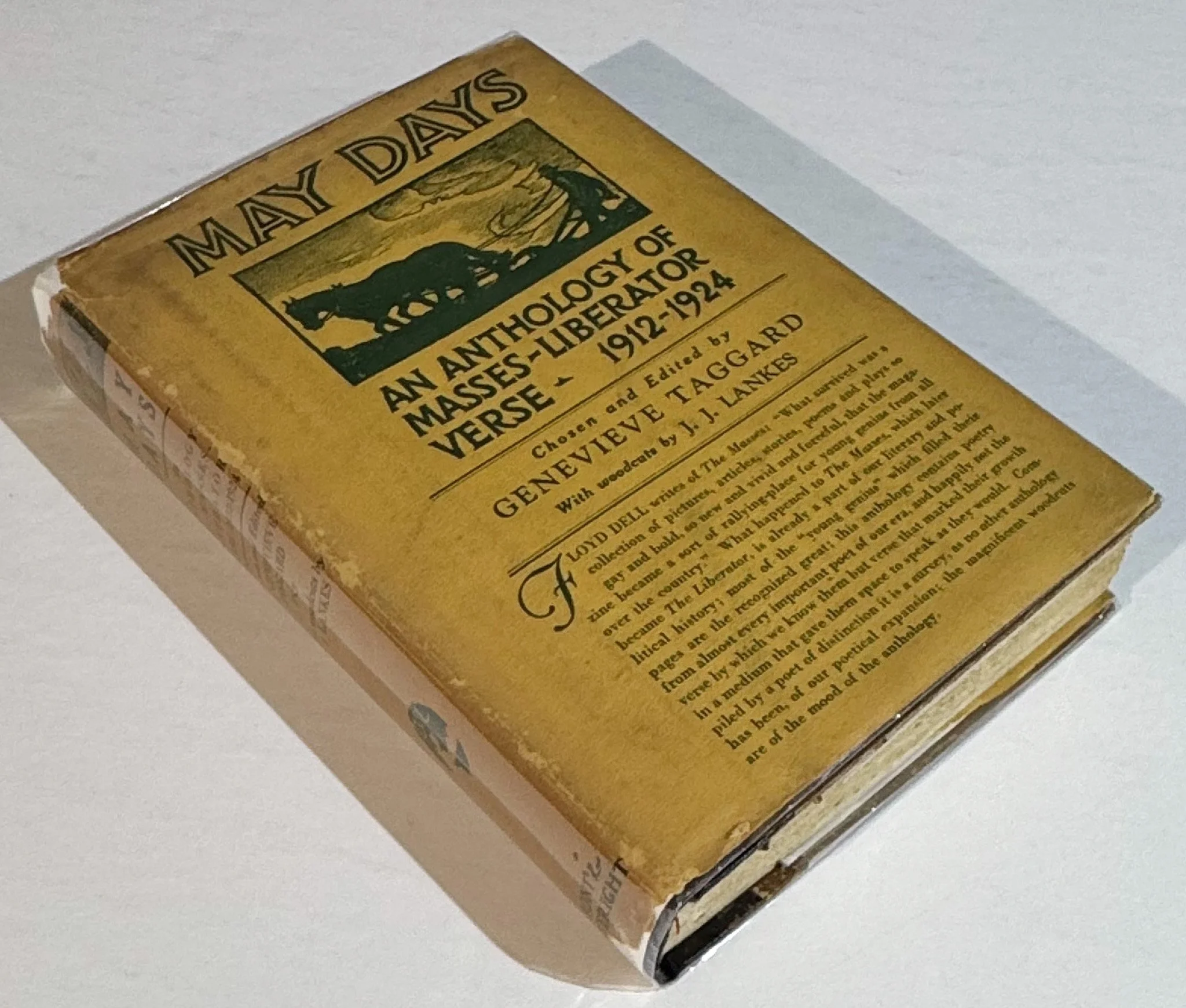
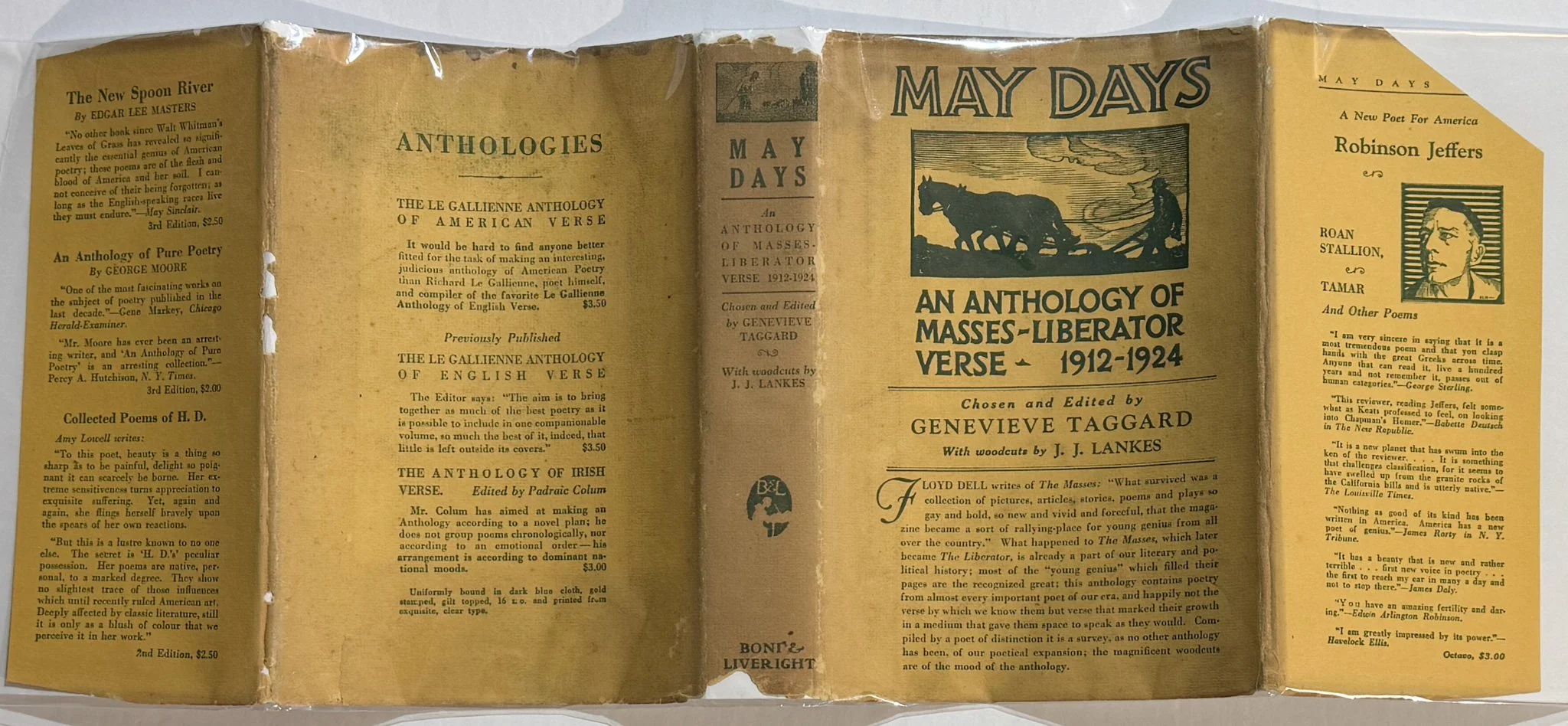
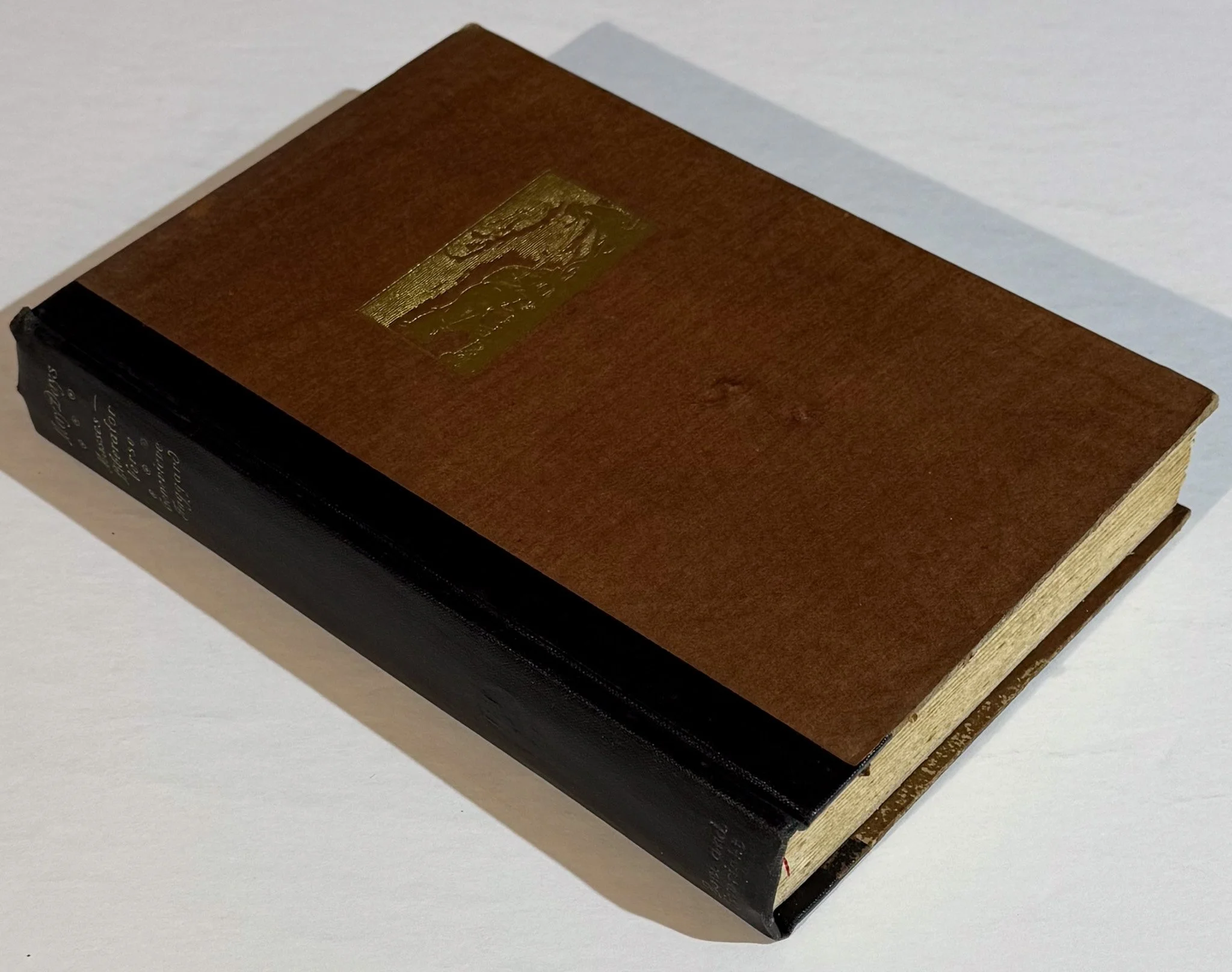
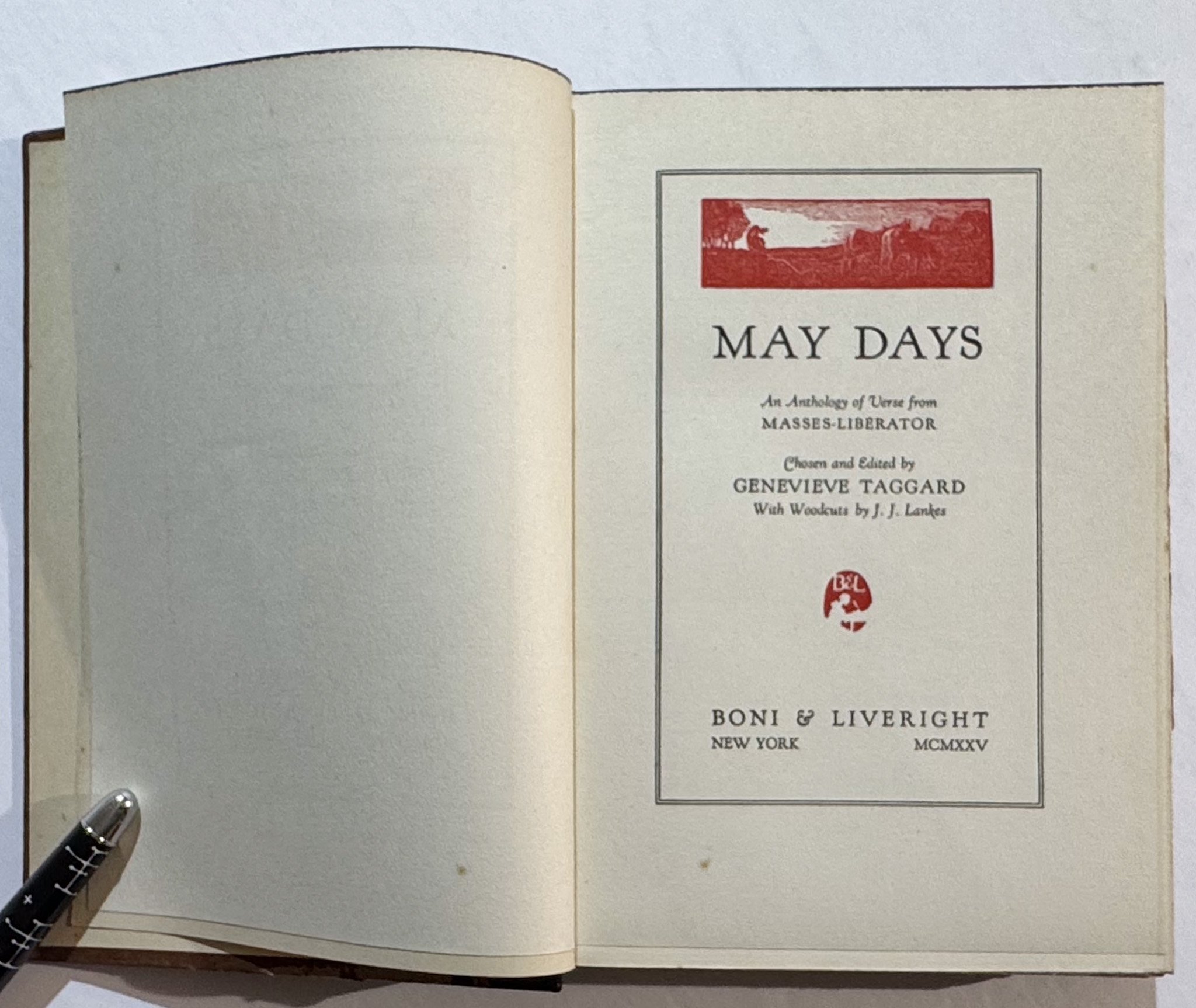
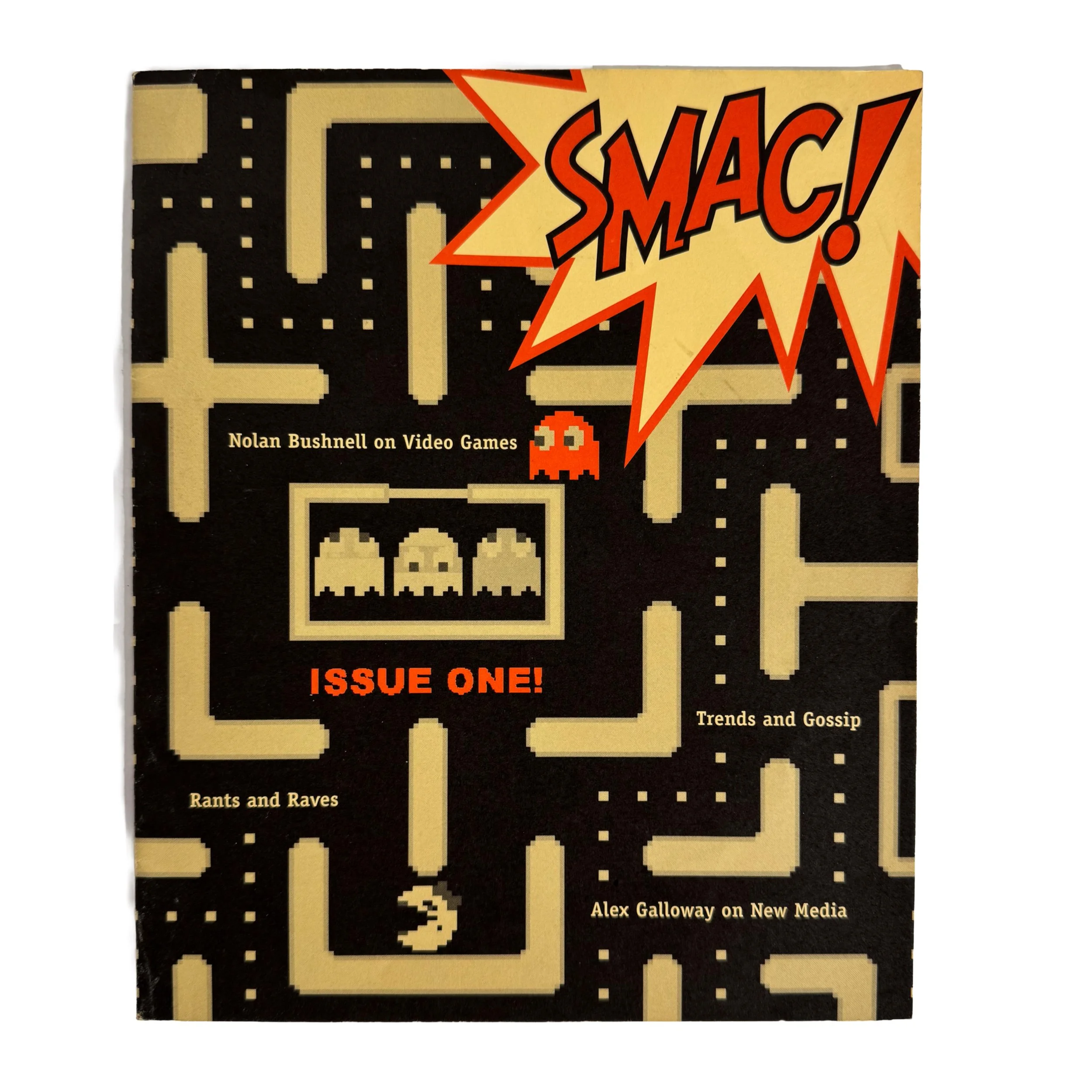 Image 1 of 10
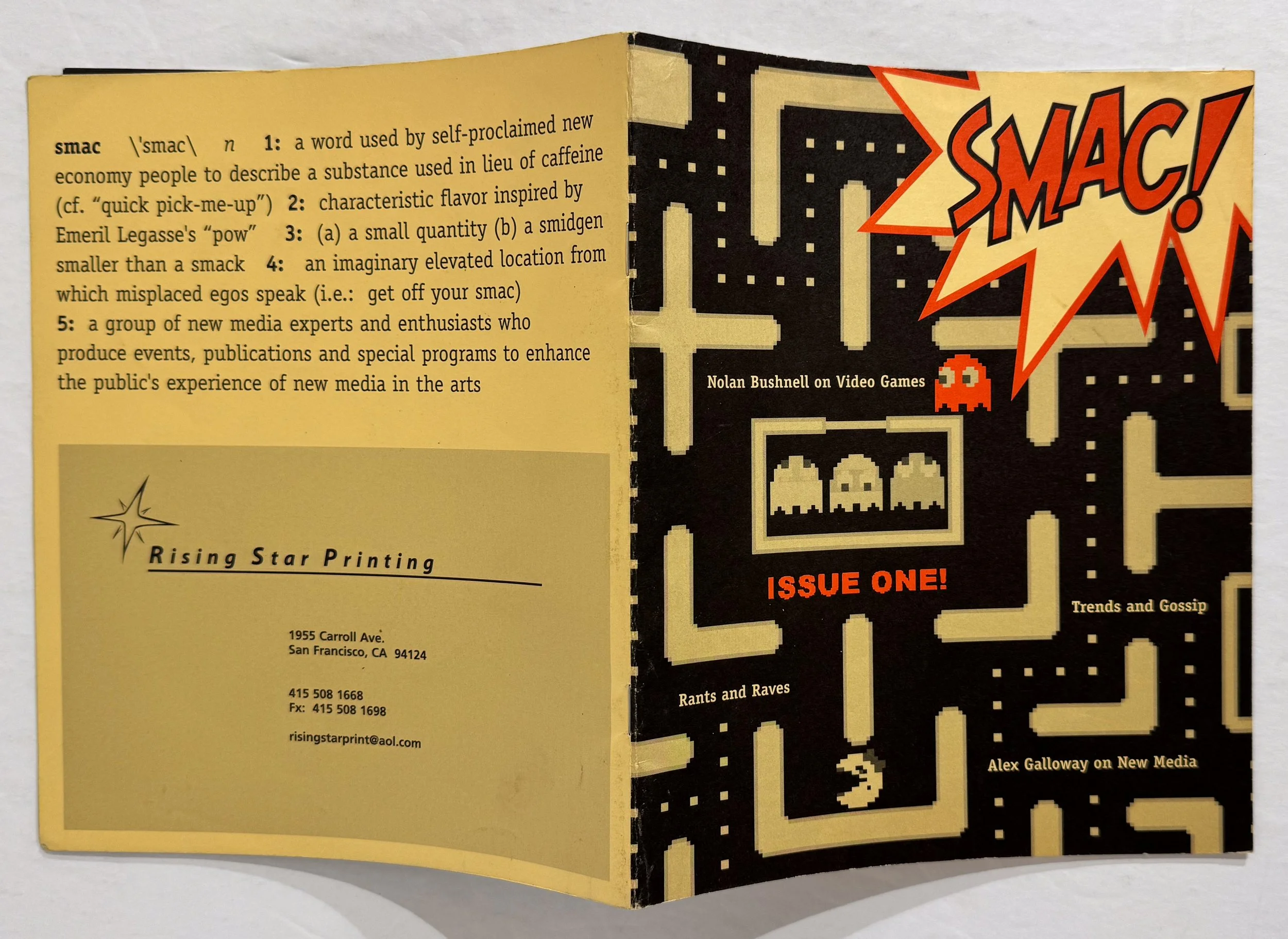 Image 2 of 10
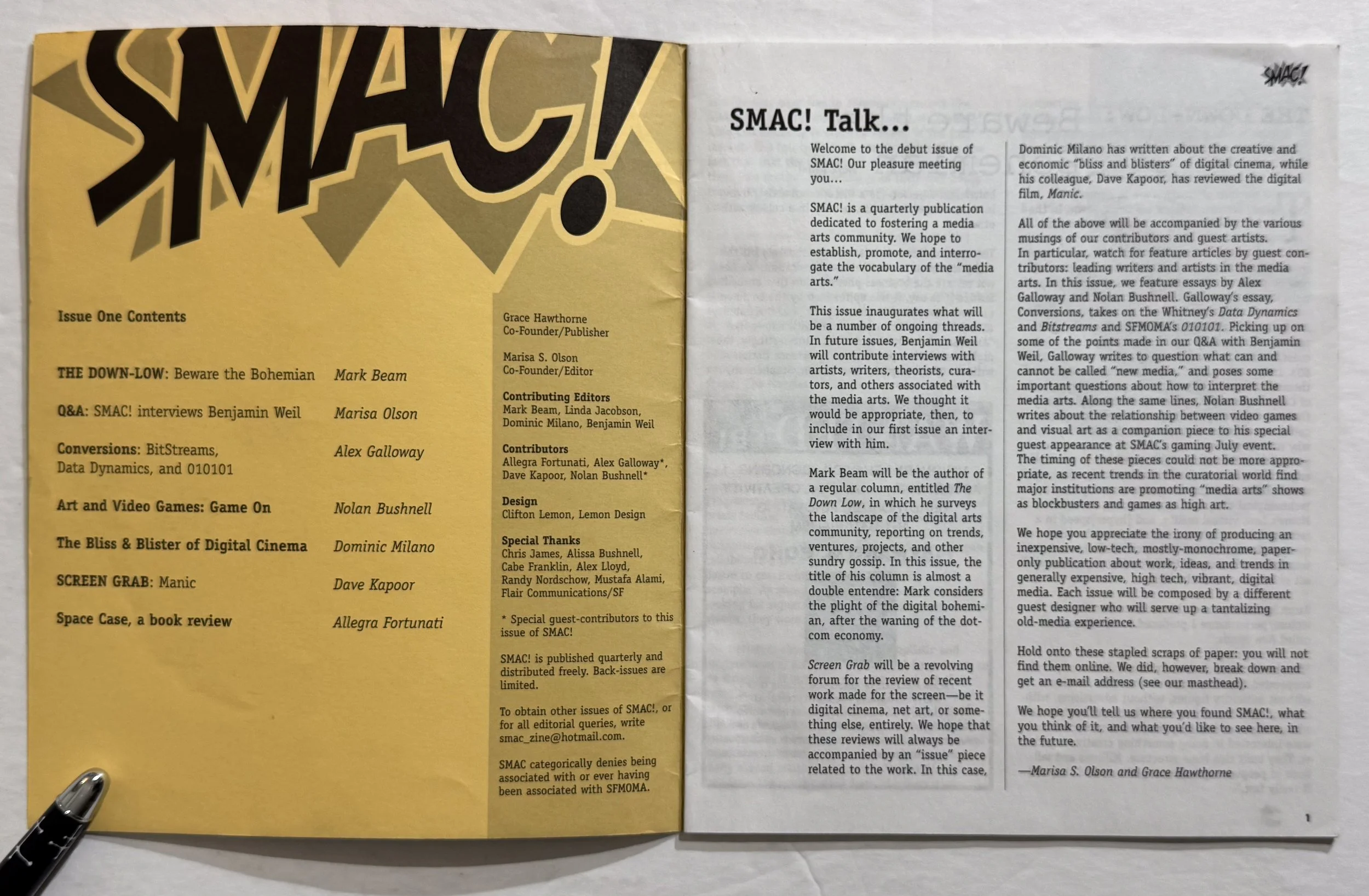 Image 3 of 10
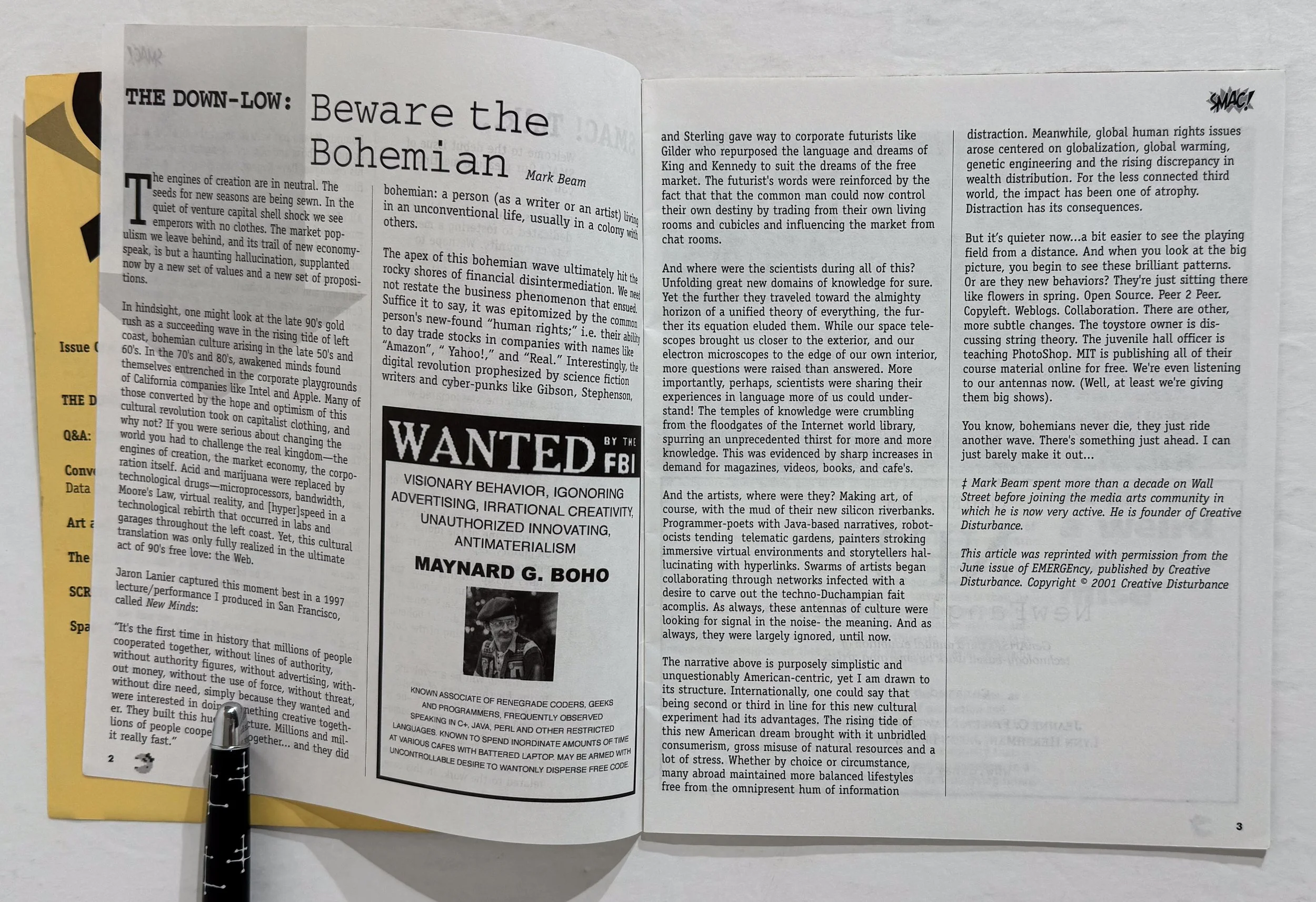 Image 4 of 10
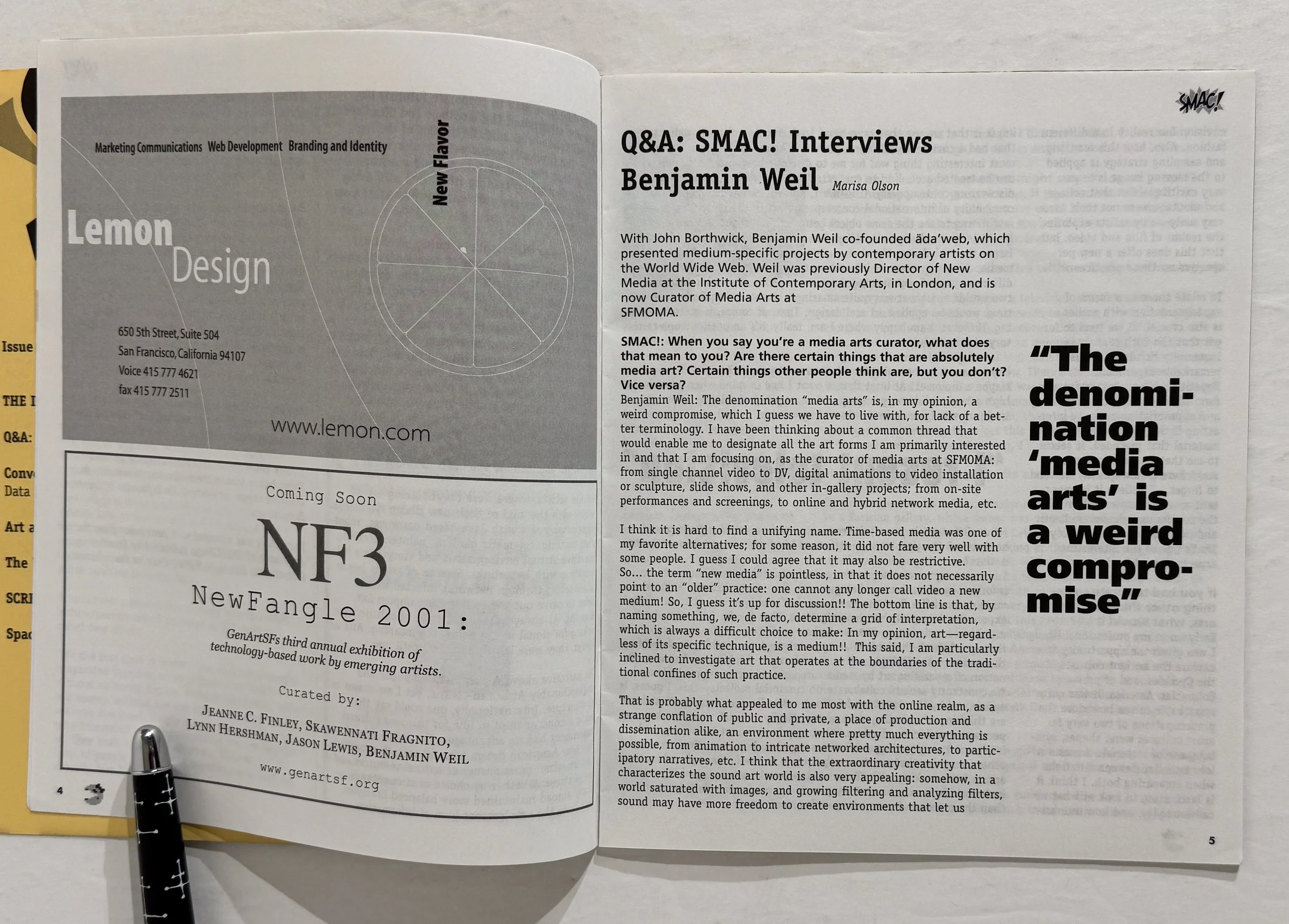 Image 5 of 10
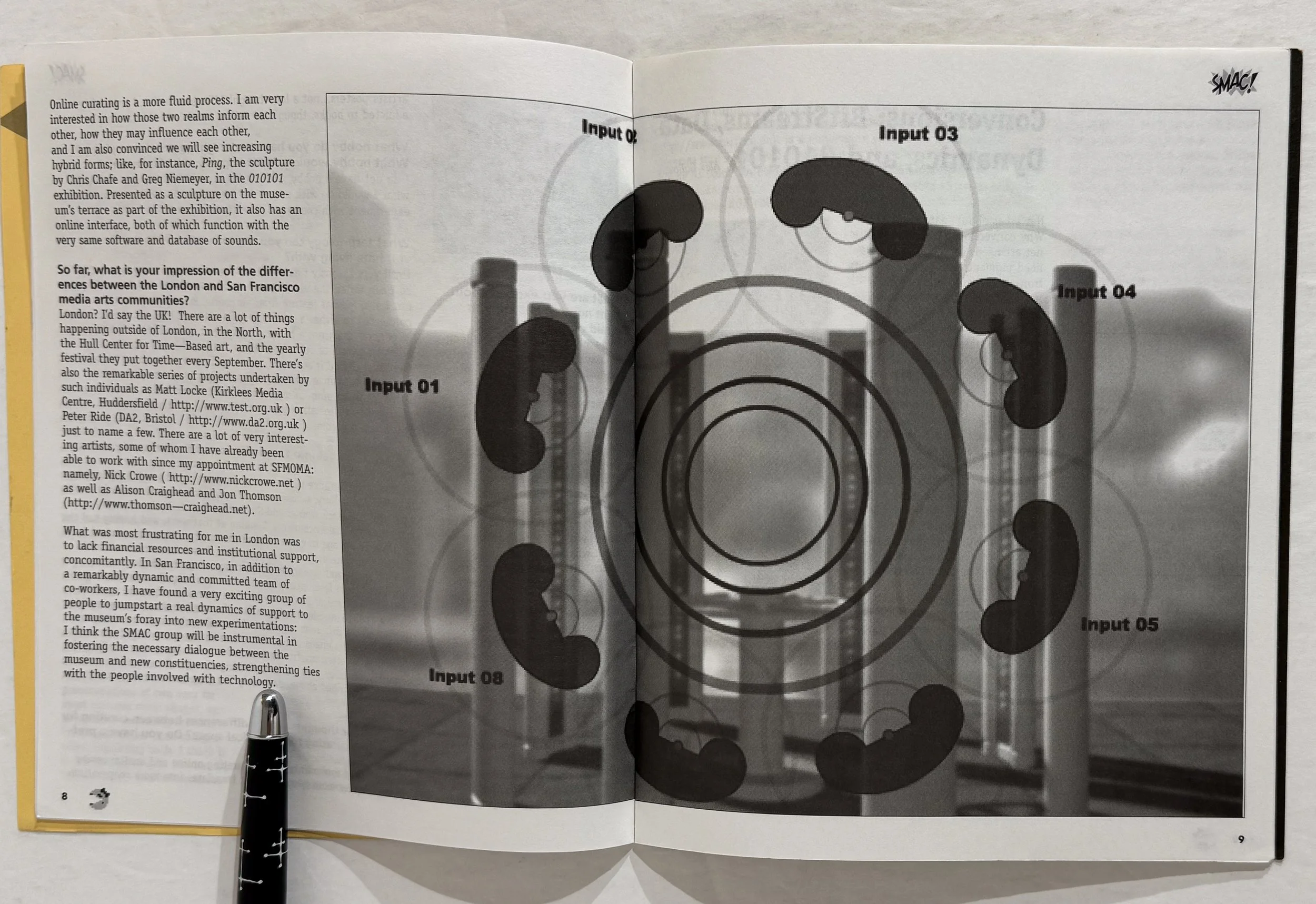 Image 6 of 10
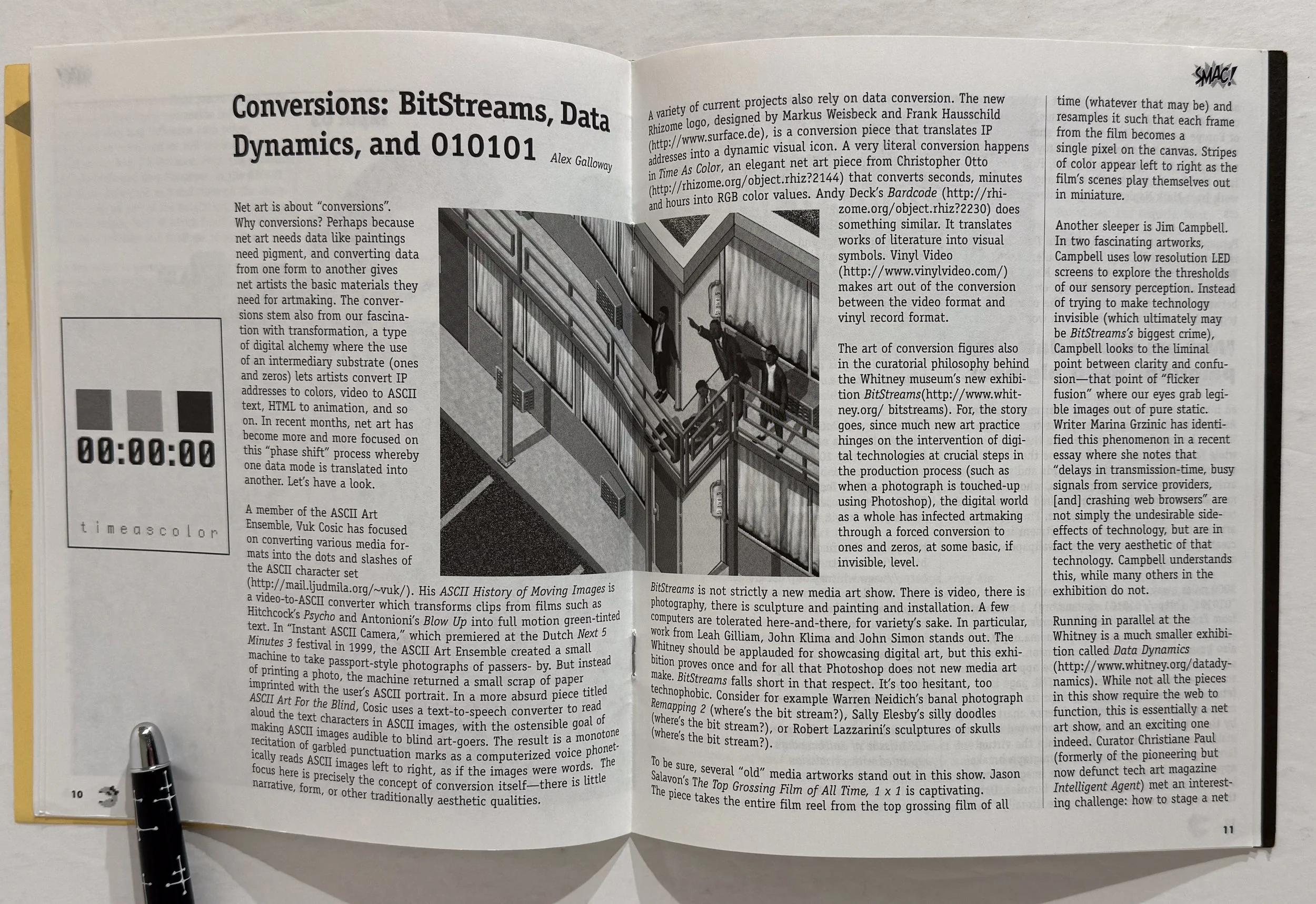 Image 7 of 10
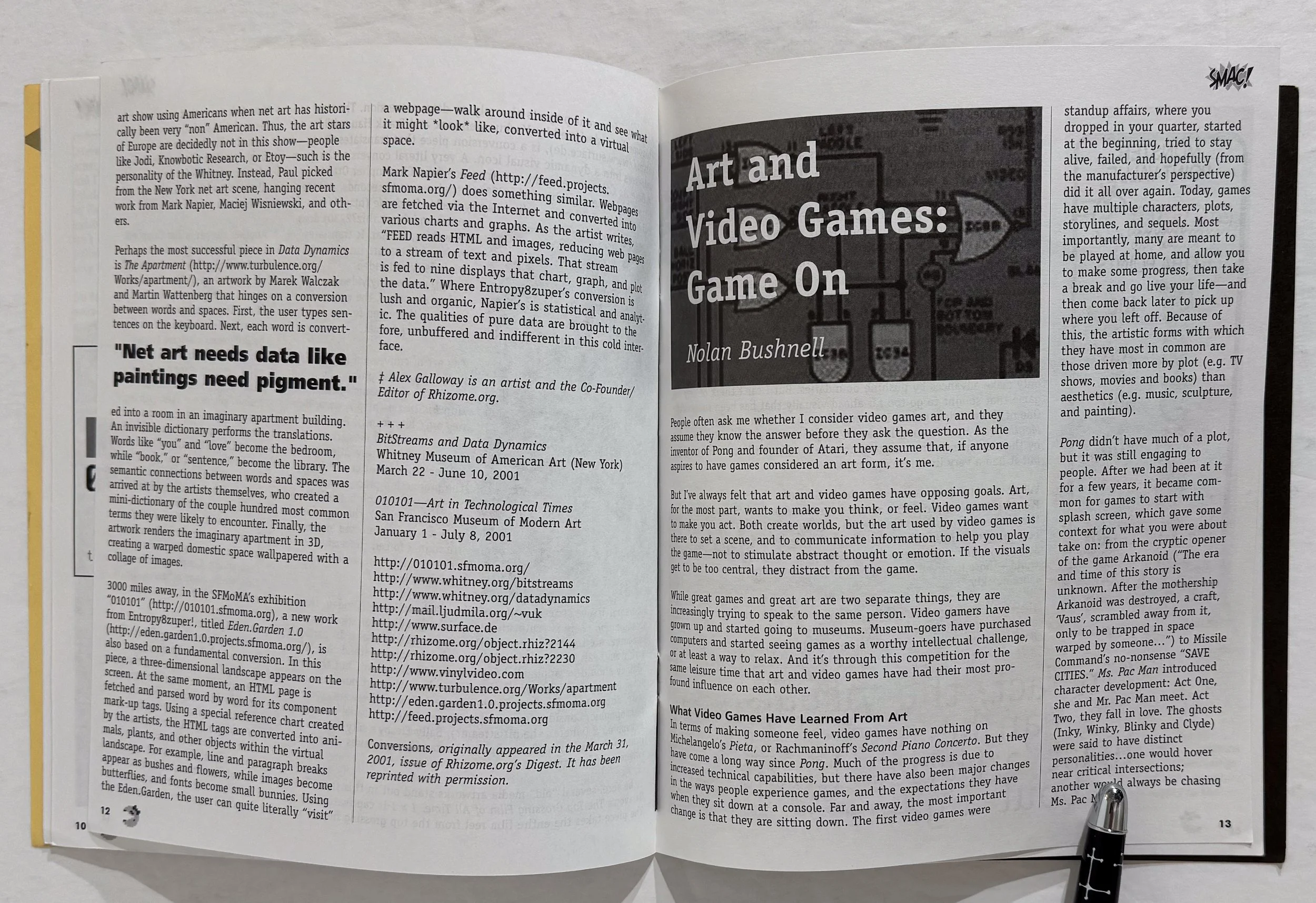 Image 8 of 10
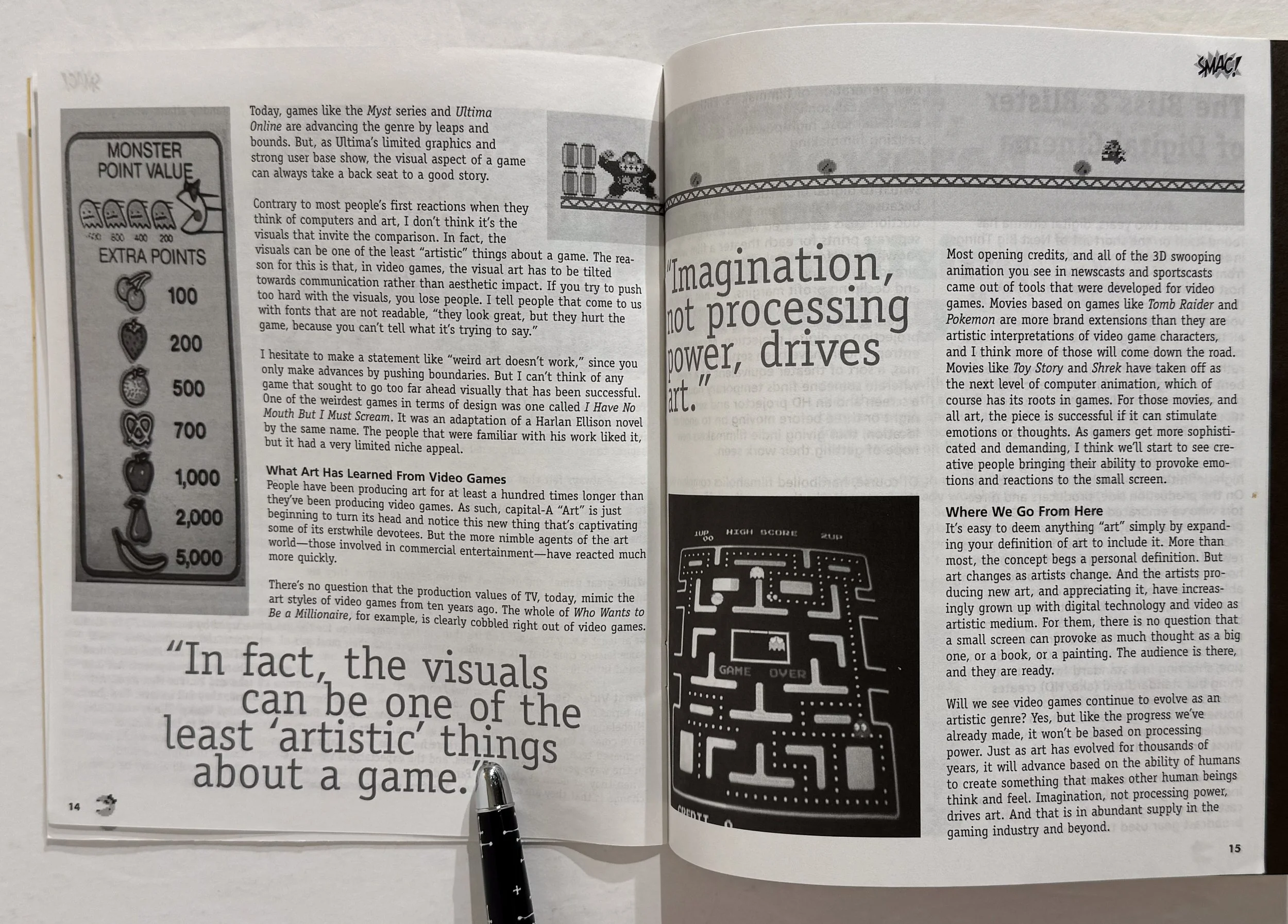 Image 9 of 10
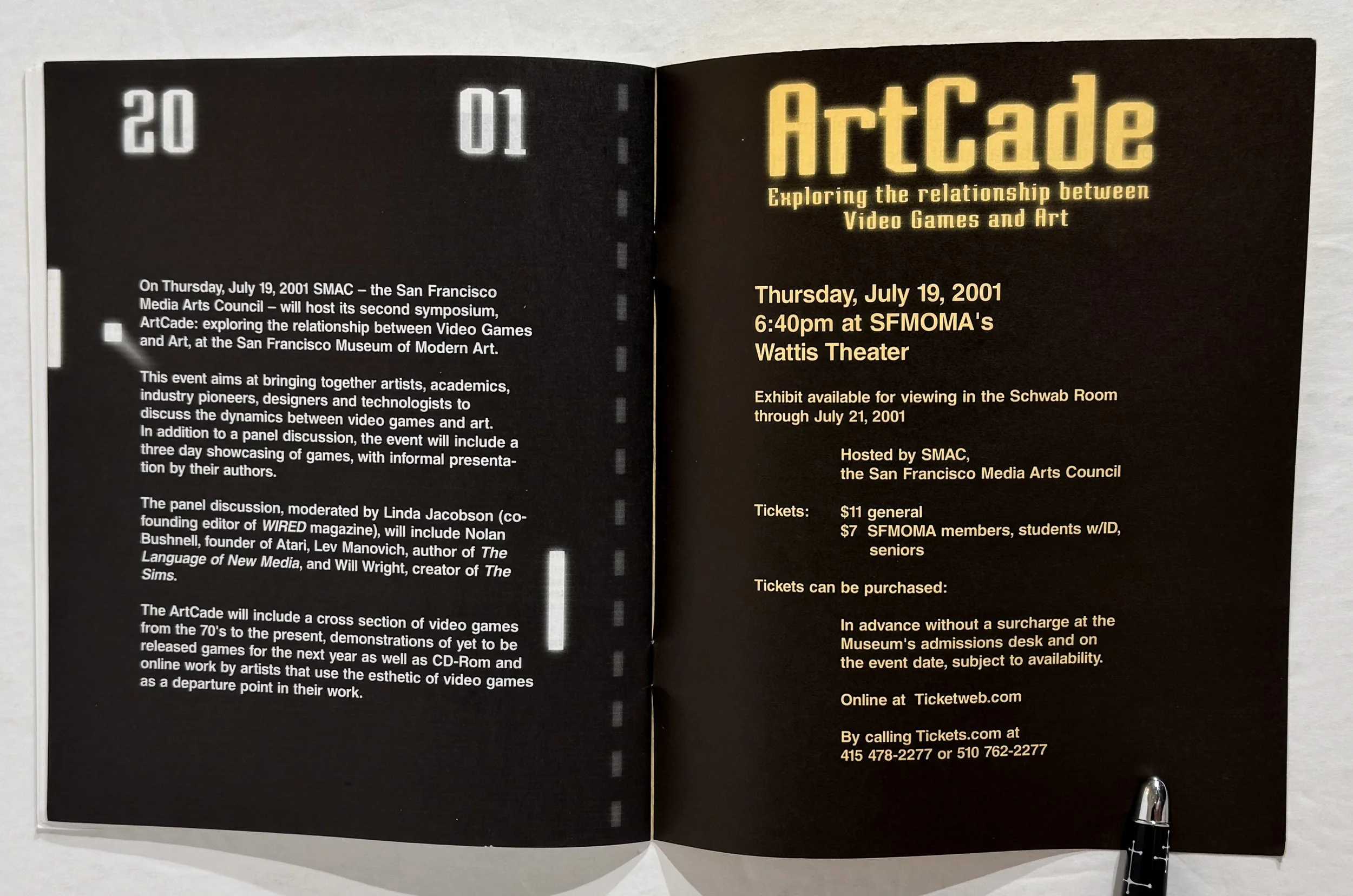 Image 10 of 10