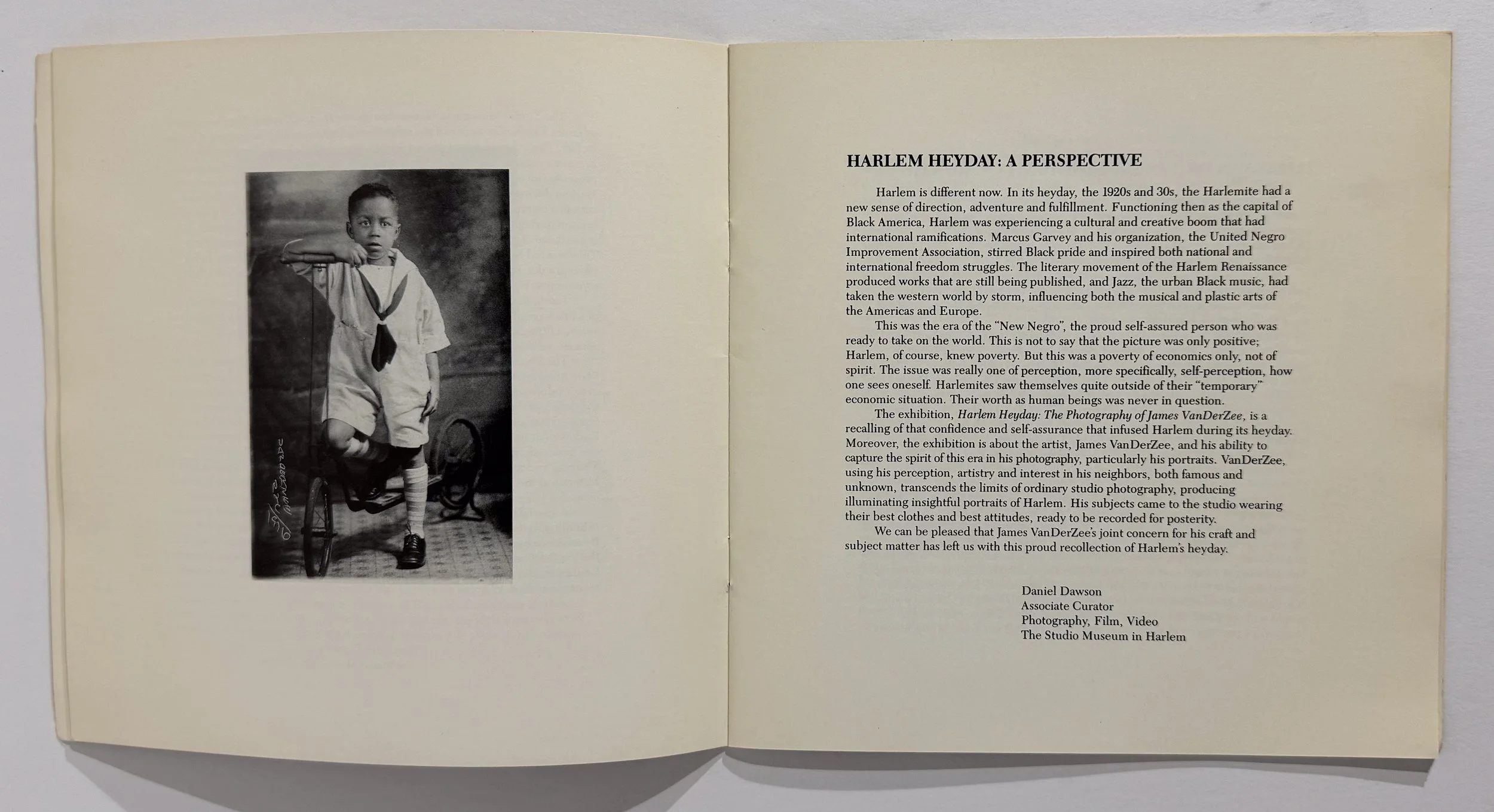
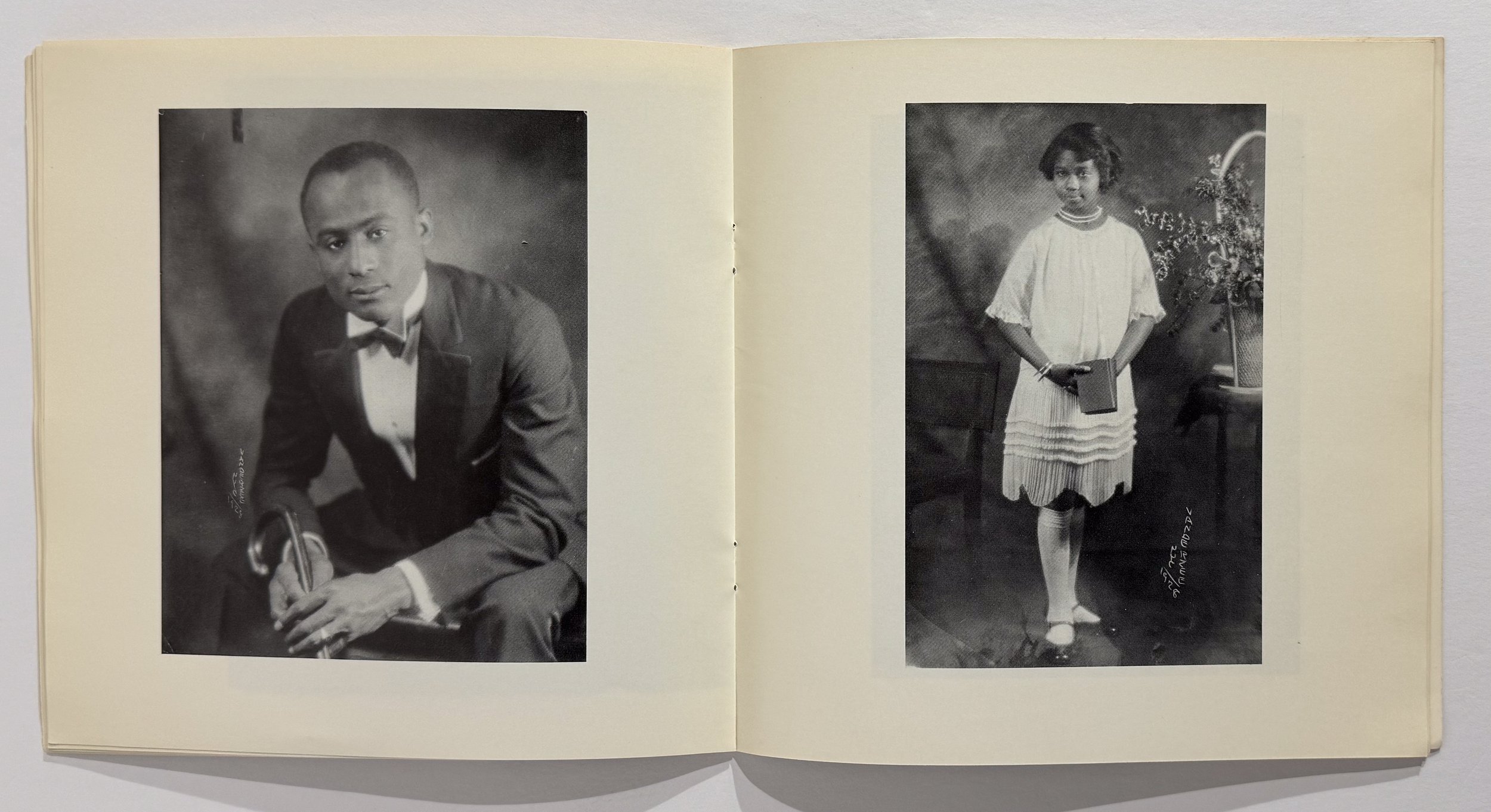
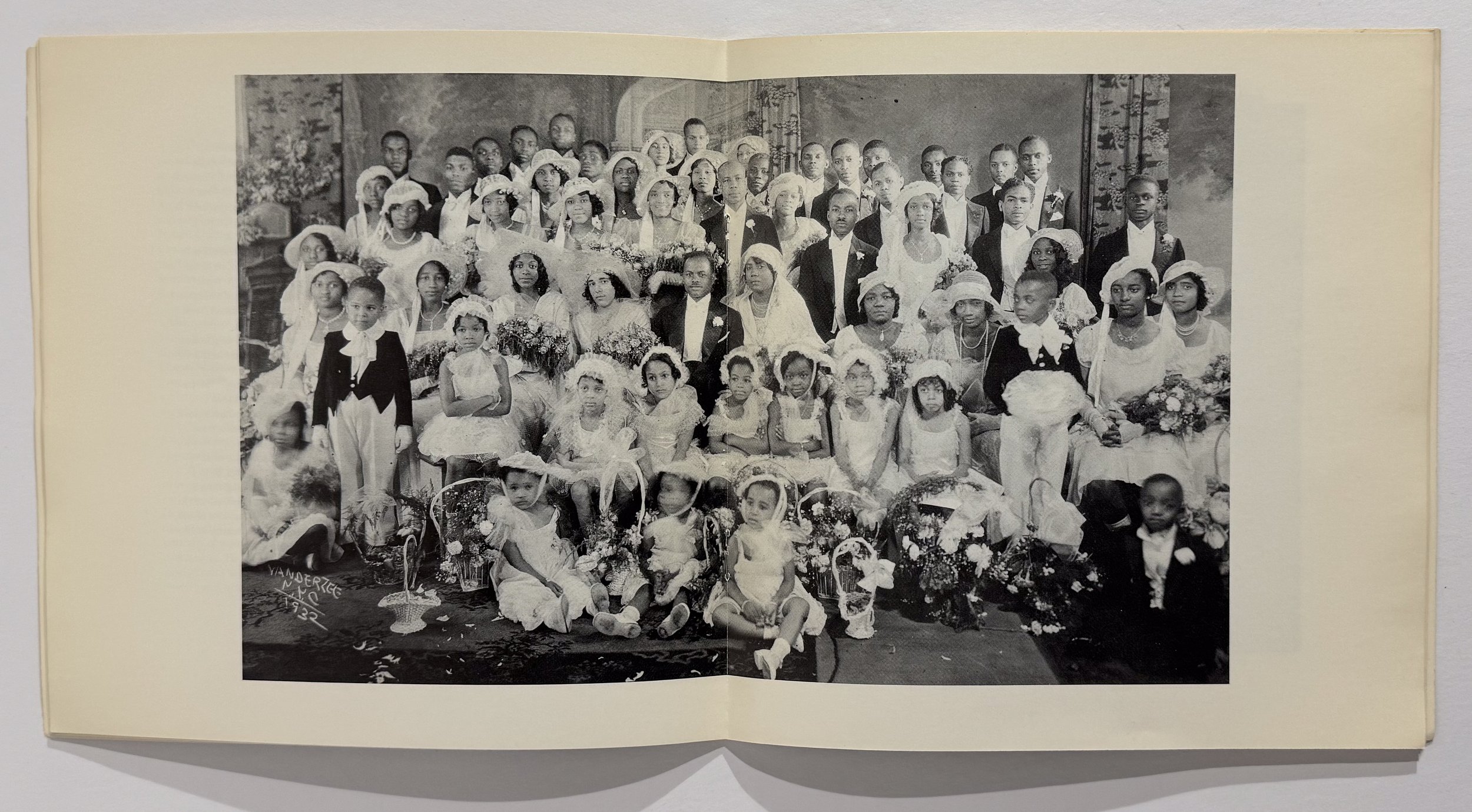
Catalog accompanying an exhibition held at the Fogg Art Museum, Harvard University in 1936. 8vo (6 × 9.25 inches), printed wrappers, 55 pages followed by 20 pages of black-and -white plates. Ownership signature of midwestern museum director and educator Siegfried R. Weng to upper front wrapper. With the printed calling card of Paul J. Sachs laid in, inscribed by Sachs: “This catalogue has been produced by my students in the 1936 ‘Museum Class’ / With my compliments / PJS.”
An exceptional Paul J. Sachs presentation copy to his former Museum Course student Siegfried R. Weng, documenting one of the formative networks in the professionalization of the American museum.
Organized at Harvard's Fogg Art Museum in 1936, Style and Technique examined the relationship between artistic conception and the materials and processes through which art is made. Rather than treating technique as subordinate to stylistic history, the exhibition proposed that materials and working methods themselves participate in the formation of style. The introduction, signed “H.J.” by the young H. W. Janson, considers how innovations in materials and technique can facilitate changes in artistic form. The plates are correspondingly organized around technical categories including tempera and oil painting. An early American publication by Janson, later one of the most influential art historians of the postwar period.
The catalogue was produced by students in the celebrated Museum Course of Paul J. Sachs, as Sachs explicitly records on the accompanying card. Professor and associate director of the Fogg, Sachs pioneered a model of museum training combining art history and connoisseurship with collecting, exhibition organization and practical museum administration. His students became an influential generation of American curators and museum directors.
The recipient, Siegfried R. Weng (1904–2008), was himself a product of this program. After receiving B.A. and M.A. degrees from the University of Chicago in 1927 and 1928, Weng studied at Harvard in 1929 specifically in preparation for museum work. The connection is confirmed by the Harvard Art Museums Archives, where the Papers of Paul J. Sachs contain a dedicated file catalogued “Weng, Siegfried — Museum Course, [1928–1946].” That same year, at only twenty-five, Weng became director of the Dayton Art Institute, beginning a four-decade career as a museum director.
Sachs's inscription therefore has unusual documentary force: he was presenting a former Museum Course student with the work of the next generation of his students, explicitly identifying the catalogue as having been “produced by my students in the 1936 ‘Museum Class.’”
The chronology also intersects directly with the emergence of the Museum of Modern Art. Weng's Harvard museum training in 1929 coincided with MoMA's founding, in which Sachs participated as a founding trustee. Sachs was instrumental in recommending another of his Harvard students, Alfred H. Barr, Jr., as director of the new museum; Barr himself appears in the acknowledgments to Style and Technique. The volume thus brings together two branches of Sachs's influence: Barr and the developing MoMA on one hand, and Weng and the professionalization of the regional American museum on the other.
A compelling association copy at the intersection of museum studies, curatorial education, technical art history and the emergence of the modern American museum profession. Rear hinge weakened. Light bumping and rubbing to extremities. Mild damp staining to top corner of plates; not affecting text.

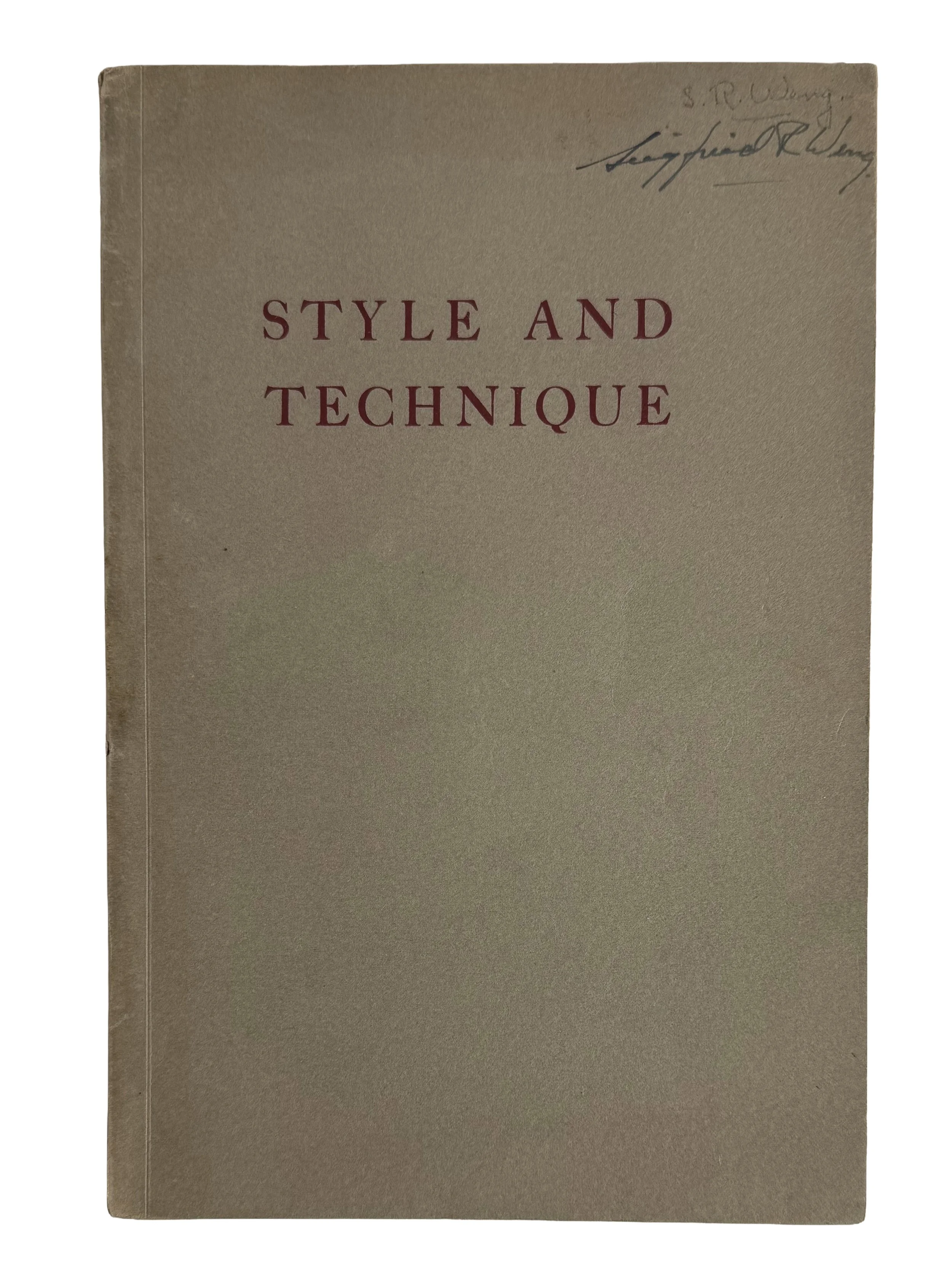 Image 1 of 11
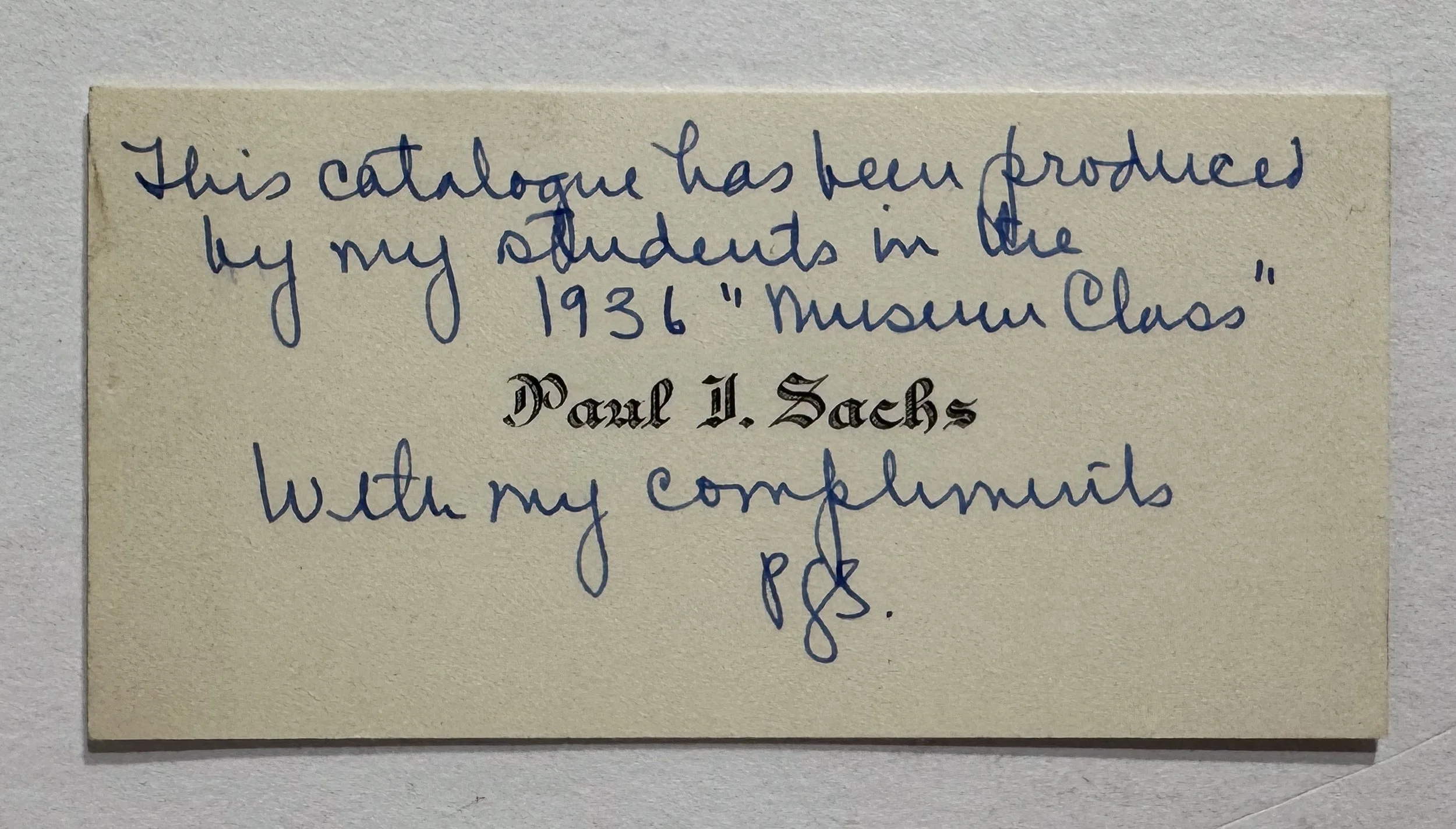 Image 2 of 11
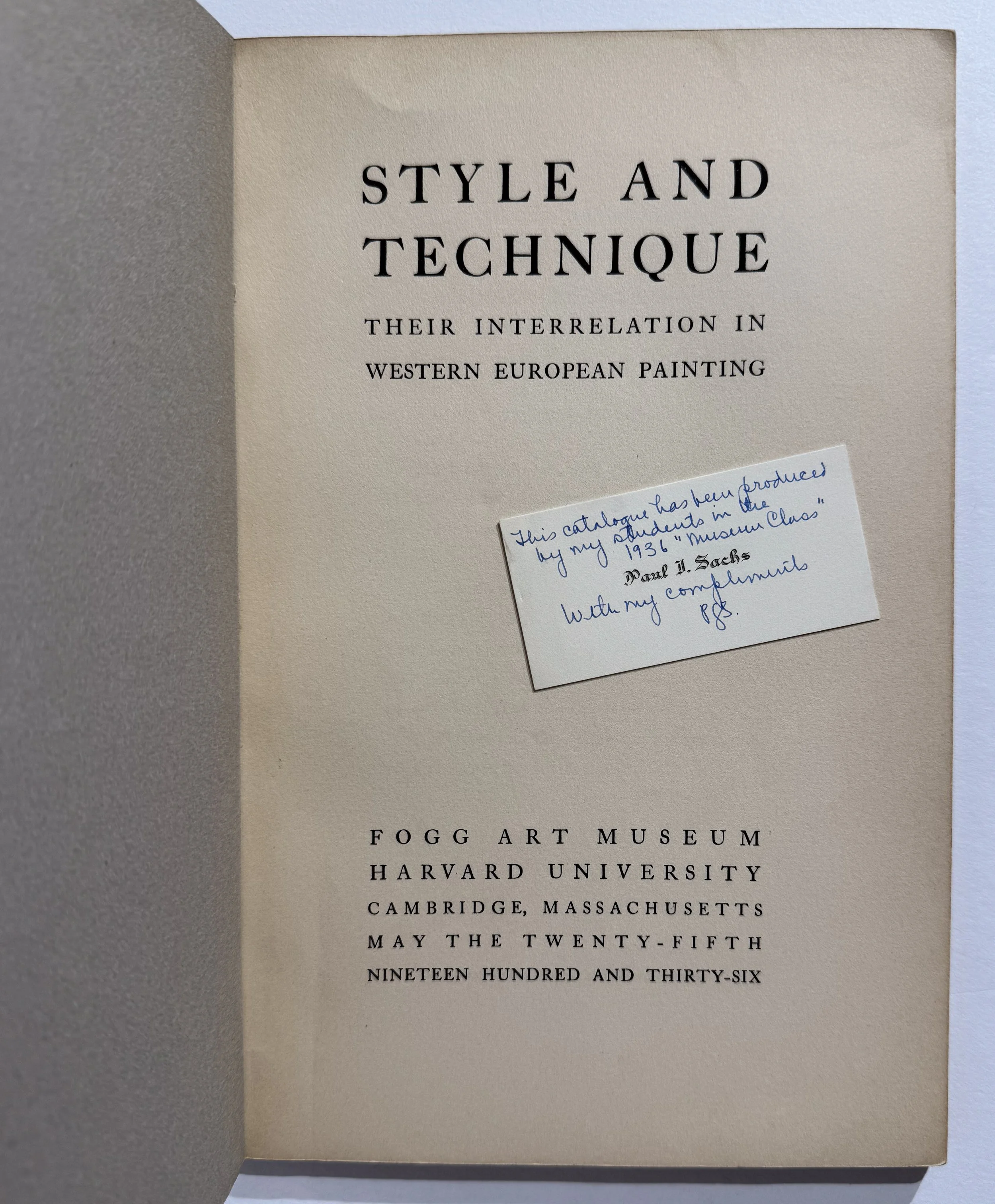 Image 3 of 11
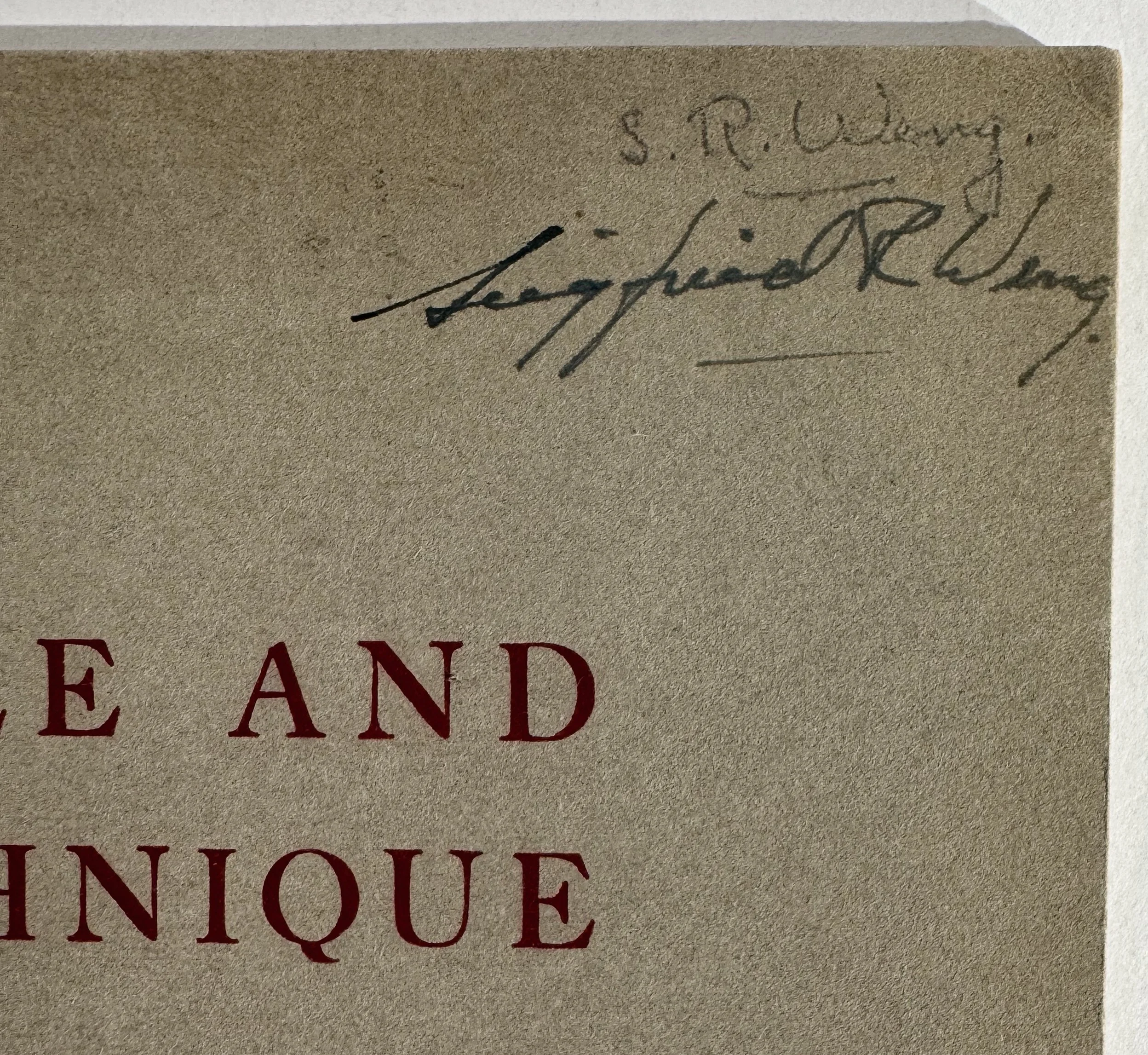 Image 4 of 11
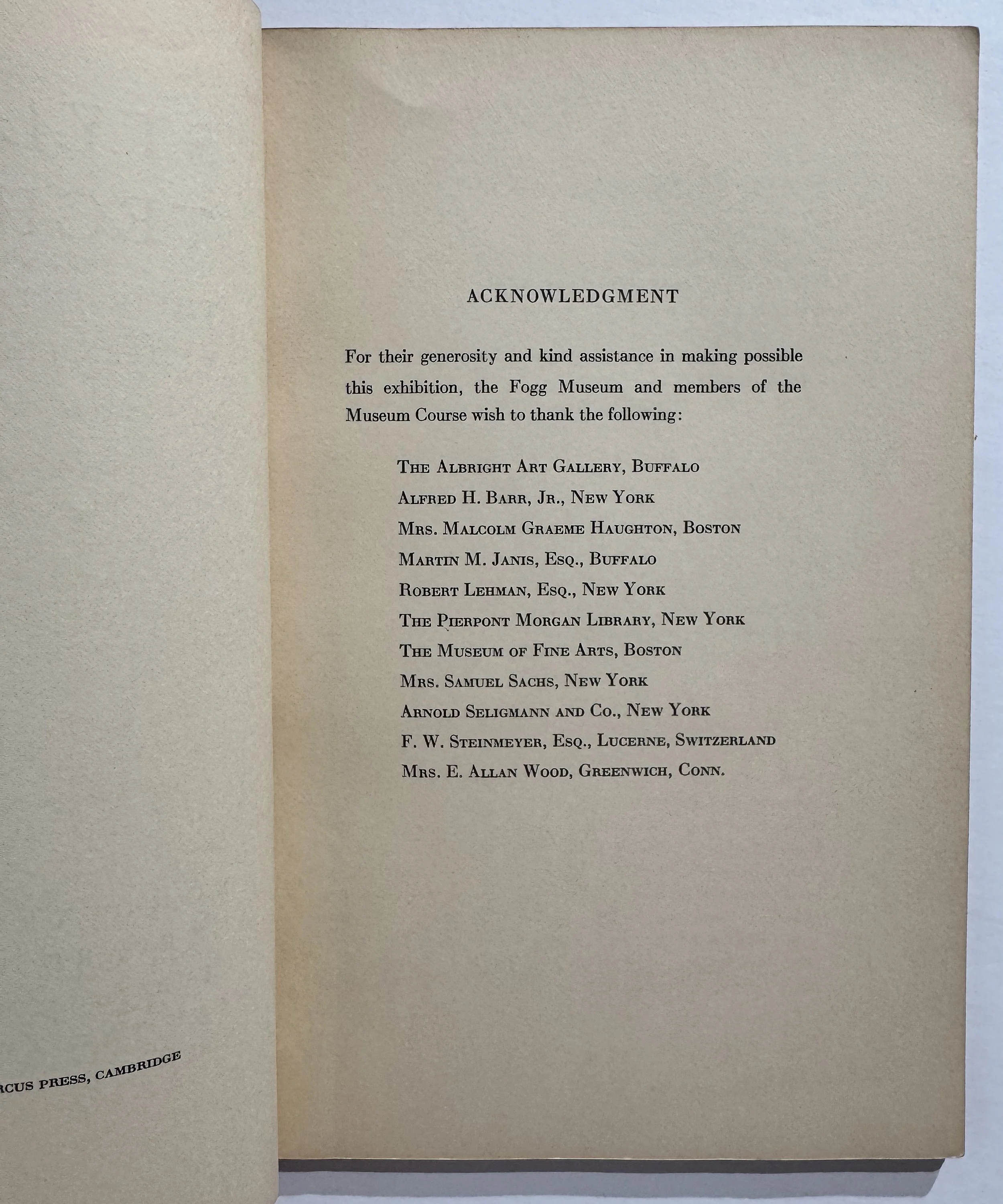 Image 5 of 11
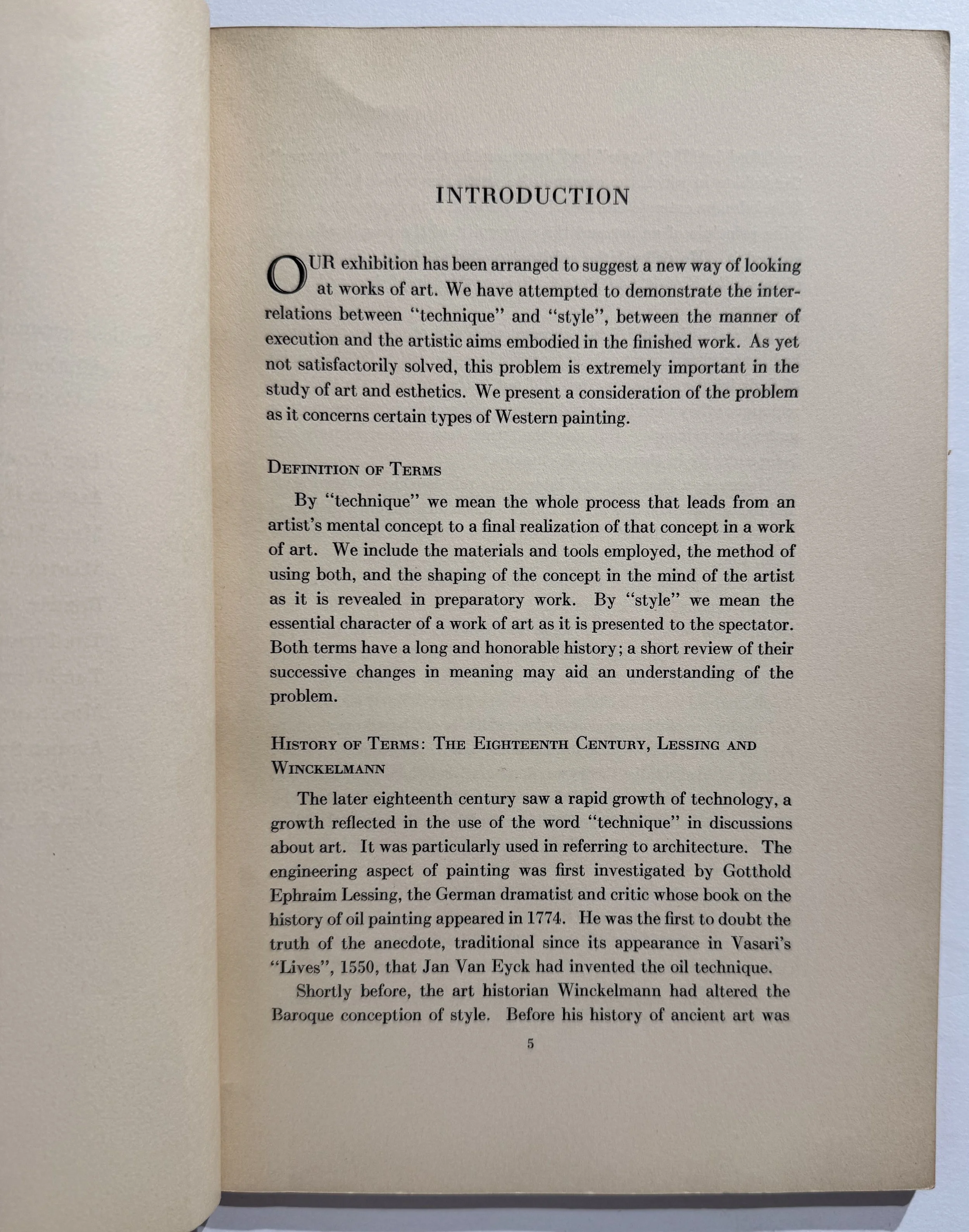 Image 6 of 11
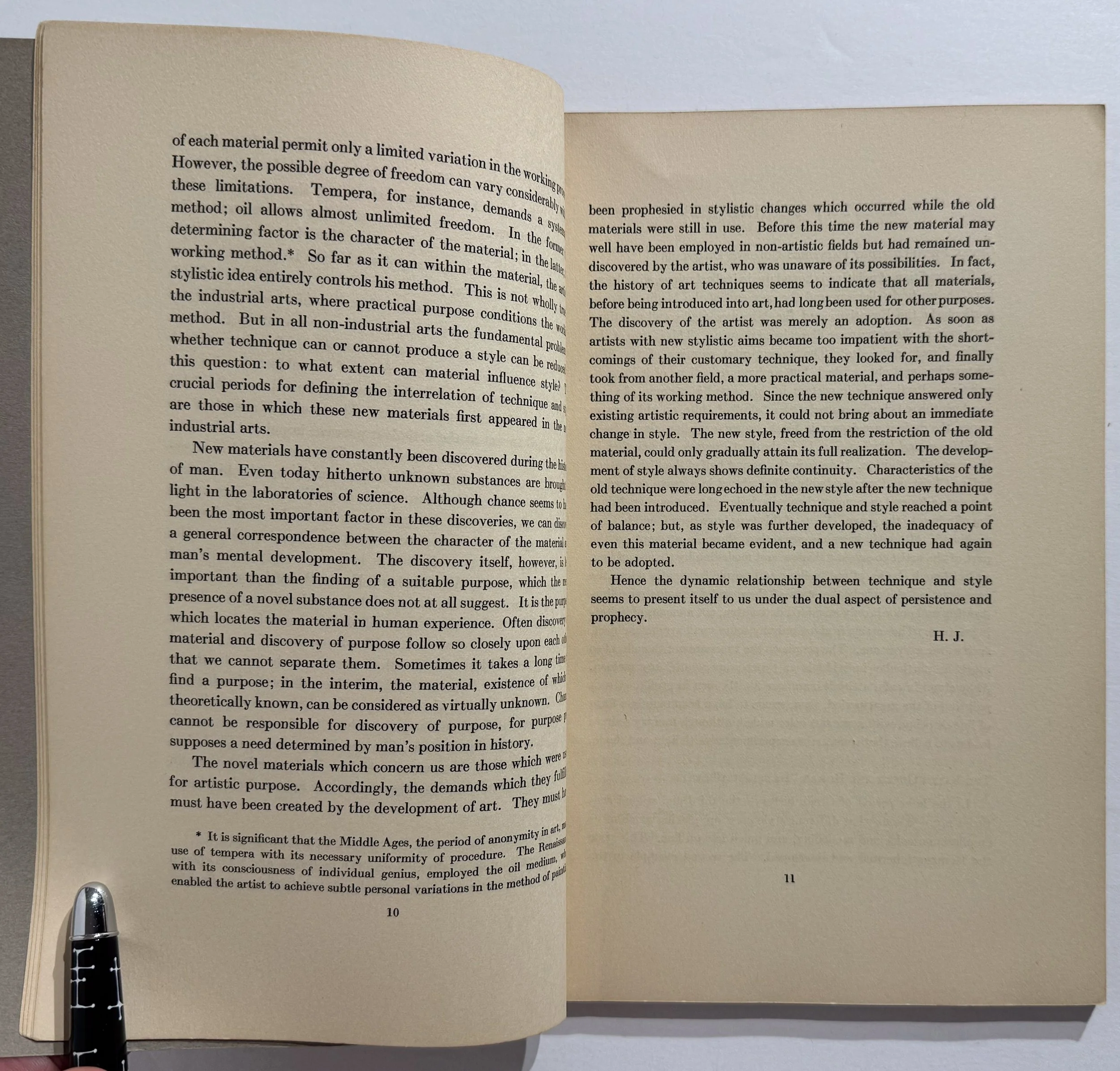 Image 7 of 11
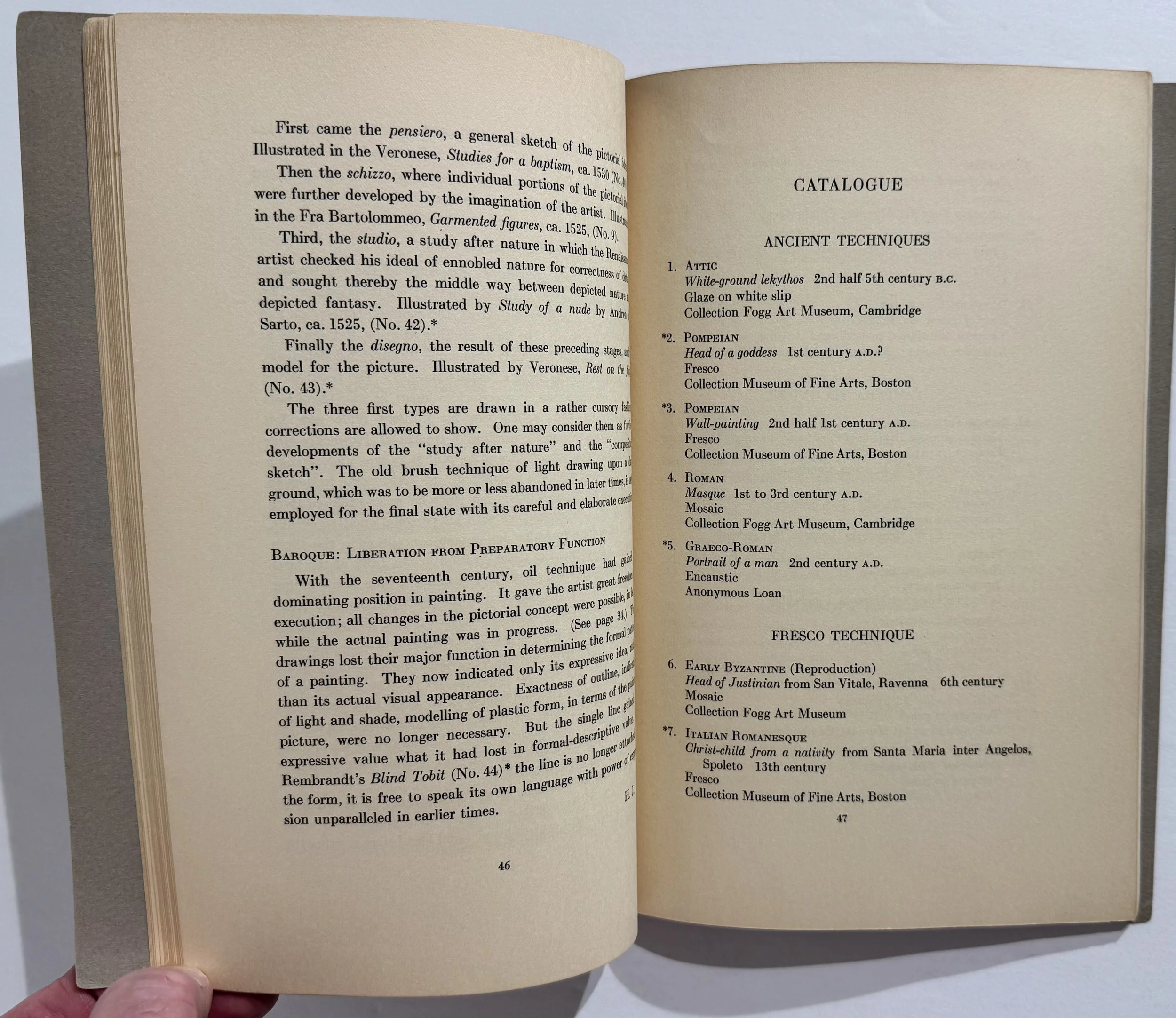 Image 8 of 11
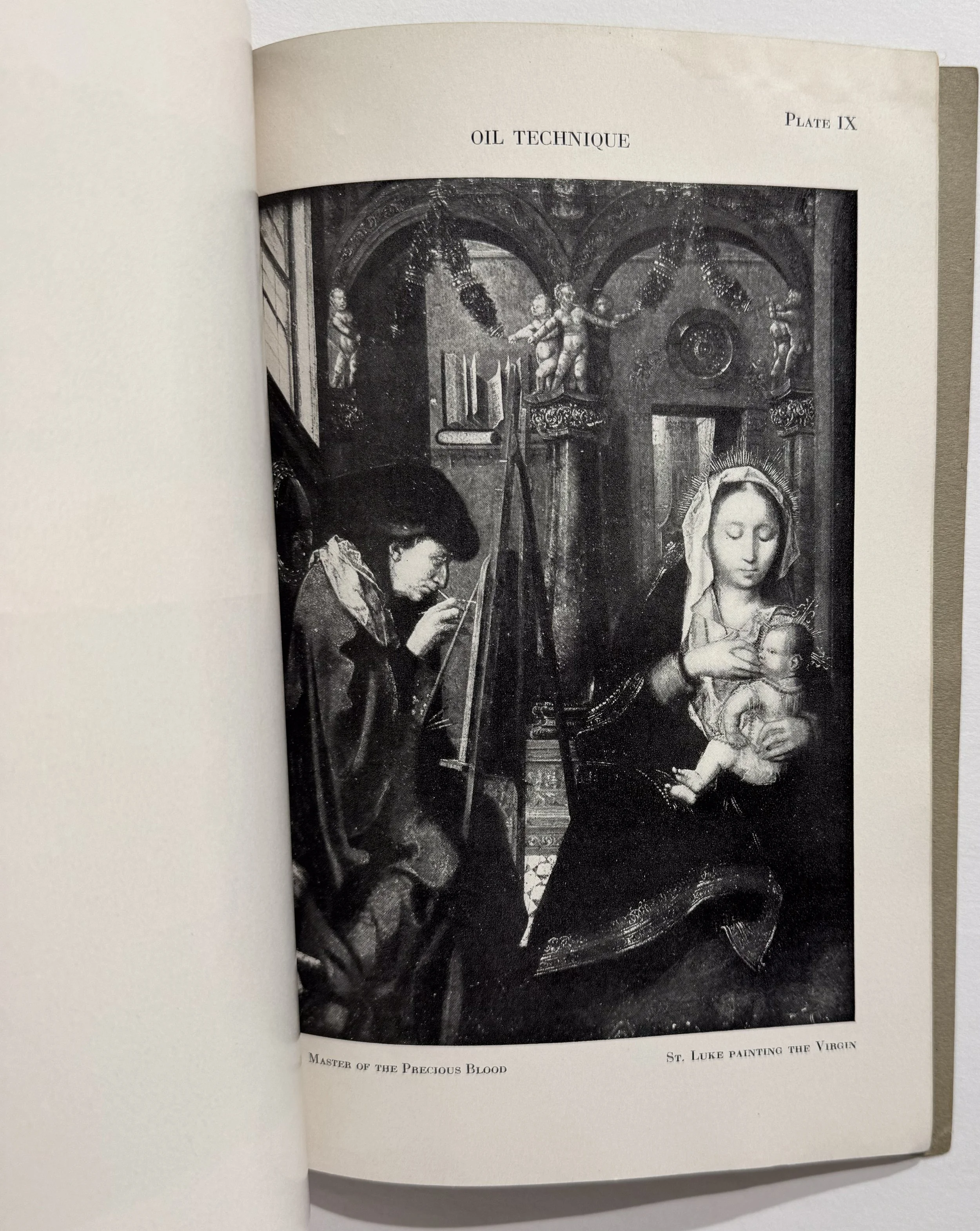 Image 9 of 11
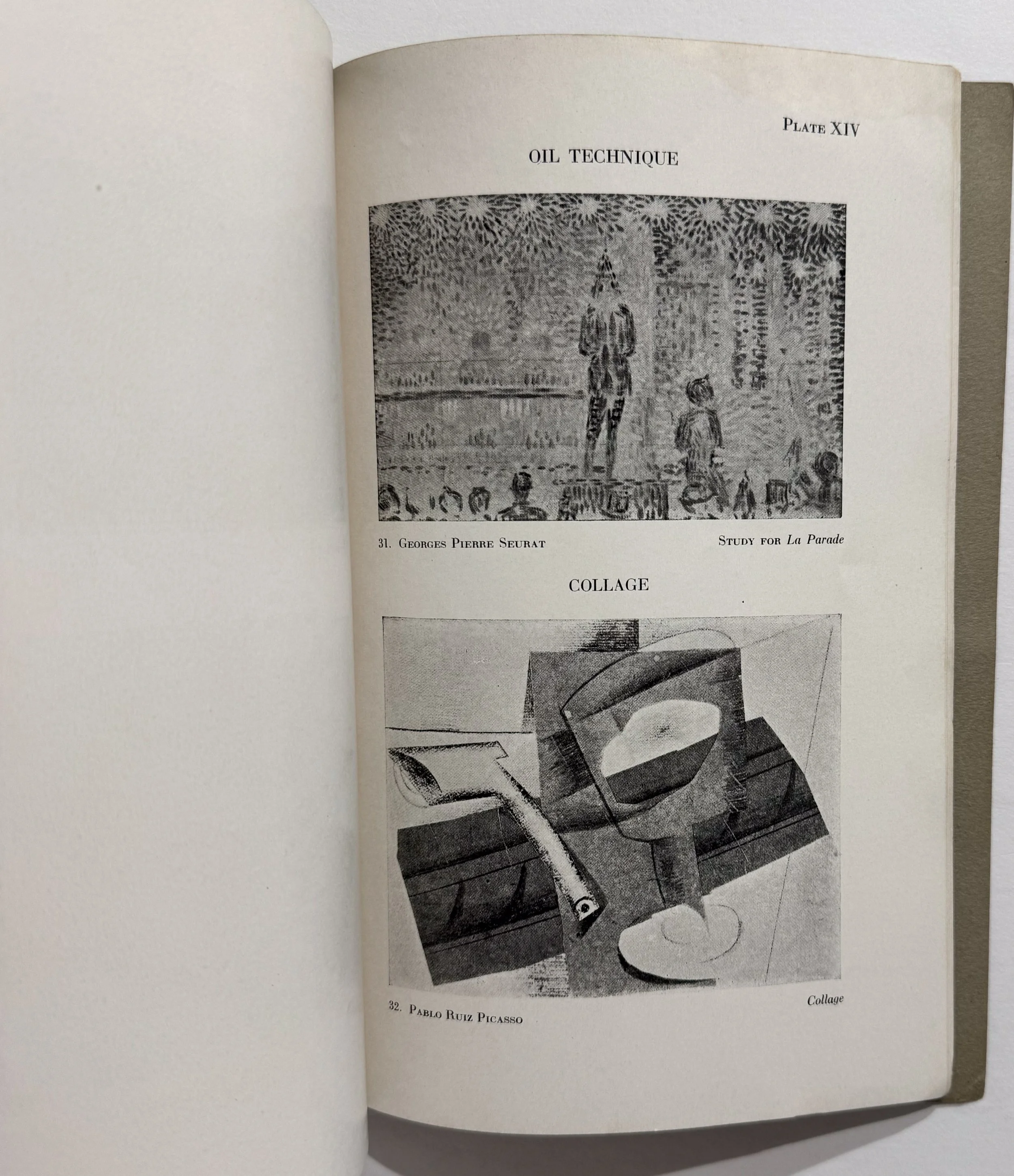 Image 10 of 11
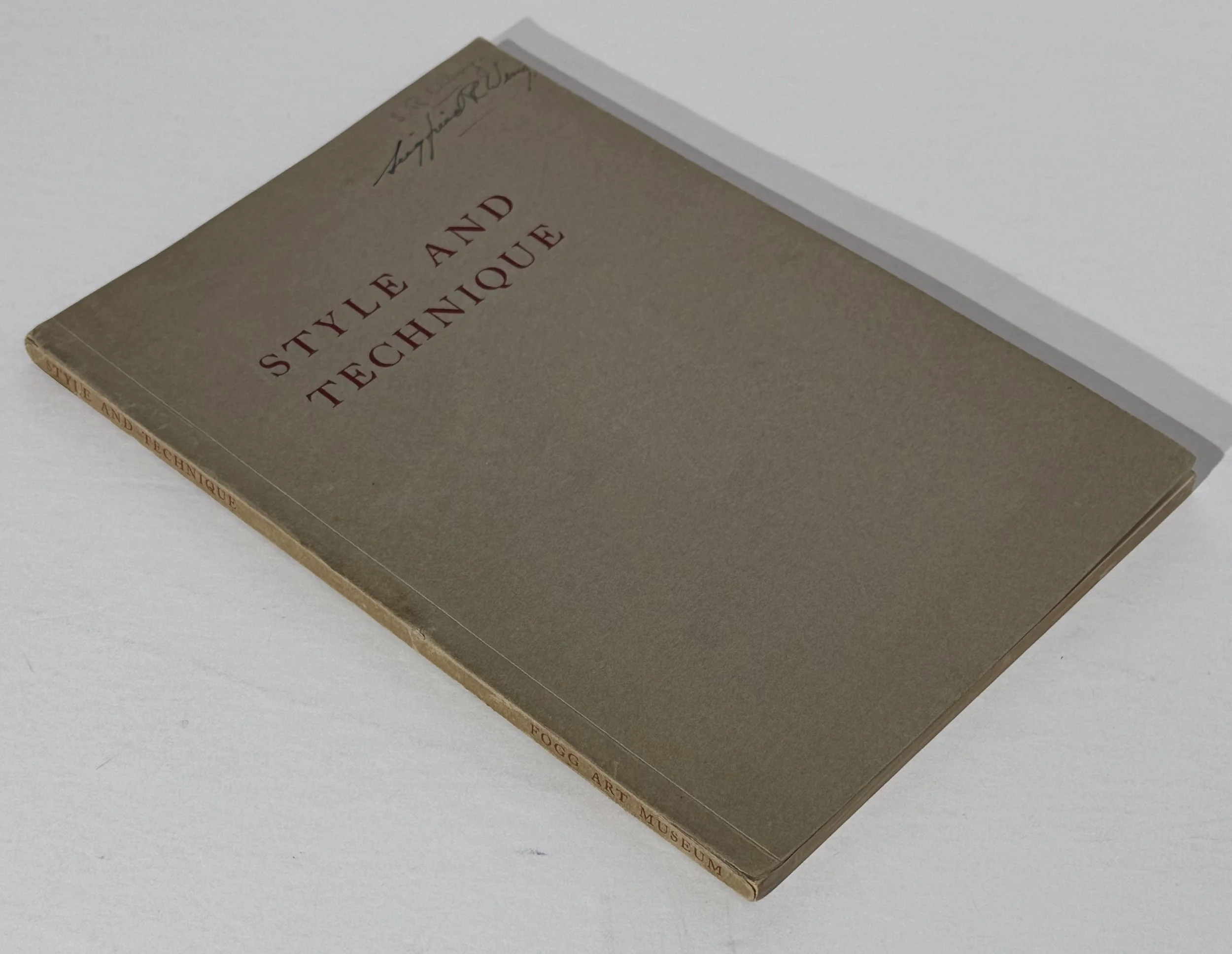 Image 11 of 11