One of 25 special-paper copies of John D. Graham’s influential modernist treatise, published in 1937 by Delphic Studios. Affectionately inscribed in the year of publication to “dear and loved friends Blanche and Joe.” Copy no. 4 of 25 on papier blanc helio, from a total edition of 1,000, the remaining 975 printed on velin edition alfate. First edition, printed in France. Original printed wrappers, approximately 6 x 9.5 inches; black-and-white illustrations. Inscribed on the half-title, signed “Graham,” and dated XXXVII [1937].
An ambitious attempt to articulate the principles of art at a formative moment in American modernism. Organized as a sequence of questions and answers, Graham’s text moves between abstraction, artistic judgment, the unconscious, and the relationship of form to historical and social conditions. Graham occupied an unusually consequential position within the New York avant-garde: painter, collector, interlocutor, and a conduit between European modernism and younger American artists. His friendships with Arshile Gorky, Willem de Kooning, and David Smith, and his subsequent promotion of Jackson Pollock and Lee Krasner, place this publication within the intellectual prehistory of the New York School. Its interest lies both in the ideas it advances and in its record of the artistic conversations from which a new American painting would emerge.
The wrappers lend the book a striking visual authority. Tall, tightly composed serif capitals dominate the upper portion, their pronounced contrasts of thick and thin strokes balanced by the author’s name across the foot. This copy’s special-paper limitation and warm contemporary inscription distinguish it from the regular issue; the recipients’ surnames have not been established.
Subsequently in the collection of Martin and Enid Packard, the noted collectors and museum supporters, with their ex-libris card, dated 1985, laid in. Minor rubbing and light bumping to extremities. Creasing to spine, with minor closed tears to spine ends. Hinges weakened, spine slightly detached from the top; binding otherwise sound. A handsome copy of a fragile production, without the original glassine.
One of 25 special-paper copies of John D. Graham’s influential modernist treatise, published in 1937 by Delphic Studios. Affectionately inscribed in the year of publication to “dear and loved friends Blanche and Joe.” Copy no. 4 of 25 on papier blanc helio, from a total edition of 1,000, the remaining 975 printed on velin edition alfate. First edition, printed in France. Original printed wrappers, approximately 6 x 9.5 inches; black-and-white illustrations. Inscribed on the half-title, signed “Graham,” and dated XXXVII [1937].
An ambitious attempt to articulate the principles of art at a formative moment in American modernism. Organized as a sequence of questions and answers, Graham’s text moves between abstraction, artistic judgment, the unconscious, and the relationship of form to historical and social conditions. Graham occupied an unusually consequential position within the New York avant-garde: painter, collector, interlocutor, and a conduit between European modernism and younger American artists. His friendships with Arshile Gorky, Willem de Kooning, and David Smith, and his subsequent promotion of Jackson Pollock and Lee Krasner, place this publication within the intellectual prehistory of the New York School. Its interest lies both in the ideas it advances and in its record of the artistic conversations from which a new American painting would emerge.
The wrappers lend the book a striking visual authority. Tall, tightly composed serif capitals dominate the upper portion, their pronounced contrasts of thick and thin strokes balanced by the author’s name across the foot. This copy’s special-paper limitation and warm contemporary inscription distinguish it from the regular issue; the recipients’ surnames have not been established.
Subsequently in the collection of Martin and Enid Packard, the noted collectors and museum supporters, with their ex-libris card, dated 1985, laid in. Minor rubbing and light bumping to extremities. Creasing to spine, with minor closed tears to spine ends. Hinges weakened, spine slightly detached from the top; binding otherwise sound. A handsome copy of a fragile production, without the original glassine.

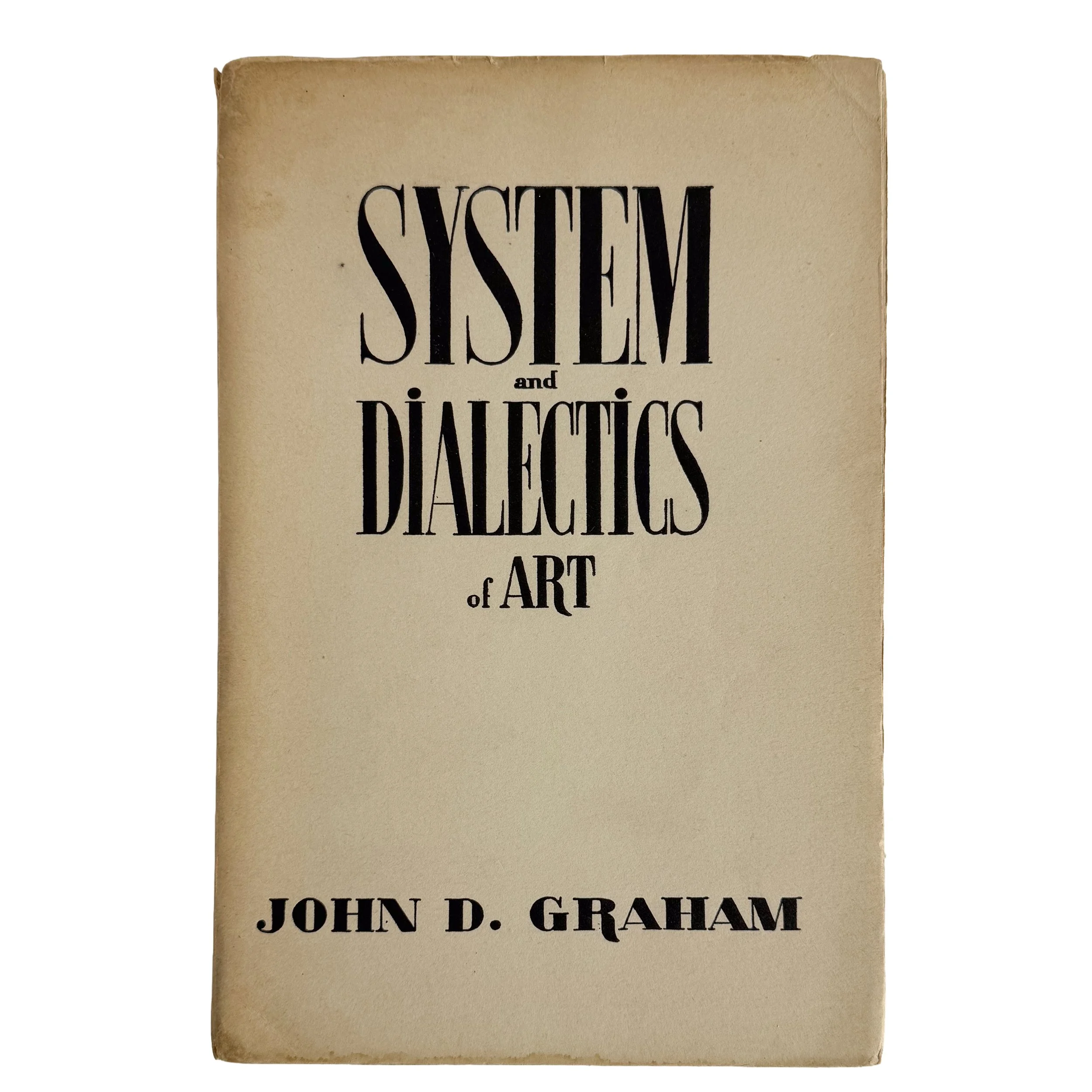 Image 1 of 8
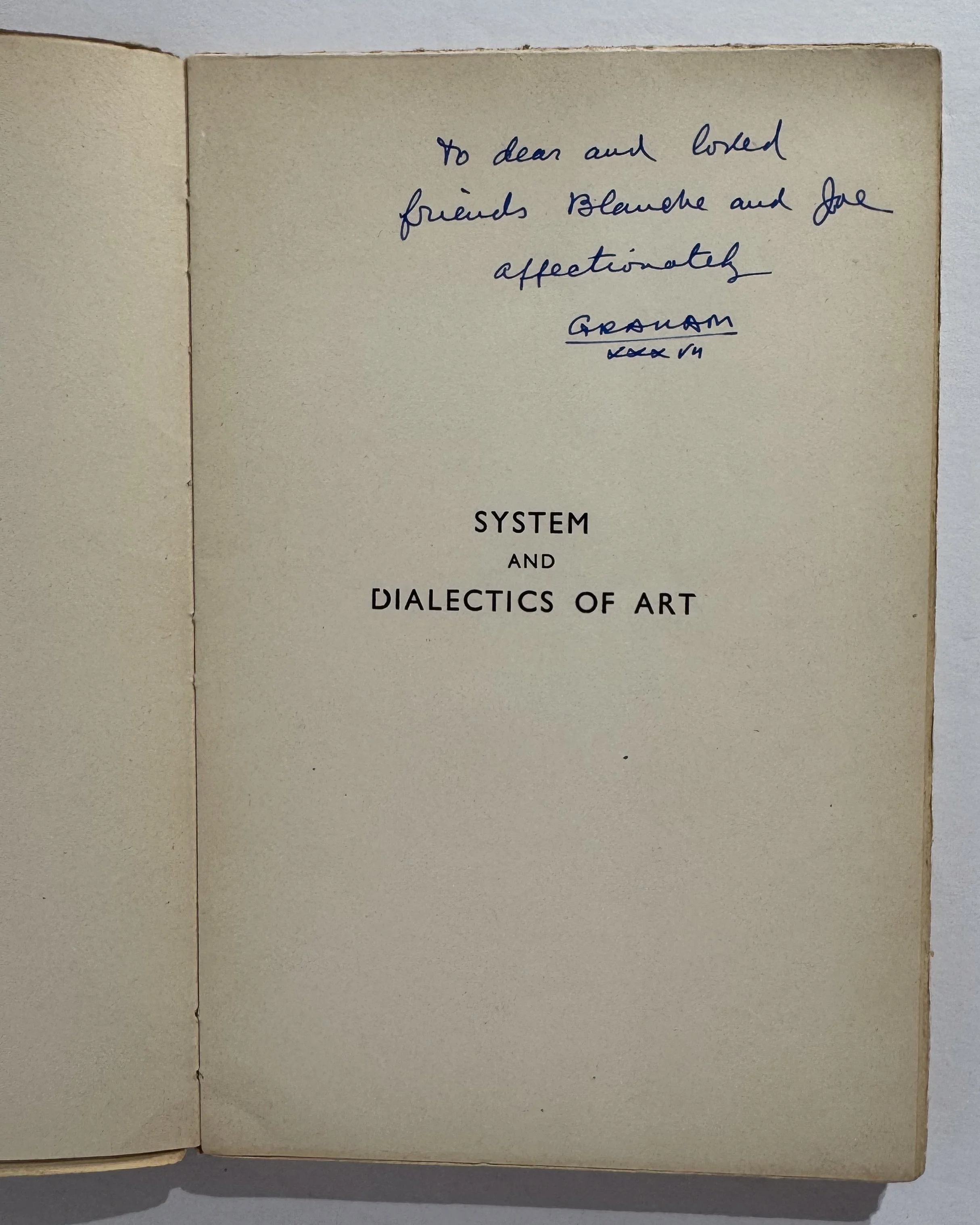 Image 2 of 8
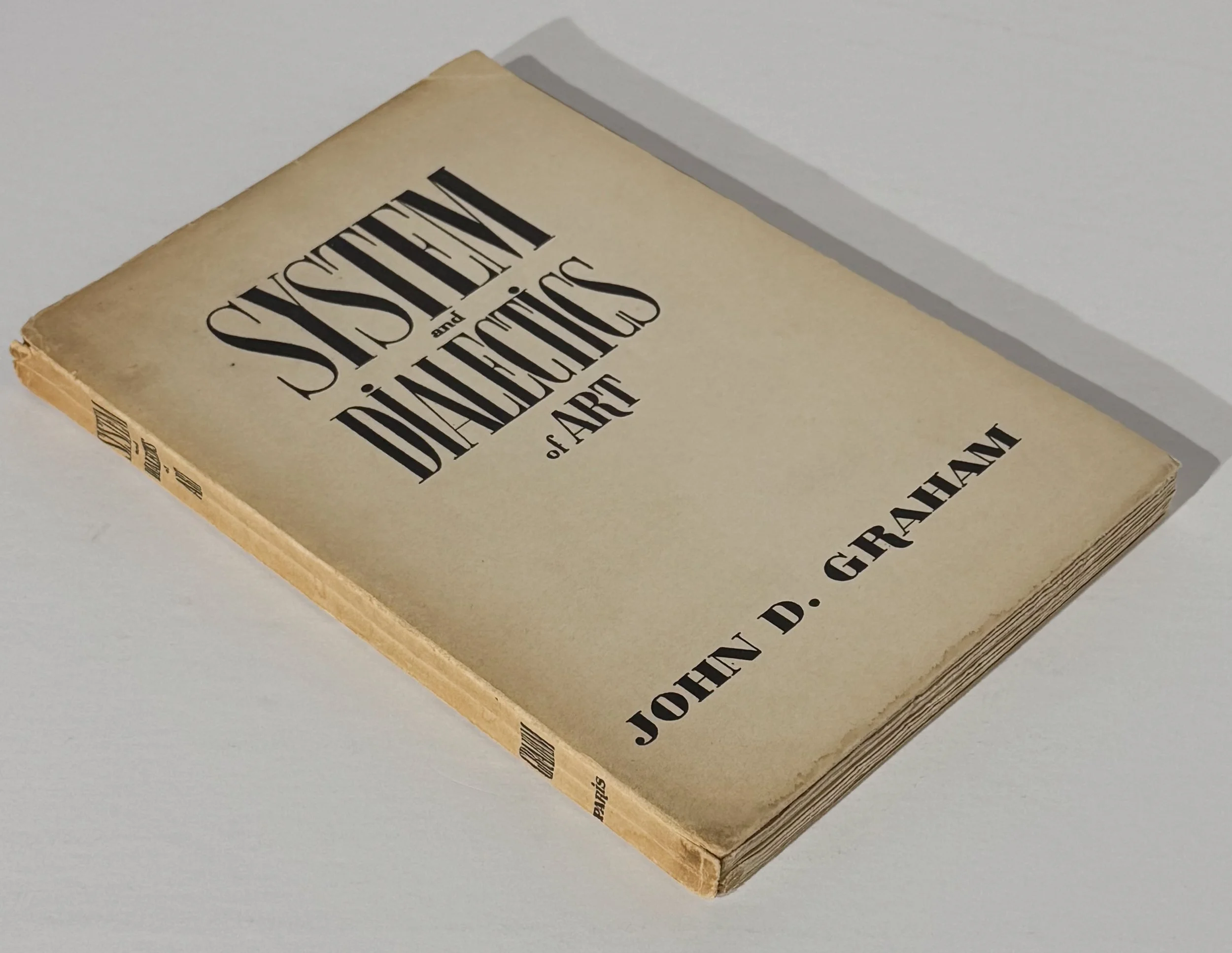 Image 3 of 8
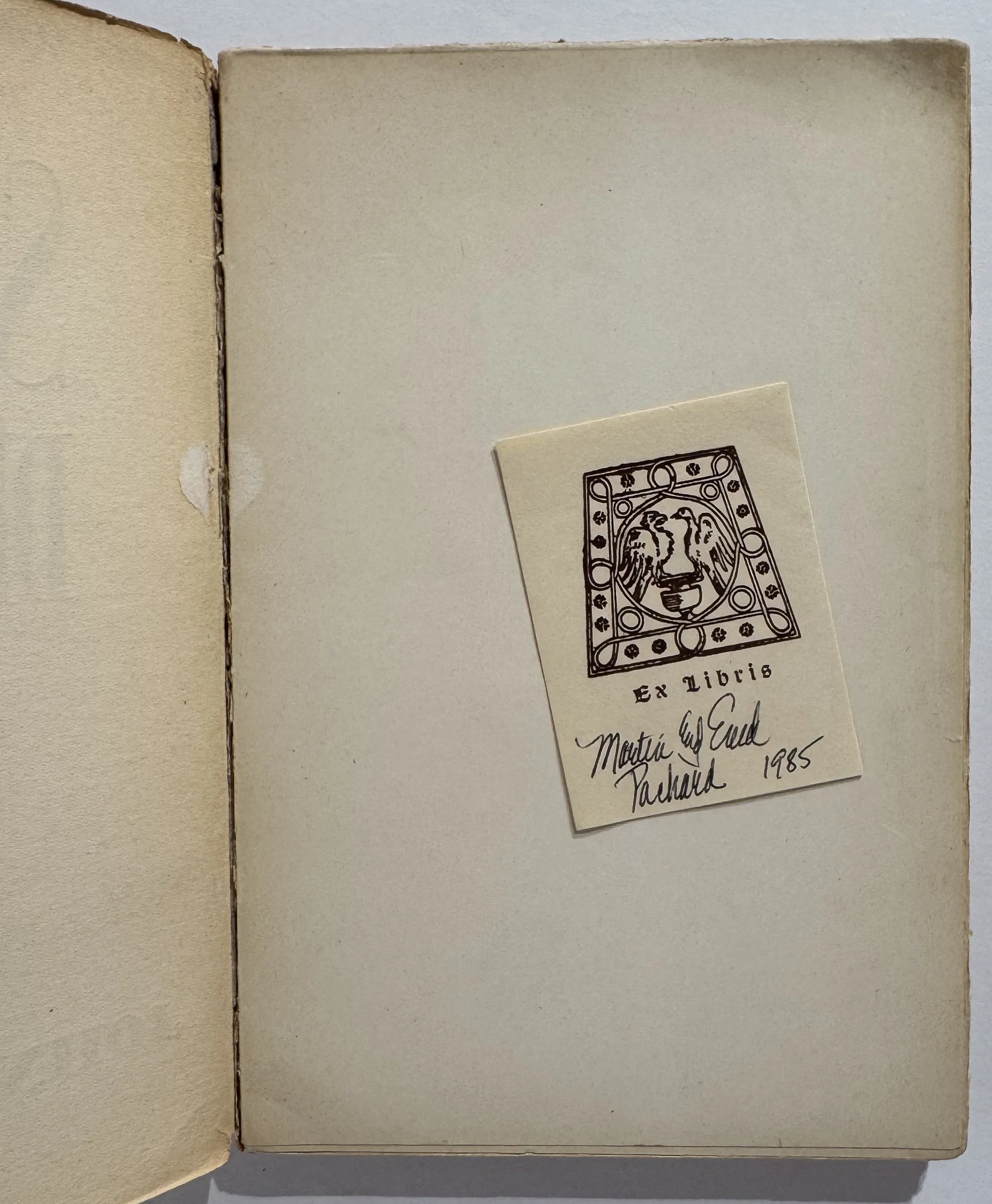 Image 4 of 8
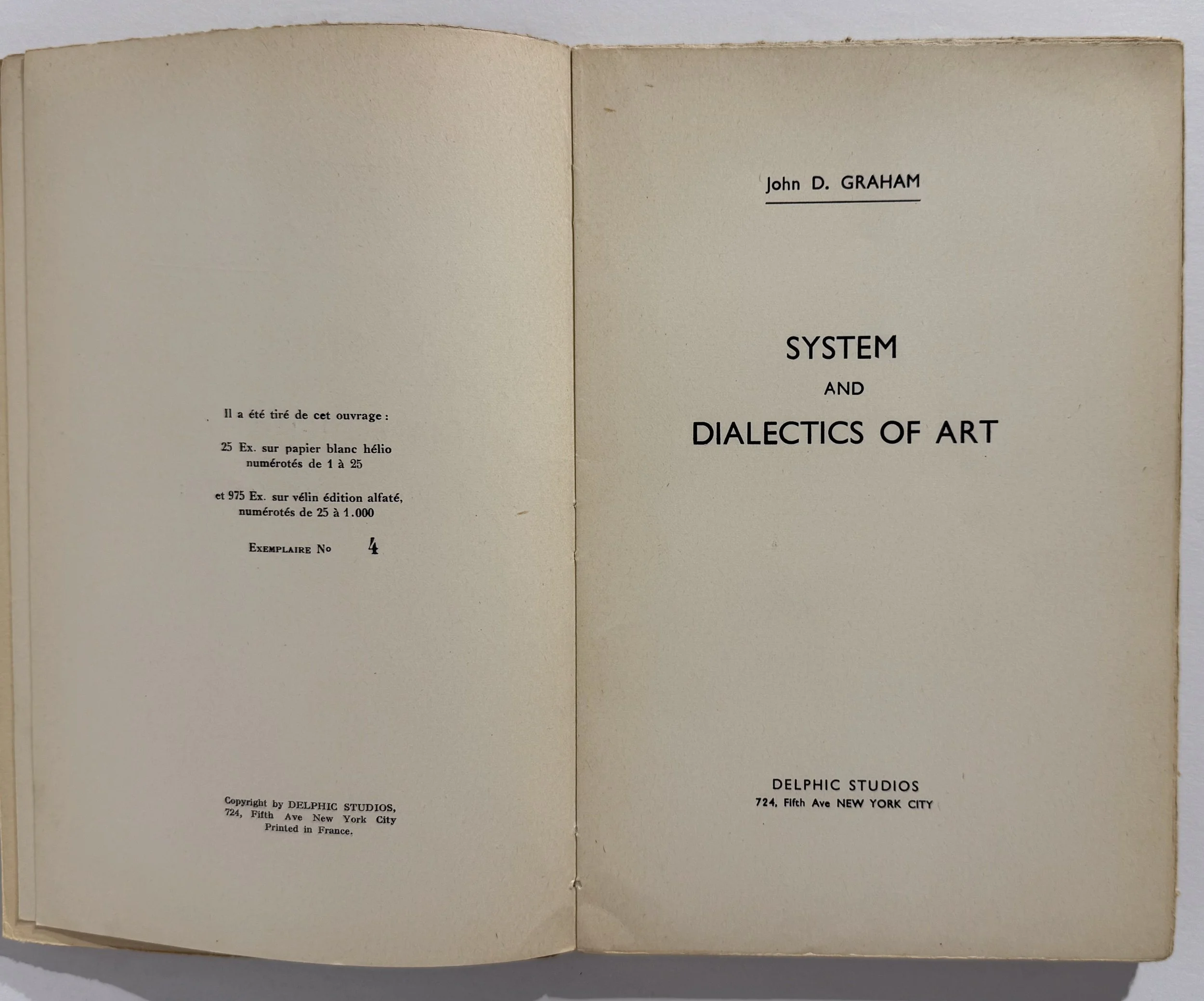 Image 5 of 8
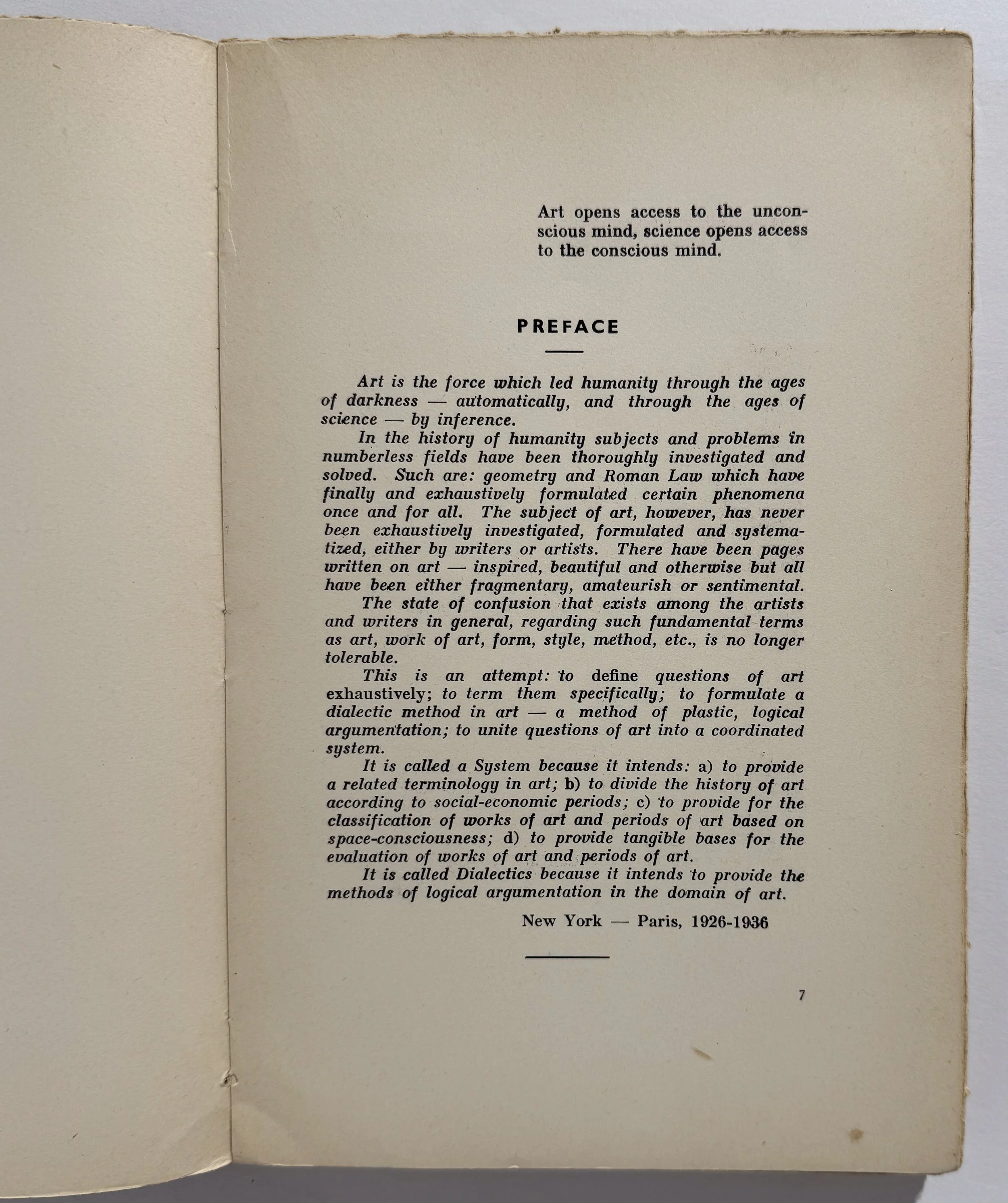 Image 6 of 8
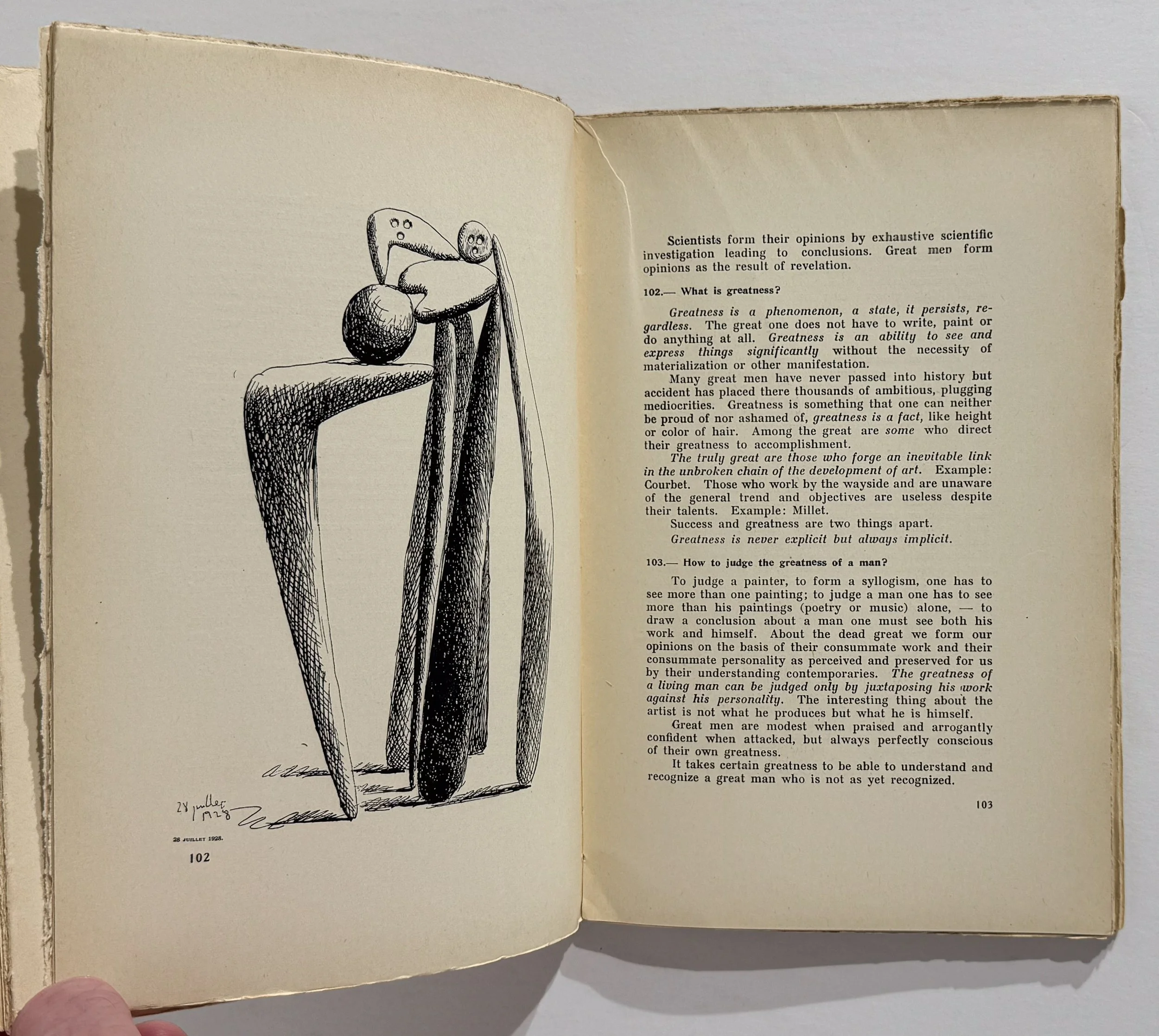 Image 7 of 8
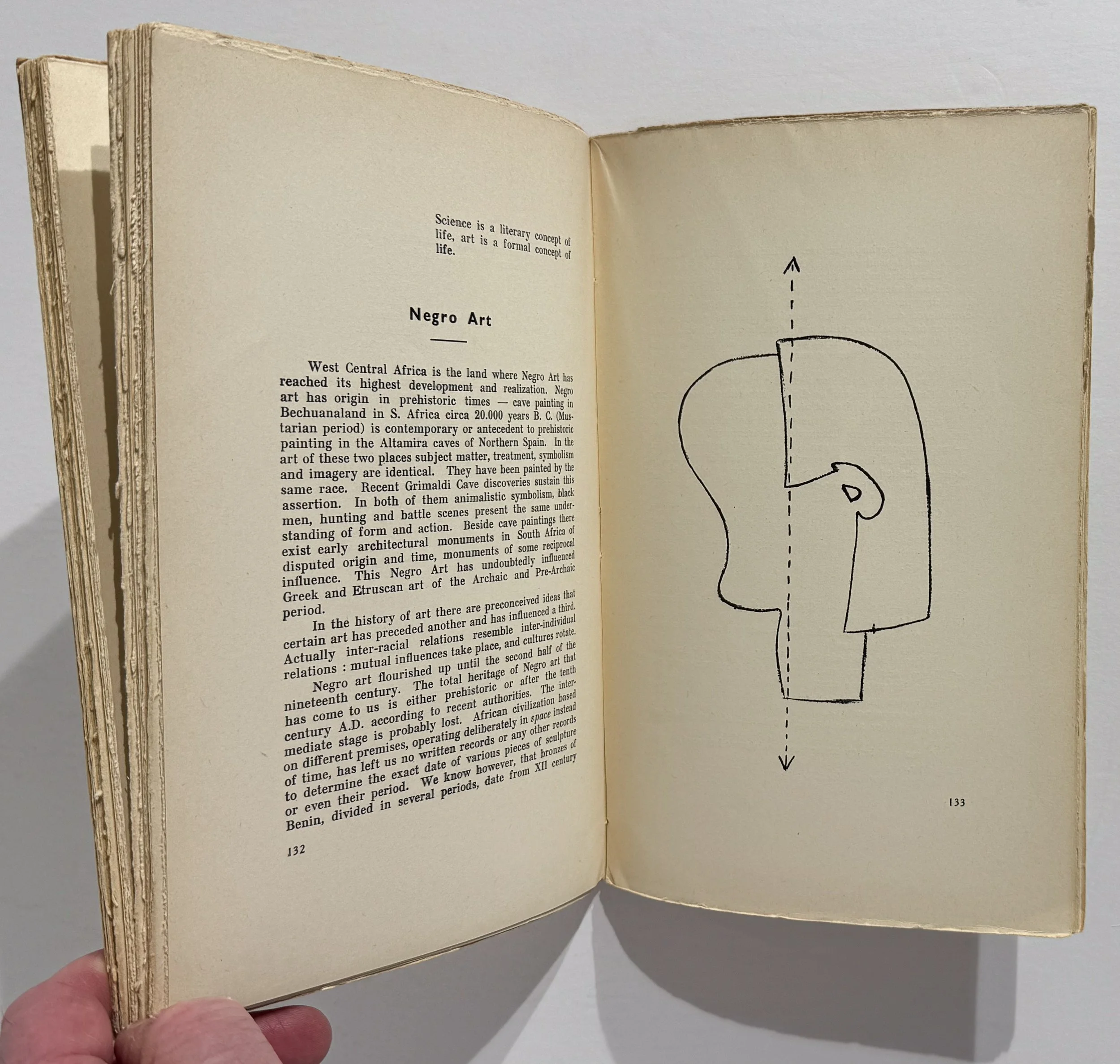 Image 8 of 8