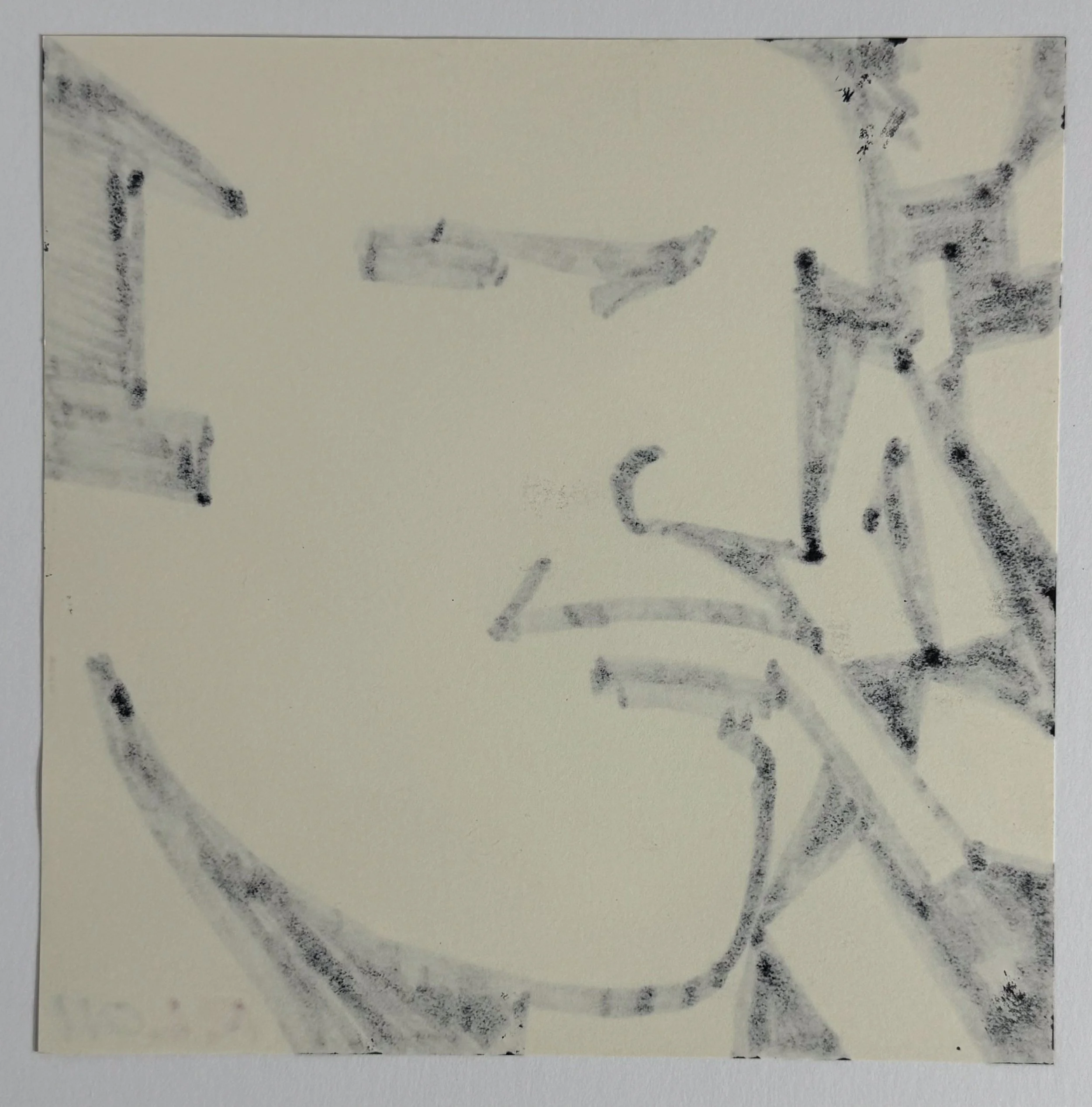
Invitation card for “Wink,” Takashi Murakami’s landmark installation held at Vanderbilt Hall, Grand Central Terminal, from March 14-April 13, 2001. 5” x 7”. Published by Creative Time/MTA Arts for Transit.
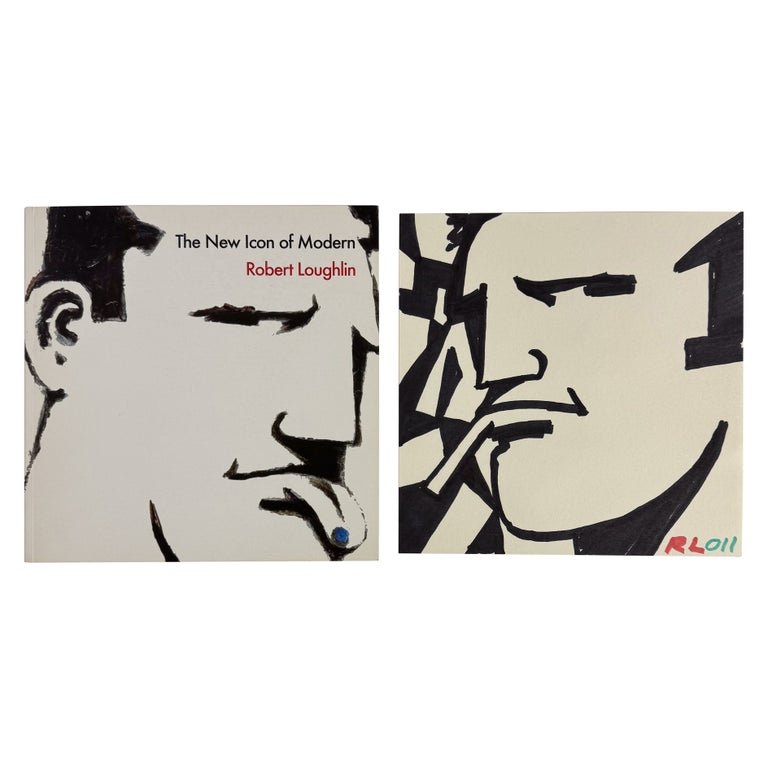
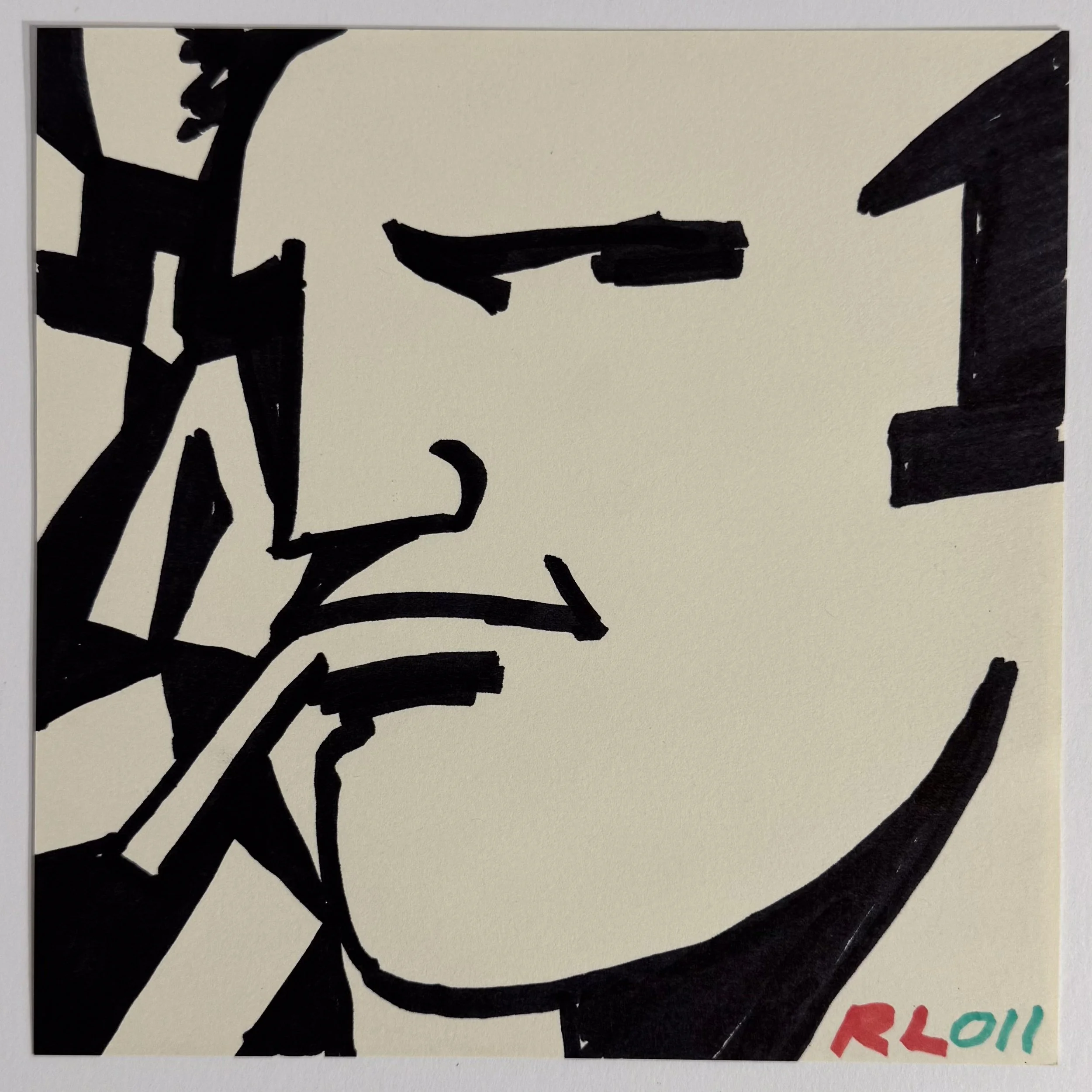
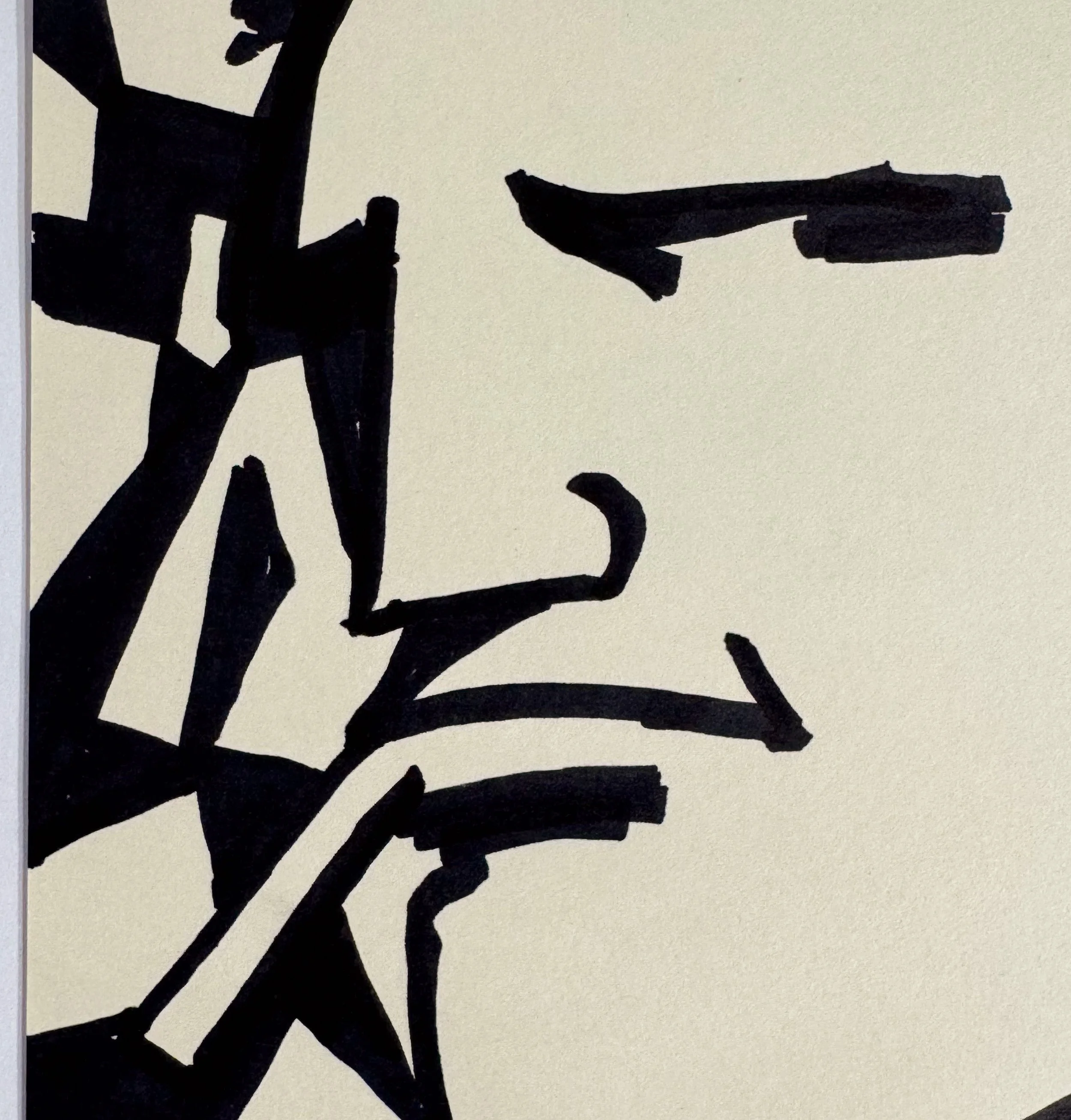
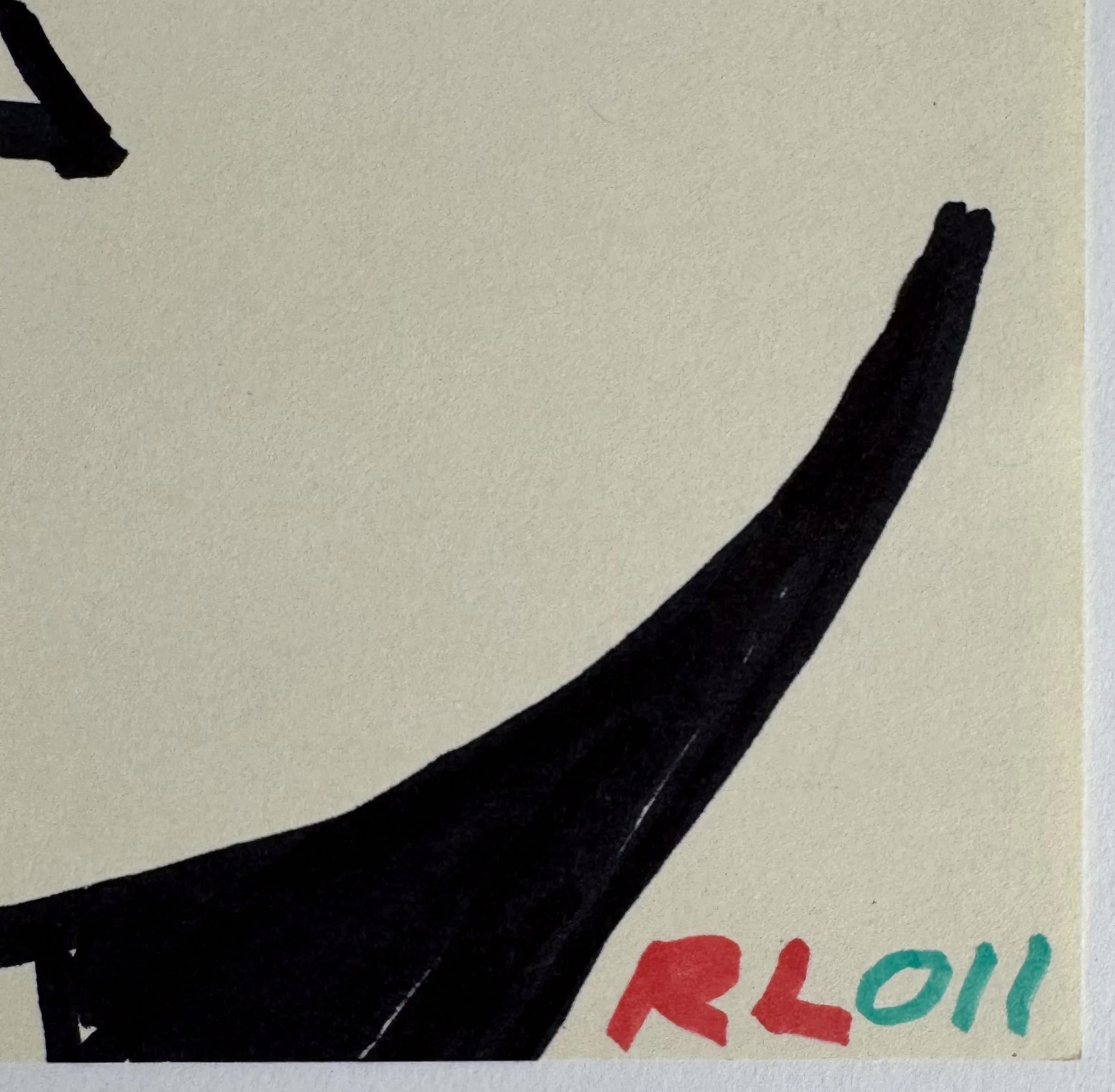
An exceptional early American Murakami artifact, boldly signed, inscribed and embellished by the artist with an original hand-drawn variation of Mr. DOB, Murakami’s foundational alter-ego figure and the central symbolic protagonist of the Superflat universe. Executed in black marker at the opening reception on March 14, 2001, the drawing transforms the otherwise ephemeral institutional invitation into a unique work on paper directly tied to one of the artist’s first major public commissions in the United States.
The spontaneous composition is particularly compelling for its fully articulated DOB-like body, rather than the abbreviated head studies more commonly encountered in Murakami inscriptions of the period. Murakami playfully incorporates the printed imagery of the invitation itself into the drawing, allowing the flame-like tuft of the underlying “Oval” character to function compositionally as the body support for the improvised figure above. The result is a remarkably vivid example of Murakami’s early live-hand graphic language at precisely the moment his Superflat aesthetic was entering the American cultural mainstream.
Accompanied by an original vernacular photograph depicting Murakami in the act of executing the drawing at the opening event, providing unusually strong contemporaneous documentary provenance.
“Wink” introduced Murakami’s “neo-pop” vocabulary into the monumental Beaux-Arts environment of Grand Central Terminal through a group of large-scale inflatable sculptures and floor installations centered on floating eyes and the character “Oval.” The project occupies an important transitional position within Murakami’s early international career, appearing immediately after the formulation of Superflat and just prior to the explosive global expansion of Kaikai Kiki and the artist’s commercial crossover into mass culture.
Near fine. A scarce early-career example of a direct and fully documented Murakami performative intervention aligned with the experimentation, immediacy, instability, and improvisational energy of his contemporary studio practice.
Note: The full accompanying photo, measuring 4” x 6” and showing the recipient and part of a Murakami floor sculpture, will be supplied with the purchase.
Invitation card for “Wink,” Takashi Murakami’s landmark installation held at Vanderbilt Hall, Grand Central Terminal, from March 14-April 13, 2001. 5” x 7”. Published by Creative Time/MTA Arts for Transit.
An exceptional early American Murakami artifact, boldly signed, inscribed and embellished by the artist with an original hand-drawn variation of Mr. DOB, Murakami’s foundational alter-ego figure and the central symbolic protagonist of the Superflat universe. Executed in black marker at the opening reception on March 14, 2001, the drawing transforms the otherwise ephemeral institutional invitation into a unique work on paper directly tied to one of the artist’s first major public commissions in the United States.
The spontaneous composition is particularly compelling for its fully articulated DOB-like body, rather than the abbreviated head studies more commonly encountered in Murakami inscriptions of the period. Murakami playfully incorporates the printed imagery of the invitation itself into the drawing, allowing the flame-like tuft of the underlying “Oval” character to function compositionally as the body support for the improvised figure above. The result is a remarkably vivid example of Murakami’s early live-hand graphic language at precisely the moment his Superflat aesthetic was entering the American cultural mainstream.
Accompanied by an original vernacular photograph depicting Murakami in the act of executing the drawing at the opening event, providing unusually strong contemporaneous documentary provenance.
“Wink” introduced Murakami’s “neo-pop” vocabulary into the monumental Beaux-Arts environment of Grand Central Terminal through a group of large-scale inflatable sculptures and floor installations centered on floating eyes and the character “Oval.” The project occupies an important transitional position within Murakami’s early international career, appearing immediately after the formulation of Superflat and just prior to the explosive global expansion of Kaikai Kiki and the artist’s commercial crossover into mass culture.
Near fine. A scarce early-career example of a direct and fully documented Murakami performative intervention aligned with the experimentation, immediacy, instability, and improvisational energy of his contemporary studio practice.
Note: The full accompanying photo, measuring 4” x 6” and showing the recipient and part of a Murakami floor sculpture, will be supplied with the purchase.

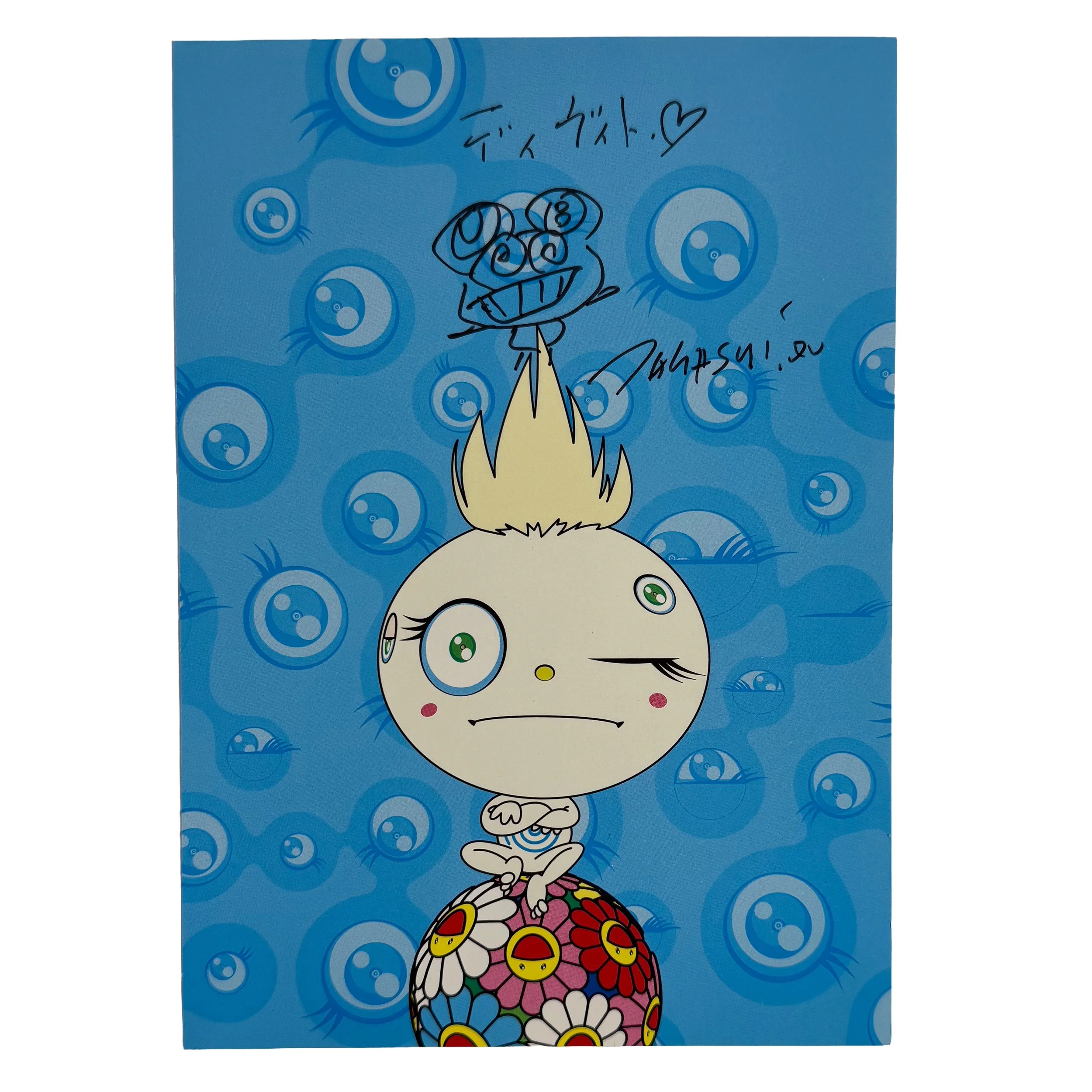 Image 1 of 6
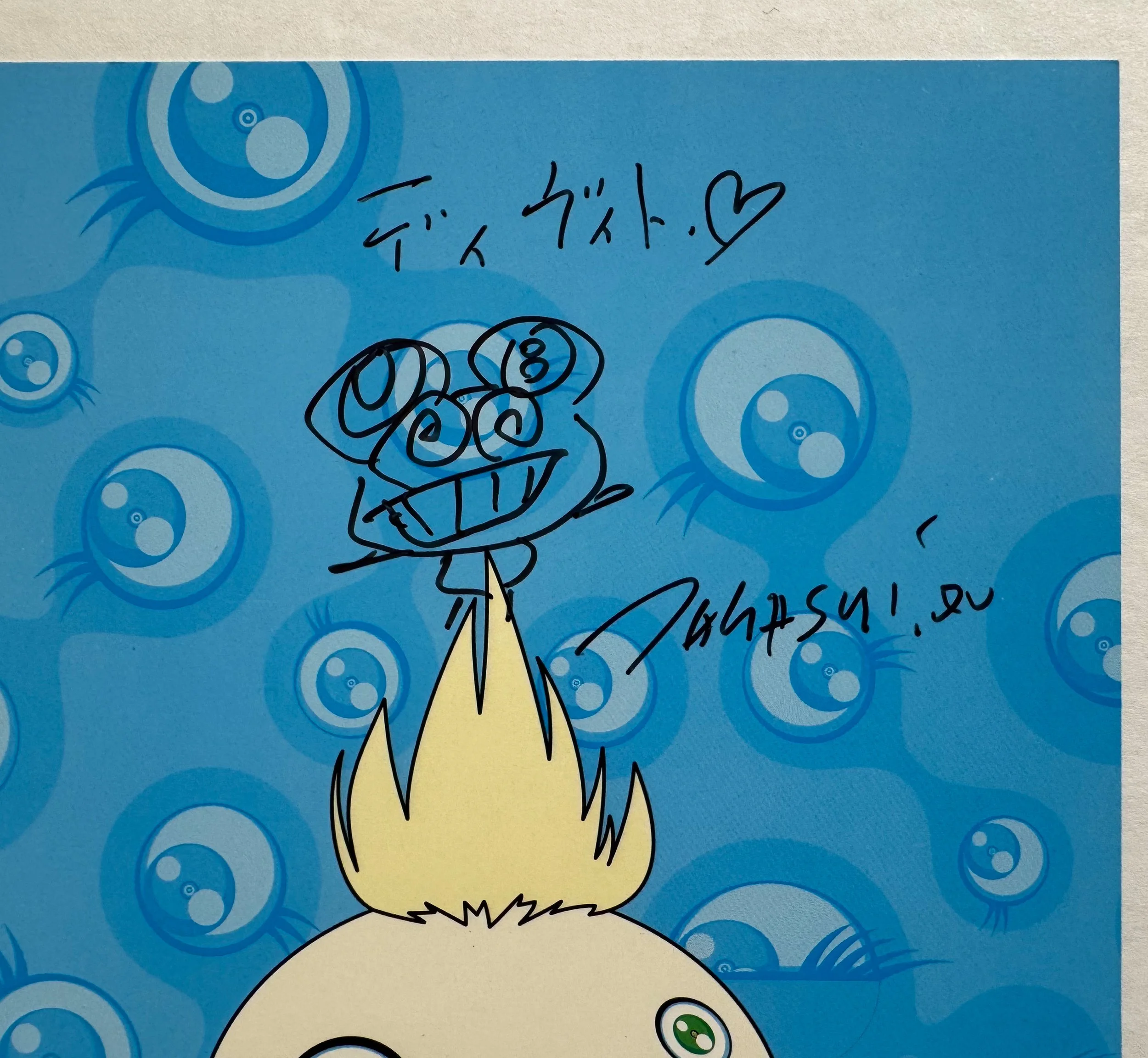 Image 2 of 6
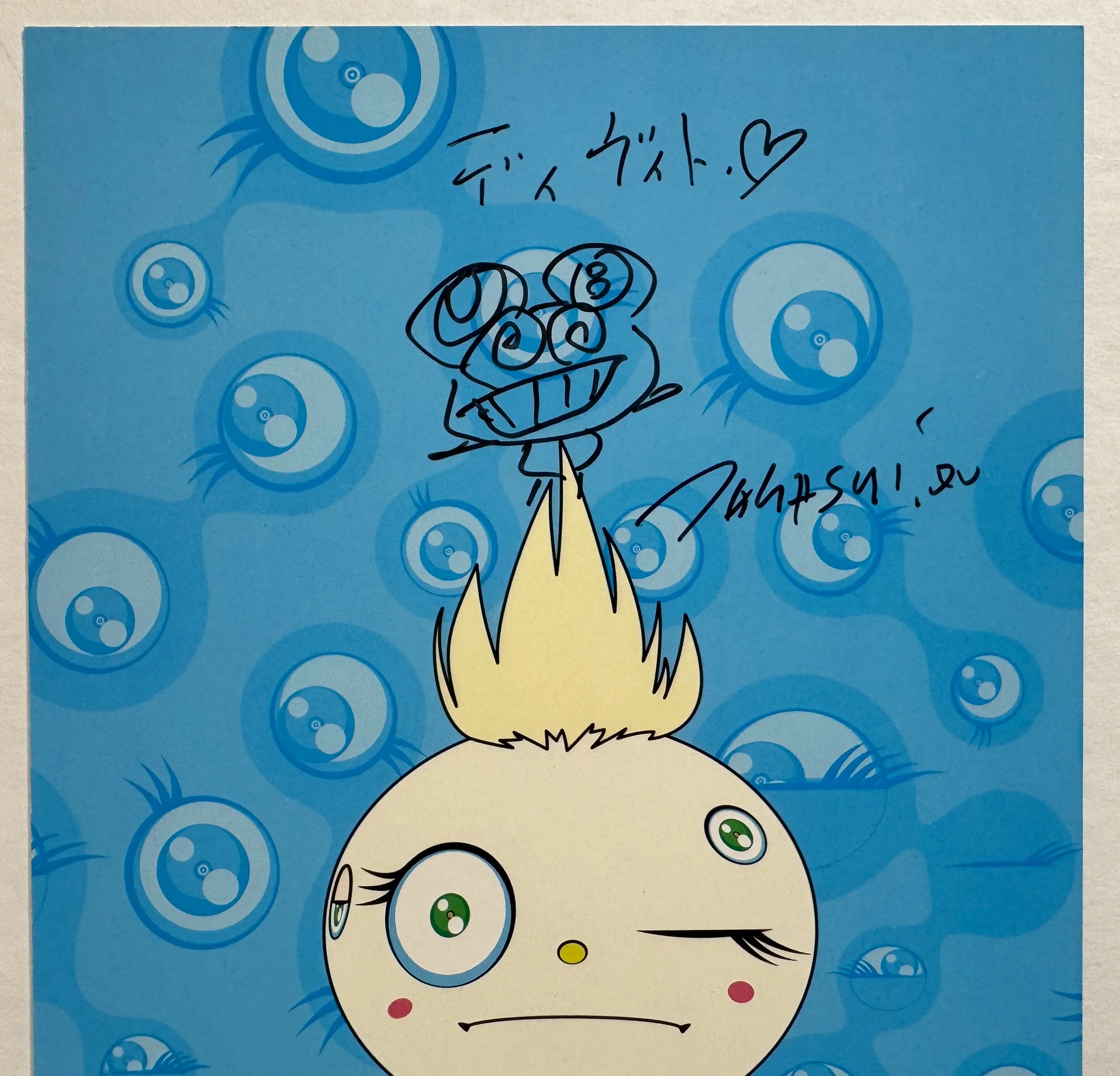 Image 3 of 6
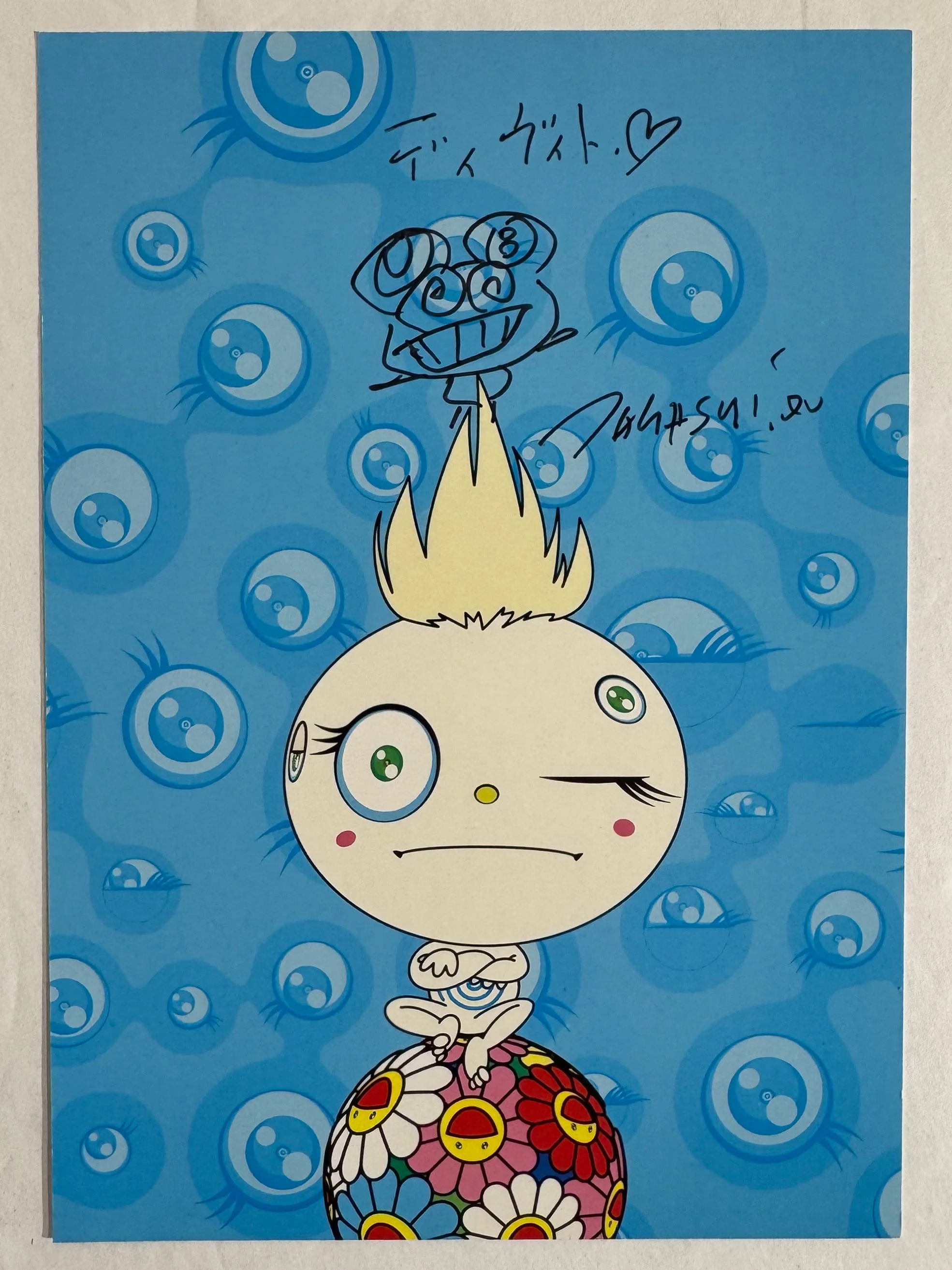 Image 4 of 6
 Image 5 of 6
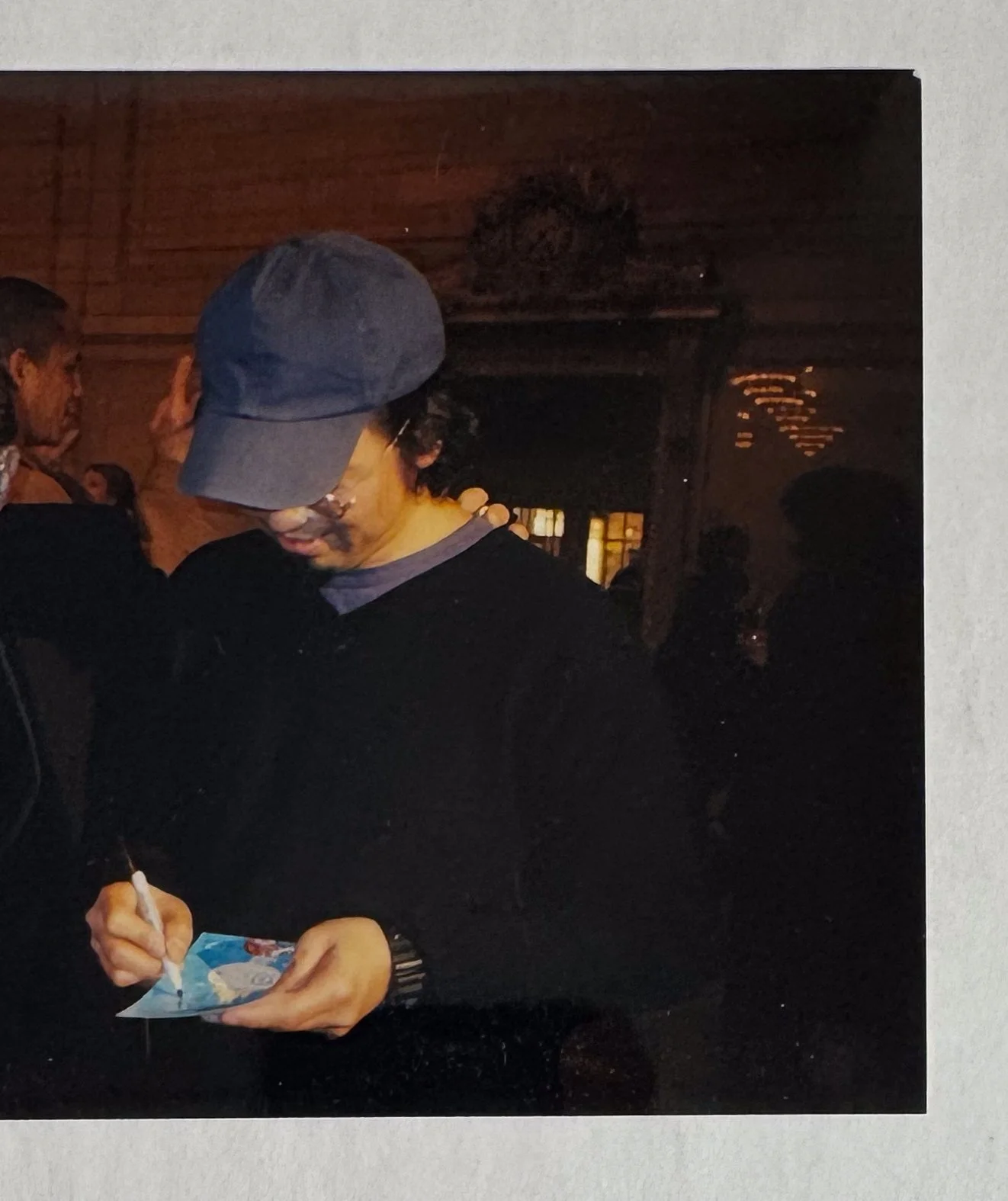 Image 6 of 6