 Image 1 of 5
 Image 2 of 5
 Image 3 of 5
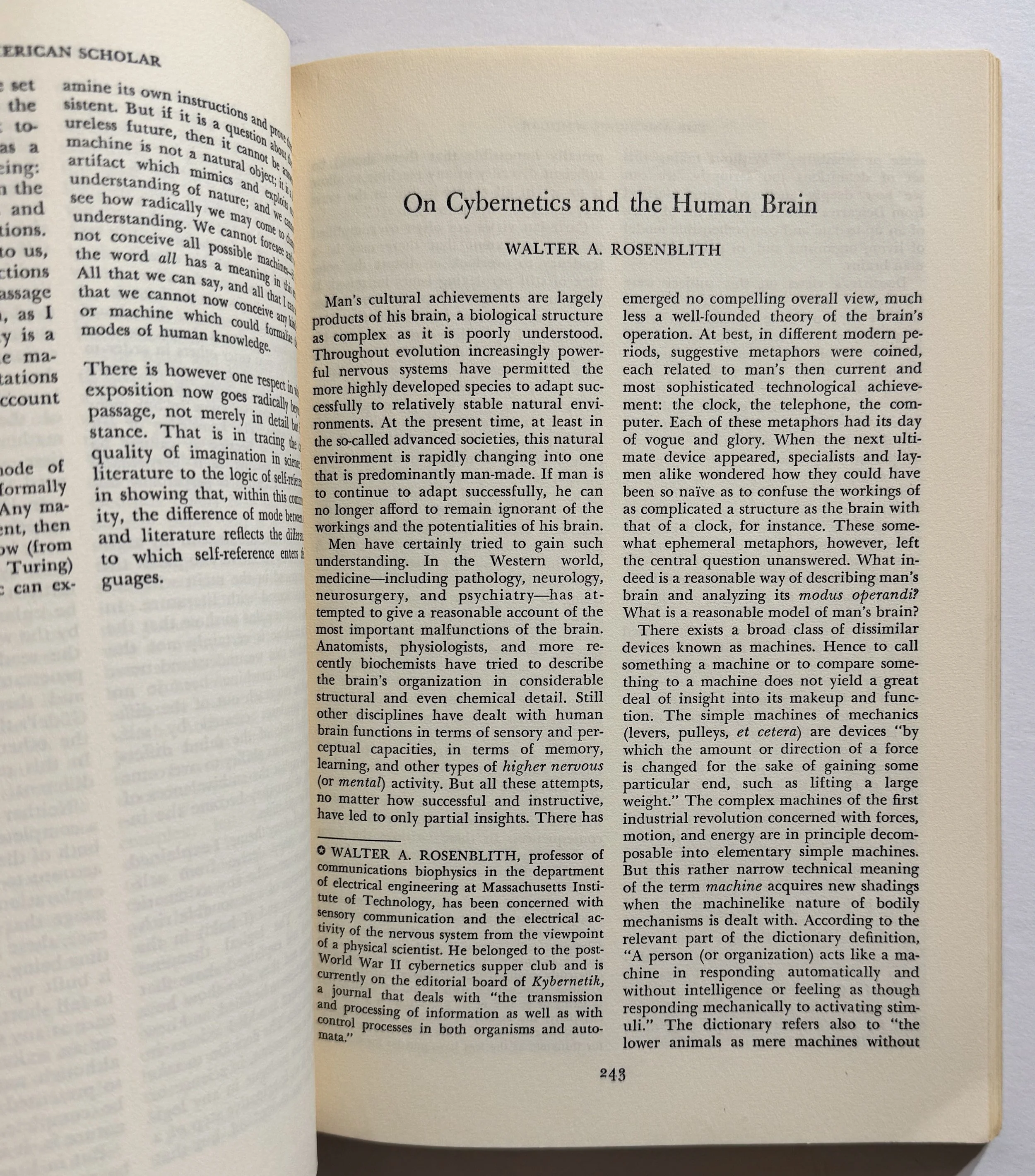 Image 4 of 5
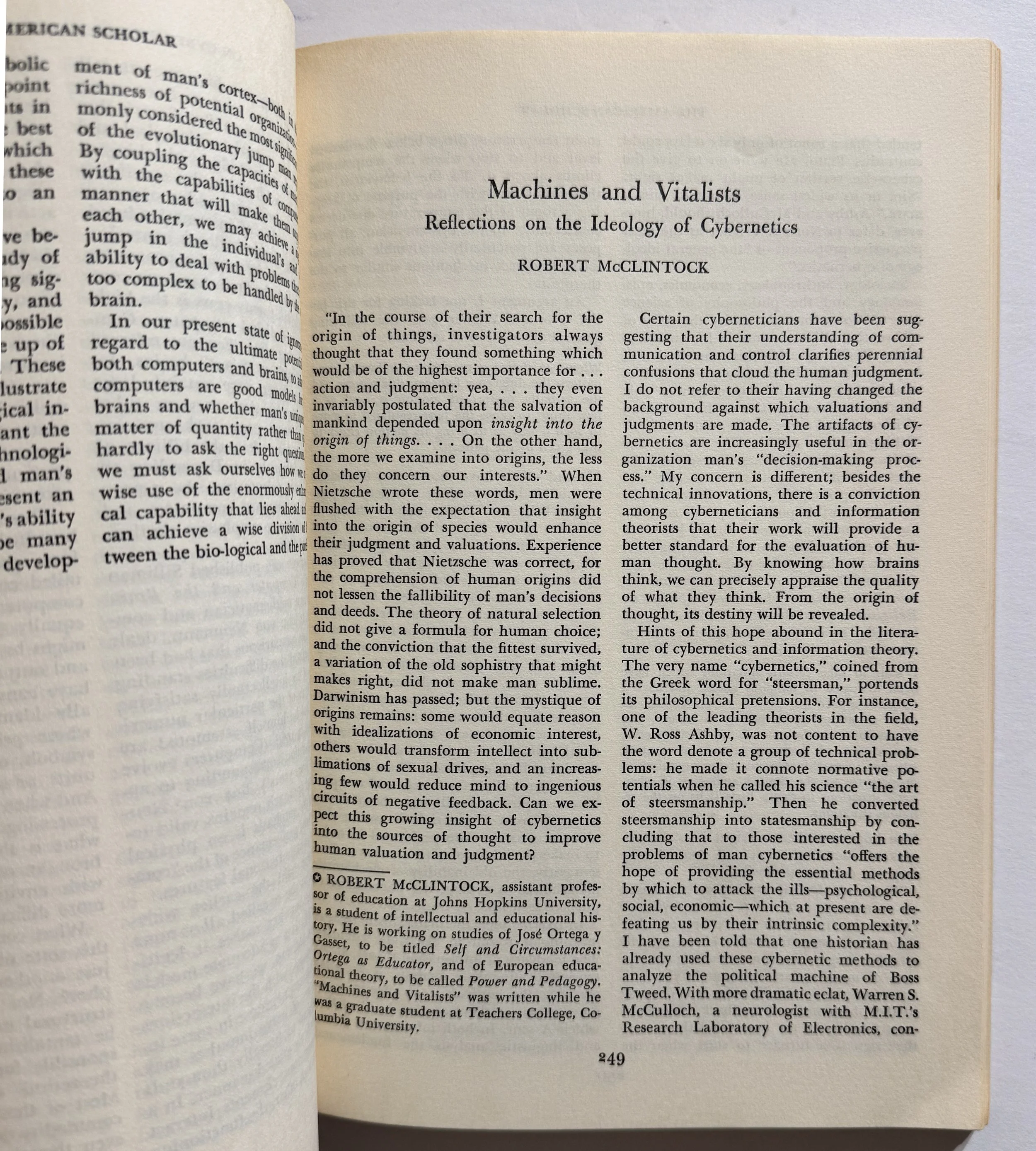 Image 5 of 5
Special issue of The American Scholar devoted to the emerging electronic and information culture, bringing together an unusually concentrated group of figures in cybernetics, computing, communications, media theory, art and design. Published in 1966 by United Chapters of Phi Beta Kappa. 8vo (6.75 × 9.75 inches), printed wrappers, pp. 181-392. Includes Marshall McLuhan's “Address at Vision 65” and R. Buckminster Fuller's “Vision 65 Summary Lecture,”alongside Herbert A. Simon's remarkably prescient “A Computer for Everyman,” Walter A. Rosenblith on cybernetics and the human brain, Robert McClintock on the ideology of cybernetics, David B. Hertz on computers and world communications, and contributions by Max Bill, Richard Hoggart, Sol Worth, Mel Powell, and Stan VanDerBeek, among others.
Published at a pivotal moment when computers and electronic communications were moving beyond specialist applications toward a broader reconsideration of culture, cognition, design and everyday life. An especially rich period document of the intellectual response to the Electronic Revolution, encompassing cybernetics, computerization, artificial intelligence, mass communications, electronic music, experimental film and design. Light bumping and rubbing to extremities with creasing to spine.