Three volumes documenting the conception, realization, and theoretical codification of the Museum of Modern Art's landmark 1932 Modern Architecture: International Exhibition—the exhibition that introduced the “International Style” to an American audience and established architecture as a central component of MoMA's institutional program.
1. Philip Johnson. Built to Live In. New York: Museum of Modern Art, 1931. Original printed wrappers, 8½ x 11¼ inches; 20 pages including wrappers. Illustrated. One of 500 numbered copies, this copy No. 57.
An exceptionally scarce and unusually well-preserved prospectus for the exhibition that would become Modern Architecture: International Exhibition. Issued nearly a year before the show, Built to Live In reveals the project while still being formulated: Johnson outlines an ambitious international survey embracing housing, factories, skyscrapers and the new European architecture, with proposed models and installations and the participation of figures including Mies van der Rohe. Among Johnson's earliest published architectural statements and a foundational document in the formation of MoMA's architectural program. Minor bumping and rubbing to extremities, with paperclip impression to top edge of rear wrapper. Mild foxing to verso of rear wrapper and last page. Staples rusted, with limited staining to center fold, which has come loose; binding otherwise sound.
2. Alfred H. Barr, Jr., Henry-Russell Hitchcock, Philip Johnson, Lewis Mumford, et al. Modern Architecture: International Exhibition. New York: Museum of Modern Art, 1932. First edition. Pictorial wrappers; 199 pages, extensively illustrated with photographs, plans, elevations and drawings. Hinges professionally repaired; binding otherwise sound. Mild to moderate bumping and rubbing to the characteristically fragile wrappers. Some creasing and chipping to spine. Contents NF. With a small contemporary printed card laid in: “COMPLIMENTS OF THE MUSEUM OF MODERN ART.”
The catalogue of MoMA's epochal 1932 exhibition, organized principally by Hitchcock and Johnson under Alfred H. Barr, Jr. The exhibition brought together the work of Le Corbusier, Mies van der Rohe, Walter Gropius, J. J. P. Oud, Richard Neutra, Howe & Lescaze and others, constructing for an American audience a coherent image of the new European and American architecture. Its famous cover reproduces Mies's Barcelona Pavilion. The exhibition was MoMA's first major architectural survey and immediately preceded the establishment of its Department of Architecture.
3. Henry-Russell Hitchcock and Philip Johnson. The International Style: Architecture Since 1922. New York: W. W. Norton, 1932. Stated first edition. 240 pages; 82 full-page photographic illustrations with plans. Red cloth in the scarce original pictorial dust jacket designed by Werner Helmer. Spine somewhat shaken. Gentle bumping to boards. Moderate bumping and rubbing to price-clipped dj, with small open tears to top edge. Ownership label of Mrs. Walter P. Hickey, wife of Cranbrook-trained architect Walter Preston Hickey.
The theoretical counterpart to the MoMA exhibition and the book that gave the International Style its enduring name. Hitchcock and Johnson distilled the architecture presented at MoMA into three defining principles: architecture conceived as volume rather than mass, regularity rather than axial symmetry, and the rejection of applied ornament. The jacket reproduces Mies van der Rohe's Tugendhat House.
Together the three publications constitute an unusually coherent documentary sequence, preserving successive stages in one of the defining episodes in the institutional history of modern architecture. Built to Live In records Johnson's project in formation; Modern Architecture presents the exhibition through which MoMA constructed and disseminated its architectural canon; The International Style converts that visual argument into an explicit theoretical system.
A foundational group for the history of MoMA, modern architecture, architectural publishing, and the American reception of European Modernism, with particularly strong examples of each component: the numbered and exceptionally scarce 1931 prospectus; the first-edition exhibition catalogue retaining its MoMA compliments card; and the first edition of The International Style in its rare original dust jacket. Price is for the group of three volumes. Additional images and information available upon request.
Three volumes documenting the conception, realization, and theoretical codification of the Museum of Modern Art's landmark 1932 Modern Architecture: International Exhibition—the exhibition that introduced the “International Style” to an American audience and established architecture as a central component of MoMA's institutional program.
1. Philip Johnson. Built to Live In. New York: Museum of Modern Art, 1931. Original printed wrappers, 8½ x 11¼ inches; 20 pages including wrappers. Illustrated. One of 500 numbered copies, this copy No. 57.
An exceptionally scarce and unusually well-preserved prospectus for the exhibition that would become Modern Architecture: International Exhibition. Issued nearly a year before the show, Built to Live In reveals the project while still being formulated: Johnson outlines an ambitious international survey embracing housing, factories, skyscrapers and the new European architecture, with proposed models and installations and the participation of figures including Mies van der Rohe. Among Johnson's earliest published architectural statements and a foundational document in the formation of MoMA's architectural program. Minor bumping and rubbing to extremities, with paperclip impression to top edge of rear wrapper. Mild foxing to verso of rear wrapper and last page. Staples rusted, with limited staining to center fold, which has come loose; binding otherwise sound.
2. Alfred H. Barr, Jr., Henry-Russell Hitchcock, Philip Johnson, Lewis Mumford, et al. Modern Architecture: International Exhibition. New York: Museum of Modern Art, 1932. First edition. Pictorial wrappers; 199 pages, extensively illustrated with photographs, plans, elevations and drawings. Hinges professionally repaired; binding otherwise sound. Mild to moderate bumping and rubbing to the characteristically fragile wrappers. Some creasing and chipping to spine. Contents NF. With a small contemporary printed card laid in: “COMPLIMENTS OF THE MUSEUM OF MODERN ART.”
The catalogue of MoMA's epochal 1932 exhibition, organized principally by Hitchcock and Johnson under Alfred H. Barr, Jr. The exhibition brought together the work of Le Corbusier, Mies van der Rohe, Walter Gropius, J. J. P. Oud, Richard Neutra, Howe & Lescaze and others, constructing for an American audience a coherent image of the new European and American architecture. Its famous cover reproduces Mies's Barcelona Pavilion. The exhibition was MoMA's first major architectural survey and immediately preceded the establishment of its Department of Architecture.
3. Henry-Russell Hitchcock and Philip Johnson. The International Style: Architecture Since 1922. New York: W. W. Norton, 1932. Stated first edition. 240 pages; 82 full-page photographic illustrations with plans. Red cloth in the scarce original pictorial dust jacket designed by Werner Helmer. Spine somewhat shaken. Gentle bumping to boards. Moderate bumping and rubbing to price-clipped dj, with small open tears to top edge. Ownership label of Mrs. Walter P. Hickey, wife of Cranbrook-trained architect Walter Preston Hickey.
The theoretical counterpart to the MoMA exhibition and the book that gave the International Style its enduring name. Hitchcock and Johnson distilled the architecture presented at MoMA into three defining principles: architecture conceived as volume rather than mass, regularity rather than axial symmetry, and the rejection of applied ornament. The jacket reproduces Mies van der Rohe's Tugendhat House.
Together the three publications constitute an unusually coherent documentary sequence, preserving successive stages in one of the defining episodes in the institutional history of modern architecture. Built to Live In records Johnson's project in formation; Modern Architecture presents the exhibition through which MoMA constructed and disseminated its architectural canon; The International Style converts that visual argument into an explicit theoretical system.
A foundational group for the history of MoMA, modern architecture, architectural publishing, and the American reception of European Modernism, with particularly strong examples of each component: the numbered and exceptionally scarce 1931 prospectus; the first-edition exhibition catalogue retaining its MoMA compliments card; and the first edition of The International Style in its rare original dust jacket. Price is for the group of three volumes. Additional images and information available upon request.

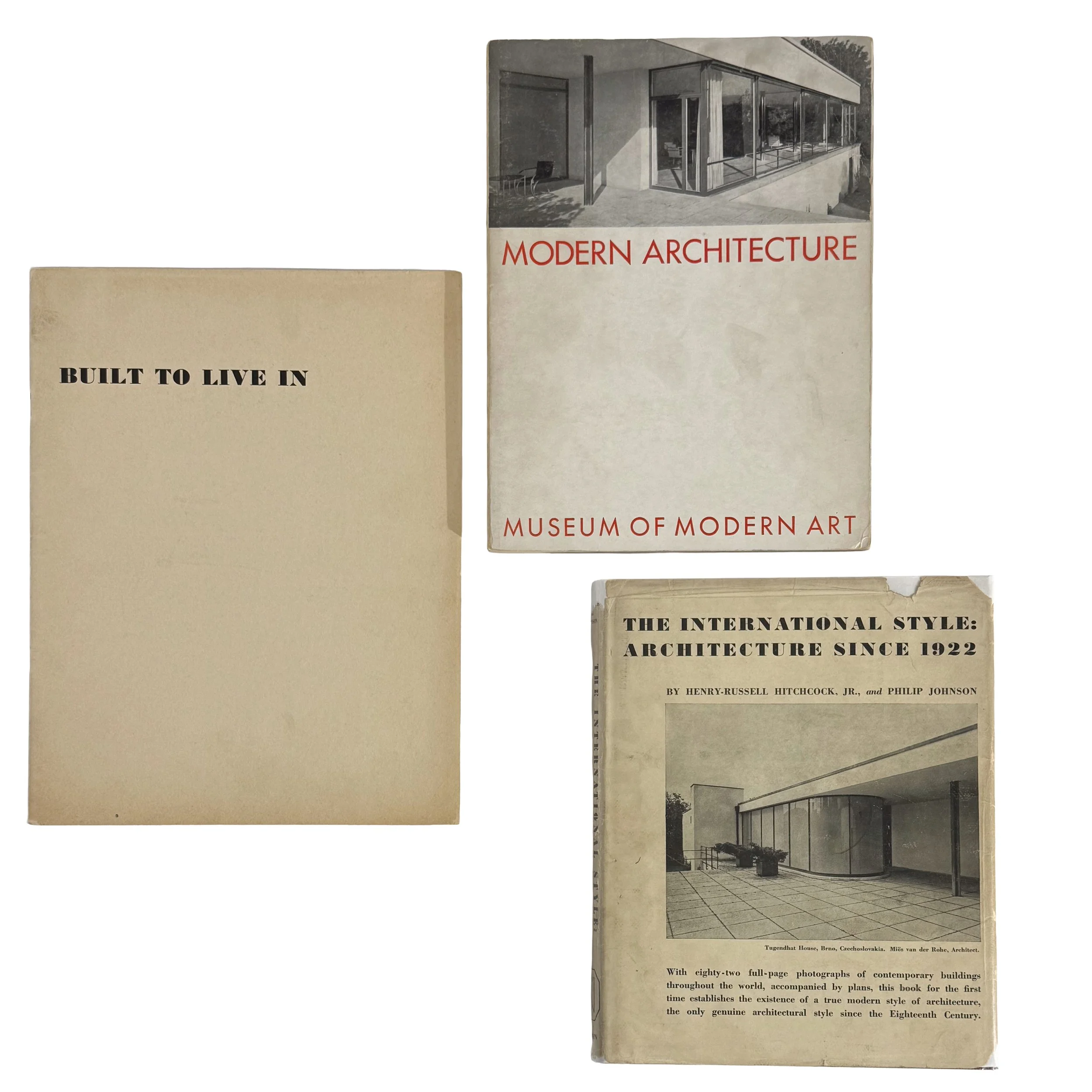 Image 1 of 22
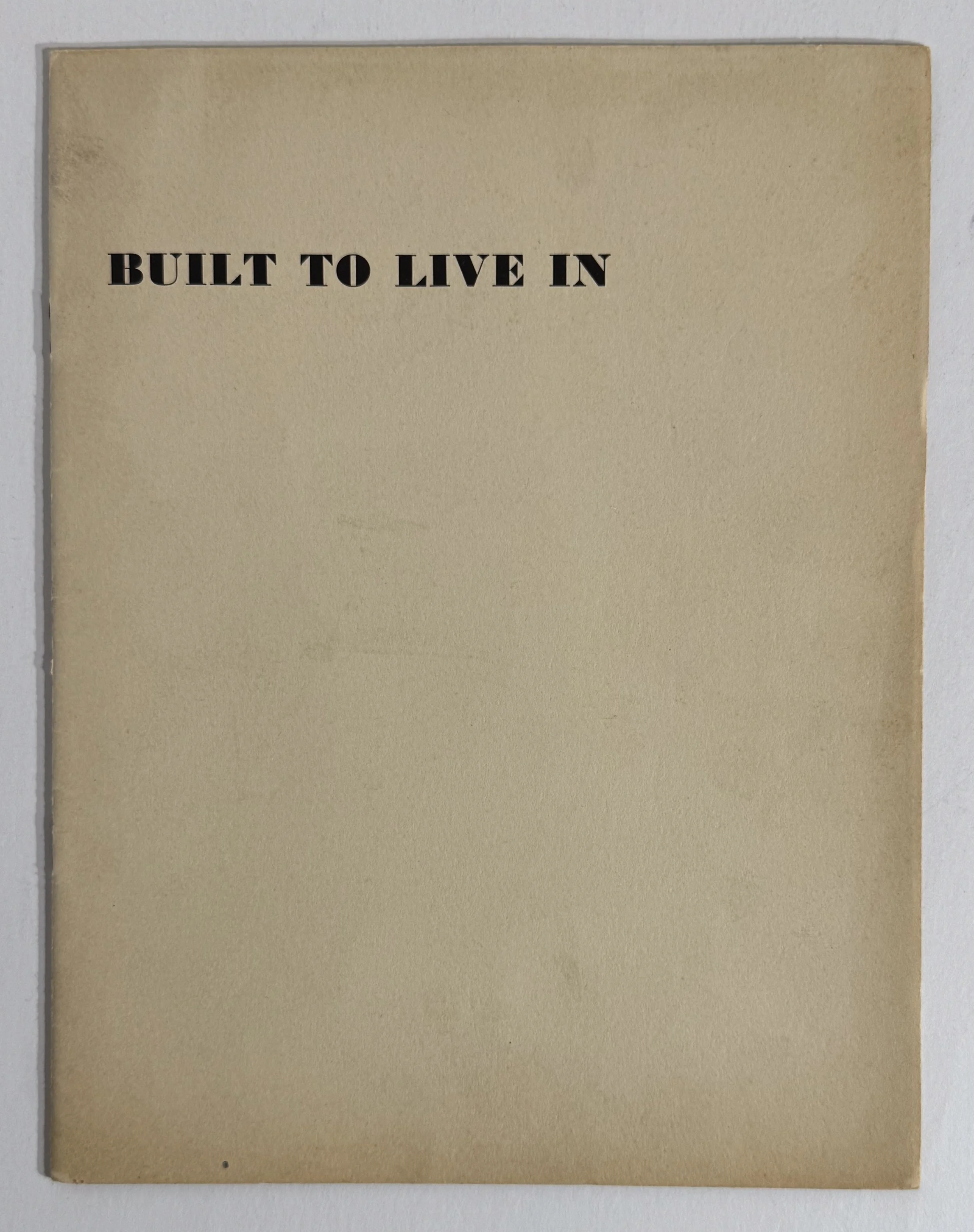 Image 2 of 22
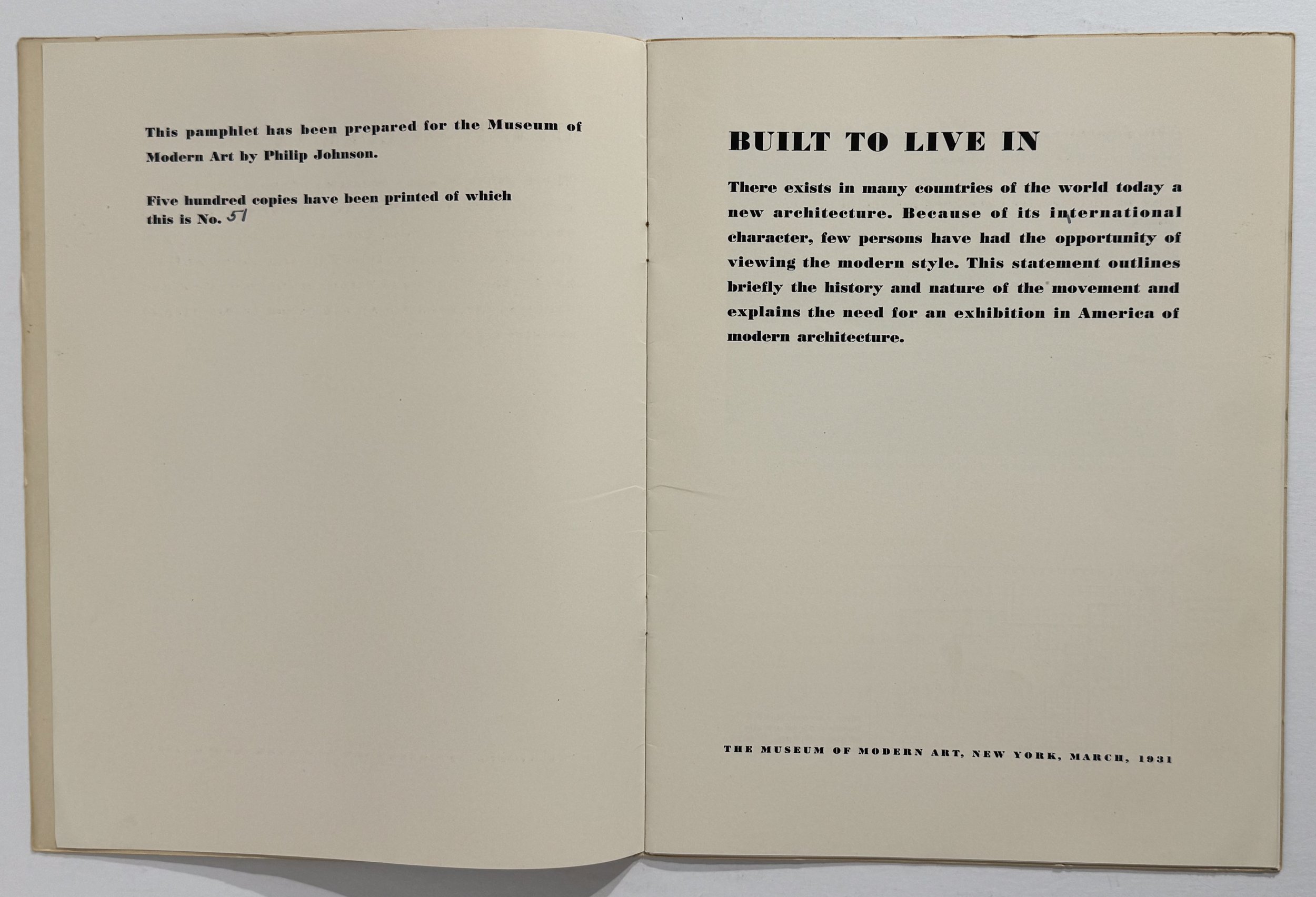 Image 3 of 22
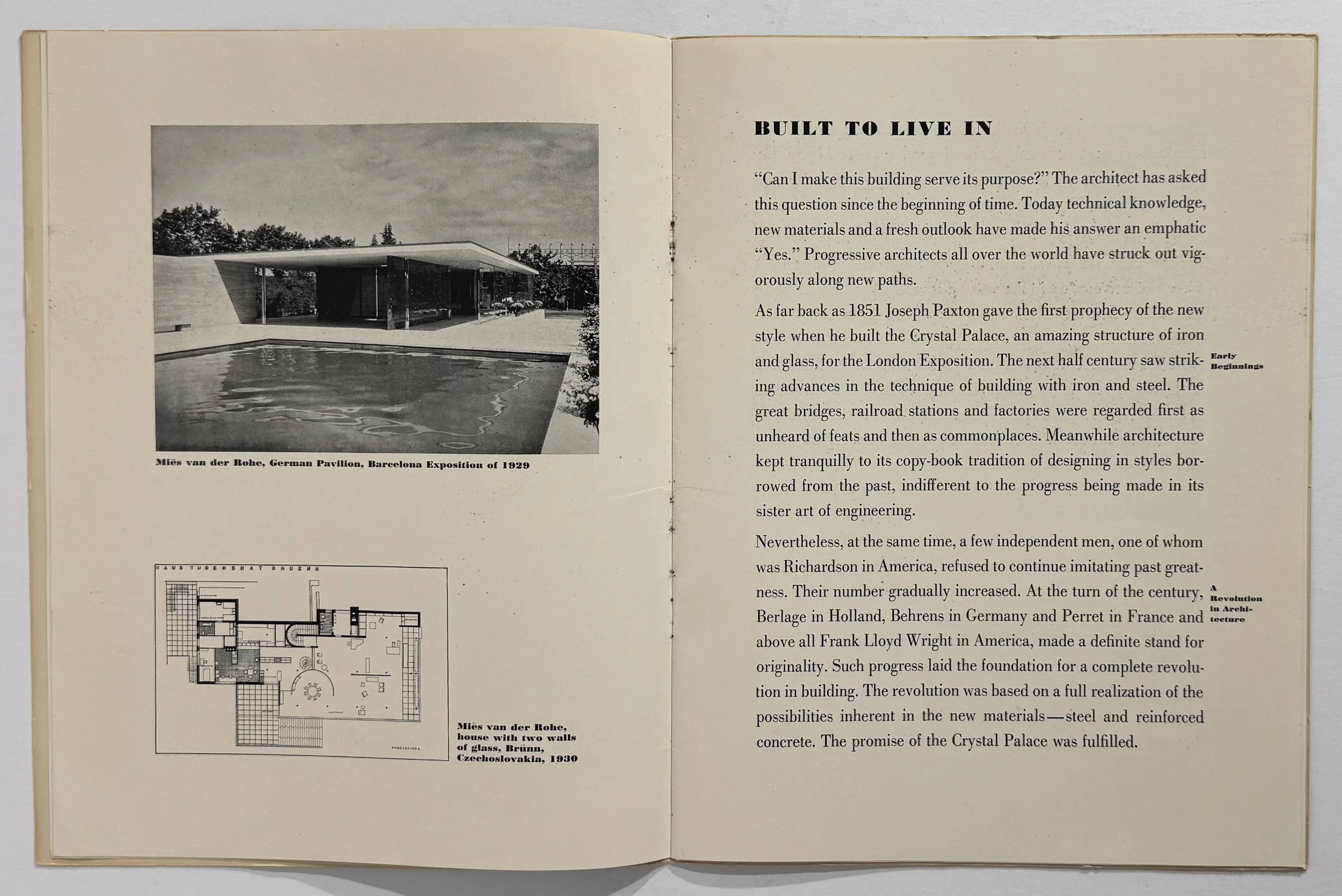 Image 4 of 22
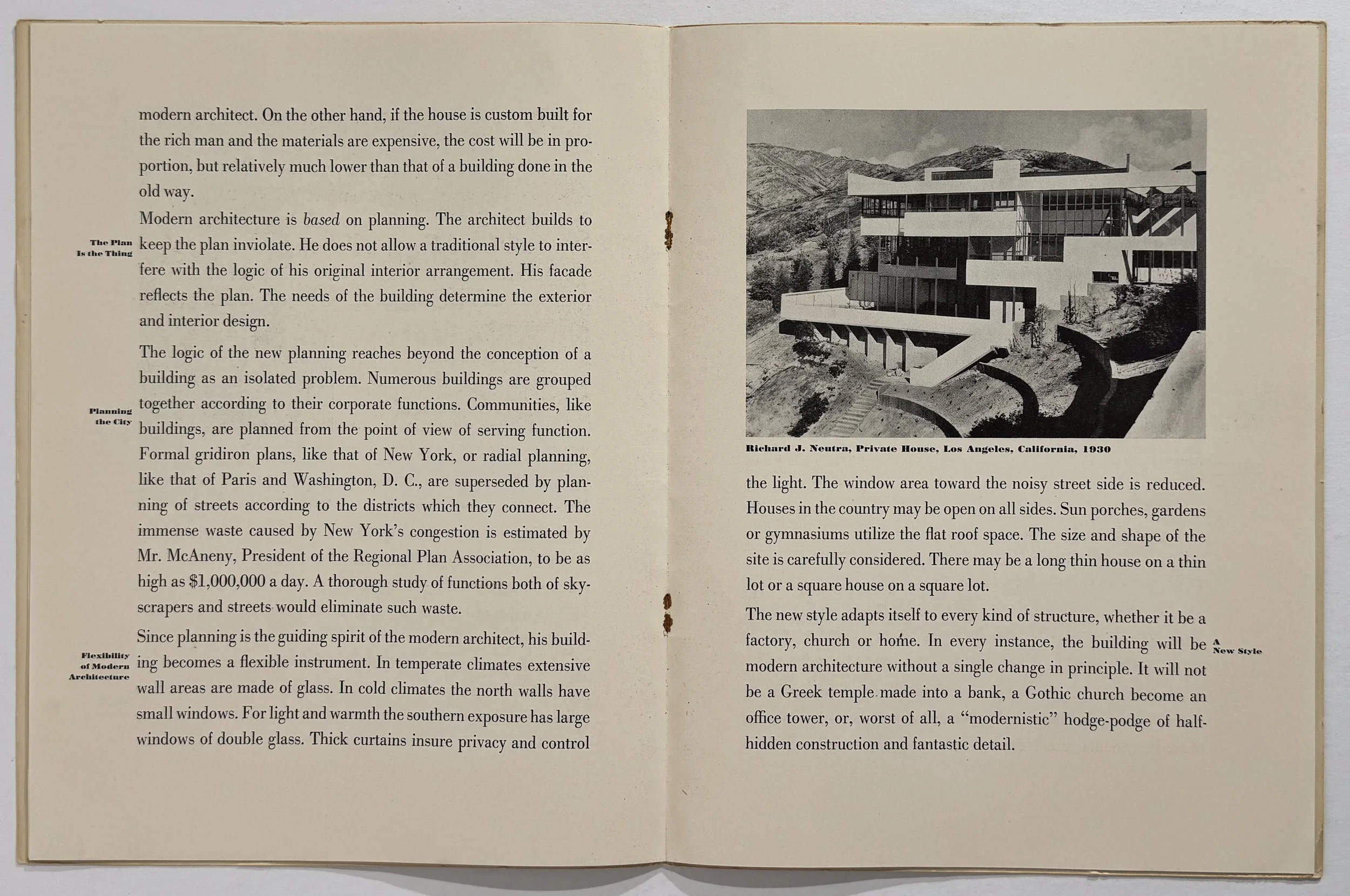 Image 5 of 22
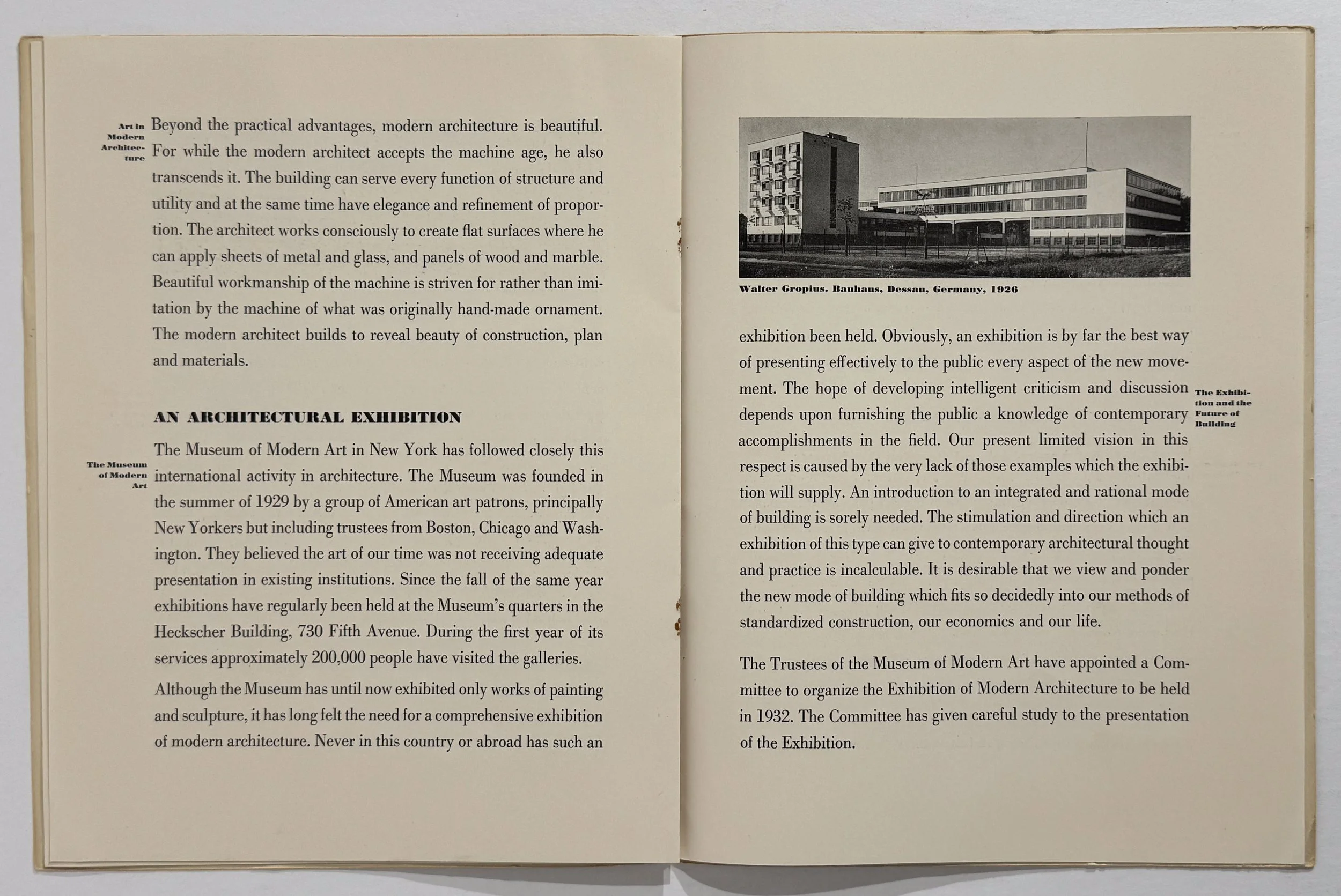 Image 6 of 22
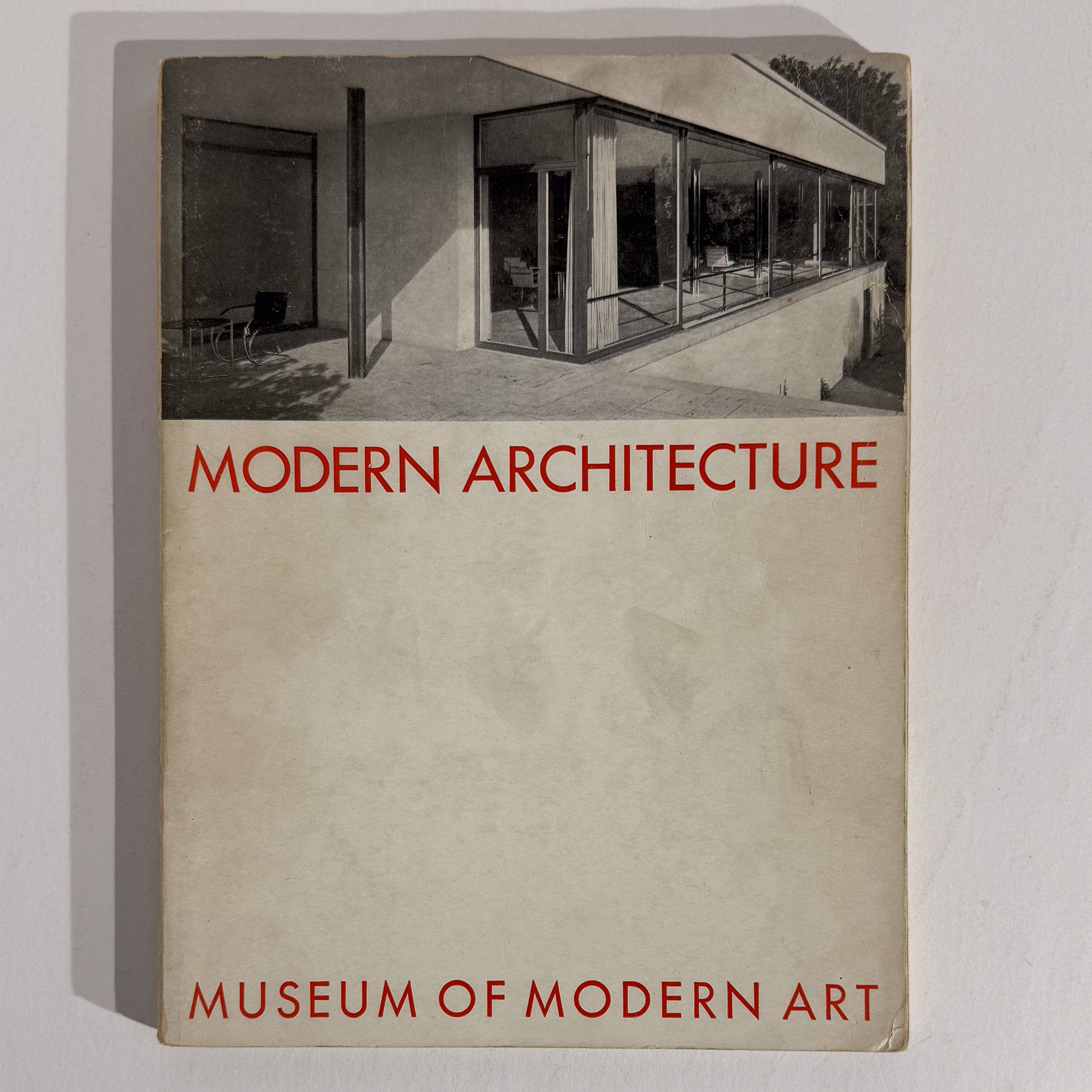 Image 7 of 22
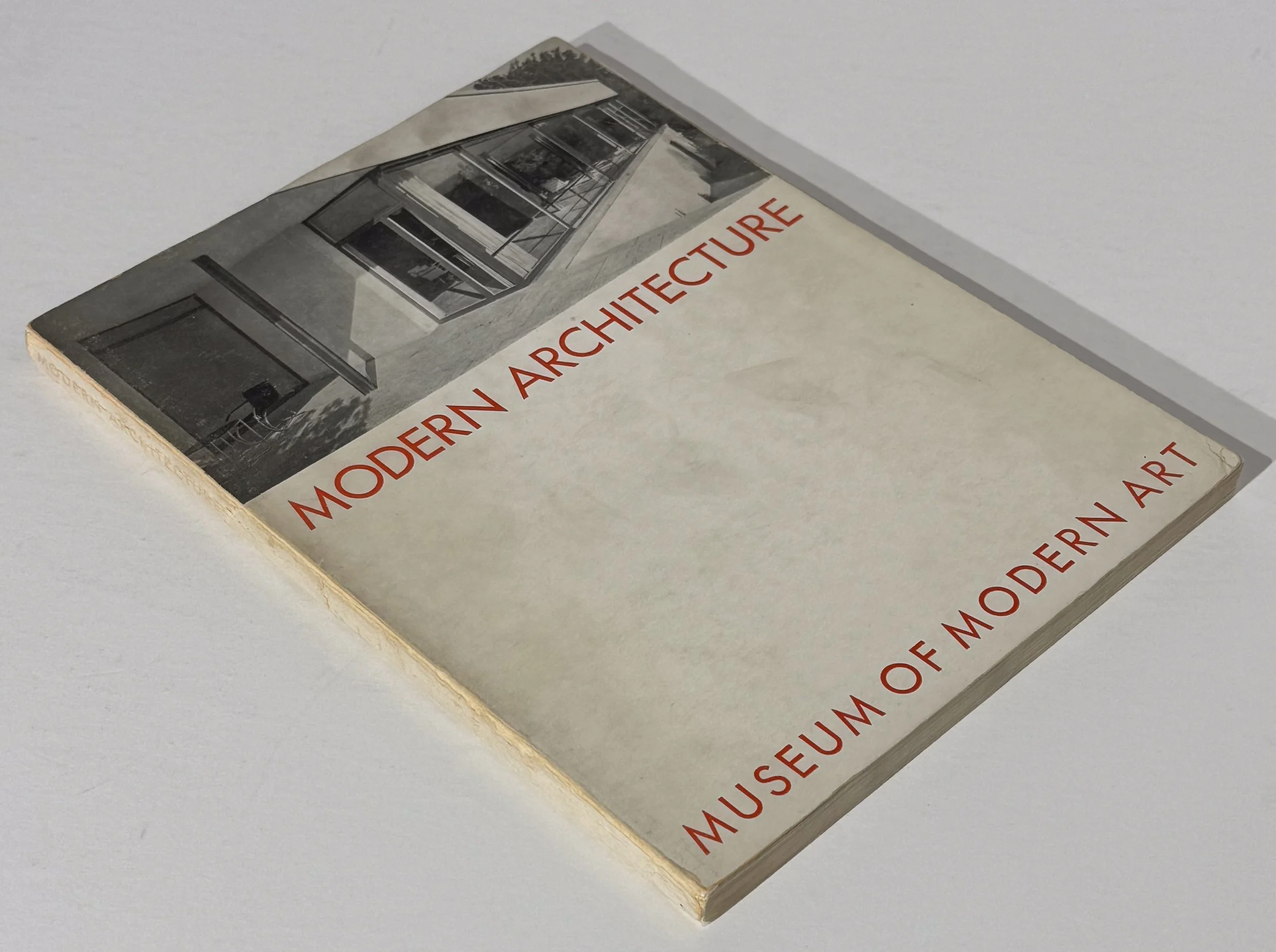 Image 8 of 22
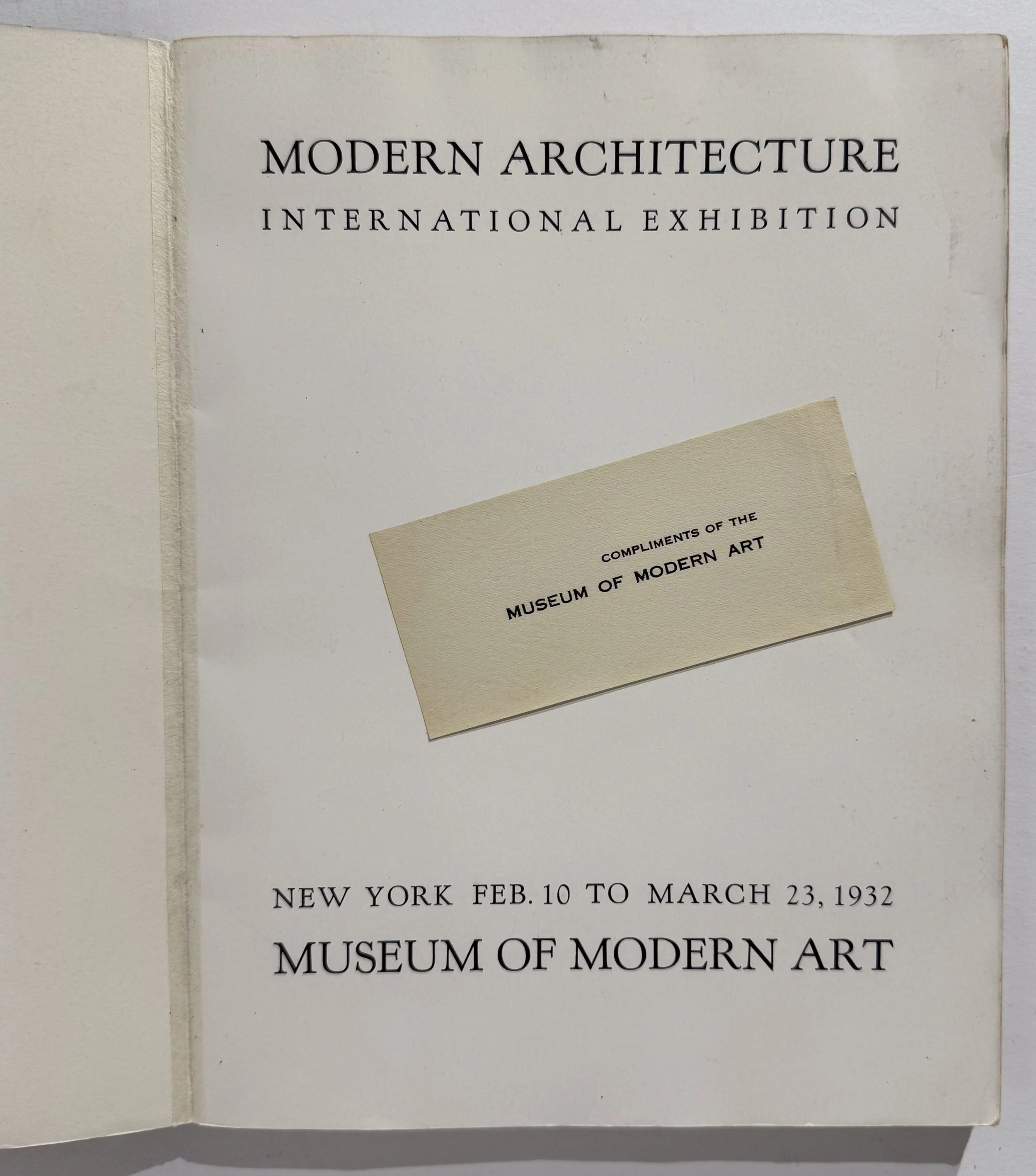 Image 9 of 22
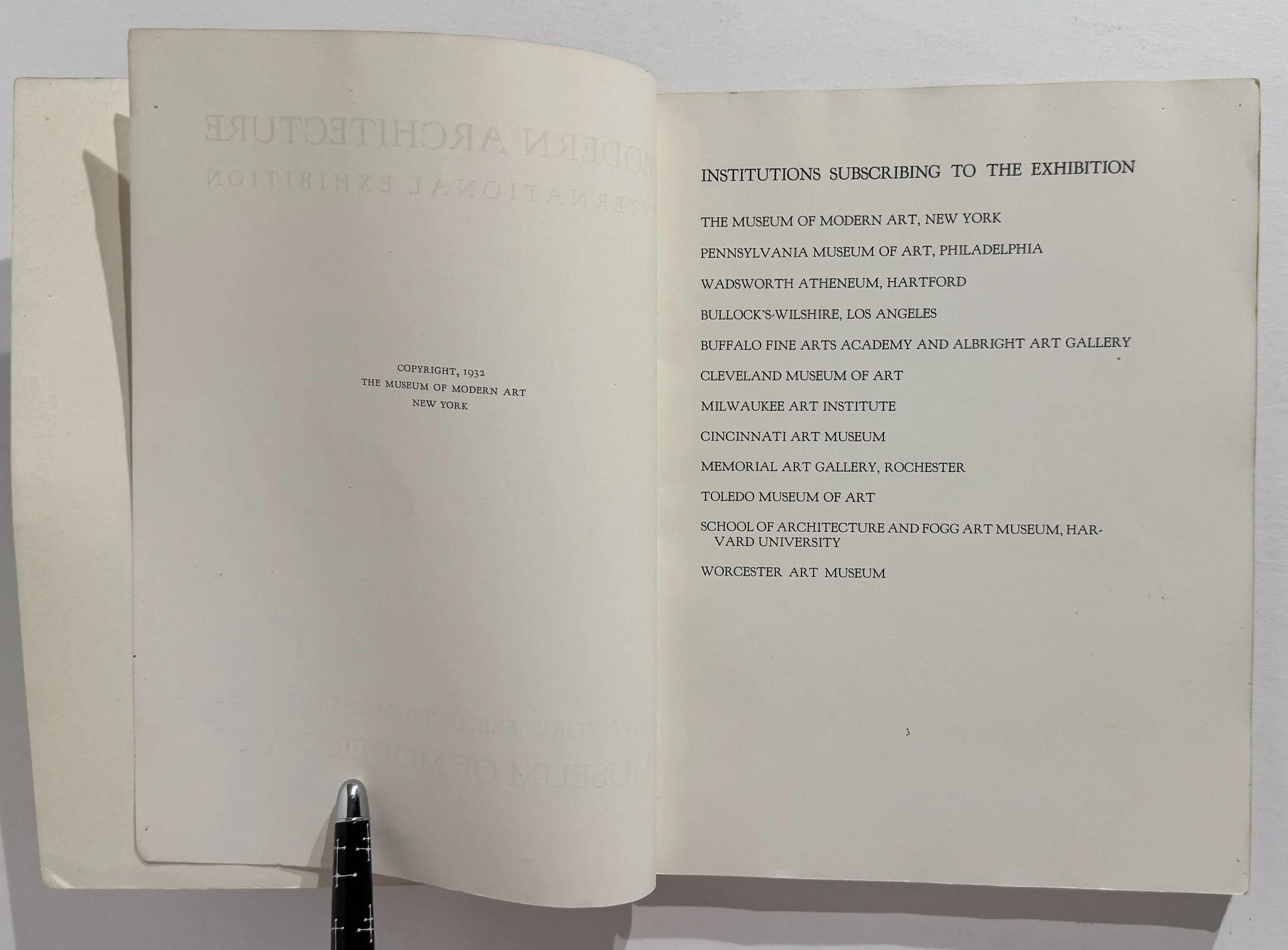 Image 10 of 22
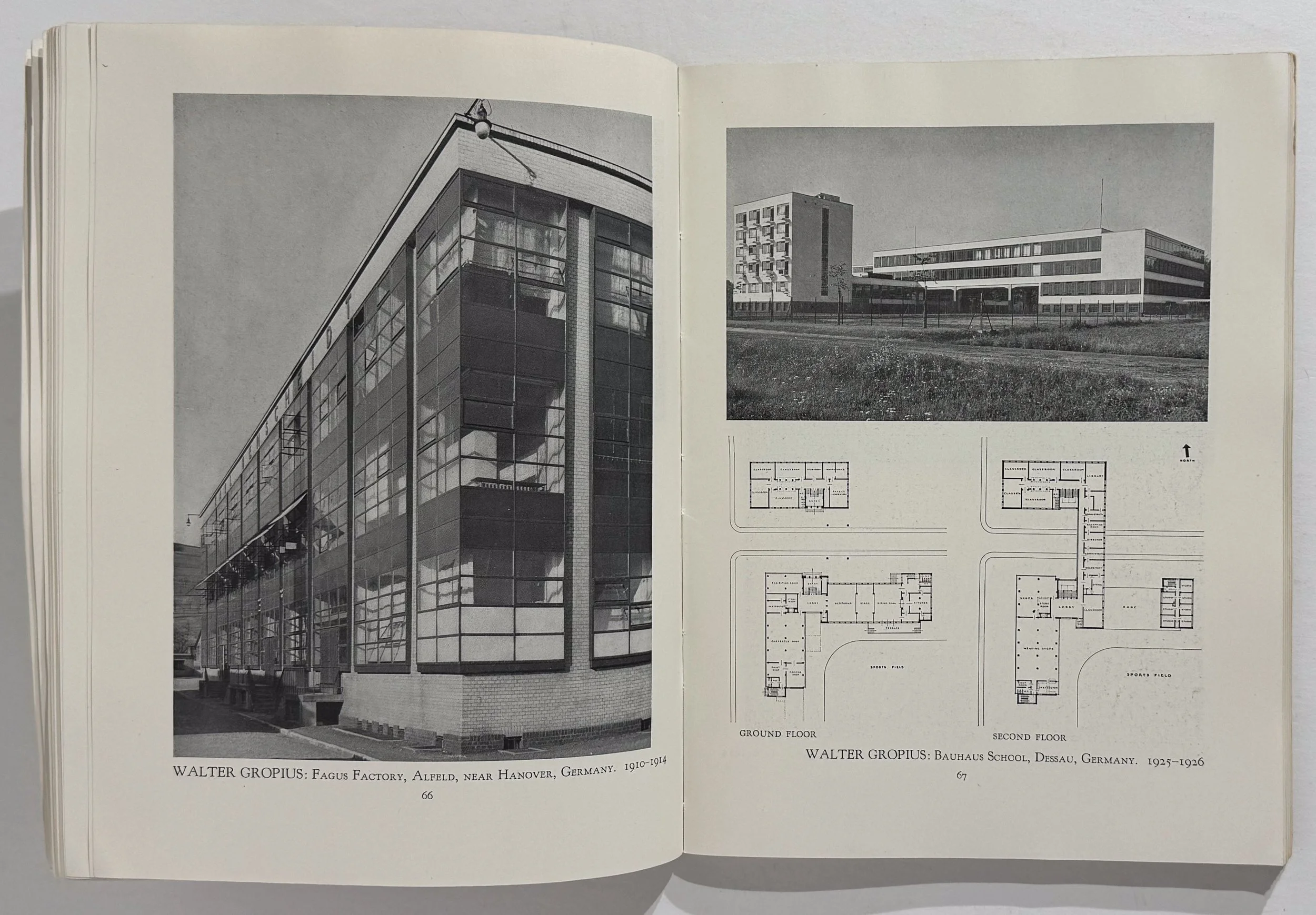 Image 11 of 22
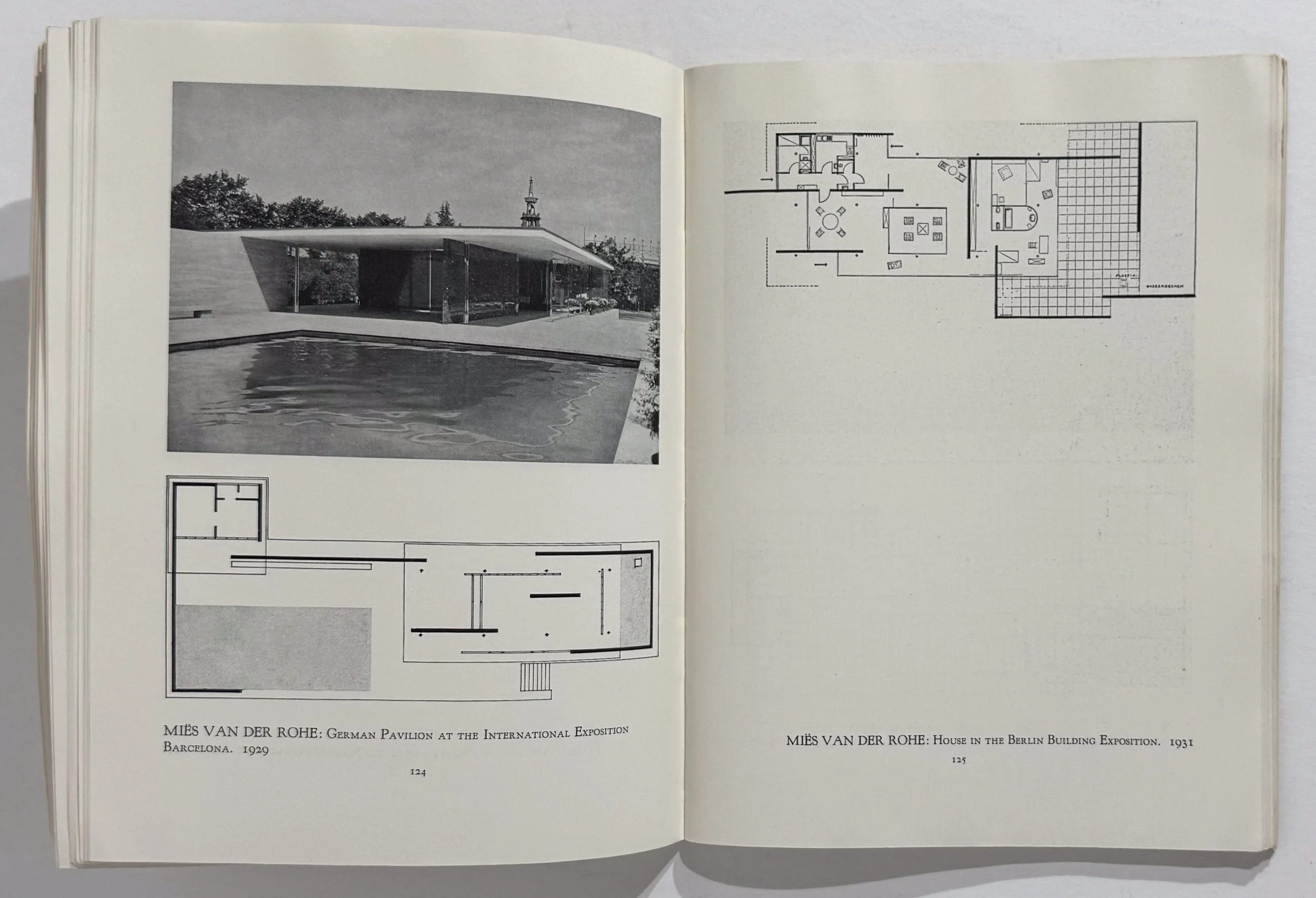 Image 12 of 22
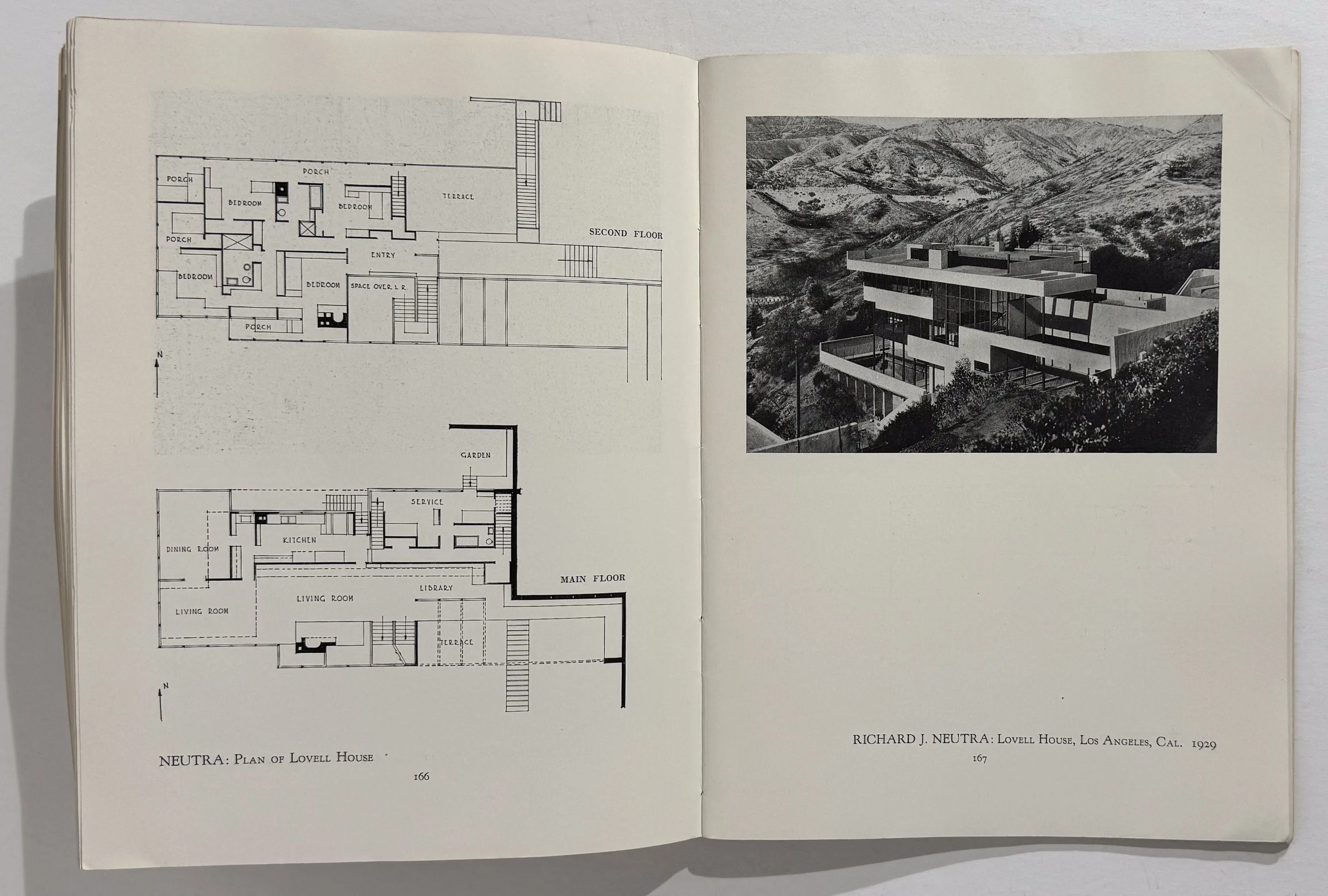 Image 13 of 22
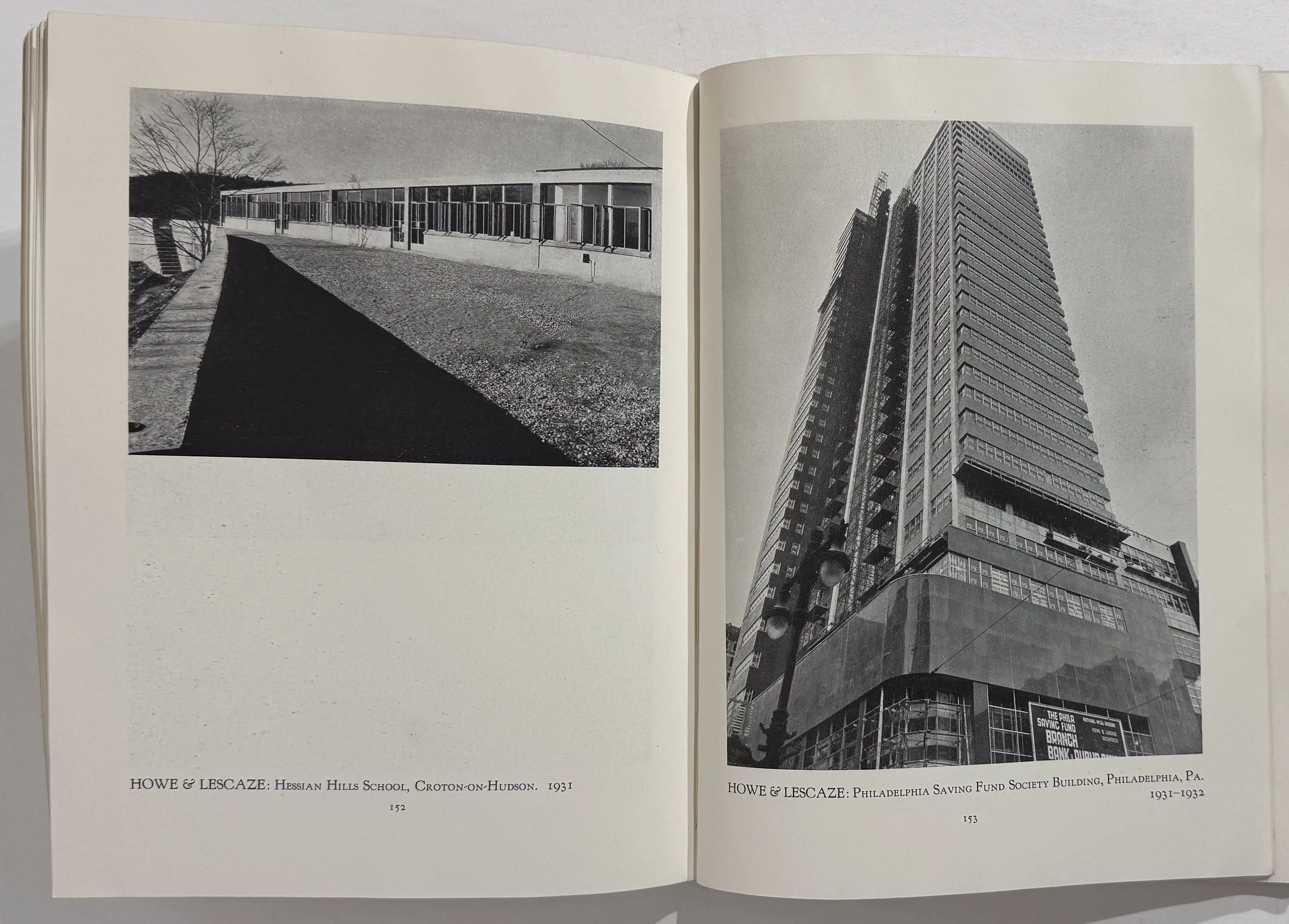 Image 14 of 22
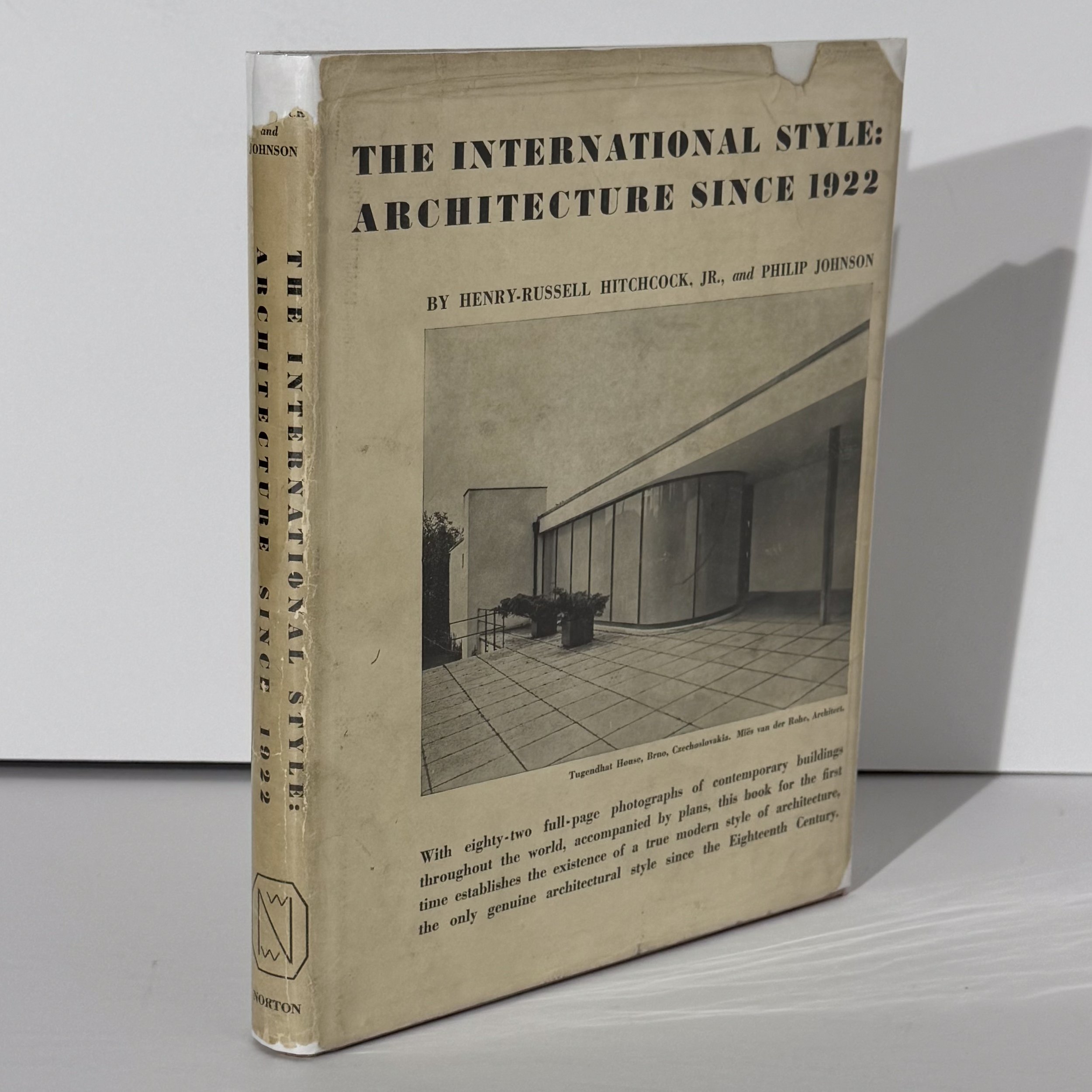 Image 15 of 22
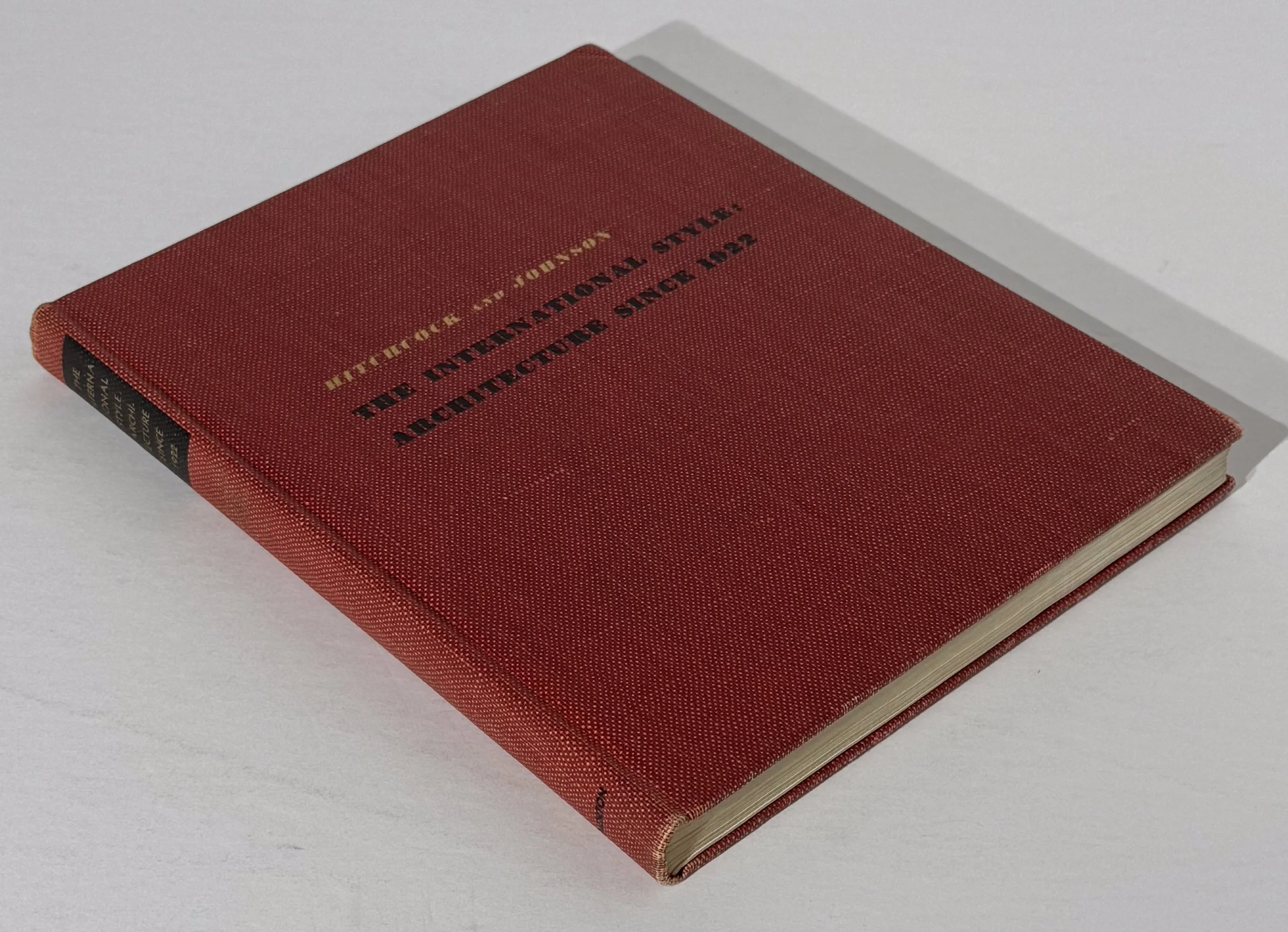 Image 16 of 22
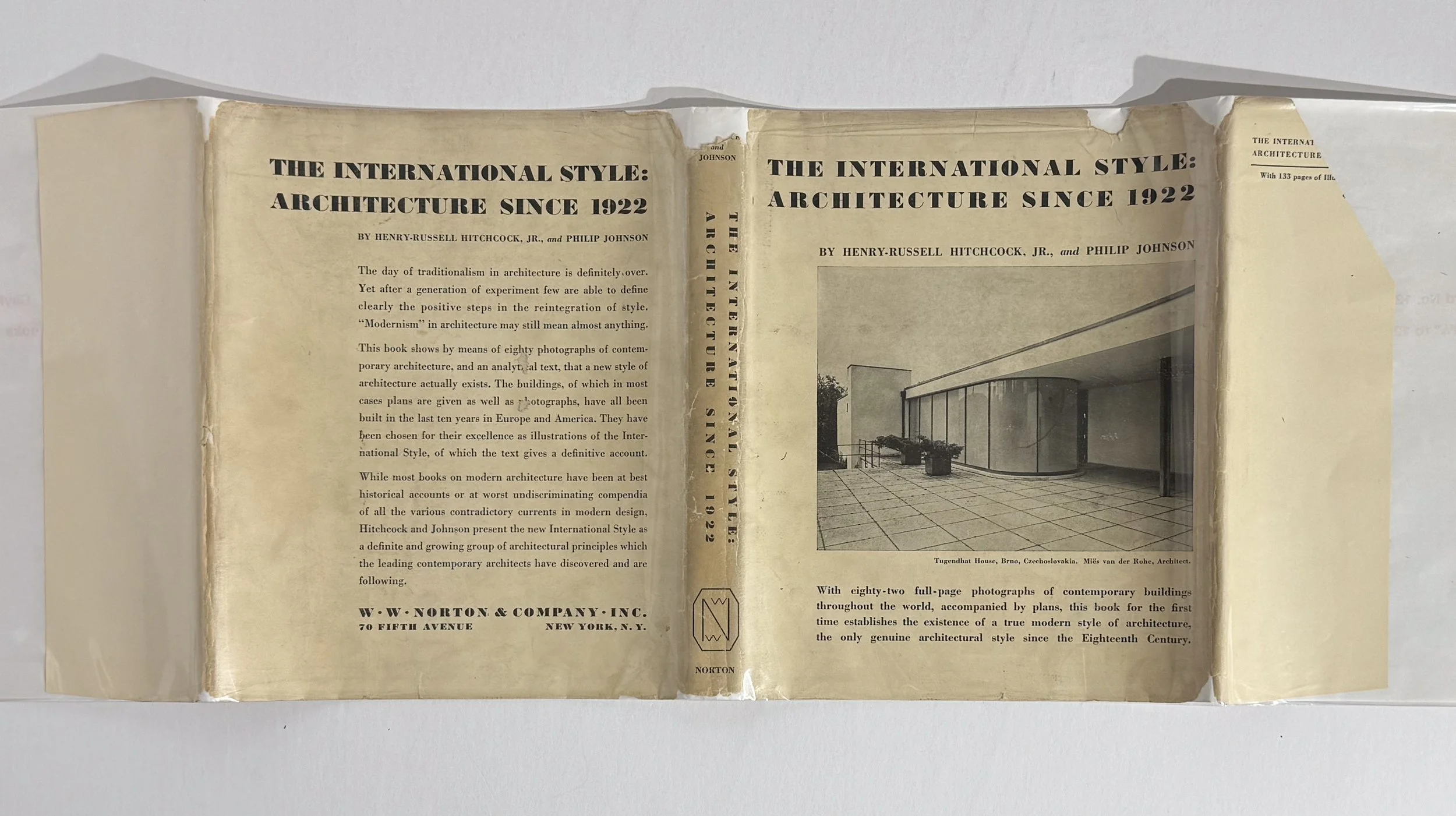 Image 17 of 22
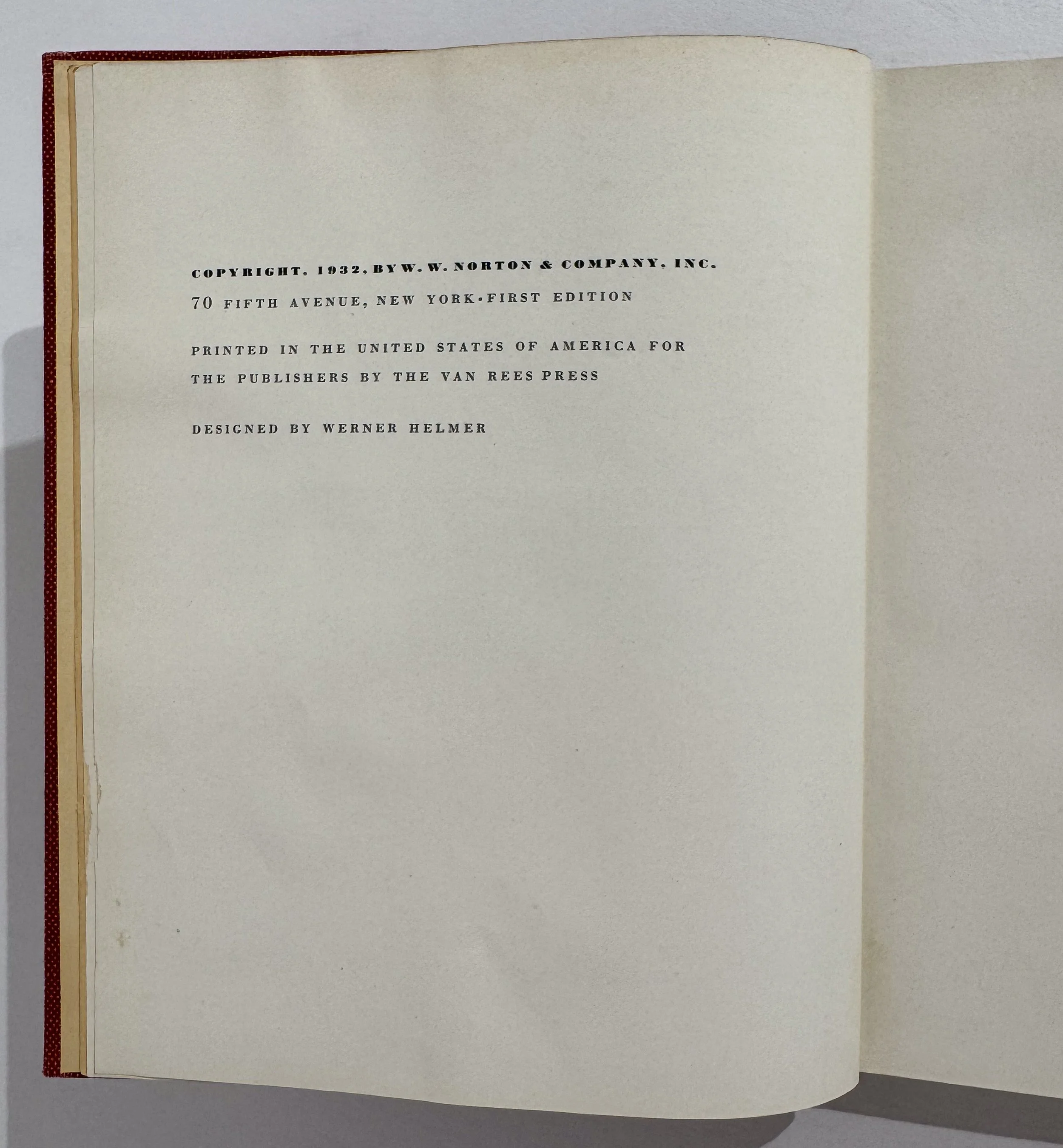 Image 18 of 22
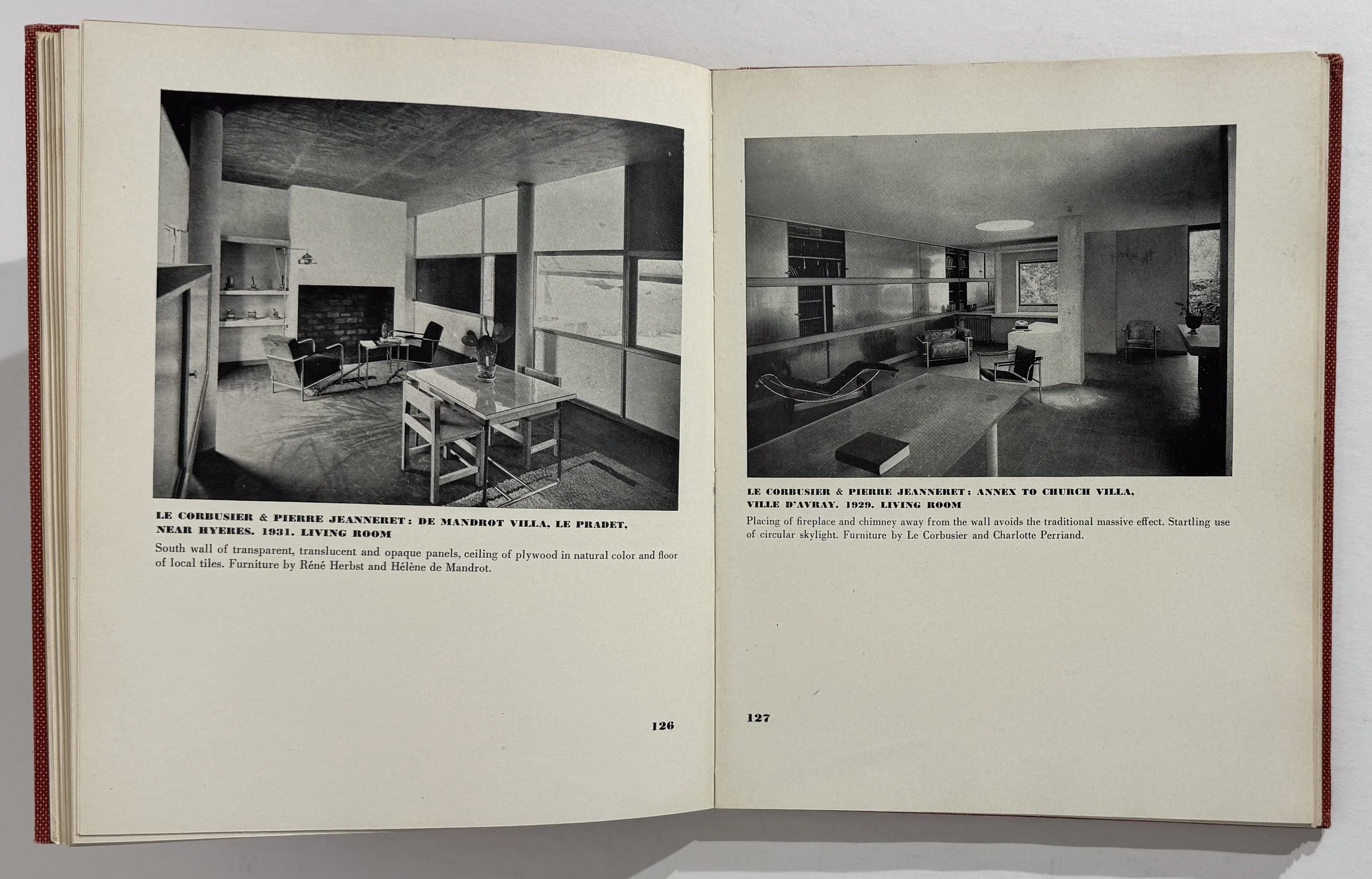 Image 19 of 22
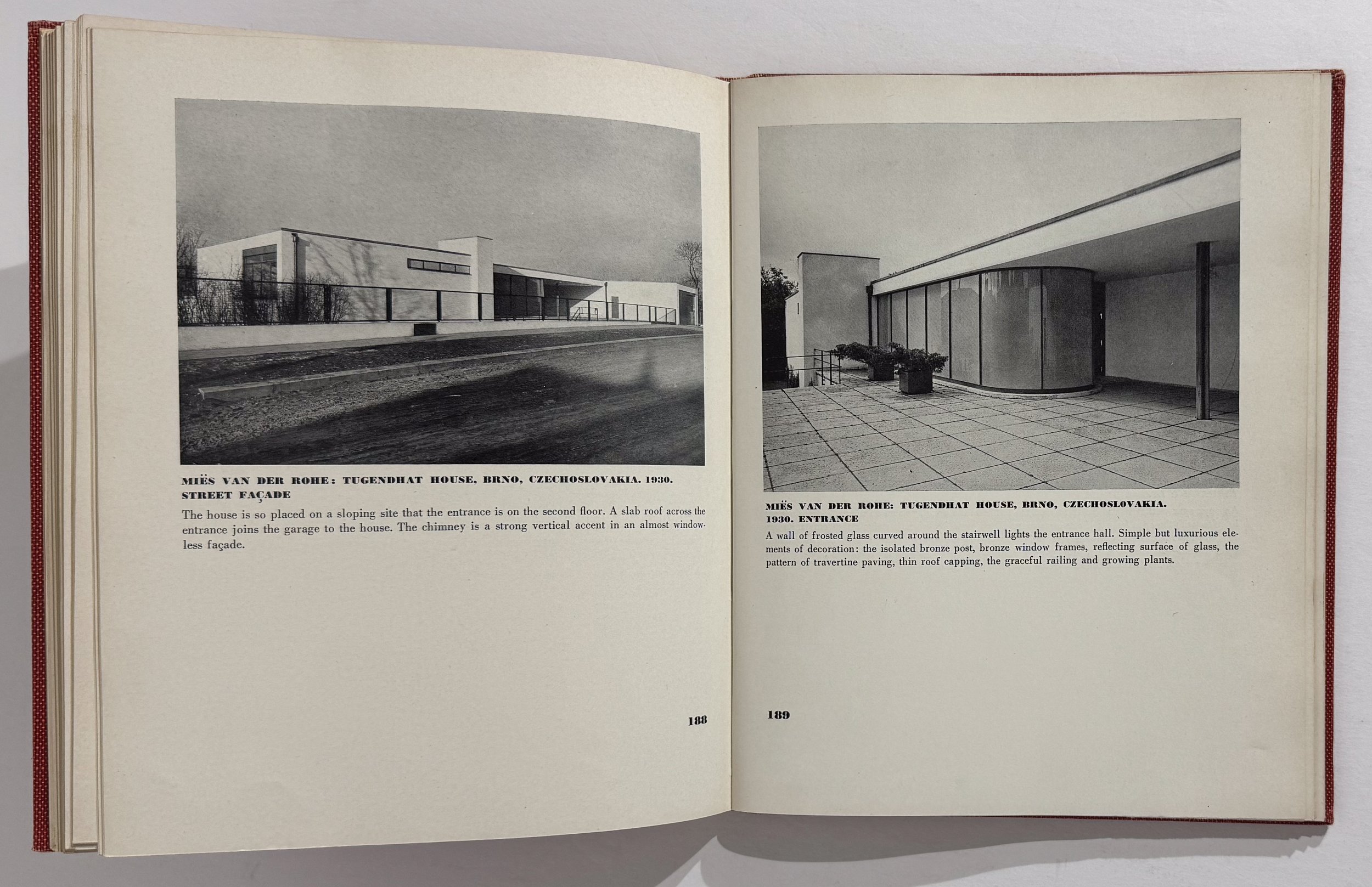 Image 20 of 22
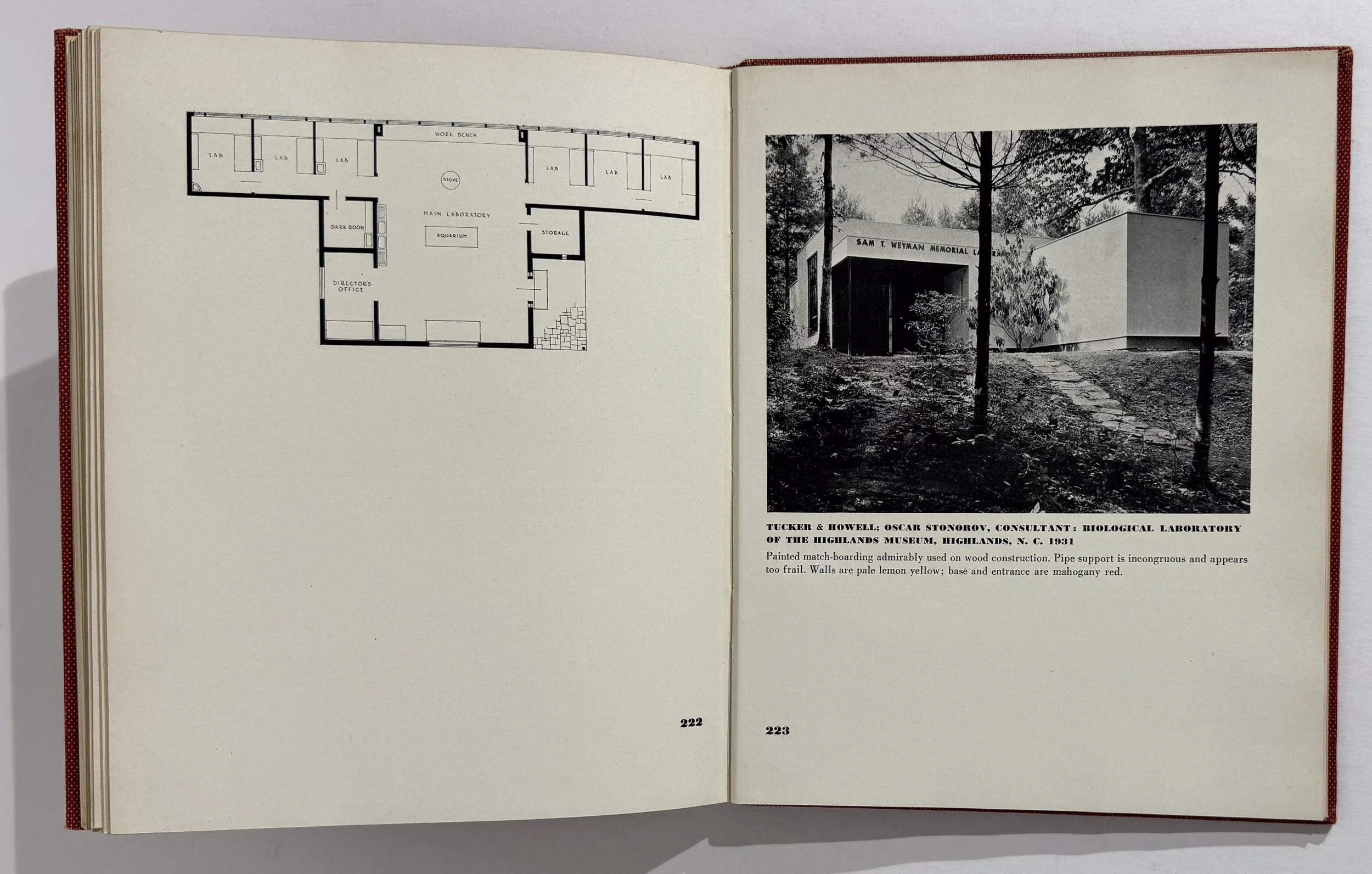 Image 21 of 22
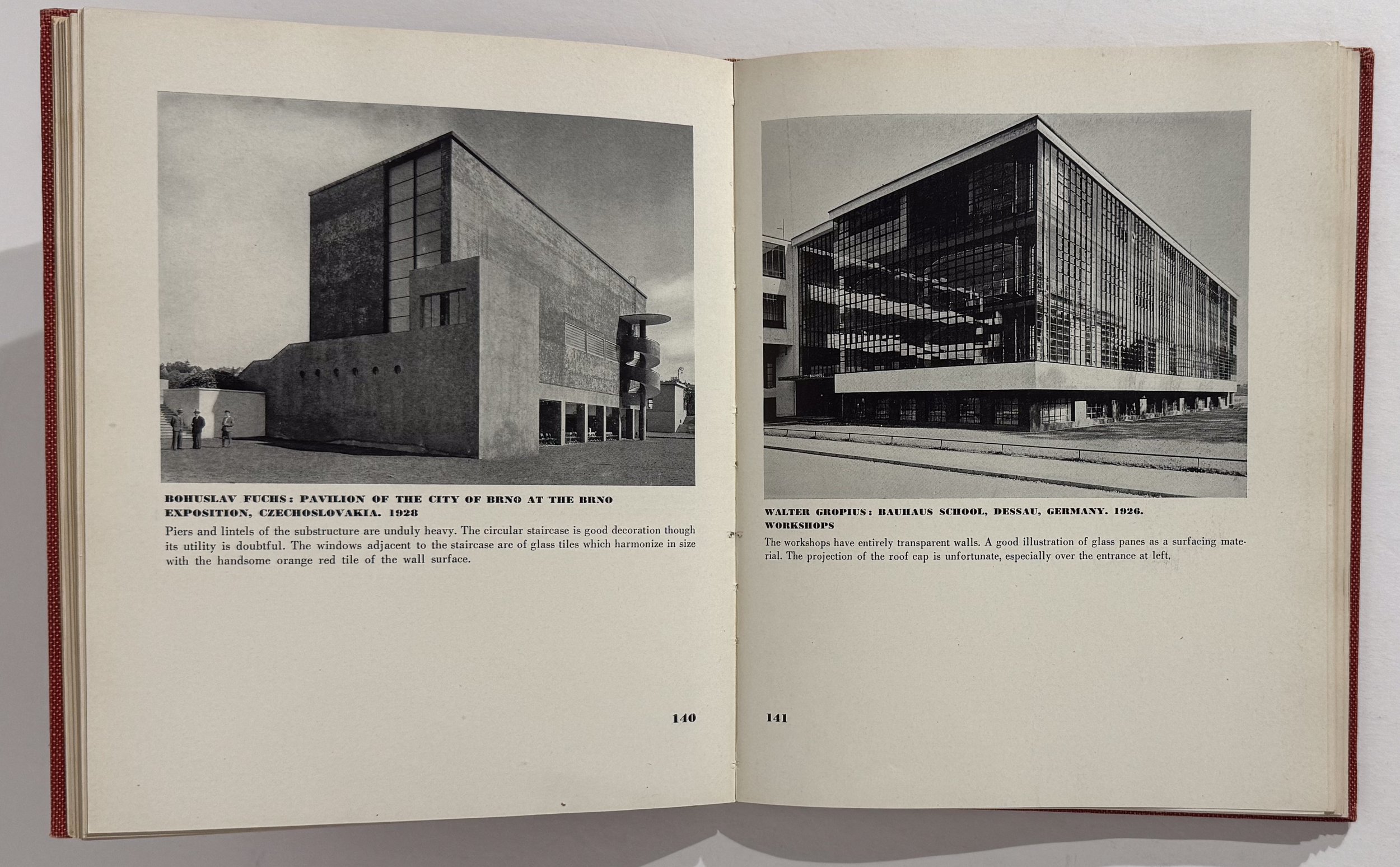 Image 22 of 22



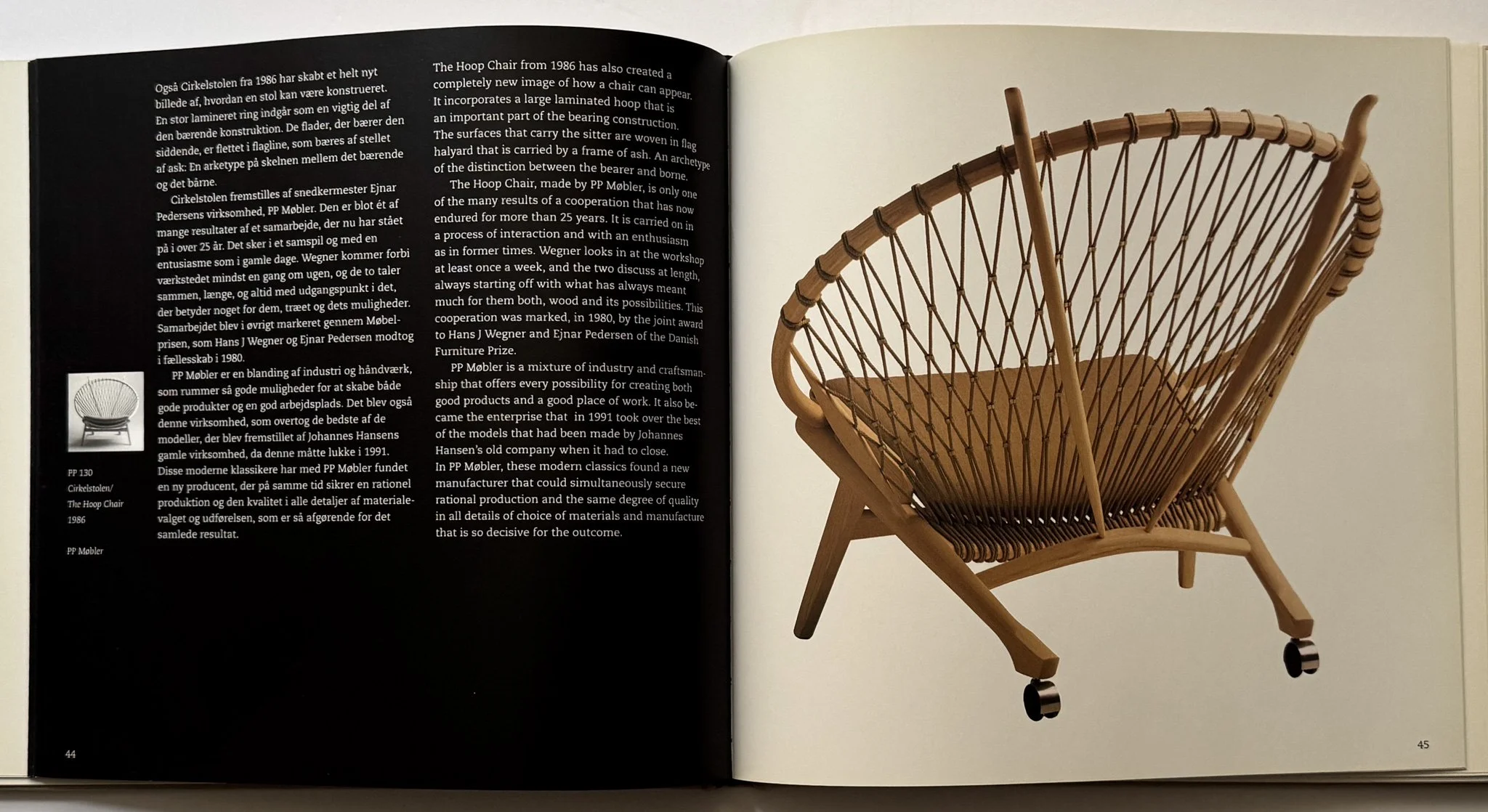
![[1st ed] Hans J Wegner om Design](https://images.squarespace-cdn.com/content/v1/61dc97a529892d0e352a9423/b3985cb0-93f7-49ee-8f90-30a0d9b85ed5/IMG_2799+2.jpg)