First edition of this early study of the social consequences of technological change and the prospects facing the coming generation, produced in association with the Institute for Policy Studies. 8vo (5.75” x 8.25”), hardcover with dust jacket, 218 pages. Published in 1965 by Random House. Inscribed on the FFE at publication to George Boehm: “For George—With deepest thanks for your expert—and your human—input! Don 1/14/65.”
The author, Donald N. Michael, was among a comparatively small group of postwar American social scientists attempting to understand the societal implications of rapidly accelerating technological change. Trained at Harvard and the University of Chicago, he worked during the 1950s in Washington policy circles, including with the Weapons Systems Evaluation Group of the Joint Chiefs of Staff and the National Science Foundation, before joining the Brookings Institution and subsequently becoming a resident fellow at the newly established Institute for Policy Studies. His work ranged from the social consequences of space exploration—he contributed to the influential 1960 Brookings report on the implications of peaceful space activities—to automation, cybernation, institutional planning, technological forecasting, and ultimately the profound uncertainties inherent in attempting to predict and manage complex societies.
The association represented by this copy is substantive. In his preface Michael states that the book was “influenced pervasively” by the deliberations of seven men who devoted three intensive days and nights to developing and refining their collective picture of the following twenty years. Among them were sociologist Daniel Bell, David Riesman, Robert Theobald, Robert A. Asher, Herbert Striner, Stephen Withey—and science journalist George Boehm, then Science Editor of Fortune. Michael's presentation inscription to Boehm, dated January 14, 1965, directly acknowledges the contribution documented in the printed text.
Glue burn to front endpapers. Light bumping and moderate rubbing to dj. Half-inch closed tear to top edge of rear cover; 1.5” open tear to bottom edge of front flap. An exceptional association copy of an important early work of American futures studies, presented by one of the field's pioneering thinkers to a named participant in the workshop group from which the book emerged. Provenance: the estate of George Boehm.
First edition of this early study of the social consequences of technological change and the prospects facing the coming generation, produced in association with the Institute for Policy Studies. 8vo (5.75” x 8.25”), hardcover with dust jacket, 218 pages. Published in 1965 by Random House. Inscribed on the FFE at publication to George Boehm: “For George—With deepest thanks for your expert—and your human—input! Don 1/14/65.”
The author, Donald N. Michael, was among a comparatively small group of postwar American social scientists attempting to understand the societal implications of rapidly accelerating technological change. Trained at Harvard and the University of Chicago, he worked during the 1950s in Washington policy circles, including with the Weapons Systems Evaluation Group of the Joint Chiefs of Staff and the National Science Foundation, before joining the Brookings Institution and subsequently becoming a resident fellow at the newly established Institute for Policy Studies. His work ranged from the social consequences of space exploration—he contributed to the influential 1960 Brookings report on the implications of peaceful space activities—to automation, cybernation, institutional planning, technological forecasting, and ultimately the profound uncertainties inherent in attempting to predict and manage complex societies.
The association represented by this copy is substantive. In his preface Michael states that the book was “influenced pervasively” by the deliberations of seven men who devoted three intensive days and nights to developing and refining their collective picture of the following twenty years. Among them were sociologist Daniel Bell, David Riesman, Robert Theobald, Robert A. Asher, Herbert Striner, Stephen Withey—and science journalist George Boehm, then Science Editor of Fortune. Michael's presentation inscription to Boehm, dated January 14, 1965, directly acknowledges the contribution documented in the printed text.
Glue burn to front endpapers. Light bumping and moderate rubbing to dj. Half-inch closed tear to top edge of rear cover; 1.5” open tear to bottom edge of front flap. An exceptional association copy of an important early work of American futures studies, presented by one of the field's pioneering thinkers to a named participant in the workshop group from which the book emerged. Provenance: the estate of George Boehm.

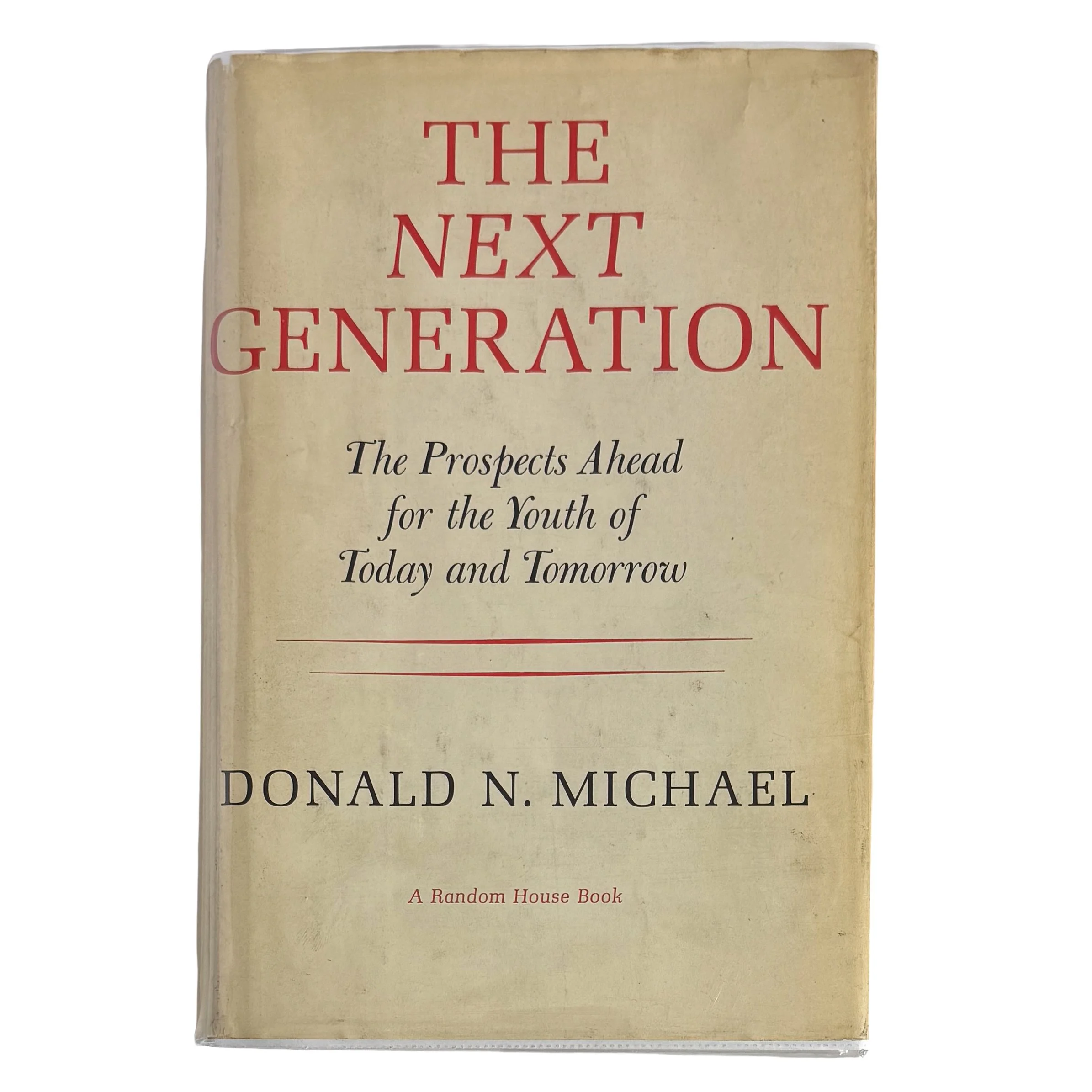 Image 1 of 8
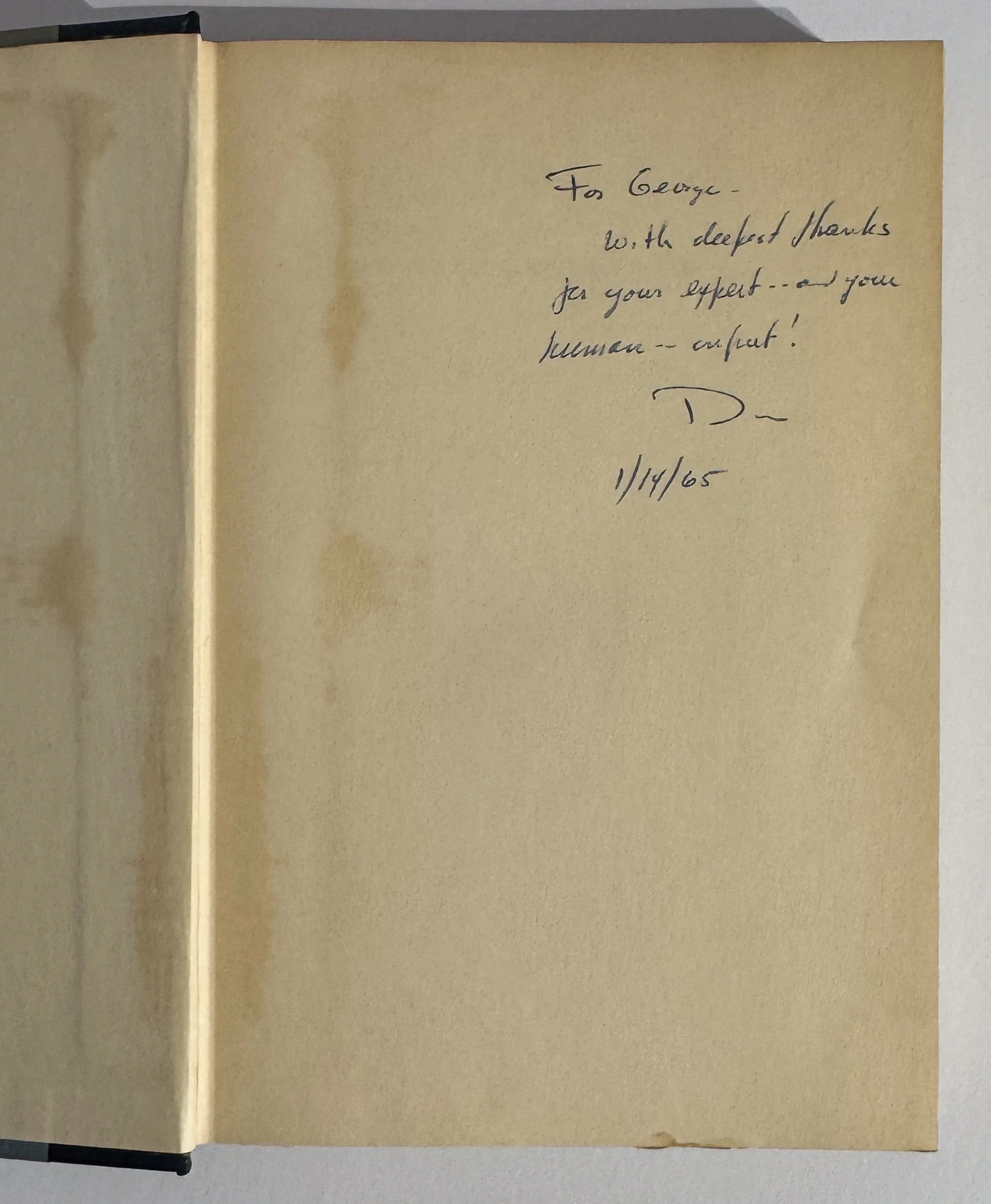 Image 2 of 8
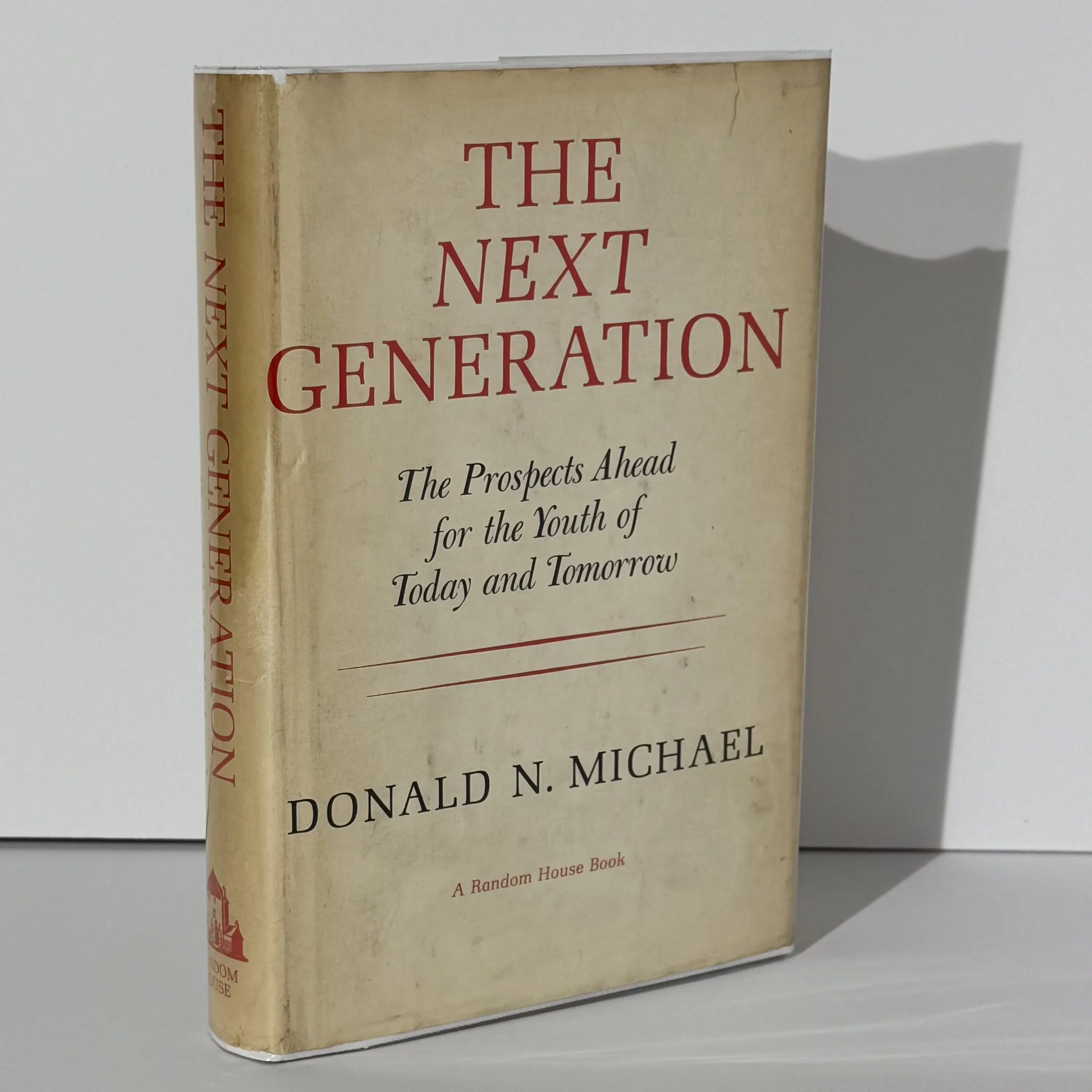 Image 3 of 8
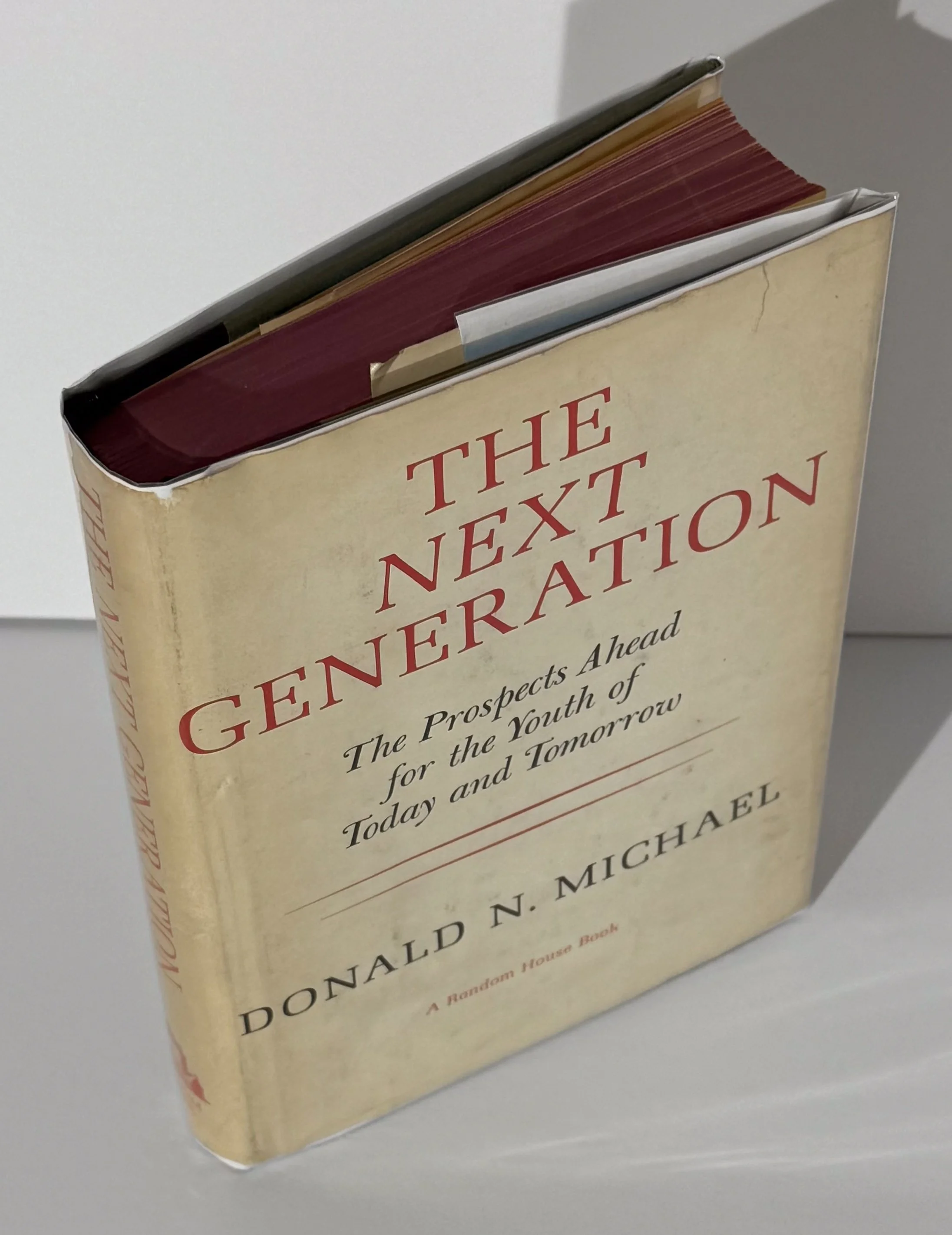 Image 4 of 8
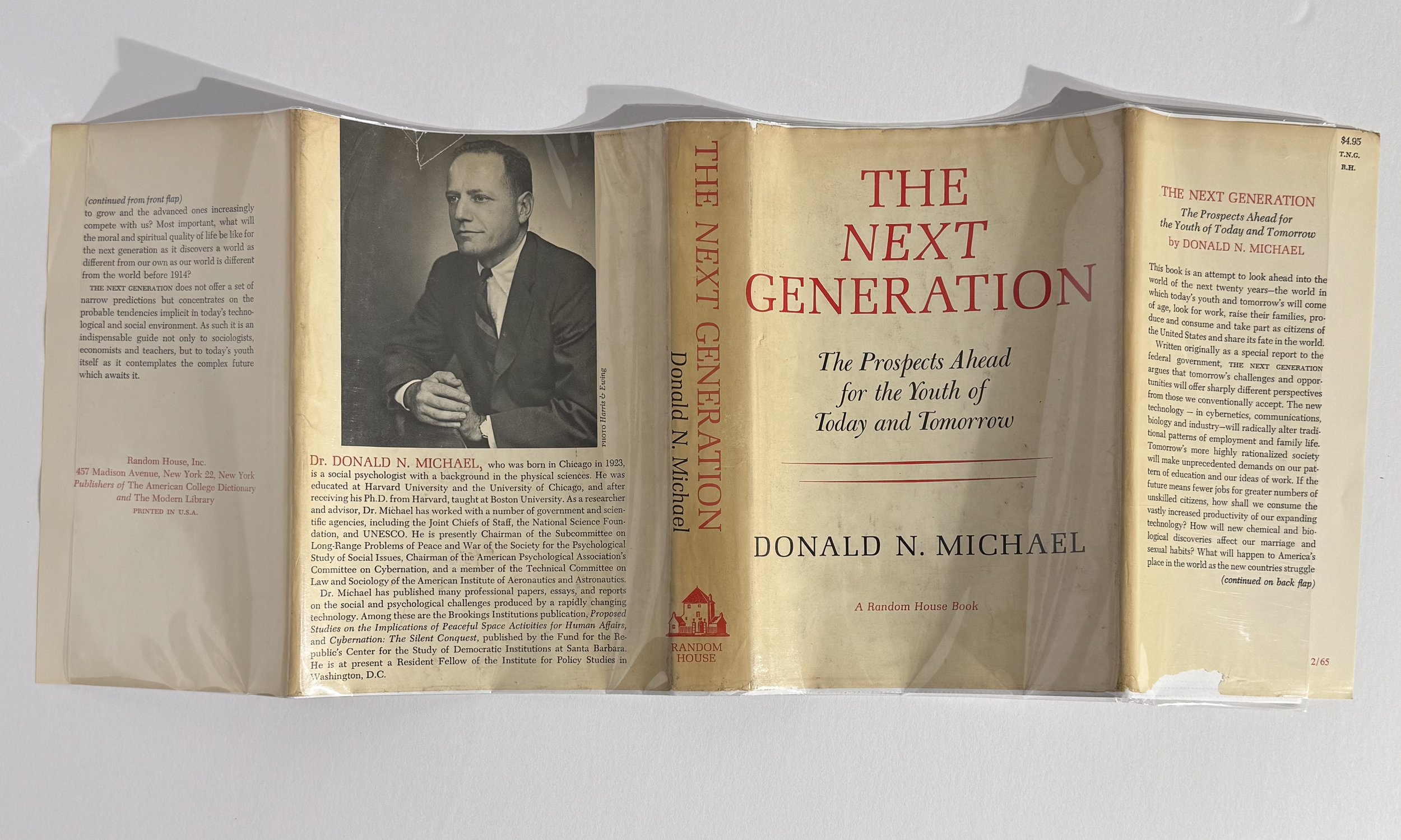 Image 5 of 8
 Image 6 of 8
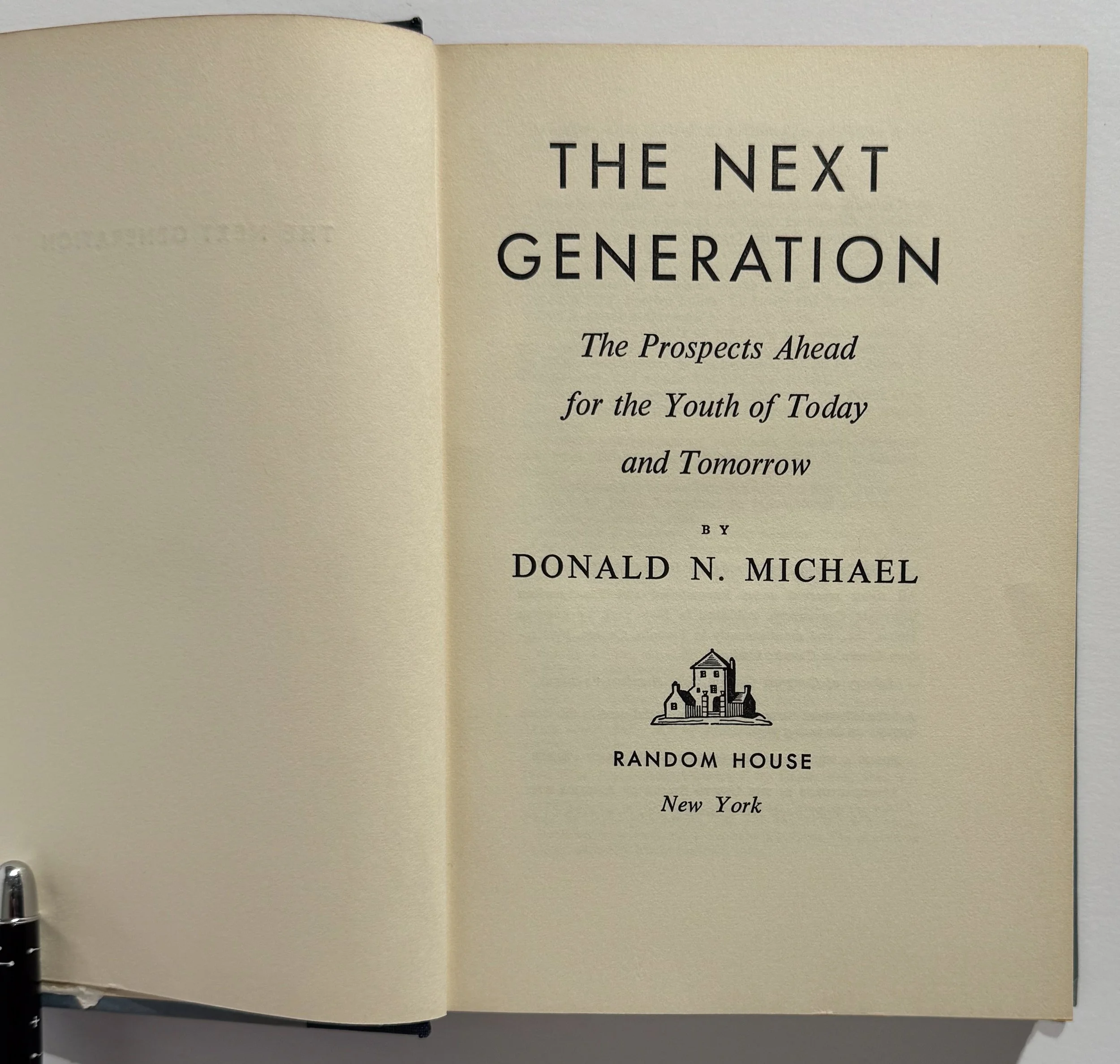 Image 7 of 8
 Image 8 of 8