 Image 1 of 5
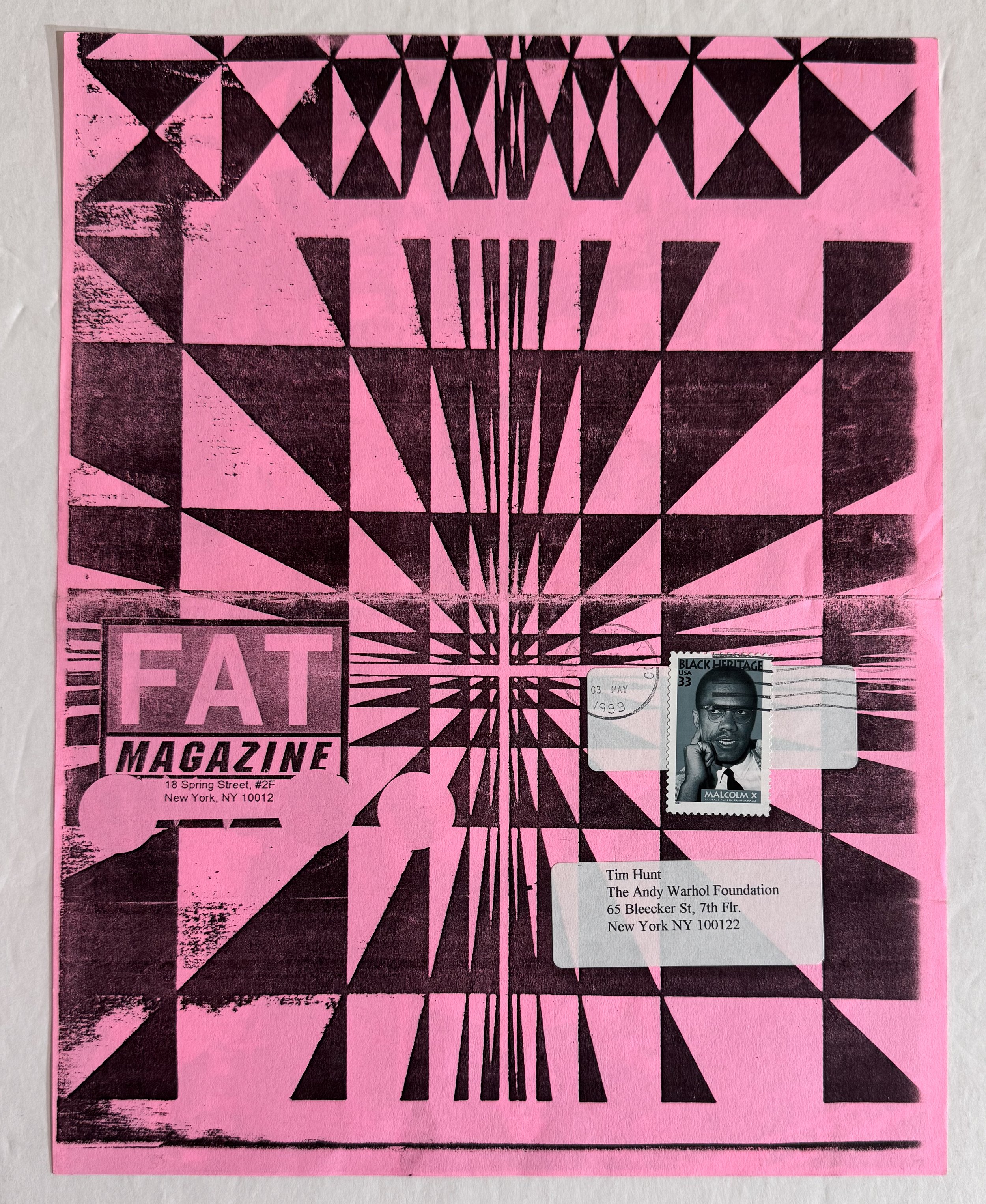 Image 2 of 5
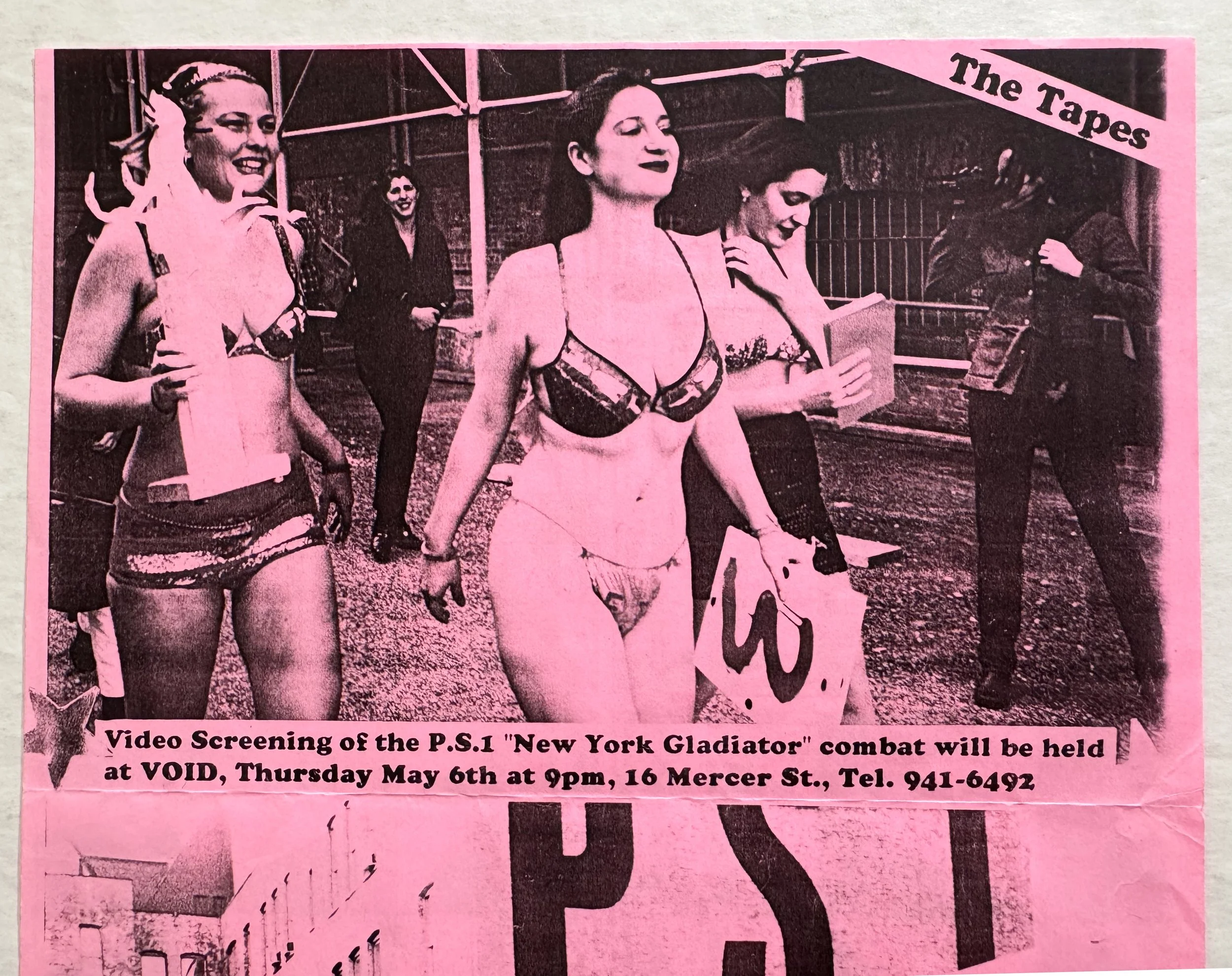 Image 3 of 5
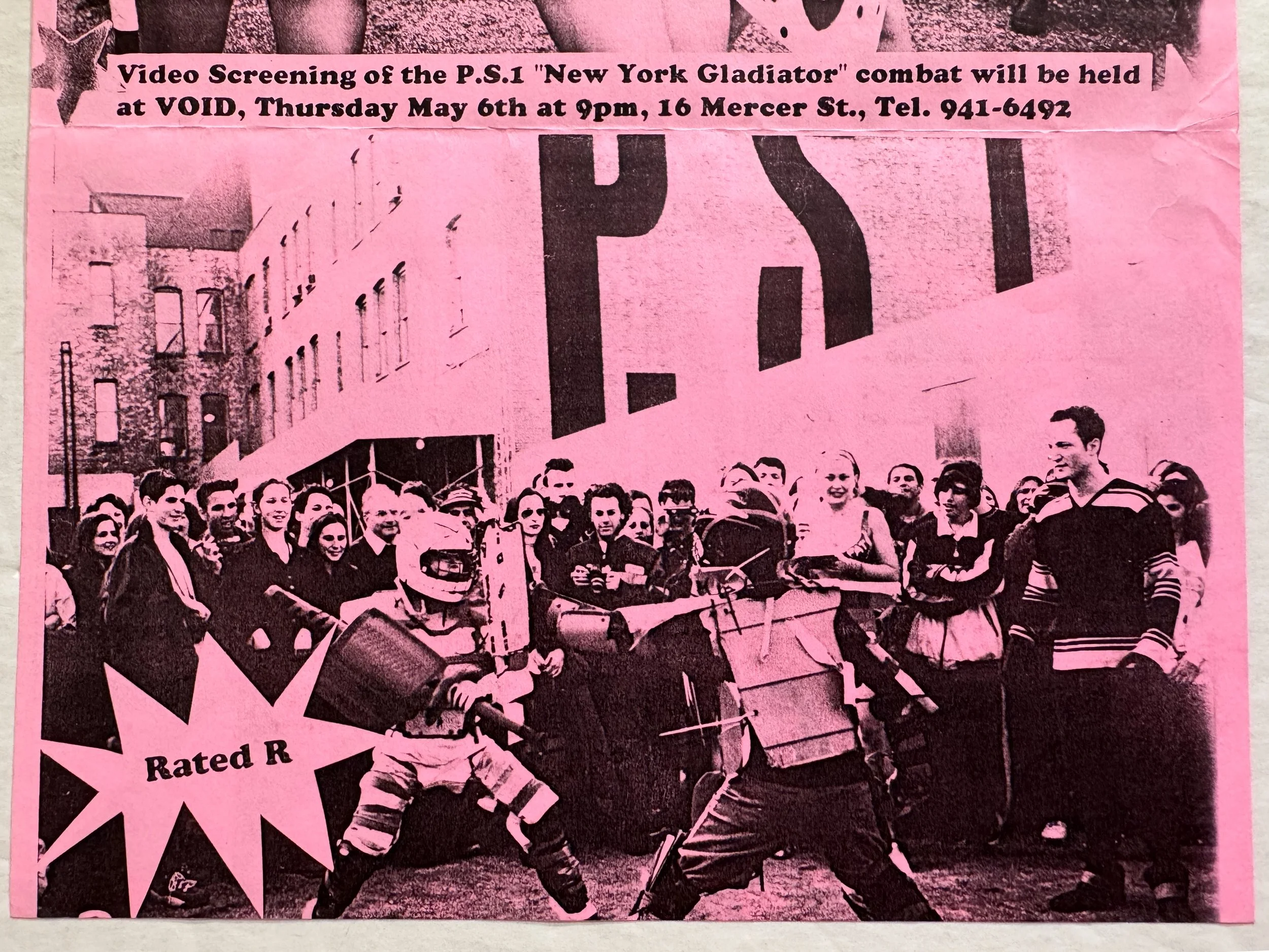 Image 4 of 5
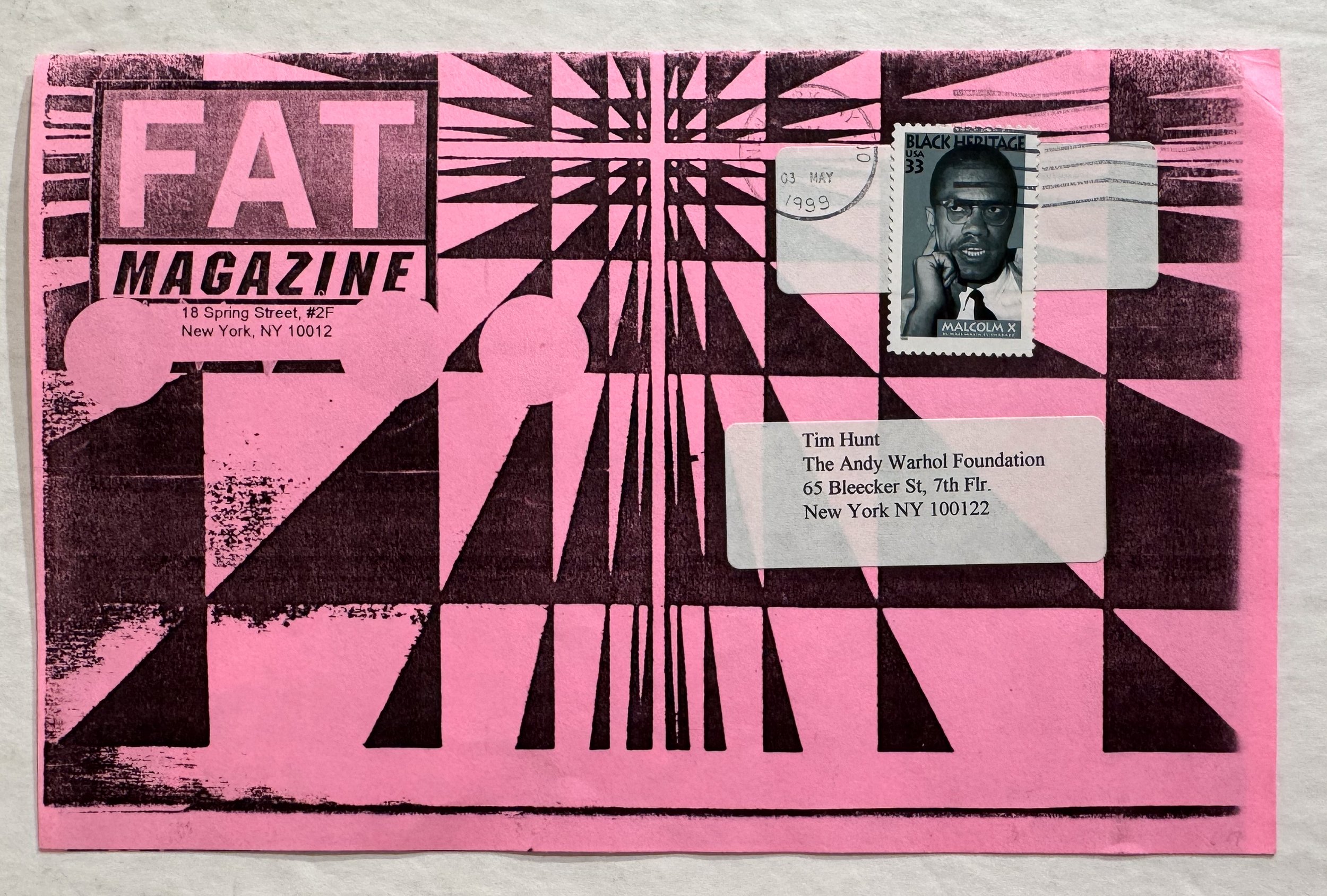 Image 5 of 5
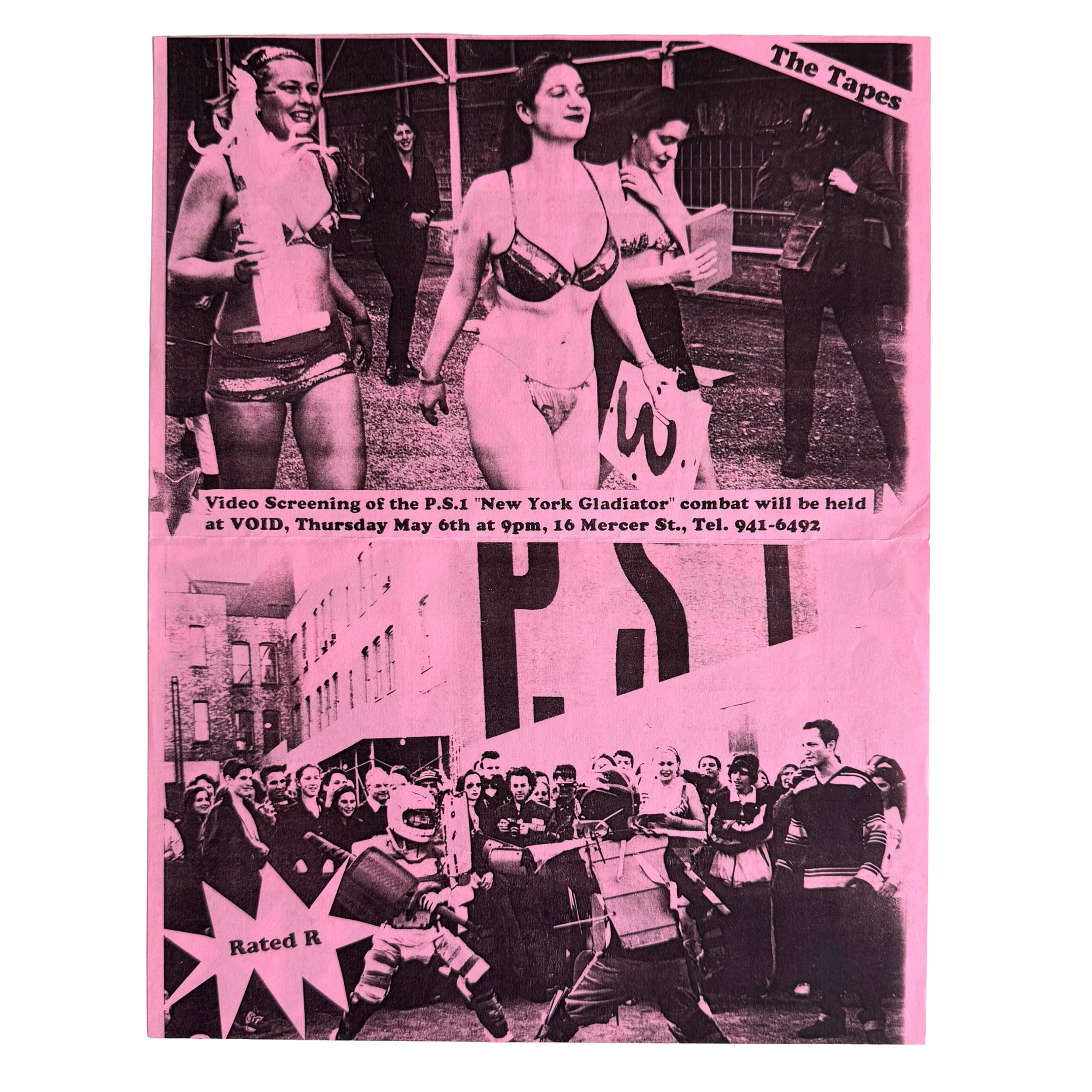
Double-sided flyer/broadside published by FAT Magazine and issued for the May 6, 1999 screening at VOID, 16 Mercer Street, of video documenting multimedia artist Dirk Westphal’s New York Gladiators combat staged at P.S.1. 8.5” x 11”, black-printed on fluorescent-pink paper, photographically illustrated recto with an optically charged mailing panel on verso; folded for mailing. Westphal’s event formed part of Criss Cross: Some Young New Yorkers III, P.S.1’s investigation of collaborative and entrepreneurial activity within the contemporary New York art world. On April 3, FAT founder and editor Josephine Meckseper publicly challenged female magazine editors to meet her in Westphal’s courtyard arena, while FAT extended a more general invitation to fearless participants of either sex.
FAT Magazine was conceived as a work of art in circulation. Drawing upon the tabloid press, pornography, advertising, political propaganda, and Jean-Paul Marat’s revolutionary newspaper L’Ami du peuple, it replaced the decorum of contemporary-art publishing with a shrill, deliberately popular visual language. In the present case, photographic reportage, sexual spectacle, mock sensationalism, fluorescent stock, and the emphatic designation “Rated R” transform an ephemeral announcement into a compact graphic object. The reverse is equally forceful: address, postage, and cancellation interrupt an expanding field of geometric forms, making the mechanics of distribution part of the composition.
Mailed May 3, 1999—three days before the screening—to Tim Hunt at the Andy Warhol Foundation for the Visual Arts. Hunt served for more than a decade as the Foundation’s chief curator and later as its official agent for Warhol prints and photographs. The association is particularly resonant: FAT’s collision of art, commerce, sexuality, celebrity, and mass-media circulation occupied a distinctly post-Warhol terrain.
Original mailing folds, address and postal labels, 33-cent Malcolm X stamp, and New York cancellation; scattered handling creases with modest edge and corner wear. Very good for an example distributed through the mail. An apparently scarce piece of Meckseper and Westphal ephemera, simultaneously documenting a P.S.1 performance, downtown alternative culture, and the circulation of FAT as an artist’s project.
Double-sided flyer/broadside published by FAT Magazine and issued for the May 6, 1999 screening at VOID, 16 Mercer Street, of video documenting multimedia artist Dirk Westphal’s New York Gladiators combat staged at P.S.1. 8.5” x 11”, black-printed on fluorescent-pink paper, photographically illustrated recto with an optically charged mailing panel on verso; folded for mailing. Westphal’s event formed part of Criss Cross: Some Young New Yorkers III, P.S.1’s investigation of collaborative and entrepreneurial activity within the contemporary New York art world. On April 3, FAT founder and editor Josephine Meckseper publicly challenged female magazine editors to meet her in Westphal’s courtyard arena, while FAT extended a more general invitation to fearless participants of either sex.
FAT Magazine was conceived as a work of art in circulation. Drawing upon the tabloid press, pornography, advertising, political propaganda, and Jean-Paul Marat’s revolutionary newspaper L’Ami du peuple, it replaced the decorum of contemporary-art publishing with a shrill, deliberately popular visual language. In the present case, photographic reportage, sexual spectacle, mock sensationalism, fluorescent stock, and the emphatic designation “Rated R” transform an ephemeral announcement into a compact graphic object. The reverse is equally forceful: address, postage, and cancellation interrupt an expanding field of geometric forms, making the mechanics of distribution part of the composition.
Mailed May 3, 1999—three days before the screening—to Tim Hunt at the Andy Warhol Foundation for the Visual Arts. Hunt served for more than a decade as the Foundation’s chief curator and later as its official agent for Warhol prints and photographs. The association is particularly resonant: FAT’s collision of art, commerce, sexuality, celebrity, and mass-media circulation occupied a distinctly post-Warhol terrain.
Original mailing folds, address and postal labels, 33-cent Malcolm X stamp, and New York cancellation; scattered handling creases with modest edge and corner wear. Very good for an example distributed through the mail. An apparently scarce piece of Meckseper and Westphal ephemera, simultaneously documenting a P.S.1 performance, downtown alternative culture, and the circulation of FAT as an artist’s project.