Volume VIII, number 3 of this influential Christian Socialist and pacifist little magazine, published in March, 1925 by The Fellowship Press. 4to (8.75 × 11 inches), stapled self-wrappers, pp. 65-96. Special issue devoted to “ART—and the new social order,” examining modern art, aesthetics, internationalism, religion, and creative expression within a changing social and political order. Contributions by Dorothy Loeb, Babette Deutsch, Clement Wood, Devere Allen, Marguerite Wilkinson, and others. Rear wrapper with Anna Louise Strong’s appeal concerning the John Reed Children’s Colony in Soviet Russia.
Of particular significance is Alain Locke’s “Internationalism—Friend or Foe of Art?” (pp. 75–76), an important statement of Locke’s developing philosophy of cultural pluralism. Rejecting both chauvinistic nationalism and a homogenized international culture, Locke argues for the preservation of distinctive national and racial cultures joined through reciprocity and exchange—ideas central to the cultural philosophy he was simultaneously bringing to bear on the emerging Harlem Renaissance.
Locke’s essay appeared in March 1925, the same month as the celebrated Survey Graphic number “Harlem: Mecca of the New Negro,” which Locke guest-edited and for which he contributed “Harlem,” “Enter the New Negro,” “Youth Speaks,” and “Art of the Ancestors.” That project would be expanded later in 1925 into The New Negro: An Interpretation, the defining anthology of the Harlem Renaissance. “Internationalism—Friend or Foe of Art?” thus belongs to the extraordinary cluster of writings produced at the moment Locke was articulating the intellectual framework of the New Negro movement.
The World Tomorrow was itself an important progressive interwar little magazine, emerging from the pacifist Fellowship of Reconciliation milieu and providing a forum for Christian socialism, internationalism, labor, racial equality, anti-imperialism, and social reform. Its engagement with the developing Harlem Renaissance was substantial: two years earlier its May 1923 special number, “Making a Living: What the Negro Faces,” had brought together W. E. B. Du Bois, Langston Hughes, Charles S. Johnson, and other leading Black writers and intellectuals in what can be regarded as an important precursor document of the Harlem Renaissance. The present issue carries that discussion forward, placing Locke’s argument for cultural reciprocity within a broader consideration of art and the new social order.
A scarce original periodical appearance of a significant Alain Locke essay, published at the moment the New Negro movement was achieving its defining intellectual and literary expression. No copy of this March 1925 issue located in the current marketplace during our search. Light bumping and rubbing to extremities, with two small closed tears to edges of wrappers. Closed tear towards spine tail, affecting first and last four leaves. Very good for the fragile newsprint format.
Volume VIII, number 3 of this influential Christian Socialist and pacifist little magazine, published in March, 1925 by The Fellowship Press. 4to (8.75 × 11 inches), stapled self-wrappers, pp. 65-96. Special issue devoted to “ART—and the new social order,” examining modern art, aesthetics, internationalism, religion, and creative expression within a changing social and political order. Contributions by Dorothy Loeb, Babette Deutsch, Clement Wood, Devere Allen, Marguerite Wilkinson, and others. Rear wrapper with Anna Louise Strong’s appeal concerning the John Reed Children’s Colony in Soviet Russia.
Of particular significance is Alain Locke’s “Internationalism—Friend or Foe of Art?” (pp. 75–76), an important statement of Locke’s developing philosophy of cultural pluralism. Rejecting both chauvinistic nationalism and a homogenized international culture, Locke argues for the preservation of distinctive national and racial cultures joined through reciprocity and exchange—ideas central to the cultural philosophy he was simultaneously bringing to bear on the emerging Harlem Renaissance.
Locke’s essay appeared in March 1925, the same month as the celebrated Survey Graphic number “Harlem: Mecca of the New Negro,” which Locke guest-edited and for which he contributed “Harlem,” “Enter the New Negro,” “Youth Speaks,” and “Art of the Ancestors.” That project would be expanded later in 1925 into The New Negro: An Interpretation, the defining anthology of the Harlem Renaissance. “Internationalism—Friend or Foe of Art?” thus belongs to the extraordinary cluster of writings produced at the moment Locke was articulating the intellectual framework of the New Negro movement.
The World Tomorrow was itself an important progressive interwar little magazine, emerging from the pacifist Fellowship of Reconciliation milieu and providing a forum for Christian socialism, internationalism, labor, racial equality, anti-imperialism, and social reform. Its engagement with the developing Harlem Renaissance was substantial: two years earlier its May 1923 special number, “Making a Living: What the Negro Faces,” had brought together W. E. B. Du Bois, Langston Hughes, Charles S. Johnson, and other leading Black writers and intellectuals in what can be regarded as an important precursor document of the Harlem Renaissance. The present issue carries that discussion forward, placing Locke’s argument for cultural reciprocity within a broader consideration of art and the new social order.
A scarce original periodical appearance of a significant Alain Locke essay, published at the moment the New Negro movement was achieving its defining intellectual and literary expression. No copy of this March 1925 issue located in the current marketplace during our search. Light bumping and rubbing to extremities, with two small closed tears to edges of wrappers. Closed tear towards spine tail, affecting first and last four leaves. Very good for the fragile newsprint format.

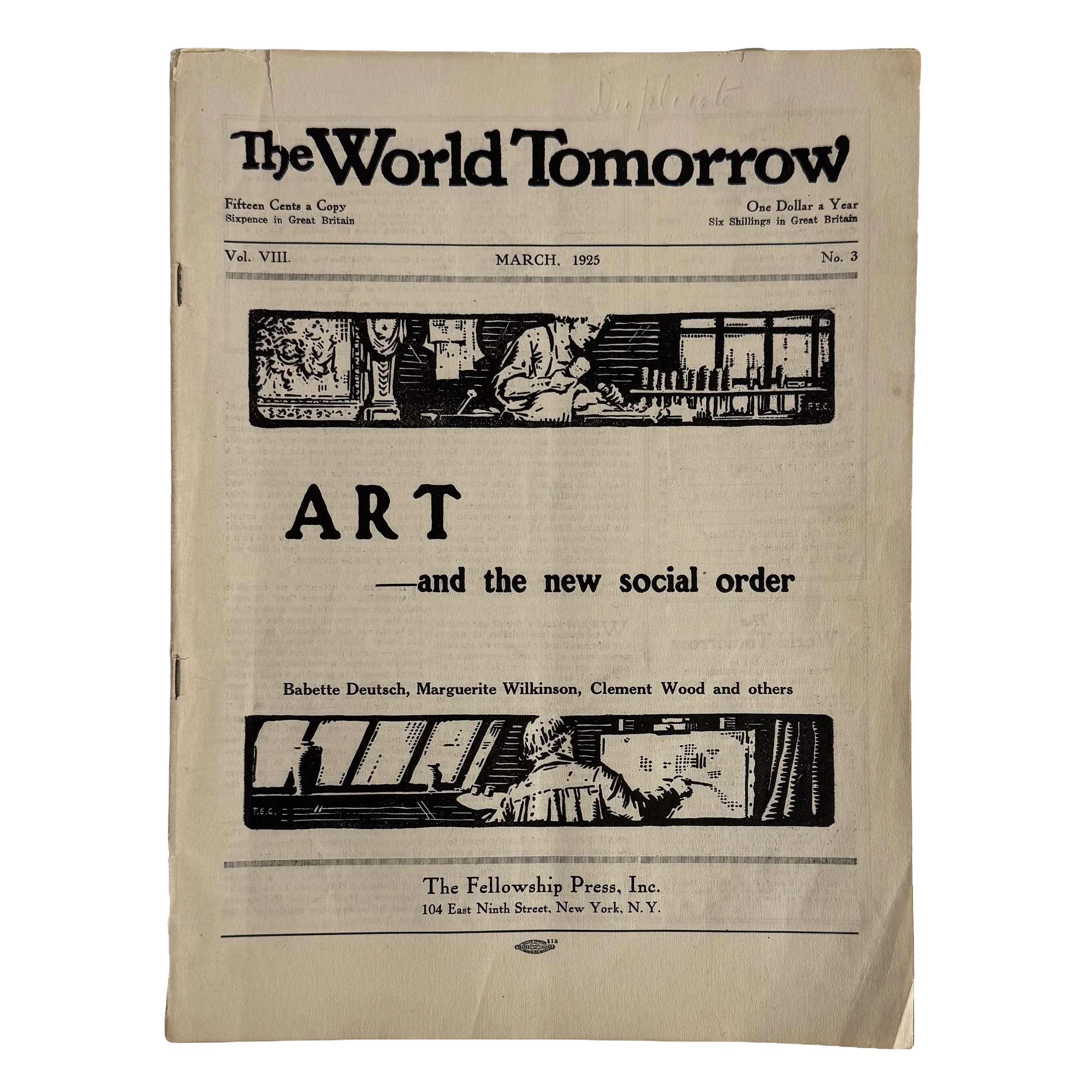 Image 1 of 9
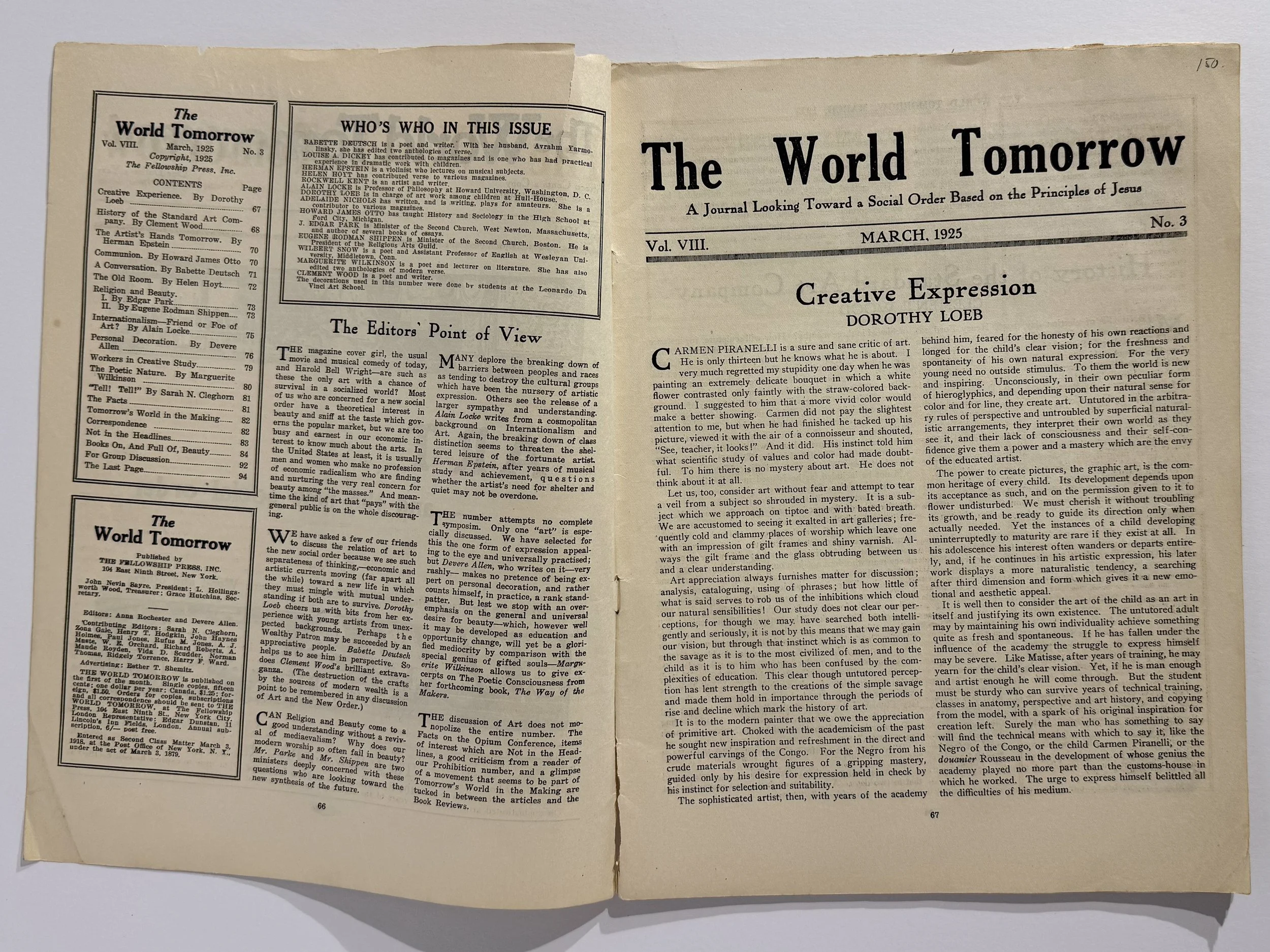 Image 2 of 9
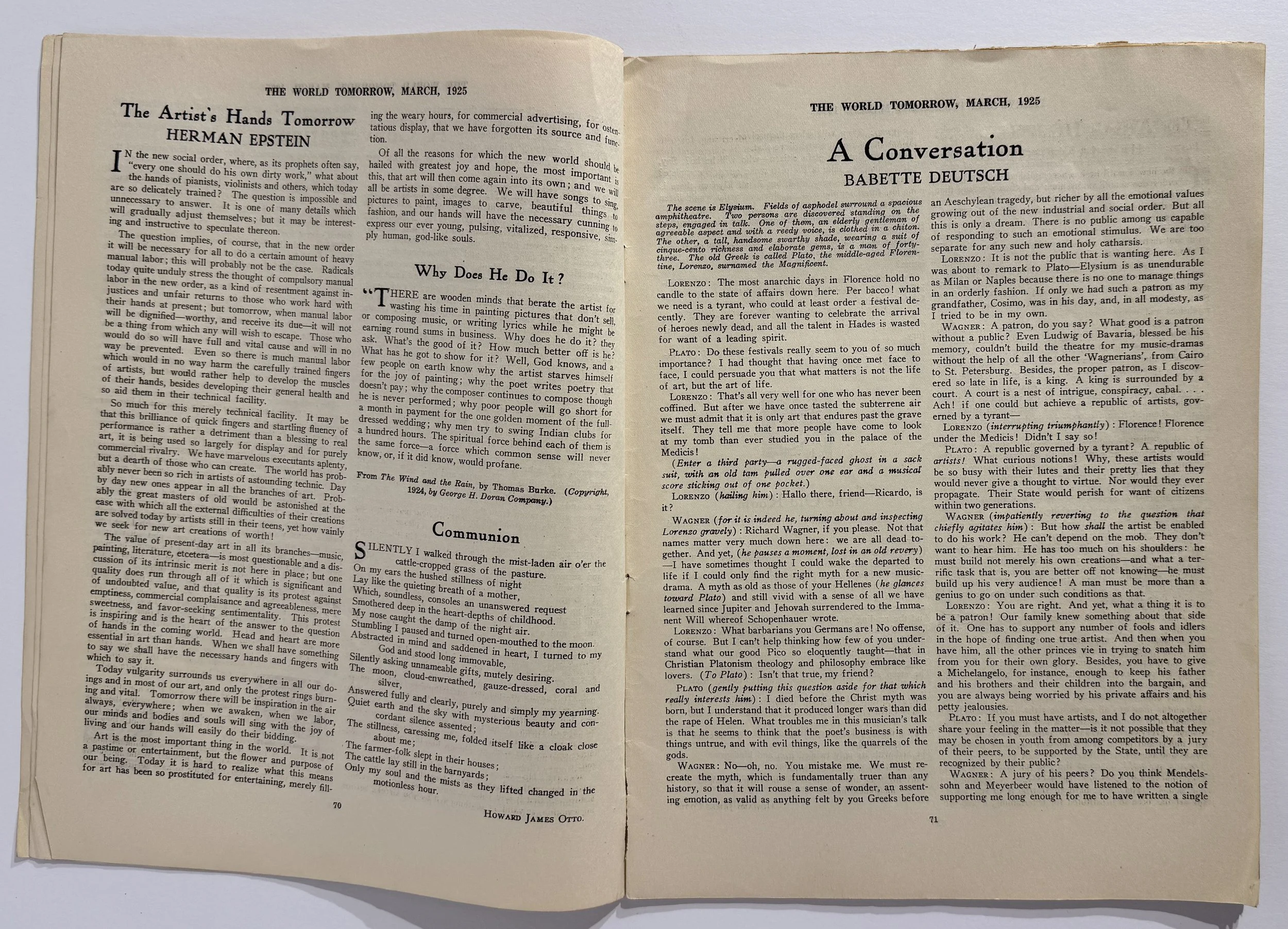 Image 3 of 9
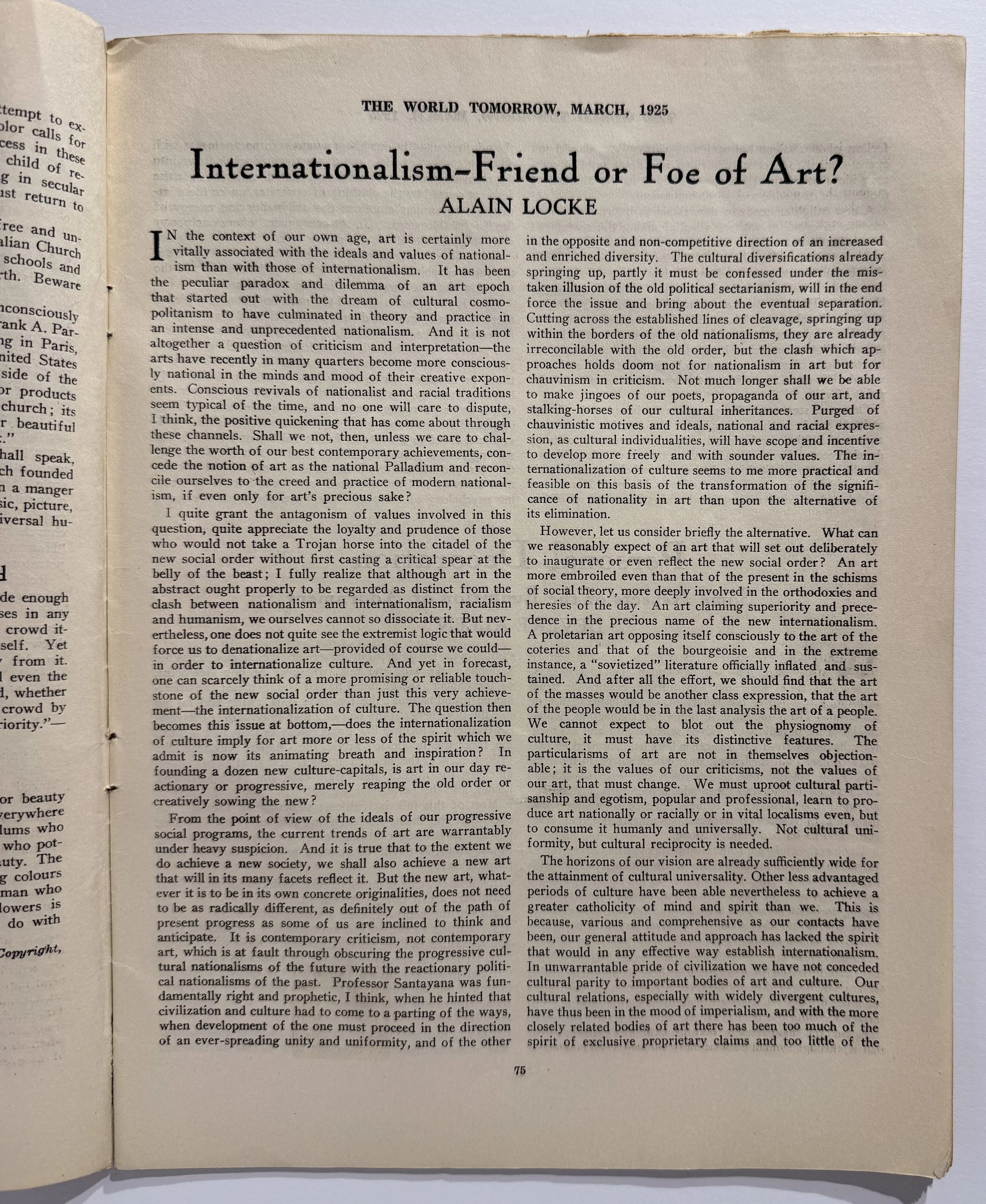 Image 4 of 9
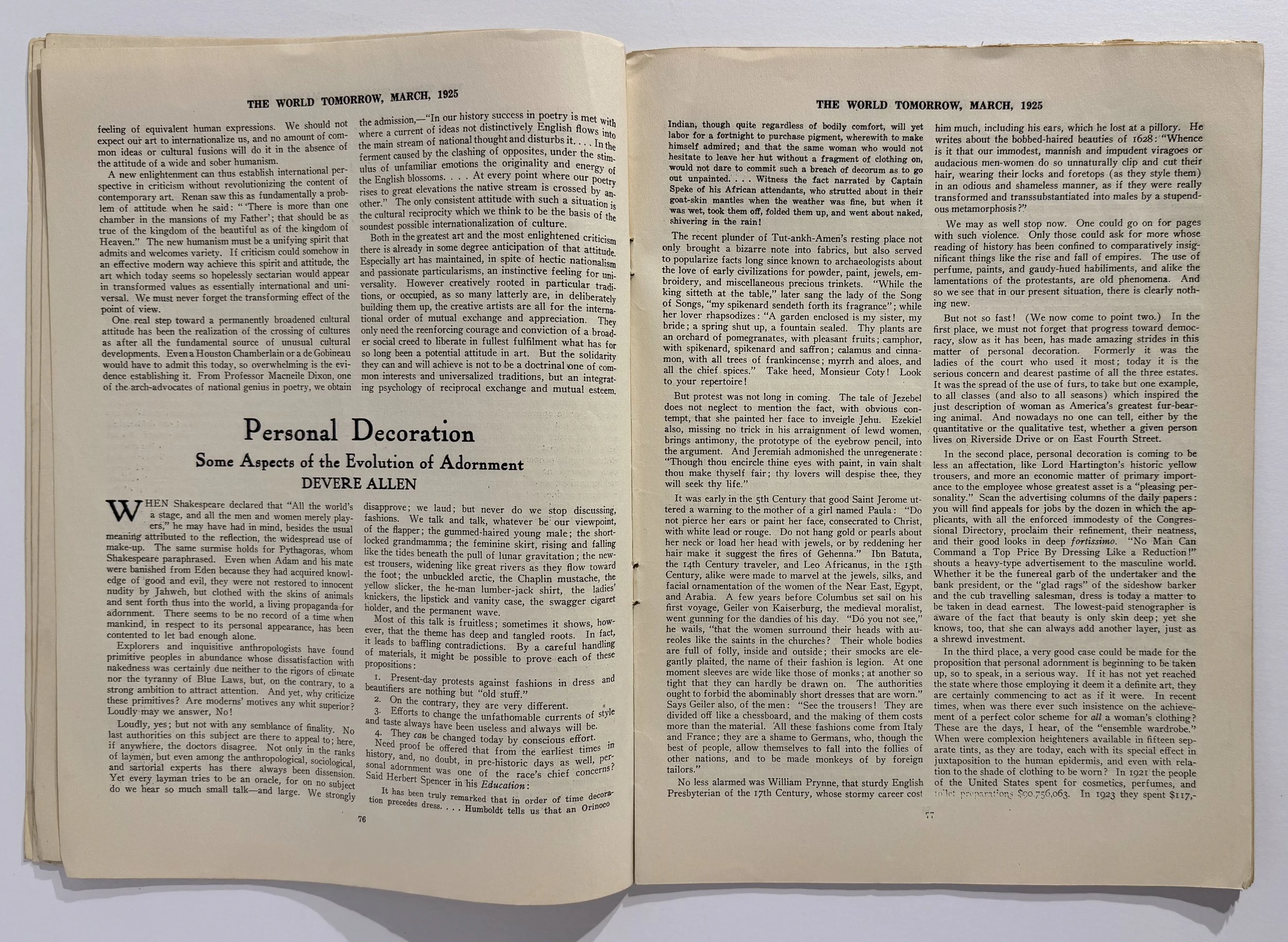 Image 5 of 9
 Image 6 of 9
 Image 7 of 9
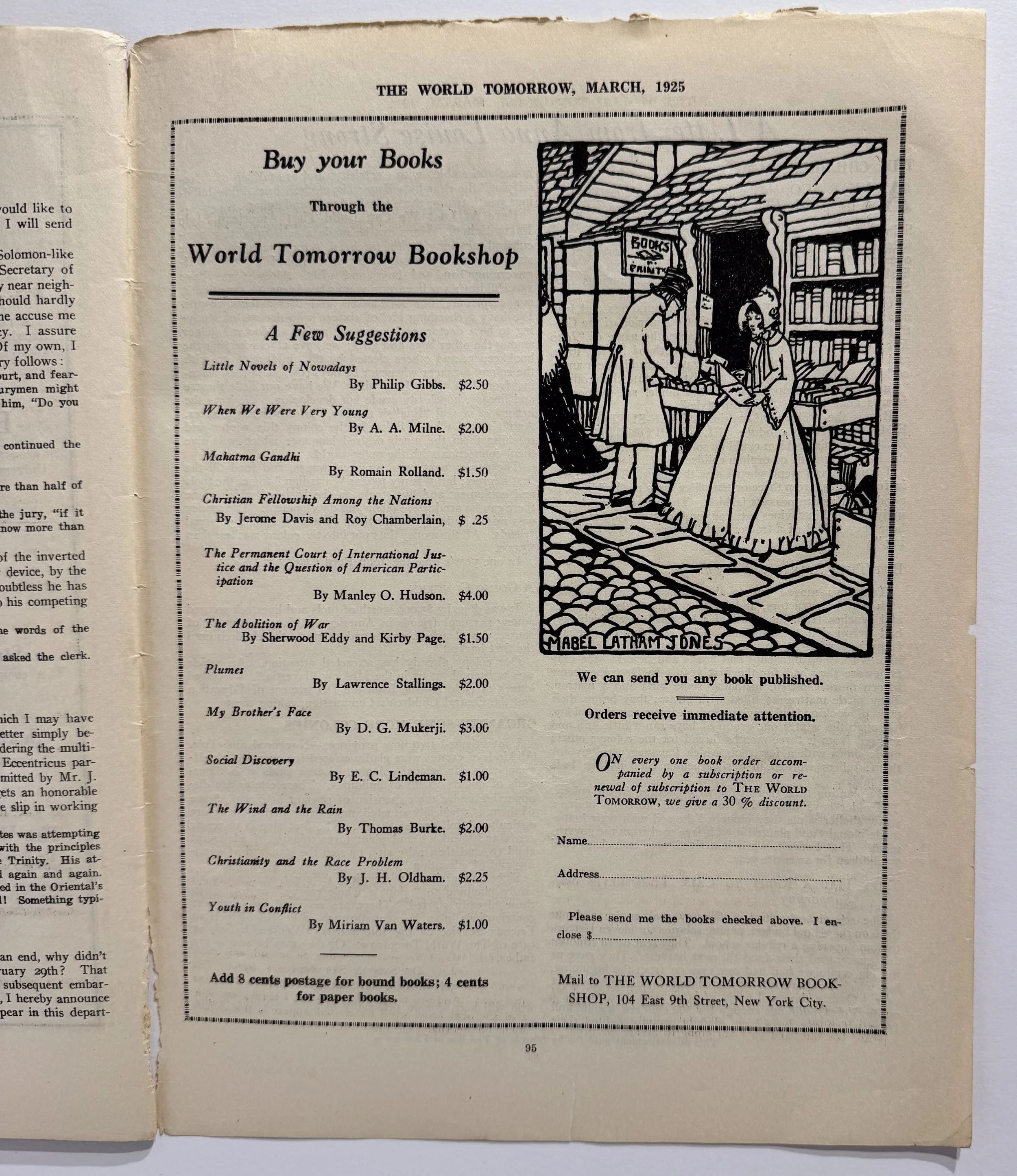 Image 8 of 9
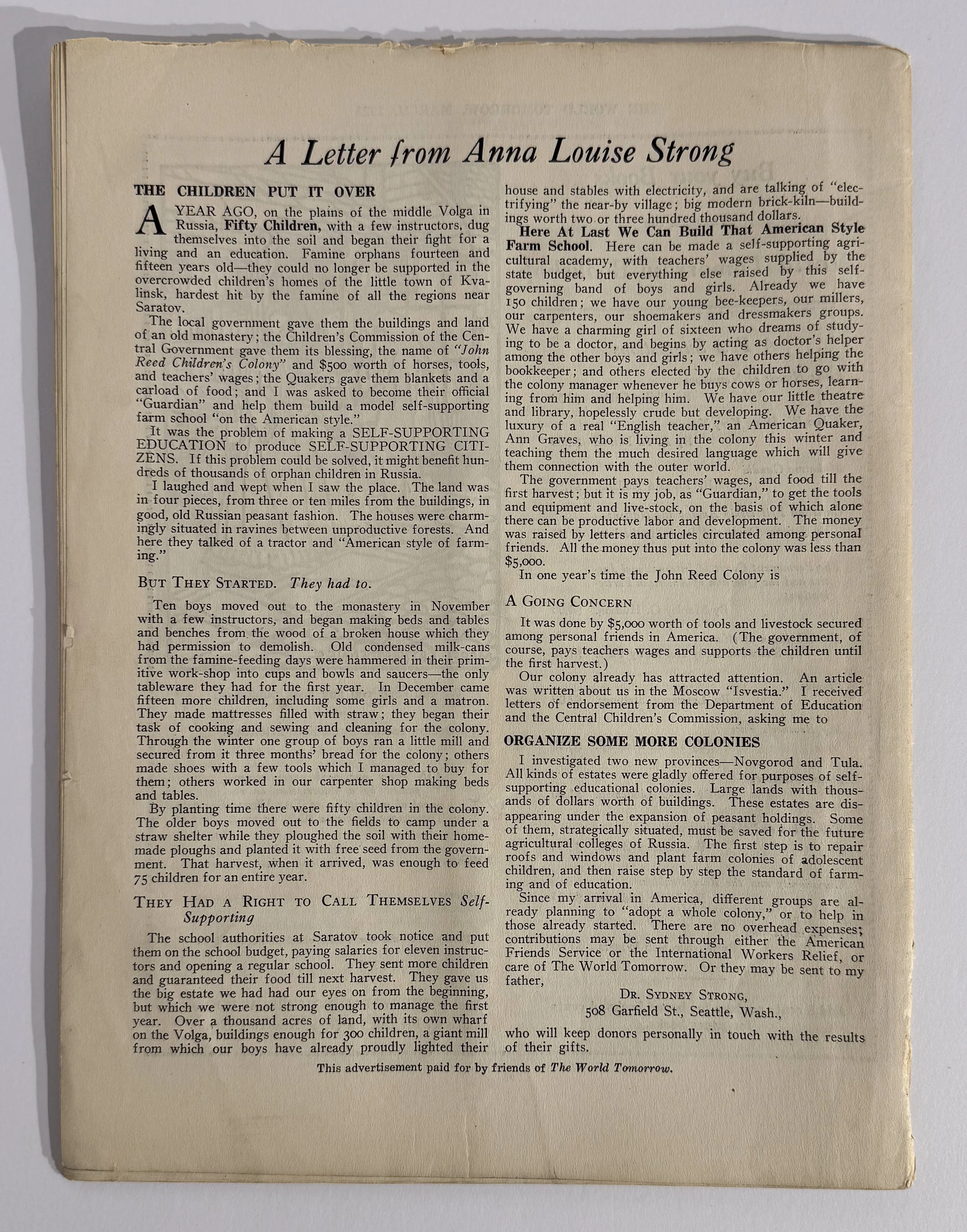 Image 9 of 9
![[1st American ed] Paul Klee: the thinking eye (the notebooks of Paul Klee)](https://images.squarespace-cdn.com/content/v1/61dc97a529892d0e352a9423/faaa9ae8-6356-453f-9398-900e326193fe/f_46150602_1754407509140_bg_processed.jpg.webp)