First dedicated brochure (SF-1), published circa 1963, in which the Unistrut Corporation presents the Attwood-derived space-frame system as a fully realized three-dimensional structural method. Though modest in extent, the brochure functions as a succinct manifesto for a standardized, demountable, kit-of-parts architecture, assembled from mass-produced components and capable of continuous expansion and reconfiguration.Illustrated throughout with period photographs of realized structures—schools, laboratories, factories, exhibition halls—the brochure pairs these applications with a technical specifications section detailing materials, finishes, and assembly protocols. Particularly striking is the interior matrix of built examples, which situates the system not as theoretical speculation but as an already disseminated building technology. The language of the piece—emphasizing modular coordination, mechanical joints, and field assembly without welding—captures a pivotal moment in mid-century construction, when industrial production methods were being consciously translated into architectural systems. In this respect, the document stands alongside contemporaneous explorations of space-frame and systems-based design, anticipating later high-tech and plug-in architectural thinking (Cedric Price, Archigram, etc) without recourse to overt theoretical framing. 4to, pictorial wrappers, 10 pages, b/w and two-tone illustrations. A compact yet conceptually resonant and visually appealing artifact at the intersection of engineering, industrial design, and architectural modernism. Light handling wear; minor soiling to wrappers. Original side punch holes as issued. Small pen notation to upper right of front cover. Contents near fine. With a small promotional tag laid in.
First dedicated brochure (SF-1), published circa 1963, in which the Unistrut Corporation presents the Attwood-derived space-frame system as a fully realized three-dimensional structural method. Though modest in extent, the brochure functions as a succinct manifesto for a standardized, demountable, kit-of-parts architecture, assembled from mass-produced components and capable of continuous expansion and reconfiguration.Illustrated throughout with period photographs of realized structures—schools, laboratories, factories, exhibition halls—the brochure pairs these applications with a technical specifications section detailing materials, finishes, and assembly protocols. Particularly striking is the interior matrix of built examples, which situates the system not as theoretical speculation but as an already disseminated building technology. The language of the piece—emphasizing modular coordination, mechanical joints, and field assembly without welding—captures a pivotal moment in mid-century construction, when industrial production methods were being consciously translated into architectural systems. In this respect, the document stands alongside contemporaneous explorations of space-frame and systems-based design, anticipating later high-tech and plug-in architectural thinking (Cedric Price, Archigram, etc) without recourse to overt theoretical framing. 4to, pictorial wrappers, 10 pages, b/w and two-tone illustrations. A compact yet conceptually resonant and visually appealing artifact at the intersection of engineering, industrial design, and architectural modernism. Light handling wear; minor soiling to wrappers. Original side punch holes as issued. Small pen notation to upper right of front cover. Contents near fine. With a small promotional tag laid in.

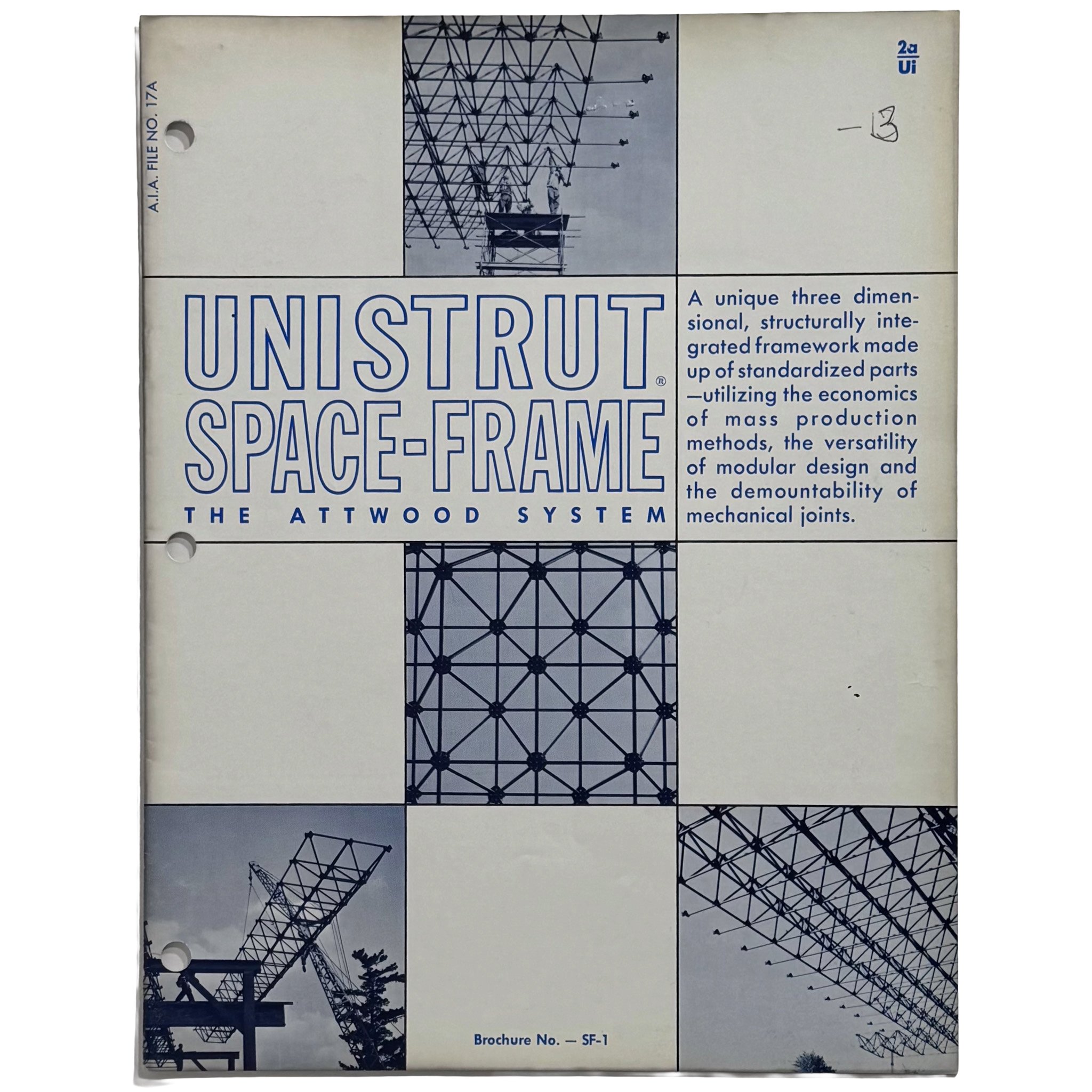 Image 1 of 7
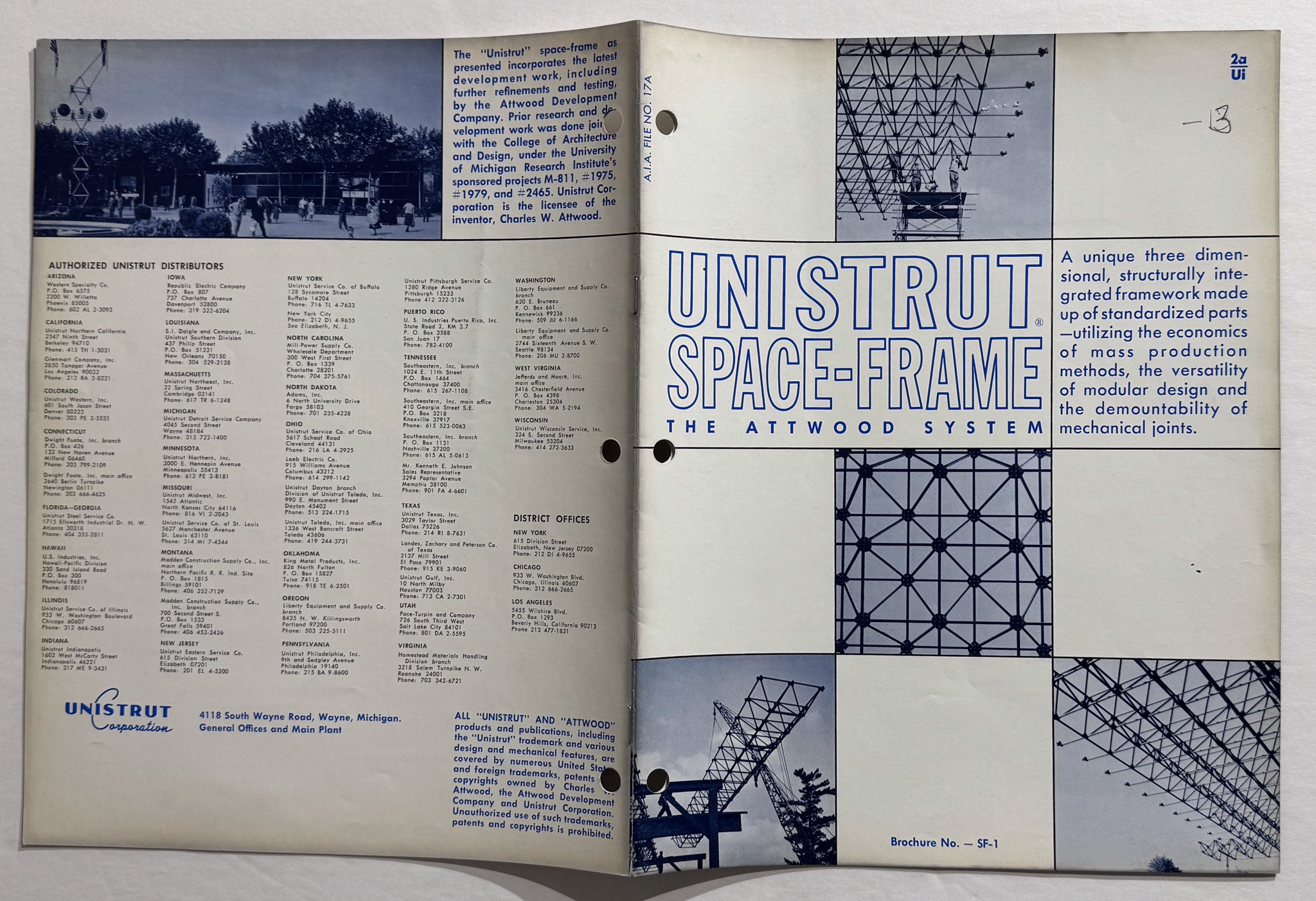 Image 2 of 7
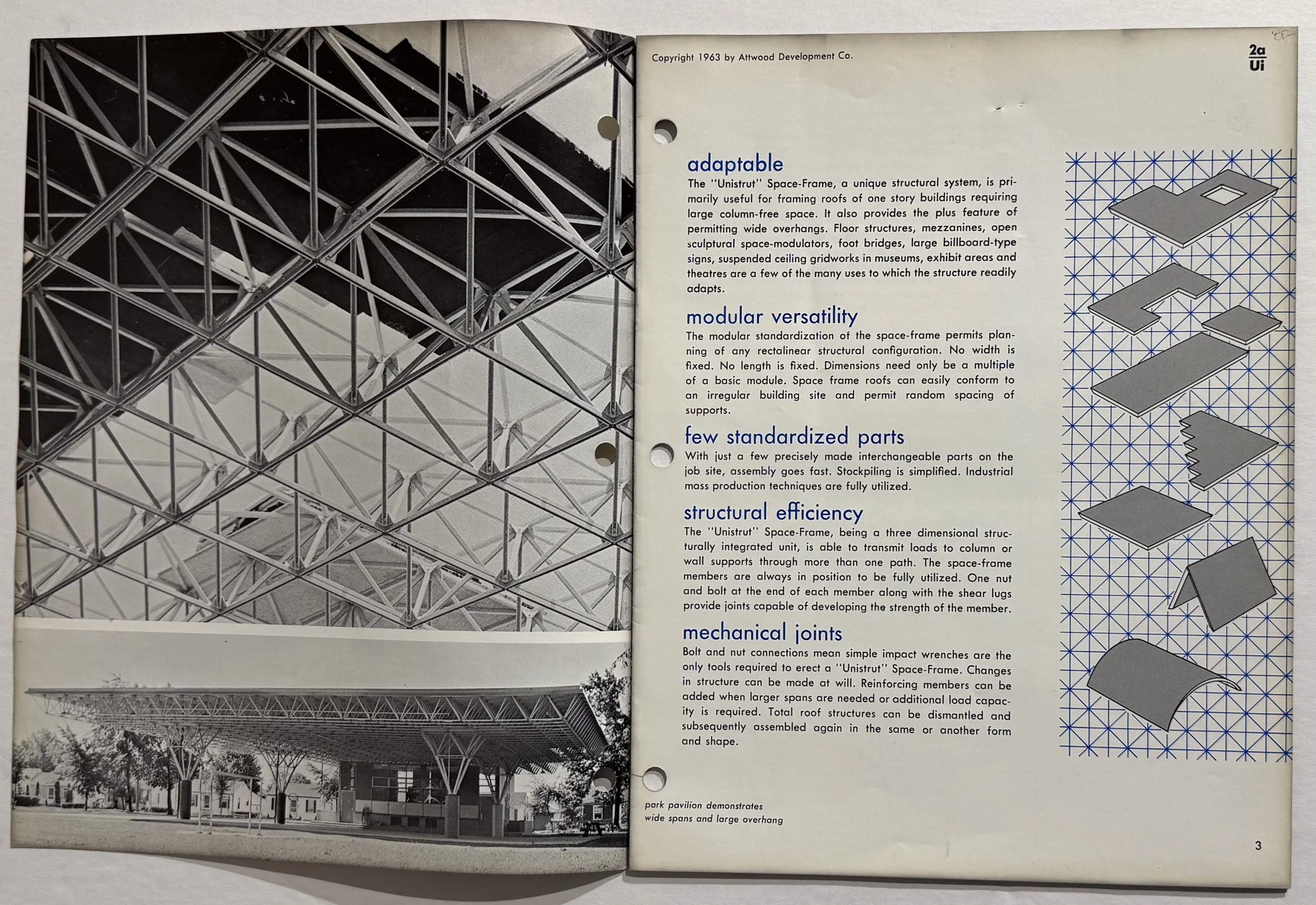 Image 3 of 7
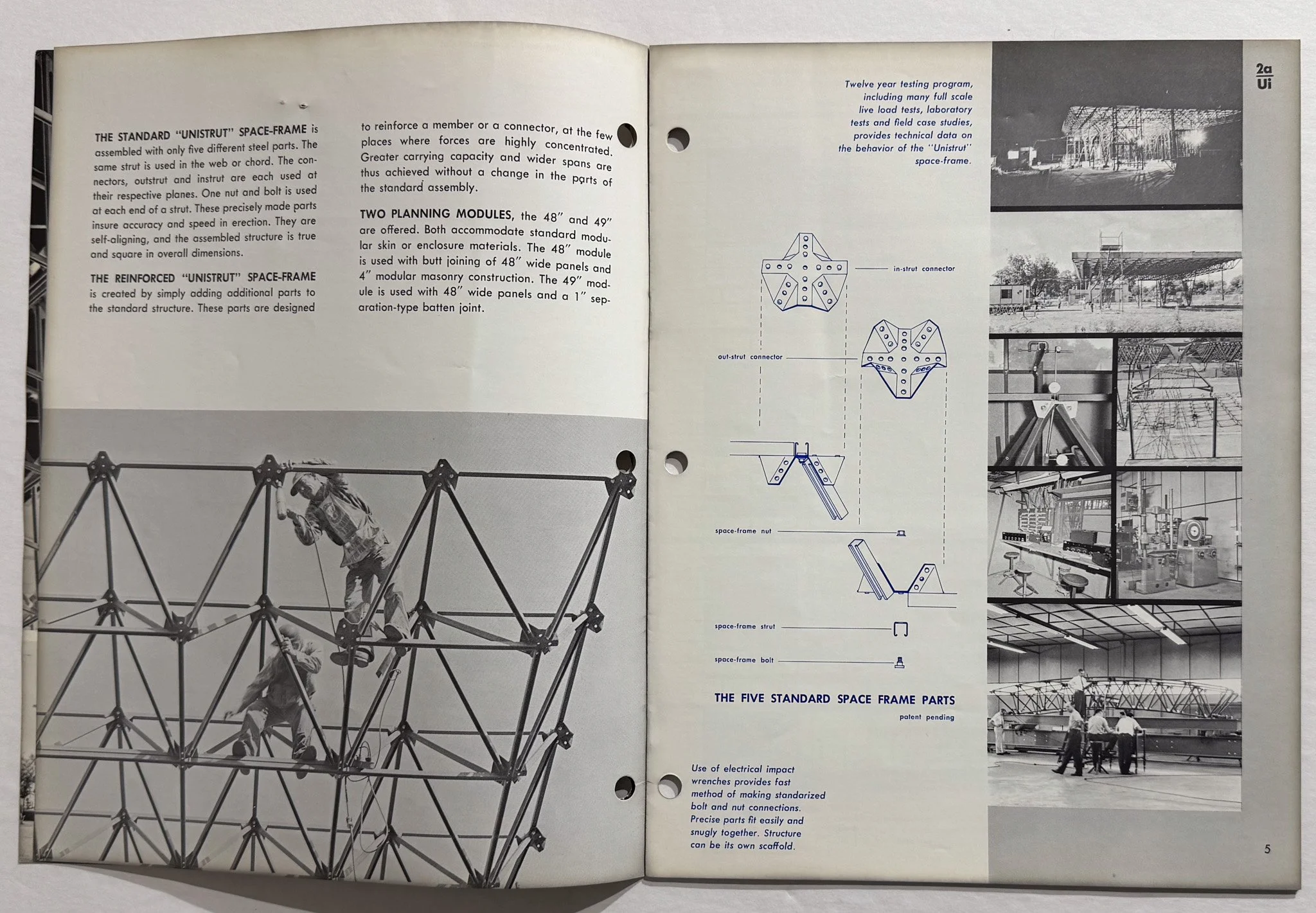 Image 4 of 7
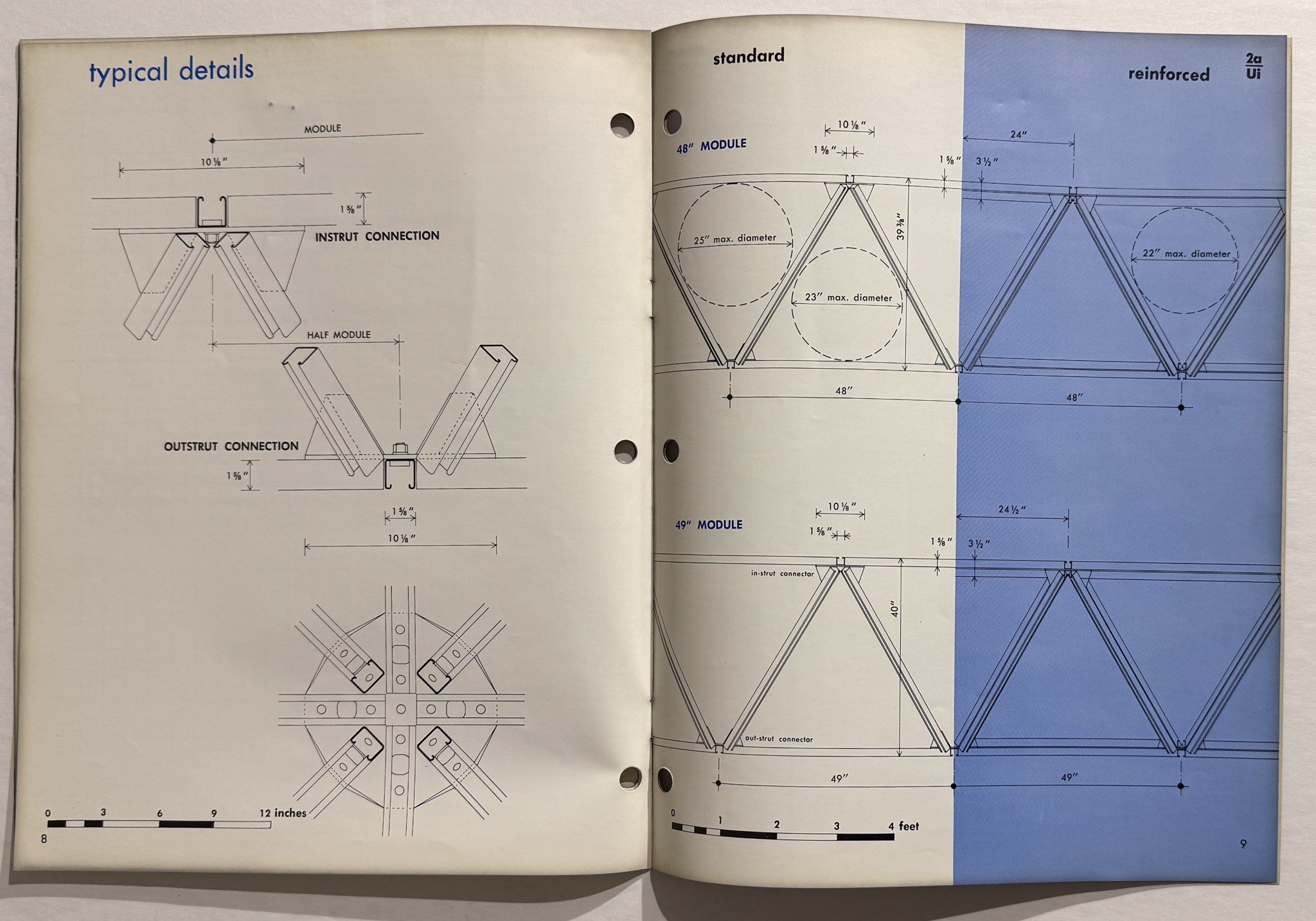 Image 5 of 7
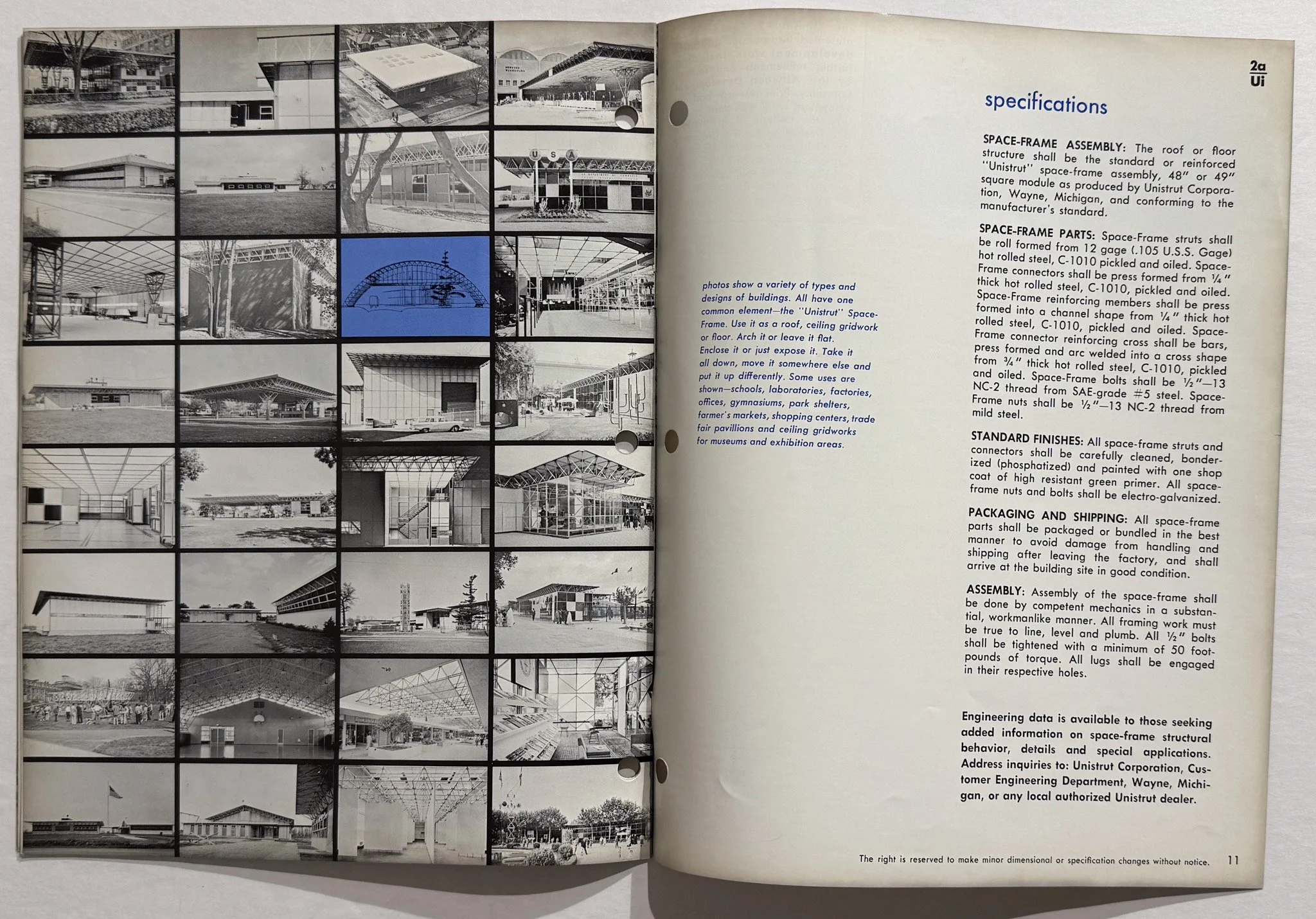 Image 6 of 7
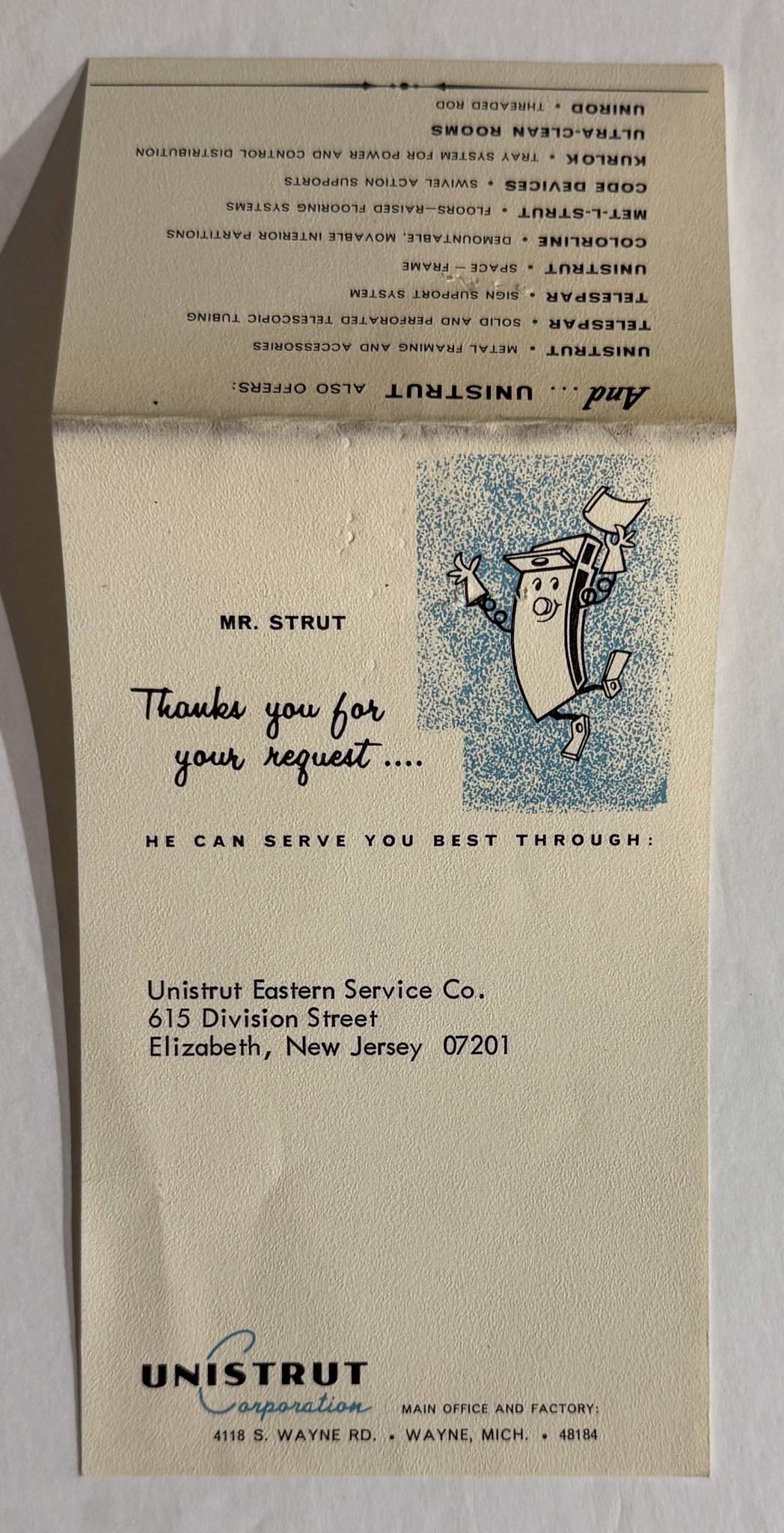 Image 7 of 7




![[1st ed] Hans J Wegner om Design](https://images.squarespace-cdn.com/content/v1/61dc97a529892d0e352a9423/b3985cb0-93f7-49ee-8f90-30a0d9b85ed5/IMG_2799+2.jpg)