Museum of Modern Art Bulletin Volume. XIV, No. 1, Fall 1946. 8vo (7 × 9.5 inches), stapled pictorial wrappers, 16 pages, black-and-white illustrations. A seminal statement of postwar American industrial design issued by the Museum of Modern Art under Edgar Kaufmann, Jr., Director of its Department of Industrial Design, and an important early document in the institutional reception of Charles and Ray Eames. Published only months after MoMA's 1946 exhibition New Furniture Designed by Charles Eames, the Bulletin places the Eameses' revolutionary molded-plywood furniture within Kaufmann's larger argument for a modern design determined not by applied style but by function, materials, manufacturing processes, economy, and the requirements of contemporary life.
The celebrated molded-plywood LCW occupies the front wrapper, where a small photographic image of the finished chair is juxtaposed against enlarged profile and construction drawings—simultaneously presenting the chair as an elegant domestic object and as a piece of industrial engineering. The cover illustration is credited to Herbert Matter, adapted from Arts & Architecture, while Matter's photographs of Eames furniture appear within. Several interior spreads document the Eames molded-plywood chairs, tables, and storage units at the formative moment when this experimental furniture was entering postwar American production via Evans Products and before its subsequent distribution by Herman Miller.
Kaufmann's text provides the intellectual framework. Modern industrial design, he argues, cannot be reduced to the appearance of an object: it arises from the coordinated consideration of purpose, material, manufacturing technique, cost, use, and environment. The Bulletin consequently functions as something close to a manifesto for MoMA's Industrial Design Department, demonstrating the Museum's increasingly powerful role not simply in exhibiting modern design but in defining the criteria by which it would be understood. The Eameses appear alongside a remarkable contemporary constellation including Eva Zeisel, Edward Wormley, William Armbruster, Dorothy Liebes, and Florence Forst, creating in miniature a survey of the emerging American postwar design canon.
Mild rubbing to extremities, with light bumping to spine.

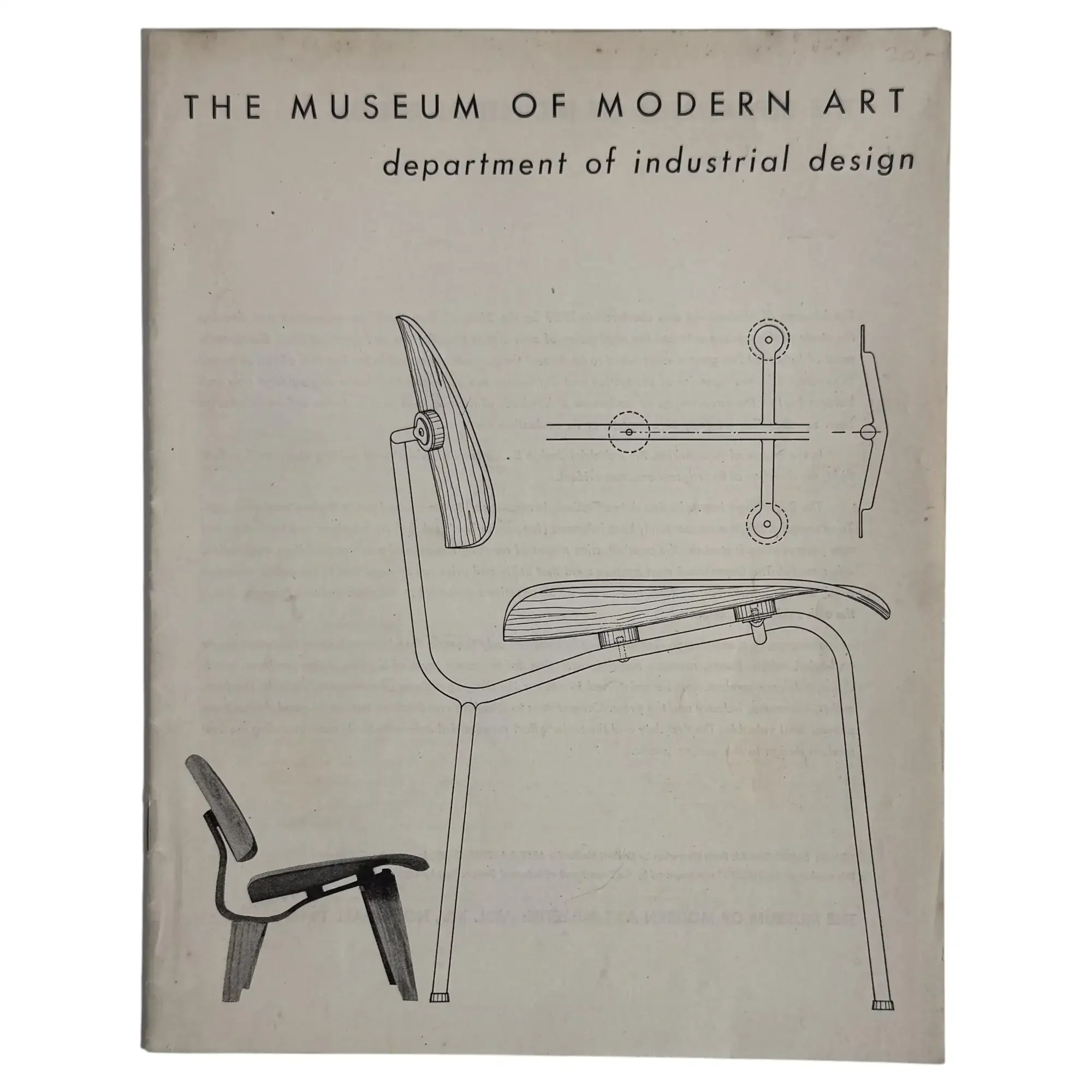 Image 1 of 7
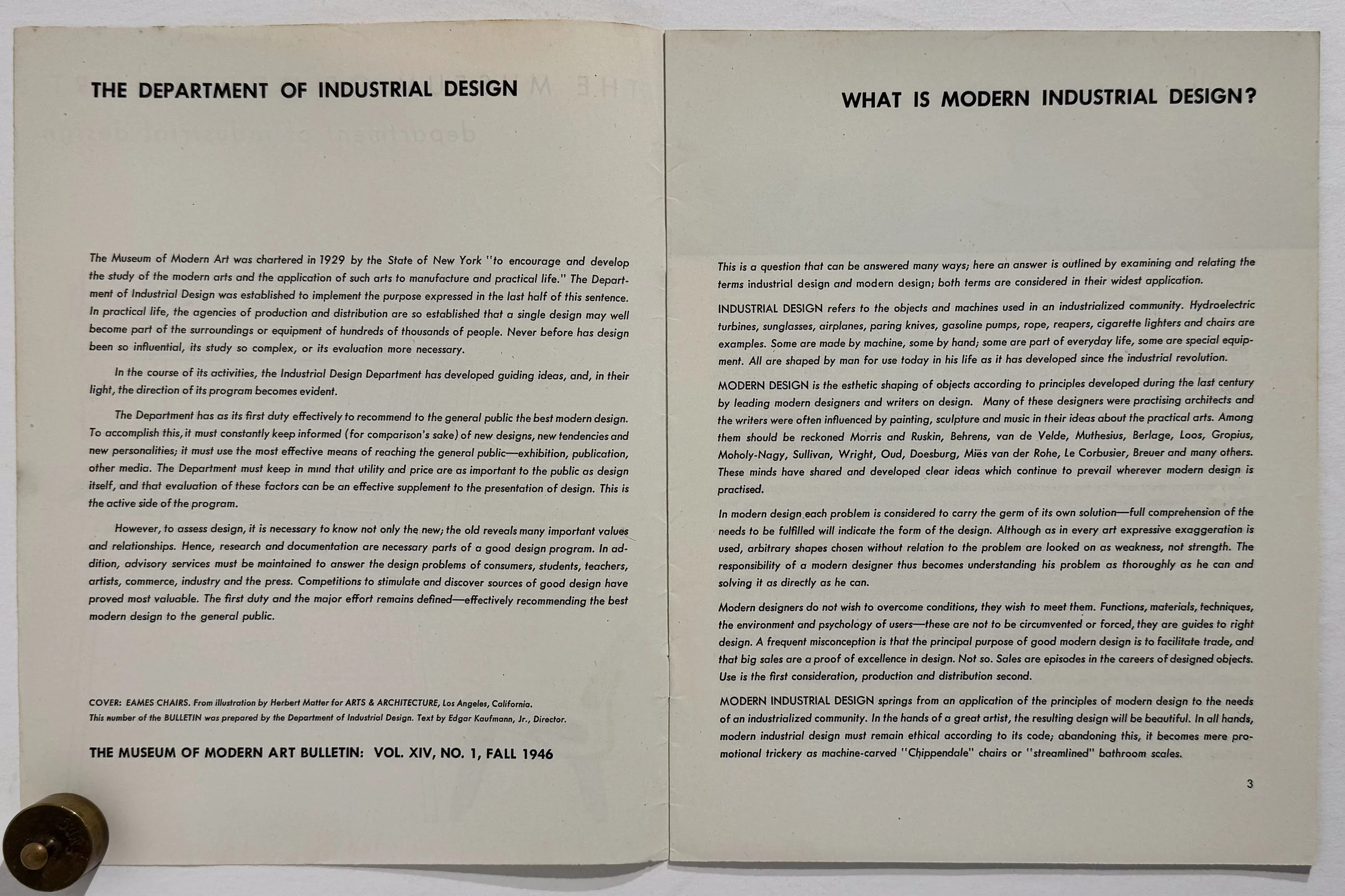 Image 2 of 7
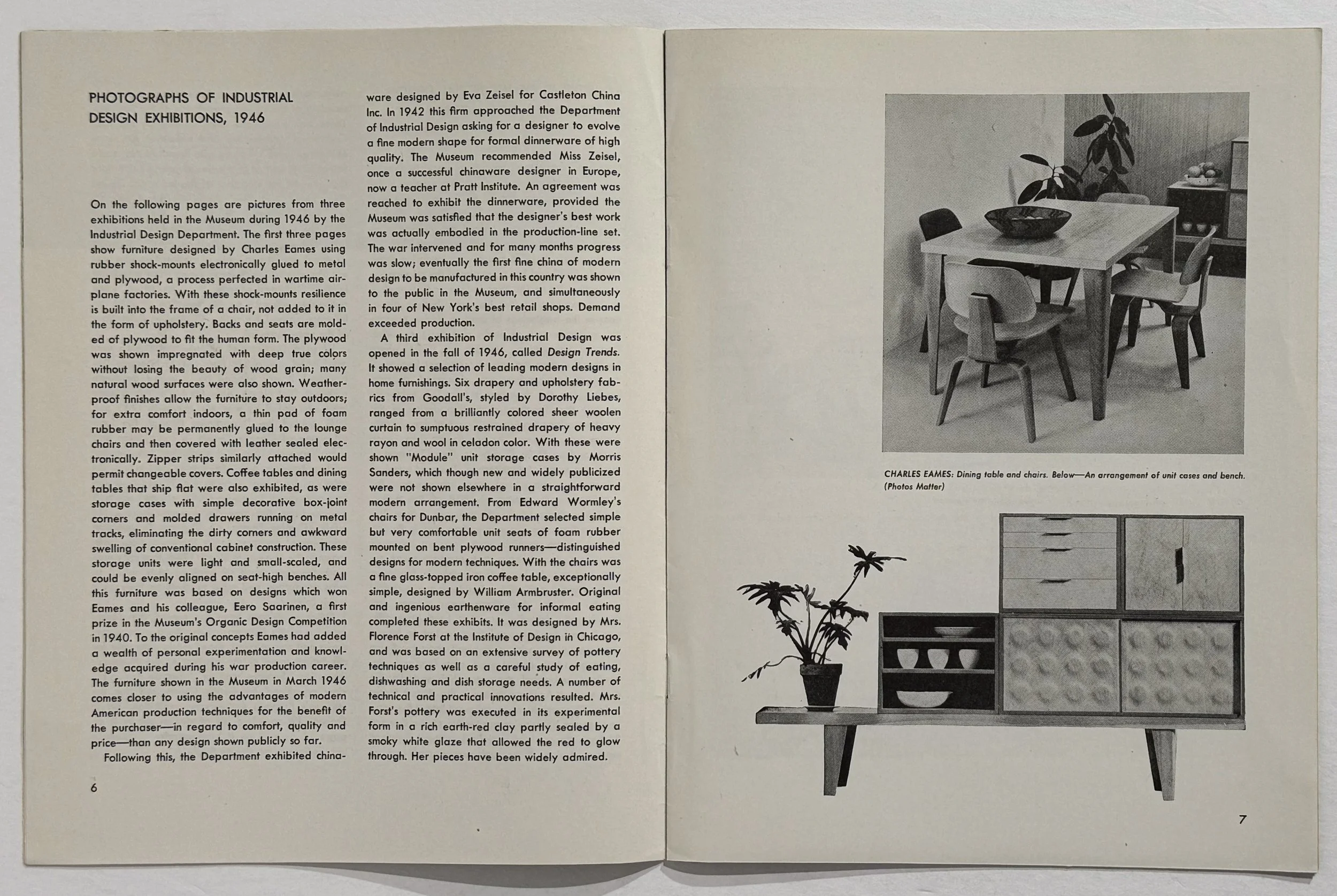 Image 3 of 7
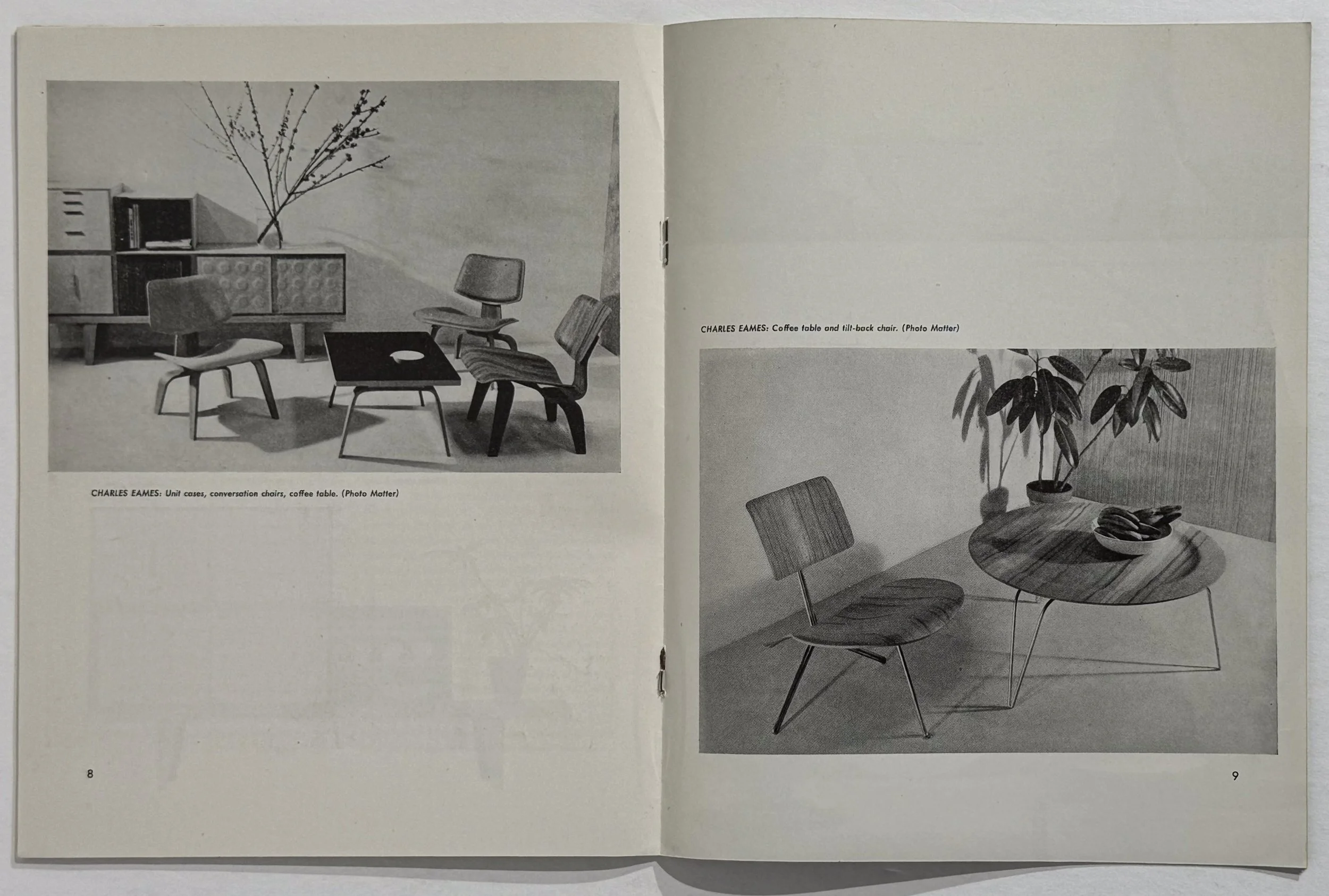 Image 4 of 7
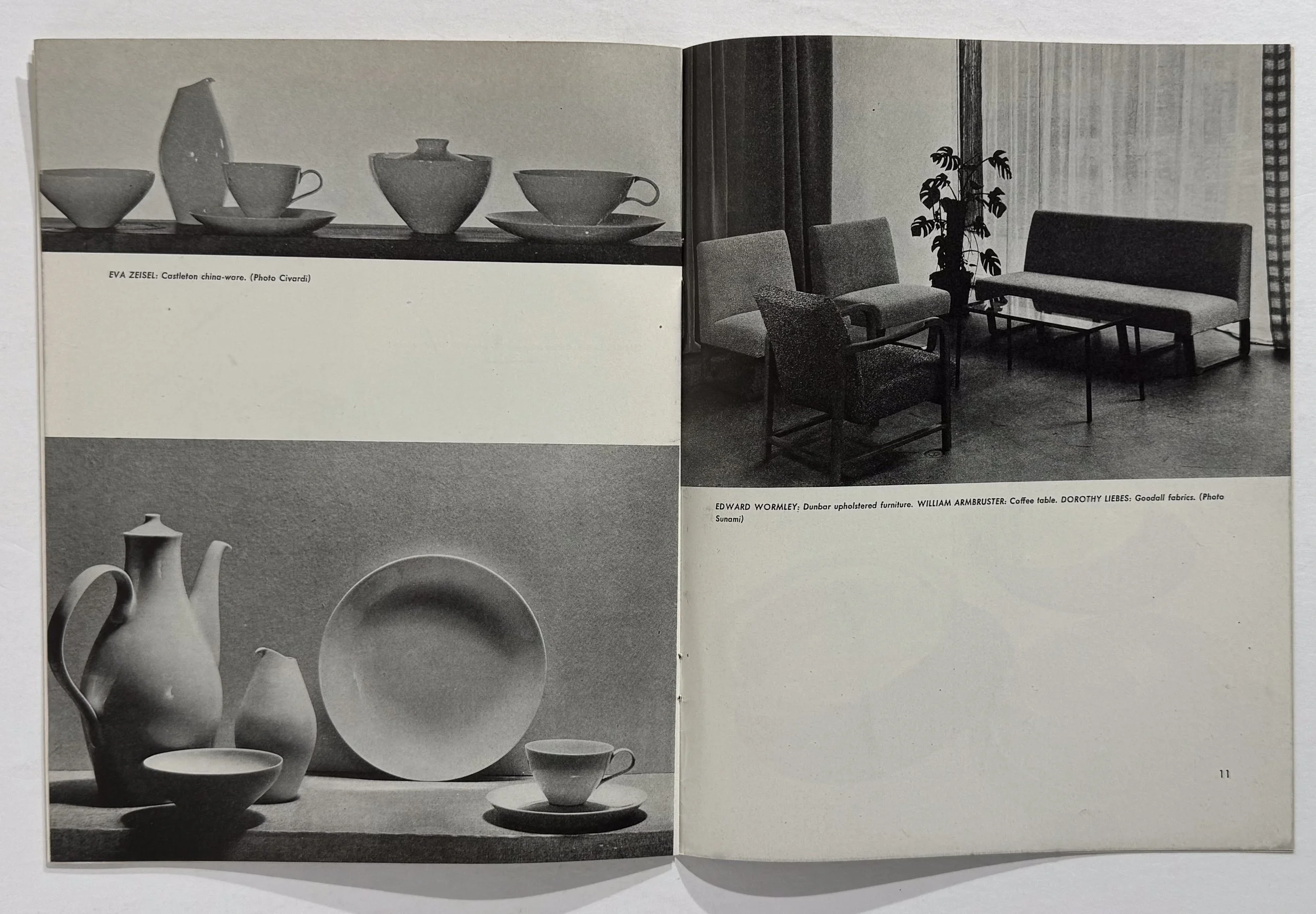 Image 5 of 7
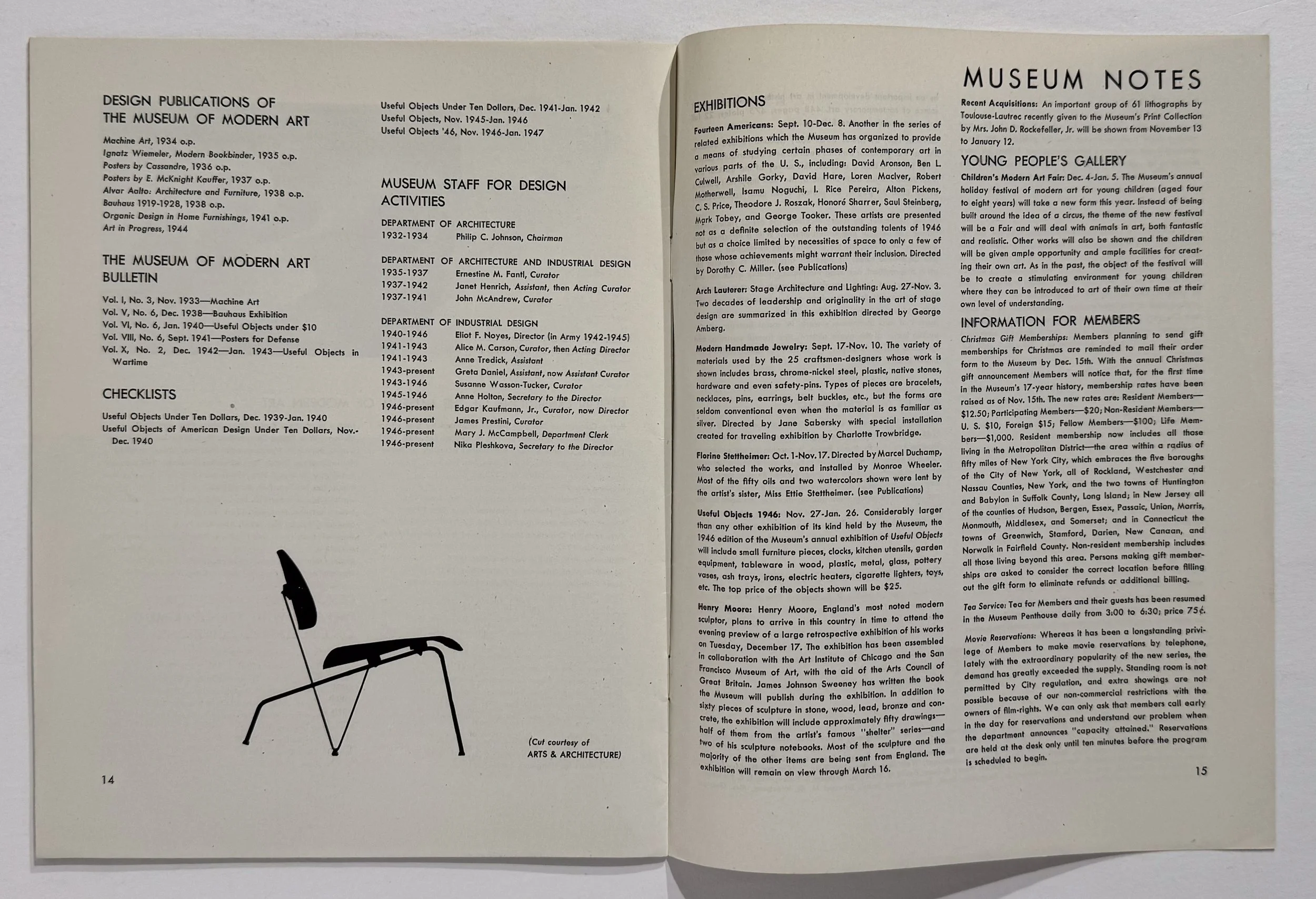 Image 6 of 7
 Image 7 of 7